Posted in theology, word of the week

Sunday Word: Peace

By Elizabeth Prata

When we discuss other words representing the fruit of the Spirit, such as love, peace, and joy, we think we know what they mean, but often times these culturally embedded words have a totally different flavor when used from a biblical context. It is true of the words pertaining to the Fruit of the Spirit. Even these ‘simpler’ biblical words are misunderstood.

Let’s look at Peace

But the fruit of the Spirit is love, joy, peace, patience, kindness, goodness, faithfulness, gentleness, self-control; against such things there is no law. (Galatians 5:22-23)

What does ‘peace’ mean? I hear people saying in their decision-making, “I have a peace about it.” Is Galatians talking about that kind of peace? Or, is it the peace that comes after a war or a struggle with someone?

The Greek word as it’s used in the verse is (they think) from eiro. It means in this verse, a harmony and an accord.

Once we possess the Spirit, we are no longer at enmity against the Lord. (Ephesians 2:16). We have peace with Him since we are no longer rebelling against Him. We have relational peace. Strong’s defines it partly as:

According to a conception distinctly peculiar to Christianity, “the tranquil state of a soul assured of its salvation through Christ, and so fearing nothing from God and content with its earthly lot, of whatsoerer sort that is”: Romans 8:6; namely, is used of those who, assured of salvation, tranquilly await the return of Christ and the transformation of all things which will accompany that event,

John Gill Comments on the two kinds of peace, peace with God and peace with each other, on the Gal 5:22 verse,

which is another fruit of the Spirit: and designs peace with God in a man’s own conscience, produced there by the Spirit of God, in consequence of peace being made by the blood of Christ; and that through the application of the blood of Christ for pardon, and of his righteousness for justification to the soul of a sensible sinner by the blessed Spirit, the effect of which is peace, quietness, and tranquillity of mind; also peace with men, with the saints, and with all others; for such who are under a work of the Spirit of God, and are influenced and led by him, seek after the things which make for peace and edification among the brethren, and are desirous if possible to live peaceably with all men: hence appears another grace in them,

But beyond that, as the verse in John 13:34-35 says,

A new commandment I give to you, that you love one another: just as I have loved you, you also are to love one another. By this all people will know that you are my disciples, if you have love for one another.

We cannot have peace with one another if we are feeling less than loving.

What was “new” about this commandment? Love wasn’t new, it is in the Ten Commandments. What was new was the depth and the extent of the love Jesus commanded His people to do. Jesus loved His own to the end, fully and consistently and completely. He gave the sop to Judas. Giving the morsel to someone at a dinner was a manner and custom in Israelite banquets. The host showed utmost respect and love to a person, by personally handing him a morsel, sometimes even placing it in the recipient’s mouth himself. Judas was to betray Jesus in mere hours, but Jesus still loved Judas to the end. He gave him the sop. THAT is the new kind of love.

The fruit of the Spirit is all one fruit. It isn’t that we work on peace one week and then patience the next… The first fruit mentioned is love. ALL other fruit stems from this one fruit. If we are loving we will be patient, we will be joyful, we will be gentle, we will employ self-control, and so on. Jesus was at peace relationally with Judas the Betrayer and demonstrated that peace through His loving act of giving the morsel.

Peace with one another is to be sought because we love.

~~~~~~~~~~~~~~~~~~~~~~~~~~~~~~~~~~~~~~~~

Here is a wonderful 45 minute sermon by Harry Walls at Grace Community Church about the kind of love Jesus expects from us.
Connecting with Quality Love by Harry Walls

Here is an article about Peace from Compelling Truth:
In What Way is Peace a Fruit of the Spirit?

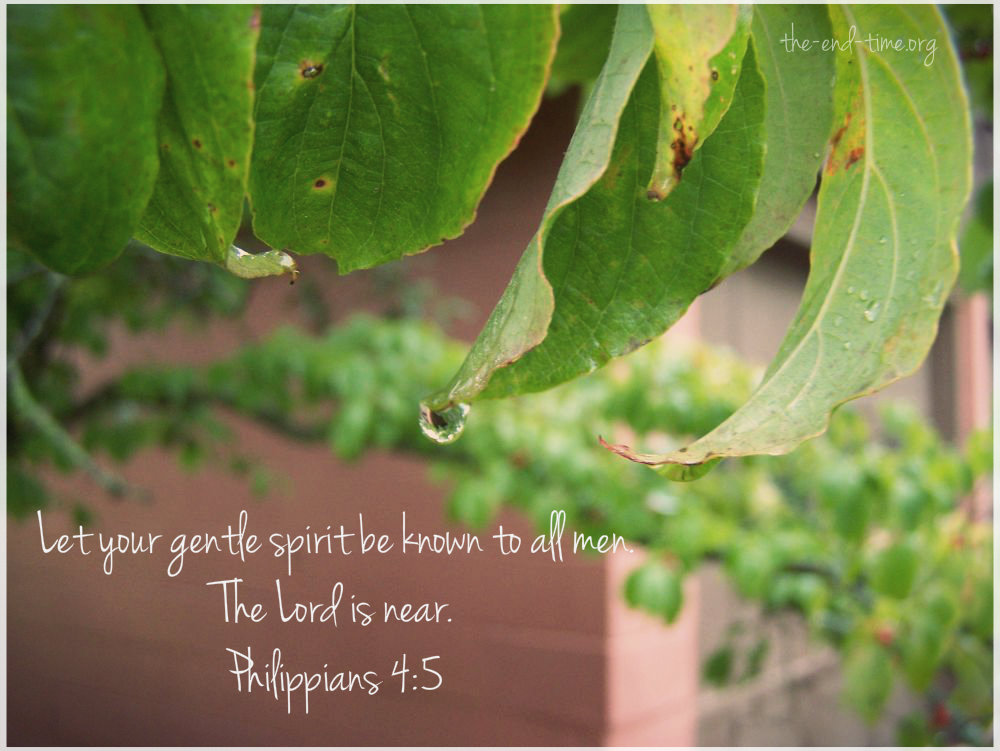
peace verse.jpg
EPrata photo
Posted in theology, word of the week

Sunday Word of the Week- Fruit of the Spirit: Patience

By Elizabeth Prata

But the fruit of the Spirit is love, joy, peace, patience, kindness, goodness, faithfulness, 23 gentleness, self-control; against such things there is no law. (Galatians 5:22).

The fruit of the Spirit is singular. It’s all one fruit. It’s not like the believer works on love one month and then patience the next and then moves on to self-control. It’s all one, and the one is love. If one loves the Savior, they will be joyful, and that joy will permeate all that he or she does, including relationships with believers and non-believers. Same with peace. Peace will characterize their relationships, and patience will be a hallmark of relationships, and so on.

Continue reading “Sunday Word of the Week- Fruit of the Spirit: Patience”
Posted in encouragement, theology

Goodness: A Biblical Perspective

By Elizabeth Prata

Love: A Biblical perspective, here

But the fruit of the Spirit is love, joy, peace, patience, kindness, goodness, faithfulness, gentleness, self-control; against such things there is no law. (Galatians 5:22-23).

SYNOPSIS

Theological literacy for believers is important, particularly understanding key biblical concepts and even common words we think we understand. Common terms, like goodness, often differ in biblical context from cultural interpretations. Central to this is the Fruit of the Spirit, with love as a primary characteristic manifesting through believers, reflecting God’s nature and sacrificial commitment. Let’s look at Goodness today.

Continue reading “Goodness: A Biblical Perspective”
Posted in theology, word of the week

Understanding the Fruit of the Spirit: Peace Explained

By Elizabeth Prata

SYNOPSIS

In this series, I discuss the importance of understanding theological terms for maintaining doctrinal clarity. I explore the biblical concept of peace as a fruit of the Spirit. True peace signifies reconciliation with God foremost, and reflects love in interpersonal relationships as an outworking of our lack of enmity with God. Peace is essential for a spiritual community’s harmony and for a witness in effective evangelism.

Continue reading “Understanding the Fruit of the Spirit: Peace Explained”
Posted in theology, word of the week

Word of the Week- Fruit of the Spirit, Self-Control

By Elizabeth Prata

But the fruit of the Spirit is love, joy, peace, patience, kindness, goodness, faithfulness, gentleness, self-control; against such things there is no law. (Galatians 5:22-23).

In past essays, I explored the previous characteristics in the verse, from the first, joy, to gentleness, the second to last. Now we look at self-control.

In a previous essay it was noted that the 9 characteristics Paul outlines in the verse can be grouped by three threes. Continue reading “Word of the Week- Fruit of the Spirit, Self-Control”

Posted in theology

Word of the Week: Fruit of the Spirit, Faithfulness

By Elizabeth Prata

But the fruit of the Spirit is love, joy, peace, patience, kindness, goodness, faithfulness, gentleness, self-control; against such things there is no law. (Galatians 5:22-23).

The word we’re focusing on this week inside the fruit of the Spirit list is- faithfulness.

As a reminder, the fruit of the Spirit is love. All other fruit stems from that one fruit. There is one fruit of the Spirit, it isn’t a plural. It’s one bundle.

fruit goodness verse 1

The Greek word in this verse for faithfulness is pistis. Helps Word Studies explains,

pístis (from 3982/peithô, “persuade, be persuaded”) – properly, persuasion (be persuaded, come to trust); faith.

Faith/pistis) is always a gift from God, and never something that can be produced by people. In short, “faith” for the believer is “God’s divine persuasion” – and therefore distinct from human belief (confidence), yet involving it. The Lord continuously births faith in the yielded believer so they can know what He prefers, i.e. the persuasion of His will (1 Jn 5:4).

Pistis in secular antiquity referred to a guarantee (warranty). In Scripture, faith is God’s warranty, certifying that the revelation He inbirthed will come to pass.

Faith (4102/pistis) enables the believer to know God’s preferred-will (cf. J. Calvin; see 2307/thelçma).

Reflection: Faith is only (exclusively) given to the redeemed. It is not a virtue that can be worked up by human effort.

Resources:

Ligonier Devotional: Goodness and Faith

Faith is another fruit of the Spirit in our lives (Gal. 5:22). But when the Apostle refers to faith, he speaks not merely of “believing in God.” Paul also calls us to “believe God.” Believing in God is not that remarkable — even demons do that. What the Lord wants is a people who trust in His promises alone (James 2:14–26).

GotQuestions: Fruit of the Spirit- What is Faithfulness?

Faithfulness is believing that God is Who He says He is and continuing in that belief despite the vagaries of life. Functionally, that means we trust what God says in the Bible, and not necessarily what the world or our own eyes tell us. We trust He will work out everything for good. We trust He will work His will in us. And we trust that our situation on earth is nothing compared to our future reward in heaven. The only way we can have such faith is by the Holy Spirit’s influence. He testifies to the truth and impels us to seek God. The Spirit makes us faithful.

Arthur W. Pink:

Faith endures as seeing Him who is invisible (Heb. 11:27); endures the disappointments, the hardships, and the heart-aches of life, by recognizing that all comes from the hand of Him who is too wise to err and too loving to be unkind. But so long as we are occupied with any other object than God Himself, there will be neither rest for the heart nor peace for the mind. But when we receive all that enters our lives as from His hand, then, no matter what may be our circumstances or surroundings—whether in a hovel or prison-dungeon, or at a martyr’s stake—we shall be enabled to say, ” The lines are fallen unto me in pleasant places” (Ps. 16:6). But that is the language of faith, not of sight nor of sense.

Posted in theology, word of the week

Word of the Week: Fruit of the Spirit, Gentleness

By Elizabeth Prata

But the fruit of the Spirit is love, joy, peace, patience, kindness, goodness, faithfulness, gentleness, self-control; against such things there is no law. (Galatians 5:22-23)

Warren Wiersbe notes the triple triad within the verse. The first three characteristics of the fruit are love, joy, and peace. Those reflect the Godward aspect of Christian life.

The next three are patience, kindness, goodness; characteristics reflecting the manward aspect of Christian life.

Faithfulness, gentleness, self-control are aspects reflecting the selfward part of the Christian life. Below, Wiersbe’s longer explanation:

When a person lives in the sphere of love, then he experiences joy—that inward peace and sufficiency that is not affected by outward circumstances. (A case in point is Paul’s experience recorded in Phil. 4:10–20.) This “holy optimism” keeps him going in spite of difficulties. Love and joy together produce peace, “the peace of God, which passeth all understanding” (Phil. 4:7). These first three qualities express the Godward aspect of the Christian life.

The next three express the manward aspect of the Christian life: long-suffering (courageous endurance without quitting), gentleness (kindness), and goodness (love in action). The Christian who is long-suffering will not avenge himself or wish difficulties on those who oppose him. He will be kind and gentle, even with the most offensive, and will sow goodness where others sow evil. Human nature can never do this on its own; only the Holy Spirit can.

The final three qualities are selfward: faith (faithfulness, dependability); meekness (the right use of power and authority, power under control); and temperance (self-control). Meekness is not weakness. Jesus said, “I am meek and lowly in heart” (Matt. 11:29), and Moses was “very meek” (Num. 12:3); yet no one could accuse either of them of being weak. The meek Christian does not throw his weight around or assert himself. Just as wisdom is the right use of knowledge, so meekness is the right use of authority and power. The Bible Exposition Commentary, Warren Wiersbe

The word gentleness as it is used in the verse means ‘derived from the root pra-, emphasizing the divine origin of meekness (“gentle strength”) which expresses power with reserve and gentleness.’

Gentleness, ladies, does not mean doormat, but restrained power combined with kindness, peace, and the other characteristics of the fruit. That’s why the fruit of the Spirit is one fruit displaying many aspects, not many fruits.

Wiersbe again with the reason the Spirit grows the fruit in us:

We must remember that this fruit is produced to be eaten, not to be admired and put on display. People around us are starving for love, joy, peace, and all the other graces of the Spirit. When they find them in our lives, they know that we have something they lack. We do not bear fruit for our own consumption; we bear fruit that others might be fed and helped, and that Christ might be glorified. The flesh may manufacture “results” that bring praise to us, but the flesh cannot bear fruit that brings glory to God. It takes patience, an atmosphere of the Spirit, walking in the light, the seed of the Word of God, and a sincere desire to honor Christ.

gentle1

Posted in encouragement, theology

Word of the Week: Fruit of the Spirit, Goodness

By Elizabeth Prata

But the fruit of the Spirit is love, joy, peace, patience, kindness, goodness, faithfulness, gentleness, self-control; against such things there is no law. (Galatians 5:22-23).

What is goodness? If you ask most people, they would declare that they “are a good person.” But is man’s view of goodness the same as God’s? No. Continue reading “Word of the Week: Fruit of the Spirit, Goodness”

Posted in theology, word of the week

Sunday Word of the Week- Fruit of the Spirit: Patience

By Elizabeth Prata

But the fruit of the Spirit is love, joy, peace, patience, kindness, goodness, faithfulness, 23 gentleness, self-control; against such things there is no law. (Galatians 5:22).

The fruit of the Spirit is singular. It’s all one fruit. It’s not like the believer works on love one month and then patience the next and then moves on to self-control. It’s all one, and the one is love. If one loves the Savior, they will be joyful, and that joy will permeate all that he or she does, including relationships with believers and non-believers. Same with peace. Peace will characterize their relationships, and patience will be a hallmark of relationships, and so on. Continue reading “Sunday Word of the Week- Fruit of the Spirit: Patience”

Posted in theology, word of the week

Sunday Word of the Week: Fruit of the Spirit, Joy

By Elizabeth Prata

On Sundays I usually post a theological word with its definition, then an explanation, and use it in a verse. I also use a picture to represent the concept. This is my effort to maintain a theological literacy among the brethren and between generations, something I believe is critical. We have to know what we believe, why, and know the words to express it. Words like Justification, Immanence, and Perspicuity have all been a Sunday Word of the Week. Continue reading “Sunday Word of the Week: Fruit of the Spirit, Joy”