Posted in theology

Bread- physical food AND spiritual nourishment

By Elizabeth Prata

I’m Italian-Irish/English. But we spent more time with the Italian side of the family. My father was thoroughly Italian. That meant he liked bread. He could not conceive of a meal without bread being served. If we went to a Chinese restaurant (where the preferred starch was rice) he brought bread with him.

I grew up in the 1960s (“the nineteen-hundreds” as I tell my students and their eyes widen). A popular slang term back then was “bread” which stood for “money”. Someone might say, ‘I can’t go out tonight, I got no bread, man.’

Bread could mean actual bread you make a sandwich with, or it could mean money.

In the Bible, bread is a staple food for both the Old Testament Hebrews and the New Testament Christians. Bread was made from wheat (preferred) or barley (lesser quality but more affordable). The book of Revelation mentions wheat and barley.

And I heard something like a voice in the center of the four living creatures saying, “A quart of wheat for a denarius, and three quarts of barley for a denarius; and do not damage the oil and the wine.” (Revelation 6:6).

A quart is a quarter of a gallon. So for the same price in that future time, you’d pay a day’s wage for a quarter gallon of wheat but get 3 quarts of barley for the same price.

Bread could mean a food made from grain, or it could be used metaphorically to indicate spiritual food/nourishment.

Israel’s most common form of their staple food was bread made from wheat or barley, which are mentioned over 30 times each in the Old Testament, according to The Lexham Bible Dictionary. Common phrases used bread, such as ‘breaking bread with’ meaning, to partake of a meal with someone.

In the New Testament the Greek word for bread, (artos), usually refers specifically to baked bread, but could describe food in general (Matt 4:4; 6:11; Luke 11:3). Wheat bread was still more expensive, the poor made bread called barley cakes.

As the Lexham Bible Dictionary further explains, “The Gospel writers use the term ἄρτος (artos) metaphorically, to express theological statements. In John, Jesus refers to Himself as the “bread of life” (John 6:35, 48) and “the living bread” (John 6:51). After feeding a large crowd with five loaves of barley bread and two fish, Jesus uses the literal bread as a metaphor for His own ability to provide the world with sustenance and new life (John 6:1–13, 22–58).”

In Matthew and Mark, Jesus metaphorically refers to His miracles as bread for the Jews, yet He allows a Canaanite woman to partake of the “crumbs” (Matt 15:21–28; Mark 7:24–30). Similarly, God’s blessings to the rich are implicitly likened to bread in the parable of the rich man and Lazarus, when the rich man blessed by God with wealth is unwilling to share even his breadcrumbs with poor and needy Lazarus (Luke 16:19–31).” The Lexham Bible Dictionary. Lexham Press.

Jesus said to them, “I am the bread of life; the one who comes to Me will not be hungry, and the one who believes in Me will never be thirsty“. (John 6:35).

I am the living bread that came down out of heaven; if anyone eats from this bread, he will live forever; and the bread which I will give for the life of the world also is My flesh.” (John 6:51).

Imagine this. In the future, when the Bride is safely home, we will break bread with the Savior! See this scene in Luke 24:30-31,

And it came about, when He had reclined at the table with them, that He took the bread and blessed it, and He broke it and began giving it to them. 31And then their eyes were opened and they recognized Him; and He vanished from their sight.

The 2 men from Emmaus, one of whom is named Cleopas, broke bread with the risen Savior, who taught them the scriptures! We will too, in heaven, in our new abode Jesus is preparing for us. What a day that will be!

Posted in encouragement, Uncategorized

Daily. It means every day.

Have you ever thought about the frequency of the word daily in practical, Christian life?

And he said to all, “If anyone would come after me, let him deny himself and take up his cross daily and follow me. (Luke 9:23)

Taking up your cross does not mean having to deal with a trivial unpleasant circumstance, your job, your boss, your hostile colleague, your irritating mother in law or your wayward teenager … It means to endure hatred, hostility, rejection, reproach, persecution, shame, and even the most horrible death; to say no to self and no to safety for His sake (cf. 1 Peter 4:16). ~John MacArthur Commentary on Luke 9:23b

Every day, pick up that cross.

Give us each day our daily bread, (Luke 11:3).

Jesus said in that verse from Luke that we pray for our provision each day. He sustained the wandering Israelites in the desert with daily manna. He sustains us daily with the temporal provision we need each day. As I heard someone preach, if we don’t have it today, that means we don’t need it.

Therefore do not be anxious about tomorrow, for tomorrow will be anxious for itself. Sufficient for the day is its own trouble. (Matthew 6:34).

After we pick up our cross and then pray for provision and thank Him for it, we consult the scriptures daily.

Now these Jews were more noble than those in Thessalonica; they received the word with all eagerness, examining the Scriptures daily to see if these things were so. (Acts 17:11).

Our growth is from the word of God, absorbing it, learning it, living it. Man’s wisdom will not grow us. Drifting away from the Bible will only put us at risk of neglecting so great a salvation. They not only consulted the word, but did so with eagerness.

I admit I do not consult the scriptures daily. I do a lot, often, but sometimes not daily. Sometimes I don’t even do it with eagerness.

We as believers need life defining decisions. We decide to do these things daily, making a life commitment to the One who taught us how to live. We have to think and live like the Teacher. Not just believe, but actively be discipled to Him, by obeying and doing.

Every day.

conformed

Posted in encouragement, Uncategorized

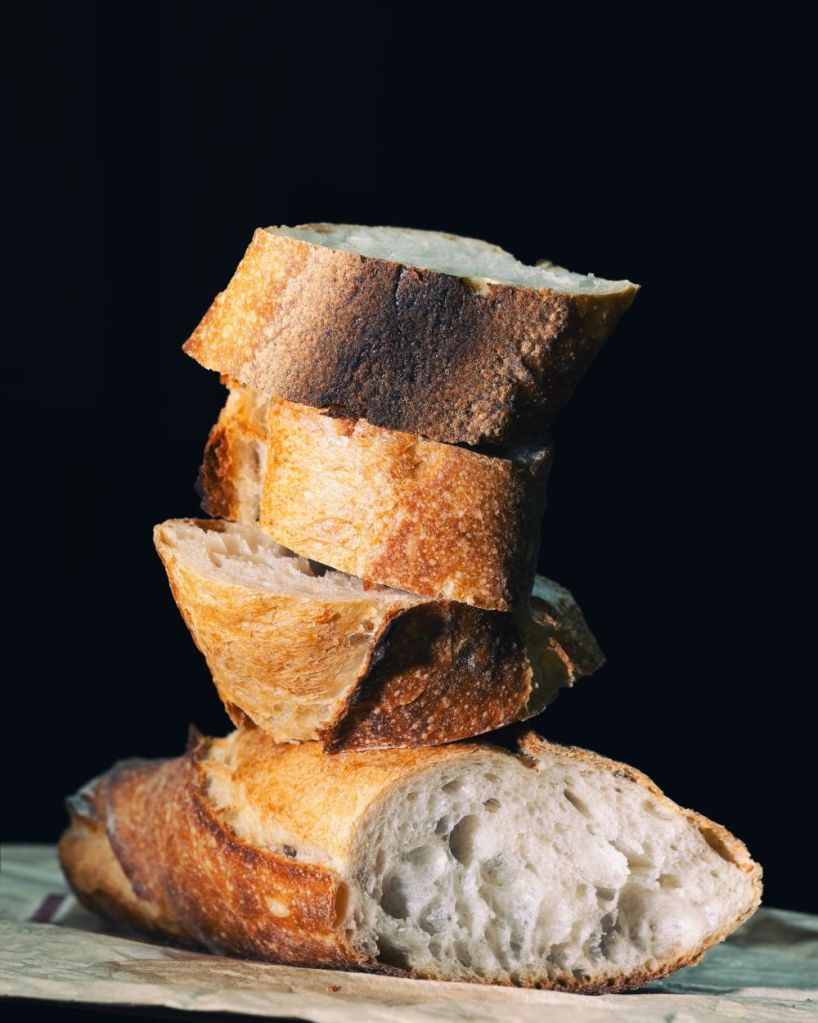
Our Daily Bread

I really liked this morning’s devotional from Spurgeon. Spurgeon wrote in the last paragraph. “in matters of grace you need a daily supply. You have no store of strength. Day by day must you seek help from above”.

The Lord’s Prayer in Matthew 6 reminds us of this. In verse 6:11 we read that we are to pray: “Give us this day, our daily bread”. The word in the Greek for ‘our daily’ means “for the coming day, for subsistence”, bringing emphasis to Spurgeon’s note that we have no store of strength.

Blessedly, the table of bread is eternal, ever flowing to sustain His people. Spurgeon notes that we will “never go hungry while the daily bread of grace is on the table of mercy.” Like the manna in the desert, sustenance will ever appear, daily.

This Morning’s Meditation

C. H. Spurgeon

And his allowance was a continual allowance given him of the king, a daily rate for every day, all the days of his life.“—2 Kings 25:30.

JEHOIACHIN was not sent away from the king’s palace with a store to last him for months, but his provision was given him as a daily pension. Herein he well pictures the happy position of all the Lord’s people. A daily portion is all that a man really wants.

We do not need tomorrow’s supplies; that day has not yet dawned, and its wants are as yet unborn. The thirst which we may suffer in the month of June does not need to be quenched in February, for we do not feel it yet; if we have enough for each day as the days arrive we shall never know want. Sufficient for the day is all that we can enjoy.

We cannot eat or drink or wear more than the day’s supply of food and raiment; the surplus gives us the care of storing it, and the anxiety of watching against a thief. One staff aids a traveller, but a bundle of staves is a heavy burden. Enough is not only as good as a feast, but is all that the veriest glutton can truly enjoy. This is all that we should expect; a craving for more than this is ungrateful. When our Father does not give us more, we should be content with his daily allowance. Jehoiachin’s case is ours, we have a sure portion, a portion given us of the king, a gracious portion, and a perpetual portion. Here is surely ground for thankfulness.

Beloved Christian reader, in matters of grace you need a daily supply. You have no store of strength. Day by day must you seek help from above. It is a very sweet assurance that a daily portion is provided for you. In the word, through the ministry, by meditation, in prayer, and waiting upon God you shall receive renewed strength. In Jesus all needful things are laid up for you. Then enjoy your continual allowance. Never go hungry while the daily bread of grace is on the table of mercy.

bread verse.jpg
EPrata photo