SYNOPSIS I lament rising social-media conflict, highlighting Beth Moore’s recent divisive comments as an example. Reflecting on Christian discernment, I emphasize that teachers’ actions must match their words and that pursuing long-term holiness, especially in speech and conduct, is essential for evaluating true faith and character.
A man who hardens his neck after much reproof will suddenly be broken beyond remedy. (Proverbs 29:1).
Gill’s Exposition explains the intriguing part about broken beyond remedy:
shall suddenly be destroyed; or “broken” (e); as a potter’s vessel is broken to pieces with an iron rod, and can never he put together again; so such persons shall be punished with everlasting destruction, which shall come upon them suddenly, when they are crying Peace to themselves notwithstanding the reproofs of God and men;
I understand that when Christians are developing and practicing discernment, it’s sometimes difficult to detect a false teacher, especially in the early days of the false teacher’s ministry or the early days of the Christian. Other people, though they suspect, find it hard to admit that their favorite teacher is false. “But they teach about Jesus!” they say. I know, it’s interesting to listen to some of the more crafty (Genesis 3:1) teachers who have such eloquence of tongue and then believe they are insincere. But remember that the antichrist is prophesied to gain the world by a smooth tongue and flattery. (Daniel 11:21). These present mini-antichrists (1 John 2:22) are almost as smooth as the prophesied Antichrist will be in the future, so it is no wonder that they are so slick in their speeches.
The main way to detect a false teacher of course is to compare what they say to the Bible (Acts 17:11).
But even then, some are so disguised as an angel of light that they never put a word wrong. Think of Demas who traveled with Paul, Simon Magus who was baptized by Philip, and of course Judas who lived WITH the disciples.
So here is another way to detect a false teacher: how they react when they are corrected or challenged. Doctrine is utmost, but behavior is important. How does the true or the false teacher respond when posed a question, challenged in their interpretation, or rebuked for their teaching?
It’s the behavior when corrected that also indicates the true vs false teacher. If the teacher is God-honoring s/he cares about the word as primary importance. How crushing it is when we say or teach something in error or contrary to proper exposition! We hasten to correct, humbling ourselves to Him and the truth of His word.
The false teacher who rebels when teaching the word will continue to rebel when corrected in the word. As the Proverb says, he will harden his neck. Stiff necked is a synonym for stubborn. Instead of being teachable and gentle, the false teacher will entrench him or herself into stubbornness and double down on their position. This is because they are full of pride, and care not for the truth of God’s word. They SAY they care, but their behavior SHOWS they do not.
The second half of the Proverb is encouraging. I know it’s all the rage to claim love and kindness to and for false teachers, but I do not. If a teacher has abused the name of Christ, twisted His words, and persistently shown that they care only for themselves, money or fame, harming His sheep in the process, the second half of the Proverb is rallying to my soul. It motivates me to leave the judgment of this scourge of fiery ants to the Lord, and to take comfort in His timing. They WILL be broken beyond remedy. Good.
When challenged over these issues the false teachers stiffen themselves, they entrench into their stubbornness. This is a God-ordained exposure. Let us not ignore these exposures seen through their behavior, but heed the wisdom in Proverbs.
It’s OK to take comfort in the knowledge of the coming permanent and irreversible destruction of these wolves. It means that the name of Jesus will eternally remain spotless with no dung thrown on Him or on His people, ever again. What a day that will be!
Our church has a healthy demographic of college kids and young marrieds. Some time ago I was watching an Instagram video story a young friend posted of a bunch of the youths in high spirits romping around the college campus at midnight, then heading to a local store for sodas, laughing and pushing and giggling.
I smiled, remembering my own hi-jinks and clean fun- road trips and loud laughter and silly fun. Ahhh, youth.
Those kind of memories are satisfying because that is how youths act, college or no. They’re boisterous, they’re lively, they’re carefree, they’re happy.
Kim Shay at The Upward Call blog published a good essay about older women not being a trope. (In TV or Movies a trope is a common overused theme or device). In many TV shows, the older women is depicted as silly, or a gossip, or a busybody. Think Hyacinth Bucket (Bou-quet) or the sanctimonious Church Lady of Saturday Night Live by Dana Carvey. Or Mrs Bridgette McCarthy on Father Brown, a church secretary, gossip, and often at odds with and acerbic toward other characters.
Shay’s essay was a look at how older women should act according to Bible verses that command reverence and sober-mindedness.
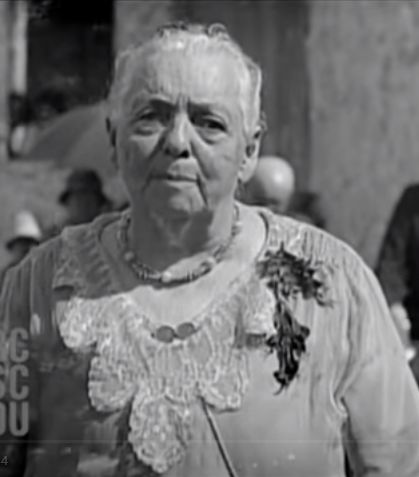
I’m an older woman now. I’m almost 64 years of age. I have completely white hair, overweight, a lumbering stiff walk, and oh my achin’ back. All the things that come with old age, including sagging skin, age spots, and general droopiness.
Not me. But sort of me.
I remember being a teen at a friends’ house listening to the latest music laying upside down, college road trips, my car stuffed with gangly youths, a young adult with my posse playing bar trivia…it was yesterday. Ladies, age creeps up on silent cat feet (with apologies to Carl Sandburg). The boisterous hi-jinks no longer suit. If I were to gadabout at midnight with pals, they’d lock me up for being crazy. Why? That’s not how older women act.
We line the wall at dances sitting in folding chairs, purses firmly atop lap. We tut-tut at the beauty and litheness of the young ones sailing by. We cook and serve the meals with a knowing nod and quiet hospitable satisfaction. We accept collect calls from grandkids at midnight when the car breaks down on the way home from hi-jinks. We rearrange the potlucks on the sagging table, they form the cleanup swat team afterwards. I say, we. I’m a we now.
I know some of these are a writing trope in themselves, but they are tropes because they are true.
Kim Shay wrote: “My husband once asked me with regard to the women who have spoken at my church’s women’s conferences: “Why is the speaker always young and beautiful instead of old and plain?”
I was noticing that, too. So many of the speakers at conferences now are younger women. Do younger women have something to say? Yes, but so do older women. And the elder females have been at it longer.
So since we have been at it longer what do we say about how to conduct ourselves? Well, whatever the Bible says we are to act.
Before I get into the nuts and bolts of biblical behavioral standards, I’ll mention that whenever I discuss behavioral standards, particularly applied to false teachers, these comments receive the most negative feedback of all the kinds of comments I make online. People hate to be reminded that the Bible endlessly outlines behavioral standards of any kind. There are general calls for certain kinds of good behavior, there are specific calls for individual demographics, and there is a reminder that we will be judged on how we behaved as well as what we believed.
In one set of verses we read about how we are to act, and the reason for it-
as servants of God we commend ourselves in every way: by great endurance, in afflictions, hardships, calamities, 5 beatings, imprisonments, riots, labors, sleepless nights, hunger; 6 by purity, knowledge, patience, kindness, the Holy Spirit, genuine love; 7 by truthful speech, (2 Corinthians 6:4-7a)
Why?
“so that no fault may be found with our ministry” (2 Corinthians 6:3b).
But what specifically of elder women? If we are married to a overseer, act in ways that aid him in keeping order in the household. (1 Timothy 3:4). If married to a deacon, the same, (1 Timothy 3:12. Additionally, deacon’s wives must be dignified, not slanderers, but sober-minded, faithful in all things. (1 Timothy 3:11). I am assuming that wives of pastors and deacons aren’t entirely youthful because the qualifications for pastors are not to be recent converts (1 Timothy 3:6) and to have built up a good reputation- which takes time. (1 Timothy 3:7).
If we are a widow, Paul in 1 Timothy 5 described real widows as: “Now she who is a widow indeed and who has been left alone, has fixed her hope on God and continues in entreaties and prayers night and day.” Which reminds me of Anna at the temple in Luke 2.
A widow could be put on the list for church aid if she had behaved in the following way-
A widow is to be put on the list only if she is not less than sixty years old, having been the wife of one man, 10having a reputation for good works; and if she has brought up children, if she has shown hospitality to strangers, if she has washed the saints’ feet, if she has assisted those in distress, and if she has devoted herself to every good work.
An elder married woman is not to be contentious, as Syntyche and Euodia were. (Philippians 4:2). Titus 2 is the famous verse that outlines how older women are to act-
Older women likewise are to be reverent in behavior, not slanderers or slaves to much wine. They are to teach what is good, and so train the young women to love their husbands and children, to be self-controlled, pure, working at home, kind, and submissive to their own husbands, that the word of God may not be reviled.
Reverent in behavior. Self-controlled. Kind. These are not hard to understand and not unreasonable to ask. When I write about behavioral standards other women rush to scream and rant, but really, what is there to rant against? They want to lose control? Be irreverent? Unkind?
Anyway, the Bible outlines behavioral standards for all ages. As I pass through the aging eras and enter the golden gate of elder womanhood, I’ll try to be mindful of how the Bible expects me to behave, so as not to discredit the ministry. Plus, in the Lord’s grace, I’ll try not to be a trope!
Further Reading
This makes a nice companion piece. Jared Wilson, that whippersnapper at age 49, not only muses on growing old, but provides some helpful tips to grow old gracefully.
Our church has a healthy demographic of college kids. The other day I was watching an Instagram video story a young friend posted of a bunch of the youths in high spirits romping around the college campus at midnight, then heading to CVS for sodas, laughing and pushing and giggling.
I smiled, remembering my own hi-jinks and clean fun- road trips and loud laughter and silly fun. Ahhh, youth.
Those kind of memories are satisfying because that is how youths act, college or no. They’re boisterous, they’re lively, they’re carefree, they’re happy.
Kim Shay at The Upward Call blog published a good essay a few days ago about older women not being a trope. (In TV or Movies a trope is a common overused theme or device). In many TV shows, the older women is depicted as silly, or a gossip, or a busybody. Think Hyacinth Bucket (Bou-quet) or the sanctimonious Church Lady of Saturday Night Live by Dana Carvey. Or Mrs Bridgette McCarthy on Father Brown, a church secretary, gossip, and often at odds with and acerbic toward other characters.
It was a look at how older women should act according to Bible verses that command reverence and sober-mindedness.
I’m an older woman now I’m almost 58 years of age. I have completely white hair, overweight, a lumbering stiff walk, and oh my achin’ back. All the things that come with old age, including sagging skin, age spots, and general droopiness.
Not me. Yet.
I remember being a teen at a friends’ house listening to the latest music laying upside down, college road trips, my car stuffed with gangly youths, a young adult with my posse playing bar trivia…it was yesterday. Ladies, age creeps up on silent cat feet (with apologies to Carl Sandburg). The boisterous hi-jinks no longer suit. If I were to gadabout at CVS at midnight with pals, they’d lock me up for being crazy. Why? That’s not how older women act.
They line the wall at dances sitting in folding chairs, purses firmly atop lap. They tut-tut at the beauty and litheness of the young ones sailing by. They cook and serve the meals with a knowing nod and quiet hospitable satisfaction. They accept collect calls from grandkids at midnight when the car breaks down on the way home from hi-jinks. They rearrange the potlucks on the sagging table, they form the cleanup swat team afterwards. I should say instead, we. I’m a we now.
I know some of these are a writing trope in themselves, but they are tropes because they are true.
Kim wrote: “My husband once asked me with regard to the women who have spoken at my church’s women’s conferences: “Why is the speaker always young and beautiful instead of old and plain?”
I was noticing that, too. So many of the speakers at conferences now are younger women (in addition to all ages of men). Do younger women have something to say? Yes, but so do older women. And the elder females have been at it longer.
So since we have been at it longer what do we say about how to conduct ourselves? Well, whatever the Bible says about our conduct. Before I get into the nuts and bolts of biblical behavioral standards, I’ll mention that whenever I discuss behavioral standards, particularly applied to false teachers, these comments receive the most negative feedback of all the kinds of comments I make online. People hate to be reminded that the Bible endlessly outlines behavioral standards of any kind. There are general calls for certain kinds of good behavior, there are specific calls for individual demographics, and there is a reminder that we will be judged on how we behaved as well as what we believed.
In one set of verses we read about how we are to act, and the reason for it-
as servants of God we commend ourselves in every way: by great endurance, in afflictions, hardships, calamities, 5 beatings, imprisonments, riots, labors, sleepless nights, hunger; 6 by purity, knowledge, patience, kindness, the Holy Spirit, genuine love; 7 by truthful speech, (2 Corinthians 6:4-7a)
Why? “so that no fault may be found with our ministry” (2 Corinthians 6:3b).
But what specifically of elder women? If we are married to a overseer, act in ways that aid him in keeping order in the household. (1 Timothy 3:4). If married to a deacon, the same, (1 Timothy 3:12. Additionally, deacon’s wives must be dignified, not slanderers, but sober-minded, faithful in all things. (1 Timothy 3:11). I am assuming that wives of pastors and deacons aren’t entirely youthful because the qualifications for pastors are not to be recent converts (1 Timothy 3:6) and to have built up a good reputation- which takes time. (1 Timothy 3:7).
If we are a widow, Paul in 1 Timothy 5 described real widows as: “Now she who is a widow indeed and who has been left alone, has fixed her hope on God and continues in entreaties and prayers night and day.” Which reminds me of Anna at the temple in Luke 2.
A widow could be put on the list for church aid if she had behaved in the following way-
A widow is to be put on the list only if she is not less than sixty years old, having been the wife of one man, 10having a reputation for good works; and if she has brought up children, if she has shown hospitality to strangers, if she has washed the saints’ feet, if she has assisted those in distress, and if she has devoted herself to every good work.
An elder married woman is not to be contentious, as Syntyche and Euodia were. (Philippians 4:2). Titus 2 is the famous verse that outlines how older women are to act-
Older women likewise are to be reverent in behavior, not slanderers or slaves to much wine. They are to teach what is good, and so train the young women to love their husbands and children, to be self-controlled, pure, working at home, kind, and submissive to their own husbands, that the word of God may not be reviled.
Reverent in behavior. Self-controlled. Kind. These are not hard to understand and not unreasonable to ask. When I write about behavioral standards other women rush to scream and rant, but really, what is there to rant against? They want to lose control? Be irreverent? Unkind?
Anyway, the Bible outlines behavioral standards for all ages. As I pass through the aging eras and enter the golden gate of elder womenhood, I’ll try to be mindful of how the Bible expects me to behave, so as not to discredit the ministry. Plus, I’ll try not to be a trope!
Further Reading
This makes a nice companion piece. Jared Wilson, that whippersnapper at age 42, not only muses on growing old, but provides some helpful tips to grow old gracefully.




 the-end-time.org