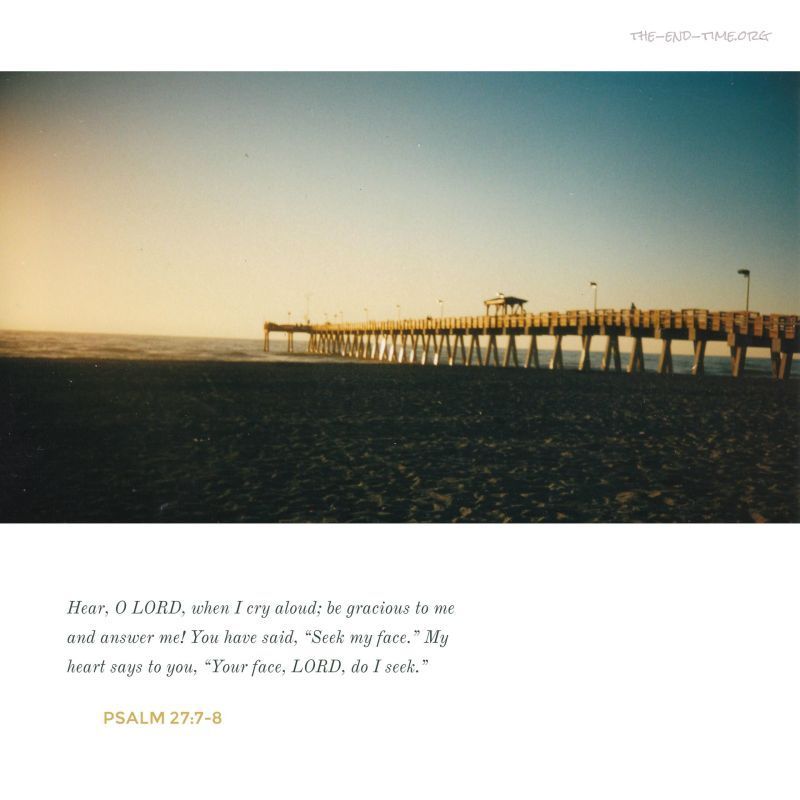
I reminisce about vacations from Maine to Florida, exploring beaches from Labrador to the Bahamas. Each beach offers unique treasures—shells, sea glass, coral, and rocks—revealing the wonders of God’s creation. Blending natural history, personal reflection, and Scripture, my essay celebrates the beauty and mystery of the sea.
I like to get to work about a half hour early. There are many reasons for this. A practical reason is that I have the first duty at opening bell, and then I go right into teaching small groups. I need a few minutes to prepare the room and my materials.
I also enjoy seeing the school ‘wake up’. There are only a few people there when I arrive. Someone is in the front office manning the phones, but I go in by the back. I greet the lone custodian who comes in half an hour before I do, and we chat a moment. She is a Christian lady and we usually take time to pause and praise the Savior. The lunch ladies scuttling around in the kitchen, banging pots and opening oven doors, making breakfast ready for the kids who enter beginning at 7:10am.
The school’s lights are on in the cafeteria and on the other side of the building in the office but in between it’s dark, quiet, and calm. As more staff trickle in the school wakes up. It almost feels like an organism opening one eye, then the other, then stretching, then rising, then bounding over the meadows.
I enjoy watching the day wake up too. I admire the School District’s handling of money and how they maintain the campuses. Our school has a lower elementary with 3 playgrounds, an upper elementary with some raised gardens, the Board Office next to that, and the High school next to that, with numerous fields and outbuildings. Behind it all is the PreK school and the transportation garage with many buses starting up. All these are all well maintained.
Ground fog in the early dawn. EPrata photo.
So when I arrive I pause to see the floodlights streaming over the fields, the distant whistle at the high school as the football team practices, the transportation garage idling buses, the cut grass and rolling fields around the track.
But then I look up. It’s my favorite part. I see Orion constellation beaming down his starlight. He is embedded in a velvet blanket of purple as the sky begins to slightly lighten. It’s the gloaming time when as Yeats says, “The blue and the dim and the dark cloths Of night and light and the half-light”. The moon is a crescent fingernail and just off the tip of the pointy edge, is bright Venus.
As I arrive each day I notice that Orion is moving to the right, to the east and rising higher. The planets in their courses revolve on the plane of the ecliptic. I marvel that God placed them there, hung them all on nothing. What a God we serve.
Pause in your day and look up. Look around. Find something to rejoice in. Discover what can be praised to the Lord. A towering evergreen you pass each day? A puffy cloud that looks like a mountain of sheep? The blue sky dazzling bright? A family of foxes scampering over the field? Dew glistening on the early morning grass? Hoar-frost on the fence?
Frost at dawn on the fields with one escaping umbrella. EPrata photo
I saw on Twitter a while ago the question posed: “Why don’t we make things like this any more?”
The tweet author presented photos of ornate and beautiful buildings: cathedrals, skyscrapers like Empire State and Chrysler building, Taj Mahal and the like.
Why don’t we build beautiful buildings any more? I wonder that too. I searched and found this video which I think explains it in a reasonable way. Of course, his is not the only opinion, but he did make sense. It is a 10-minute video with nice graphics.
Culture Faith & Beauty @cultrfaith: A beautiful building from an era when we built beautiful places.
But it’s not just buildings. I mean, buildings are important. They are our landscape; the silent, insentient forms populating our visible spaces. I personally believe we need beauty in our lives and that includes buildings plus everything else we see. Anything we see: art, fashion, interior décor, exterior architecture. Beauty. We need it.
RC Sproul thought the same. He was big on “Goodness, Truth, and Beauty.” A while ago when I searched for a teaching on beauty, his was just about the only one I found. It was a course called “Recovering the Beauty of the Arts.”
In that course, Sproul said,
“In the history of the Christian church, goodness, truth, and beauty have remained the three most important concepts. Unfortunately, we have historically overemphasized one at the expense of the others. Some stress ethics, others stress doctrine, and still others stress beauty. But rightly viewed, all three are to be emphasized, since they are all interdependent and interrelated.”
We see that played out in Psalm 27 when David noted the origin of beauty:
One thing I have asked from Yahweh, that I shall seek: That I may dwell in the house of Yahweh all the days of my life, To behold the beauty of Yahweh And to inquire in His temple. Psalm 27:4
In 1 Chronicles 16:8–36, David the king mentions God’s glory often—a word that refers to His majesty, worth, and splendor. He then calls on God’s people to worship the Lord in the beauty of His holiness. We are to worship the Beautiful, said Sproul.
Ascribe to Yahweh, O sons of the mighty, Ascribe to Yahweh glory and strength. Ascribe to Yahweh the glory of His name; Worship Yahweh in the splendor of holiness. Psalm 29:1-2
Ponder the word “splendor”. It means grandeur, majestic. We don’t really use the word splendor in common conversation much any more. Growing up in the 1960s, there was a song called Love is a Many Splendored Thing. Aside from the Bible, that’s the only time I heard the word in secular life.
Sproul said further of Christians and Art: “While the Christian church has produced some of the finest artists in history, the modern church has tended to marginalize artists by implying that their vocation is somehow more worldly.“
True.
Art can be ugly, you know. Yes, I know that art is subjective, but you know ugly when you see it. Witness the reaction of the populace of my city when the City installed public art that was pretty much universally denounced as ugly. One local Redditor posted, “Can we all commiserate on how terrible this is?” and hundreds of comments ensued. Then, uh-oh, this news story about this same installation: “Controversial downtown artwork vandalized”. Its ugliness prompted someone to take negative action. We need beauty. Ugliness offends us.
Or how about the MLK statue recently installed in Boston’s Common, Slammed as “The Ugliest Thing Ever.” People tend to take beauty for granted…until ugliness comes in and by contrast, and we mourn the ugly in our need for the beautiful.
The tweet that got me started on this personal musing on beauty and the increasing lack of it in the world, is the tweet author’s opinion that the beauty we mourn the loss of is not exclusive to buildings and art forms like songs and 2-dimensional art, but in people, too.
He had noted that it seems that people dislike going outside into the world now because of lack of aesthetics in people. Not their physical looks, but faces, dress, and attitude. There seem to be so many ugly dressed people, ugly character, and ugly speech.
I was surprised when I went to Italy for the first time in 1990. Maybe things are different now, but when I traveled there, I saw that everyone out and about was dressed beautifully. From head to toe, men and women were polished. They took care and pride in their appearance. Not surprising, Italians through the ages have always loved beauty and they have consistently crafted gorgeous buildings, appealing art, and high fashion. They took beauty seriously.
But I believe we are becoming increasingly inured to the ugliness around us, accepting it and not even noticing its impact on our soul.
Remember, satan always tries to beautify sin. As sin increases (as the Lord lifts His hand of restraint) people’s sin also rises closer to the surface. In the past, moral pressure from society and also a Christian veneer everywhere kept people’s sin more hidden. Now, it is clearly everywhere, including on people’s faces. The rising sin in individuals and in society as a whole is seen on faces.
I am always reminded of Cain’s face when God accepted Abel’s offering and rejected Cain’s,
And the LORD had regard for Abel and his offering; but for Cain and his offering He had no regard. So Cain became very angry and his face was gloomy. Then the LORD said to Cain, “Why are you angry? And why is your face gloomy? If you do well, will your face not be cheerful? (Genesis 4:4a-7b NASB).
I like the KJV of verse 6: “And the LORD said unto Cain, Why art thou wroth? and why is thy countenance fallen?”
Think about that connection: as sin rises, the face falls. Cain was the Bible’s first angry, depressed man. And it showed on his face.
COUNTENANCE One’s face as an indication of mood, emotion, or character (Gen. 4:5–6; Prov. 15:13; Eccles. 7:3; Mark 10:22). Holman Illustrated Bible Dictionary.
How about today’s world? With sin rising, don’t people look more upset/angry/depressed/cranky, etc? I believe they do.
Matthew Henry says of the Genesis 4 verse and Cain’s face:
God puts Cain himself upon enquiring into the cause of his discontent, and considering whether it were indeed a just cause: Why is thy countenance fallen? Observe, 1. That God takes notice of all our sinful passions and discontents. There is not an angry look, an envious look, nor a fretful look, that escapes his observing eye. 2. That most of our sinful heats and disquietudes would soon vanish before a strict and impartial enquiry into the cause of them. “Why am I wroth? Is there a real cause, a just cause, a proportionable cause for it? Why am I so soon angry? Why so very angry, and so implacable?”
Henry, M. (1994). Matthew Henry’s commentary on the whole Bible: complete and unabridged in one volume (p. 17). Hendrickson.
Mostly everyone is angry now. It shows.
Absent the Holy Spirit inside us, people will continue to look (and speak and dress) in increasingly ugly ways. One good thing about this, the only thing I think, is that as their faces fall further and ugliness rises, the ONE and ONLY place where beauty reigns is in Jesus. His light is splendorous.
Words are interesting. I like the word ‘gloaming’. It’s a more romantic and atmospheric word than just ‘dusk’ or even ‘twilight’.
Merriam Webster says of gloaming: “Originally used in Scottish dialects of English, the word traces back to the Old English glōm, meaning “twilight,” which shares an ancestor with the Old English glōwan, meaning “to glow.” In the early 1800s, English speakers looked to Scotland again and borrowed the now-archaic verb gloam, meaning “to become dusk” or “to grow dark.” Source Merriam Webster.
A less academic and more poetic treatment of the word, which is a weather word after all, comes from weather.com:
Gloaming stems from the Old English glōmung, which itself is a derivative of glōm, which means “twilight or darkness.” Dictionary.com notes that gloaming comes from the same root as glōwan, a verb that means “to glow like a coal or fire.” So, while twilight literally means “second light” or “half light,” and emphasizes the light itself, when you use gloaming, it stresses the way the landscape is glowing, the way it looks strangely alive, rather than the light itself.
EPrata photo of clouds at gloaming time
I went outside at sunset because I heard ducks. Aa bunch of them were waddling toward the pond across the street. What I saw when I looked up to the sky was amazing. A storm front was moving through with boiling clouds scudding from west to east. But they looked like mountains. The scene was of mountains marching to the sea, a stately, purposeful a march with the light behind them changing by the second. The gloaming light tinged the edges of the clouds with gold and silver. They glowed. I was mesmerized.
The light changed from orange to pink to red to yellow moment by moment. The mountainous clouds slid by as if on skates, gliding in a regal progression too majestic to notice mere tiny humans. The photos don’t nearly capture it.
Did you ever wonder why God chose to reveal Himself in words? He could have done so in pictures or in other ways our limited human brains can’t even fathom. But He chose words.
He created worlds, the stars, and us. He set the sun in its course to rise and set, and have it paint the sky while it was rising and setting. He chose color in the world.
My own words aren’t poetic enough to reach the heights of elegance that the clouds and sun and sky reached as I viewed their magnificent display. But God’s mind is such that He chose to give us words. One of them is gloaming. And He chose to give us beauty in the world. God gave me a demonstration of beauty in the gloaming I would not soon forget.
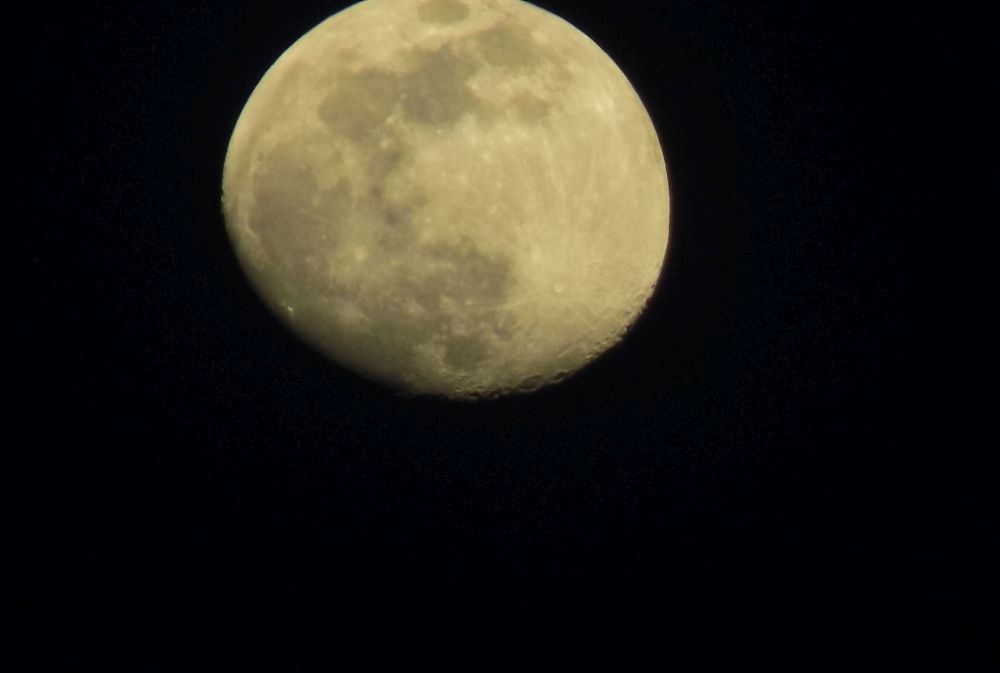
When I consider Your heavens, the work of Your fingers, The moon and the stars, which You have set in place; 4What is man that You think of him, And a son of man that You are concerned about him? (Psalm 8:3-4)
1685, John Bunyan (1628 – 1688), the English writer and preacher who wrote ‘Pilgrim’s Progress’. Original Artwork: Drawn by Kenneth Maclean from a rare print by Francis Hall, after the painting by T Sadler. (Photo by Hulton Archive/Getty Images)
Russell Moore is Editor in Chief of Christianity Today and had been the President of the ERLC. He holds a Ph.D. in systematic theology from the Southern Baptist Theological Seminary. Karen Swallow Prior had until very recently been the professor of Christianity & Culture at Southeastern Baptist Theological Seminary. She is an author, speaker, and podcaster.
It is sad. Prior could be so interesting & the topic of imagination, literature, and how God uses us to create, would be wonderful to delve into, IF she wasn’t such a liberal and Moore so far from evangelical. There was one thing Prior said that I agree with: for too long we have neglected the aesthetic in literature. As modernists, I also think we have neglected the aesthetic in music, art, and architecture, too.
I’ve often studied this topic- imagination, art, and the Christian. I’ve blogged on “Writing, and writing for the Lord“. I enjoy Sheehan Quirke’s “Cultural Tutor” twitter threads and his newsletter “Areopagus”. For example, here, he talks about minimizing design too much.
I’m not necessarily talking about beauty here. I’m just talking about things having some discernible qualities & characteristics. The bollard on the left is hardly “beautiful,” but it *does* have some character. The one on the right… it exists. That’s all. S.Quirke
And when Sheehan Quirke does talk about beauty, wow. Beauty in music, art, architecture, literature. It is God-honoring to attribute creativity and means to the Lord.
I took and completed a wonderful course at Ligonier called “Recovering the Beauty of the Arts”. RC Sproul taught it. The premise is that “the first step in recovering the lost beauty of the arts — God’s glory — is to begin to think critically and clearly about the Christian’s relationship to art and aesthetics. … and to motivate you to support God-honoring art within and without the Church, so that we can heed more fully the apostle’s charge by meditating on “whatever is true, . . . honorable, . . . just, . . . pure, . . . lovely, [and] commendable” (Phil. 4:8).”
Beauty. In Ezra 3:12-13, the young men wept with joy when the temple foundation was laid, but the old men who had seen the glory and splendor and beauty of the previous one, Solomon’s temple, they wept and mourned. The second Temple would not be as beautiful or grand. Not even close.
Beauty is important. It moves us, it brings tears to one’s eyes. So does the lack of it. It is sad to see a graceful building decay…a glorious piece of art slashed…a masterpiece of literature rejected. And that brings us to Moore and Prior.
Youtube video with transcript here Podcast website, episode here
There are three points to discuss here. But first, let’s see what Moore and Prior said. Excerpt:
Moore: I don’t like John Bunyan. I like the person of John Bunyan. I like the life of John Bunyan, but Pilgrim’s Progress leaves me cold and Grace Abounding to the Chief of Sinners even more so. And I think because I’ve seen so many people who started reading some Puritan literature from that time period who became so morose and so introspective and believing there’s no way they could really be a Christian.
And all of the tests that they were giving to themselves, then they would test whether or not they had the objectivity to go through the tests, you know, all of that. That Puritan era, I think, brought some things that just really creeped me out.
But you talk about in the book just how significant Pilgrim’s Progress really was in terms of shaping everything around us, which I don’t think I’d ever thought about before. I mean, I knew it was at one point the most popular book other than the Bible, but I didn’t really think about how the story actually changed the way we see things.
Prior: I’m going to be completely honest here. I mean, the Pilgrim’s Progress is kind of a drag to read. I mean, even teaching it, my students love to hate it, and I love to teach it to try to hate it with them and help them see it. And I’m so glad, actually, that I came to it as a student of literature before more than a Christian. I mean, I was a Christian, but I approached it as literature.
Point #1: Rejection of some books is more telling than just having an opinion about them
First, it is correct to say that people have opinions of books and authors and they are just opinions. Moore expressed his high opinion of southern writer Flannery O’Connor. I’m not a huge fan of O’Connor, I enjoy Zora Neale Hurston more. OK fine.
However Pilgrim’s Progress is not just any book. It is obviously sparked by God in a man whose imagination had been influenced by His word. It is a book designed to evoke vivid mental pictures and emotional responses toward God. No, it’s not the word OF God, but is closely parallels it. For Moore to say it ‘leaves him cold’ raises questions in people who understand that a book that has been in print for 346 years, and until recently was the 2nd most printed book after the Bible.
Point #2: Hating on the writing from the entire Puritan era.
Even if we put that aside, my second of three points here today is this: Moore dismissed the entire era of Puritan writing. THE WHOLE THING. “It really creeped me out,” he said.
Let’s look at the Puritan era for a moment. The era’s beginning and ending, though nebulous, is generally considered to have lasted from 1533 to 1740. Two hundred years. Why would a professor and an editor such as Moore dismiss the entire two hundred years of writing from evangelical Reformers? They had impact on theology AND history. For example, the article at the First Amendment Encyclopedia at Middle Tennessee State says,
“The bravery and initiative of the Puritans served as a source of inspiration for colonists during the Revolutionary War. Later, the framers of the Constitution would look to the Puritan era in history for guidance when crafting the First Amendment rights for freedom of religion.”
The Founding Fathers considered the Puritan writings to be good enough to include their precepts into the Constitution. In fact, the first civil agreement in the US was the Mayflower Compact, and so became the first document to establish self-government in the New World.
“Mayflower Compact laid the foundations for two other revolutionary documents: the Declaration of Independence, which stated that governments derive their powers “from the consent of the governed,” and the Constitution” writes The History Channel.
But the Puritan era’s writers really creep Moore out.
Point #3: Liberals love their emotions and decide things based on them. Moore is no exception.
The third thing is that he not only dismissed an obvious and enduring work of God in rejecting Pilgrim’s Progress, and not only rejected important writing from a 200-year-period of our history, but he did so on the basis of emotions.
Moore left, Prior right.
And that is the liberal to a T. How they FEEL about a thing becomes their truth about the thing. “It left me cold”. “It creeped me out”. Moore observed others becoming “morose”, ‘doubtful’ and “introspective.” These are emotions.
Feelings are everything to a liberal. Truth is what they feel, not what they know. Feelings are their guide, not what is objectively true.
Prior later complained amid the outcry, “So you can listen to a very clipped clip that’s circulating, or you can read the books. (Yeah, we know what the click-baiters will choose.)”
She is being disingenuous. It’s a clip but it’s the entire part about Bunyan. I listened to the whole podcast and the clip of their discussion and rejection of Bunyan’s works is presented in its entirety. It didn’t range over long hours with only a minimal clip cherry picked for spitefulness, as Prior seems to allude. It extends from minute 26:00 to 27:28. A minute and a half. That’s all the talk of Bunyan there was. So, it IS a clipped clip, Mrs Prior. And since your talk was public and you were free to say all you wanted to say about Bunyan and the writing and aesthetic from “the Puritan era”, we are likewise free to comment publicly on your and Moore’s comments.
If you are interested in aesthetics and God, as good old RC used to say, what is good, what is beautiful, and what is true, then here are some for you-
RESOURCES
Here are some more solid resources for you on the topic of imagination, aesthetic, and God:
Book: The Liberated Imagination: Thinking Christianly About the Arts, by Leland Ryken.
Pamphlet: Art for God’s Sake: A Call to Recover the Arts, Leland Ryken
Novelette: Art & The Bible, by Francis Schaeffer
Art Book: Visual Exegesis Vol I, by Christopher Powers of the ministry Full of Eyes, a ministry that “seeking to help people see, savor, and sing the beauty of God in Jesus Christ.”
Course: Recovering the Beauty of the Arts: Ligonier.org, RC SProul
When Adam sinned, the Lord our God, creator of all, cursed the ground.
“Because you have listened to the voice of your wife and have eaten of the tree of which I commanded you, ‘You shall not eat of it,’ cursed is the ground because of you; (Genesis 3:17)
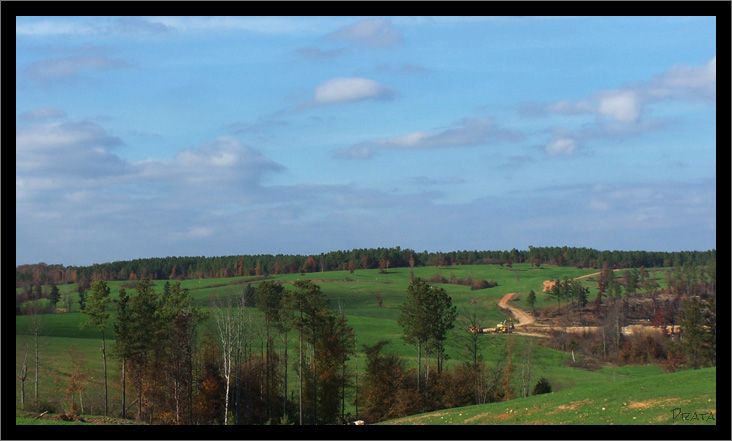
I live in a rural area. Not every place on earth looks like this, I know. But I’m astounded that ANY place looks like this, after the curse.
EPrata photo
EPrata photo
EPrata photo
EPrata photo
If God’s earth is THIS beautiful after the ground has been cursed, then imagine the beauty of heaven! Look toward the reward- being in God’s family, perfected in glory, and seeing the face of Jesus, amid inexpressible sounds and sights of beauty of such scope that we cannot even imagine! (2 Corinthians 12:4)
But, as it is written, “What no eye has seen, nor ear heard, nor the heart of man imagined, what God has prepared for those who love him”— (1 Corinthians 2:9)
Romans 1:20: “For since the creation of the world God’s invisible qualities; his eternal power and divine nature; have been clearly seen, being understood from what has been made, so that men are without excuse.”
Beauty in this world is an echo of Eden. Our very souls in their innermost parts know God is in the center of the beautiful. No? Then why do we sigh when the sun dips below a beautiful sunset? Why do we ache for the sweep of the tide and the undulations of the ocean? Why do we thirst for moonrise, settle into the sway of the pine tree? God is beauty. We long for the open spaces of our soul to be filled with His empyrean substance as expressed through nature.
Is it true that a person can come to know about God through nature? Yes. The scriptures say so, and that is the ultimate authority. It is how I came to know God. It is how I was so perplexed about how the world came into being was confused and why we humans existed upon it.
As I traveled, each time I saw an amazing natural event I’d think: “this could not have all come about by chance.” I’d think, “I do believe God is behind all this. It is too beautiful otherwise. Too complex.”
Satan, created the most beautiful of all angels, perfect in beauty (Ezekiel 28:12, 17), likely could not get humans to dispense entirely with the planet’s beauty, so the environmental movement is about being utilitarian. We don’t say ‘save the environment because it is beautiful!’ we say ‘save the environment because we can get stuff out of it!’ The environment is just someplace we extract energy rather than experience beauty and perhaps, contemplate God. God shines in His glory in the heavens and in His whole creation and as far as satan is concerned, the less we see it as beautiful the less chance we will see of God in it.
Second, our lives are increasingly crowded. We are over-scheduled. Our mental life is increasingly devoid of meditation time, imagination, contemplation. Every moment is utilitarian. I am grateful that I had the opportunity to reflect on the wonders in nature I was seeing during my travels. If I was too busy commuting and working and scheduling every moment I never would have pondered the larger things. And never have eventually wondered about God in them. Satan diminishes the glory of God’s creation to a utilitarian product and crowds our lives with less time to contemplate it.
It is one of satan’s methods to combat Romans 1:20, squeeze out the beauty in the world. 2 Timothy 3:3 tells us that in the end times people will be brutal;… brutality isn’t beautiful, is it?
Beauty draws you. Combat satan. Consider beauty. God is there. Praise the Creator for His wondrous works!
When we repent and come into reconciliation with Jesus, He sends the Holy Spirit into us and the Spirit begins the work of regenerating sanctification. Because we are born dead, spiritually empty and carnally minded, when the Spirit comes, He enlivens us and begins the work of shaping us like clay into the Lord’s likeness. Here are but two verses that remind us that He grows us sovereignly and perfectly:
“One of those listening was a woman named Lydia, a dealer in purple cloth from the city of Thyatira, who was a worshiper of God. The Lord opened her heart to respond to Paul’s message.” (Acts 16:14)
“For to be carnally minded is death, but to be spiritually minded is life and peace.” (Romans 8:6)
The change is not instant. We go from one who is dead in the flesh to one who is bearing all the good fruit is that the Spirit nurtures in us (Galatians 5:22-26). Even the Apostle Paul battled flesh (Romans 7:15). But through constant submission, prayer, study of the word, and good works-bearing fruit, the Spirit leads us into good things, which will be completed on the day we are glorified in body at the rapture or upon our death. (Galatians 6:9; 1 Corinthians 15:51-52; 1 Thessalonians 4:13-18).
But sometimes it is hard to detect if we can see this change in ourselves. In growth by degrees you don’t see it at first. On our first day of school when I see the little kindergarteners I’d worked with last year, I notice that they have sprung up like weeds! I notice it because I had not seen them for 8 weeks. But do I notice growth or change in them day in and day out during the school year? Not so much.
And that’s outward, physical growth. It is even harder to detect fruit-bearing, spiritual growth in myself.
The Bible says for us to “Set your mind on the things above, not on the things that are on earth.” (Colossians 3:2). So I do. I ponder heaven, and the Spirit and Jesus and the things He has told us in the Bible.
One day I was musing along in my mind and thought of the statue of the David I’d seen in Italy. It was a beautiful piece of work, so lifelike carved out of marble! ‘It will be gone someday,’ I thought, ‘As will all man-made art.’ I shook my head. But then another thought popped into my mind. “Hey! I can go over and see the REAL David!” My mind was no longer on earthly things but realized that a greater treasure was the resurrected, glorified and perfected David that the Lord had personally set as King of Israel! I laughed out loud. The real David, how about that! I began to get a glimmer of just how beautiful the Lord’s work is in us and that there will be many more things that will be stunningly beautiful that my brain can’t even conceive of but was just getting a tiny glimpse of. Slowly and surely the Holy Spirit does His work in us, praise God.
As we grow, we let go of earthly things and trust the fact that no matter how lovely the man-made things of earth are; like soaring bridges, stately buildings, beautiful art, the LORD is preparing a place for us that will be astoundingly beautiful, the foremost beauty of which are the glorified and redeemed people populating the place through the redemptive blood of Jesus Christ. And more than that, Christ Himself is the most beautiful of all!
RC Sproul used to talk of beauty from the Bible and especially how beautiful God is. He said,
Other texts also talk about God’s beauty. “One thing have I asked of the Lord, that will I seek after: that I may dwell in the house of the Lord all the days of my life, to gaze upon the beauty of the Lord and to inquire in his temple” (Ps. 27:4). In Psalm 29, David calls upon us to worship the Lord in the beauty of holiness. In both places, the Lord (or significant aspects of His character) are called “beautiful.”
We are being grown in HIS beauty!
Do you have a moment when you came across a growth marker in yourself when you realized that your response to a thought or a situation was a direct result of the sanctifying work of the Holy Spirit? Let’s celebrate the Spirit’s work!!
In the beginning…what was the first thing recorded that God ‘saw’?
Light.
In the beginning God created the heavens and the earth. 2 Now the earth was formless and empty, darkness was over the surface of the deep, and the Spirit of God was hovering over the waters. And God said, “Let there be light,” and there was light.(Genesis 1:1-3).
What was the first thing recorded that God said?
Light.
In my Spurgeon morning devotional, Spurgeon wrote that “Light is the cause of beauty.” Isn’t it funny when a seemingly simple phrase sends you off on a direction of deep pondering.
Light and beauty are companions. Beauty might exist, but it cannot be seen and appreciated until there is light.
God didn’t have to make the world beautiful, but He did. But if it was dark, we would never know.
In photography, there is the Golden Hour. It’s when the sun has slid down the sky to an angle where its rays that touch all things turn them gold. It happens the hour after sunrise and the hour before sunset. The light is special then, bathing the world in a gentle blanket of golden light.
During the Renaissance the artists discovered ways to play with light, shadow, and dark. It’s called chiaroscuro (clear-dark).
Chiaroscuro in art, is the use of strong contrasts between light and dark, usually bold contrasts affecting a whole composition. The underlying principle is that solidity of form is best achieved by the light falling against it. Artists known for developing the technique include Leonardo da Vinci, Caravaggio and Rembrandt, Vermeer, and Goya. It is a mainstay of black and white and low-key photography. (Wikipedia)
The Renaissance painter Caravaggio is known for his mastery of the play of dark against light. Here is his Annunciation (1608):
We all know we can’t really have beauty if there is no light, but I had not thought about how light is the cause of beauty, as Spurgeon wrote.
The root of all this is of course Jesus. He IS the Light. (John 8:12). We cannot have anything, including beauty, unless it was made by Him, and for Him, and through Him. (1 Corinthians 8:6; Colossians 1:16).
If we say “Light is the cause of beauty” then we might as well say “Jesus is the cause of beauty”, then we might as well say “Jesus IS beauty”. Since He is the root of all things, the cause of all things, and the sustainer of all things, He is light and beauty itself.
His Light will soon, on that blessed day, be the only Light.
And there will no longer be any night; and they will not have need of the light of a lamp nor the light of the sun, because the Lord God will illumine them; and they will reign forever and ever. (Revelation 22:5).
Imagine a world where it’s is always the Golden Hour, everything is always beautiful, and we can always gaze upon the root and cause of it all: Jesus.
He has made everything beautiful in its time. He has also set eternity in the human heart; yet no one can fathom what God has done from beginning to end. (Ecclesiastes 3:11
Wow.
‘He has made everything beautiful in its time’. Babies, like babies. If you ever gazed on a sleeping baby you have seen beauty in its time. ‘He has set eternity in our hearts’, and if you are saved by grace and faith in Jesus, then you will experience eternity with Him, in joy. If you have not accepted Jesus as your savior then respond to that eternity in your heart, you know you’re yearning, asking, seeking.
Here where I live spring is in full swing. I love the orderly change from brownish grass and leafless trees to the sudden burst of energy, color, and beauty all around. Fruit trees blossom into color, bushes, wildflowers, all showing the glory that God gave them. Birds return and sing, swoop, build, nest, and feed their babies.
God controls all of it.
‘No one can fathom what God has done from beginning to end’. No, I can’t, and that is the beauty of it, the eternity of it. Can we fathom a God who sends His Son to be crushed for our iniquities? Can we fathom the painful anguish of a Son separated from His Father? Can we fathom the love, boundless love of a God who became Man and hung on a cross for us?
A mysterious, omnipotent God who is unfathomable yet places Himself in our hearts and makes our souls beautiful. I am glad I know Him.





















 the-end-time.org