Posted in chantry, discernment, megapastor, prophecy

What are the signs of a believer?

By Elizabeth Prata

If people would simply stop accepting at face value the proclamations of celebrity pastors and lady ‘Bible’ teachers, that they are Christians, the faith would be stronger.

When a megapastor, such as the types like Mr Furtick, Mr Driscoll, or Mr Stanley, or a lady ‘Bible’ teacher like Beth Moore or Jennie Allen or Joyce Meyer teach something that isn’t in the Bible, or otherwise make an outrageous statement, the thinking goes something like this:

“What?! How could Pastor So-and-So say that? He says s/he’s a Christian, so how can s/he not know that isn’t the truth?! Since s/he says they are a Christian, we have to find out what s/he really meant. It must be a mistake, or s/he said it because s/he must be temporarily under the influence of NyQuil. Of course s/he is a Christian (because Pastor So-and-So says he is) and Christians would know better than to teach that.”

Complex rhetorical pretzel-logic ensues.

You know, most people who say they’re saved, are not saved. Am I pessimistic? Am I “judging the heart”? Am I “judging their motives”? No. Jesus said that many go on the broad way to destruction and few find the way to salvation. (Matthew 7:14). Jesus followed that statement immediately in the next verse, saying

Watch out for false prophets. They come to you in sheep’s clothing, but inwardly they are ferocious wolves. (Matthew 7:15). Further on we read the devastating verses in Matthew 7:21-23 where many are unveiled to not have been a Christian all along. Jesus says ‘Depart from me, yu worker of iniquity, I never knew you.’

In the New Testament ‘false prophets’ are pastors, a word we’re more familiar with today. Or they are teachers.

If someone in real life says to me that they are saved, I don’t dismiss their statement, of course. But I do not accept it at face value, either. I listen to testimony, I watch for fruit, I reserve comment or opinion on their self-proclamation until I see one way or another which way their wind blows. That takes time.

But if someone is a pastor or teacher at the highest levels with a following or influence, and thus a body of work to examine and compare to the Bible (Acts 17:11), and they say something incontrovertibly against a foundational doctrine, (like when Billy Graham says we can go to heaven without knowing Jesus; or the wild abuses against the Spirit of Benny Hinn or Joyce Meyer, or the greed with which a Joel Osteen bows to Mammon), then it’s understood in my mind that someone with the Holy Spirit in them would never teach that or behave that way. Ever.

There are some simple items to help people begin to understand whether to call someone a brother. Here are a few-

1. True believers will understand, confess, and defend the true Gospel of Jesus Christ. (See Corinthians 15:1-5.) 

2. Actual Christians will discerningly spot counterfeit gospels and conclusively reject all of them. (See Galatians 1:6-9).

3. Believers, while not morally perfect until glorification, will care about holiness and will strive to live according to God’s commands. If pointed out to be teaching falsity or to be in sin, they will hasten to correct (See I Corinthians 6:9-11).

Remember, the Holy Spirit indwells a true believer. He will not allow decades of falsity to spew from the pastor’s or teacher’s mouth. He will not allow decades of behavioral abuse to continue. If an actual believer teaching something falls into sin, after a short while it will be resolved through repentance, or even in the case of the Corinthians they were disciplined with sickness or even death for abusing the Lord’s Table, or the Thyatirans who followed metaphorical Jezebel, Jesus threatened to kill them. The Spirit’s ministry is to point to Jesus, not allow falsity from one of His sheep to confuse the unwary and pollute the faith. We must see Jesus with clear eyes. Many, believe it or not, do not profess the true Jesus, but sadly, many do not know that the foundation of their faith is sand and not the Rock. (see Matthew 7:21-23).

In his Handout Church History Lecture series, John Gerstner said in 1990,

How goes the Gospel in the world at the end of the twentieth century? There is no way of getting full or accurate statistics (though there are many useful attempts). One can only make educated guesses. Mine is that the vast majority—maybe 90 percent—of professing Christendom does not profess Christianity. Or rather, it does not understand the Christianity it professes.

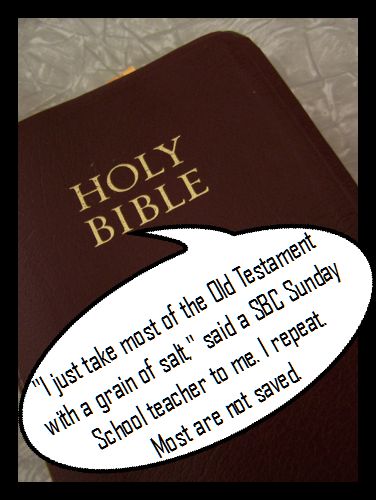
Most of the people who profess Christ do not believe the essential doctrines that set one apart as a regenerated, saved Christian. I have seen this up close. A Southern Baptist Convention Sunday School Teacher/Director laughingly said to me once, “Oh, I just take most of the Old Testament with a grain of salt.”
Here is Got Questions with 12 verses answering What are some of the signs of genuine saving faith?

Here is John MacArthur with an essay on “What kind of things do and do not prove the genuineness of saving faith?” Do not be caught by the conditions observed in a person that do not prove OR disprove genuine saving faith, such as: Visible Morality, Intellectual Knowledge, Religious Involvement, Active Ministry, Conviction of Sin, The Feeling of Assurance, A Time of Decision. Then MacArthur continues in showing Nine conditions that DO prove genuine saving faith. Here is the link.

Ever since the beginning of my walk with the Lord, I have been concerned with the notion of false professions, false Christians, and polluted faith. I work at not contributing to the problem by examining myself, confessing sin when necessary, and keeping my eyes on “This Same Jesus” who departed in Acts 1:11 and will return the same way.

I dread the day when Matthew 7:21-23 comes true, when many (hopefully not me!) will be unmasked as false believers and sent to hell. However, that will be one way that Jesus’ glory will be shown to be even more glorious than we ever could imagine. These things must be pondered.


Posted in theology

Darnel is Devastating

By Elizabeth Prata

Yesterday I wrote about how the ancients winnowed and threshed. Now here is the Parable of the Weeds (Tares)

“He put another parable before them, saying, “The kingdom of heaven may be compared to a man who sowed good seed in his field, but while his men were sleeping, his enemy came and sowed weeds among the wheat and went away. So when the plants came up and bore grain, then the weeds appeared also. And the servants of the master of the house came and said to him, ‘Master, did you not sow good seed in your field? How then does it have weeds?’ He said to them, ‘An enemy has done this.’ So the servants said to him, ‘Then do you want us to go and gather them?’ But he said, ‘No, lest in gathering the weeds you root up the wheat along with them. Let both grow together until the harvest, and at harvest time I will tell the reapers, Gather the weeds first and bind them in bundles to be burned, but gather the wheat into my barn.’” (Matthew 13:24-30).

Here is Jesus’ explanation of the parable.

Then he left the crowds and went into the house. And his disciples came to him, saying, “Explain to us the parable of the weeds of the field.” He answered, “The one who sows the good seed is the Son of Man. The field is the world, and the good seed is the sons of the kingdom. The weeds are the sons of the evil one, and the enemy who sowed them is the devil. The harvest is the end of the age, and the reapers are angels. Just as the weeds are gathered and burned with fire, so will it be at the end of the age. (Matthew 13:36-40).

You see, the church is filled with tares as well as wheat. Satan came in and secretly brought in destructive heresies and false workers to spew them in order to bring reproach onto the name of Jesus and hinder His kingdom on earth. To illustrate this, Jesus told the parable of the weeds, posted above.

The weed is likely darnel, which enemies used to sow into an enemy’s field. This was agricultural sabotage. It was a disaster in the ancient days, so much so that Rome passed a law prohibiting it and levied severe penalties to anyone caught doing it. It is a catastrophic way to destroy the economy of your enemy, because the darnel looks exactly like wheat, until the very last moment when the full ear blooms. Darnel is called “false wheat” in many parts of the world. In the Bible it is also known as tares.

In Montana they are combating Persian darnel infestation. Montana State University Extension reports, “At high densities, Persian darnel could cause crop yield loss of up to 83 percent, 70 percent and 57 percent for spring wheat, canola and sunflower, respectively.” An 83% loss of your grain certainly is catastrophic.

Persian Darnel – A hidden problem pamphlet says: “Persian darnel is hard to spot in the emerging crop as it looks similar to wheat and/or wild oats,” says Steve King, technical service representative for Bayer CropScience. “So growers don’t know they have it and don’t use a herbicide that controls it. They find out about the infestation at harvest, which is not a good surprise.” … Discovering an infestation in the combine not only hurts yields, but can significantly impede harvest.

We know that false Christians populate the church. The Parable of the Tares tells us this. Also, the following verses are a few that tell us that there will be false ones among us. (2 Corinthians 11:13-15; 2 Timothy 3:5; Titus 1:16).

Satan’s sowing of false Christians into the church is certainly devastating.

In fact, the Bible’s note that the false ones’ future pleas to Jesus tell us there will be “many” who were false. They will say, “Lord, Lord, did we not…” and He will say “Depart from me you workers of iniquity, I never knew you.” (Matthew 7:21-23). These are people who looked the Christian part, acted the part, even attended church and prophesied in His name.

We can often get a sense of whether a person is genuinely saved or not. We can compare their life that is allegedly sanctified to the Word and if they bear no fruit we suspect the worst. We can pray for them in that case. But we can’t uproot the wheat because we don’t truly know for sure if they are wheat or darnel. That is not our job.

Forerunner Commentary explains, “The bad seeds grow to become poisonous weeds that allow only the healthiest of the wheat to survive. … Only when the wheat has matured can the tares be detected. Then the tares are gathered together in bundles in the field and destroyed by fire. … Many who are not in the process of conversion resemble those who are. Just like true Christians, they go to church, pray, and read the Bible, but they are only religious hobbyists. Jesus calls them “sons of the wicked one” (Matthew 13:38), and being tares, they will be destroyed. [Mathew G. Collins, Forerunner Commentary.]

If you are indeed a repented, forgiven, Bible-believing, submitted-to-Jesus true Christian, great! If you are not sure, wondering if you could be a tare not a wheat, then here are a few resources for you along the lines of assurance:

Is it Real? 11 Biblical Tests of Genuine Salvation

The Basis of Assurance

Posted in theology

If in fact the spirit dwells in you…

By Elizabeth Prata

People who are Christians often swing one of two extremes. Either they are told never to doubt their salvation, that it’s the devil trying to get them to doubt. Or they’re told to always doubt their salvation, that it’s arrogant to think we can be sure and secure.

Neither of these extremes are correct. Neither of these extremes are profitable.

Let’s use Romans 8:9 as a launching off point for today’s blog.

Continue reading “If in fact the spirit dwells in you…”
Posted in theology

Are things spinning out of control? (Answer: No)

By Elizabeth Prata

So many spheres of our lives feels like they are unraveling, undergoing pressure, or otherwise getting worse than it was even a few years ago. It sure feels like things are spinning out of control.

They’re not.

I was musing on God’s orderliness. Time and time again in the Bible He shows us just how much He is in control. Everything happens in His schedule, in His timetable, in His timing, for His reasons. Nothing escapes His notice. Nothing happens unless He causes it, allows it, or oversees it and then brings it all to the good for those who love Him.

Continue reading “Are things spinning out of control? (Answer: No)”
Posted in theology

Do you have “full conviction”?

By Elizabeth Prata

Paul, Silvanus, and Timothy,
To the church of the Thessalonians in God the Father and the Lord Jesus Christ: Grace to you and peace. We always give thanks to God for all of you, making mention of you in our prayers; constantly keeping in mind your work of faith and labor of love and perseverance of hope in our Lord Jesus Christ in the presence of our God and Father, knowing, brothers and sisters, beloved by God, His choice of you; for our gospel did not come to you in word only, but also in power and in the Holy Spirit and with full conviction; just as you know what kind of men we proved to be among you for your sakes. (1 Thessalonians 1:1-5).

EPrata photo

I hear so many people say “I want to be filled with the Spirit.” And that is a good thing to seek (if you mean in the true sense of the word and not Charismatically.)

But have you thought about how being filled with the Spirit might also include what Paul is extolling here that the Thessalonians received? “Full assurance”?

We want to be filled with, energized, dominated by the Sprit so our sins diminish and so our deeds grow. But deeds for Christ rest on the assurance that they will be-

1. Performed for His glory
2. Go out and not return void

If Paul praised the Spirit for the full assurance the Thessalonians had received (it’s a passive reception, not humanly-catalyzed) then we can ask for the same.

And in much assurance - That is, with firm conviction, or full persuasion of its truth. It was not embraced as a doubtful thing, and it did not produce the effect on the mind which is caused by anything that is uncertain in its character. Many seem to embrace the gospel as if they only half believed it, or as if it were a matter of very doubtful truth and importance; but this was not the case with the Thessalonians. There was the firmest conviction of its truth, and they embraced it "heart and soul;" compare Colossians 2:2Hebrews 6:11. From all that is said in this verse, it is evident that the power of God was remarkably manifested in the conversion of the Thessalonians, and that they embraced the gospel with an uncommonly strong conviction of its truth and value. ~Barnes' Notes on the Bible, on 1 Thessalonians 1:5

We want the filling of the Spirit, but let’s start with asking for full conviction as the foundation upon which the filling will rest. Doubt isn’t noble. It might be part of the human mind and heart, but we can and should ask the Spirit to fill us with conviction, as well as strength, energy, power etc.

[P]pursuing a course of holiness (in conjunction with the hearty acceptance of saving truth) provides evidence that one is indeed elect and not merely self-deceived. Paul affirms essentially the same understanding of election and its evidences in 1 Thessalonians 1:4–7. ~Founders Ministries

Further Resources

What does it mean to be ‘filled with the Spirit’?

How Can I be Filled with the Holy Spirit?

The Doctrine of Conviction

Assurance

Posted in theology

Can I lose my salvation? How can I be sure?

By Elizabeth Prata

PODCAST HERE

Are you sealed with the Spirit? EPrata photo

Assurance of salvation is something many Christians struggle with. It’s normal that a believer might enter a period when they doubt their salvation. We still sin, and if a person sins repeatedly, it’s also normal to wonder if the Lord has sealed the Spirit in us and that we’re actually saved for the day of redemption. It’s normal that a believer might have a (short) period of performing besetting sins or as known in the Christian culture, “backslide”. We often feel in life that we are not making progress (like the Pilgrim in John Bunyan’s Pilgrim’s Progress, who also slid down the hill at times).

The Holy Spirit is sealed in believers and if a person possesses the Spirit, He will not allow the believer to continue to sin. His ministry is to sanctify. Persistent sin in a believer would be at odds with that progress, so if a person does not allow conscience to prick their heart and repent, eventually the Spirit will make Himself known more strongly- either through a bigger conscience prick, or sending someone to confront you, or raise certain Bible verses to you, or even a mishap in life to knock sense into us.

Continue reading “Can I lose my salvation? How can I be sure?”