Posted in theology

When Prophets Roam Like Jackals

By Elizabeth Prata

SYNOPSIS
Exploring Ezekiel 13:4, I examine why false prophets are compared to jackals, studying their scavenging, predatory, and nocturnal behaviors. By probing metaphors and using historical resources, the piece encourages deeper biblical questioning and highlights the spiritual danger posed by deceptive teachers.

Continue reading “When Prophets Roam Like Jackals”
Posted in jesus, new earth, pets, rapture

Animals & Pets in Heaven: Biblical Perspectives

By Elizabeth Prata

The discussion revolves around whether pets will be present in heaven, from a Christian perspective. Although humans uniquely reflect God’s image, there is speculation about the fate of animals post-New Earth. The article emphasizes God’s care for animals and suggests trust in His intentions, ultimately asserting joy in heaven will be fulfilled in Christ.

Continue reading “Animals & Pets in Heaven: Biblical Perspectives”
Posted in agriculture, donkey

All about the Donkey

By Elizabeth Prata

Studying the natural history of the Bible is a good thing to do. Plants, places, and animals are constantly mentioned in God’s Word. Processes such as wine-making and agricultural endeavors like threshing and irrigating are mentioned too. Knowing what the references mean helps deepen our understanding of such verses when we study them. For example in Psalm 21:1, it is stated,

The king’s heart is a stream of water in the hand of the LORD; he turns it wherever he will.

This is a vivid metaphor that anyone can understand. But knowing that in ancient times and even today, Egyptian farmers by the Nile dig complicated channels in the earth and board the source of each one, and by lifting a certain board at any given time they could precisely direct the channel to a row of crops as they will. Now you have an even more clear picture of the metaphor. (More here)

Or this regarding passing under the rod. In Ezekiel 20:37 it says,

And I will cause you to pass under the rod, and I will bring you into the bond of the covenant:

which Jamieson/Fausset/Brown’s Commentary says,

pass under the rod—metaphor from a shepherd who makes his sheep pass under his rod in counting them (Le 27:32; Jer 33:13).

As the shepherd bunked down nightly, he would count each sheep to ensure they were all collected. As each one passed under his rod entering the sheepfold he would count them. Knowing these things could develop into a deeper study of agricultural practices in order to provide background context for scripture study, or simply knowing a little bit about what the rod or the channels of water helps provide  a better understanding of the verse.

EPrata photo

There are many animals in the Bible either used in fact or referred to as symbols (like the ant in Proverbs 6:6). Donkeys are an animal mentioned frequently and used as beasts of burden to carry goods or people.

So Abraham rose early in the morning, saddled his donkey, and took two of his young men with him, and his son Isaac. And he cut the wood for the burnt offering and arose and went to the place of which God had told him. (Genesis 22:3)

Donkeys were part of the Law.

If you meet your enemy’s ox or his donkey going astray, you shall bring it back to him. (Exodus 23:4)

There are some famous donkeys in the Bible. Balaam’s donkey for example, spoke. Or was it God speaking through the beast?

EPrata photo

Jesus’ Triumphal entry was on the back of a donkey. John 12:14 records,

And Jesus found a young donkey and sat on it, just as it is written, “Fear not, daughter of Zion; behold, your king is coming, sitting on a donkey’s colt!”

Initially, people who could afford them rode donkeys, such as Judges. (Judges 5:10). After that time, though, horses were imported, and high officials enjoyed riding white horses more than donkeys so they left the donkeys to the poorer folk. When Jesus rode in to Jerusalem on a donkey it was demonstrating his humility and meekness.

Donkeys were a beast of burden used frequently as the preferred animal because they were stoic and patient, and tended to panic less easily than horses. Physically,

Donkeys’ feet have a number of differences, including being more elastic, narrower in shape, and more upright than a horse’s. Donkeys can be prone to developing very long hooves as they do not chip and breakaway as a horse’s would do. The donkey’s digestive system is considerably more efficient than that of a similar sized pony. … Donkeys in general have a very efficient walking pace and to be honest, in most situations it is easier to walk at the donkeys pace rather than try and make them go at ours.  (source)

A boy and his donkey. This is in the town of Papallacta, high in the Andes. The type of saddle has been in use since Incan times. EPrata photo

Rejoice greatly, O daughter of Zion; shout, O daughter of Jerusalem: behold, thy King cometh unto thee: he is just, and having salvation; lowly, and riding upon an ass, and upon a colt the foal of an ass. (Zechariah 9:9).

PS: There is actually no Bible verse that says Mary rode a donkey on her way to Bethlehem with Joseph. More on that in an upcoming blog!

Further Reading

Bible topics: The Domestic Ass.

Posted in encouragement, Uncategorized

The LORD is Creator and Commander of the animal kingdom

The Lord in His power directs every atom, every person, every angel, every demon, and every animal on earth (and in heaven). He created all and He is in control over all.

Not that He makes humans like robots, but His providence sees to it that His will and His plans are carried out. I enjoy pondering His power over His creation, don’t you? There are many verses that speak to this fact. Here are a mere few that demonstrate His sovereignty.

“The earth is the LORD’s, and everything in it, the world, and all who live in it; for he founded it on the seas and established it on the waters” (Psalm 24:1-2).

Before the mountains were born or you brought forth the whole world, from everlasting to everlasting you are God” (Psalm 90:2).

He is before all things, and in him all things hold together” (Colossians 1:17).

One demonstration of His power is His control over the animals. Let’s take a look.

The most obvious one is His control over animals when He sent them to Noah to board the ark.

Of the birds according to their kinds, and of the animals according to their kinds, of every creeping thing of the ground, according to its kind, two of every sort shall come in to you to keep them alive. (Genesis 6:20).

In Exodus, He sent the plagues of flies, gnats (Exodus 8:16-19), frogs (Exodus 8:1-15) and killed all the cattle- except the ones who belonged to the Hebrews. Lest someone believe that it was an accident, the Bible declares that the LORD did it.

And the Lord did so. There came great swarms of flies into the house of Pharaoh and into his servants’ houses. Throughout all the land of Egypt the land was ruined by the swarms of flies. (Exodus 8:24).
EPrata photo


And the next day the Lord did this thing. All the livestock of the Egyptians died, but not one of the livestock of the people of Israel died
. (Exodus 9:6).

Prophet Elijah was fed by ravens.

And the word of the Lord came to him: 3 “Depart from here and turn eastward and hide yourself by the brook Cherith, which is east of the Jordan. 4 You shall drink from the brook, and I have commanded the ravens to feed you there.” (1 Kings 17:2-4).

Lest anyone think it was an accident, note that the LORD “commanded” the birds to do this. It was His will and desire that this should occur. And it did.

In Numbers 22:28 He made a donkey speak. What I found funny was that Balaam argued back. He was arguing with a donkey! He didn’t say, “Hm, this donkey which I have ridden all my life and it never spoke before, suddenly began acting strangely and then it talked to me. It must be the LORD.’ No, Balaam said he was so mad at the donkey he would like to kill it. The donkey then pleaded his case. A strange scene, for sure. But the LORD made the donkey speak. Once again, He is in control.

Of course one can think of the bears God sent to maul the taunting youths, the great fish He sent to swallow Jonah, the lions’ mouths he closed in the lion’s den for Daniel, the ram he sent to Abraham caught in the thicket atop Mt Moriah, and many other instances of how the LORD used animals to fulfill His will.

In the New Testament, He made the fish overload the disciples’ nets so much that their net broke. (Luke 5:6). In Matthew 17:24-27 he put a drachma coin into a fish’s mouth. He will call the birds of the air to the Great Supper of God. (Revelation 19:17).
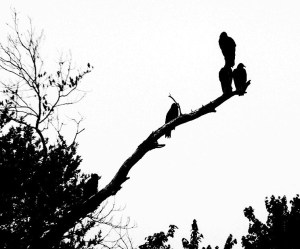
EPrata photo

God communicates with His creatures. He cares for them. They indicate that there IS a Creator as a product of God’s creative energy and will.

I enjoy thinking about the sovereignty of God through these topics. His created order, the world, and heaven contain animals of which he creates, communicates with, and cares for. They do what He wishes and they even give praise to their creator. (Psalm 148:10-13).

We can do the same.

EPrata photo
Posted in encouragement, Uncategorized

The Sheep: from The Scripture alphabet of animals

THE SHEEP.

I suppose you think you already know as much about sheep and lambs as I can tell you, and perhaps you do. Yet I dare say you never took up your Bible to see how many times they are mentioned there, or how many beautiful things are said about them.

Abel, who, as you know, was the third man that lived on the earth, was a “keeper of sheep;” and there have always been a great many shepherds in the world from that time to this. Some of the men who lived in old times had a great many sheep. Job had seven thousand, which God allowed to be taken from him; but afterwards gave him twice as many-fourteen thousand. At the time when Solomon’s beautiful temple was dedicated to God, he offered a sacrifice of a hundred and twenty thousand sheep.

If you want to know how many that is, try to think of a pasture with a hundred sheep in it-then think of a hundred pastures, just like it, with just as many sheep in each-then think of those hundred pastures taken twelve times over, and you will begin to understand how many there were. It is not common with us to have persons whose whole business it is to take care of sheep, but that was always the way in Bible countries.

This was not done by servants, at least not always; for a great many rich men employed their children as shepherds. Rachel, who was afterwards the wife of Jacob, “kept her father’s sheep”-so did Jacob’s twelve sons-so did Moses for his father-in-law.

Cook, H. N. (1842). The Scripture alphabet of animals. New York: American Tract Society.

sheep