Posted in theology

Why are there so many false *pastors*?

By Elizabeth Prata

I recently finished a short biography of RC Sproul by Nate Pickowicz. It was an excellent book. In it, I read of RC’s description of how false teachers do their work and why they are so dangerous.

“In my college days, there was a pre-ministerial fraternity for those who were planning to go on to seminary, and while I cannot read anyone’s heart, it seemed as if the majority of members of that particular club were quite hostile to all things Christian. I scratched my head and wondered, “What are these men doing preparing for the ministry when they’re so hostile to the things of Christ?” In time, it became apparent to me that one of the reasons why people go into the ministry is to refute the truth claims of Christianity.

Becoming a pastor is one of the easier ways to gain a public hearing; the preacher can air his views to a captive audience for an hour each Sunday Morning. However, those unbelieving men (and sometimes women) who are ordained to ministry usually find it difficult to sustain a viable ministry in the local church for any length of time, so they tend to gravitate to administrative positions, and before you know it, the unconverted control whole denominations.” ~RC Sproul, originally in “Matthew” (Wheaton: Crossway) 2013, p 656.

Eye opening, isn’t it? We know that 2 Peter 2:1 says the false teachers creep in to spy on our liberty, and Galatians 2:4, and so many other verses. But to see it laid out so clearly, that they are unconverted and abuse the pulpit to confuse and deceive the sheep, it’s startling.

I remember my conversion and when I first started to go to church. I felt a deep sense of relief, now I was safe! In one sense, I was safe, safe in the hand of Jesus where no one could snatch me out. In another sense I was now in more danger than ever. I had a new worldview, so I was the salmon that swam upstream from the crowd, whom the bear looks for and catches. Whom the lion roams around seeking to devour.

And this is how false teaching gets in, or, one of the ways.

The reason they get in is because the people want them. Believers who may turn out to be false themselves (Matthew 7:21-23), or even true believers who are unlearned and undiscerning…they do the action of heaping up the false teachers. 2 Timothy 4:3 tells us this

For the time will come when they will not endure sound doctrine, but wanting to have their ears tickled, they will accumulate for themselves teachers in accordance to their own desires,

And there is a false teacher to match every flavor of sin. There’s the greedy money hungry false teachers, (Simon Magus of Acts 8) or the licentious false teachers (Revelation 3’s ‘Jezebel’), the heretic (Alexander and Hymenaeus), hyper-authoritative false teachers (Pharisees), teachers (OT prophets) who tell you what you want to hear, like peace when there is no peace, or prosperity or healing), and so on.

Challies outlines 7 False teachers in the Church today, listing 7 types. Seven certainly isn’t comprehensive.
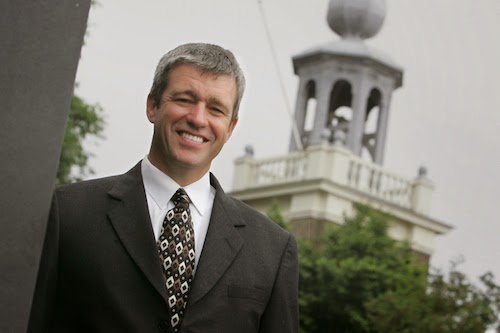
Paul Washer said:

“False teachers are God’s judgment on people who don’t want God, but in the name of religion plan on getting everything their carnal heart desires. That’s why a Joel Osteen is raised up. Those people who sit under him are not victims of him. He is the judgment of God upon them because they want exactly what he wants and it’s not God.”

It’s the people who do the heaping up and clinging to false teachers. The catalyst is people, and satan is only to happy to provide them to the people who want their carnal desires stoked.

It’s the people who raise them up, and combined with Sproul’s outlook on one of the ways they get in, it’s clear we have a problem.

And the people who call them out often bear the brunt of the anger of the false converts or the deceived believer, who charge us with being mean or inappropriate. This is a way that satan uses the unlearned to protect his teachers.

Here are two resources that may help:

John MacArthur, “Defining Discernment” 

Ligonier (Sinclair Ferguson) “What is Discernment?” 

Tomorrow, more on discernment; what it is and isn’t, and the scriptural basis for discerning.

Posted in theology

Little Known Bible Characters #4: Eutychus

By Elizabeth Prata

#1: Iddo (Old Testament)
#2: The List of Offenders (Old Testament)
#3: Trophimus (New Testament)
#4 Eutychus (New Testament)

I never forgot Voddie Baucham’s introduction to a certain sermon. It was back when he was preaching here in the US and on rotation with other pastors in his church. He said his turn came up in the expository preaching passage, and it was the list of names Paul wrote. The passage (I think it was Paul’s sign-off of Romans 16). He said preachers usually read the passage something like: ‘The verse says ‘And give my love to…all these names I can’t pronounce…’ “

Of course, Voddie always says there is a lot to learn from “just a list of names.” Voddie’s preached on the concept before, that ALL scripture has something to offer, even if it was just an introduction or sign-off of a bunch of names in one of Paul’s epistles. Names are important!

Today we see the name “Eutychus.” This young man is mentioned just once, in Acts 20:7-12, but was the central character in a miracle.

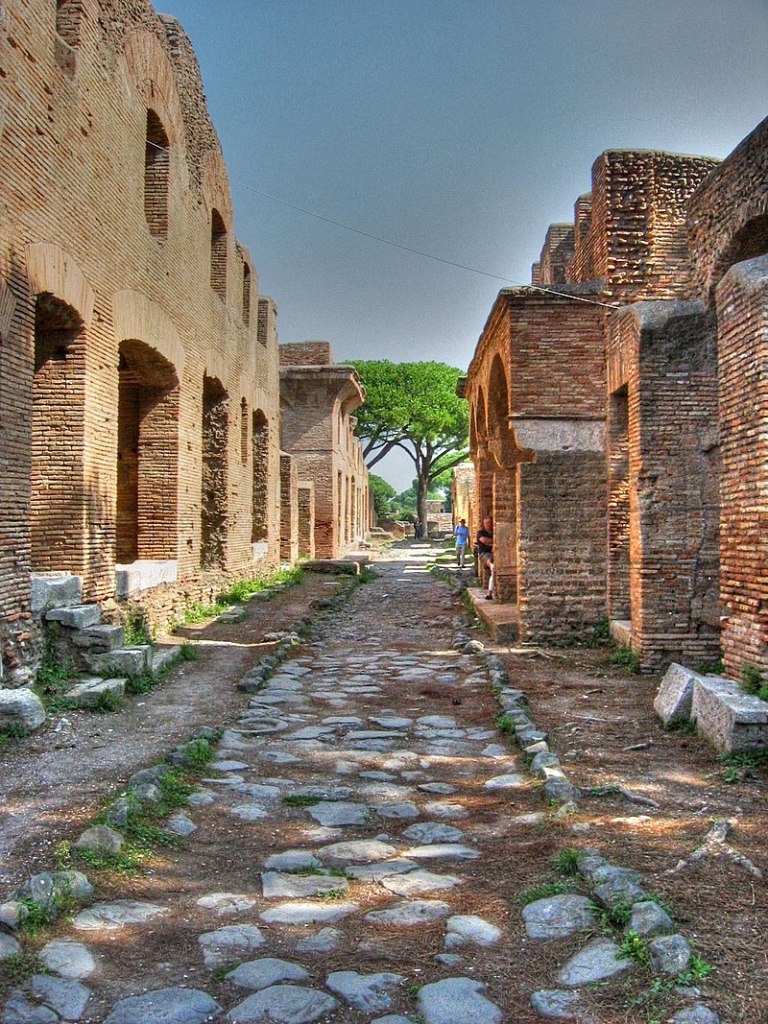
The scene is a home where Paul is preaching. The house is packed. Because the third story is mentioned, the dwelling was probably an insulae, a lower-class apartment building in an area where other apartment buildings were, AKA tenements. The poorer someone was the higher up in the building they lived. The insulae were configured as you might imagine apartments are today, but square with a central courtyard with a fountain. Many of the lowest class ones were not made of bricks but of wood. No such dwellings exist today in Troas, the city (now called Alexandria Troas) is mostly ruins. But in the city of Ostia Italy, we can still see many preserved apartment tenements (insulae). In fact, most urban dwellers lived in such apartments, the density of which would not be seen again until the Industrial Revolution. (Source)

Ostia Antica, regione I, via dei Balconi (public domain). Source

Apartments were cramped and many were not well made or maintained by their owners. Cicero admitted he was a poor landlord when he wrote:

“Two of my shops have collapsed and the others are showing cracks, so that even the mice have moved out, to say nothing of the tenants.  ‘Immortal gods, what do such trivialities matter to me?”

So perhaps Eutychus’ fall was not totally due to sleepiness but perhaps a poor condition of the window or the dwelling itself? … hmmm.

Anyway, Paul was leaving the next day, and he wanted to impart as much as he possibly could to his beloved friends. Paul liked to wring out every minute for Jesus.

And he did. He began preaching probably after dinner when they had completed the Lord’s supper, and Paul continued on past midnight.

The three-story house was filled with people, all the lamps were lit, and it was a Mediterranean evening. Lamps in the first century usually emitted a great deal of smoke and it would have become hard to breathe, so, since the crowd was staying in one spot for a long time, shutters were opened to allow fresh air in. All this to say, hot and stuffy. With not a lot of movement, with dinner in their bellies, and the length of time they were sitting still, young man Eutychus nodded off.

This happens. Who can blame him? I get sleepy at all-day meetings when they resume after lunch. The difference is, Eutychus was perched on the open windowsill. When he fell asleep, he fell out the window. He fell to the ground and was pronounced dead.

Imagine the scene. Hazy, warm lamplight, wafting breeze, cicadas, a murmuring voices, all was hushed, then- SUDDEN DEATH!

What a shock!

Jerusalem old city. Photo by Levi Meir Clancy on Unsplash

On the first day of the week, when we were gathered together to break bread, Paul began talking to them, intending to leave the next day, and he prolonged his message until midnight. There were many lamps in the upstairs room where we were gathered together. And there was a young man named Eutychus sitting on the window sill, sinking into a deep sleep; and as Paul kept on talking, Eutychus was overcome by sleep and fell down from the third floor, and was picked up dead. But Paul went down and fell upon him, and after embracing him, he said, “Do not be troubled, for he is still alive. When Paul had gone back up and had broken the bread and eaten, he talked with them a long while until daybreak, and then left. They took away the boy alive, and were greatly comforted. (Acts 20:7-12).

They didn’t have to plan a funeral but could continue to learn from Paul immediately and deepen their love for the Lord through His word!

See similar event in 1 Kings 17:21 where Elijah also fell on the widow’s son and asked the Lord to resurrect the lad. And the same in 2 Kings 4:34 with Elisha.

Eutychus was dead. Not mostly dead, but all dead. The first century people saw death often. They knew dead. Luke the physician wrote Acts, he records that Eutychus was dead, and Luke would know. Yet Eutychus came alive!

Imagine having your name inscripturated forever. You’re mentioned in God’s holy word! Anna’s faithfulness, Mary’s submission, Lydia’s hospitality…wow. And on the flip side, also Jezebel forever linked with deep evil. Cain always known as the rebel. And more innocently, Eutychus, the sleeper, lol. Forever known as the guy who fell asleep.

But the positives are these. He was young, but desired to attend a meeting where Paul would be preaching. He didn’t say instead, ‘I’ve got sheep to herd or nets to fix or a girl to date.’ He chose to go and be present where the word of God was taught. Sleepiness at midnight is normal, but then he became the central figure in a display of the power of God! God can resurrect the dead, using ordinary men like Paul and young men like Eutychus!

So now, Eutychus is forever known as the man whom God resurrected from the dead! The man God obviously had plans for. I wonder how Eutychus lived his life for Christ in his remaining days on earth.

The scene in the home where Eutychus fell, crowded with earnest and eager listeners, desiring to have a firehose of theology aimed at them, clinging to as much as they can from the learned lecturer, reminds me of another scene in these present days.

It happened shortly after the Iron Curtain fell and the Soviet Union disintegrated. The loosely united regions and nations under Russian control splintered into their own little countries, and Kazakhstan was one of them. Pastors who had been persecuted or exiled collected in a first-ever conference, and who did they ask to come and teach them? John MacArthur.

They gave MacArthur 6 days to teach them all the doctrines of the Bible. 1600 men came from all over the region, traveling and staying where they could. They crowded into hot, stuffy room to listen to Dr MacArthur and be taught all day and all night, previously not having had the benefit of seminaries or even openly learning because of the atheistic Communist regime which oppressed them. MacArthur said the sessions were about 12 hours long.

Such things as the Eutychus house still happen. Anywhere or at any period of time on earth, if there are people of the Lord there will be people eager to gather and learn more about Him. Eutychus’ time wasn’t up, the Lord had more of a number of days for him. And we will meet him in heaven! Remember, the people we read about in the Bible are real, and those who are said to be believers we will see and commune with in heaven, praising our Savior!


Sources:

EUTYCHUS IN TROAS: THE ARCHITECTURE AND ARCHAEOLOGY OF HIS FALL by Mark Wilson in Biblica.

Roman domestic architecture: the insula By SmartHistory

Logos 9 Bible Software.

Other entries in the series:

Little Known Bible Characters #8: Tryphena and Tryphosa
Little Known Bible Characters #7: Salome
Little Known Bible Characters #6: King Chedorlaomer
Little Known Bible Characters #5: Harbonah the Eunuch
Little Known Bible Characters #4: Eutychus
Little Known Bible Characters #3: Trophimus
Little Known Bible Characters #2: ‘The List of Offenders’
Little Known Bible Characters #1: Iddo

Posted in theology

The Great London Exhibition of 1851: The Crystal Palace

By Elizabeth Prata

The other day I wrote about transparent gold How, when gold is stripped down to a few molecules at the nano-level, it becomes transparent.

As I worked through the verses in Revelation, and checked old-time Commenters to see how they handled the Revelation verses about the transparent gold in the New Jerusalem (because they didn’t know about nano-tech back then), I came across Barnes’ Notes on it.

Albert Barnes lived from 1798 – 1870. He was an American theologian, clergyman, abolitionist, temperance advocate, and author. He’s best known for his extensive Bible commentary and notes on the Old and New Testaments, published in a total of 14 volumes in the 1830s, says Wikipedia. You can read his Commentary online, here.

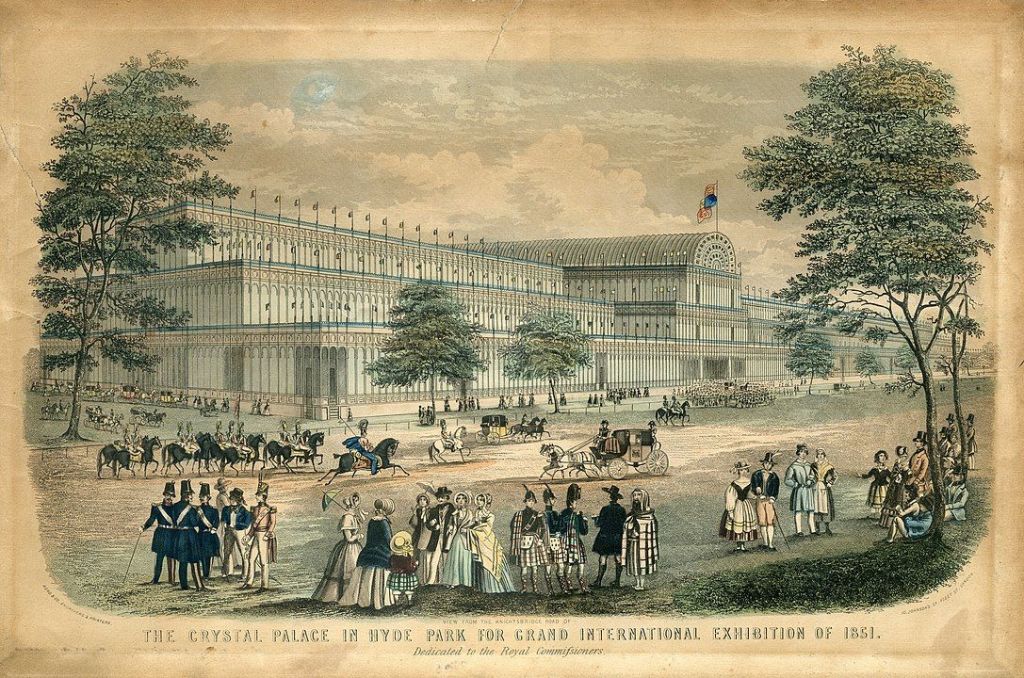
By Read & Co. Engravers & Printers – View from the Knightsbridge Road of The Crystal Palace in Hyde Park for Grand International Exhibition of 1851. Dedicated to the Royal Commissioners., London: Read & Co. Engravers & Printers, 1851., Public Domain, https://commons.wikimedia.org/w/index.php?curid=48718934

Barnes was alive and an adult when the 1851 London Exposition occurred.

The Crystal Palace was a cast iron and plate glass structure, originally built in Hyde Park, London, to house the Great Exhibition of 1851. The exhibition took place from 1 May to 15 October 1851, and more than 14,000 exhibitors from around the world gathered in its 990,000 square feet exhibition space to display examples of technology developed in the Industrial Revolution. Designed by Joseph Paxton, the Great Exhibition building was 1,851 feet long, with an interior height of 128 feet, and was three times the size of St Paul’s Cathedral.

The 60,000 panes of glass were manufactured by the Chance Brothers. The 990,000 square foot building with its 128 foot high ceiling was completed in thirty-nine weeks. The Crystal Palace boasted the greatest area of glass ever seen in a building. It astonished visitors with its clear walls and ceilings that did not require interior lights. Wikipedia

The Industrial Revolution was surely a marvel for the people living in that time. For them to witness the construction of such a magnificent building, the likes of which had never been accomplished before, must have been a memorable moment! All that glass…no need for interior illumination…wow.

Just as we in this day and age still struggle with some of the descriptions in the Bible (Cherubim in the shape of a wheel within a wheel with eyes all around, anyone?) so also the old time people had a hard time envisioning describing what the New Jerusalem will look like. Until that is, The Crystal Palace was built.

The material of the wall was jasper; and the city was pure gold, like clear glass. (Revelation 21:18).

Revelation 21:18 Commentary by Albert Barnes, “Barnes’ Notes”-

Perhaps the reflection of the sunbeams from the “Crystal Palace,” erected for the late “industrial exhibition” in London, would convey a better idea of what is intended to be represented here than anything which our world has furnished. The following description from one who was an eyewitness, drawn up by him at the time, and without any reference to this passage, and furnished at my request, will supply a better illustration of the passage before us than any description which I could give:

“Seen as the morning vapors rolled around its base – its far-stretching roofs rising one above another, and its great transept, majestically arched, soaring out of the envelope of clouds – its pillars, window-bars, and pinnacles, looked literally like a castle in the air; like some palace, such as one reads of in idle tales of Arabian enchantment, having about it all the ethereal softness of a dream. Looked at from a distance at noon, when the sunbeams came pouring upon the terraced and vaulted roof, it resembles a regal palace of silver, built for some Eastern prince; ‘when the sun at eventide sheds on its sides his parting rays, the edifice is transformed into a temple of gold and rubies;’ and in the calm hours of night, when the moon walketh in her brightness, the immense surface of glass which the building presents looks like a sea, or like throwing back, in flickering smile, the radiant glances of the queen of heaven.”

A Christian’s future is to live in the Crystal Palace of God, glittering and bright, filled with the glory of God

I saw no temple in it, for the Lord God the Almighty and the Lamb are its temple. And the city has no need of the sun or of the moon to shine on it, for the glory of God has illuminated it, and its lamp is the Lamb. The nations will walk by its light, and the kings of the earth will bring their glory into it. In the daytime (for there will be no night there) its gates will never be closed; and they will bring the glory and the honor of the nations into it; (Revelation 21:22-26)

Posted in theology

Don’t worry, the tiger can’t escape…

By Elizabeth Prata

Ocelot. Photo by Pamela Newton on Unsplash

I discovered the series of children’s books by The Millers. I found “Missionary Stories with the Millers” which is aimed at 6-10 year olds. The stories are about missionaries and are intended to be inspiring and interesting for kids. Here is the blurb:

“Experience thrilling adventure as the Christian missionaries on these pages meet witch doctors, disease, drought, hate-filled guerillas, a Bible thief, and killer cats. Each story is based on actual happenings from the lives of real people.”

I was inspired and entertained myself by this story in the book, one of many. It’s called “The Tiger Can’t Escape” featuring pilot missionary Jack McGuckin. Colonel Jack served 4 years as a pilot in Peru with Wycliffe Bible Translators before going on to be a global evangelist for 30 years. Before all that, Col. Jack was a Marine Corps fighter pilot who served in WWII and the Korean Conflict. Col. McGuckin had earned the Distinguished Flying Cross, Air Medal, Bronze Star and the Presidential Citation. Born in 1921, he died in 2007. Here is the adapted anecdote from the book Missionary Stories, called “The Tiger Can’t Escape!”


“The tiger cannot possibly escape from the basket,” said the sergeant. “Are you sure?” Jack the missionary pilot stood beside his small plane pushing back his cap as he wiped a trail of sweat from his forehead and looked doubtfully at the huge wicker basket.

Inside the basket, which had been made from reeds and strips of bark, crouched a fierce looking spotted cat. The tiger was really an ocelot, a tiny South American panther.

“Oh, si Señor,” the Peruvian soldier assured Jack. His white teeth flashed in his face as he grinned. “The tiger cat will be quite safe in your plane. My basket is very strong.” Jack was not enthusiastic about having a wild ocelot aboard the plane. He looked pretty mean. He was flying alone on this trip with a cargo of supplies for different missionary stations.

“I’m already carrying four live chickens and two turtles in a box,” Jack mused. “This plane is turning into Noah’s ark.” But Jack remembered the missionary director’s rule always cooperate with the government people whenever possible we are in their country by permission to preach the gospel, so be courteous.

“Yes, I will take your tiger along and deliver her to your friend,” Jack agreed. The two men loaded the big basket behind the back seat. The plane skimmed lightly over the river on its pontoons and rose into the air. Jack was flying one of the small fleet of mission planes which soared daily over the most savage dangerous jungles of South America. Any mistake on his part could bring his plane crashing down to vanish in the trackless expanse of jungle where death waited in many forms; from poisonous snakes… poisonous plants…and man-eating fish with sharp razor-sharp teeth… or head hunting Indians.

Not the actual plane and not Peru. Photo by Brandon Pierson on Unsplash

They all lurked in the thick green rain forest before airplanes came to the South American missions. The missionaries and the Bible translators had needed to travel on foot through the treacherous jungle trails or by small boats on the rivers. A trip to the nearest town or doctor might take days of dangerous travel. But now pilots like Jack took the same trip in an hour.

This made things so much easier for the brave missionaries who were risking their lives to bring the gospel to the Indians.

Jack whistled happily thinking about this as his hand skillfully held the controls. He peered through the plexiglass windows of the cockpit. Feet below were the lush jungles of the northern Peru with the strangely black waters of the Nanay River churning through them.

Suddenly a flurry of squawking noises erupted from the seat behind Jack. It sounded just like the noise of chickens that had made on his father’s farm the time a fox had crept into their hen house late at night. Whirling around in his seat, Jack saw that the ocelot had escaped! She was climbing over the seat yellow eyes gleaming as she hungrily looked at the chickens. Grabbing his canteen, Jack threw water at the big cat. Snarling, she slunk back into the luggage compartment. In just a few moments though, she started over the seat again. Frantic, the chickens flopped their wings and fought to free their feet from the vines that tied them together. Jack hurriedly hurled his empty canteen at the cat. He missed and the ocelot pounced, landing in the seat beside the chickens. Snapping the weed vines around their feet, the panicked chickens exploded in all directions. Their wings beat against the windows and in Jack’s face as the ocelot stood up on her hind legs.

Sharp claws swinging for a drumstick, feathers flew everywhere. Jack forgot all about flying the airplane and began grabbing for chickens. But it was no use. The ocelot soon had a chicken trapped on the floor under Jack’s seat and he could hear its sharp teeth crunching on flesh and bones.

The plane was three thousand feet up in the air and no help was near. What could Jack do? Would the ocelot be satisfied after a chicken dinner and sleep for a while, or would she decide to hunt for more meat?

Slash! One tiny foreleg tipped with steely claws shot out from under the seat toward Jack. For an instant the ocelot’s claws hooked into the pilot’s pants and then tore free. Jack’s pounding heart seemed to be squeezing the breath from his lungs. The tiger was hunting him with all of his might!

Jack kicked back at his enemy she held a blood-curdling cry of rage that filled the small plane. “Lord what shall I do? Help me find a place to land!” Jack prayed desperately looking out the window he spotted a small settlement by the river below. Jack rolled down the flaps of his plane and began to circle around for a landing. Kicking the cat with his heels every time she reached for his leg, he finally got the plane down to the water.

EPrata photo

A crowd of men appeared as Jack taxied the plane up to the bank. “Help!” he shouted out the window. “I have a loose tiger cat in here!” A dozen men jumped onto the pontoons at the same time all trying to see into the plane which began to sink.

“No!” cried Jack, “Not all at once!” The men jumped off again and their leader sent for a coil of rope. Soon the angry ocelot had been lassoed and safely tied up. Sighing with relief Jack thanked the Peruvians.

Photo by 2H Media on Unsplash

“Oh, it is nothing,” the leader smilingly told Jack. “We are just so glad you landed here. One of my men had a heart attack this morning, and may die if we cannot get him to the hospital. Will you take him along to the city?”

“Of course I will take him,” Jack agreed.

“So the Lord had a purpose in allowing the tiger cat to break loose,” Jack mused as he helped lift the sick man into the airplane. “God used a snarling ocelot and a scared pilot to get his plane to the right place and save this man’s life.”

Less than two hours later the sick man was safely in the hospital at Iquitos. The army officer had his ocelot and Jack was on his way back to the mission station.


This loose ocelot incident occurred in the 1960s on almost one of Jack’s first missionary flights. Jack was fairly new pilot with Wycliffe then.

When people complain about God’s election of individuals to salvation, they say ‘Well what about the native in the deep jungle who never heard of the Gospel or of Jesus?’

First of all, because God is wholly in charge of a person’s salvation, when the appointed time for them to be saved comes, God is perfectly capable of sending a missionary to them, or bringing that person to a pastor, or having the word go out in some way.

Secondly, He made the entire world, nothing is too far for the Lord to reach His intended sheep. Nothing is too difficult for Him to bring the spirit of repentance on a person, whether they live in London apartment or a Mongolian hut or a Peruvian jungle.

God’s work is pure, holy, and always perfect. He is powerful and delights to bring people to salvation. He must have had plans for the man whose heart attack necessitated a trip to the city hospital. So God arranged for the ocelot’s escape on a plane than landed out of nowhere! God is amazing!

Posted in theology

You never know where your words will go, or who will be impacted

By Elizabeth Prata

I’ve written before about how, when I was not saved yet but the Spirit was strongly drawing me, that there was a pastor of a Bible believing Baptist church in my town. I used to work at the Post Office putting up the post office box mail. The wall didn’t go all the way to the ceiling and of course the boxes were open at my end and with a door at the customer’s end.

So, I could hear all conversations in the lobby. When the pastor came in he would always mention blessing, or Jesus, or the Savior, or something that was like acid on my soul. I used to shove the mail into the boxes while grinding my teeth, thinking, “Why does he always talk of Jesus? How foolish! Doesn’t he know that no one’s listening!”

Of course, I was listening. The Lord used throwaway words, not even aimed at me, to grab me at the scruff of the neck and force me to look at my sin like a bad puppy.

I’ve also mentioned before how John Bunyan heard conversations from three or four ladies at their doorstep, and how Bunyan marveled at how they seemed to ‘know’ the savior, who to Bunyan at that point, was a remote God. Their grace-filled words words carried to his heart and eventually were used to bring him to Christ.

Famously, Augustine heard a child’s song in the next-door walled garden, of a child singing a song Augustine had never heard before (or since) including the words “Tolle lege!” which means ‘pick up and read’. He felt a compulsion to do so, and he did pick up the Bible and read. He was convicted by what he read in Romans. We know the rest from there.

Wholesome words are never wasted even if they seem throwaway. God’s word never returns void. It always makes its intentions sure and profitable, and this includes words in conversation. (It’s why we mustn’t gossip or slander, because those words have an equally negative impact as much as wholesome words have their positive effect).

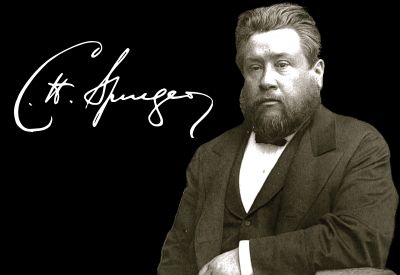
Charles Spurgeon never knew the following anecdote until the end of his life, though the incident occurred at the beginning of his pastorate. The following are his own words from “The Autobiography of Charles Haddon Spurgeon“.


THE FAST-DAY SERVICE AT THE CRYSTAL PALACE.

During the time of our sojourn at the Surrey Gardens, it was my privilege to conduct one service which deserves special mention, for it was the occasion on which I addressed the largest congregation to which I ever preached in any building. This was on Wednesday, October 7, 1857, when 23,654 persons assembled in the Crystal Palace to join in the observance of the day appointed by proclamation “for a solemn fast, humiliation, and prayer before Almighty God: in order to obtain pardon of our sins, and for imploring His blessing and assistance on our arms for the restoration of tranquillity in India”.

[link to Spurgeon’s Fast-Day Service at the Crystal Palace]

About a month previously, in my sermon at the Music Hall on “India’s Ills and England’s Sorrows”, I had referred at length to the Mutiny, and its terrible consequences to our fellow-countrymen and women in the East. The Fast-day had not been proclaimed, but when it was announced, I was glad to accept the offer of the Crystal Palace directors to hold a service in the centre transept of the building, and to make a collection on behalf of the national fund for the sufferers through the Mutiny.

The Lord set His seal upon the effort even before the great crowd gathered, though I did not know of that instance of blessing until long afterwards. It was arranged that I should use the Surrey Gardens pulpit, so, a day or two before preaching at the Palace, I went to decide where it should be fixed; and; in order to test the acoustic properties of the building, cried in a loud voice, “Behold the Lamb of God, which taketh away the sin of the world.” In one of the galleries, a workman, who knew nothing of what was being done, heard the words, and they came like message from Heaven to his soul. He was smitten with conviction on account of sin, put down his tools, went home, and there, after a season of spiritual struggling, found peace and life by beholding the Lamb of God. Years after, he told this story to one who visited him on his death-bed.

 It was a service I was not likely ever to forget, and one result upon my physical frame was certainly very remarkable. I was not conscious, at the close of the service, of any extraordinary exhaustion, yet I must have been very weary, for after I went to sleep that Wednesday night, I did not wake again until the Friday morning. All through the Thursday, my dear wife came at intervals to look at me, and every time she found me sleeping peacefully, so she just let me slumber on until–“Tired nature’s sweet restorer, balmy sleep,”

I was greatly surprised, on waking, to find that it was Friday morning; but it was the only time in my life that I had such an experience. Eternity alone will reveal the full results of the Fast-day service at the Crystal Palace.


We never know the effect of words spoken from His word either to the direct listeners in the pew or behind the radio or TV, nor do we know the effect of His word on those we have no idea are listening nearby, or even unseen within in hearing distance, like that workman. Spurgeon didn’t even know the workman was there, the Bible believing pastor didn’t know I was behind the wall, nor did the child in the garden know there was a spiritually agonized sinner named Augustine behind the garden wall.

God is great and His purposes ALWAYS accomplish exactly what He intends. He is worthy of so much praise.

Posted in theology

Jewels #3: Rubies

By Elizabeth Prata

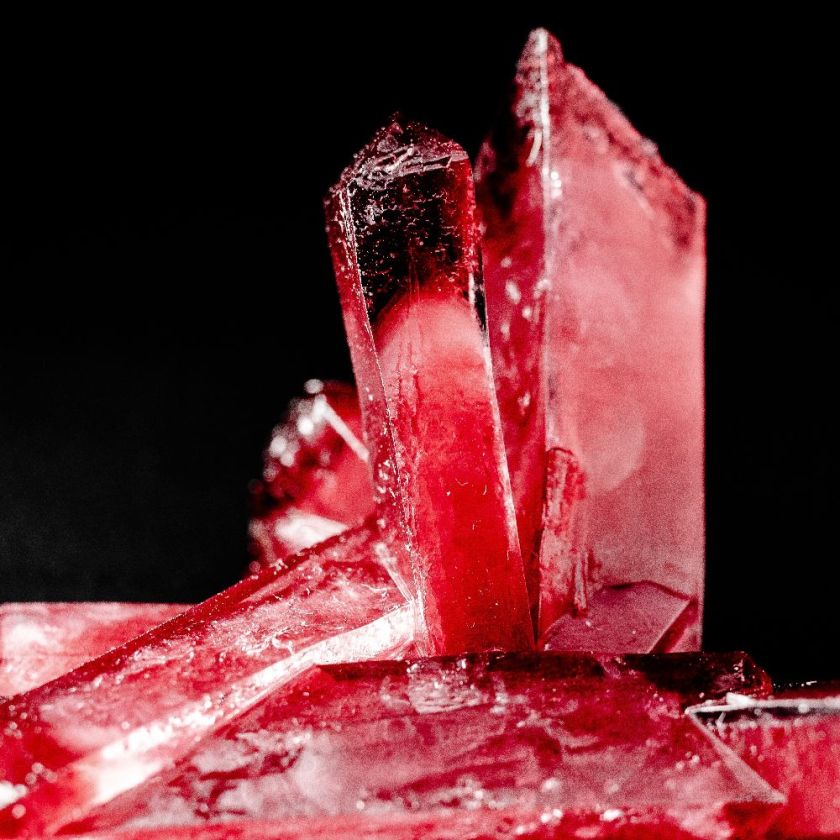
Photo by Jason D on Unsplash

The Bible makes mention of many precious and semi-precious stones. I mean, who isn’t curious about the giant pearl as a gate to the heavenly city, said to be over 200 feet high? (Revelation 21:21). Or the foundation of the heavenly city studded with these:

The foundation stones of the city wall were decorated with every kind of precious stone. The first foundation stone was jasper; the second, sapphire; the third, chalcedony; the fourth, emerald; the fifth, sardonyx; the sixth, sardius; the seventh, chrysolite; the eighth, beryl; the ninth, topaz; the tenth, chrysoprase; the eleventh, jacinth; the twelfth, amethyst. (Revelation 21:19-20).

It’s glorious to try and imagine. The things we considered precious and sought after on earth, will simply be construction materials of the heavenly city! The REAL jewel of surpassing value is Jesus. Rubies are nothing compared to Him.

But in earthly economy, we do love jewels. They are beautiful and charming, and we seek after them. How often does the Bible talk about rubies, and in what manner?

In Exodus, the High Priest’s breastplate is studded with rows of gems. The top row is described as having a ruby. The gems were engraved with the names of the 12 tribes. Each gem represented a tribe. (Exodus 28:21, 39:14).

Breastplate reproduction, circa 1900AD. Source

Did you know that before his fall, Lucifer was covered with every gemstone, including the ruby?

You were in Eden, the garden of God; Every precious stone was your covering: The ruby, the topaz and the diamond; The beryl, the onyx and the jasper; The lapis lazuli, the turquoise and the emerald; And the gold, the workmanship of your settings and sockets, Was in you. On the day that you were created They were prepared.” (Ezekiel 28:13).

No gemstone can make the corrupt and the evil look any better. For God knows the heart. It is too bad the gems were wasted on Lucifer, his ugliness showed through soon after when he defied God.

The Bible describes “agates” which can be transparent, and “carbuncles”, which literally means sparking gem. If a carbuncle is held up to the sunlight, it glows like a burning coal. The Bible also mentions jewel-like items such as coral and pearls. As for rubies,

A comparison is made between the value of wisdom and rubies (Job 28:18; Prov. 3:15; 8:11). The price of a virtuous woman is said to be “far above rubies” (Prov. 31:10).” Easton, M. G. (1893). In Illustrated Bible Dictionary

The King James Version & NIV mention that wisdom obtained is more precious than rubies, though other translations use pearls for the jewel, or just the word jewel.

EPrata photo

She is more precious than rubies: and all the things thou canst desire are not to be compared unto her. (Proverbs 3:15)

The same with Proverbs 31:10, describing an excellent wife-

An excellent wife, who can find? For her worth is far above jewels (rubies)

The Hebrew and Greek use different words for the various jewels, including ruby. And the words change meaning so it’s hard to get a handle on which verse exactly mans ruby and which doesn’t.

The exact meaning of the Hebrew word for ruby is uncertain. Some render it “red coral;” others, “pearl” or “mother-of-pearl” says Easton’s Illustrated Bible Dictionary and Treasury of Biblical History, Biography, Geography, Doctrine, and Literature.

As symbols used to compare various concepts, though, using jewels for the comparison is something to which we can all relate. We know that rubies are expensive, rare, and beautiful. To compare wisdom to it is a notion we can intuitively understand.

Do we seek wisdom as much or as cunningly as we seek a ruby for Christmas?

And the idea that gold will be street pavement and rubies are just one of many jewels studding the walls of new Jerusalem, is remarkable. Earth’s economy isn’t heaven’s economy. What is precious here will not be precious there. And why would it? Jesus is the MOST precious in the universe. His beauty the most astonishing. His rarity, the rarest.

Other essays in the series-

Jewels #2: Gold
Jewels #1: Pearls

Posted in theology

Creation Grace: Some beauty to rest your eyes on

By Elizabeth Prata

Today just some lighthearted creation grace and beauty.

God made all this in 6 days!! Just think on that!

https://twitter.com/i/status/1518960077385969664

God’s creation is amazing!

“The Indonesian Ayam Cemani chicken, with its unrelenting darkness, is one of the world’s most fascinating chicken breeds. Its feathers are black, but so is its skin, muscles, bones, and organs!” Source in caption.

Source: @BeachDog15

God is amazing. His creation is beautiful and even more amazing, it’s temporary. He will burn it up in a fervent heat, and make all things anew. I wonder what the NEXT world will be like! Paul said even glimpsing the current third heaven was inexpressible. Isaiah saw gems and jewels and creatures up there he could barely comprehend. John too! God’s intellect is bigger than the universe and His mind’s depths are unfathomable. I am grateful that He was mindful of me! And saved my polluted, sinful soul and is transforming it into a thing of beauty.

Have a great day everyone!

Posted in end time, nanotechnology, prophecy

Jewel Series #2: When gold becomes transparent

By Elizabeth Prata

EPrata photo. Goldenrod

Recently I wrote about pearls, and today I’m writing about gold. Many precious and semi-precious gems mentioned in the Bible, and I’m interested in all of them! Next in my Jewels series I’ll write about rubies.

But first, some science. I haven’t written a science essay in a while.

Quantum dots are the new big thing in science, particularly chemistry. Last month two guys just won the Nobel Prize in Chemistry for their discovery of and manipulation of “quantum dots.”

Quantum dots are tiny particles or nanocrystals of a semiconducting material with diameters in the range of 2-10 nanometers (10-50 atoms). They were first discovered in 1980. They display unique electronic properties” Source, Millipore Sigma

The discovery of quantum dots, and the ability to synthesize such materials with high accuracy but relatively simple chemical methods, is an important step in the development of nanoscience and nanotechnology.” More on the Nobel Prize here.

The ability to construct machines at the sub-atomic level is Nanotechnology. It is engineering at the molecular scale. Molecule by molecule you can build something from the bottom up. Nano-technology is already being applied in medicine and environmental technologies. Nanotechnology is also known as molecular manufacturing.

A mechanical white blood cell attacks bacteria. The bacteria cannot develop immunity to mechanical devices as it would towards a drug

Renowned physics professor Richard Feynman proposed the capability of nanotechnology in 1959, and in every decade since then, advances have been made in the field. That brings us up to last month:

In September 2023, the Nobel Prize in Chemistry was awarded to “Moungi G. Bawendi, Louis E. Brus and Alexei I. Ekimov for being pioneers of the nanoworld. The new laureates discovered and developed quantum dots, semiconductors made of particles squeezed so small that their electrons barely have room to breathe. Semiconductors are crystals that help power our electronics. But while traditional crystals may be quite large at the molecular level, a quantum dot consists of just a few thousand atoms squished into a space just a few nanometers across. The difference in size between a quantum dot and a soccer ball is about the same as the difference between a soccer ball and the Earth, the Nobel Foundation said.” Source NY Times.

Targeted drug delivery through nanotechnology

Nano-tech is is a hot topic. Within that field, nano-gold is even hotter. Scientists have discovered that as the gold particle size is decreased, there are many intriguing phenomena which occur.

On the nanoscale, gold becomes transparent! Remind you of any particular verses?

And now, scientists are discovering the uses of matching quantum dots with nano-gold and there are even further discoveries to be made that they say will benefit humankind.

This pdf explains nanogold in laymen’s terms: it’s really interesting and easy to read. Exploring Materials—Nano Gold

If you shrink gold down to a nanoparticle, its properties change dramatically. Its color changes, it becomes a very good conductor. It is no longer a metal – instead it turns into a semiconductor.

Even today, ultra-thin gold is being used on buildings and aircraft windows – thin film of gold display some unusual characteristics. When processed with ultra-thin sheets gold becomes transparent. Windows coated with gold admit light but reflects heat. Therefore, the cockpit windows of modern aircraft are coated with gold, as well as the windows of many new office buildings. (BBC).

Here are the biblical implications of nano-gold!

Have you ever been intrigued by the verse in Revelation 21:21,

And the twelve gates were twelve pearls; each one of the gates was a single pearl. And the street of the city was pure gold, like transparent glass.

Or Revelation 21:18,

And the material of the wall was jasper, and the city was pure gold, like pure glass.

How can gold be transparent, you ask? Well, at the nano-level, gold becomes transparent! We didn’t know this until a new millennium, but God always knew this, since He is the author and architect of creation!

Perhaps the references to ‘gold pure as glass’ in those Revelation verses, the only places in the Bible where that combination is mentioned by the way, is meant symbolically. The older Commentary writers struggled with this and most explained the clear gold as the purity of the heavenly dwelling, using the pure gold as reference to New Jerusalem’s cleanness (absence of dirt or sin). And maybe it is.

Or maybe … now that we know of nano-gold’s properties, that it becomes transparent at the sub-molecular level, maybe the verse is meant literally.

Isn’t it interesting that God knows the properties of every single molecule on earth and in heaven. He made the sun, the moon, and the stars. He makes the Aurora Borealis. He makes gold, and He knows that gold can become transparent.

Will man go too far with nano-technology? Will the new advances in “quantum dots” give man the capability of creating a new and unique life forms? Will the nano-universe become man’s Tower of Babel? Time will tell. God will not allow man to intrude into His sphere. He shared Earth with man, putting man on the earth to work the garden and keep it. But it is His earth, His domain to give life and take it away. His domain to create beauty.

As for me, I can’t wait to have a sinless mind. When we ‘get there’ we will be cleansed of sin. I’ll think clearly- not just about difficult subjects like quantum physics or nano-technology, but able to think clearly and sinlessly about God. To SEE our Jesus, to live in His dwelling place, to experience the giant pearl gates and the street of gold, to be with His redeemed forever. What a day that will be!

Further Resources

Pearls in the New Testament

Does heaven literally have streets of gold?

Posted in encouragement, testimony, Uncategorized

Sipping wine in the place where the grape is grown

By Elizabeth Prata

In the late 1980s I was inspired by the movie Shirley Valentine, a film that depicted a middle-aged London wife unhappy with her boring husband and her dreary life. “I want to sip wine in the place where the grape is grown” Shirley had said. So she chucked her husband and her life and jetted off to sunny Greece, swam topless, had an affair, and decided to stay. I guess she liked the wine better than her husband.

grapes
Vineyard, Chiusi, Tuscany. EPrata photo

I was very much taken with the notion of changing one’s life. I was entranced by Shirley’s life mantra, of ‘sipping wine in the place where the grape is grown’. I had tried a conventional life, but my husband had chucked me, I was saddled with a house in a dreary climate and three jobs to pay for it. I wanted more. Sipping wine in places where it’s grown was certainly not the dying mill city of snowy Maine. It bespoke of gentle Tuscan hillsides, green California dreams, or Greek whitewashed stucco. What a goal, Shirley, what a goal.

I went to wine places. California, Tuscany, South of France, rolling hills and grape vines abounding. But wine was just wine and the problem was the same. I met my goal. It was empty.

I searched with my heart how to cheer my body with wine—my heart still guiding me with wisdom—and how to lay hold on folly, till I might see what was good for the children of man to do under heaven during the few days of their life. … Ecclesiastes 2:3

What was the meaning of life? Where was permanence, solidity, something that would not disappear in a breath? Something that would give lasting joy, meaning, and purpose? What is man’s chief end??

Then I considered all that my hands had done and the toil I had expended in doing it, and behold, all was vanity and a striving after wind, and there was nothing to be gained under the sun. (Ecclesiastes 2:2-4, 11).

Question. 1. What is the chief end of man?
Answer. Man’s chief end is to glorify God, and to enjoy him for ever. Westminster Shorter Catechism

The Puritan Thomas Watson preached on this in his sermon, Man’s Chief End is to Glorify God

Here are two ends of life specified. 1. The glorifying of God. 2. The enjoying of God.

First. The glorifying of God, 1 Pet. 4:11. “That God in all things may be glorified.” The glory of God is a silver thread which must run through all our actions. l Cor. 10:31. “Whether therefore ye eat or drink, or whatsoever ye do, do all to the glory of God.”

Everything works to some end in things natural and artificial; now, man being a rational creature, must propose some end to himself, and that should be, that he may lift up God in the world. He had better lose his life than the end of his living.

The great truth asserted is that the end of every man’s living should be to glorify God. Glorifying God has respect to all the persons in the Trinity; it respects God the Father who gave us life; God the Son, who lost his life for us; and God the Holy Ghost, who produces a new life in us; we must bring glory to the whole Trinity.

Q. What is it to glorify God?
A. Glorifying God consists in four things: 1. Appreciation, 2. Adoration, 3. Affection, 4. Subjection. This is the yearly rent we pay to the crown of heaven.

Watson continued in his sermon to explain what and how to appreciate, adore, love, and submit to God.

King Solomon, who wrote Ecclesiastes concludes with the eternal wisdom:

Now all has been heard; here is the conclusion of the matter: Fear God and keep his commandments, for this is the duty of every human being. (Ecclesiastes 12:13).

Wine is vanity, travel is vanity. All we do when we relocate is bring our depravity with us. We are the problem. Godless, we are adrift in a sea of evil, wafting from one vain flurry to another. Drifting as dust motes upon an acid air, we leave evil, bring evil, and expire as evil. We believe ourselves to be maidens of rosy blush and coy innocence, when we are simply mud mounds cast upon miry shores. Godless, we are drenched with corruption.

The Lord saw that the wickedness of man was great in the earth, and that every intention of the thoughts of his heart was only evil continually. And God saw the earth, and behold, it was corrupt, for all flesh had corrupted their way on the earth. (Genesis 6:5,12).

When we are saved by His grace through faith, we are cleansed, our sin nature is given a Helper. We are dressed in white robes and stood on our feet, no longer to crawl in the dust like the serpent. We are given a will and testament that promises eternal peace, treasures, crowns, and dwellings in glory with the Savior. Our goal shifts to one of giving Him glory and enjoying Him forever.

What a goal, what a goal.