Anger: Mark 3:5, After looking around at them with anger, grieved at their hardness of heart, He said to the man, “Stretch out your hand.” And he stretched it out, and his hand was restored.
He was angry at hypocrites, namely, the Pharisees, and He overturned the tables and cleansed the temple. His anger wasn’t a wild, uncontrolled anger tough, it was a righteous anger.
Compassion: Now Jesus called His disciples to Him and said, “I feel compassion for the people, because they have remained with Me now for three days and have nothing to eat; and I do not want to send them away hungry, for they might faint on the way.” Matthew 15:32
Mark 1:42, Moved with compassion, Jesus reached out with His hand and touched him, and said to him, “I am willing; be cleansed.”
Sorrow: And when Jesus saw that [the Rich Young Ruler rejected Him] he was very sorrowful, he said, How hardly shall they that have riches enter into the kingdom of God! KJV, Luke 18:24.
Exasperation/Frustration: And Jesus answered and said, “You unbelieving and perverse generation, how long shall I be with you? How long shall I put up with you? Bring him here to Me.” Matthew 17:17
Matthew 8:26, He said to them, “Why are you afraid, you men of little faith?” Then He got up and rebuked the winds and the sea, and it became perfectly calm.
Tiredness/Exhaustion, John 4:6, and Jacob’s well was there. So Jesus, tired from His journey, was just sitting by the well. It was about the sixth hour.
Love: Looking at him, Jesus showed love to him and said to him, “One thing you lack: go and sell all you possess and give to the poor, and you will have treasure in heaven; and come, follow Me.” Mark 10:21
Joy: At that very time He rejoiced greatly in the Holy Spirit, and said, “I praise You, Father, Lord of heaven and earth, that You have hidden these things from the wise and intelligent and have revealed them to infants. Yes, Father, for doing so was well pleasing in Your sight. Luke 10:21.
Jesus felt joy in serving His Father: Hebrews 12:2, looking only at Jesus, the originator and perfecter of the faith, who for the joy set before Him endured the cross, despising the shame, and has sat down at the right hand of the throne of God.
Marveled: And He was amazed at their [Nazarenes] unbelief. Mark 6:6.
In Matthew 8:10 Jesus said, Now when Jesus heard this, He was amazed and said to those who were following, “Truly I say to you, I have not found such great faith with anyone in Israel.”
Emotions never recorded: Jesus is never astonished. Why? He can’t be. He knows the end from the beginning. Nothing surprises him or startles Him. We never read of Him feeling sorry for Himself. More on that tomorrow.
We are grateful to a Savior who at all points felt the pressure of temptation, yet never sinned in thought, word, or deed. He knows and understands when we feel anger, frustration, sorrow. He rejoices with us when we triumph over sin or feel joyous empathy for another. He is a good, good God.
We humans feel, we are emotional beings. Monitor what you feel today, and think about why. Is our anger righteous or sinful? Were we feeling sorry for ourselves for a selfish reason, or are we legitimately down, yet trusting the Lord? Emotions are part of who we are, but they don’t have to lead us. In fact, our emotions should not lead us. Jesus felt emotions, but the right ones at the right time. let us do our best to copy His model.
Today we have a scene in Luke. There was a centurion, not named, who had a slave who this centurion regarded highly. The centurion is only known by his profession, but his words are recorded. Further the centurion, a gentile no less, was commended by Jesus for his “great faith.”
Jesus Christ was very ready to show kindness to the centurion. He presently went with them (v. 6), though he was a Gentile; for is he the Saviour of the Jews only? Is he not also of the Gentiles? Yes, of the Gentiles also, Rom. 3:29. The centurion did not think himself worthy to visit Christ (v. 7), yet Christ thought him worthy to be visited by him; for those that humble themselves shall be exalted. (Source: Matthew Henry’s commentary on the whole Bible).
A Roman Centurio on a portrait medaillon of his grave, 2nd century A.D. from Flavia Solva. CC Wikipedia
We read actually of four centurion in the Bible.
Cornelius, a god-fearing centurion who Peter baptizes and is the pivot point of the beginning of the spread of the gospel to Gentiles (Acts 10–11).
A centurion who was present at Jesus’ crucifixion and identified Jesus as the Son of God, Mark 15:39 and Matthew 27:54, as innocent as per Luke 23:47.
A centurion whose slave Jesus heals from a distance, Jesus praises his faith (Matthew 8:5–13; Luke 7:2–10).
Julius of the Imperial Regiment to whom Paul was turned over, (Acts 27:1) and who “treated Paul with consideration and allowed him to go to his friends and receive care”. v. 3
Roman centurion were known as brutal military men in battle. They lived an orderly lifestyle. They were also known as ingenious engineers, fearless leaders, intelligent and brave.
AI generated illustration of a Roman Centurion
A Roman centurion carried the following equipment: a short sword called a Gladius as well as two spears called Pilum (plural, Pila). Body armor was fashioned from leather and a metal, usually bronze and iron. Metal hoops were tied to a leather harness, resembling later metal armor. He had a helmet called a galea topped with a crest, made of horsehair and sometimes dyed red. He had a shield called a scuta, which was large and heavy. His cape was held together across his neck by a brooch.
This shield is the only known surviving example of the examples known as a scutum. It was found at Dura Europos. Roman soldiers used round, oval, and rectangular shields as military evolution progressed. Source Wiki, CC
What was life like for a centurion?
A centurion was a soldier, but not just any soldier. He was a lifetime soldier, this was his life’s profession. He advanced through the ranks, accumulating authority along the way. A centuria was the smallest unit of a Roman legion. A legion was usually composed of 6,000 soldiers. Each legion was segmented into 10 cohorts, with each cohort containing 6 centuria. The centurion commanded about 100 men. If you wonder about the word centuria of 100 soldiers, and ‘century’ meaning 100, this is where we get the word from.
Here is a picture of it. All the soldiers in the illustration are a legion. Each colored column of men is a cohort. Each of the 6 squares in the cohort contain 1 centuria, with a centurion leading it. Source. The initials CT on the left mean Centurion. O is Optio, the centurion’s second in command.
The red box indicates the men a centurion would command.
Pause for a minute to think of the poor demon possessed Gadarene man in Mark 5:8-9. When Jesus asked the demon’s name, he said we are many, our name is legion. So that is about how many demons possessed the poor man!
The three main categories of ranks in a Roman legion were centurions, tribunes who commanded the cohort and were above a centurion, and prefects. Prefects administered things like a quartermaster does in our terms, but could command if senior officials were absent. The Legion Legate was the commander of the whole legion. We read of tribunes in the Bible. In some versions Acts 21 mentions it was a Tribune of a cohort who arrested Paul at the temple in Acts 21.
So the centurion has authority over 100 men. He himself is under authority to the Tribune who commands the cohort, and above him was the Legate who commanded the legion. See, I told you the life of a Roman was under layers of orderly hierarchical authority.
So when the Centurion said to Jesus, “For I also am a man placed under authority, with soldiers under myself; and I say to this one, ‘Go!’ and he goes, and to another, ‘Come!’ and he comes, and to my slave, ‘Do this!’ and he does it.'” (Luke 7:8). The centurion was saying he possesses authority to command men, and he is also under authority and must obey commands of those above him.
Centurions were paid more than a regular solider. Career opportunities to advance in rank awaited him, based on performance. They were supposed to be strict toward the men below them, and responsible for training them in the military arts, the success of which, the entire cohort and then the legion depended upon when action came their way.
From scripture we know that centurions helped maintain peace- they quelled riots and protected citizens (Acts 21:32 ESV). They accompanied prisoners, such as Centurion Julius sailing with Paul for Italy. They oversaw execution of criminals (Acts 23:47). This centurion who had asked for his slave to be healed, was the same one who built the city’s synagogue. (Luke 7:5). Idle soldiers tend to get into trouble, so, often the Roman army would have the soldiers build or repair buildings or roads in between battles. This kept the men in shape, in addition to the centurion training the men.
God used a centurion as the pivot in His plan to bring Jews and Gentiles together into one body under His New Testament Gospel. Cornelius the centurion of the Italian band is considered to be the first pagan convert after the Resurrection. (Some say it was the Ethiopian eunuch, but I side with Cornelius). He had been a God-fearer, the name Jews gave to Gentiles who worshiped Yahweh and held to the food laws. Cornelius was “a righteous and God-fearing man well spoken of by the entire nation of the Jews” (Acts 10:22).
The Lord graciously converted this centurion. He then brought Peter to Cornelius. The societal laws were now moot (Peter said it would have been unlawful to go to a Gentile’s house, but could go to Cornelius as per the vision, Acts 10:28), and that the food laws were now moot (Acts 10:11).
A Roman centurion living in Judea converted to the God of Israel! We serve a great, GREAT God.
A study of angels is called Angelology, and it is a legitimate field of study in theology. See link below for more on what angelology is. Angels are powerful created beings with God-given powers to be used for God’s glory and within limits. The angels that fell into sin and followed Lucifer are the demons, and their powers are used for ill and evil, but also within God’s limits.
But there are two weird areas of study within this fascinating field. As if studying the ‘normal’ angels isn’t deep enough, we have two scenarios in the Bible that are perplexing and amazing. In Genesis 6:2 we have a short verse telling us that some fallen angels did not keep their estate and took human wives, all they wanted. Peter and Jude tell us these particular beings are locked up now. (2 Peter 2:4-7, Jude 1:6). These are somehow tied to the Nephilim, some say, and defining the Nephilim has been a controversial and unsettled fringe branch of angelology for a long time.
The other scenario are the living beings with four faces (Ezekiel 1:4-14, which may or may not be the same as the ones described in Revelation 4:6–9), the creatures called seraphim with 6 wings, (Isaiah 6:2) and these wheels within wheels with eyes all around that Spurgeon tells about.
As Shakespeare said in the play Hamlet, ‘There are more things in heaven and earth, Horatio, / Than are dreamt of in your philosophy.’
Certainly, God is above our ways and His mind is incredible, and ‘wondrous strange’ to our way of thinking. But let’s turn to Spurgeon’s fascination of the beings that are wheels within wheels with eyes all around. Spurgeon sees these creatures as angels of a sort, and the very visible mechanism of the Providence of God. Ezekiel 1:15-19-
As I looked at the living creatures, I saw a wheel on the ground beside each creature with its four faces. 16 This was the appearance and structure of the wheels: They sparkled like topaz, and all four looked alike. Each appeared to be made like a wheel intersecting a wheel. 17 As they moved, they would go in any one of the four directions the creatures faced; the wheels did not change direction as the creatures went. 18 Their rims were high and awesome, and all four rims were full of eyes all around. 19 When the living creatures moved, the wheels beside them moved; and when the living creatures rose from the ground, the wheels also rose.
Sermon- God’s Providence, October 15, 1908, Scripture: Ezekiel 1:15-19, Charles Haddon Spurgeon.
I like Spurgeon’s transparency here:
The meaning of the passage, “In heaven their angels do always behold the face of my Father which is in heaven,” surely is that every Christian has a guardian angel, who flies about him, and holds the shield of God over his brow, keeps his foot lest he should dash it against a stone, guards him, controls him, manages him, injects thoughts into his mind, restrains his evil desire and is the minister and servant of the Holy Ghost, to keep him from sin, and lead him to righteousness. Whether I am right or wrong, I leave you to judge; but perhaps I have more angelology in me than most people have. I know my imagination has sometimes been so powerful that, when I have been alone at night, I could almost fancy that I saw an angel fly by me, when I have been out preaching the Word. However, I take it that the text teaches us that angels have very much to do with God’s Providence, for it says,
“And when the living creatures went the wheels went by them, and when the living creatures were lifted up from the earth, the wheels were lifted up.” Let us bless God that he has made angels ministering spirits to minister unto them that are heirs of salvation.
Yes, we praise God for His messengering-ministering agents.
EPrata photo
He has several points in his sermon. Firstly Spurgeon explains why he sees providence as a wheel. Next he points out that The Providence of God is in some mysterious way connected with angels. Third, the creatures with four faces indicate that Providence is universal (north, south, east, west). Fourth, Providence is uniform (the creatures had four faces but one likeness). next, Providence is intricate.
Here, I stopped reading the sermon for a moment so as to ponder this truth. I often muse about God in his Infinite, creative, and powerful mind. His creation is amazing. His creatures are tremendously varied and adapted to the many habitats He created. He forms each person in the womb and gives them a unique blend of personality, talents, appearance. Then uses each person, each creature, each circumstance on earth among all 8 billion people simultaneously to bring about His will. He does this every minute of every day. His providence is intricate, yet powerful. Delicate, yet inflexible. He is God.
Spurgeon preaches a while on how Providence is always correct, and concludes that Providence is AMAZING.
“These living creatures I believe to be angels, and the text teaches us that there is a connection between Providence and angelic agency. I do not know how to explain it, I cannot tell how it is; but I believe angels have a great deal to do with the affairs of this world. An angel cut off the hosts of Sennacherib, and it is still my firm belief that angels are sent forth, somehow or other, to accomplish the everlasting purpose of God.”
John MacArthur preached about angels in his 2-part series God’s Invisible Army. In part 2, MacArthur noted that angels were a part of the giving of the Law. They can control natural elements. (Revelation 8 and 9). They can physically restrain evildoers (Genesis 19).
Angels are part of the creation of God, they are created beings. They do His will, even the fallen ones. Providence IS amazing, yet the God OF Providence is even more so. Worship Him today.
I’m taking an online course on discipling and mentoring with Harry Walls out of The Master’s Seminary. It’s full of rich truths. Allow me to share what I am learning from Him.
prayer and Bible reading AKA devotions. The elixir of life
Devotions: Why?
Why should we do devotions? Loving God with all our heart, mind, strength, soul can’t be accomplished without taking TIME, and quality time at that, to get to know Him. Daily time for God alone. Commit to God!
Jesus’ summary of the greatest commandment in the New Testament was to love God with all your soul, strength, mind, and heart. And secondly, to love our neighbor as ourselves. We love God by engaging with Him.
Love is relational. God created man so He would engage in a love relationship with us. Not that He needed to, He was perfectly satisfied with the intra-Trinitarian love among the three Persons of the Godhead. But he wanted to extend that love to humankind.
In return, we take time for God in our devotions, which is our relational time for God alone. Every relationship requires undivided and undistracted time alone with the person we love. In marriage, some spouses prioritize ‘date night’ so they can reconnect and nurture each other. Children always want to have some alone time with their parents, where the parent is focused and connected with them. It’s impossible to develop a loving, relational, thriving relationship without taking time for it.
And He said to him, “‘You shall love the Lord your God with all your heart, and with all your soul, and with all your mind.’ (Matthew 22:37).
The word all in the verse means as we would recognize, whole, complete, entire. Loving God supremely, with our very life.
Devotions: When?
In so doing, we choose our BEST time, the supreme time to be alone with God. For many of us, that means the morning. We are fresher. The mundane, worldly distractions haven’t divided our attention yet. We can be more focused. If we are to love God with all we’ve got, we love Him with the BEST we’ve got. If the time you take isn’t in the morning, then choose the BEST time relationally for you to meet with God alone.
Prioritize that time, protect it. Whether early, late, or midday, your devotional time should be at the same time each day. Carving out a protected time displays intention and value, which in turn shows an intentionality of prioritizing the relationship you’re nurturing.
So set the best time, the same time, and an amount of time. A little is better than nothing. But do it. Missing too many alone times with family or friends, they will let you know they feel undervalued or not prioritized. The relationship will wither.
EPrata photo
But don’t just take my word for it. Let’s turn to the scriptures to see our models regarding devotional time spent with God:
Choose a private, quiet, secluded place. As Jesus did,
Yet, “And in the early morning, while it was still dark, Jesus got up, left the house, and went away to a secluded place, and prayed there for a time. (Mark 1:35).
Luke 4:42, Now when day came, Jesus left and went to a secluded place;
Luke 5:16, But Jesus Himself would often slip away to the wilderness and pray
Slipping away to the wilderness (or other translations, ‘lonely places’) didn’t mean Jesus hopped into his car and comfortably drove to the trails at the park. He walked, hiked, took time before he got to the place where He was going to take time. He went to lengths to ensure that his prayer-devotional life would be undistracted.
Grace, by Eric Enstrom. Photograph, 1918
Being busy was not an excuse. Jesus was the busiest man alive during His ministry on earth. David was busy. During his life he was either a King or a fugitive. But he prayed (hear my voice) and then ‘watched’ (watching out to see what God would say). Sometimes that time would be early:
Psalm 5:3, In the morning, Lord, You will hear my voice; In the morning I will present my prayer to You and be on the watch.
Sometimes it would be late: When I remember You on my bed, I meditate on You in the night watches, Psalm 63:6.
Sometimes it was all day long! Psalm 119:97, How I love Your Law! It is my meditation all the day.
Jesus is our model for humans ought to live. His time for meeting with God was usually before the day started. Job rose early and offered sacrifices. (Job 1:5). Luke 21:38 says the people who wanted to hear Jesus at the temple “would get up very early in the morning to come to Him in the temple to listen to Him.”
It’s not just learning, it’s relating. You need Bible, pen, paper, or journal, place. It is an opportunity to be with the best Person ever. Pursue this with a positive expectation. An encounter with perfection yields satisfaction. Feast on the perfections of our Creator and Savior!
Devotions: What?
EPrata photo
What do we do during devotions?
1.Devotional reading. Let God talk about Himself. Relationship is communication. Devotional Bible reading, What does what I read teach me about my God, my Savior, my Friend. He will reveal what he wants to reveal about Himself. Read the scripture for self-revelation. Ask Him to reveal God to you.
1.Daily devotional reading is listening to God talk to you about Himself. Not audibly! Do not expect that. As you read devotionally, keep asking, “God what are you revealing to me about Yourself?” For example, in the scene in Genesis 14:17-24, Melchizedek, Abram, Cherdorlaomer (Kerd-or-lay-omer), you see the term “Most High several times. And Abram said he would not take booty from Cherdorlaomer, not a whisker of it. And he gave a tenth to Melchizedek. So in a devotional reading of this passage you could pray, ‘O Lord, you are most high and most deserving. High and lifted up you are, and worth all my devotion, attention, and love. Let not one iota of pollution enter into my mind, let nothing unworthy be mixed in with worship…’ and so on
2.Respond-Talk to God about what He has revealed to you. This is devotional praying. Pray back in praise and worship.
3.Let God talk to you for you and about you. Not audibly! Do not expect that. It’s reading for inspiration, direction, for transformation. ‘God, please feed my soul with fresh bread, more necessary that my food’. Look for personal encouragement from God’s word. As you read the Bible, look for affirming and encouraging words for your soul. ‘Soul food’ nourishment.
4.Look for life guidance from God too. Not just inspiration, not just encouragement and affirmation, but direction in life. Proverbs 8 speaks about wisdom, acquiring it and using it. Wisdom from God will guide us in life. His wisdom is in His book- the Bible. Wisdom for life guidance from other people is fine, but it’s filtered through a finite mind. Wisdom from God is gained from His word and the Spirit’s application and illumination of it to us. God will guide us- from His word.
Meet with Him daily.
I’m not super spiritual. I fail at this myself. I’m home on school break, I have no family nearby, no children, no work tasks, no appointments, and no intrusions. I still fail sometimes to meet with God in the ways described above! I read the Bible, but sometimes distractedly. I pray, but sometimes not for long. I meditate on God, but not praying God’s promises or scriptures. This just goes to show me that our flesh is indeed strong. We still mutiny against meeting with God in prayer, His word, and private meditations.
Even though God is the best person anywhere, even though it’s always profitable to meet with Him, even though it reaps glorious benefits, even though it’s our chief end in life to glorify Him and enjoy Him forever, we still don’t love Him with all our heart, mind, soul and strength.
Let’s make a pact, sister, for you and me to do our best to apply the devotional principles outlined above, summarized from the good teacher Harry Walls from The Master’s Seminary, and do our utmost to love Jesus as He deserves – AND as He has commanded.
EPrata photo
Further Resources
Devotionals the produce aren’t the same as doing devotional Bible reading. But here are some great devotionals for feasting on during your day:
The Valley of Vision. A selection of petitions and meditations in the Puritan tradition.
Love Came Down at Christmas: Daily Readings for Advent by Sinclair Ferguson
The Dawn of Redeeming Grace: A Daily Advent Devotional by Sinclair Ferguson
A Basket of Summer Fruit: Sweet vignettes and Bible expositions bearing the author’s love for Christ, by Susannah Spurgeon
Drawing Near: Daily Readings for a Deeper Faith by John MacArthur
The Private Key to Heaven, by Thomas Brooks. Book presents twenty arguments for private prayer. Drawing from examples in Scripture and history, Brooks exhorts God’s people to more faithfulness in this spiritual discipline and means of grace. His application is filled with poignant rebuke, specific directions, and refutation of objections to private prayer. FREE at Chapel Library as ebook, snail mail freely sent to you, or download.
Jesus saw Nathanael coming to Him, and said of him, “Here is truly an Israelite, in whom there is no deceit!” 48Nathanael said to Him, “How do You know me?” Jesus answered and said to him, “Before Philip called you, when you were under the fig tree, I saw you. 49Nathanael answered Him, “Rabbi, You are the Son of God; You are the King of Israel!” John 1:47-49
This is another one of those moments where the narrative is short on details but long on valuable lessons for us. It’s like the gap in the conversation in John 3:2 and 3:3, between where Nicodemus says ‘You must be from God…right?’ and Jesus replies ‘You must be born again’. Wait, wut?
Barnes’ Notes did a good job of commenting on the Nathanael-Jesus conversation. There is a gap between where Jesus says ‘here comes a man with no deceit’, and Nathanael proclaiming Jesus ‘the Son of God and the King of Israel’. There are things we can learn nonetheless about this interaction.
EPrata photo
Barnes’ Notes: “When thou wast under the fig-tree – It is evident that it was from something that had occurred under the fig-tree that Jesus judged of his character. What that was is not recorded. It is not improbable that Nathanael was accustomed to retire to the shade of a certain tree, perhaps in his garden or in a grove, for the purpose of meditation and prayer. The Jews were much in the habit of selecting such places for private devotion, and in such scenes of stillness and retirement there is something especially favorable for meditation and prayer. Our Saviour also worshipped in such places. Compare John 18:2; Luke 6:12. In that place of retirement it is not improbable that Nathanael was engaged in private devotion.”
Barnes’ Notes: “I saw thee – It is clear, from the narrative, that Jesus did not mean to say that he was bodily present with Nathanael and saw him; but he knew his thoughts, his desires, his secret feelings and wishes. In this sense Nathanael understood him. We may learn:
that Jesus sees what is done in secret, and is therefore divine.
that he sees us when we little think of it.
that he sees us especially in our private devotions, hears our prayers, and marks our meditations. And,
that he judges of our character chiefly by our private devotions. Those are secret; the world sees them not; and in our closets we show what we are. How does it become us, therefore, that our secret prayers and meditations should be without “guile” and hypocrisy, and such as Jesus will approve! ~end Barnes’ Notes
We know that Jesus knows our hearts. We know we should do our devotions. But when it’s put it together like that, that He knows our character through our devotions, it brings things home a bit more, doesn’t it?
I’ll post tomorrow more about devotions. For today, we can learn from Nathanael. Put yourself in his shoes. The region is abuzz with news of a man who preaches with authority. Phillip goes to Nathanael and says “He is Here! The Messiah! He’s from Nazareth!” And the first thing Nathanael says is ‘He can’t be, Nazareth is such a backwater, nothing good ever comes from there!’ But then this man says something to you that only you knew. The private devotions of your heart, your unguarded moment, your pouring out of what was never said openly. Under the fig tree.
Nathanael instantly knew Jesus was the One. That was all the ‘evidence’ Nathanael needed. Whatever conversation Nathanael had with Jesus under the fig tree in prayer, now continued in person.
What a blessing!! Keep in mind, sisters, our prayers, devotions, conversations with Jesus are with a real person, who really hears, who is here with you, even unto the end of the age. Someday abruptly, whether when we’re gathered to Him in the air or exhale our last and pick up in heaven the next second, we too, will continue our devotions with Him in physical person. What a day that will be.
I was reading a commentary on Genesis, focusing on the outcry of Sodom. It was written by John Phillips, called “Exploring Genesis”. It’s a new-to-me commentary. So far it’s not only been solid in doctrine but it is an absorbing read, not just for reference.
Mr Phillips has pointed out some things about the hospitality of Abraham and Lot. I’ll summarize in my own words.
In the biblical Eastern lands, which many call Oriental, hospitality was woven into the fabric of the culture with hard unwritten rules. A man’s reputation rested by how well he hosted guests.
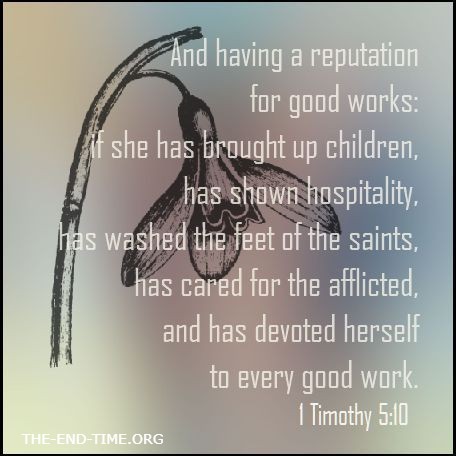
In New Testament times, there are biblical rules about hosting. In fact, a widow was not allowed to be on the list to receive food support if she had not “shown hospitality to strangers.” (1 Timothy 5:10). Jesus rebuked the Pharisee hosts, saying that they had failed in hosting duties- “When I entered your house, you did not give Me water for My feet… you gave Me no kiss…you did not anoint My head“, (Luke 7:44-46). One of the qualifications to be an overseer is that he is a hospitable person. (1 Timothy 3:2).
Genesis 18 has the story of Abraham and Lot’s visitations from heaven before the destruction of Sodom.
At the cusp of the destruction of four of the Cities of the Plain, (Sodom, Gomorrah, Admah, and Zeboiim), three men appeared at Abraham’s tent. Several things should be noted. First, it seems that as Abraham was relaxing during the heat of the day at the opening of his tent, the three men were not there, then suddenly they were. Abraham didn’t see them from a distance far off, he looked and suddenly they were “standing opposite him”.
Next, see how Abraham began hosting briskly. He didn’t linger, delay, or in any way demonstrate the was reluctant to host.
Verse 2: When he saw them, he ran from the tent door to meet them Verse 6a: So Abraham hurried into the tent to Sarah Verse 6b: “Quickly, prepare…“ Verse 7: Abraham also ran to the herd
He fed them, standing by while they ate. Picture a waiter, at attention near your table, and that was Abraham’s attitude, he didn’t sit with them. He stood, ready to serve.
A normal practice in Bible lands at that time was when the host saw visitors approaching, they stand by their house door or tent flap and await the guest’s arrival. That Abraham rushed to greet them and then bowed, indicated Abraham somehow intuited that these three were not normal men, but the Lord and heavenly visitors. The other two were angels who later went on to Sodom and spoke with Lot. So not only was Abraham a good host but had spiritual insight and worshiped.
Now let’s compare Lot’s hospitality. Genesis 19 has the scene.
Lot was sitting by the Gate. I’ll write another essay later about what that meant and what it entailed. Suffice to say now that being an elder by the gate meant you were a city official doing official things for the city such as administering, judging, ambassadorial greetings, security, etc.
Abraham’s honor at his war-time success likely dribbled onto Lot, and Lot ate it up. So Lot was an elder at the gate, now fully embedded in the city’s life. He was participating in the city. He had even allowed his daughters to marry its unholy citizens. Lot saw the two men (angels) approaching and did the expected as an elder would do, he greeted them and bowed.
However they were not as cordial with Lot as they had been with Abraham and later, Sarah. No conversation, no meal, no chit chat, not as friendly and pleasant with Lot. Lot extended his hospitality to them, saying in verse 2, “Now behold, my lords, please turn aside into your servant’s house, and spend the night, and wash your feet; then you may rise early and go on your way.“
The angels curtly replied, ‘Nah, we’re good. We’ll stay in the park.’
This bears thinking about for a moment. Some commenters say that declining an offer of hospitality was expected at first pass, a sign of modesty not to be too forward. Others say the angels were testing the sincerity of Lot’s offer. But I compare the scene with Abraham. In a theophany (incarnated appearance of Jesus in the Old Testament), Jesus came to Abraham. The three stayed a while, had a meal, calmly discussed things. They invited Sarah to join.
But Jesus did not accompany the angels to Sodom. The angels demurred at an invitation to stay with Lot. They did not inquire after Mrs. Lot as they had for Sarah. Their initial preference was to stay in the park. It was only Lot ‘strongly urging’ them that the angels agreed to lodge in Lot’s house.
BTW this is the first mention in the Bible of a house. Lot had one. Abraham, spiritually and materially rich, had a tent.
Lot brought them to his house, but the description of the food Lot put out was not lovingly described as it was for Abraham’s feast, which had included cold milk, tender meat, fine flour bread-cakes. All that is described is that Lot offered a slab of unleavened tasteless bread.
There are many scenes within these scenes that could be pondered. I’ll finish with a direct quote from “Exploring Genesis” by John Phillips-
“Abraham’s haste and humility teach us the much-neglected lesson of reverence in the presence of God. It was not a matter of forced or artificial posturing. It was a question of spiritual intuition, an overwhelming sense of the presence of God.”
“God took Abraham into His confidence and revealed to His servant a new line of truth-apocalyptic truth, truth concerning the impending overthrow of an utterly vile civilization. The revelation of that truth was an interesting test of Abraham’s growth in grace and of his increase in the knowledge of God.”
“How does a faithful, maturing, obedient child of God react to the truth that a holocaust of judgment is about to engulf a world of vile and godless men? Jonah, faced with apocalyptic truth, was glad. He pondered the impending doom of Nineveh with glee, determined to do nothing to stay its fall, careless of the thousands of little children who lived within its walls. Jesus, faced with apocalyptic truth, was moved to tears. … And He wept, wept for the city whose sins called for vengeance so thorough and so complete. Faced with apocalyptic truth, Abraham prayed.”
And we should do the same. Weep and pray for those caught in sin, pray for their repentance and turning from their immoral ways. Bow with reverence to the One who carries justice and mercy in His bosom. Pray for patience to see which will emerge on behalf of our sinning friends, family, co-workers, and pray for peace with the result, whichever it may be. For Jesus is the Lord of glory.
Scroll to bottom after photo for mini-library suggestions of books on grace.
What are these incomparable riches of God’s grace?
First, Christ Jesus.
“But God, who is rich in mercy, because of His great love with which He loved us, even when we were dead in trespasses, made us alive together with Christ (by grace you have been saved), and raised us up together, and made us sit together in the heavenly places in Christ Jesus, that in the ages to come He might show the exceeding riches of His grace in His kindness toward us in Christ Jesus.” (Ephesians 2:4-7).
As we are saved, we step from dead flesh to life eternal. From enemy sinner to forgiven friend. From object of wrath to recipient of grace.
He is GREAT!!
He manifested Himself as man, servant, no less, so that He could live a life full of the same temptations we experience, can you imagine that? “Because he himself suffered when he was tempted, He is able to help those who are being tempted.” (Hebrews 2:18)
GRACE!!
As our High Priest, when we confess to Him, He understands! Thoroughly, bodily, intimately. “For we do not have a high priest who is unable to sympathize with our weaknesses, but we have one who has been tempted in every way, just as we are–yet was without sin.” (Hebrews 4:15).
GRACE!!
Another example of the incomparable riches of His grace is “The Promise of the Holy Spirit” –“On the last day, that great day of the feast, Jesus stood and cried out, saying, “If anyone thirsts, let him come to Me and drink. He who believes in Me, as the Scripture has said, out of his heart will flow rivers of living water.” But this He spoke concerning the Spirit, whom those believing in Him would receive; for the Holy Spirit was not yet given, because Jesus was not yet glorified.” (John 7:37-39).
We are given the grace of Spirit within us and as a result have eternal security of our salvation all the days of our life. Incomparable grace!
“He set his seal of ownership on us, and put his Spirit in our hearts as a deposit, guaranteeing what is to come.” (2 Corinthians 1:22)
What is to come is MORE GRACE!!
When you think of Jesus and what He has done for us and continues to do, don’t you just get weak in the knees? Doesn’t your heart faint with love? He saved us so that He could shower us with His grace. “But the God of all grace, who hath called us unto his eternal glory by Christ Jesus, after that ye have suffered a while, make you perfect, stablish, strengthen, settle you.” (1 Peter 5:10) He is the God of all grace, and He chose to shower us with the riches of that incomparable grace.
Don’t forget to remind each other of these things. Encourage one another. Repeat your testimonies. Share verses, laugh with joy at our Great Savior, who is of all Grace. All is well because Christ Jesus has risen and dwells in His heaven. All of us in Him are testimonies of His grace, and that is all joy.
EPrata photos
Some Suggestions for Books on Grace:
Fundamentals of the Faith: 13 Lessons to Grow in the Grace and Knowledge of Jesus Christ, foreword by John MacArthur
John Bunyan and the Grace of Fearing God, Joel R. Beeke
The Glory of Grace, Lewis Allen
Christian Freedom (Grace Essentials), Samuel Bolton
Grace Abounding to the Chief of Sinners: A Brief Relation of the Exceeding Mercy of God in Christ to His Poor Servant John Bunyan, John Bunyan
All of Grace: An Earnest Word with Those Who Are Seeking Salvation by the Lord Jesus Christ, C. H. Spurgeon
Dark Clouds, Deep Mercy: Discovering the Grace of Lament, Mark Vroegop
Grace Transforming, Philip Graham Ryken
The Grace of Repentance, Sinclair B. Ferguson
Grace Defined and Defended: What a 400-Year-Old Confession Teaches Us about Sin, Salvation, and the Sovereignty of God, Kevin DeYoung
Transforming Grace: Living Confidently in God’s Unfailing Love, Jerry Bridges
Genesis is such an amazing book of the Bible. In re-reading Genesis 12, I was again astounded by the depth and complexity of human history and our relationship with God. Genesis 12 is the famous chapter in which God called Abram (later name changed to Abraham) and made a significant promise:
I will make you a great nation; … I will bless those who bless you. And I will curse him who curses you; And in you all the families of the earth shall be blessed.” (Gen 12:2a & 3a)
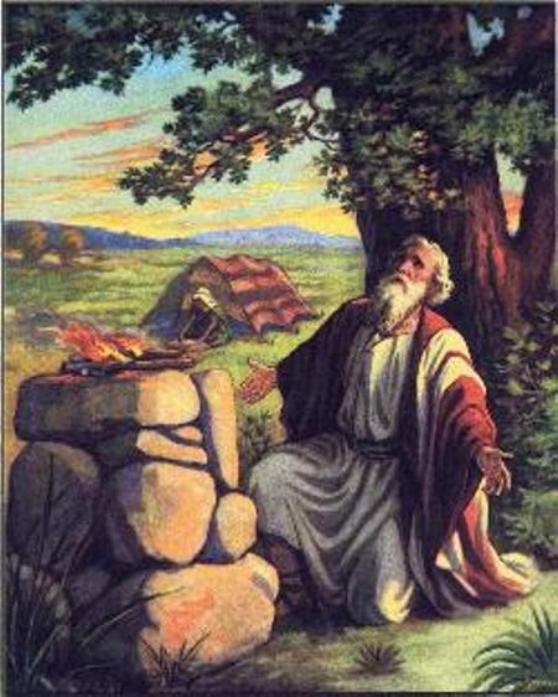
You can be sure that the promise of God is solid, and that we are seeing the curse of nations who curse Israel beginning before our eyes. In verse 7 of Genesis 12, “Then the LORD appeared to Abram,” God appeared to Abraham. In my interpretation he appeared as the Son (Jesus said in John 8:58,”Before Abraham was, I AM.” He was quoting God speaking to Moses at the burning bush in Exodus 3:14). God appeared to Abram! Think on that for a moment. The El-Shaddai, the I AM, the ALMIGHTY, appeared to a man, walked with him, spoke to him, comforted him, and commanded him. It is a shuddering thought to ponder the gravity of those moments. That gravity was not lost on Abraham, who built altars to Him all over the Land wherever he went. Abraham did not build houses for himself, he built altars to God.
Then the LORD appeared to Abram and said, “To your descendants I will give this land.” And there he built an altar to the LORD, who had appeared to him. And he moved from there to the mountain east of Bethel, and he pitched his tent with Bethel on the west and Ai on the east; there he built an altar to the LORD and called on the name of the LORD. So Abram journeyed, going on still toward the South.
Abraham built altars right away, to mark his obedience to the LORD, and to sacrifice and worship. When Abraham came back from Egypt, “to the place of the altar which he had made there at first. And there Abram called on the name of the LORD.” (Genesis 13:3-4) which is another way of saying worship and sacrifice. When Abraham and Lot had separated and Abram moved to the region of Hebron, he “built an altar there to the Lord” (Genesis 13:18).
EPrata photo
Abraham corresponded with the LORD by building altars for worship. Building an altar is an intentional, physical act. Worshiping on front of an altar is an intentional, physical act. When Abraham returned from Egypt, Abraham saw the altar he had originally made and ‘called on the name of the LORD’ in worship and thanks. In this case, the altar was a reminder of his relationship with the great I AM.
We do not need to build altars in these New Testament times, but we do need to be as dedicated and as intentional as Abraham in our relationship with God and Jesus and the Holy Spirit. You note that when Abraham and Lot separated, there was no mention of Lot building an altar to the LORD.
EPrata photo
Lot was with Abraham when Abraham got the calling from God (Genesis 12:5) and was with Abraham throughout the blessing of his peoples’ increase. Lot saw God working in his family’s life. He reaped the blessings of Abraham’s obedience. But Lot did not build an altar. And from the biblical record we see how the distance between man and God can slowly grow when we fail to consistently correspond with the LORD.
Lot crept toward Sodom, closer and closer he pitched his tent, until he was finally living inside the city with all its sin and perversity. Though the sins of the city grieved Lot greatly (2 Peter 2:6-8) Lot did not build an altar. And in the end, Lot lost his city, his possessions, his family, his wife, (“Remember Lot’s wife” Luke 17:32) and sin fell upon his daughters, who lay with their father in perverse sin.
We do not build altars … but we pray. Our part of the correspondence between ourselves and God/Jesus/Holy Spirit is maintained through prayer, corporate worship, and fellowship in the body of the believers. Is your heart an altar to I AM? Do you pray constantly? Do you worship in faith and obedience, as Abraham did? No? Remember Lot’s wife.
Sequester a place where you pray, erect a wall around the dedicated time you pray, build an altar of prayer in your life and you will be blessed by the presence of the I AM Himself!!! He is with you, lo, even to the end of the age.
Martyn Lloyd-Jones (MLJ) preached through an incredible series called “The Great Doctrines of God.” You can listen to them here. The companion sermon to The Good Angels (The Bad Angels) is unfortunately not recorded, but you can read a transcript of that sermon on fallen angels from MLJ, here.
Listening to his sermon on the good angels gave me such encouragement. I always find that thinking of, reading about, or listening to any piece which exalts the majesty of God is in itself great encouragement. And why not? All good things come from God and thus, He is the source of encouragement.
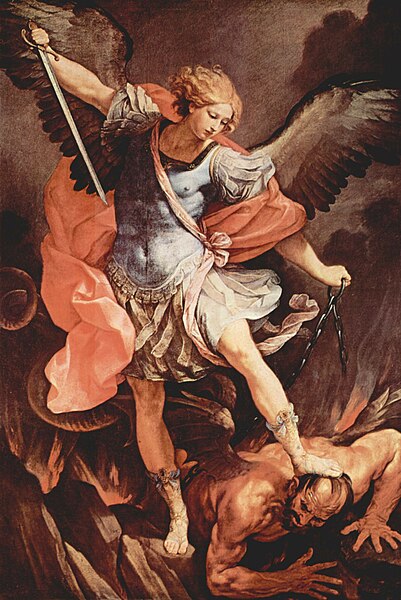
“Guido Reni’s Michael (in Santa Maria della Concezione church, Rome, 1636) tramples Satan. Public domain
Lloyd-Jones’s sermon brought out so many great points. The red type from here on are MLJ’s words.
“Let me ask a question at this point: How often have you heard either a sermon or an address on the biblical doctrine of the angels? How often have you considered this doctrine or meditated upon it? I ask those questions in order that I may ask another: Why is it that we tend to neglect certain parts of the biblical revelation? Why is it that even as evangelical people we seem to be content with the minimum of doctrine? Why are we only interested in the doctrine of salvation? It more and more seems to me that we rob ourselves of a wealth of truth because we do not isolate these doctrines and hold them up for our study and contemplation.”
I’ll summarize in very bare bones fashion what Dr Lloyd-Jones preached on:
Jesus made all the angels. There are thousands upon thousands of them. (Luke 2:13, Rev. 5:11). He made every one a unique individual. He did this before He created the world. (Colossians 1:16).
Angels never die. They were created, but won’t die. They came into existence by Jesus at a certain point, but their existence will never end. And what about those cherubim (e.g. Psalm. 99:1; Ezekiel 10:1–22) and seraphim (Isaiah 6:2)?
They dwell in the presence of God, as we will one day. Don’t forget about the cherubim standing guard at the eastern entrance to the Garden of Eden with his flaming sword going every which way. Dr Lloyd-Jones wondered if he would be there also to welcome us when the Garden is re-opened at the resurrection. They are incredible beings.
The Annunciation, by Leonardo da Vinci. Public domain
MLJ said, “I think that there is profound significance in that; the flaming sword is to prevent man from entering back again into Paradise. He can never go back on his own. There is only one way back, and it is the way that has been opened by the Lord Jesus Christ.”
He spent some time developing the hierarchy of angelic orders and the distribution of work. From archangels on down, he revealed truth after truth. His take on it was fascinating, delving deep into the bible and unearthing gem after gem. He briefly mentioned the hierarchy/division of the bad angels but only touched on it since this sermon was only about the good angels.
And that, of course, leads us in turn to the next question which is: Are there orders among the angels? Are they all identical? Are they equal in power and in authority, or have they orders and ranks? It seems quite clear that there is a division both in status and in work.
Angel appears to Zacharias in the Temple. Book illustration for Scenes from the main histories of the Old and New Testament. The Hague by Pieter de Hondt, 1728. Public domain
And that brings us to the whole question of their power. The Bible is explicit about this—they are very great in power. We are told of the mighty angels, that they excel in strength‘ (Ps. 103:20). Their power is undoubtedly greater than human power; they are not only superior in dignity and in status, they are also undoubtedly superior in power.
Salvation is such an incredible, holy act, and the angels long to look into it.
Then there is something else that the angels are very busy about. I never read this next point without having a still more glorious understanding of my salvation. We are told that they spend a good deal of their time in looking into this question of our salvation. Let me give you my authority. Peter, in talking about our salvation says, ‘which things the angels desire to look into’ (1 Peter 1:12). It is something so marvellous, and so wonderful, that these created angelic spirits, who have always spent their eternity in the presence of God, are, as it were, looking on at this thing which is most astonishing to them, and which surpasses everything else.
Then the next thing we are told about them is this—let us bear it in mind always—they not only behold the face of God, they are not only looking into salvation, but they are looking at us. …the Scripture teaches that when Christians meet together, and when they gather together in prayer, then the angels of God are present…”
If you read Revelation you realize just how much the angels participate in bringing judgment. They are instruments of God’s will and participate in it. They gave the law. They reveal God’s purposes. They bring messages from God. When not directly performing a task, they stand at attention, adoring God, worshiping Him, looking into salvation. They are busy. And one of the ways they are busy is that they minister to God’s own people.
“But again I would say that the most comforting, and the most wonderful aspect of this teaching is what we are told in the Scriptures of the way in which God uses the angels to bless and to care for His own people: Are they not all ministering spirits, sent forth [called forth] to minister for them who shall be heirs of salvation?‘ (Heb. 1:14). What, after all, is the greatest function of the angels? It is to minister to you and to me—to minister to the heirs of salvation.”
Chris Koelle, The Book of Revelation Graphic Novel Source
We find that the angels protect us. They also give us guidance. They cheer us and to give us comfort and consolation. Angels fight on behalf of God. (Elisha’s servant was given a sight of this). They deliver us from situations (Peter was led from jail by an angel). They are tremendous beings. Of course, Dr. Lloyd-Jones developed each of those points He ended with this glorious, glorious testament to the level of care that God gives His children:
But there is something more which I trust will give great comfort and consolation to many people who may perhaps have been thinking with fear and dread of the end of their life in this world—afraid of the physical aspect of death. But we need not be, for we read in Luke 16:22–3…
…when we come to die they will be there to receive our spirit and to take us to Paradise. That is the teaching of the Lord Jesus Christ Himself. Never again, Christian people, imagine that when you come to die you will be going into some awful loneliness as a disembodied spirit to an unknown world. Not at all. The angels of God will be there to receive you, and to conduct you, and to take you to be with the Lord in Paradise. What a wonderful thing!
Oh, indeed it is wonderful! God made the uncountable stars and named them all. He made the innumerable angels and named them too. The doctrine of angels is an amazing doctrine.
Angel rolled the stone from the tomb- Alexander Ivanov. Public domain
Shame on us Christian people that we neglect the doctrine of the angels, that we do not read our Scriptures thoroughly and wholly. …
…”Let us take hold of the biblical teaching. Let us not rob ourselves as we do. Let us look into this great Word and receive it as it is, and we shall find things that will amaze us, and fill us with a still greater sense of wonder as we come to know our marvellous God and His wondrous love towards us.”
Amen! Please take some time to listen to the sermon. Of course, just the few quotes here do not even come close to comparing the full impact of this terrific sermon and hearing about the doctrine of angels.












 the-end-time.org
.jpg)