
EPrata photo
My the Lord’s grace fill you today
EPrata photo
My the Lord’s grace fill you today
By Elizabeth Prata
SYNOPSIS
A popular teaching claims mothers can secure pain-free childbirth through faith and declaration. Examining Scripture in context, this review exposes faulty interpretation, failed prophecy, and the burden such promises place on women, urging discernment, humility, and trust in God rather than formulas or trends.
Continue reading “Promises of Painless Birth and the Problem of False Hope”By Elizabeth Prata
Jesus said we do not need to worry. Mt 6:25: “For this reason I say to you, do not be worried about your life, as to what you will eat or what you will drink; nor for your body, as to what you will put on. Is not life more than food, and the body more than clothing?”
So let us watch and marvel at His word and feel joy in His promises.
Continue reading “Prata Potpourri: Chart of Suffering, Planetary Alignment, Marching Orders, How to Deal with Narcissists Biblically, more”By Elizabeth Prata
This article addresses the tension wives face when husbands fail to lead spiritually. Drawing on counsel from John Piper and others, it urges patient prayer, humble faith, and steadfast trust in the Holy Spirit to work in God’s timing.
Continue reading “Waiting, Praying, Hoping: When Leadership Lags at Home”By Elizabeth Prata

My “Cut To the Chase” articles are shorter form, bulleted discernment outlines, rather than a longer essay.
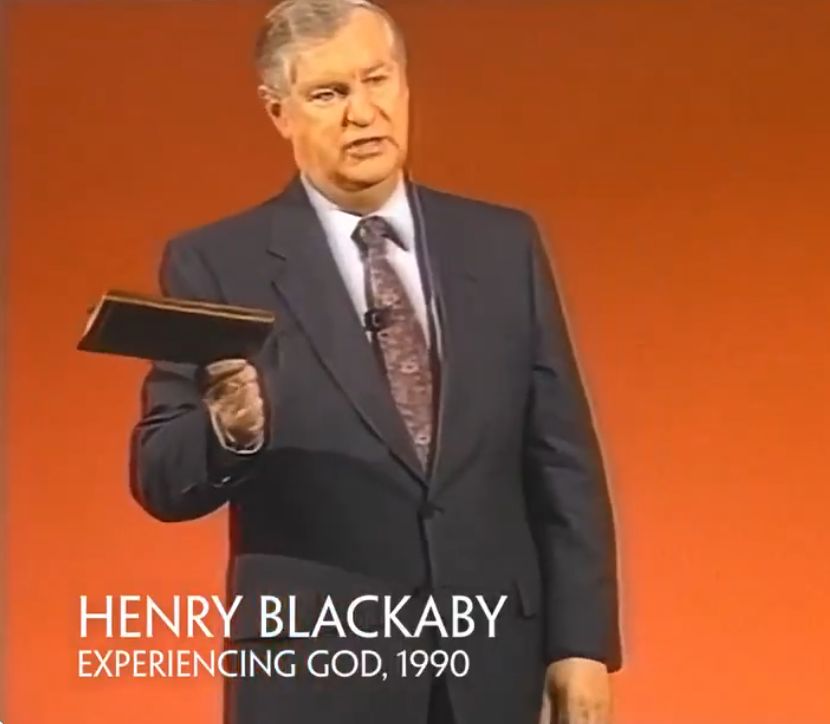
@JustinPetersMin wrote, “Experiencing God was one of the most damaging books introduced to the evangelical world in over a hundred years.”
That us a lot of power in a book. False doctrine does not only emerge from the pulpit. In fact, it is more likely to emerge from the tangential ministries in a church, such as the women’s Bible study, the church Library, or brought in as evil seeds from external conferences members attend elsewhere.
Why was “Experiencing God” so damaging? Let’s take a look.
Issue #1: Normalizing hearing from God
5 Solas wrote on X about Blackaby and Experiencing God, “The false teaching that the way God speaks to His people under the New Covenant is audibly or internally by some “still small voice,” and not through His all-sufficient written Word, has done unimaginable harm to the church. The idea that it’s not a personal relationship unless you are hearing voices or getting impressions is damnable. You are essentially saying that God doesn’t speak through His Word.”
This issue relates to the “Sufficiency of Scripture.” We often refer to 2 Timothy 3:16-17 when saying that God’s written word as contained in the 66 books of the Bible is enough for the Christian to learn, absorb, and live by. We do not see and interpret signs or omens, hear whispers, or listen to audible voices directing our steps. The verse says:
All Scripture is inspired by God and beneficial for teaching, for rebuke, for correction, for training in righteousness; so that the man or woman of God may be fully capable, equipped for every good work.
Note the words- All, fully, every. Those words are quantifiers that indicate total, complete, or inclusive quantity. Note what the Bible is good for- all the things a Christian might need to do- teaching (and learning), training, rebuking. Note the benefits of living by the Word only- righteousness, capable, equipped.
How many verses does one need when we have such a perfect description of the Christian life right there in 2 Timothy? But wait, there’s more: Hebrews 4:12, Romans 15:4, Matthew 4:4 and other verses reinforce the sufficiency of God’s word alone.
Issue #2: Believing we can see where God is working
A refrain comes up frequently in the book: “watch to see where God is working and join Him in His work.”
One question: Where ISN’T God working? There is not one molecule not under his jurisdiction, command, and movement. If there is one maverick molecule in the universe (as Sproul famously said) then God is not God, not in control, and not working. It would invalidate His divine sovereignty.
One thought: Do we, being sinners with sin-darkened minds and a finite perspective, have the intelligence to see and know exactly where God is doing a work? The way Providence operates is that it sometimes can be seen but only AFTER the work is done.
One warning: God doesn’t ‘invite’ us to join Him. He commands us to do His will. Working out our salvation with fear and trembling and pursuing holiness is not a cafeteria experience of choosing. ‘I want to join Him there, but not there, that looks uncomfortable…’
Issue #3: That we can come to know God through our own, self-interpreted experiences
In the book, Blackaby (and co-author Claude King) constantly prioritize personal experience over the commands of God through scripture. From the book blurb at Lifeway: “God is inviting you into an intimate love relationship through which He reveals to you His will, His ways, and His work” but the book teaches that He does this not through scripture, but through our experiences and observations.
We don’t come to know God by looking around and observing. Romans 1 teaches that the danger in doing this is that we begin to worship the creation and not the creator.
Justin Peters said in his teaching linked below that, in “Experiencing God, Henry Blackaby says this: “If you have troubling hearing God speak, you are in trouble at the very heart of your Christian experience.”
That is a dire warning that Blackaby and King issued in their book. ARE we in trouble is we don’t hear God speak? Many conscientious and committed Christians would not want to make a mistake in failing to do something God wants us to do, so they would in all diligence strain to listen. Others who are not as conscientious but are more prideful would seize that claim and puff themselves up as conduits for God. Many professing Christians did just that and claims began popping up like multiplying viruses that various people claimed to hear from God all the time and ‘He said…’
Peters continued, “I would submit to you that the resource, the book that is singularly most responsible for introducing charismatic theology into at least theoretically non-charismatic churches is Experiencing God by Henry Blackaby that came out in 1991. If you go back before 1991, at least in non-charismatic churches, almost everyone would have understood that God speaks to us through the Bible, we speak to Him in prayer. Today hardly anybody understands that; and I believe experiencing God is singularly most responsible for introducing these notions into non-charismatic churches.” –end Justin Peters quote.
The Bible is the most trustworthy source for living life under God’s heaven, for understanding HIs will, and for how to pursue holiness. God gave us His book and that is where He speaks, nowhere else. Avoid “Experiencing God” and experience living by His word from the Bible instead.
“The book that is singularly most responsible for introducing charismatic theology into at least theoretically non-charismatic churches is Experiencing God by Henry Blackaby…” said Justin Peters at the 2019 Truth Matters Conference.
Bob Dewaay at Critical Issues Commentary: Unbiblical Teachings on Prayer and Experiencing God
Book: God Doesn’t Whisper by Jim Osman (Author)
By Elizabeth Prata
SYNOPSIS
Feeling the old pressure of New Year’s dates and Valentine expectations, I contrast restless singleness with hard-won contentment in Christ. Through regret, divorce, and redemption, I urge women to trust God’s appointed season, warning that chasing marriage can hurt more than waiting.

Add
The preaching of the true word of God always pierces hearts.
“So those who received his word were baptized, and there were added that day about three thousand souls.” (Acts 2:41)
Subtract
However, taking away from that word will bring condemnation to those who subtract from it:
“and if anyone takes away from the words of the book of this prophecy, God will take away his share in the tree of life and in the holy city, which are described in this book.” (Revelation 22:19)
Multiply
We love God’s word so much we share it, not sparingly but liberally. To His own glory, the Lord multiplies what is needed in the sower so they can return and multiply their doing good again and again–
“He who supplies seed to the sower and bread for food will supply and multiply your seed for sowing and increase the harvest of your righteousness.” (2 Corinthians 9:10)
Barnes Notes explains, “Multiply your seed sown – Greatly increase your means of doing good; make the result of all your benefactions so to abound that you may have the means of doing good again, and on a larger scale, as the seed sown in the earth is so increased that the farmer may have the means of sowing more abundantly again.”
Divide
But make no mistake, proclamation of, living by, and protecting the word will bring division. Doctrine DOES divide.
“Do you think that I have come to give peace on earth? No, I tell you, but rather division.” (Luke 12:51)
In efforts not to have “division” but a (false) unity based on a watered down version of the Gospel, you really have nothing. Nothing from nothing leaves nothing, said Billy Preston.
John MacArthur on doctrine dividing, from his sermon A Call for Discernment: “When you don’t even lay down clear doctrine at the level of the Gospel, where are you going to go from there? And the cry is, as one man said to me when my book on The Gospel According to Jesus came out, he said, “Your book is divisive!” You want to know something? He’s right. He’s right. Want to know something else? Doctrine divides. People say, “Oh doctrine divides … doctrine divides.” I say, “Amen, preach it, doctrine divides.” You know what it does? It confronts error. It separates true from false. It makes judgments. Today’s climate, however, of unity in the priority of relationships, that’s not tolerable.”
But here is the new math of God’s kingdom: His infinitely extravagant grace! There is no counting it and no end to it. Praise the Lord that His grace and mercies fall on us every day. I can’t add the number of times I’ve been a grateful recipient of it.
“Our Lord is great, vast in power; His understanding is infinite.” (Psalm 147:5)
“Yes, everything else is worthless when compared with the infinite value of knowing Christ Jesus my Lord.” (Philippians 3:8).

By Elizabeth Prata
SYNOPSIS
I reflect on God’s love with His righteous wrath, using Daniel’s compassion toward Nebuchadnezzar. The essay argues that the Gospel begins with wrath against sin and ends with redeeming love, urging believers to love enemies while warning that repentance is essential for salvation.
Continue reading “The Gospel’s Bookends: Wrath and Love”By Elizabeth Prata

‘Cut To the Chase’ essays are shorter form bulleted articles highlighting the issues of a particular author or false doctrine.
Ann Voskamp is a popular writer and conference speaker. Her most famous book is “One Thousand Gifts”, which is an exploration of her spirituality in a poetic narrative form.
Issue #1: Inappropriate sexual metaphors and innuendos about God
In his original review of Voskamp’s book, blogger and book reviewer Tim Challies wrote this:
“By the book’s final chapter Voskamp has realized that she still hasn’t put it all together, that something is still missing, and so, in her words, “I fly to Paris and discover how to make love to God.” This closing chapter, “The Joy of Intimacy,” is her discovery of God through something akin to sexual intimacy. In a chapter laden with intimate imagery she falls in love with God again, but this time hears him urging to respond. She wants more of him. And then at last she experiences some kind of spiritual climax, some understanding of what it means to fully live, of what it means to be one with Christ, to experience the deepest kind of union. “God makes love with grace upon grace, every moment a making of His love for us. Couldn’t I make love to God, making every moment love for Him? To know Him the way Adam knew Eve. Spirit skin to spirit skin?” –Challies
“It is true, of course, that the Bible uses imagery of bride and groom to describe the relationship of Christ to his church, but it does not go as far as integrating the sexual component of marriage. Sometimes it is best to allow God to define the parameters of our metaphors rather than taking them to a much greater extent. Voskamp would have done well to limit herself here.” –Challies
“The sexuality of this chapter is not all that concerns me. I am also concerned with the kind of spiritual climax she experiences. Why should she have to travel to a Roman Catholic cathedral in a foreign land in order to truly experience the Lord?” –end Challies quoting Voskamp.
Issue #2: Voskamp’s romantic panentheism.
Bob Dewaay is solid, He is at Critical Issues Commentary. His articles are long but good. He reviews Voskamp, her book, and her romantic panentheism here: Romantic Panentheism: A Review of One Thousand Gifts by Ann Voskamp
Dewaay shows that “Voskamp sees God in everything, and that concept has a name—panentheism. We must distinguish panentheism from pantheism, the belief that God is everything. If we accept that God is in everything, then we accept that God can be discovered and understood through encounters with nature.”
Marcia Montenegro at Christian Answers for the New Age wrote about Voskamp and had similar concerns with the unbiblical stance of her panentheism-
Ann Voskamp: Panentheism and Hollow Words, By Marcia Montenegro
“Panentheism is contrary to Scripture, yet can sound very biblically correct and even uplifting. Panentheism mingles God with creation, demeans His majesty and omnipotence, and ends up altering God’s attributes and character as presented in the scriptures.”: (with additional links to other commentaries about Voskamp)”
Issue #3: Ann Voskamp partners with false teachers.
Recent examples are her speaking at the HopeStory Conference with keynote speaker and false teacher Lisa Bevere. (Source). Also has appeared at the same event as with Mark Batterson (who is false). Voskamp invited false teacher Beth Moore to guest post on her website.
Please avoid Ann Voskamp. She promotes unbiblical doctrines, lacks discernment, and makes other problematic choices that indicate consuming her material is not healthy for the Christian woman. Be discerning.

By Elizabeth Prata
SYNOPSIS
Technological progress invites both benefit and danger. As AI blurs reality through deepfakes and misinformation, society’s grip on truth weakens, preparing hearts for Revelation’s prophetic deception. Christians must cling to Scripture, the unchanging anchor, amid confusion, remembering only Christ conquers death and saves.