In around 1400 BC, Moses led the Israelites into the wilderness. They had been released from slavery by powerful acts of God, including ten plagues and parting the Red Sea to aid their escape. (Exodus 1-15)
However, it wasn’t long before the Israelites grumbled. They were sick of manna, they wanted an easier life, they wanted to get there. (Numbers 20:4). So they grumbled some more, against Moses and against God.
When Jesus came down from the mountain, large crowds followed Him. And a leper came to Him and bowed down before Him, and said, “Lord, if You are willing, You can make me clean.” Jesus stretched out His hand and touched him, saying, “I am willing; be cleansed.” And immediately his leprosy was cleansed. And Jesus said to him, “See that you tell no one; but go, show yourself to the priest and present the offering that Moses commanded, as a testimony to them.” (Matthew 8:1-4).
Notice that in the Bible it’s almost always (with two exceptions) a cleansing of a leper, not a healing of a leper. This essay examines why that distinction exists, and looks at the life of a person in New Testament times who has the disease of leprosy.
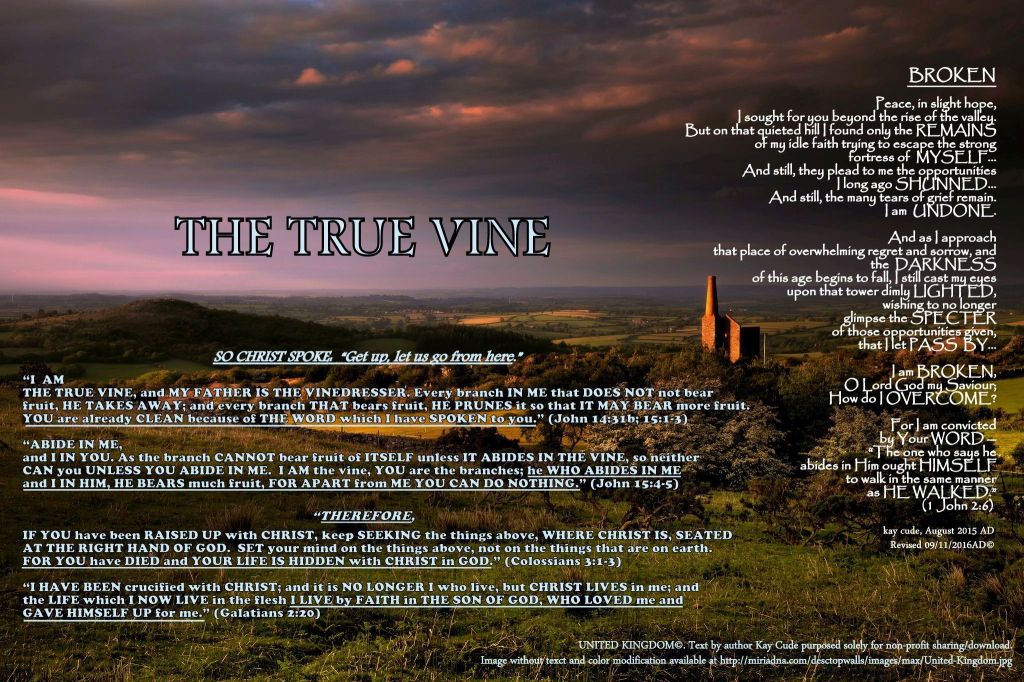
Kay Cude poetry, used with permission. Click picture to enlarge
Artist’s Statement:
I am consistently drawn to Dore’s work! And each time I utilize one of his profoundly sensitive pieces, I imagine that as he worked on his wood plates, he had no concept of their enduring qualities or that centuries later I and others would be drawn to use them in our efforts to magnify and praise God! How amazed Dore would be to know that his telling works now cover the earth through digital media, or that millions have seen God’s glory through his pieces, and in a more profound way than he could even begin to imagine! Isn’t God just so very wise! His plans to make Himself and His Christ known through art and other forms of media makes our intuitiveness very pale! I believe God selects those desiring to serve Him in this manner and uses their work (spiritual gifts) for His purpose…
I was asked recently for my testimony. Here are the thoughts of a pagan, graciously drawn to our Blessed Savior
I was not saved by the Lord’s grace until I was 43 years old. Before that, I lived in New England and lived a very liberal life. I’m grateful to my patient and loving Savior who elected me, drew me, and lifted me from the pit of sin in which I was living.
Until that time, during my adult life, I could not understand the phenomenon of Jesus. Oh, I understood it to be a phenomenon, all right. No one can dismiss Him, least of all the unsaved. He is a pervasive presence that simply does not go away. I used to actively wonder about His staying power. Buddha comes and goes as a fad, Allah wasn’t even around until 600 AD and wasn’t popular for a long time after that. Pele the volcano goddess waned and Ra the sun god is passe. And whatever happened to Aphrodite and Mars? But Jesus never waned and He is worshiped in every culture throughout every era.
On July 8, 2012, Pastor Jim Murphy of First Baptist Church of Johnson City, NY delivered a sermon titled “The Subtlety of Satan“. I can’t believe it’s been almost ten years! I remember the impact of that sermon like it was yesterday. The church synopsized Pr. Murphy’s sermon this way:
"Pastor Jim looked back over the last fifty years of church ministry to suggest the slow, incremental, and subtle changes that have created a theological crisis resulting in a move away from the foundational authority of the Word of God and into an experiential, emotional, and radically individualized form of Christianity. Not only will this review trace the consequences of the "little" erroneous theological conclusions that have defined the current struggle within evangelicalism, it will also define the way back to biblical Christianity."
I wrote about that sermon here. One of the things that caught my attention was the fact that the Pastor repented for not paying attention to some of the other gateway points of encroachment satan uses to enter into the church in order to corrupt it. We all know that elders are charged with guarding the pulpit from satan’s wiles against polluting the word of God. But satan enters in through other points in the church too. He enters in via the church library. Via the women’s ministry. Via the music.
Most pastors guard the pulpit well, this gate is usually tended to and secure EPrata photo
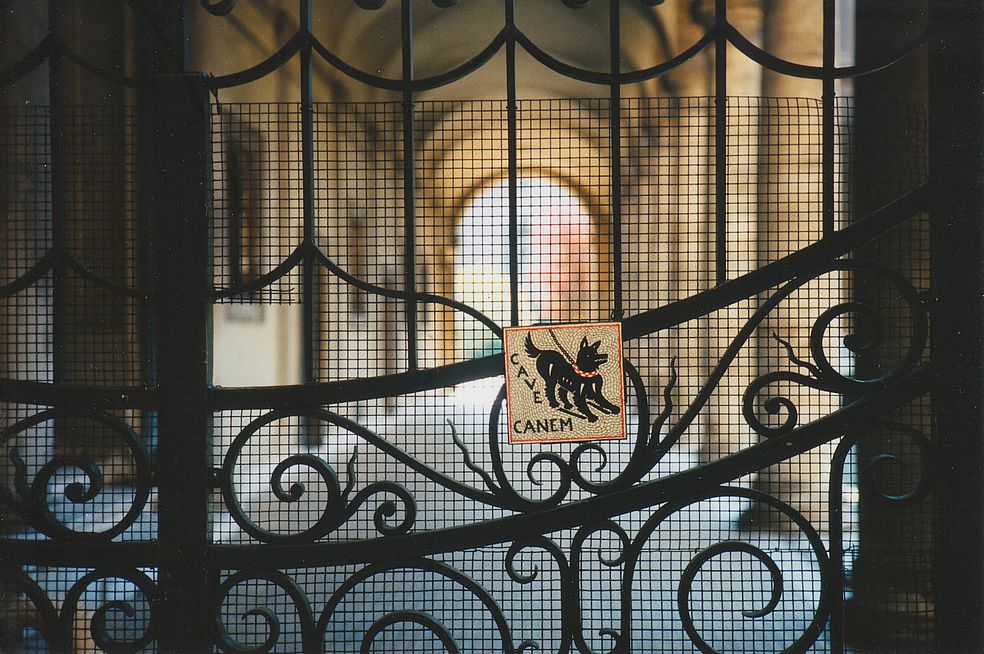
Meanwhile, other fences in the church are left unguarded or are neglected. Satan enters in the gaps. EPrata photo
Pastor Joel Webbon of Right Response Ministries interviewed Justin Peters about that very point of entry. Peters called music the “Gateway Drug” to heresy.
Music contains doctrine. It can present good doctrine or poor doctrine or heresy. As the congregation sings good or bad or heretical words, it changes the mind and heart. It’s meant to. Good music points to God and changes one’s affections toward Him and extols His attributes. Bad and heretical music points to ourselves and nudges us away from heavenly affections.
Music is one infiltration point. The music you sing in your church matters. The clip below is 6 minutes. Under the video are some resources about the importance of singing good music in church, and why.
Hymns are wonderful didactic tools, filled with Scripture and sound doctrine, a medium for teaching and admonishing one another, as we are commanded to do in Colossians 3:16… ~John MacArthur
Grace Community Church, Generations of Grace-Hymnody: Here, the ministry of John MacArthur’s church through opera singer Phillip Webb presents a short backstory to a hymn, and then he sings the hymn with instrumental backup. You might need to plug in your email to access the 93 hymns.
Truth for Life ministry by Alistair Begg discusses Music and Worship, with Keith Getty, saying,
Music has been a fundamental element of Christian worship from the earliest days of the church. As Keith Getty points out, though, its power is not guaranteed. Singing lyrics with shallow theology or leaving the actual singing to the “professionals” will not help form the body of Christ. Music’s transformative power in worship is only present when the full Gospel is proclaimed and when the congregation sings God’s truth as one body.

Tend your fences...because satan is subtle.
For a lot of people in the US, summer is only just getting started. For me, I go back to school on August 2, so my summer break is winding down, fast! It always flies by quickly, but this year more than ever. I moved from one town to another on June 1, and it took a good 3 weeks to get settled. That, plus some other issues happening, made this year’s summer break seem like a blink.
The SBC Annual Meeting didn’t go well, and that took energy from me, and then the plagiarism scandal pushed me over the edge. I hate sermon plagiarism because it is deception, lying, laziness, and offends God severely. Pastors are given a high position in God’s economy. They are to share the word of God with the people divide it rightly. When pastors deliberately fail at this repeatedly, in my mind it’s a sin of the highest order. So that wearied me too.
Let’s take a break. Here are some nice, wholesome, pleasant links for you that have nothing to do with any scandal.
BOOKS: Carrie Graham Koens and her husband adopted 5 children from Latin America a few years ago. The children didn’t know English, or much of anything outside their home country. The oldest was sullen and resentful. Carrie relates a beautiful story of striving to find common ground with her newly adopted kids, through reading aloud. Here she reviews The Enchanted Hour: The Miraculous Power of Reading Aloud in an Age of Distraction, and offers a beautifully written personal experience story, here.
FOOD: Here at Good, Cheap Eats, Jessica reviews her experience with the subscription of Imperfect Produce (changed to Imperfect Foods). In my area there’s Misfit Market, and there are many other subscription boxes you can try. While it was available in my area, I belonged to a produce co-op where you went to a location and picked up your ordered box. You ordered a box, but accepted whatever came in it. It was a frugal alternative to full price produce at the supermarket, and I was introduced to produce I had not heard of before. I now have too many food allergies and a much more limited range of produce (and foods in general) I can eat, so subscription boxes wont’ work for me any more, but I thought Jessica’s review of this particular subscription was fair and honest. Check out her other essays for great information on a range of food-related and kitchen topics.
MANSION: Want to buy an 11-acre mansion set on the cliffs of Dover, (In England) complete with its own lighthouse? Only 4.25 million UK pounds. Can’t quite pull that out of your pocket? Then take a virtual tour and enjoy the beauty, and dream a little.
MOVIES: Need a pleasing, feel-good family movie to rest your eyes and not blight your soul? I enjoyed Blue Miracle with Dennis Quaid. Here, The World reviews it positively, if you want to find more about it. On Netflix.
ART: The bustling NY City Tribeca art scene is as far away from here, a rural county with cows and pastures and farmers trundling up the road on tractors, but that’s why I’m fascinated with it. People in America live vastly different lives from each other in vastly diverse settings. Here is an art essay on the Tribeca gallery scene and the realtor who helped bustle it.
CATS: I’ve been missing having a cat lately. Not enough to get another one, and my lease forbids animals anyway, so I’ve satisfied my need to see kitties with watching Youtube videos. Of those, thousands abound! I watched a short series from wife and husband Rachel & Jun, who had pity on a starving, injured cat, caught it, and brought home to foster in their small apartment in Japan.
WRITING: We’ve had art, books, and now writing. Next will be music, thus completing my surf today of the arts I enjoy. I agreed with Doug Eaton who says that writing can be and often is a spiritual discipline. It is for me. I found this on Challies’ roundup links so a hat tip to him. Writing as a Spiritual Discipline
MUSIC: At Grace Community Church, there’s a media section of Hymnology. Opera singer Phillip Webb introduces a hymn by giving the backstory of the author, then he sings it. It’s a relaxing, educational, sweet 4 minutes. You can watch for free but need to sign up with email to get in. GCC doesn’t spam you. Hymnology from Hymns of Grace
New York City. The Empire State Building as seen from the East River. Note its lightning rod. EPrata photo
Our teaching pastor is going through Acts. We got to a part where the scriptures introduced Barnabas. My teaching pastor spent some time relating to us the scriptures that demonstrated Barnabas’ character. Anyone who has spent any amount of time in the New Testament is familiar with Barnabas.
Barnabas was nicknamed “Son of Encouragement.” It’s a great nickname. Son of Encouragement is way better than the nickname given to James and John- “Sons of Thunder” AKA Boanerges. Barnabas and Paul were together for many years, a pair that encouraged each other, supported each other, and went about on mission teaching and preaching having each other’s backs. Barnabas even affirmed Saul before he was widely known as a convert and still seen as a persecutor. (Acts 15:2, Acts 9:27). Look for how many times in the New Testament we read, “Paul and Barnabas.” As Kevin DeYoung said in his sermon Christians in Conflict, these two were like Batman and Robin.
So the other day I watched a clip of a storm hovering over a driving range. The range had been cleared, but one teenager wanted to get in one last swing. He drove his golf ball off the driving tee, and hurtling 88 miles per hour, in mid-air a lighting bolt came out of nowhere and incinerated it. The youth was amazed and scurried further into the safety of the covered roof. The video made the news.
The National Weather Service has a few things to say about lightning and thunder. “Lightning is an underrated killer, responsible for an average of 26 deaths per year across the country (10 year average).” The NWS motto is, “When Thunder Roars, Go Indoors!” because “if you can hear thunder, you are close enough to be struck by lightning, … No place outside is safe during a thunderstorm.”
Paul was a lightning rod. We know that the Lord told Ananias in Acts 9:16 that Paul must suffer for His name. In 2 Corinthians 11:23b-27 Paul recounted some of these sufferings-
I more so; in far more labors, in far more imprisonments, beaten times without number, often in danger of death. Five times I received from the Jews thirty-nine lashes. Three times I was beaten with rods, once I was stoned, three times I was shipwrecked, a night and a day I have spent adrift at sea. I have been on frequent journeys, in dangers from rivers, dangers from robbers, dangers from my countrymen, dangers from the Gentiles, dangers in the city, dangers in the wilderness, dangers at sea, dangers among false brothers; I have been in labor and hardship, through many sleepless nights, in hunger and thirst, often without food, in cold and exposure.
Barnabas suffered also. Barnabas was with Paul at Lystra when the Jews stoned Paul. Acts 14:19-20
But Jews came from Antioch and Iconium, and having persuaded the crowds, they stoned Paul and dragged him out of the city, supposing that he was dead. But when the disciples gathered about him, he rose up and entered the city, and on the next day he went on with Barnabas to Derbe.
Even if the people with Paul didn’t directly experience the stoning, they experienced trauma. Even if one stone had not landed on Barnabas, Barnabas had the agony of witnessing his friend being injured, watched him dragged bloody and unconscious out of the city, and thought his friend was dead! It must have been emotionally wrenching for Barnabas.
What if you’re a bit shy, and friends with someone who stands firmly on biblical doctrine? What if you’re friends with a podcaster who receives push-back for their stances? What if you are friends with someone who preaches or teaches or proclaims in the streets the ordinances of God? Will you stand with him or her? Or will you back away?
Counting the cost not only has application for the ones proclaiming, but for the friends within that person’s sphere, too. Will you stand with your friend and ignore your crumbling reputation because of his or her strong stances? Will you support by your friend, defending him even when others back away? Will you keep holding the lightning rod?
In 1752, when Ben Franklin was mulling over the issue of lightning and electricity, even before he did his kite experiment, Franklin proposed a lighting rod would be a safe way to attract the lightning and deliver it safely to the ground before it could harm anything or anyone. He called it the lightning attractor. These days, anyone who stands on biblical doctrine is a lightning attractor. We never know when or from what direction the strike will come from, but it will come.
Indeed, all who desire to live a godly life in Christ Jesus will be persecuted, 2 Timothy 3:12
The days are evil and getting more evil by the day. Here in the United States, there is an overt and aggressive push against anything Christian. It’s worse elsewhere in the world. Just saying a Bible verse out loud in public is often enough to draw the lightning! Counting the cost will come to mean counting whether or not to be a Robin to your Batman.
Well, when he arrived at the synagogue, he was invited to preach; and Barnabas and he sitting in the congregation were noticed by the leaders. Paul was invited to preach, and he did. His sermon blew the city wide open. It was the most devastating, shattering thing that perhaps had ever happened in the city of Antioch. The city had, like most cities, endeavored under its leadership to maintain some kind of a placid equilibrium and some kind of a balance, and that was absolutely shattered by the preaching of Paul. But before we would be too surprised, we would call to mind the fact that the gospel, whenever it is purely proclaimed in the midst of sin and wherever there are unsaved people, is bound to have results that are going to be shattering. (Source: The Troubling Gospel)
Bearing the above in mind, here’s an imaginary conversation between Paul and Barnabas.
Barn, let’s sail to Cyprus. Hey, haven’t you been shipwrecked three times? Yup. OK, let’s go! And Barnabas gets on the ship.
Would you get on a ship with Paul? Will you hold the lightning rod? It’s one thing to hang onto it when skies are clear. Now that it’s stormy, will you not only stand next to it, but hold it? These are decisions you will no doubt need to make as time goes on. We bless Barnabas for being a faithful friend to Paul even though Paul’s sufferings often included his friend either witnessing dire events, or participating in them. Silas was jailed WITH Paul-
The crowd joined in an attack against them, and the chief magistrates tore their robes off them and proceeded to order them to be beaten with rods. When they had struck them with many blows, they threw them into prison, (Acts 16:22-23a).
If you’re a Robin because you like to be in the background, you might sorrowfully find yourself stepping away from your friend. If you’re a Robin because you’re a Son or Daughter of Encouragement and enjoy being a support to someone else for the name of Christ, then you might find yourself on a wild ride like that golf ball hurled into the skies only to be struck by a bolt out of the blue. Will you get on the ship with Paul or wave goodbye from the shore?
Time will tell. But think on these things, and prepare ahead for the inevitable time of deciding.
Paul tenderly gives a spiritual charge to his spiritual son, Timothy,
You therefore, my son, be strong in the grace that is in Christ Jesus. The things which you have heard from me in the presence of many witnesses, entrust these to faithful men who will be able to teach others also. (2 Timothy 2:1-2).
Paul can be seen as the spiritual patient zero, who took Timothy under his wing, the next generation, who is now charging Timothy to relate the truth to those who heard him, 3rd generation, who will turn around and give it to the upcoming generation. Four spiritual generations passing the baton of truth on down.
Thank goodness for historians. In ancient Rome during the last days of the Apostle Paul, Sallust and Livy, for example, wrote of the notorious jail in Rome known as the Mamertine, dubbed so in the medieval period. It’s originally known in history as the Carcer, or the Tullianum, or at least, the lower half of the underground dungeon was. History does not record for a definite fact that Peter and Paul were at different times held there, but tradition and Roman practice indicate it was a strong possibility.
This essay is constructed in three sections:
Section 1: The prison itself. What was it like? Section 2: Paul in Prison Section 3: Facing Death
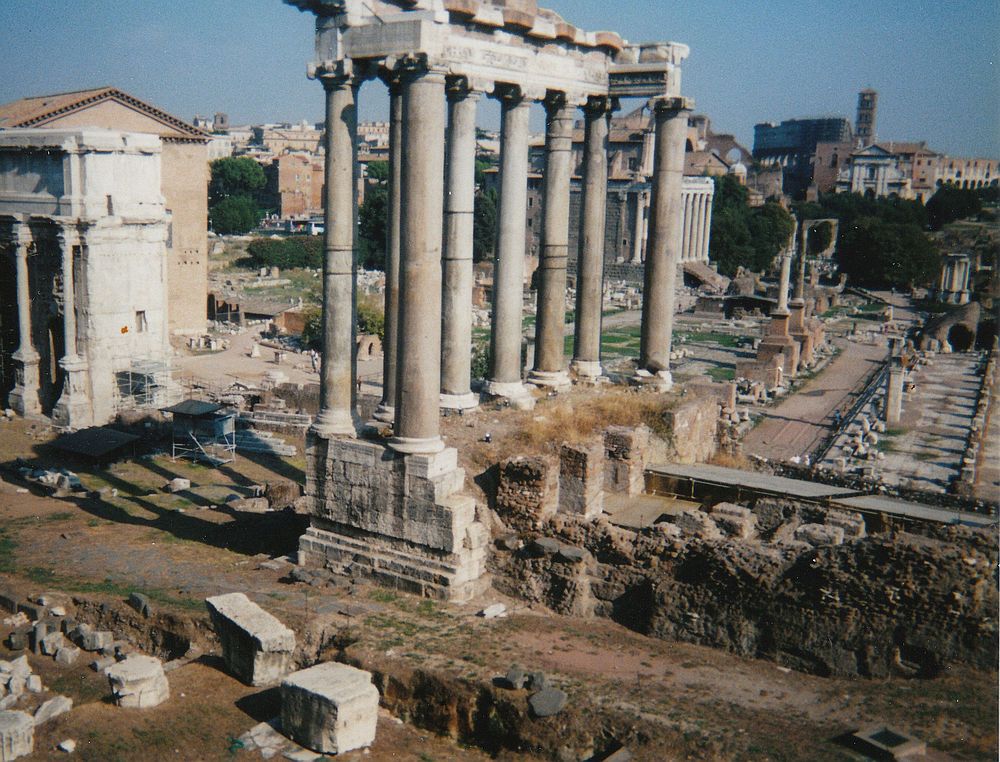
Roman Forum. Mamertine Prison was up behind the building with the dentil cornice. EPrata photo
What was the Mamertine Prison like?
The Mamertine prison was a prison in the Roman Forum where high-profile prisoners were kept, usually so they could be marched through the Roman streets during a triumph parade. High ranking commanders captured during war and other famous prisoners’ names are recorded on a plaque at the entrance. Since Paul was a significantly known public figure, it’s likely when he was imprisoned in Rome, this was the place he was kept.
The prison was deliberately constructed in the middle of the city and placed in the middle of that, into the Roman Forum, as a symbol of Rome’s power, authority, and as a warning. Crime had begun to rise as the city grew, and the Emperors wanted its citizenry to heed the consequence of crime. Hence the jail was visible and constructed so as to be fearsome.
Interestingly, Roman law did not consider the imprisonment itself as a punishment. Jails were simply a place to hold the captured or the criminals until execution, which was the punishment. Mamertine was a place of detention until execution. Barbarian Commanders captured in war were paraded and then strangled publicly, for example. Roman citizens, if unfortunate enough to have been detained for a crime, were taken outside the city on the Ostian Way and beheaded there, usually in private. Privacy in execution was a way to give a Roman Citizen his last dignity. Non-Romans were killed by any method; for example, sent to the beasts, used to the death in gladitorial games, or crucified as Peter was (tradition says, upside down). These executions were public for the spectacle of Roman power and for the amusement of its citizens.
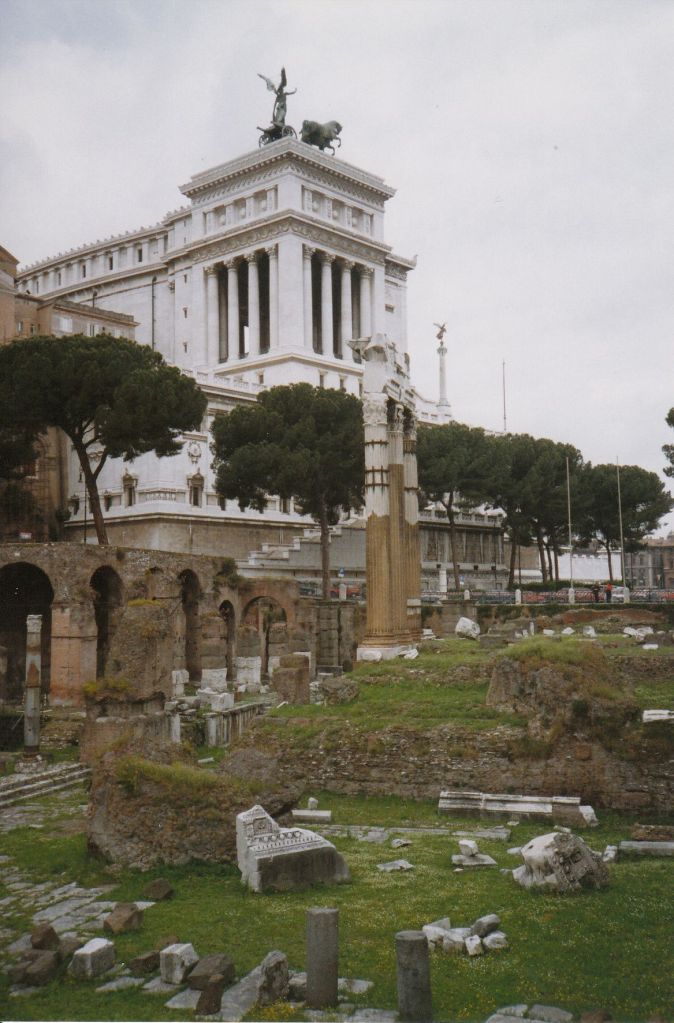
Roman Forum. EPrata photo
The Mamertine, or Tullianum prison was a two-story underground prison. The upper chambers had light and air and was drier. The lower, which prisoners were let down through a hole for their fate, was dank. Historians say the word tullius meant a jet of water and since the prison was originally built as a cistern, this signifies the origin of the name. When the 6th emperor of Rome Servius Tullius arose, the origin story shifted to claim his name as the name of the jail. Below the well or cistern ran the sewer known as the Cloaca Maxima. Seepage from the sewer into the cells just above was common. In fact, they used to flush out the corpses of the incarcerated dead to the Tiber River in this way.
Once the door was shut there was little air, no light, and the cell was steaming hot. Just the name of the Mamertine drew shudders, as in this account from historian Sallust-
“There is a part of the prison which is called the Tullianum, where you ascend a short way on the left. The Tullianum is sunk into the earth about 12 feet and is constructed of stone walls on all sides; above this is a room with a ceiling of vaulted stone. Foul from neglect, darkness, and stench, it is an altogether terrifying sight. … Sallust described “Its appearance is disgusting and vile by reason of the filth, the darkness and the stench.” Sallust, War against Catiline 55. “Execution of Prisoners.”
Prisoners who were held for trial were called in carcer from which we get the word incarcerated. If you were in the Mamertine prison, you were considered as dead. Sometimes, in fact, they threw you down to the lower cell and starved you to death. What a way to go, in the dark, forgotten, hungry, alone, and then you die the painful slow death of starvation, knowing your ignoble corpse will be flushed into the sewer as waste.
Paul in prison- what do the scriptures say?
Paul was jailed numerous times and in a variety of conditions. His first was at Philippi, where he’d delivered a slave girl of her demon of divination and the owner was upset his method of income was gone. This was around 51AD. Paul (and Silas’) release was a supernatural event accompanied by an earthquake and an instant loosening of all the bonds and chains. The jailer was converted, and the next day the magistrates came and let Paul and Silas go (but asked them to leave the city). Paul went to Lydia’s house. (Acts 16:22-40).
Paul’s second jailing that we know of occurred in Jerusalem. It was prophesied beforehand that he would be jailed, (Acts 21:11) but Paul pressed on, knowing at the outset that Jesus had said Paul was to suffer mightily for the Name. (Acts 9:16). Jews, jealous of Paul, claimed (wrongly) that Paul was allowing Gentiles into the Jews-only part of the Temple, and stirred up a riot. (Acts 21:28). This was AD 57. Paul was removed to Caesarea for his safety, kept another two years, sent to Rome under house arrest around AD60. He was released in 62AD.
Paul’s last jailing was likely at the infamous Mamertine prison. He had been deserted. He knew this was the end. He had written before that he had learned to be content in whatever circumstances he found himself in by God’s providence. He had learned he could do all things through Christ. (Philippians 4:11-13). Whether enjoying a comfortable house imprisonment attended to by family, whether free and dining at Lydia’s in fellowship with the saints, or hunkered down in the sewage at Mamertine, hungry and alone. We do not know if the Lord visited Paul at the end, but we do know the Lord visited Paul at other times in his jailings, like in Acts 23:11. Bible Knowledge Commentary says,
23:11. The importance of this vision was not only in its comfort and encouragement (cf. 18:9–10) but also in the confirmation it gave of Paul’s plans to go to Rome. The gospel of Christ would literally go from Jerusalem to Rome by means of the Apostle Paul. This was the fourth vision the Lord gave Paul (cf. 9:4–6; 16:9; 18:9–10).Toussaint, S. D. (1985). Acts. In J. F. Walvoord & R. B. Zuck (Eds.), The Bible Knowledge Commentary: An Exposition of the Scriptures (Vol. 2, p. 420). Wheaton, IL: Victor Books.
Facing Death
But in reality, I think it must have been hard to maintain a positive attitude in that place. Only Luke was with him, which must have been a comfort. (2 Timothy 4:11). Paul hopes to see Timothy and also Mark. Paul was a super-Christian, but still a man. He had been buoyed personally by Jesus many times, supported by family at times, and enjoyed within his circle of beloved friends. But what thoughts go through a man’s mind when sitting in a jail cell knowing the end has come? He longed to be with Jesus, that is certain. But he just have wondered if his actual death would be prolonged or painful. He must have wondered how long he would languish in that dank place. He had been blessed with glimpses of ‘the other side,’ but must have wondered what would it really be like to be with Jesus eternally. Here is A.T. Robertson’s The International Standard Bible Encyclopaedia entry of the end.
"When Paul writes again to Timothy he has had a winter in prison, and has suffered greatly from the cold and does not wish to spend another winter in the Mamertine (probably) prison (2 Tim 4:13, 21). We do not know what the charges now are. They may have been connected with the burning of Rome. There were plenty of informers eager to win favor with Nero. Proof was not now necessary. Christianity is no longer a religio licita under the shelter of Judaism. It is now a crime to be a Christian. It is dangerous to be seen with Paul now, and he feels the desertion keenly (2 Tim 1:15 ff; 4:10). Only Luke, the beloved physician, is with Paul (4:11), and such faithful ones as live in Rome still in hiding (4:21)." [Robertson's The International Standard Bible Encyclopaedia entry continues->]
"Paul hopes that Timothy may come and bring Mark also (4:11). Apparently Timothy did come and was put into prison (He 13:23). Paul is not afraid. He knows that he will die. He has escaped the mouth of the lion (2 Tim 4:17), but he will die (4:18). The Lord Jesus stood by him, perhaps in visible presence (4:17). The tradition is, for now Paul fails us, that Paul, as a Rom citizen, was beheaded on the Ostian Road just outside of Rome. Nero died June, 68 AD, so that Paul was executed before that date, perhaps in the late spring of that year (or 67). Perhaps Luke and Timothy were with him. It is fitting, as Findlay suggests, to let Paul’s words in 2 Tim 4:6–8 serve for his own epitaph. He was ready to go to be with Jesus, as he had long wished to be (Phil 1:23)."

Source-  Robertson, A. T. (1915). Paul, the Apostle. In J. Orr, J. L. Nuelsen, E. Y. Mullins, & M. O. Evans (Eds.), The International Standard Bible Encyclopaedia (Vol. 1–5, p. 2287). Chicago: The Howard-Severance Company.

And so, Jesus gathered Paul to Himself to enjoy eternal peace and rest after so much suffering for the cause. Of all people, we can say of Paul, "Rest in Peace, brother".
Artist’s statement: This was the very first Christian piece I ever composed. I began it as a poem of heartbreak about my son, but as I wrote and edited, it moved away from my sorrow about him to my sorrow about my spiritual immaturity and subsequent failures. Then it continued on to the approaching darkness of this age and my inadequacies and weakness relative to my witness for Christ. I still am panged when I read this piece, but determined to continue on and strive against my “self” and honor Christ.