Jesus saw Nathanael coming to Him, and said of him, “Here is truly an Israelite, in whom there is no deceit!” 48Nathanael said to Him, “How do You know me?” Jesus answered and said to him, “Before Philip called you, when you were under the fig tree, I saw you. 49Nathanael answered Him, “Rabbi, You are the Son of God; You are the King of Israel!” John 1:47-49
This is another one of those moments where the narrative is short on details but long on valuable lessons for us. It’s like the gap in the conversation in John 3:2 and 3:3, between where Nicodemus says ‘You must be from God…right?’ and Jesus replies ‘You must be born again’. Wait, wut?
Barnes’ Notes did a good job of commenting on the Nathanael-Jesus conversation. There is a gap between where Jesus says ‘here comes a man with no deceit’, and Nathanael proclaiming Jesus ‘the Son of God and the King of Israel’. There are things we can learn nonetheless about this interaction.
EPrata photo
Barnes’ Notes: “When thou wast under the fig-tree – It is evident that it was from something that had occurred under the fig-tree that Jesus judged of his character. What that was is not recorded. It is not improbable that Nathanael was accustomed to retire to the shade of a certain tree, perhaps in his garden or in a grove, for the purpose of meditation and prayer. The Jews were much in the habit of selecting such places for private devotion, and in such scenes of stillness and retirement there is something especially favorable for meditation and prayer. Our Saviour also worshipped in such places. Compare John 18:2; Luke 6:12. In that place of retirement it is not improbable that Nathanael was engaged in private devotion.”
Barnes’ Notes: “I saw thee – It is clear, from the narrative, that Jesus did not mean to say that he was bodily present with Nathanael and saw him; but he knew his thoughts, his desires, his secret feelings and wishes. In this sense Nathanael understood him. We may learn:
that Jesus sees what is done in secret, and is therefore divine.
that he sees us when we little think of it.
that he sees us especially in our private devotions, hears our prayers, and marks our meditations. And,
that he judges of our character chiefly by our private devotions. Those are secret; the world sees them not; and in our closets we show what we are. How does it become us, therefore, that our secret prayers and meditations should be without “guile” and hypocrisy, and such as Jesus will approve! ~end Barnes’ Notes
We know that Jesus knows our hearts. We know we should do our devotions. But when it’s put it together like that, that He knows our character through our devotions, it brings things home a bit more, doesn’t it?
I’ll post tomorrow more about devotions. For today, we can learn from Nathanael. Put yourself in his shoes. The region is abuzz with news of a man who preaches with authority. Phillip goes to Nathanael and says “He is Here! The Messiah! He’s from Nazareth!” And the first thing Nathanael says is ‘He can’t be, Nazareth is such a backwater, nothing good ever comes from there!’ But then this man says something to you that only you knew. The private devotions of your heart, your unguarded moment, your pouring out of what was never said openly. Under the fig tree.
Nathanael instantly knew Jesus was the One. That was all the ‘evidence’ Nathanael needed. Whatever conversation Nathanael had with Jesus under the fig tree in prayer, now continued in person.
What a blessing!! Keep in mind, sisters, our prayers, devotions, conversations with Jesus are with a real person, who really hears, who is here with you, even unto the end of the age. Someday abruptly, whether when we’re gathered to Him in the air or exhale our last and pick up in heaven the next second, we too, will continue our devotions with Him in physical person. What a day that will be.
I was reading a commentary on Genesis, focusing on the outcry of Sodom. It was written by John Phillips, called “Exploring Genesis”. It’s a new-to-me commentary. So far it’s not only been solid in doctrine but it is an absorbing read, not just for reference.
Mr Phillips has pointed out some things about the hospitality of Abraham and Lot. I’ll summarize in my own words.
In the biblical Eastern lands, which many call Oriental, hospitality was woven into the fabric of the culture with hard unwritten rules. A man’s reputation rested by how well he hosted guests.
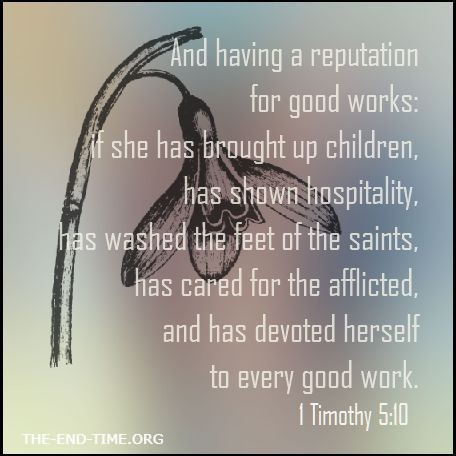
In New Testament times, there are biblical rules about hosting. In fact, a widow was not allowed to be on the list to receive food support if she had not “shown hospitality to strangers.” (1 Timothy 5:10). Jesus rebuked the Pharisee hosts, saying that they had failed in hosting duties- “When I entered your house, you did not give Me water for My feet… you gave Me no kiss…you did not anoint My head“, (Luke 7:44-46). One of the qualifications to be an overseer is that he is a hospitable person. (1 Timothy 3:2).
Genesis 18 has the story of Abraham and Lot’s visitations from heaven before the destruction of Sodom.
At the cusp of the destruction of four of the Cities of the Plain, (Sodom, Gomorrah, Admah, and Zeboiim), three men appeared at Abraham’s tent. Several things should be noted. First, it seems that as Abraham was relaxing during the heat of the day at the opening of his tent, the three men were not there, then suddenly they were. Abraham didn’t see them from a distance far off, he looked and suddenly they were “standing opposite him”.
Next, see how Abraham began hosting briskly. He didn’t linger, delay, or in any way demonstrate the was reluctant to host.
Verse 2: When he saw them, he ran from the tent door to meet them Verse 6a: So Abraham hurried into the tent to Sarah Verse 6b: “Quickly, prepare…“ Verse 7: Abraham also ran to the herd
He fed them, standing by while they ate. Picture a waiter, at attention near your table, and that was Abraham’s attitude, he didn’t sit with them. He stood, ready to serve.
A normal practice in Bible lands at that time was when the host saw visitors approaching, they stand by their house door or tent flap and await the guest’s arrival. That Abraham rushed to greet them and then bowed, indicated Abraham somehow intuited that these three were not normal men, but the Lord and heavenly visitors. The other two were angels who later went on to Sodom and spoke with Lot. So not only was Abraham a good host but had spiritual insight and worshiped.
Now let’s compare Lot’s hospitality. Genesis 19 has the scene.
Lot was sitting by the Gate. I’ll write another essay later about what that meant and what it entailed. Suffice to say now that being an elder by the gate meant you were a city official doing official things for the city such as administering, judging, ambassadorial greetings, security, etc.
Abraham’s honor at his war-time success likely dribbled onto Lot, and Lot ate it up. So Lot was an elder at the gate, now fully embedded in the city’s life. He was participating in the city. He had even allowed his daughters to marry its unholy citizens. Lot saw the two men (angels) approaching and did the expected as an elder would do, he greeted them and bowed.
However they were not as cordial with Lot as they had been with Abraham and later, Sarah. No conversation, no meal, no chit chat, not as friendly and pleasant with Lot. Lot extended his hospitality to them, saying in verse 2, “Now behold, my lords, please turn aside into your servant’s house, and spend the night, and wash your feet; then you may rise early and go on your way.“
The angels curtly replied, ‘Nah, we’re good. We’ll stay in the park.’
This bears thinking about for a moment. Some commenters say that declining an offer of hospitality was expected at first pass, a sign of modesty not to be too forward. Others say the angels were testing the sincerity of Lot’s offer. But I compare the scene with Abraham. In a theophany (incarnated appearance of Jesus in the Old Testament), Jesus came to Abraham. The three stayed a while, had a meal, calmly discussed things. They invited Sarah to join.
But Jesus did not accompany the angels to Sodom. The angels demurred at an invitation to stay with Lot. They did not inquire after Mrs. Lot as they had for Sarah. Their initial preference was to stay in the park. It was only Lot ‘strongly urging’ them that the angels agreed to lodge in Lot’s house.
BTW this is the first mention in the Bible of a house. Lot had one. Abraham, spiritually and materially rich, had a tent.
Lot brought them to his house, but the description of the food Lot put out was not lovingly described as it was for Abraham’s feast, which had included cold milk, tender meat, fine flour bread-cakes. All that is described is that Lot offered a slab of unleavened tasteless bread.
There are many scenes within these scenes that could be pondered. I’ll finish with a direct quote from “Exploring Genesis” by John Phillips-
“Abraham’s haste and humility teach us the much-neglected lesson of reverence in the presence of God. It was not a matter of forced or artificial posturing. It was a question of spiritual intuition, an overwhelming sense of the presence of God.”
“God took Abraham into His confidence and revealed to His servant a new line of truth-apocalyptic truth, truth concerning the impending overthrow of an utterly vile civilization. The revelation of that truth was an interesting test of Abraham’s growth in grace and of his increase in the knowledge of God.”
“How does a faithful, maturing, obedient child of God react to the truth that a holocaust of judgment is about to engulf a world of vile and godless men? Jonah, faced with apocalyptic truth, was glad. He pondered the impending doom of Nineveh with glee, determined to do nothing to stay its fall, careless of the thousands of little children who lived within its walls. Jesus, faced with apocalyptic truth, was moved to tears. … And He wept, wept for the city whose sins called for vengeance so thorough and so complete. Faced with apocalyptic truth, Abraham prayed.”
And we should do the same. Weep and pray for those caught in sin, pray for their repentance and turning from their immoral ways. Bow with reverence to the One who carries justice and mercy in His bosom. Pray for patience to see which will emerge on behalf of our sinning friends, family, co-workers, and pray for peace with the result, whichever it may be. For Jesus is the Lord of glory.
“Pride Month” is over now, thank goodness. All during the month of June we were bombarded on social media and elsewhere with perverse and disgusting depictions of the perversity that sinful people love but that God hates. (Romans 1:31-32)
Whenever I was scrolling and came across one of those depictions, I averted my eyes, ground my teeth, asked God “How long O Lord?!” and went on. Seeing those pictures and clips upset me, especially when there were children in them or bystanding as they do when a parade passes. A parade of perversity.
I’m on Twitter a lot. Twitter (now ridiculously named ‘X’) is owned by Elon Musk, the billionaire. He tweeted something the other day that caught my attention.
I realized how much of a relief it was when I did come across a photo that simply was beautiful, or happy, or displaying nature in all God’s glory. Yes, I decided, I will make a practice of posting a few things each day that are simply beautiful. I figured if I was relieved seeing such nice things, other people may be too. I’ve been burdened by the ugliness of the perversity and sin captured in these photos and videos. Let’s push back and show either great art, design beauty, or nature in all its wonder.
THAT now got me thinking about photographs in general. I’m an educator and many of my colleagues are on Facebook. Summer time is fun time. I love seeing their summer vacation photos. I love seeing the anniversary celebration photos. I got to thinking about their pictures. It makes me happy to see my friends happy. It gives me joy to see a marriage thrive long-term.
And that is the crux. It’s the reverse of the Pride pics. If it makes me, a Christian, happy to see God’s working in families and marriages, visual depictions of a couple’s blessing of children or a marriage succeeding under His ordinance and guidance, it must grind the sinner’s gears to see them. As much as I am grieved with glimpsing on social media during Pride Month overweight men strutting around in bondage gear, it must grind satan to see displays of flourishing families frolicking at the beach or couples praising God for a wonderful marriage.
Amazing these days that a mom and her child and her husband as nuclear family, happy in the Lord, is revolutionary in these perverse days.
Normal family life is now counter-cultural. Stop and think about that for a second. It really is. You think that posting happy family photos is a negligible act, or an incidental moment. Frivolous, really. It’s not.
It’s actually an act of war.
The simple act of posting family photos of a nuclear family with a married biological mom and a dad is a poke in the eye to satan.
Whether you knew it or not when you posted that photo or video, the effect is countercultural. It’s a revolutionary push back against ugliness. And sin is ugly. Grace and godliness is needed. THAT is the real beauty.
You do not need to be a skilled rhetorician to show Christ in your life. You don’t need to always take a combative stance. You don’t need to win debates. If that is not your style, that’s fine. Simply posting a photo of your family with a caption of how much you love motherhood, or an anniversary picture with a praise for your husband, will have the same impact, or more, than all the above. Even better, attach a pertinent verse to it as well.
So post your photos that show a moral life under God- the wedding pics, anniversary photos, clips of the kids, being a mom or a dad, choosing motherhood, happy in the Lord. They are not incidental pics nor are they frivolous. They are revolutionary. Sad to say that showing a nuclear family with a dad, mom, and happy children, with the adults thriving in their complementary roles, is now considered extremist.
I was finishing my book by Scottish Puritan, James Durham, The Scandal of False Teaching. I love the minds of the Puritans, deep thinkers, and as a result, it was an excellent book.
Anyway, in the book the author related a story from old church history. There was a man named Tyrannius Rufinus, born around 345AD in Italy. He died around 410/411. He was a Roman priest, writer, theologian, and translator of Greek theological works into Latin at a time when knowledge of Greek was declining in the West, says Encyclopedia Britannica. Rufinus is known for translating Eusebius’ works from Greek to Latin. When Rufinus completed the translation of Eusebius’ Ecclesiastical History, Rufinus went on and added two more chapters of church history where Eusebius left off. Those were books 10 and 11.
In book 10, chapter 3, Rufinus related a story about the doings during the Council of Nicea and a certain event that happened there.
Durham said that back in the days of the Council of Nicea, there were debates and talks. There came a climax of a showdown between a simple man and a skilled philosopher. Note: a dialectician is a person skilled in philosophical debate.
By Bloemaert, Frederick, From: 1614-1669
The story goes like this, from Rufinus:
Now we may learn how much power there is in simplicity of faith from what is reported to have happened there. For when the zeal of the religious emperor had brought together priests of God from all over the earth, rumor of the event gathered as well philosophers and dialecticians of great renown and fame.
One of them who was celebrated for his ability in dialectic used to hold ardent debates each day with our bishops, men likewise by no means unskilled in the art of disputation, and there resulted a magnificent display for the learned and educated men who gathered to listen.
Nor could the philosopher be cornered or trapped in any way by anyone, for he met the questions proposed with such rhetorical skill that whenever he seemed most firmly trapped, he escaped like a slippery snake.
Icon depicting Constantine the Great, accompanied by the bishops of the First Council of Nicaea 325
But that God might show that the kingdom of God is based upon power rather than speech, one of the confessors, a man of the simplest character who knew only Christ Jesus and him crucified, was present with the other bishops in attendance.
When he saw the philosopher insulting our people and proudly displaying his skill in dialectic, he asked everyone for a chance to exchange a few words with the philosopher. But our people, who knew only the man’s simplicity and lack of skill in speech, feared that they might be put to shame in case his holy simplicity became a source of laughter to the clever.
But the elder insisted and he began his discourse in this way: “In the name of Jesus Christ, O philosopher,” he said, “listen to the truth. There is one God who made heaven and earth, who gave breath to man whom he had formed from the mud of the earth and who created everything what is seen and what is not seen with the power of his word and established it with the sanctification of his spirit.
This word and wisdom whom we call Son took pity on the errors of humankind was born of a virgin, by suffering death freed us from everlasting death and by his resurrection conferred on us eternal life. Him we await as the judge to come of all that we do. Do you believe that this is so, O philosopher?”
But he as though he had nothing whatever that he could say in opposition to this so astonished was he at the power of what had been said could only reply to it all that he thought that it was so, and that what had been said was the only truth.
Then the elder said, “If you believe that this is so, arise, follow me to the church and receive the seal of this faith.”
The philosopher turning to his disciples and to those who had gathered to listen said “Listen, O learned men: so long as it was words with which I had to deal, I set words against words and what was said I refuted with my rhetoric. But when power rather than words came out of the mouth of the speaker, words could not withstand power nor could man oppose God. And therefore if any one of you was able to feel in what was said what I felt, let him believe in Christ and follow this old man in whom God has spoken.” And thus the philosopher became a Christian and rejoiced at last to have been vanquished.
Source Rufinus, Ecclesiastical History, Book 10, ch 3; Excerpt on the First Council of Nicaea, published in year 402-403.
Now, the First Council at Nicea ended in the year 325 and the translation and addendum by Rufinus was published in 402. As with any history that’s separated by such a gap of years, the Bible being the exception, there may be embellishments or errors. Maybe it happened that way, and maybe it didn’t. It doesn’t matter.
Yet it is true, “but God has chosen the foolish things of the world to shame the wise, and God has chosen the weak things of the world to shame the things which are strong,” says 1 Corinthians 1:27. The power is not in our delivery, the power is in the word of God energized by the Spirit.
Don’t be hesitant to share God’s truth, no matter how faltering or stuttering you believe you are, (Moses, anyone?) God will use you in some capacity or another.
Paul said, “and my message and my preaching were not in persuasive words of wisdom, but in demonstration of the Spirit and of power“, 1 Corinthians 2:4
From Wikipedia: “Burning Man is a week-long large-scale desert event focused on “community, art, self-expression, and self-reliance” held annually in the western United States. The event’s name comes from its culminating ceremony: the symbolic burning of a large wooden effigy, referred to as the Man, that occurs on the penultimate night.” On the very last night they burn down “The Temple”.
A lot of people go.
When it’s described as ‘large scale’, they mean it. It’s huge. It is THE biggest festival not just in the US but in the world in terms of acreage. (Glastonbury is smaller in acreage but bigger in daily attendance.) Burning Man is the orange semicircle.
The event started at its current location in the Black Rock Desert in 1991. It is a free for all, free expression, art, ‘radical inclusion’ type of deal. There are art installations, dance, music, self-expression, and of course, a temple, because pagan man must worship something. The event lasts 9 days, and there is a blistering desert heat, lung killing dust, and a long walk to the portapotties. So why do upwards of 80,000 people attend?
By Christopher Michel – BURNING MAN 2010, CC BY 2.0. This reminds me of scenes from the post-apocalyptic movie series Mad Max.
Mad Max: Fury Road
They go for the self-expression. Some see it as a sanctuary from the constraining world with its rules and expectations. Some attend because they want to shed their persona and experiment with drugs or sex. The event IS clothing optional, after all. In the days before cell phones, more attendees appeared in various states of undress, but afterward when cell phone photography and video-ing became common, fewer people walk around exposed or totally naked. Go figure.
In other words, they go because of sin. Sin is attractive.
In 2001 or 2002 or so, I wanted to go. I wanted to go pretty bad. It was before I was saved. I thought that Burning Man was the epitome of a lifestyle of freedom that the world prevented. I wanted to see if an alternative lifestyle of ‘acceptance’ of any walk of life, race, lifestyle, art, music, or expression was possible. I was looking for freedom, freedom from what, I didn’t know. Yet.
What I was looking for was Burning Bush, not Burning Man.
Then the angel of the LORD appeared to him in a blazing fire from the midst of a bush; and he looked, and behold, the bush was burning with fire, yet the bush was not being consumed. (Exodus 3:2).
Then He said, “Do not come near here; remove your sandals from your feet, for the place on which you are standing is holy ground.” (Exodus 3:5).
King Solomon wrote Ecclesiastes to show us that pursuits, lifestyles, and worship is pointless (futility, vanity) if God isn’t at the center of it. Any pursuit of anything- music, art, self-expression, without God is vain. Same with any kind of worship or reverence. What is one reverencing if they go to the Burning Man festival’s “Temple”? One’s self. And a “free lifestyle” just usually means sexuality of one kind or another. The pursuit of the ‘something’ is never satisfied. Why? It’s all circular. You come back to yourself, and the self is unholy, unrighteous, and unfulfilled without God.
To be satisfied in life, to attain freedom, we must transcend self. The only way to do that is through Jesus.
Burning Man is a sacrificial ritual concocted by man, for man, and in the end, futile. Such rituals have been a part of the sinful world since the beginning, starting with The Golden Calf. Asherah. Nehushtan. Celtic Fire Festivals. Slavic ritual Marzanna. Portuguese Caretos Festival. Et cetera and so on ad nauseum.
All things are wearisome; No one can tell it. The eye is not satisfied with seeing, Nor is the ear filled with hearing. (Ecclesiastes 1:8)
In December 2003/January 2004, I became saved. What I had been looking for was holiness, purity, righteousness, and justice. In Exodus 3:5 it is the first time holy or holiness is referenced in relation to God. God told Moses to remove his sandals and not to approach closer, because the Bush was holy ground. By contrast, Moses was not holy and neither was the ground, apart from the bush.
Fire is used throughout the Bible to represent God’s purifying effect. At Burning Man they light the man and the temple to consume it. But with God He IS the fire and HE consumes.
I’m grateful that Jesus decided to save me. Through His grace, I am being purified, refined by the holy fire of His word, daily. It was a good trade, the Burning Man for Burning Bush. The Man is burned every year to cinders and must be rebuilt. With God, his love, and care is eternal and His flame never goes out.
I was at a friend’s house for dinner. There were 3 of us ladies there, 70 something, 60 something, 30’s almost. We got to talking about diaries and journaling.
I’d said I bought a diary at a thrift store that was written by a teenager in 1931. Nearly 100 years old, it was an insight into the daily life of a high schooler in a time of depression, rural poverty, and a long ago era. It was a fascinating read. She rarely mentioned her family. It was almost entirely about cliques, social life, other girls, popularity, and fun events. Just like a 15 year old girl might write about today!
But that got us talking about journaling in general.
If I remember correctly we agreed that journaling in the form of a diary, i.e. putting pen to paper and writing down all our thoughts and feelings, wouldn’t be that great use of time in our opinion. Why would we be writing this stuff down? Just for ourselves? With a risk of adult children reading it after we’d passed away? To do naval gazing instead of gazing at the One who is our North Star? Too much introspection leads to self-centeredness. We should deny ourselves and look to Him.
I remember the movie The Bridges of Madison County with Meryl Streep and Clint Eastwood. Meryl was nominated for an Academy Award for lead Actress. It won lots of other awards and reaped a high ticket gate. It was essentially an apologetic and a affirmation of the ‘healthiness’ or the ‘necessity’ for adultery. It came out in 1992. The adulteress passed away, keeping her secret to the grave, except her adult kids read it and instead of being outraged learning that mom had cheated on their father, they were moved. Actually knowing this helped each of them in their own marriages. Oy. Adultery is not a healer, it’s a divider.
Anyway, even if the thoughts written down weren’t some deep sin, who wants to read their mom’s opinions on Aunt Tillie’s hat or whether she liked some recipe her sister made her try….or something.
I think it was safe to say that diary, bare-all writing wasn’t for us.
I know that “Bible art journaling” is (or was?) a thing. In my opinion, God’s pure and holy word doesn’t need enhancements. And we, having the sin-nature, don’t need distractions competing with God’s word.
Taking notes during a sermon, that’s good. We all agreed we take notes in some form or another, whether meticulously or just jotting down a Bible verse reference or a word or two.
I commented that I chronicle. I don’t journal, Bible art journal, or even prayer journal. I DO chronicle. I have a planner that goes from June to June. So I am leafing thru it today (June 28) as I plan on setting it aside to bring my next planner up on deck for July 1, and I discover all the books I’d read. I start listing them. I had thought I had only read 4 or 5 books, so I was disappointed with myself. But I didn’t need to be sad, I’d read 26 books, which was my goal! 11 theology books, 2 professional books, 6 non-fiction and 7 fiction, a nice spread. Also rediscovered some dishes to make I’d forgotten about, and more. Chronicling can be useful.
I tor the calendar pages out of my June 2023 to June 2024 planner
I’d jotted down when I was out sick from school, my trip to Lake Rabun, the movies I’d seen or TV shows I’d forgotten about. When my last dentist appointment was, or the great score at the thrift store. Prayer list. Books I’m reading.
Below is the list of the books I read this past year. The Harry Potter #2 I didn’t finish and neither did I finish I Couldn’t Care Less (a noir detective novel from the 1940s). The most enjoyable books on the list were Grann’s The Wager, The Art Thief (make sure you get the book by Finkel, there’s another one named the same that’s dull as dishwater), and most of the stories in Nine Tomorrows. For the theology books I enjoyed the Sproul bio, and Scandal of False Teaching, as well as Taming the Fingers.
THEOLOGY Good Grief: A Companion for Every Loss by Granger E. Westberg R.C. Sproul: Defender of the Reformed Faith by Nate Pickowicz Forensic Faith: A Homicide Detective Makes the Case for a More Reasonable, Evidential Christian Faith J. Warner Wallace Taming the Fingers: Heavenly Wisdom for Social Media by Jeff Johnson The Art of Self-Discipline – John MacArthur The American Puritans – Dustin Benge and Nate Pickowicz Benedictions and Doxologies – HB Charles The Scandal of False Teaching – James Durham Communication and Conflict Resolution – Stuart Scott From Pride to Humility: A Biblical Perspective – Stuart Scott This Outside Life: Finding God in the Heart of Nature – by Laurie Kehler
PROFESSIONAL Shifting the Balance: 6 Ways to Bring the Science of Reading into the Balanced Literacy Classroom by Jan Burkins, Kari Yates Teaching with Poverty in Mind: What Being Poor Does to Kids’ Brains and What Schools Can Do About It, by Eric Jensen
NON-FICTION The Devil and Sherlock Holmes – David Grann The Art Thief: A True Story of Love, Crime, and a Dangerous Obsession by Michael Finkel The Wager – David Grann James Herriot, Best of – James Herriot Mt. Everest Reconnaissance Mission – by Eric Shipton The Ultimate Guide for the Avid Indoorsman: Life Is Better in Here by John Driver
FICTION It Couldn’t Matter Less – by Peter Cheyney Winter Birds – Jamie Turner The Sweet Everlasting – by Judson Mitcham Nine Tomorrows – Isaac Asimov Harry Potter #1 – JK Rowling Harry Potter #2 – JK Rowling The Associate – John Grisham
Do you journal? Prayer journal? Keep a diary? Jot notes during sermons or lectures? Do Bible art in your journal? Do Bible crafts in an art sketchbook?
There are all different ways to process the theological content we take in. How do you?
I saw a meme on Facebook that made me laugh. I can’t find it again, but it went something like, ‘I have prayer ADHD, I start, drift into thinking other things, then come back saying ‘Where was I, Lord?’
I think we have all had the same experience. Our fleshly minds want to think of anything except compass point north, Jesus Christ. It zones out on us, drifts off, creates a grocery list, listens to the birds outside, or the traffic, anything but laser focus on the throne of grace.
Why is it so hard? Praying is an act of war, spiritual war. We are opposed at every turn by the evil one and his minions, and when we clasp our hands together, we are effectively sounding a trumpet to those demons that we are entering another battle with them.
In his book The Hidden Life of Prayer by David MacIntyre, we read that,
The main reason for this unceasing insistence is the arduousness of prayer. In its nature it is a laborious undertaking, and in our endeavor to maintain the spirit of prayer we are called to wrestle against principalities and powers of darkness.
Dr. Andrew Bonar used to say that, as the King of Syria commanded his captains to fight neither with small nor great, but only with the King of Israel, so the prince of the power of the air seems to bend all the force of his attack against the spirit of prayer.
If he should prove victorious there, he has won the day. Sometimes we are conscious of a satanic impulse directed immediately against the life of prayer in our souls; sometimes we are led into “dry” and wilderness-experiences, and the face of God grows dark above us; sometimes, when we strive most earnestly to bring every thought and imagination under obedience to Christ, we seem to be given over to disorder and unrest; sometimes the inbred slothfulness of our nature lends itself to the evil one as an instrument by which he may turn our minds back from the exercise of prayer.
Because of all these things, therefore, we must be diligent and resolved, watching as a sentry who remembers that the lives of men are lying at the hazard of his wakefulness, resourcefulness, and courage. “And what I say unto you,” said the Lord to His disciples, “I say unto all, Watch!”
How do you pray? I used to kneel but my knees and back can’t take that any more. So now I sit in my chair and pray aloud. Praying out loud helps me focus and not drift off. However there is no one particularly commanded position for praying. I don’t imagine Paul had too many options for prayer positions when he was chained up in jail.
Hannah famously prayed a whisper prayer in the temple. The priest watching her thought she was drunk. But no, she was just agonizing in spirit and pressing that agony upward to the LORD. (1 Samuel 1:9-17).
Jonah prayed to the LORD in the belly of the great fish, he also cried out (Jonah 2:2). I think his cries were probably pretty loud, too!
David no doubt prayed silently but no doubt he prayed aloud too. David had an active prayer life with the LORD. His prayers were appeals, praises, repentance, appreciation for provision, imprecations…his type of prayers are a good model for us, because he conversed with the Savior through prayer as if the LORD was standing right beside David. In effect Jesus was, and David knew that.
No matter how you pray, the point is, pray. It’s a mechanism that is commanded, after all, but it is also a grace that we have been given as a gift. Practice focusing on what you are saying to the Lord and not drifting off, because He is standing right there with you (and me) after all.
In the end, when Hannah finished pouring out her prayer to the LORD, “her face was no longer downcast.” (1 Samuel 1:18). What a blessing to be able to commune with Jesus.
“Our first act in prayer ought to be the yielding of our souls to the power of the blood of Christ”. ~The Hidden Life of Prayer, by David MacIntyre.
Be hospitable to one another without grumbling. (1 Peter 4:9).
Hospitality in Bible times in Palestine was a serious matter. There were cultural expectations, protocols, and traditions. The word host or hospitable is from a Greek word philoxenia meaning “love of strangers”.
• a greeting with bow or kiss (Gen 18:2; 19:1) • a welcome for the guest to come in (Gen 24:31) • an invitation to rest (Gen 18:4; Judg 4:19) • an opportunity to wash (Gen 18:4; 19:2; 24:32) • a provision of food and drink (Judg 4:19; 19:5) • an invitation to converse (Gen 24:33) • a provision of security (Gen 19:8) Source- “Hospitality” from The Lexham Bible Dictionary
We read much in the Old Testament about hospitality. It was expected to offer shelter and grace to those sojourning among them, because back in the day the Israelites were sojourners themselves. It was considered almost a sacred duty! Lack of hospitality was condemned. (Numbers 20:14–21; Deuteronomy 23:3–4).
In the New Testament we read Jesus’ parables urging believers to be hospitable even outside the 4 walls of one’s home, with the Parable of the Good Samaritan and the Parable of the Midnight Visitor. Jesus was the recipient of much hospitality since He had no place to lay His head, and relied on the hospitality of others (such as Mary/Martha/Lazarus) when he lodged for a period of time.
Lydia was quite hospitable. A native Thyatiran, living in Philippi, the first thing she did after her conversion was to press upon the band to come lodge at her house.
A woman named Lydia was listening; she was a seller of purple fabrics from the city of Thyatira, and a worshiper of God. The Lord opened her heart to respond to the things spoken by Paul. 15 Now when she and her household had been baptized, she urged us, saying, “If you have judged me to be faithful to the Lord, come into my house and stay.” And she prevailed upon us. (Acts 16:14-15).
The first New Testament missionaries would have had to rely on this Palestinian tradition of gracious lodging, made all the more sweet because of the message the missionaries carried.
As the first Christian churches were founded, the exercise of hospitality took on a new aspect, esp. after the breach with the Jews had begun. Not only did the traveling Christian look naturally to his brethren for hospitality, but the individual churches looked to the traveler for fostering the sense of the unity of the church throughout the world. Hospitality became a virtue indispensable to the well-being of the church—one reason for the emphasis laid on it (Romans 12:13; Hebrews 13:2). As the organization of the churches became more perfected, the exercise of hospitality grew to be an official duty of the ministry and a reputation for hospitality was a prerequisite in some cases (1 Timothy 3:2; 5:10; Titus 1:8). Source- The International Standard Bible Encyclopaedia.
That is why John’s words were shocking. In some cases, believers were instructed to DENY hospitality to another. It was a big, countercultural step. 1 Corinthians 5:11 instructs the believer thus:
But now I am writing to you not to associate with any so-called brother if he is a sexually immoral person, or greedy, or an idolater, or a reviler, or a drunkard, or a swindler—not even to eat with such a one.
Believers were to DENY hospitality to anyone who teaches false doctrine. These false teachers were entering homes and abusing the graciousness of hosts to captivate weak women and lure them into the falsity. (2 Timothy 3:5).
They were also told to DENY hospitality to intentional deceivers:
If anyone comes to you and does not bring this teaching, do not receive him into your house, and do not give him a greeting, (2 John 1:10).
This is why John’s words (and Paul’s) were so shocking. You can imagine how this behavior would be so startling. It isn’t so shocking today, we don’t entertain strangers in our homes. We don’t go house to house in fellowship much anymore either. It isn’t shocking to deny entertaining so-and-so when they never even came to your house in the first place. But to close the door against someone in Bible times, with thousands of years of a deeply embedded tradition in hospitality, would be shocking.
Times nowadays have completely changed the notion of hospitality. We do not and should not entertain unknown traveling itinerants. We have hotels. Unannounced guests knocking on our door is rare and rather scary. We aren’t nomads anymore either. But in today’s times we do have TV, radio, podcasts, and streaming entering our home. Do you allow false teachers and deceivers into your home via technology? Are you ‘hosting’ them daily, or weekly? Do your children see you offering your time to these false teachers, by sending them money by purchasing their materials?
Hospitality has changed definitions since John’s day, but today we can still host gatherings of believers from church, craft a celebratory party or dinner for struggling folks, or practice hospitality one-on-one with those whom we know. Being hospitable isn’t necessarily restricted to a home environment, either. A gracious greeting at work, sharing lunch with someone at work, a phone call to check up on someone, pleasant conversation at church, are all hospitable activities.
DENY these false teachers entry to your home. Do not expose them to your family or to your own soul. Even though such ‘hospitality’ in today’s times may be just second hand through a screen, still, do not entertain them. And when or if a person in your church is disciplined as per Matthew 18:17b, and reaches the last stage, “if he refuses to listen even to the church, let him be to you as the Gentile and the tax collector” are you strong enough to obey and DENY them hospitality?
When the sentence for a crime is not speedily executed, the hearts of men become fully set on doing evil. (Ecclesiastes 8:11).
One who hates disguises it with his lips, But he harbors deceit in his heart. When he speaks graciously, do not believe him, Because there are seven abominations in his heart. Though his hatred covers itself with deception, His wickedness will be revealed in the assembly. Proverbs 26:24-26
This essay isn’t about Robert Morris.
On June 14, 2024, a woman named Cindy Clemishire in partnership with The Wartburg Watch (a church sexual abuse reporting and support page) announced she had been molested by Robert Morris in 1981 when she was 12. Morris, now age 63, is the pastor of the largest mega-church in the United States. He was selected as then-candidate President Trump’s spiritual advisor. He has been in the preaching business since he was 19 years old. He is incredibly famous.
But this isn’t about Robert Morris’s fame.
Several times in the past, Morris had confessed to his elders and sometimes to his congregation that when he was younger, around age 20 or so, but married and with a baby, he had fallen into what he termed “a moral failure” with “a young lady” but since that time he has “walked in purity and accountability.” He was pastor of Shady Grove Church the first time the issue came to light. Most recently he has been pastor of Gateway Church.
(Side note: any pastor who engages in adultery is a fallen ‘below reproach’ pastor, and needs to step down and resume his seat in the pew. He can be forgiven if he repents, Jesus will forgive. But he has lost the office of pastor forever, his immoral act disqualifies him. 1 Timothy 3:2-7. It should also be remarked that many people had warned about Morris’ false doctrine for years, accusing him of being a false teacher. Where there’s smoke there’s fire).
But that so-called “young lady” grew up. She is Cindy Clemishire, and Morris’ interaction with her was not a consensual short term fling, as Morris had intimated. She was a 12 year old child, and the alleged molestation had gone on for four and a half years.
When this accusation came out, the nation was stunned, shocked, and sickened. For the next week, accusations flew, coverups were intimated, information and misinformation shot out from the can of worms and flung around in frenzied orbits. Morris’ accused act was even rebuked by Texas State Representative Giovanni Capriglione, former Southlake Mayor John Huffman, and State Representative Nate Schatzline.
Initially, the elders at Morris’ current church (Gateway Church) defended their lead pastor, but eventually the flames and horror grew to the point that they met and asked for Morris’ resignation. You can read Cindy’s account here.
But this isn’t about that.
That info above was just the necessary context.
As the news came out, and it was just a few days after mega-church long term pastor Tony Evans (also false) stepped down abruptly due to an unnamed sin, I was reeling. Granted, both are false, but it’s such a blot on Christianity, and the pagans don’t know they’re false. What is happening?!
I, like everyone else, was reeling from the horror of a child molester revealed. The disgust and outrage mounted as the heinousness of his casual lie about her age or the length of time it went on was revealed. About the fact that he took advantage of his friends who were hosting him overnight, to allegedly molest their daughter right under their noses. On Christmas, the day we celebrate the holy Savior’s birth!
At the loss of a childhood innocence, betrayal, blots against Jesus, abuse of his position, the sullying of the pulpit. The list goes on at all the terrible things a revelation of this sort raises.
But this isn’t about that.
I do not like to dwell on foulness. It shrinks my soul. I sought a positive. I chose to look at Jesus, not the horror. THIS is what it’s about.
It’s about JESUS.
Finding the Good through the worst news. I thought of three things that a horrific event can bring to mind about our God. Because Jesus is infinitely GOOD, there must be an infinite number of GOOD aspects to this our finite minds cannot grasp. I’ll be happy with these three.
1.His patience. Jesus is patient. He is patient to a degree I cannot even understand. His patience is not endless, but it is magnanimous. I myself was not saved until I was 43. He was patient with ME all those decades, and I strutted around the earth doing sin and reveling in it. His patience to allow a man such as accused child molester Robert Morris is even greater, because the man all these years purported to speak in Jesus’ name.
Angry, I mentally changed Exodus 22:18KJV “Thou shall not suffer a witch to live” to “Thou shall not suffer a to suffer a molester to live.” Yet I remember God’s patience, wanting all to come to repentance, unwilling that any should perish.
The Lord is not slack concerning His promise, as some count slackness, but is longsuffering toward us, not willing that any should perish but that all should come to repentance. (2 Peter 3:9).
Or do you disregard the riches of His kindness, tolerance, and patience, not realizing that God’s kindness leads you to repentance? (Romans 2:4).
Jesus allows sin to exist because it serves His good purpose. His patience is not endless. Sin will end one day. We can cling to that. But until that day, focus on how patient He was with YOU (me too) before the moment came when He justified us.
2.His wisdom: He tests us all through false teachers. I mean, we know Robert Morris is false. We know through their doctrine. False doctrine is evil because it is sin. However seeing also HOW false they are through exposure of his sinful immorality is hard to bear. But there is a purpose in it. Jesus uses corruption when exposed as a test to show His elect the ‘exceeding sinfulness of sin’ as the Puritan Ralph Venning coined. As we view the rancid evilness of sin, we recoil, and cling to the purity and holiness of Jesus all the more.
What did David do when Nathan rebuked David for his sin? David recoiled. Then he wrote his Psalm 51 confession. It is the same when we see others’ sin so blatant, we shrink back in disgust (just in case we were getting used to our own pet sin or sin in others). Any Christian pursuing holiness and advancing in sanctification will quail in horror to see such doings, and the boomerang reaction is to run to Jesus. We cry out, ‘Lord, let that not happen to me! Preserve me from sin, I confess my sin!’ Then we care even more deeply about the holiness of His church.
For nothing is concealed that will not become evident, nor anything hidden that will not be known and come to light. (Luke 8:17)
3.His mercy: This one was big for me. If we were allowed to see all the sin there is, we would die immediately from crushing grief. That He lifts the blanket covering sin so minutely, slowly, measuredly is a mercy. As always, His timing allows us to absorb, self-reflect, test our emotions, engage compassion, repent ourselves, fight for purity in our own church… and so on.
We reel and stagger in disgust when this one man’s sin is exposed, imagine how FULL of sin this world is. Its foul and fetid stink permeating everything man does. Sin’s percolating decay leaching into the perfect world God hath made, staining it with vile rot.
We don’t see it all. Our puny souls and finite minds cannot get a mental hold of the totality of it. But imagine this: Jesus sees it ALL. He sees it all at once. And not just from heaven, He came down from glory and lived among it. Sin did not stain Him, but in the end, He became sin. He lived among sinful man, knowing their hearts and minds. He saw Nathanael under the fig tree before he was even called, (John 1:48).
Jesus sees this one is a secret embezzler (Judas) or that one is a molester and that one is a murderer. He knows the secret sins of all. He is merciful to allow us to see sin in only thimbleful amounts!
If He were to lift the blanket on even our own sins all at once and force our nose in it like a puppy? We would die, probably. It’s a mercy that Jesus ONLY allowed us to see Robert Morris’ sin and not all the sin in the world.
When a pastor falls or a secret is exposed to the world it does take a moment for us to absorb, process the feelings, and re-attain equilibrium. But don’t dwell on the horror part. Know this:
now, will God not bring about justice for His elect who cry out to Him day and night, and will He delay long for them? (Luke 18:7)
Then look to Jesus.
Turn to Me and be saved, all the ends of the earth; For I am God, and there is no other. (Isaiah 45:22).
Then the LORD said to Moses, “Make a fiery serpent and mount it on a pole. When anyone who is bitten looks at it, he will live.” (Numbers 21:8)
looking only at Jesus, the originator and perfecter of the faith, who for the joy set before Him endured the cross, despising the shame, and has sat down at the right hand of the throne of God. (Hebrews 12:2)