Posted in encouragement, theology

Passing the baton

By Elizabeth Prata

Paul tenderly gives a spiritual charge to his spiritual son, Timothy,

You therefore, my son, be strong in the grace that is in Christ Jesus. The things which you have heard from me in the presence of many witnesses, entrust these to faithful men who will be able to teach others also. (2 Timothy 2:1-2).

Paul can be seen as the spiritual patient zero, who took Timothy under his wing, the next generation, who is now charging Timothy to relate the truth to those who heard him, 3rd generation, who will turn around and give it to the upcoming generation. Four spiritual generations passing the baton of truth on down.

Continue reading “Passing the baton” →
Posted in theology

Jailed for the Lord – Paul in the ‘House of Darkness’

By Elizabeth Prata

Thank goodness for historians. In ancient Rome during the last days of the Apostle Paul, Sallust and Livy, for example, wrote of the notorious jail in Rome known as the Mamertine, dubbed so in the medieval period. It’s originally known in history as the Carcer, or the Tullianum, or at least, the lower half of the underground dungeon was. History does not record for a definite fact that Peter and Paul were at different times held there, but tradition and Roman practice indicate it was a strong possibility.

This essay is constructed in three sections:

Section 1: The prison itself. What was it like?
Section 2: Paul in Prison
Section 3: Facing Death

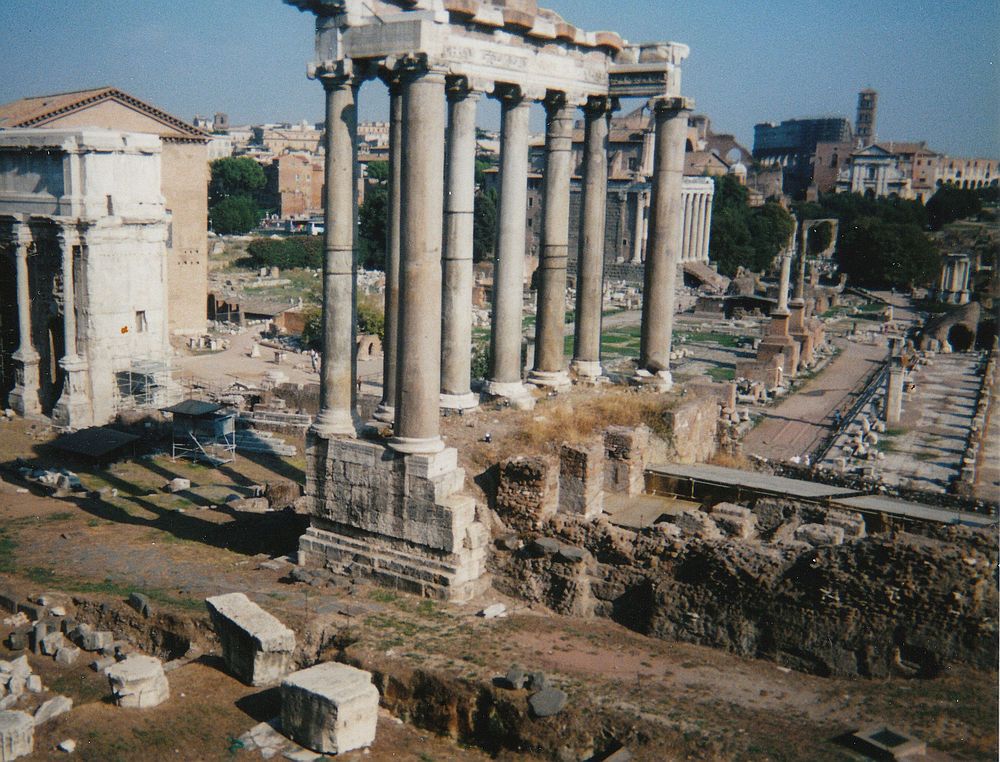
Roman Forum. Mamertine Prison was up behind the building with the dentil cornice. EPrata photo

What was the Mamertine Prison like?

The Mamertine prison was a prison in the Roman Forum where high-profile prisoners were kept, usually so they could be marched through the Roman streets during a triumph parade. High ranking commanders captured during war and other famous prisoners’ names are recorded on a plaque at the entrance. Since Paul was a significantly known public figure, it’s likely when he was imprisoned in Rome, this was the place he was kept.

The prison was deliberately constructed in the middle of the city and placed in the middle of that, into the Roman Forum, as a symbol of Rome’s power, authority, and as a warning. Crime had begun to rise as the city grew, and the Emperors wanted its citizenry to heed the consequence of crime. Hence the jail was visible and constructed so as to be fearsome.

Interestingly, Roman law did not consider the imprisonment itself as a punishment. Jails were simply a place to hold the captured or the criminals until execution, which was the punishment. Mamertine was a place of detention until execution. Barbarian Commanders captured in war were paraded and then strangled publicly, for example. Roman citizens, if unfortunate enough to have been detained for a crime, were taken outside the city on the Ostian Way and beheaded there, usually in private. Privacy in execution was a way to give a Roman Citizen his last dignity. Non-Romans were killed by any method; for example, sent to the beasts, used to the death in gladitorial games, or crucified as Peter was (tradition says, upside down). These executions were public for the spectacle of Roman power and for the amusement of its citizens.

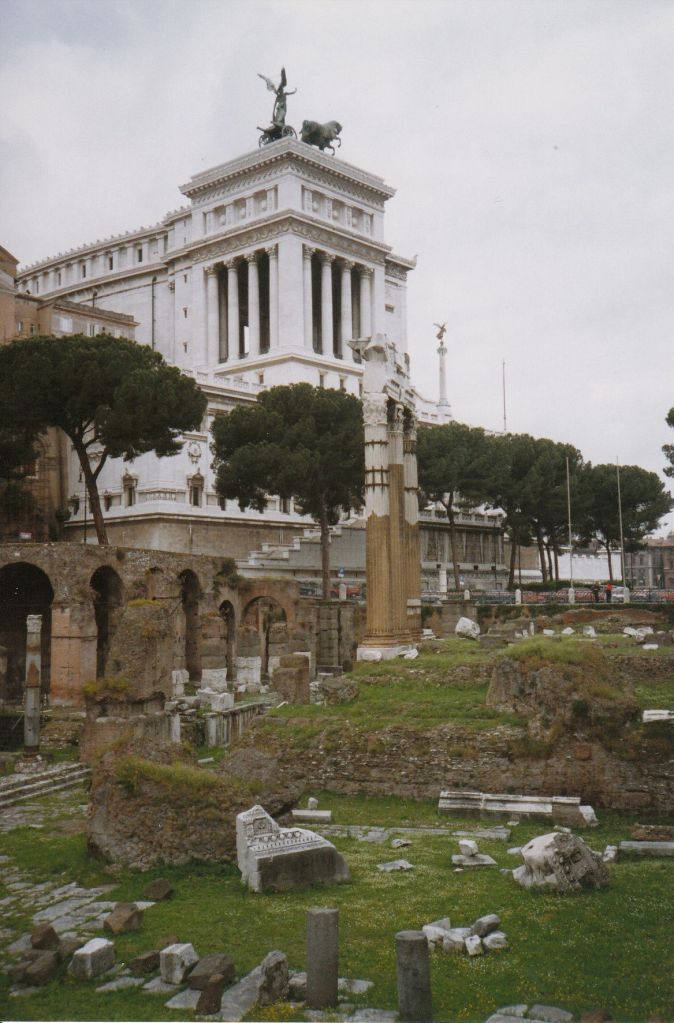
Roman Forum. EPrata photo

The Mamertine, or Tullianum prison was a two-story underground prison. The upper chambers had light and air and was drier. The lower, which prisoners were let down through a hole for their fate, was dank. Historians say the word tullius meant a jet of water and since the prison was originally built as a cistern, this signifies the origin of the name. When the 6th emperor of Rome Servius Tullius arose, the origin story shifted to claim his name as the name of the jail. Below the well or cistern ran the sewer known as the Cloaca Maxima. Seepage from the sewer into the cells just above was common. In fact, they used to flush out the corpses of the incarcerated dead to the Tiber River in this way.

Once the door was shut there was little air, no light, and the cell was steaming hot. Just the name of the Mamertine drew shudders, as in this account from historian Sallust-

 “There is a part of the prison which is called the Tullianum, where you ascend a short way on the left. The Tullianum is sunk into the earth about 12 feet and is constructed of stone walls on all sides; above this is a room with a ceiling of vaulted stone. Foul from neglect, darkness, and stench, it is an altogether terrifying sight. … Sallust described “Its appearance is disgusting and vile by reason of the filth, the darkness and the stench.” Sallust, War against Catiline 55. “Execution of Prisoners.”

Prisoners who were held for trial were called in carcer from which we get the word incarcerated. If you were in the Mamertine prison, you were considered as dead. Sometimes, in fact, they threw you down to the lower cell and starved you to death. What a way to go, in the dark, forgotten, hungry, alone, and then you die the painful slow death of starvation, knowing your ignoble corpse will be flushed into the sewer as waste.

Paul in prison- what do the scriptures say?

Paul was jailed numerous times and in a variety of conditions. His first was at Philippi, where he’d delivered a slave girl of her demon of divination and the owner was upset his method of income was gone. This was around 51AD. Paul (and Silas’) release was a supernatural event accompanied by an earthquake and an instant loosening of all the bonds and chains. The jailer was converted, and the next day the magistrates came and let Paul and Silas go (but asked them to leave the city). Paul went to Lydia’s house. (Acts 16:22-40).

Paul’s second jailing that we know of occurred in Jerusalem. It was prophesied beforehand that he would be jailed, (Acts 21:11) but Paul pressed on, knowing at the outset that Jesus had said Paul was to suffer mightily for the Name. (Acts 9:16). Jews, jealous of Paul, claimed (wrongly) that Paul was allowing Gentiles into the Jews-only part of the Temple, and stirred up a riot. (Acts 21:28). This was AD 57. Paul was removed to Caesarea for his safety, kept another two years, sent to Rome under house arrest around AD60. He was released in 62AD.

Paul’s last jailing was likely at the infamous Mamertine prison. He had been deserted. He knew this was the end. He had written before that he had learned to be content in whatever circumstances he found himself in by God’s providence. He had learned he could do all things through Christ. (Philippians 4:11-13). Whether enjoying a comfortable house imprisonment attended to by family, whether free and dining at Lydia’s in fellowship with the saints, or hunkered down in the sewage at Mamertine, hungry and alone. We do not know if the Lord visited Paul at the end, but we do know the Lord visited Paul at other times in his jailings, like in Acts 23:11. Bible Knowledge Commentary says,

23:11. The importance of this vision was not only in its comfort and encouragement (cf. 18:9–10) but also in the confirmation it gave of Paul’s plans to go to Rome. The gospel of Christ would literally go from Jerusalem to Rome by means of the Apostle Paul. This was the fourth vision the Lord gave Paul (cf. 9:4–6; 16:9; 18:9–10).Toussaint, S. D. (1985). Acts. In J. F. Walvoord & R. B. Zuck (Eds.), The Bible Knowledge Commentary: An Exposition of the Scriptures (Vol. 2, p. 420). Wheaton, IL: Victor Books.

Facing Death

But in reality, I think it must have been hard to maintain a positive attitude in that place. Only Luke was with him, which must have been a comfort. (2 Timothy 4:11). Paul hopes to see Timothy and also Mark. Paul was a super-Christian, but still a man. He had been buoyed personally by Jesus many times, supported by family at times, and enjoyed within his circle of beloved friends. But what thoughts go through a man’s mind when sitting in a jail cell knowing the end has come? He longed to be with Jesus, that is certain. But he just have wondered if his actual death would be prolonged or painful. He must have wondered how long he would languish in that dank place. He had been blessed with glimpses of ‘the other side,’ but must have wondered what would it really be like to be with Jesus eternally. Here is A.T. Robertson’s The International Standard Bible Encyclopaedia entry of the end.

"When Paul writes again to Timothy he has had a winter in prison, and has suffered greatly from the cold and does not wish to spend another winter in the Mamertine (probably) prison (2 Tim 4:13, 21). We do not know what the charges now are. They may have been connected with the burning of Rome. There were plenty of informers eager to win favor with Nero. Proof was not now necessary. Christianity is no longer a religio licita under the shelter of Judaism. It is now a crime to be a Christian. It is dangerous to be seen with Paul now, and he feels the desertion keenly (2 Tim 1:15 ff; 4:10). Only Luke, the beloved physician, is with Paul (4:11), and such faithful ones as live in Rome still in hiding (4:21)." [Robertson's The International Standard Bible Encyclopaedia entry continues->]
"Paul hopes that Timothy may come and bring Mark also (4:11). Apparently Timothy did come and was put into prison (He 13:23). Paul is not afraid. He knows that he will die. He has escaped the mouth of the lion (2 Tim 4:17), but he will die (4:18). The Lord Jesus stood by him, perhaps in visible presence (4:17). The tradition is, for now Paul fails us, that Paul, as a Rom citizen, was beheaded on the Ostian Road just outside of Rome. Nero died June, 68 AD, so that Paul was executed before that date, perhaps in the late spring of that year (or 67). Perhaps Luke and Timothy were with him. It is fitting, as Findlay suggests, to let Paul’s words in 2 Tim 4:6–8 serve for his own epitaph. He was ready to go to be with Jesus, as he had long wished to be (Phil 1:23)."

Source-  Robertson, A. T. (1915). Paul, the Apostle. In J. Orr, J. L. Nuelsen, E. Y. Mullins, & M. O. Evans (Eds.), The International Standard Bible Encyclopaedia (Vol. 1–5, p. 2287). Chicago: The Howard-Severance Company.

And so, Jesus gathered Paul to Himself to enjoy eternal peace and rest after so much suffering for the cause. Of all people, we can say of Paul, "Rest in Peace, brother".

Sources and further reading:

Visit Rome: The Mamertine Prison

Historical Background of Paul’s Final Imprisonment

A Dispatch from Rome: The Mamertine Prison

Posted in theology

How do the rod and staff comfort us?

By Elizabeth Prata

EPrata photo

The LORD, the Psalmist’s Shepherd. A Psalm of David.

The LORD is my shepherd,
I will not be in need.
He lets me lie down in green pastures;
He leads me beside quiet waters.
He restores my soul; He guides me in the paths of righteousness
For the sake of His name.
Even though I walk through the valley of the shadow of death,
I fear no evil, for You are with me;
Your rod and Your staff, they comfort me.
You prepare a table before me in the presence of my enemies;
You have anointed my head with oil; My cup overflows.
Certainly goodness and faithfulness will follow me all the days of my life,
And my dwelling will be in the house of the LORD forever.

(Psalm 23:1-6).

As my elder read the Psalm during our time of congregational prayer, I wondered, how could a rod comfort a person? Isn’t a rod a metaphor for God’s justice, or his discipline? I made a mental note to look this up, and went back to listening.

I didn’t forget my mental note, and once home I looked up about a Shepherd’s rod and staff, also known as a “crook.” We’re all familiar, I think, with the crook. It’s the shepherd’s tool, the hooked rod usually associated with that profession. It is the symbol of the Shepherd’s Conference-

The staff usually had a curved end that was large enough to hook around a sheep or lamb’s neck so as to prevent it from falling into a ditch, or to reroute away from something dangerous, like poisonous plants or a snake’s nest. It was long enough to do this before the shepherd entered its fear sphere and then bolt.

The staff and the rod were almost an extension of the shepherd’s arm. It represented power, control, and authority of the flock. The rod was authoritative. You remember that it was the staff that God used to demonstrate His power through Moses to Pharaoh. (Exodus 4:17).

The Shepherd relied on the rod to beat back predators, protecting the flock. He would use it to poke a bush and look for snakes. He used the rod to scan the sheep. Their fluffy wool could hide parasites, skin diseases etc, so the shepherd used the rod to part the wool in order to examine its skin and wool for anything untoward. The shepherd’s hands would then run all over the sheep to make sure he was healthy and not beginning with some disease.

Each night as the sheep were brought into the shed or the fold, they would pass under the rod, which was used as a counting stick. Each sheep was touched by the rod in counting so that the shepherd ensured all of them were present, and none were lost. This was called ‘passing under the rod”.

I will make you pass under the rod, and I will bring you into the bond of the covenant; (Ezekiel 20:37). cf Jeremiah 33:13, Leviticus 27:32.

The rod was also used for disciplining the sheep. Shepherds in Africa had a rod with a knob at the end called a knob-kerrie they would hurl at a sheep to startle it from, say, not running down a cliff or into a ditch if they couldn’t get there in time.

That David, the shepherd, said ‘the rod and the staff comfort me’ now becomes easier to understand. Jesus is THE Shepherd. His staff guides us, keeps us away from the ditch or falling down a cliff. His rod unearths the snakes and the poisonous weeds. His staff guides us to fresh clover and green pastures, still waters of living water. He counts each and every one of us so that none are lost, knowing where each of us is at any given moment. As we pass under his rod he checks us for disease or injury.

Even the rod of discipline, if it becomes necessary, is for our good. Don’t eat that poisonous weed! Don’t get near that wolf! Don’t run down that ditch! It is a comfort that the Shepherd can see from the heights of His vantage point the things we cannot. Our low vantage point and limited view often leads us to trouble, but He leads us to still waters and green pastures. He uses his rod and his staff to do it, and this is such a comfort.

Posted in theology

Don’t “help” the Gospel

By Elizabeth Prata

The Gospel is simple. Repent and believe in Jesus Christ, who died for our sins and rose again, ascended to heaven and will return in judgment. That’s it. Repent and believe. It’s simple, but profound. It’s eternally life saving. It’s countercultural. It’s offensive. It’s foolish to those who are perishing (1 Corinthians 1:18)

Because it is too simple for some people, or too offensive for others to hear, well-intentioned Christians, even pastors, sometimes tweak the Gospel, change the Gospel, soften the Gospel, in order to “help.”

The Gospel comes out looking like this:

Continue reading “Don’t “help” the Gospel” →
Posted in theology

I was a mocker (and such were some of you)

By Elizabeth Prata

Now Simon’s mother-in-law was lying sick with a fever; and immediately they spoke to Jesus about her. And He came to her and raised her up, taking her by the hand, and the fever left her, and she waited on them. (Mark 1:30-31)

Luke 4:38-40, Matthew 8:14-15 repeat the same incident and in the same way, with Dr. Luke adding that the fever was high, and that others in the house advocated for her to Jesus.

Source: https://www.bbc.com/culture/article/20171214-sarah-bernhardt-was-she-the-first-a-list-actress

I wasn’t saved by the grace of Jesus until I was 42 years old. I grew up in the sexual revolution and feminist revolution of the 1960s and ’70s, and my mother was a feminist. I disbelieved feminism in the main, but my tender years couldn’t withstand all of it, so I was tainted by its tenets to a degree.

Continue reading “I was a mocker (and such were some of you)” →
Posted in theology

Roundup and timeline of “Sermongate” of Ed Litton

By Elizabeth Prata

The Southern Baptist Convention is said to be the largest Protestant denomination in the world. As such, there is newsworthy interest in its doings, never more than when the annual Meeting is conducted and a new president is elected. This year it was held on June 15-16 in Nashville TN. The president is elected to a two-year term. However, due to COVID-19 last year, outgoing president JD Greear served for three, because the Annual Meeting was suspended due to no mass gathering restrictions in most states of the US, including Tennessee.

Continue reading “Roundup and timeline of “Sermongate” of Ed Litton” →
Posted in theology

Feed my sheep, or regurgitate already eaten food? The duties of pastoral office

By Elizabeth Prata

When Jesus charged Peter to feed his sheep, Jesus did not have in mind to regurgitate recycled food.

A picture of plagiarizing. photo Liam Quinn photo CC, share alike license

You’ve seen these animal documentaries when the mama bird regurgitates already digested food into her chick’s beak. We all go “ewwww!” but we know that pre-digestion is a must for the chicks to be able to handle the food.

When a pastor plagiarizes his material, in whole or in part, he is doing the same thing. He is offering regurgitated, recycled, cold, pre-digested food to the flock. This is not nourishing. The flock will starve.

When they had finished breakfast, Jesus said to Simon Peter, “Simon, son of John, do you love me more than these?” He said to him, “Yes, Lord; you know that I love you.” He said to him, “Feed my lambs.” … He said to him the third time, “Simon, son of John, do you love me?” Peter was grieved because he said to him the third time, “Do you love me?” and he said to him, “Lord, you know everything; you know that I love you.” Jesus said to him, “Feed my sheep.” (John 21:15, 17, ESV).

Continue reading “Feed my sheep, or regurgitate already eaten food? The duties of pastoral office” →
Posted in theology

Fasting: What is it, should I do it, and how should I do it?

By Elizabeth Prata

The Christian practice of fasting is not talked about a lot in churches today. I am careful to say ‘Christian fasting’ because other religions have fasts. Ramadan in the Muslim religion is a month-long fast with many prescribed rules. Catholics between the ages of 18 and 59 are obligated to fast on certain holy days of the year and during Lent, and in certain prescribed ways. And so on.

Christians saved by the grace of God and the blood of Jesus are not obligated to fast. There is no command in the New Testament commanding a Christian to fast. But it is a worthwhile spiritual practice in which Jesus expected a believer might choose to engage. There are no rules for it, thankfully. However, fasting seems to be a spiritual duty the believer might perform at least on occasion, so Jesus gave some thumbnail outlines for the practice in Matthew 6:16-18,

“Now whenever you fast, do not make a gloomy face as the hypocrites do, for they distort their faces so that they will be noticed by people when they are fasting. Truly I say to you, they have their reward in full. But as for you, when you fast, anoint your head and wash your face, so that your fasting will not be noticed by people but by your Father who is in secret; and your Father who sees what is done in secret will reward you.“

Examples in the New Testament fasting:

Jesus fasted in the desert wilderness for His Temptation. (Matthew 4:2). He fasted for 40 days and nights!

Anna served the Lord in the temple by praying and fasting frequently. (Luke 2:37). Fasting is almost always mentioned in conjunction with prayer. In Acts 13:1-3 Barnabas, Simeon, Lucius, Manaen, and Saul were ‘serving the Lord and fasting’ at Antioch. ‘serving the Lord’ usually meant praying, but in that verse it is also more extensive, meaning they could have been performing any service unto the Lord.

Paul and Barnabas prayed with fasting before appointing elders in all the churches. (Acts 14:23).

Fasting can be privately habitual. Cornelius habitually fasted. Acts 10:30 some translations have him praying at the ninth hour, others say he was fasting at that hour. Again, fasting and prayer are tied together. You can pray without fasting, but fasting without prayer is spiritually meaningless.

Saul/Paul fasted after he was visited by Jesus on the Damascus road, for three days and nights.(Acts 9:9). Many people fast and pray ahead of a decision, or during a trial or a time of deep spiritual anguish as Paul was doing there.

There is/was such a thing as a national prayer & fast. US President John Adams called for a national day of prayer, fasting and humiliation on March 23, 1798 because the new nation of the United States was being harassed by a foreign power. He said, “it has appeared to me that the duty of imploring the mercy and benediction of Heaven on our country demands at this time a special attention from its inhabitants.” He said in part,

"I have therefore thought fit to recommend, and I do hereby recommend, that Wednesday, the 9th day of May next, be observed throughout the United States as a day of solemn humiliation, fasting, and prayer; that the citizens of these States, abstaining on that day from their customary worldly occupations, offer their devout addresses to the Father of Mercies agreeably to those forms or methods which they have severally adopted as the most suitable and becoming; that all religious congregations do, with the deepest humility, acknowledge before God the manifold sins and transgressions with which we are justly chargeable as individuals and as a nation, beseeching Him at the same time, of His infinite grace, through the Redeemer of the World, freely to remit all our offenses..."

President Abraham Lincoln also called for a national fast. His Proclamation Appointing a National Fast Day was issued for March 30, 1863, smack in the middle of the 4-year Civil War. He wrote,

"We have forgotten the gracious hand which preserved us in peace, and multiplied and enriched and strengthened us; and we have vainly imagined, in the deceitfulness of our hearts, that all these blessings were produced by some superior wisdom and virtue of our own. Intoxicated with unbroken success, we have become too self-sufficient to feel the necessity of redeeming and preserving grace, too proud to pray to the God that made us! It behooves us then, to humble ourselves before the offended Power, to confess our national sins, and to pray for clemency and forgiveness."

Whether private or corporate, the first step in fasting is to confess sin. The confession of sin is more of an Old Testament preface to fasting & prayer, but as with NT supping at the Lord's Table with admonitions to clear the decks of your life and conscience of sin before partaking, it is also wise to ensure that your devotion to Christ through prayer and fasting is not polluted with unconfessed sin. The prayer of a righteous man is powerful and avails much says James 5:16, so alternately if one is not righteous, the prayer would be less likely to be powerful. Humble yourself as you enter your fast. You're going before the throne of God for a reason or issue that you want to earnestly bring to the Lord. Don't complicate it with unconfessed sins.

Normally, fasting and prayer are done for negative reasons, as in, before a decision, an urgent need, a national or personal calamity, and so on. Jesus said in answer to the disciples of John who asked why Jesus’ disciples do not fast. Jesus replied that fasting is a mourning activity and while the groom was with them they were not mourning. (Matthew 9:14-15). So treat fasting & prayer as a serious endeavor. We should not enter into it lightly or for the wrong reasons (hence confessing sin, first).

Speaking of wrong reasons, fasting doesn’t ‘force’ God to pay attention to your prayer more than He would if you were just plain old praying. It is more for the believer to demonstrate devotion to God in a single-minded pursuit of Him for Himself, on behalf of the issue or person you are fasting for. Fasting is a punctuation to prayer, not the point of it. The other wrong way to fast & pray is to parade it in front of people to show your piety to men as Jesus warned about the hypocritical Pharisees.

We fast to divest ourselves of something that would otherwise crowd our attention. Most people fast from food, and that is the description of NT prayer & fasting. Fasting from food. Don Whitney tends more toward fasting from food as true fasting, but accepts Martyn Lloyd-Jones’ expanded definition of a fast including a cessation of any activity that would otherwise distract one’s attention from their prayers.

A person can fast from any activity that would take time away from prayer and conscious, continual devotion to the throne of God. In the Jesus times, food procurement and preparation was a lengthy and labor intensive process. You could not just go to Wal-Mart and get groceries. You couldn’t drive thru McDonald’s and grab a burger. There wasn’t a means of even storing food. Anything prepared would go bad in desert temperatures. Fasting from food made sense because it would free up the believer to engage in solemn prayer more constantly.

I fast, but it is not habitual, meaning a set time I always do it. I do it when I feel a strong spiritual burden or a spiritual anguish that needs attention. When I fast, it is always from food. I’ve found that my mind drifts toward food more often than I think! Not just the three times a day “I’m hungry” but “Did I take down the chicken to defrost?” “Do I have all the ingredients for dinner?” How long will it take me to cook this or that?” “Should I do grocery shopping today or tomorrow?” Taking away all the activity surrounding food gathering, preparation, eating, and cleaning up after clears a lot of mental time. During my fast, whenever I think of anything related to food, I stop what I’m doing and pray for my identified issue right then and there.

Usually I declare a fast out loud to begin. It is a kind of oath or vow. Ligonier has a devotional on New Testament oaths. I find that if I say it out loud and dedicate my fast to Jesus, I am more inclined to keep it, given the solemnity of swearing an oath to begin with. (cf Ligonier again). Again, this is personal. You may choose to fast differently, of course.

I have fasted/prayed for a unique issue in my former or current church, for a personal heavy decision, for salvation for someone, or when I feel especially deeply attacked in spiritual warfare.

I declare a fast for a certain amount of time, 24 hours, 2 days, or 3 days, usually. Once in a while I declare a fast with no time limit, letting the Holy Spirit guide as to when the pressure might still be on or off. However, I do try always to make it at least 24 hours. If you have medical issues, please check with your doctor before beginning any fast from food. I tend to get dizzy by the end of a 3-day fast.

When I end a fast I punctuate it with one last prayer in thanks to the Lord for hearing my prayers, for the privilege of being able to come to the throne boldly, and for His will to be done.

If you decide to fast and pray, however you decide to do it is an individual discipline, and only guided by the few scriptures mentioned above and below. I DO recommend fasting occasionally though. It is spiritually refreshing and I believe it honors Jesus.

There are a LOT of bad books and materials out there guiding the believer in fasting. When I began my recent fast, I looked for good materials to review in order to ensure I was doing it right and for the right reasons. Phew, there’s not a lot. I have these resources and I’ve read these resources. All of them. I recommend them to you whole heartedly. This is what I found and recommend-

Resources on Fasting

Understanding the Discipline of Fasting (Biblical Foundations for the Christian Faith)
by Paul David Washer. $5.25

Why Should I Fast? (Cultivating Biblical Godliness) Kindle Edition, by Daniel R. Hyde. $2.99 Kindle, $4.78 booklet

Blog series at GTY.org by Don Green-

The Heart of Christian Fasting, Part 1: Fasting in the Old Testament
The Heart of Christian Fasting, Part 2: Fasting in the Sermon on the Mount
The Heart of Christian Fasting, Part 3: Fasting in the New Testament

The Heart of Christian Fasting Part 4: Fasting Today

This book is a series of 8 sermons preached by English Puritan Arthur Hildersham at the outbreak of plague in 1625-26. It deals with corporate prayer and fasting but is still a worthwhile resource for what fasting is, preached by a more than credible source.

Fasting, Prayer, and Humiliation for Sin by Arthur Hildersham, $9.99 kindle version only at Amazon, but available as hardcover book at Reformation Heritage Books on sale for $8.00.

Other resources I have not read but can recommend are:

Spiritual Disciplines for the Christian Life, by Don Whitney. Chapter nine deals exclusively with fasting.

Martyn Lloyd-Jones’ book on his sermon series from Matthew deals quite a bit with fasting. Studies in the Sermon on the Mount. You will find lots of online quotations from Lloyd-Jones from his sermon on fasting

Here is a quick-list of fasting in the Bible, by subject. Source is Torrey, R. A. (2001). The new topical text book: A scriptural text book for the use of ministers, teachers, and all Christian workers. Oak Harbor, WA: Logos Bible Software.

Fasting Scriptures

1. Spirit of, explained. Isa 58:6, 7.
2. Not to be made a subject of display. Mt 6:16–18.
3. Should be to God. Zec 7:5; Mt 6:18.
4. For the chastening of the soul. Ps 69:10.
5. For the humbling of the soul. Ps 35:13.
6. Observed on occasions of
a. Judgments of God. Joe 1:14; 2:12.
b. Public calamities. 2 Sa 1:12.
c. Afflictions of the Church. Lu 5:33–35.
d. Afflictions of others. Ps 35:13; Da 6:18.
e. Private afflictions. 2 Sa 12:16.
f. Approaching danger. Es 4:16.
g. Ordination of ministers. Ac 13:3; 14:23.
7. Accompanied by
a. Prayer. Ezr 8:23; Da 9:3.
b. Confession of sin. 1 Sa 7:6; Ne 9:1, 2.
c. Mourning. Joe 2:12.
d. Humiliation. De 9:18; Ne 9:1.
8. Promises connected with. Isa 58:8–12; Mt 6:18.
9. Of hypocrites
a. Described. Isa 58:4, 5.
b. Ostentatious. Mt 6:16.
c. Boasted of, before God. Lu 18:12.
d. Rejected. Isa 58:3; Jer 14:12.
10. Extraordinary Exemplified
a. Our Lord. Mt 4:2.
b. Moses. Ex 34:28; De 9:9, 18.
c. Elijah. 1 Ki 19:8.
11. National Exemplified
a. Israel. Jdj 20:26; Ezr 8:21; Es 4:3, 16; Jer 36:9.
b. Men of Jabesh-gilead. 1 Sa 31:13.
c. Ninevites. Jon 3:5–8.
12. Of Saints Exemplified
a. David. 2 Sa 12:16; Ps 109:24.
b. Nehemiah. Ne 1:4.
c. Esther. Es 4:16.
d. Daniel. Da 9:3.
e. Disciples of John. Mt 9:14.
f. Anna. Lu 2:37.
g. Cornelius. Ac 10:30.
h. Christians. Ac 13:2.
i. Apostles. 2 Co 6:5.
j. Paul. 2 Co 11:27.
13. Of the wicked-Exemplified
a. Elders of Jezreel. 1 Ki 21:12.
b. Ahab. 1 Ki 21:27.
c. Pharisees. Mr 2:18; Lu 18:12.

I pray this helps you if you have decided to fast for the glory of Christ and personal devotion to Him. Jesus is the Bread of life. Why not feast solely on Him for a period of time?!
Posted in theology

Faces, faces

By Elizabeth Prata

I ran a community newspaper. Something that was important was to feature the community in the newspaper. I went around endlessly taking pictures of everything happening. My graphics designer, who had a lot of newspaper experience, said: ‘When you take pictures, get close enough to see their faces. Mamas want to see their babies’ face in the newspaper.’

Maybe because I worked so long and so hard to get lots of faces in the paper, whenever I see a photo of a group and the photographer is standing on the other side of the planet and the people in the pic are the size of a molecule, it drives me crazy. If the people are too far away, you can’t see their face.

Now, here is the next topic about faces. Being on the Autism spectrum, I struggle with faces for a lot of different reasons. One is difficulty in recognizing people. This is a newly released study looking (once again) at how people with ASD struggle to recognize people by face. This work appears in Psychological Bulletin. A conclusion was that:

The researchers identified 112 studies representing over 5,000 participants and compared them using meta-analysis, a process that combines and weighs all evidence so it is objective. They found, on average, over 80% of ASD individuals perform worse than typical individuals on tests of face identity processing. “This impairment likely contributes to ASD-specific difficulties with social interaction, which require the ability to identify social partners as unique individuals,” said Scherf.

Yah, it’s a problem. You know who has no problem with recognizing faces, no matter how far away they are or how unrecognizable? God.

We have a God who sees! Genesis 16:13 says-

Then she called the name of the LORD who spoke to her, “You are a God who sees me”; for she said, “Have I even seen Him here and lived after He saw me?”

Hagar had run away from Sarah and Abraham. She was alone with her son Ishmael in the wilderness desert, crying, bereft, and about to die. The verse says,

God heard the boy crying; and the angel of God called to Hagar from heaven and said to her, “What is the matter with you, Hagar? Do not fear, for God has heard the voice of the boy where he is. Get up, lift up the boy, and hold him by the hand, for I will make a great nation of him.” (Genesis 21:17-18) .

No place on earth is too distant for our God in heaven to be able to recognize us. We are not hidden, we are not lost (in the sense of unobserved). We are not unrecognizable to God! He knew Hagar’s name!

We see another instance of God recognizing another person’s face, and his name. Genesis 4:9,15

Then the Lord said to Cain, “Where is Abel your brother?” And he said, “I do not know. Am I my brother’s keeper?” … So the Lord said to him, “Therefore whoever kills Cain, vengeance will be taken on him seven times as much.”

But even before that, God, all the way from heaven, speaking to Cain by name, saw His face.

Then the Lord said to Cain, “Why are you angry? And why is your face gloomy? (Genesis 4:6)

Matthew Henry says in his Commentary, "God is here reasoning with Cain, to convince him of the sin and folly of his anger and discontent, and to bring him into a good temper again, that further mischief might be prevented. It is an instance of God’s patience and condescending goodness that he would deal thus tenderly with so bad a man, in so bad an affair. He is not willing that any should perish, but that all should come to repentance. Thus the father of the prodigal argued the with the elder son (Luke 15:28, etc.), and God with those Israelites who said, The way of the Lord is not equal, Ezekiel 18:25."
Henry continues, "I. God puts Cain himself upon enquiring into the cause of his discontent, and considering whether it were indeed a just cause: Why is thy countenance fallen? Observe, 1. That God takes notice of all our sinful passions and discontents. There is not an angry look, an envious look, nor a fretful look, that escapes his observing eye. 2. That most of our sinful heats and disquietudes would soon vanish before a strict and impartial enquiry into the cause of them."

Source, Henry, M. (1994). Matthew Henry’s commentary on the whole Bible: complete and unabridged in one volume (p. 17). Peabody: Hendrickson.

It is a comfort that God recognizes our face and knows our name. By the same token, it should induce heart trembling, knee knocking fear that no emotion on our face goes unobserved by God. Hagar’s distress in the desert was noted and she was comforted. Cain’s countenance fell into anger and above as M. Henry wrote, God reasons with Cain, i.e. talks him down. He also sees our petulance at our boss, rolled eyes at a parent or friend, jealous eyes coveting a relative’s shiny new X, all noticed by God. He has no trouble recognizing our face, and the emotions on it.

He created us for His glory and for us to enjoy Him, says #1 in the Westminster Shorter Catechism. The most supreme moment in all of time, space, and the universe, will be when we see HIM face-to-face!

There will no longer be any curse; and the throne of God and of the Lamb will be in it, and His bond-servants will serve Him; 4they will see His face, and His name will be on their foreheads. (Revelation 22:3-4).

What will the Lamb look like? Bright in glory and Light, we already know that. Will He be smiling? Solemn? Joyful? How will He look? I am not worried about being able to recognize Him when the time comes, that is for sure. No distance will separate me from His face, no shame will cause me to cover my face. No autism will prevent me from seeing Him for who He is, nor to recognize all the other saints and know them by face. (1 Corinthians 3:12). What a day that will be!

Rejoice in our Savior, praise Him for His creation, His ways, and His tender care of us, despite being on the throne in heaven. He is not too far, He is near.

The things you have learned and received and heard and seen in me, practice these things, and the God of peace will be with you. (Philippians 4:9)

Posted in theology

Standing in the sand

By Elizabeth Prata

I work in education, which means I and most of my friends who also are in education, have the summer off. A LOT of people go to the beach. I grew up in The Ocean State (Rhode Island) and lived for 30 years in Vacationland (Maine) on a lake near the ocean. I love the beach. I love, love, love it.

The tang of the salt air, the foghorns blowing their intermittent warnings to mariners off at the horizon, the putt-putt of the trawlers in the distance, the scuttle of hermit crabs on the wet sand, the glistening of the rounded wave tossed rocks as they tumbled ashore.

As a kid I’d stand on the sea-sand boundary and let the wavelets wash over my feet and ankles. The waves sweep over and around my feet, cooling my toes in the hot sand under the sun. But after only two or three sweeps of the waves, my feet would sink into the sand to a level where I’d practically be falling over. I’d have to constantly readjust.

As I traveled the country, I’d heard a lot about the hard sand of Daytona Beach. It was so packed down that cars could ride on it! This would be unfamiliar to me, the sand is soft at the New England beaches I’d frequented. The Rangers patrolling the beach ride around on Jeeps with balloon sized tires so they don’t sink into the sand.

But even when I stood on the hard-packed sand at Daytona, when the waves came, my feet would sink into it.

I am reminded of the hymn “My Hope is Built on Nothing Less”- here is the first stanza and the refrain,

My hope is built on nothing less
Than Jesus Christ, my righteousness;
I dare not trust the sweetest frame,
But wholly lean on Jesus’ name.
On Christ, the solid Rock, I stand;
All other ground is sinking sand,
All other ground is sinking sand

Jesus is the only firm ground upon which to stand. He is the rock! I think most people who have stood on a beach in the sand, or on a desert dune in the sand, knows how unstable it is. Our lives are unstable. Our circumstances change, sometimes in a split second. Our health changes. Our church changes. Our jobs change. Nothing stays the same, ever. But Jesus does. He stays the same, James 1:17 says-

Every good thing given and every perfect gift is from above, coming down from the Father of lights, with whom there is no variation or shifting shadow.

He doesn’t even change from the Old Testament to the New! Malachi 3:6 says He is unchanging, “For I, the LORD, do not change; therefore you, the sons of Jacob, have not come to an end“.

I’d rather cling to a rock than a pile of sand. It’s an apt exhortation. Cling not to just any rock, but to Jesus. Jesus is THE rock, the strongest, most transcendent, highest, and eternal rock. He is safe! Safe, that is, if one has repented for their sins and appealed to Him for forgiveness of them.

EPrata photo

24 “Therefore, everyone who hears these words of Mine, and acts on them, will be like a wise man who built his house on the rock. 25 And the rain fell and the floods came, and the winds blew and slammed against that house; and yet it did not fall, for it had been founded on the rock. 26 And everyone who hears these words of Mine, and does not act on them, will be like a foolish man who built his house on the sand. 27 And the rain fell and the floods came, and the winds blew and slammed against that house; and it fell—and its collapse was great.” (Matthew 7:24-27).