Buffalo Springfield. 1966. For What It’s Worth. An anthem that captured a moment, a movement, a revolution. And it wasn’t about the Viet Nam war.
“For What It’s Worth (Stop, Hey What’s That Sound)“ (often referred to as simply “For What It’s Worth”) is a song written by Stephen Stills. Performed by Buffalo Springfield, it was recorded on December 5, 1966, released as a single on Atco Records on December 23, 1966. … The song is a staple of period piece films about 1960s America and the Vietnam War, such as Forrest Gump, and often used as a common shorthand to quickly establish the atmosphere of 1960s counterculture movement and protests.” (Wikipedia)
I used to vacation in the small village of Lubec, Maine. It is the “nose” on the map of Maine that looks like a silhouette of a dog. It sits across from Campobello Island, New Brunswick, Canada. I mean a stone’s throw. See?
The boat is docked in Lubec, USA. The lighthouse is in Canada.
Sunlight is a precious thing in Maine, especially that far north. Lubec is just 5 miles from the 45th parallel, which is the halfway point between the equator and the north pole. Daylight hours in July (when I visited) are 15 hours but in December there are only 8 hours of sunlight.
There is a street facing Canada called Water Street. There is an old cannery, the town library, a hotel, some pubs and cafes. One place you can stay is called the Betsy Ross B&B. It faces east, toward Campobello Island and has a bank of poppies and other plants growing in front. There is a slight overhang over the flwoers, plus the building is tall. The poppies are aiming, seemingly desperately reaching for the sun, as it rises over Campobello and arcs quickly across the sky before leaving the poppies in shadow again. See?
I wish I had a further-out view for you. But every flower is parallel to the wooden brace you see at a nearly 45 degree angle.
This isn’t a new thought, or an especially creative thought. But I think it is a good thought.
Though creation is fallen, it is still subject to God. Even the plants ‘know’ enough to reach for what is good for them. They need and thrive on the sun.
Isaiah 55:12,
For you will go out with joy And be led forth with peace; The mountains and the hills will break forth into shouts of joy before you, And all the trees of the field will clap their hands.
Barnes’ Notes says,
Here it is an expression of the universal rejoicing which would attend the extension of the kingdom of God on the earth.
The conscience-less creation groans now and will be praising with joy later. Metaphorically? Actually? The Bible doesn’t explain. Yet, we know that God has a relationship with creation. Maybe it’s a general call to praise, or perhaps the trees will clap and the mountains will shout.
For all our human wisdom and machinations and progress, we Christians, do we reach for what is good for us? The Son? With our superior relationship with Jesus over the creation and even over the angels, do we reach? Bask? Long for the Son?
The School shooting was horrific. I shed tears. The teachers and staff of our own school having just released our 500 students for the summer, waving goodbye as they settled into their bus seats and called out to us. It was a sweet parting. But only hours later, a devastated community, parents, and nation parted with 19 children and 2 staff members at another school in our country, parting with their kids in a different way- not in a sweet goodbye, but from massacre.
A shooter, alleged to be 18-year-old Salvador Ramos, opened fire at Robb Elementary School and killed 19 kids and two teachers. He injured two policemen before being shot to death.
I can’t imagine.
I just can’t imagine the grief.
Needless to say, Twitter came alive with all sorts of opinions, reactions, and attempts at comfort. Here are a few.
I long for Jesus’ return. I can’t wait for the Day when all will be resolved to His satisfaction as He’d ordained. I can’t wait for sin to be done. I can’t wait for the glory of the Lord to shine over all, and creation to be released from the curse. I can’t wait to serve Him in person.
I also long for and pray for the salvation of my loved ones. I cry, pray, and plead. I wish all could be saved, but I know all will be saved that are in the Lamb’s book of life, written before the foundation of the world. Meanwhile, since I don’t know who they are, I pray for all.
The Last Things, or Eschatology. is a set of doctrines pertaining to the Lord’s return. Sadly, that sphere of study has a bad reputation. Some fringe people have made too many predictions, too many people have set dates.
Eschatology has a bad reputation partly because people don’t understand it, having been ignored in seminaries for a few decades, and partly because so many people in recent decades have misused it (newspaper eisegesis, date setting, etc). The pendulum swings with regard to Christian trends and eschatology is currently OUT. That is too bad!
But beyond that, there should be a tension between wanting to see all come to salvation, and wanting the Lord to come back. They are not mutually exclusive preferences. They are not mutually exclusive doctrines. We are commanded to share the Gospel with all. Paul desired so much for people to be saved he would change places with an unsaved person if he could! (Romans 9:3)
But we are also told that we should long for His appearing. Paul of all people, pastoral Paul, with his desire to be with the Lord, even longed for judgment to come!
If anyone does not love the Lord, he is to be accursed. Maranatha! (1 Corinthians 16:22).
Maranatha was a common greeting and departure comment by which the early church was known. It literally means, ‘O, Lord come!’
John also expressed his fervent hope in the Lord’s return, as the book of Revelation and the Bible itself ends with it! “He who testifies to these things says, “Yes, I am coming soon.” Amen. Come, Lord Jesus!” (Revelation 22:20)
Longing for sin to be done away with, or wanting to be with the Lord because your heart aches due to family not saved or friends who are going astray is not to be sloughed off. There is nothing wrong with wanting justice to be done, or wanting to see the Lord’s glory. Saying ‘Lord please come’ is perfectly all right and more than all right, we are given a crown for longing for His return! (2 Timothy 4:8).
We’re told repeatedly in scripture to watch and be ready. Should we not express what we are hoping and readying for? Of course we should! The NT uses the word parousia, referring to the eschatological coming of Christ at the end of the age. (e.g., Matthew 24:3; 1 Thessalonians 2:19; 3:13; 4:15; 5:23; 2 Thessalonians 2:1, 8; James 5:7–8; 2 Peter 3:4, 12; 1 John 2:28). It means arrival. In these and other verses, look how many times we see reference to his arrival/revelation/appearing!
According to International Standard Bible Encyclopedia, “The subject of eschatology plays a prominent part in New Testament teaching and religion. Christianity in its very origin bears an eschatological character. It means the appearance of the Messiah and the inauguration of His work;” and “The eschatological interest of early believers was no mere fringe to their religious experience, but the very heart of its inspiration“
Yet in these days people don’t mention last things often. It’s a point of contention now, thanks to the devil. It’s also not mentioned much from pulpits, so the people in the pews don’t often exhort or even look for the coming of the Lord. If I mention it, sometimes I’m even scolded. I’d written on Twitter that if a so and so false teacher does not repent before death, then I long to see the day she is judged by a righteous Christ.
“On the one hand I remember what it was like to be so deep in sin, my worldview was as perverted & warped as hers. She needs Jesus badly. On the other, if she doesn’t repent, I can’t wait for the Day when He opens the books, repeats her awful statement, & pronounces WOE. Mt 12:36!”
A reply came that ‘Rejoicing in someone elses damnation is not cool. Js“. I said back,
Rejoice in His holiness
Rejoice in His justice
Gal 1:9, “As we have said before, so I say again now, if any man is preaching to you a gospel contrary to what you received, he is to be accursed!”
Even though I couched the first part of the statement with a hope that repentance would come forth, and I meant it, the second part of my statement seems to ignite a furor in people. Speaking of Jesus return to right wrongs, to perform justice, or just to enjoy Him, is seen as “unkind” and open to rebuke.
We should be excited for his return, he is our great Hope!
Saying ‘Lord soon come’, is also a way to remind ourselves and others that this world is TEMPORARY. It is not the end. ‘Lord soon come’ is the end. Not this world. We need people to say Lord, soon come, to help expand our mind to remember the future is not…this.
It’s also a way to confirm the Lord’s promise that he will return. We are told to look for it. 2 Peter 3:13 says, “But according to His promise we are looking for new heavens and a new earth, in which righteousness dwells.” Saying Lord soon come is a way to also confirm our trust in that promise.
We are weary and it’s OK to hope for that eternal rest. It’s not to the detriment of the unsaved for us to express that we long for the time when we are released from the burdens of this world. We can still hope for their salvation and also long for our rest.
Anyone who is a false teacher or who isn’t saved is an enemy of God. Often, people focus too much on the false teacher’s feelings rather than remembering that they are at enmity with God and enemies of the faith. We’re on Jesus’ side in this battle, at His great cost. There is nothing wrong with wanting enemies to be dealt with. David wrote a lot about that! We would not have half the Psalms we do if David hadn’t wanted righteousness to reign and enemies judged.
Again, there is nothing wrong for wanting the Lord to come and saying so. There are many biblical reasons for saying pleading for His return. Paul did. John did. We can serve the Lord by praying for salvations AND hoping and desiring His return. The two should be balanced in our heart and mind, but it’s nothing to be chastised for if we express our desire for Him and His righteousness to reign at His return, and evil to be vanquished. What a day that will be!
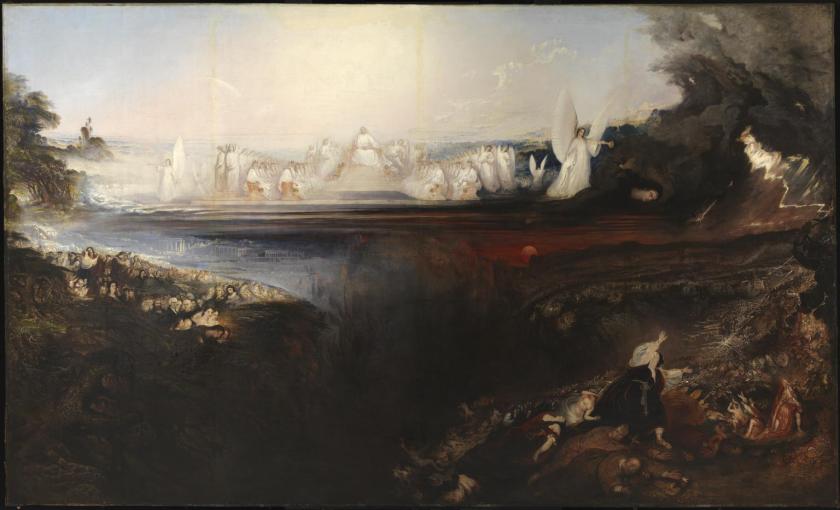
The Last Judgement 1853 John Martin 1789-1854 Bequeathed by Charlotte Frank in memory of her husband Robert Frank 1974 http://www.tate.org.uk/art/work/T01927
A reader kindly asked me a question from something she heard on my podcast. I appreciated the thoughtfulness which which she had asked, and also used scripture. Nothing makes me happier than this (except salvations and baptisms!) It’s the goal, constructive discussion on theological topics.
She said I was sharing that Beth Moore speaks of having (false) revelations and she wondered “if the Holy Spirit does not give His people revelations anymore? Especially on the Word of God, meaning enlightens us with deeper meanings or understandings about the Word? That He shines a brighter/clearer light on it, than say, perhaps what has been traditionally taught? Not negating it, necessarily, but being able to see, as enabled by the Holy Spirit of God, into the meaning of the written Word on a deeper level.“
“I do not support Beth Moore, or listen to her, but when you said one of the biggest problems with her was her receiving revelations from God, I wondered if you believe or not whether He gives them. I am thinking of the Scripture, of 1 Cor.14:26-“How is it then, brethren? Whenever you come together, each of you has a psalm, has a teaching, has a tongue, has a revelation, has an interpretation. Let all things be done for edification.”
The way she described revelation, I think she meant illumination. Her description was super, too. The description is just assigned to the wrong word, but it’s exactly what the Spirit does when opening our mind to understand God’s word.
As for revelation, that means new knowledge of God’s mind, word, intent, plans, etc. He speaks, and it’s revealed by Him. His speaking in the past was through angels, prophets, even a donkey. In this current age of the closed and finalized Bible, He spoke through His Son Jesus, and then He stopped speaking. All we need to know is already in the word. God declared it so:
Deuteronomy 4:2, You shall not add to the word which I am commanding you, nor take away from it, so that you may keep the commandments of the Lord your God which I am commanding you.
Revelation 22:18-19, I testify to everyone who hears the words of the prophecy of this book: if anyone adds to them, God will add to him the plagues that are written in this book; 19 and if anyone takes away from the words of the book of this prophecy, God will take away his part from the tree of life and from the holy city, which are written in this book.
Hebrews 1:1-2, God’s Final Word in His Son: God, after He spoke long ago to the fathers in the prophets in many portions and in many ways, in these last days has spoken to us in His Son, whom He appointed heir of all things, through whom He also made the world.
What we do have for revelation from God is sufficient. We do not need to ask for more, look for more, or expect more.
2 Timothy 3:16, All Scripture is inspired by God and beneficial for teaching, for rebuke, for correction, for training in righteousness;
What Beth Moore and others say is that God gives her NEW knowledge straight from Him, and even worse, she is to turn around and teach it. She quotes what He has supposedly said. This makes her a false prophetess. God is against people attributing things to Him that He did not say. (Jeremiah 23:21, Revelation 2:20).
However, revelation from God is different from illumination. The Spirit illuminates what is already revealed, applies it to our mind to transform it. He makes scripture clear, and brings scripture to mind. Illumination is the Spirit helping us to understand what has already been revealed. Revelation is the giving of new knowledge about God from God. As mentioned, what we know about God has already been revealed. But the Spirit goes on with helping us understand it.
Picture going into a dark room. There is a dimmer switch on the wall. The furniture is already there, but when you turn on the dimmer, a soft glow illuminates the outlines of the furniture. Then as you study, the the switch turns on more light. It gets brighter and you see more details in the room. Finally when we are glorified, then the light is on all the way and we know all that God had intended for us to know.
The most asked question and the most offered objection to Christianity are the two in the headline. Philosophers have struggled for eons to describe and resolve “the problem of evil”. Sproul called it “The Mystery of Iniquity“. If you expect an answer to the questions above, I don’t have them. Not because I haven’t thought about them, nor because I am too dim to understand philosophy, but simply because the only revealed truth we have about satan, the Bible, is silent on the subject. And that’s good enough for me.
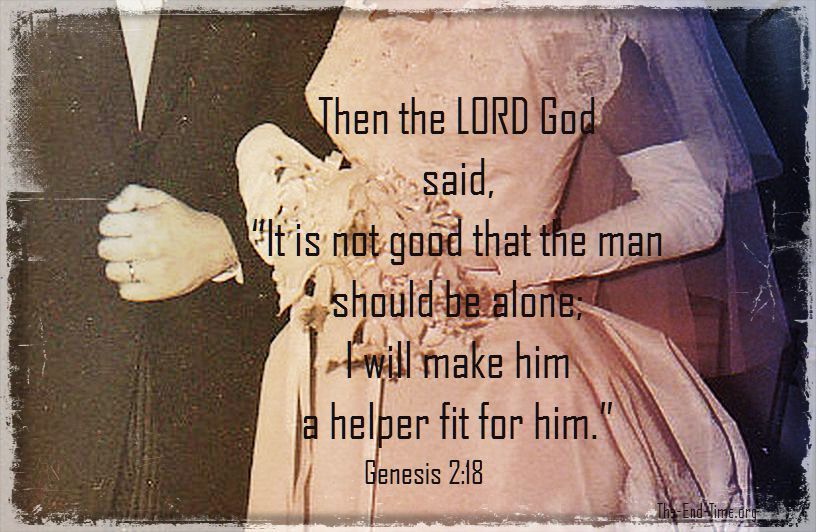
From the Center for Christ and Culture, we read from the article published in 2006, “Why is Marriage Important?“
“Marriage is far more profound than our contemporary culture would lead us to believe. It is a life-long commitment that restrains self-centeredness, self-indulgence and self-gratification. It is the one relationship that effectively prepares and conditions us for community. By restraining self-centeredness and promoting love of another, marriage becomes the foundation for social order. When this commitment labeled “marriage” is reduced to nothing more than a mere contract between two consenting persons, or worse just another option, it ceases to restrain our self-centered passions. Self-centeredness harms not only that relationship but also others as well until it spreads throughout society like ripples in a pond. Abandoning the “others before self” concept of marriage for the self-serving concept of contractual relationships between autonomous individuals makes us increasingly narcissistic, ultimately leading toward moral and social collapse. Across America the institution of marriage is being assailed, reduced to nothing more than a sentimental ceremony between consenting adults, radically redefined, or simply abandoned altogether.”
Yup. All that abandonment is contained in the article we read above and what we see enacted every day.
In the distant past, we were given biblical verses about how the world would be in the far future. There are specific prophecies about the coming perilous times, and there is no doubt we are living in those perilous times now. Conditions that we see all around us that did not exist at all or didn’t exist to the degree we see them today, such as the blatant and constant pressure to dispense with traditional marriage, are all around us. This disposal is a tragic and irreversible mistake.
That satanic urge to dispose of marriage the way God intended does not come only from the homosexual agenda but from all quarters, as we saw above. Once the foundational block of society is done away with then all else can crumble. Is this not happening now? Of course it is. The excessive narcissism that homosexual or triadic or polygamous or adulterous marriage definitions promote lead inevitably to societal collapse. And thus, society is collapsing. Paul wrote of the conditions we were to expect in the last days, and the last days are the time between Jesus’ ascension and His return.
“Godlessness in the Last Days”
1But understand this, that in the last days there will come times of difficulty. 2For people will be lovers of self, lovers of money, proud, arrogant, abusive, disobedient to their parents, ungrateful, unholy, 3heartless, unappeasable, slanderous, without self-control, brutal, not loving good, 4treacherous, reckless, swollen with conceit, lovers of pleasure rather than lovers of God, 5having the appearance of godliness, but denying its power. Avoid such people.” (2 Timothy 3:1-5)
You notice the last part of verse 5 says “having an appearance of godliness”. The people perpetrating the perilous acts will be people who seem good, having a godly appearance, pious and sincere. Yet they will be in the inside, brutal, selfish, without-self control. Even people claiming to be within Christendom are muting the boundaries of the biblical standards for marriage.
The article about marriage I linked to above concludes:
“Marriage is simply the highest of all human relationships and therefore must never be entered into lightly. It is the means of procreating humanity, nurturing and training subsequent generations, producing social order and for the Christian, the best means for perpetuating the Gospel. … If marriage is allowed to die in America as it is in other Western nations our posterity will inherit a godless culture.”
I maintain that this generation is a strong candidate as the inheritor of the godless culture. The constant barrage of marriage redefinitions (among other horrifying conditions) hath wrought godlessness in the last days. The only good news to this statement is that as the culture becomes ever more like it was in the Days of Noah and the Days of Lot it means the Day of the Lord is even closer. We draw closer with each passing day. But for the sinner, The Day of the LORD is near, said Zephaniah! Consider his words, ye sinners!
The great day of the Lord is near, near and hastening fast; the sound of the day of the Lord is bitter; the mighty man cries aloud there. A day of wrath is that day, a day of distress and anguish, a day of ruin and devastation, a day of darkness and gloom, a day of clouds and thick darkness, a day of trumpet blast and battle cry against the fortified cities and against the lofty battlements. I will bring distress on mankind, so that they shall walk like the blind, because they have sinned against the Lord; their blood shall be poured out like dust, and their flesh like dung. Neither their silver nor their gold shall be able to deliver them on the day of the wrath of the Lord. In the fire of his jealousy, all the earth shall be consumed; for a full and sudden end he will make of all the inhabitants of the earth. (Zephaniah 1:14-18)
I want to spend a few minutes recording some things I’m grateful for. I wrote these down in a journal I keep of short mementos of things for which I’m grateful. I’ve been writing about heavy topics, and there are heavy things going on in the world … so perhaps to brighten the atmosphere (even briefly) might be in order.
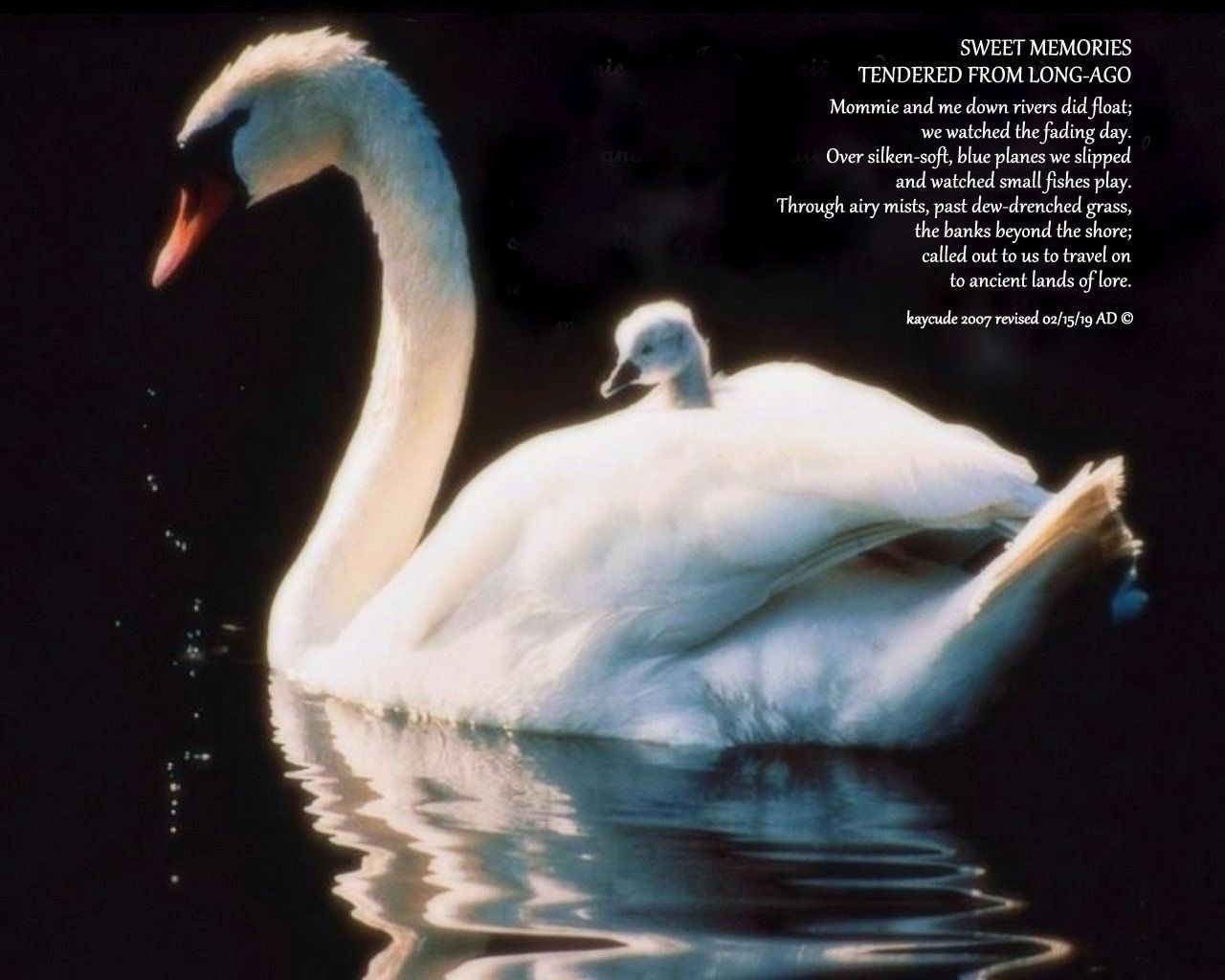
To all the mothers out there reminiscing over the time that has passed and your sons and daughters are now older, perhaps having left the nest, flying off to new skies and making nests of their own. The sweet time of little hugs and precious moments fly by. Cherish them.
Kay Cude did just that, revising a poem she had written long ago as she remembered just such a moment treasured in her heart.
Artist’s statement:
I had written this poem for my son many years ago to recount our sweet time together when he was a two-year old.







 the-end-time.org