Posted in good shepherd, I am the door, sheep, shepherd, the worthless shepherd

Jesus as Shepherd, and I AM the Door

Shed door, inside are sheep! EPrata photo

To plumb the Bible’s depths is such a treasure and a pleasure. It never ends. I’ve been studying about the Shepherd and one of His I AM statements, “I AM the door”.

The Bible mentions shepherds and shepherding over 200 times. Jesus uses the metaphor of the Shepherd often, and said here in arguably the most famous statement,

I am the good shepherd. The good shepherd lays down his life for the sheep. (John 10:11)

Did you ever notice there were a lot of shepherds in the bible? There were even the unnamed shepherds watching their flocks by night, the first recipients of the Good News.

Numerous biblical characters are associated with the occupation of shepherding: Abel (Gen. 4:2), Abraham (Gen. 13:7), Isaac (Gen. 26:20), Jacob and his sons (especially Joseph, Gen. 30:36; 46:32), Laban (and his daughter Rachel, Gen. 29:9), Moses (Exod 3:1), and David (1 Sam. 16:11). Source Holman treasury of key Bible words, Carpenter, E. E.

Shepherds’ work was never ending, lonely, and dangerous. They had few tools, the rod as a crook to extracting sheep from difficulty and the staff or club for fending off wild animals; (1Samuel 17:34-37). We know David also had a slingshot. Shepherds also had pouch for food and used their wrap as a cloak and also a blanket.

There was not a lot of grass so shepherds had to move the flock often. Sheep are followers. If one sheep walks over a cliff the rest will follow. They don’t defend themselves against prey, they simply huddle up and then there’s a slaughter. They are scared of moving water and will only drink from still water, (“He maketh me lie down near still waters”) but if they fall into moving water they will drown.
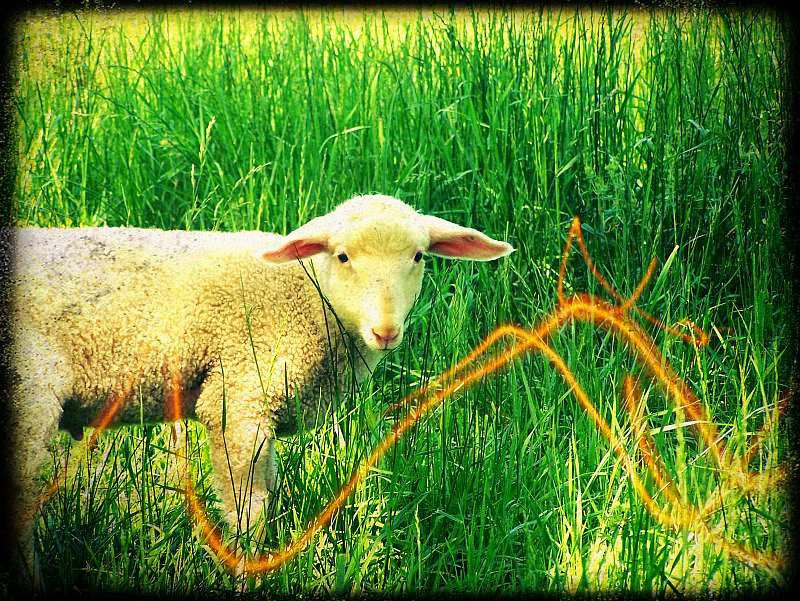
EPrata photo

When night-time came the shepherd had two options. Using one of his tools, the rod, he could lead the sheep (never drive them) into a sheepfold in the field. (Luke 2:8) This was simply a crudely made rock enclosure, usually a circle, so-high and topped with thorns to prevent prey or robbers scaling it to get in (John 10:1).

The shepherd brought the sheep to the fold one by one. He’d let down his rod to bar it from coming in, and he would inspect the sheep from head to toe. He was looking for injuries, disease, or anything that might need attention. The lanolin, a waxy substance the sheep excrete to keep their wool dry, often hid cysts or cuts, so he had to closely inspect each sheep before lifting up his rod to allow them entry.

Just as the lost are closely examined at the Great White Throne Judgment as seen in Revelation 20:11-15. The saved are allowed in but we are still inspected. (Romans 14:10-12, 2 Corinthians 5:10)

The shepherd also counted the sheep as they went in, to see if any were still out there, or for tithing purposes. (Matthew 18:12; Jer. 33:13).

I will make you pass under the rod, and I will bring you into the bond of the covenant. (Ezekiel 20:37)

And every tithe of herds and flocks, every tenth animal of all that pass under the herdsman’s staff, shall be holy to the Lord. (Leviticus 27:32)

The sheepfold had no door. The shepherd placed his rod and staff across the opening and bedded down at the threshold, becoming the door.

I am the door. If anyone enters by me, he will be saved and will go in and out and find pasture. (John 10:9)

I’ll discuss the going in and out in another blog essay. The other option was to lead the sheep to a community sheepfold or a privately owned sheepfold in town. (Zephaniah 2:6). Sometimes the shepherd would make use of his lean-to or another enclosure in town, going through the same process with the rod as each sheep entered. This time, the shepherd would have hired a hireling to watch the sheep at night, and he’d go to his own bed until morning. Sometimes hirelings were not worthy and ran away. (John 10:13)
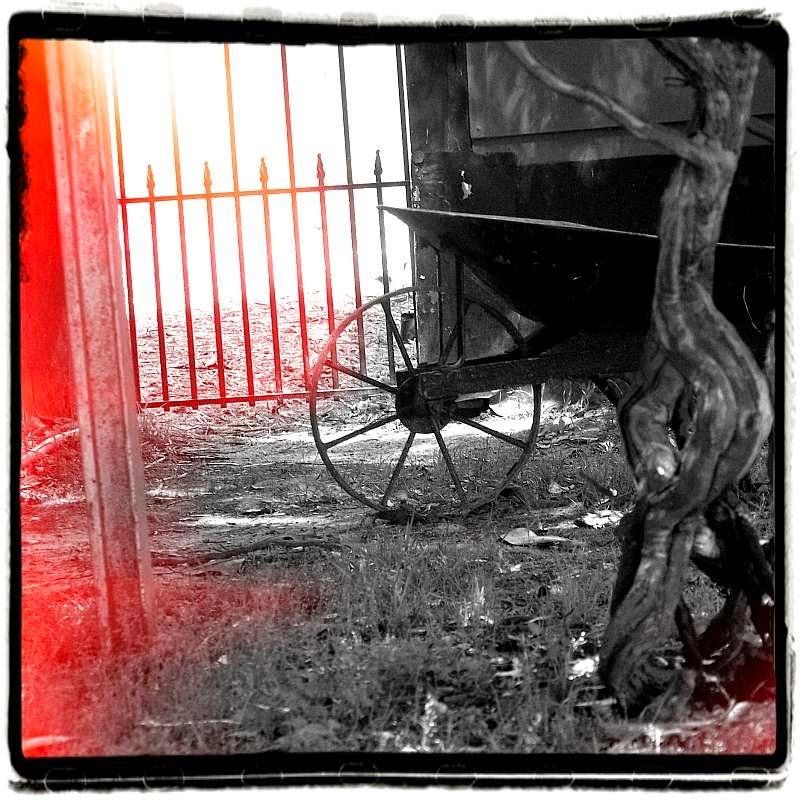
EPrata photo. Actual sheepfold door, with wheelbarrow

In the cities of the hill country, in the cities of the Shephelah, and in the cities of the Negeb, in the land of Benjamin, the places about Jerusalem, and in the cities of Judah, flocks shall again pass under the hands of the one who counts them, says the Lord (Jeremiah 33:13)

He is the Good Shepherd. He is the door, where inside the sheep are counted, examined, protected, loved, and cared for.

Posted in arm, good shepherd, prophecy, the worthless shepherd, zechariah

The strong arm of Jehovah and the antichrist’s withered arm

There are many symbols in the bible. Many of those symbols refer to an aspect of God, the Spirit, or Jesus. In the case of God, his ability to reach into the doings of humankind is shown in a symbol of His mighty Arm, or His right hand. I focus on His arm.

I was listening to a sermon by RC Sproul on Mary’s Magnificat, and in Luke 1:51, Mary extols the strength of the LORD by His arm in saying,

He has shown strength with his arm; he has scattered the proud in the thoughts of their hearts; (Luke 1:51)

Here are other verses which do the same:

Who has believed what he has heard from us? And to whom has the arm of the LORD been revealed?” (Isaiah 53:1)

You Yourself crushed Rahab like one who is slain; You scattered Your enemies with Your mighty arm. (Psalms 89:10)

Say, therefore, to the sons of Israel, ‘I am the LORD, and I will bring you out from under the burdens of the Egyptians, and I will deliver you from their bondage I will also redeem you with an outstretched arm and with great judgments.” (Exodus 6:6)

Dr Henry Morris at The Institute for Creation Research wrote,

“The LORD hath made bare his holy arm in the eyes of all the nations; and all the ends of the earth shall see the salvation of our God.” (Isaiah 52:10)

The human arm is often used in the Bible to symbolize spiritual strength or power. The word is first used in Jacob’s dying prophecy concerning His beloved son Joseph: “But his bow abode in strength, and the arms of his hands were made strong by the hands of the mighty God of Jacob” (Genesis 49:24).

The source of all true strength is in the mighty God, so it is not surprising to find at least 40 biblical references to the Lord’s powerful “arm” or “arms.” One of the most striking is our text, promising that when God “bares His arm” for His great work of delivering the lost world from its bondage to Satan and sin and death, then the whole world will see His salvation (literally, His “Jesus”).

It is an interesting article, please feel free to click the link and read the rest.

The arm of the LORD symbolizes many aspects of Himself, but for now we focus on the strength. How much more can we see the lack of strength when we contrast the following verse,

He stomps the earth but his arm is withered!

Woe to my worthless shepherd, who deserts the flock! May the sword strike his arm and his right eye! Let his arm be wholly withered, his right eye utterly blinded!” (Zechariah 11:17)

That powerful chapter of Zechariah depicts a several-fold prophecy over the course of time. Zechariah is prophesying about Israel’s future rejection of Christ. Here is an outline of the verses’ meanings by Roy Gingrich:

3. The coming of a false shepherd (11:15–17)
(Because Israel rejected Her true Shepherd, God will chasten her by giving her a false shepherd. There is already a time gap of more than 1900 years between verses 11:14 and 11:15.)
a. His character—He will be “a foolish, (wicked) shepherd.” The Old Testament writers often associated foolishness and wickedness. See Psa. 14:1.
b. His identity—He is: (1) The “little horn,” Dan. 7:8; (2) “the desolator,” Dan. 9:27; (3) “the willful king,” Dan. 11:36; (4) “the man of sin,” 2 Thes. 2:3; and (5) the “Antichrist,” 1 John 2:18.
c. His origin—God will indirectly raise him up to punish His people, 11:16. Satan will directly raise him up to promote his end-time total rebellion against God, 2 Thes. 2:4; Rev. 19:19.
d. His ruthless ministry—He will not feed, but will fleece, the flock. He will not tend, but will tear, the flock. He will not edify, but will eat, the flock. He will not feed, but will feed on, the flock.
e. His punishment (his end)—He will receive woe. His right arm (with which he slew the sheep) will be completely dried up and his right eye (with which he looked upon the sheep for evil) will be completely blinded. These things mean he will be utterly destroyed, Dan. 9:27; 2 Thes. 2:8; Rev. 19:20. God will first use and then punish this masterpiece of Satan.

Gingrich, R. E. (1999). The Books of Haggai and Zechariah (p. 52). Memphis, TN: Riverside Printing.

The worthless shepherd will strike the sheep, but the LORD will wither his arm.
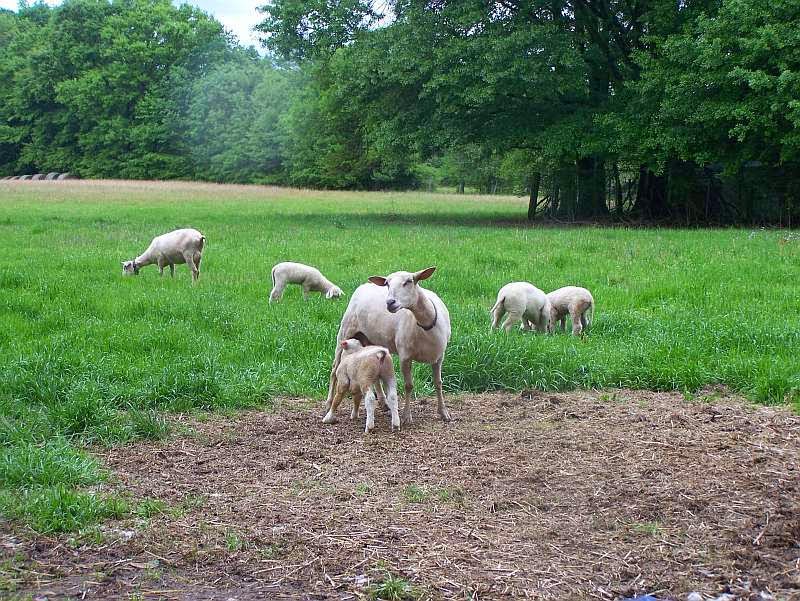
EPrata photo

This foolish and wicked shepherd Zechariah speaks of is the prophesied antichrist, also spoken of in the book of Daniel. John MacArthur writes of the Zechariah verse,

With the removal of the true shepherd, the drama called for the prophet to play a foolish shepherd, who depicted the antichrist of Daniel’s 70th week. (cf. 2 Thess 2:3; John 5:43; Dan 9:27). Zechariah’s prophecy jumped from the first century A.D. to the last days before the second coming, omitting the present mystery of the church age.

This foolish (wicked) shepherd had a broken staff or club that he used to beat stubborn sheep into submission, something clearly inappropriate for a shepherd who thoughtfully and carefully cared for his sheep. Because they did not choose the good shepherd, Israel will do a foolish one who will do absolutely the opposite of what is expected of shepherds. He will destroy the sheep (11:16). This is exactly what the antichrist does. (cf. Dan 9:27, Matthew 24:15-22). Source: MacArthur Study Bible: Note on Zech 11:17

In returning to the symbolism of the arm, we have a great God whose arm is stretched out to perform mighty deeds, the mightiest is that Jesus is God’s arm. Christ is the power of God unto salvation (cf Isaiah 53:1, 52:10)

Thus the foolish shepherd is also a worthless shepherd who rightfully deserves the condemnation pronounced (Woe). The arm indicates his strength and the eye his intelligence. The foolish plottings of the worthless shepherd will be annulled when the True Shepherd returns (cf. 12:10; Rev. 19:19–20).

The Bible Knowledge Commentary: An Exposition of the Scriptures J. F. Walvoord & R. B. Zuck (Eds.)

We can ponder the mightiness of the arm of the LORD in giving His Son to us. Whether one meets the Messiah Redeemer as friend or foe, His mighty arm will be extended to perform wonders and holy perfections. He will wither the arm of the worthless shepherd. He will strengthen His saints. He will direct His angels. He will cast the rebels into the Lake of Fire. His arm does wonders, forever!

~~~~~~~~~~~~~~~~~~~~

Let Us Reason Ministries: The Arm and Right Hand of the LORD

Alexander MacLaren, The Arm of the Lord from his Expositions of Isaiah and Jeremiah