
 |
| EPrata photo |
A sacred cow is…
An idiom is based on the popular understanding of the elevated place of cows in Hinduism and appears to have emerged in America in the late 19th century. A literal sacred cow or sacred bull is an actual cow or bull that is treated with sincere reverence. A figurative sacred cow is a figure of speech for something considered immune from question or criticism, especially unreasonably so. (source)
Are there sacred cows in Christianity? Yes. Just ask young Jessica Lam, who dared to gently chide Beth Moore’s teaching, and Moore herself came down on Mrs. Lam like a bag of hammers. You can read about it here.
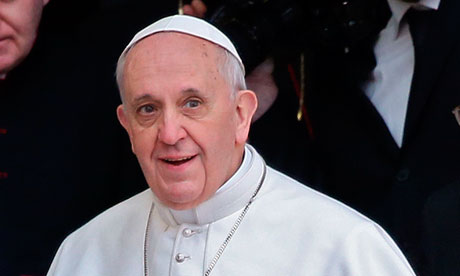
Sacred cows Ravi Zacharias and Billy Graham also get a pass, being untouchable from criticism, or even from examination of their teachings. The Pope and Mother Teresa are also sacred cows, but they are not in the faith to begin with.
CS Lewis is another sacred cow.
At Church Leaders.com, C. Michael Patton asked a great question. Why do we love CS Lewis and hate Rob Bell? Speaking to the notion of the sacred cow, Patton opens his essay this way
Theologically, there is some stuff people try to sweep under the rug as well. In fact, though I say C.S. Lewis is loved by all, I do remember walking into church one day years ago. They were giving away a bunch of the “overstock” books from the library. I saw a church elder throwing away a lot of books as well. They were all C.S. Lewis! When I inquired about his odd blasphemous actions, he said that C.S. Lewis was a heretic because he did not believe in inerrancy. While this is something of an extreme example, I think it is important to realize that not everyone likes C.S. Lewis. Almost everyone, but not all. Why?
Because he had some “non-evangelical” leanings. Besides not believing in inerrancy, he also believed in the theory of evolution, denied substitutionary atonement in favor of a “ransom to Satan,” bordered on a Pelagian idea of human freedom, seemed to advocate baptismal regeneration, and regularly prayed for the dead. To top it all off, he held out hope for the destiny of the unevangelized, believing that Christ might save them outside of direct knowledge of him (inclusivism). With all of these foibles, I seriously doubt any evangelical church would take a second look at his resume were he to apply for a pastorate at their church today. In fact, this list alone would be enough for many to call him a heretic. However, we still love him. We still read him. We still defend him. We still hand out his books by the dozens to friends and family who are struggling with their faith. This man who had his Christianity affirmed by Dr. Bob Jones but questioned by Dr. Martyn Lloyd-Jones is beloved by just about everyone, making him off-limits for serious criticism. Why?
The writer goes on to defend Lewis despite Lewis’ aforementioned “theological foibles.” Pardon me but many of the things Lewis believed in, noted above and also including the Catholic concept of purgatory, are heresy, not ‘foibles’. But Lewis gets a pass. Why? On the strength of Lewis’ persuasive arguments? (Colossians 2:4). His well-written philosophies? (Colossians 2:8).
When I first became a Christian, people urged me to read CS Lewis’ work. I said “OK.” I read Mere Christianity. I did not like it. I read The Great Divorce. I hated it. I read The Screwtape Letters, and was amused by it, but that waned halfway through. I never finished. I never even started Chronicles of Narnia. I don’t favor animal stories. Miracles? Blech. Weight of Glory? Didn’t understand it, biblically. I really tried hard, too.
I thought to myself “What is the big deal all about??” So I looked up Lewis’ theology. I was shocked that anyone would regard him as an evangelical. The man’s theology was a mess.
But I held my peace and went on my way.
In 2011 The Gospel Coalition’s Kevin DeYoung cautioned us on Mere Christianity.
C.S. Lewis’ Mere Christianity is a classic. It is a winsome, thoughtful, well-written defense of the Christian faith. Some of its better known sections–like the famous liar, lunatic, Lord, trilemma–have become part of the way evangelicals think and speak. No doubt God has used Lewis and Mere Christianity to awaken affections for Christ, engage the mind for Christ, and remove obstacles for the Spirit to draw people to Christ. I’m thankful for all this. More than that, I’ve benefited from every Lewis book I’ve read. But C.S. Lewis was not an evangelical. Mere Christianity shows why. Let me highlight two significant problems.
In 2013 Southern Baptist Theological Seminary noted there were some difficulties with Lewis’ theology, but continued to value his contribution to the canon of Christian thought and literature.
CT writer J.D. Douglas paraphrases Lloyd-Jones, saying Lewis’ view of salvation was “defective in two key respects: (1) Lewis taught and believed that one could reason oneself into Christianity; and (2) Lewis was an opponent of the substitutionary and penal theory of the Atonement.” In the same essay, Douglas notes Lewis’ wide celebration among evangelicals and even credits Lewis with making “righteousness readable.”
In 2015 we hear a pastor urge us to quit Lewis. I always appreciate Pastor Mike Abendroth’s biblical stance and plain honesty. Here is this short clip, he says, “Stop Quoting CS Lewis”. I totally agree.
In discernment, the command in God’s word is, test all things. Hold fast to the good. (1 Thessalonians 5:21). The Jamieson-Fausset Commentary says of the Thessalonians verse,
Locke says, Those who are for laying aside reason in matters of revelation, resemble one who would put out his eyes in order to use a telescope.
Test ALL. You might be surprised at what you discover, cow plop and all.
 the-end-time.org