Category: encouragement
The faith of Adam
When Adam and Eve trusted the words of the serpent instead of GOD and stepped out into disobedience, they fell from grace.
To the woman God said,
“I will surely multiply your pain in childbearing; in pain you shall bring forth children. Your desire shall be for your husband, and he shall rule over you.” (Genesis 3:16).
Then God made His prophetic pronouncements to Adam (the ground is cursed because of you, labor will be painful, you’ll sweat and toil, the serpent will be bruised under the heel of the woman’s offspring)
When God was finished speaking, the man called his wife’s name Eve, “because she was the mother of all living.” (Genesis 3:20)
![]() |
| God Judging Adam, cropped, by Wm. Blake, 1795 |
Was Eve a mother yet? No. Adam’s naming of Eve was a step into faith based on the future promises of God.
If Adam’s faith was so great based on such little revelation, how much more faith should we have based on the incarnation of Christ, the indwelling work of the Holy Spirit, and the completed revelation of God?
“For in it the righteousness of God is revealed from faith for faith, as it is written, “The righteous shall live by faith.” (Romans 1:17)
Creation Grace: Endurance
Self-esteem versus dust
I grew up in the 1970s and I was teaching first grade in the 1980s when the “self-esteem” movement hit education. Suddenly there were no winners or losers, no achievers or laggards. There were only winners, and everyone was supposed to be rewarded for ‘trying.’
Well, even Psychology Today now says in their 2011 article, The Gift of Failure, “The self-esteem movement has done an entire generation a deep disservice.“
If I may be allowed a moment of snark…well, duh.
The article recounts the movement’s beginnings.
It started with the best intentions. In 1969, Nathaniel Brandon wrote a paper entitled “The Psychology of Self-Esteem” that suggested that “feelings of self-esteem were the key to success in life”. Hearing this, many people started to find ways to confer confidence upon our children. This resulted in competitions where everyone gets a trophy and no one actually wins. “New games” attempted to engage children without any winners or losers. The parents who embraced these efforts did so out of love and with the most noble of intentions. The only problem is that these efforts simply do not work. Self-esteem is not something conferred, it is earned through taking risks and developing skills
An attitude of ‘we’re all winners’ was directed toward children and played out on the soccer field, Cub Scouts, and elementary schools. It was not constrained to just children, though, as it was perpetuated in adults by the publishing of and subsequent runaway success of the 1970s’ most popularly selling book, “I’m OK, You’re OK” By Dr. Thomas Harris, MD.
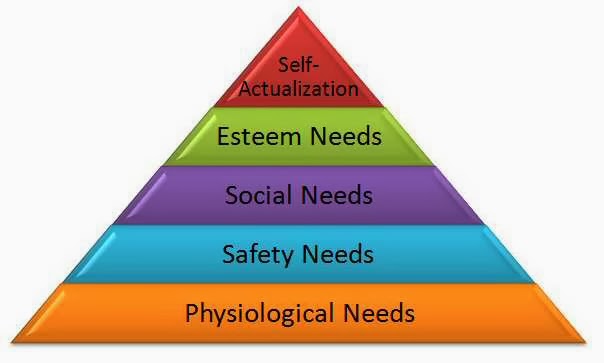
It was the era of self-help and the above paragraph sums up nicely the feeling of the times. Harris’s work extended Abraham Maslow’s, a psychologist in the 1950s who published a seminal book outlining the human’s hierarchy of needs. Maslow created a pyramid in which a hierarchy of needs was proposed. In Maslow’s schema, once man meets his own needs, he can reach his full potential. You hear this a lot in today’s self-esteem preachers: ‘full potential’.
That feeling of everyone being OK, needing a self-esteem boost continued into the 90s and into 2000s when Joel Osteen, king of the Self-Esteem booster sermon, began preaching.
It seems Osteen’s aim is to let everyone know they’re OK. More than OK, a masterpiece!
“See Yourself as a Masterpiece”…” all those thoughts of insecurity, inferiority and low self-esteem won’t have a chance!”
Now self-esteem had finally come to Christianity. We know that depraved man in the secular world has always sought ways to feel better, via mind-altering drugs, to pop psychology. There is no way to feel better apart from God. However for the Christian it’s a different story. This feeling of needing to have an ego boost is a new aspect of false doctrine. Paul wrote the first chapters of Romans expounding on how depraved and lost we are. In other words, we’re NOT OK.
Before we know Jesus, we are depraved, sinful, and unable to do anything worth anything that pleases God.
![]() |
| Maslow’s hierarchy of needs |
After we are in Christ, we don’t need self-esteem because we are co-heirs with Christ in heaven. On earth, we must strive to be humble, forgiving, live a quiet life, and serve others. All our esteem is Christ’s, not ours, and it is He who helps us live as Christians.
However it was very important for the secular world to cling to the self-esteem movement and there is a reason why this also very negatively impacts Christianity: As Abraham Maslow observes,
“any doctrine of the innate depravity of man or any maligning of his animal nature very easily leads to some extra-human interpretation of goodness, saintliness, virtue, self-sacrifice, altruism, etc. If they can’t be explained from within human nature—and explained they must be—then they must be explained from outside of human nature. The worse man is, the poorer a thing he is conceived to be, the more necessary becomes a god.”
So you see, if there is no innate goodness in man, any goodness that exists, and man intuitively knows there is (Ecclesiastes 3:11), then that goodness must come from deity. If man is not good, then the good must be God. Therefore, psychology says in its everlasting denial of God, man is good, therefore we don’t need God. ‘I’m OK, You’re OK’ really means we’re all OK without God. See to it that no one takes you captive by philosophy and empty deceit, according to human tradition, according to the elemental spirits of the world, and not according to Christ. Colossians 2:8
It’s no wonder that men like Maslow and Harris knocked themselves out with trying to construct philosophies that deny man’s innate depravity. It’s why even preachers who call themselves Christians today like Osteen or Joyce Meyer etc cling to the self-esteem, full potential, we’re all really OK mantra.
Seeing that the post-WWII world became more First World and wealth was abounding, especially in America, and people were reaching the top of Maslow’s pyramid and self-actualizing, evil still existed. People were not OK. Later in life, Maslow was concerned with questions such as, “Why don’t more people self-actualize if their basic needs are met? How can we humanistically understand the problem of evil?” He also wondered why evil existed in the majority of the people. Toward the end of his life, Maslow decided to study evil, so as ‘to understand it’.
What got me started thinking about self-esteem is a verse that happened to pierce me deeply.
“For there was not left to Jehoahaz an army of more than fifty horsemen and ten chariots and ten
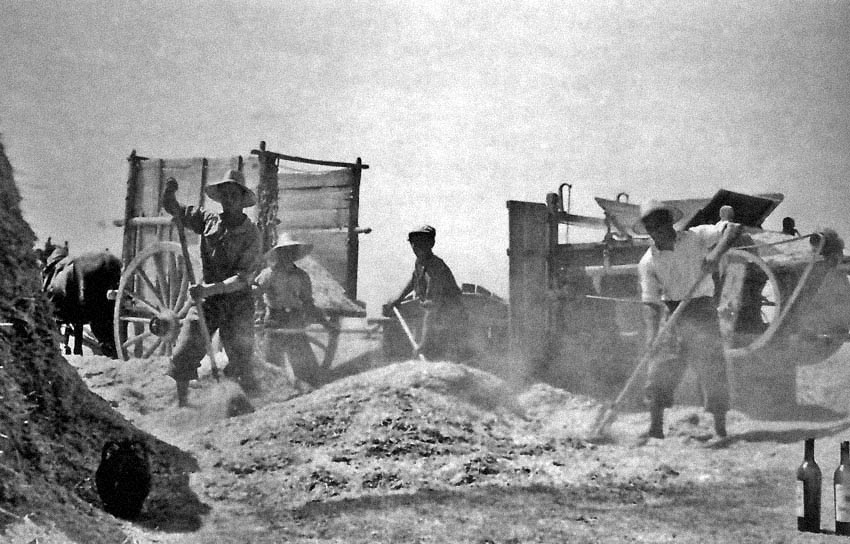
thousand footmen, for the king of Syria had destroyed them and made them like the dust at threshing.” (2 Kings 13:7)
Do you know how small of a mote threshing dust is? Small. The LORD God had allowed the King of Syria to make His people into dust.
And not just the Israelites, but all people are in fact from dust and will return to dust.
“All go to one place. All are from the dust, and to dust all return.” (Ecclesiastes 3:20)
Isaiah 40:15 says
“Behold, the nations are like a drop from a bucket, and are accounted as the dust on the scales; behold, he takes up the coastlands like fine dust.”
DUST. Remember our former position and remember that even in Christ, He will grind the nations down like dust eventually. He is God. We are not, no matter how much self-esteem we try to load into our mind.
Our self esteem must always be tempered by the awareness of our own sinfulness, goes this good advice from a study of self-esteem from Romans 12:3 by Rev. Bruce Goettsche.
For by the grace given me I say to every one of you: Do not think of yourself more highly than you ought, but rather think of yourself with sober judgment, in accordance with the measure of faith God has given you. (Romans 12:3)
And if you start thinking more highly of yourself than you ought, remember the dust.
————————-
Further Reading
God is making a Pointillist painting
We know that the church is a body, a united body of believers.
For just as the body is one and has many members, and all the members of the body, though many, are one body, so it is with Christ. (1 Corinthians 12:12)
The Holy Spirit ordains where each believer is to be and what gifts he is to have. He ordains where we are in the body so as to contribute to the good of the whole.
All these are empowered by one and the same Spirit, who apportions to each one individually as he wills (1 Corinthians 12:11)
It could be said that the Lord is painting a picture.
If you’re familiar with the Impressionist movement of art that emerged in the late 1800s in Paris, then you’re familiar with the works of Monet, Manet, Sisley, Renoir, & etc. These artists used short brush strokes to convey movement and impression, rather than precision. There was a sub-culture of the Impressionists called the Pointillists. Here is Georges Seurat’s famous pointillist painting, “Sunday Afternoon on the Island of La Grande Jatte“
As the website IncredibleArt.org states,
Strictly speaking, Pointillism refers to the technique of using dots of pure color in such a way that, seen at the appropriate distance, they achieve maximum luminosity.
(source)“Georges-Pierre Seurat made this technique famous. His painting,
Sunday Afternoon on the Island of La Grande Jatte (1884-1888) is one of the most famous paintings in the world. … At left you see a closeup of Seurat’s painting. It is a closeup of the the man laying down on the lower left. Even thought he appears to be wearing white pants, as you can see, the part of the pants in the shadow just above the grass has no white in it. It’s only when you look at it from a distance that the colors blend in. Seurat spent two years on this painting. He carefully planned it out with several sketches first.“
It could be said, that the earth is the canvas and the people are the points of paint He daubs precisely here and there, working toward an end.
I’ve seen pointillist paintings at museums. You look very closely and all you can see are daubs of color. Dots. If you back away to a distance, you can see the scene clearly. It’s amazing how the colors blend to make a seamless and beautiful picture.
We can think of ourselves as dots. We can’t see the whole picture, we don’t have the right perspective. God does. He puts a pink next to a blue and though all we can see is the blue next to us, we have to trust that the Great Artist is making something beautiful. Even if you don’t like the color pink, you know and trust that the Artist’s purposeful placement of it next to you will make the picture as a whole perfect when it is complete.
Just like heaven.
Salvation: an illustration by Action Jones
Action Jones made his illustrations freely available for ministry. Here is one titled Salvation
“It is the Spirit who gives life; the flesh is no help at all. The words that I have spoken to you are spirit and life” – Jesus Christ, from the Gospel of John 6:63
Only the Holy Spirit of God can bring a dead sinful soul to cry out to Jesus for eternal life – and if we are to be saved, this is exactly the miracle that must happen.
If you’re reading this and do not love Jesus and trust Him as your Master and Savior – this can happen to you right now if you’d just recognize your desperation and call out to Him.”
More Action Jones on:
Deviantart
Tumblr blog: Full of Eyes
Youtube
The Old Man Crucified
![]() |
| EPrata photo |
Take heart. Even as your old man is dying the New Man is blooming in his place.
EVERY New Man is two men; every Believer in Christ is what he was, and not what he was: the old nature, and the New Nature exist at the same time in each regenerate individual. … The old nature, then, is what the Apostle means. The lusts of the flesh, the carnal desires, the affections of our estranged hearts, these he calls the old man . I am much mistaken if every Christian does not find this old man still troubling him. He has a New Nature which was implanted in him, as through the Spirit’s sacred working he was led to hate sin, and believe in Jesus to his soul’s Salvation; it is the heavenly offspring of the New Birth, the pure and holy result of Regeneration. Th at New Nature cannot sin—it is as pure as the God from whom it cam e, and like the spark which seeks the sun, it aspires always after the Holy God from whom it came. Its longings and its tendencies are always towards Holiness, and God, and it utterly hates and loathes that which is evil, so that finding itself brought into cont act with the old nature, it sighs and cries as the Apostle tells us, “O wretched man that I am, who shall deliver me from the body of this death?”
Do you see yonder blood-washed host? Without spot or wrinkle they stand before the Throne of God! Ask them whether they had to fight with sin, and they will tell you that they were men of like passions with us; ask them how they overcame sin—you glori ous ones, out of what armory did you take your weapons, and who girded you for the sacred conflict?— You must get to Christ, nearer to Christ, and you will overcome sin.”
~Charles Spurgeon
excerpt from “The Old Man Crucified”
No. 882 April 11, 1869, at the Metropolitan Tabernacle
“Knowing this, that our old man is crucified with Him.” Romans 6:6.
Phil Johnson: "Sometimes the Lord’s supply seems meager, but it is always sufficient"
I’ve been thinking about money. This is not so surprising for me at this time of year. I work in a school system that I value highly and enjoy. My colleagues from one end of the district to another are wonderful. Some of those are the people in Payroll. Our tradition is that we conclude the first half of the year before Christmas and we enjoy a long break from school, coming back the first week of January. In order to ease the Christmas giving frenzy, the payroll people work in a frenzy themselves to get our paychecks to us before Christmas instead of the last day of the month like usual. We’re paid monthly.
This year we were paid December 18 and we will be paid again on January 31. So we will go six weeks between paychecks, and that is a stretch for anyone.
I am paid almost exactly enough to get by, with little to no surplus month to month. The job itself is a complete blessing. I work with kindergarten children as a teacher aide (now called para-professional.) It fulfills me professionally, because it gives me joy to be with children. It is clean, inside work. Ha, I’ve worked outside before and in very dirty jobs, and this is better, even when a five-year-old throws up on me. It is way better than picking the worms out of freshly caught cod in a freezing fish factory in Maine, which is what I did to pay the rent during college. Among other jobs. My school job also comes with health care benefits, which is a relief, not having had coverage for many years and whistling past the graveyard by on a promise and a prayer.
So the job has many benefits if not being cushy in the paycheck department. I was musing about this over the past week. I’m ending the month in very good shape. Projecting 6 weeks out is a hard things to do but I’m coming in for a precise landing and tomorrow when my paycheck arrives I’ll not have wanted for anything. It takes discipline, self-denial, and constant prayer to make it through to the end of the month.
In the end I’m glad that my financial life is this way, I decided. My discipline flows from a relaxed reliance on the promise of God to provide for us. If I had more money I know I’d become spendthrift. I tend toward greed and selfishness. So with more, I’d turn to God less and I know I’d start to be greedy and selfish. I’d also begin to believe satan’s propaganda that my comforts were self-acquired. I fear Him enough to know that when I get a glimpse of self-awareness, it’s not a pretty picture, and to look back at Him.
I like turning to the scriptures to feed myself even if the fridge isn’t stocked with everything I ever wanted. I know that it is HIM sustaining me. What a comfort.
Am I going to sing “In Christ Alone but send a few dollars extra just in case”? Am I going to pray, “I Need Thee Every Hour, except a bit of a cushion would be nice”? Or, proclaim, ” ‘Tis so Sweet to Trust in Jesus and my wallet”? What does it mean to sing, pray, speak, and think these things? It means what it means, trust Jesus to provide. Why do we sing “Trust and Obey” on Sunday and then go home and stress about finances on Monday?
So I was pondering these things. It’d good for me to live this way. Maybe other people can handle more money or more of a cushion, but the Lord knows, I can’t. I’m blessed.
I decided to do some cooking and listen to Phil Johnson’s latest sermon while chopping. His sermon is called “Not So Radical” and it is a message he is preaching through the Psalms of Ascents. He is up to Psalm 128.
Pastor Johnson explained that the psalms of ascents were songs the Israelites would sing on the way to Jerusalem. No matter what direction you approached Jerusalem from, and mostly the only way to go was the Jericho road, was uphill. You hiked. You climbed. You sweated. It was 3400 arduous feet uphill all the way. You did this three times a year. Grandma had to be carried in a cart drawn by an ox. The rest just hiked. These songs were songs they would sing in praise and anticipation of the worship festival to come, and would remind them of Who they were going to worship in the coming days.
Psalm 128:5 states the following:
“The LORD bless you from Zion! May you see the prosperity of Jerusalem all the days of your life!”
Pr. Johnson looped back to verse 1 which opens with a message about how fearing the LORD brings blessing. He said,
“We don’t hear enough about holy fear these days. Modern preachers like to encourage familiarity rather than fear, and that’s why so much of today’s worship is casual, flippant, man-centered. But Scripture is full of admonitions to fear the Lord. For many today, that is an unfamiliar concept.”
Then he moved into explaining prosperity and blessing.
“The word prosperity here in our text speaks of the biblical concept of divine blessing, spiritual affluence, and material sufficiency. This kind of prosperity has nothing whatsoever to do with the worldly idea of mammon. The world’s idea of prosperity is overabundance, opulence, luxury, self-indulgence–all dependent on material wealth. The Lord’s definition of prosperity (by contrast) is full forgiveness, the imputation of perfect righteousness, and “grace to help in time of need”–all blessings of eternal value.
“Sometimes the Lord’s supply seems meager, but it is always sufficient. He measures his blessings carefully, so that a glut of earthly prosperity doesn’t extinguish our hope of heaven. And even that is a great blessing.”
Sometimes the Lord blesses by sustaining with a large cushion, as He did with Job and Abraham. Sometimes the Lord blesses by sustaining exactly, as He does with me and perhaps with you. The Lord takes care of us financially and He takes care of us spiritually. What may seem meager is in truth perfection. I wouldn’t make the trade for anything.
“Therefore do not be anxious, saying, ‘What shall we eat?’ or ‘What shall we drink?’ or ‘What shall we wear?’ For the Gentiles seek after all these things, and your heavenly Father knows that you need them all.” (Matthew 6:31-32)
“So Abraham called the name of that place, “The LORD will provide”; as it is said to this day, “On the mount of the LORD it shall be provided.” (Genesis 22:14)
~~~~~~~~~~~~~~~~~~~~~~
For further reading:
Phil Johnson: Not So Radical
(if the link still isn’t working yet listen here at sermon audio)
9 Marks: Trusting God Through Unemployment
Our Daily Bread: God provides…but how?
Pastor Rick Henderson: The False Promise of the Prosperity Gospel: Why I Called Out Joel Osteen and Joyce Meyer
Creation Grace: Fog and Mist
His steadfast love endures forever
It’s so strange. More than a few people in my circle (both internet and real life) have said that their recent days and weeks have been full of trials and difficulties. Things have popped into their life seemingly out of nowhere, and caused trouble and trials, heartache and hurt.
For others, they have said or written that discernment is hard work,and they are tired. I’m tired too. The flood of falsity is just a tsunami now. Not only do we get discouraged because the spotless name of Jesus is constantly dragged through the mud, but our friends and family might be falling under the sway of a false teacher or doctrine, and we just want to cry and tear our hair out.
Lately, people really need encouragement and grace more than ever. Let’s give it to them just as we would like to receive it from other people when we are in a bad way.
Yesterday and today I’ve been unsettled myself, so my go-to is always prayer, and bible reading. It really helps to pray to Jesus, we know He listens.
Consequently, he is able to save to the uttermost those who draw near to God through him, since he always lives to make intercession for them. (Hebrews 7:25)
It helps more, I’ve found, to pray for other people when I’m unsettled. Focusing on others helps me put my problems into perspective. It also gives me the joy of lifting another person up to Jesus for their benefit, and to be obedient to the scriptures. (James 5:16; Ephesians 6:18)
As for my other security blanket in addition to prayer, it is reading His word. There is nothing like it. I read Psalm 136 this afternoon and it just crumbled me. The recurring refrain in the psalm is:
“his steadfast love endures forever”
He loves us–(a gift in itself!)
His love is steadfast; faithful, immovable–(amazing!)
His love is forever; speaking to His eternality. (FOREVER!!)
My oh my, what a gift. No wonder the psalmist spends so much time in exhorting thanks! The psalm continues to outline His attributes and His works. It is just beautiful. I posted it below so you can read it here. Friends, if you are going through something, or hurting, or just plain weak and tired, read the psalms. Read the word. Pray. Here is Psalm 136. I hope it blesses you.