Posted in encouragement, Uncategorized

War no more

Sin is the oldest negative thing on earth. After God created the world and the two people and called it all “very good”, sin came. Shortly after that came murder, lying, anger, jealousy, polygamy, and war.

War has been with us for so long.

I remember growing up, the Viet Nam War. It was the first war to be broadcast on television, and in living color, too. There were reports every single night. We’d hear the tally of dead and wounded. Scenes to my young eyes of limbless men hanging off gurneys in the jungle, helicopters, camouflaged men skulking with rifles pointed through the leafy undergrowth were plenty scary. They were scenes of chaos and blood.

That’s war.

I saw a news article from the Canadian Broadcasting Company.

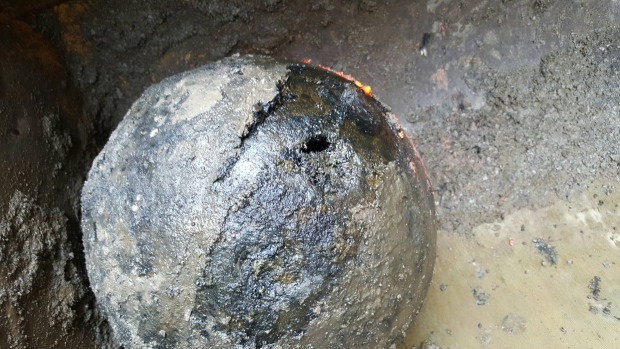
A cannonball fired by the British during the Battle of the Plains of Abraham in 1759 has been unearthed at a building site in Old Quebec. The rusted, 90-kilogram projectile was unearthed during excavation work last week at the corner of Hamel and Couillard streets and still contained a charge and gunpowder. The work crew that found the ball picked it up and gathered around it for photographs, unaware that it was still potentially explosive.

The cannonball is from Britain and was fired at Quebec City from Lévis,
across the St. Lawrence River. (Facebook/Lafontaine Inc)

In Genesis 4 we have the first murder. The Bible isn’t specific on how Cain killed Abel. Later in Genesis 4:22 we read, Zillah also bore Tubal-cain; he was the forger of all instruments of bronze and iron

Knowing that Tubal-can was in the line of ungodly descendants of Cain, and knowing the evil heart of man, I’d say with near certainty that some or all of those instruments were instruments of war. Many of those implements were likely arrows, shafts, spikes, and the sort.

Then by Genesis 6:11 we read Now the earth was corrupt in God’s sight, and the earth was filled with violence.

Violence that included war, with implements, I’m sure.

We all know about Galileo. He was famous for looking through his telescope and making

“observations that strengthened his belief in Copernicus’ theory that Earth and all other planets revolve around the Sun. Most people in Galileo’s time believed that the Earth was the center of the universe and that the Sun and planets revolved around it.” (Source: NASA).

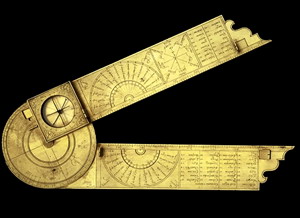
But 20 years before that, Galileo experimented with, produced, and wrote about military technological advances, in a treatise called The Operations of the Geometrical and Military Compass. Galileo’s invention of the military compass was used to calculate precise trajectories of cannonballs and other military killing projectiles.

Throughout the Renaissance many attempts were made to develop a universal instrument  that could be used to perform arithmetical calculation and geometric operations easily. This need was felt especially in the military field, where the technology of firearms called for increasingly precise mathematical knowledge. … The geometric and military compass of Galileo belonged to this class of instruments. [T]he Accademia Delia was founded in Padua to provide mathematical instruction for young noblemen training for a military career.

Imagine how much of our mind will be released when we don’t have to devote so much of it to devising evil. Imagine when we are freed to think up ways to worship Jesus, or ways to praise Him, or anything else, than to creating military items that maim and kill and destroy.

He shall judge between the nations, and shall decide disputes for many peoples; and they shall beat their swords into plowshares, and their spears into pruning hooks; nation shall not lift up sword against nation, neither shall they learn war anymore. (Isaiah 2:4)

Jesus will dissolve the earth in a fervent heat. When He creates a new earth, there will never be a cannonball to dig up. There will never be any implements of war found anywhere, like arrowheads or bullet casings or swords. Forgers of instruments of bronze and iron will be making plowshares and pruning hooks.

Won’t it be great when we will study war no more? Peace. Peace will reign in men’s hearts, between men and Jesus, and between men and men (and animals). Peace, shalom, war no more.

Posted in encouragement, Uncategorized

Humdrum to Terror: A Sailing Story

I lived on a sailboat for two years. It was a Tayana 37 with a full cast iron keel and a wooden mast. A cutter rig. It was a pretty boat, a standout in the harbor.

I sailed with my husband from Maine to the Bahamas and back, worked for a year and did it again. We sailed and motored down the Intracoastal Waterway (ICW) combined with “outside” overnight passages, and made it to our terminus of Georgetown, Exuma, Bahamas in 6 months. After languishing in harbor for a while, we turned around and sailed back up.
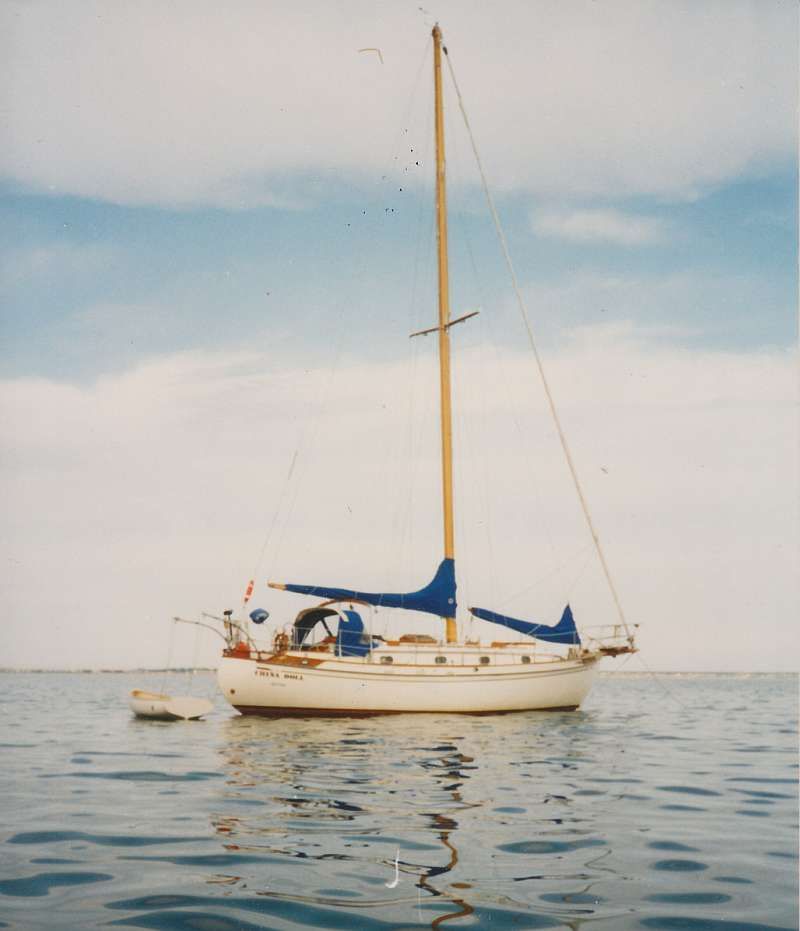
boat

The Intracoastal Waterway (ICW) is a series of Bays, Sounds, Lakes, Canals, and Rivers that connect, from Cape Ann Massachusetts to Key West, FL. (and beyond) There are man-made parts that the Corps of Engineers dredge and maintain, and there are natural parts that form the connection, like Albemarle Sound or the Neuse River. The technical portion of the Waterway begins at Mile Marker 1 in Norfolk VA, because you can go all the way from Norfolk to Key West without having to enter the Atlantic Ocean. However the informal ICW goes all the way to Maine. In order to make passages north or south most live-aboards use a combination of staying inside and going outside.
220px-CapeCodCanalEastEndAerialCape Cod Canal, Wikipedia photo

When you’re motoring or sailing down the ICW, what you’re really doing, apart from cruising and sightseeing, is commuting. If you are on a sailboat, your maximum speed is likely going to be 3-5 miles per hour. That’s only how fast sailboats go.

So traveling down the ICW means you’re seeing the eastern seaboard at a rate most people can walk or jog. Progress is incremental at an agonizingly slow rate. Since there are only so many daylight hours, and since it’s inadvisable to travel the ICW at night, and since you need to chart ahead to make the next anchorage and bed down before it gets dark, you get up at dawn and start aiming to hit that anchorage before dark.

So, you’re essentially commuting. You can make between 30-50 miles per day on average, given weather conditions and ICW traffic. The traffic you share on the ICW is a mixture of other sailboats, motorboats, small pleasure craft, commercial fishermen, and commercial traffic such as tugboats and barges. It’s busy.

Getting up at dawn and turning on the motor and setting off for the day, every day, repeatedly, lulls one into a routine. We’d check the engine first, all the belts, the oil, and the pistons. We’d do a once-over topside to make sure things were still hunky dory. We’d turn on the engine, my husband would up the anchor, and off we’d go.

anchor 2

Leaving a Georgia anchorage at dawn. EPrata photo

Mainly, life commuting down the waterway was humdrum. You turned on the motor, did the same thing each day, and you anchored down at night. You made slow progress. Sometimes you had to look at a map just to see IF you’d made any progress. It seemed that the ICW was very long and the amount traveled in a day was very short, inconsequential even. Looking at the 1700 miles from start to finish it seemed like we would never get there.

The humdrum routine was punctuated by occasionally pulling into a town. It was always interesting learning about a town’s history, getting some local food, and/or replenishing the larder. It was fun to hop into the dinghy and putt-putt into a town for recreation. Even doing a laundry run was all right if it got us to walk and stretch our legs a bit. Getting off the boat added a little different something to the day-to-day commute.

Cruising the ICW was fun and good, sometimes thrilling, but it was far from being the glamorous yachting life you see in jetsetting magazines. Routine is routine. Humdrum.

Then some days an unexpected kind of comet would burst into your life and BLAM! you would almost die.

There was the sunny, calm day like all the previous days in northern FL when we were cruising north, in tandem with a tug pushing a barge. Barges are big. The part of the ICW we were motoring was narrow and crowded. We were ahead of the barge and both of us were cruising at the same speed. We had been in close VHF radio contact and were friendly with each other, courteously minding the navigable ‘rules of the road’ and frequently making way for each other in minor ways that helped us travel safely.

The bottom was sandy, which tends to silt up at the edges. We both tried to stay in the middle so we wouldn’t ground. The tug & barge had a draft of only a foot or so but we needed at least 6 feet of water under us to stay afloat and not touch bottom.

At one point in the long day, the tug radioed and asked if we could pull to the right a bit, as he wanted to pass us. He had to do some maneuvers up ahead as his turn off the ICW into his home port on the St. John’s River was approaching.

We edged over and slowed to just enough speed to keep way on. The tug and barge passed us. We sped up and started coming back to the center of the river. We made it!

BLAM!

Underwater in the middle of the channel was a hump of sand, enough to ground us. We grounded so hard nothing on the boat even jiggled. It was instant and it was final. I was below making lunch, and all I heard and felt was a JOLT. I looked out the porthole and the trees were not going by. We were stopped.

IF we had still been traveling in front of the tug and barge, we would be dead. The tug and barge are too large a vessel to be able to stop on a dime. Think 18-wheeler, on water. It would have crushed our boat, ramming us and pushing the debris down into the mud below, and us along with it. Or perhaps my husband who was steering in the cockpit would have had time to jump off, but with me being below I certainly would have died instantly.

But those thoughts didn’t come until later. For the present, we had a terrible problem of being stuck in the middle of the channel and exposed to all other motorboats, barges, tugs, and whatever else came along. We enacted the protocol for this situation where you put the anchor into your dinghy, row out to deeper water, set the anchor, and then get back on the boat and winch yourself forward off the obstruction. Fortunately, this worked. After some hard work, terror, sweat, and skittish eyes looking down the waterway for oncoming craft, we shook loose of the keel grabbing sandbar and got afloat again.

We were extremely grateful we had a full keel and it could withstand the jolt. We were very grateful we had no adverse effects except a little lost time. It could have been so much worse.
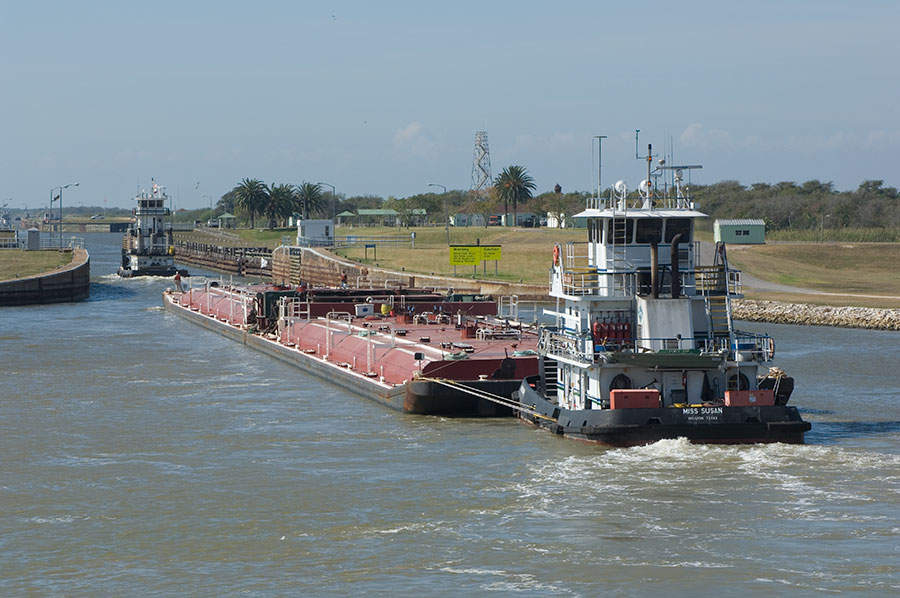
giww-tug-colo-locks

A tug and barge, not THE tug and barge., Photo TX DOT

As we processed what had happened and realized our extremely close call, we shivered and shuddered. Our days and days of tedium had been shattered in an instant by a near death experience we would never forget. That is liveaboard cruising on the ICW, long periods of humdrum routine punctuated buy sudden terror.

And that is the Christian life too.

Sometimes it seems like you’re making no progress. It feels like you’ve come only inches and there are miles to go. Can you even see your progress? It’s only incremental. It feels like you’ll never get there. You go days and days and wonder if you added anything of value to the Kingdom at all. It’s just routine. Tedium. Then BLAM! , a life changing event stirs you out of your mundane life and suddenly you’re scrambling.

A car accident. A cancer diagnosis. An injured child. A lost job. Homelessness. Whatever it is, one day you’re sailing along and the next you’re struggling for your life. Job knew. Elijah knew. Mary knew. Paul knew.

Does God use His interruptions to our daily life to shake us? Our pastor had given us the example of the fish tank. He said he had known someone who had a fish tank with fish in it but sometimes it got dirty. The water looked clear and clean. But if you were walking by and bumped it, the sludge on the bottom would drift up. He said that sludge accumulates, laying there, invisible, until a bolt from the blue comes along and then you see how much there is to clean out.
guillaume-150

Photo by Guillaume on Unsplash

That’s us believers. Our hidden sins, ruts, and blots lay in the bottom of our heart lurking and waiting undetected. When an unexpected life-comet zooms in, you turn to God. Prayer suddenly becomes fervent. Diligence in spiritual disciplines become tantamount. Pleading with tears ensues.

Does God uses the occasional BLAM in our lives to shake us? I think He does. Progress might be slow, tedium might even enter in. But when the jolts come, thank the Lord for them. He is using them to do a good work in you. It will be OK.
Posted in encouragement, Uncategorized

Heaven is a busy place

busy
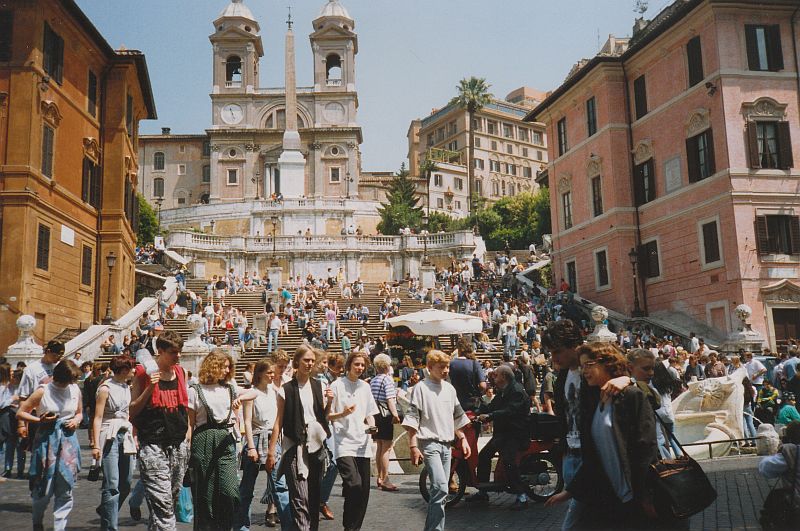
The busyness of Rome’s Piazza del Popolo can’t compare
to the busyness of heaven. EPrata photo

Heaven is busy. I know you know this. But sometimes we let the invisible become abstract, and once abstract, distant. People tell me that they feel that since our faith relies on invisibility, despite their certainty, praying to heaven sometimes feels like whistling in the wind.

I understand the feeling, and I’d like to help along those lines.

Let’s get specific.

When we have a civic issue, we do things. We write letters to the editor. We complain on Facebook. We join protests. We march. We petition. We attend Town Council meetings and speak in the microphone.

“My road isn’t paved and it’s wrecking my car!”
“There’s too many potholes on my road, do something!”
“You can’t fire the Town Manager/increase the budget/Add onto the school!”
“We need a stoplight at John Smith Road!”
“Make John Q. Public Street a 4-way stop!”
“Re-stripe the lines on Main Street!”

We are pretty busy when it comes to civic duties. We make ourselves heard for our civic needs in all the venues that are available to us.

What do we do when we have a spiritual issue? We do things. We write letters to the pastor. We complain on Facebook. We join grumbling protests. We prayer march. We petition. We attend Elder Council meetings and speak up.

What don’t we do? Pray. For whatever reason, we don’t make available to us the first thing we should be doing. Instead, we relegate it to a last resort.

Far from being an inert, harp-playing, cloud lounging, Deistic place, heaven is active and always in motion. It is in operation all the time. Heaven is busy, Heaven is involved.

Heaven has angels coming and going, presenting themselves to God. The High Court is always in session. Jesus is praying. Incense is rising. The angels are hollering holy, holy, holy. Warfare is breaking out. Martyrs are arriving. Jesus is mediating. Requests and Petitions are coming in. Praise and worship is continuing.

So pray! Pray for all your concerns. Pray to praise Jesus. Pray for your sanctification. Pray for your friends’ salvation. Pray for nations abroad, and your kids at home. Pray about everything, especially your concerns.

When you pray, you become intimately involved in the activity of heaven. Your prayer is heard by Jesus and is then absorbed into the great stream of work and operations of the celestial realms. If Jesus heard Hagar’s lone cry in the vast desert, if He saw Elijah’s exhaustion in his escape from Jezebel, if He knows the heart of Nicodemus by night, if He understands all our sorrows, fears, and feelings, He hears your prayer. You don’t have to worry. You don’t need a liver shiver or a sign or confirmation. He hears it.

Scripture references

Job 1:6; Revelation 4:1-11; Hebrews 6:20; Hebrews 7:25, Romans 8:24; Revelation 8:4, Revelation 4:8, Isaiah 6:2-3; Daniel 10:13, Revelation 12:7
Genesis 28:12; Revelation 6:9; 1 Timothy 2:5, Job 9:33; Philippians 4:6, 1 Timothy 2:1; Revelation 19:6-7, Revelation 11:16.

Posted in encouragement, Uncategorized

Christ, The Sure and Steady Anchor

Storm of the Century, March 1993. I was living on my sailboat, and I was in it. The arrow shows where.
Storm_of_the_century_satellite

I was saved at age 42, and before that I traveled a lot. I lived on a sailboat for two years, traveling about 10,000 nautical miles (with another 2000 miles on a speedboat delivery). As they say, “A lot of blue water under my keel.”

We left on our first voyage in October 1992. In March of 1993, we were anchored at Georgetown Bahamas, where we experienced the Storm of the Century.

anchor
The anchor as seen at night, through clear Bahamian waters, 20 feet down! It was convenient to be able to see that it was set well. Note the ripples the chain made in the sand as the boat at anchor sways gently to and fro.

In this from the Broward/Palm Beach New Times, we read the article Lost at Sea:

They called it the “storm of the century.” … that unnamed freak March tempest killed as many people in Florida as Hurricane Andrew and left $500 million in damage, even dropping snow in the Panhandle, by the time it finally moved out of Florida. It took with it a 40-foot sailing ketch called Charley’s Crab. No scrap, no bit of flotsam, no article of clothing was ever found from that boat, and after two desperate SOS calls, the four people who were sailing it just off the coast of Palm Beach were never seen or heard from again.

The storm continued to wreak havoc as a record-breaking blizzard as it moved up the east coast of the United States and into Nova Scotia. NOAA Weather:

The Superstorm of 1993 (also called the Storm of the Century) was one of the most intense mid-latitude cyclones ever observed over the Eastern United States. The storm will be remembered for its tremendous snowfall totals from Alabama through Maine, high winds all along the East coast, extreme coastal flooding along the Florida west coast, incredibly low barometric pressures across the Southeast and Mid-Atlantic, and for the unseasonably cold air that followed behind the storm. In terms of human impact the Superstorm of 1993 was more significant than most landfalling hurricanes or tornado outbreaks and ranks among the deadliest and most costly weather events of the 20th century. (source)

Wikipedia specifically mentions the derecho winds:

The squall line produced a serial derecho as it moved into Florida and Cuba [and The Bahamas, Ed. Note] shortly after midnight on March 13. Straight-line winds gusted above 100 mph at many locations in Florida as the squall line moved through. The supercells in the derecho produced eleven tornadoes.

Today’s point, is the anchor.

anchor 2
In gentler times, pulling the anchor up at dawn, another day of sailing
the Intracoastal Waterway.

1993 was before the internet and cell phones. GPS was very new and few sailors had it. Yet the sailing network still worked. We had been dithering about anchoring outside the harbor a little ways off behind a small island, really a sand bar hump, that had a lone palm tree. If we had followed through with that decision we might have died. As we came back in to the harbor from our day sailing, we heard the weather buzz. The chatter about the coming storm was pitched and nearly manic.

The severe weather talk prompted us to set two anchors instead of one.

As we further learned of the severity of the storm, I suggested that we set a third anchor. We possessed a third anchor but it wasn’t attached to the rope (rode) yet. We normally used the CQR as the main anchor and the Danforth as the backup two each night. The third, a Bruce, was the spare for emergencies. I considered this an emergency.

My husband resisted, but I pushed. Eventually he got busy and attached the anchor to the rope and set the third. We’d set the two anchors as if the wind would come from the normal direction, north-northwest. The harbor was very large, it could hold up to 400 boats in peak season. It was peak season. There were many, many boats anchored around us.

Storms in that location usually come in from the north-northwest. However as the unusual derecho swept over the peninsula of Florida, the Gulf Stream, and then western Bahamian Islands, it became obvious this was a storm that didn’t adhere to anything “normal.” It came not from the north, the usual winter storm pattern, but from the west.

As boaters anchored ahead of us were hit with the wind we heard them yelling into their VHS radios, reporting data from their anemometers. The wind only increased as it swept over the harbor.

“It’s 50 miles an hour!”

It’s 75 miles an hour!

“It blew out the anemometer at 98 miles an hour!”

My husband looked at me wide eyes. Without a word, he turned on the engine.

I heard it before I saw it. A terrible train sound increasing in its unearthly roar even as it blackened the horizon and roiled toward us at unbelievable speed. It seemed like a monster, a clawing, gobbling thing intent on devouring the yachts in its path like matchsticks. The last thing I heard before it hit was the incredulity in one yachtsman’s voice:

“IT’S COMING FROM THE WEST. THE WEST!!!”

610__360x_tayana37-sailplanIt hit. Our sailboat had a full cast iron keel from bow to stern, weighing 7,000 pounds. Our boat overall weighed 23,000 pounds. The derecho hit us on the side and slammed us over like a baby in a tub dunking a rubber ducky. Our side rail hit the water and as we righted, two of the anchors popped loose. My husband had gunned the engine to full speed, but we made no headway to relieve the wind’s pressure on the third anchor. All our prayers were on that last anchor. One thin rope ending in one metal anchor is all we had between us and destruction.
Boats all around us were dragging. Some were dragged by the insane wind onto the beach. Others were dragged into each other, masts tangling and rigging twining together. My husband and I stood the storm shoulder to shoulder, engine at full throttle, leaning into the wind staring into the black. Just standing. There was nothing else we could do in the face of such power.

The derecho passed over and left behind a week of winds. Thankfully, we were unscathed but many boats sustained damage, even anchored in the harbor. We heard that the sailboat Charley’s Crab (Florida restaurant owner) on its way across the Gulf Stream was lost, a tugboat and a freighter were lost at sea, too. Overall 48 people on the sea were reported missing. The Coast Guard rescued 160 people at sea. 270 people died on land.

anchor
That one little anchor, that one thin line, is all that saves you in a storm. It’s all that keeps you in one place at night when you pull down the sails and anchor in place. You go to sleep knowing that the anchor has to hold. Otherwise as you sleep, your boat could be dashed upon the rocks or swept to sea.

Christ has meaning for me as The Sure and Steady Anchor. I will hold fast to the anchor.

Posted in encouragement, Uncategorized

The ever-present peril of God’s wrath, removed

I mentioned the other day that I’ve started Professor Grant Horner’s Bible Reading Plan. You read ten chapters a day from books in the OT and the NT. One thing I enjoy about this approach is that I go through such a variety of books at the same time. Historical narrative, poetry, wisdom, philosophy etc. I am getting a feel for the “voice” of each writer. Which is doubly amazing because the uniform voice is God’s, through the Holy Spirit, But He washed His words through man’s brain and out his pen and so the distinctive style of each man come through.

Paul’s warm regards in Thessalonians is so different from his clinical lawyerly philosophy in Romans. Below is one verse from Romans that caught my attention yesterday, and the Commenter’s note about it. Sometimes the shortest verse gives the most opportunity to meditate on His word.

Much more then, being now justified by his blood, we shall be saved from wrath through him. (Romans 5:9)

Barnes’ Notes:

Much more, then – It is much more reasonable to expect it. There are fewer obstacles in the way. If, when we were enemies, he overcame all that was in the way of our salvation; much more have we reason to expect that he will afford us protection now that we are his friends. This is one ground of the hope expressed in Romans 5:5.

As I grow by His grace in sanctification, the feeling of escape from wrath of God becomes more present. The wrath of God abides on all the lost. (Romans 1:18, Ephesians 5:6, Colossians 3:6…) This is something the lost feel, whether that admit it or not or whether they suppress it or not. Post-salvation, the relief one feels from having escaped the wrath transforms into wonder and gratitude. That terrible feeling of ever-present peril is removed.

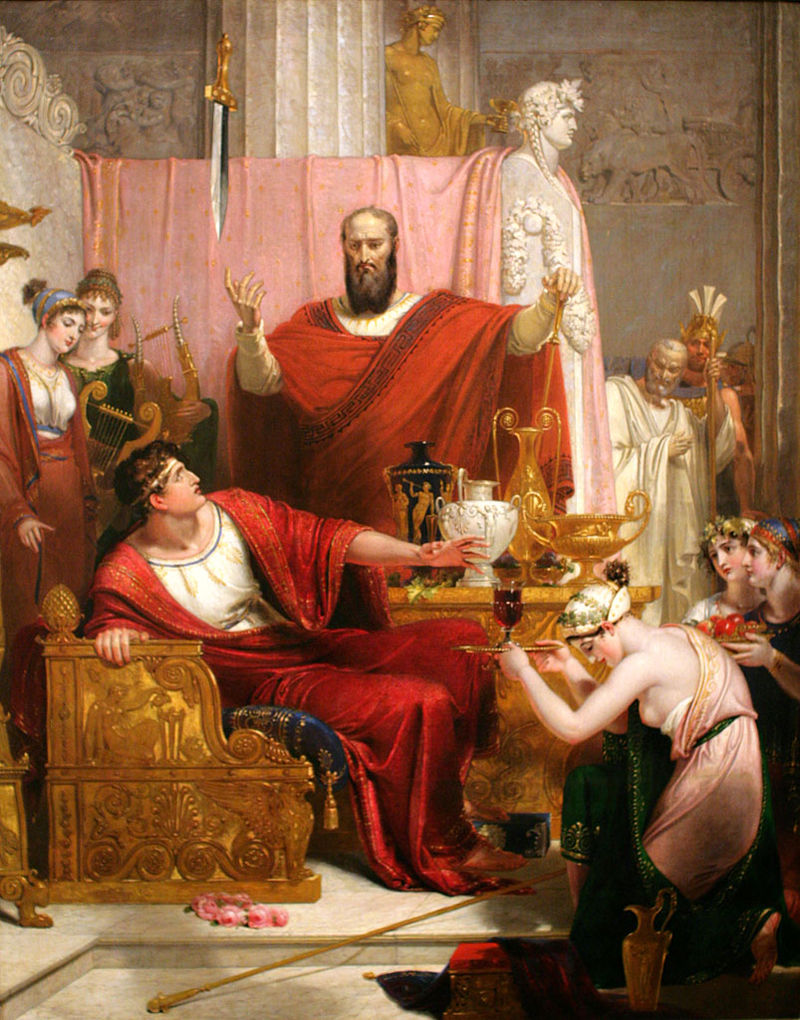
I am reminded of the story about the Sword of Damocles, from Wiktionary.

Damocles was an obsequious courtier in the court of Dionysius II of Syracuse, a fourth century BC tyrant of Syracuse. Damocles exclaimed that, as a great man of power and authority, Dionysius was truly fortunate. Dionysius offered to switch places with him for a day, so he could taste first hand that fortune. In the evening a banquet was held where Damocles very much enjoyed being waited upon like a king. Only at the end of the meal did he look up and notice a sharpened sword hanging directly above his head by a single horse-hair. Immediately, he lost all taste for the amenities and asked leave of the tyrant, saying he no longer wanted to be so fortunate. Dionysius had successfully conveyed a sense of the constant fear in which the great man lives.

In Jesus, we have the ever-present hope, instead of the ever-present wrath. Such a simple fact, but profound. It’s one upon which we should be thankful every day. Never let this get old.

Posted in encouragement, Uncategorized

I finally found a Bible reading plan that works for me

I’ve failed at every Bible reading plan I ever tried. I’ve tried The Chronological method. I’ve tried ‘read the Bible in 90 days’. I’ve tried the audible, listening to Max McLean read Robert Murray M’Cheyene’s plan. I’ve tried the Five Day reading Plan. I’ve abandoned them all.

But now I found Grant Horner’s Bible reading system and I just love it. Rather than talk myself into reading every day, I can’t wait to read every day. I adore the way it’s set up. Here is Tim Challies introducing the system. He had spent the first paragraphs explaining his own previous unsuccessful attempts to stick with a plan, too.

It’s unique among the systems I’ve attempted in that it requires more reading and yet somehow makes all that reading seem so much easier, enjoyable and attainable.

Yes. I have found this to be true.

The system is quite simple–every day you read ten chapters of the Bible. That seems like a lot, so stick with me as I explain it.

What?! Ten chapters!? Yes. Don’t bail out. The plan suggests that you read at somewhere between speed-read and skim. Just read normally. Don’t deep study and don’t go so slow you focus on every word. The reading consistently only takes me about 35 minutes. That’s really only as long as it takes. Challies again-

Each of the ten chapters will be from different books, which is to say that at any given time you’ll be reading ten books of the Bible concurrently, one chapter per day. So on day one of the system you will reading the first chapter of Matthew, Genesis, Romans, 1 Thessalonians, Job, Psalms, Proverbs, Joshua, Isaiah and Acts. You will read each of these books, one chapter per day, and then go on to other books before repeating it all again. This means that every year you’ll read through all the Gospels four times, the Pentateuch twice, Paul’s letters 4-5 times each, the Old Testament wisdom literature six times, all the Psalms at least twice, all the Proverbs as well as Acts a dozen times, and all the way through the Old Testament History and Prophetic books about 1 1⁄2 times.

Scripture begins to interpret scripture. You don’t need the deep-study while reading on this plan because the volume and variety of readings you do each day begin to knit together of themselves. You can deep-study at another time, but if your goal is to read the Bible through, despite the seeming length of material expected to be read daily, this Bible plan is excellent.

Professor Horner says of his plan,

After just a few days the reading gets much easier; in a month it will be a habit, and in six months you’ll wonder how you ever survived before on such a slim diet of the WORD. And then — you’ll tell others to start the system!

I have found this to be true as well. Here is Challies with a few tips with which I agree:

  • Stay somewhere between speed reading and deep meditation. Get through the text without dawdling, looking up cross-references and so on. Get to know the Bible and these things will explain themselves.
  • Stick with one Bible, not just one translation, but one actual Bible. I would try to ensure it’s a printed Bible, not an electronic one.
  • Read in the order he suggests, which means you’ll be moving from Old Testament to New and back again several times every day.
  • Don’t be legalistic. If you miss a day, pick up and keep going. Don’t quit.

The link to the various styles of bookmarks already have the numbers on top. The ones I printed out didn’t, so I just added a post-it tab on top. I use my MacArthur Study Bible to study, I use this Bible to read. I like using this one because I’m not distracted by the study notes on the bottom and wander off to chase rabbit trails. I just read. 🙂

Since not all the chapters are the same length, and on Day 15 you won’t necessarily be on chapter 15 of all the books, I also use a post-it tab to show me where to begin each day. One thing I like about this plan is that once I printed out the bookmarks and put the tabs on them I was done with organizing. (5 min) There is no paperwork or fussiness to this plan.

I have small note papers next to my laptop. Even though the plan demands you read at a regular reading pace, I do have questions as I read, make comparisons, draw insights. If necessary, I stop very briefly to jot them down on a small paper. It’s small so I won’t interrupt my reading for very long, just a quick note to follow up later.

That’s it! Last time I write about beginning a Plan and then abandoning it, someone had suggested in the comments that I try the Horner plan. Well I finally did! Thanks readers!

———————————-
Further reading:

Professor Horner explaining how he developed his system

Here is a link to Professor Horner’s system itself:
https://www.scribd.com/doc/12349985/Professor-Grant-Horners-Bible-Reading-System

Here is a link to printouts of different styles of bookmarks, the bookmarks help you keep track.

Sunny Shell reviews Horner’s Bible Reading plan.

Posted in encouragement, Uncategorized

Wednesday Word: Three thoughts and a video

~~~~~~~~~~~~~~~~~~~~
Persisting in Prayer


Are you praying for the lost? Do you have a burden for the lost? Do you live your life as a witness, a poem, a hymn, to the strength and power of the grace of Jesus? No? Now is the time to start. If you are, thank you. May you not dwell in a spirit of fear but of confidence, sure of His promises and the glories to come. For as His witnesses when we see Him smite the armies at Armageddon with a single word, (Revelation 19:14) and the blood floods to valley 180 miles long, to heights of the horses’ bridles, you will be glad that you spent all the time you could in worship of Mighty Jesus. Meek servant in first Incarnation, Mighty Warrior of Enemies in His second Coming, this rapidly dwindling time we use for His purposes, one of which is persisting in prayer. We were put here for just such a time as this. I hope we pray with an urgency for the lost like no other time in our lives.

~~~~~~~~~~~~~~~~~~~~
Pondering Prophecy


Author Ayn Rand said in her famous book, Atlas Shrugged, in ‘The Money Speech’,

When you see that trading is done, not by consent, but by compulsion – when you see that in order to produce, you need to obtain permission from men who produce nothing – when you see money flowing to those who deal, not in goods, but in favors – when you see that men get richer by graft and pull than by work, and your laws don’t protect you against them, but protect them against you – when you see corruption being rewarded and honesty becoming self-sacrifice – you may know that your society is doomed.

Jesus and the Bible writers said quite a bit about money. We know the famous line, that love of money is the root of all evil. (1 Timothy 6:10). We know we cannot serve Jesus and money (Matthew 6:24). This page lists many other verses about money.

Money is the invisible infrastructure to any culture. It helps define who we are as a society. Where the money goes and what we do with it brings light to our morals. During the Tribulation, which Jesus states would be the worst time on earth that ever was or will be, (Matthew 24:21), the antichrist will control the global economy by gaining control of the money. He converts the financial system into a one currency system and unless one chooses to participate in it (by taking his Mark, Revelation 13:16-17), one cannot buy nor sell. In other words, those who opt out will starve. It is a time where God will be allowing sin to come nearly to the full. Money figures prominently in that mixture of rampant sin and corruption and oppression.

What Rand described, though likely she did not know it and was perhaps thinking of communism, is a picture of what is to come in the Tribulation with how the world handles money.

~~~~~~~~~~~~~~~~~~~~
Common Grace


The Amos scripture below is representative of the character and nature of God, who wants His children to turn to Him. In the verse’s case, it was speaking directly about Israel. However in concept it’s the same for any nation, like, America. The US has for too long refused to return to Him, and may be suffering the consequences of that decision, in many ways, one of them being as Amos describes, a wet harvest in one area and drought in another.

Rain is a common grace, not thought of while it’s there, thought of quite a bit when there isn’t any, or when there is too much. Here is what Amos prophesied to Israel of God’s activity-

Amos 4:7-9 And also I have withholden the rain from you, when there were yet three months to the harvest: and I caused it to rain upon one city, and caused it not to rain upon another city: one piece was rained upon, and the piece whereupon it rained not withered. So two or three cities wandered unto one city, to drink water; but they were not satisfied: yet have ye not returned unto me, saith the LORD. I have smitten you with blasting and mildew: when your gardens and your vineyards and your fig trees and your olive trees increased, the palmerworm devoured them: yet have ye not returned unto me, saith the LORD.

As Roy Gingrich says in his Amos outline, in this reproof of Israel, “note that God times and directs the rain.” How comforting to know that everything has a purpose, and that God is sovereign, even in reproof.

~~~~~~~~~~~~~~~~~~~~
The Story of Flowers


Speaking of common grace, let’s enjoy flowers for a moment. I love botanical illustrations, those 19th century drawings of flowers and fruits. When I bought a new-to-me couch, I bought a new piece of art to go over it.

botanical

Here is a 3-minute animation in botanical illustration style that extols flowers, the pollination process, and perennial rebirth of our flora. It’s a common grace, and we should praise the Lord for it.

Here is the animator’s blurb:

Many different flowers are growing beautifully and strongly in this world. Taking their roots in the earth, sprouting, blooming, pollination by birds and insects, living on in spite of rain, wind and storms. They pass on the baton of life, rebirth and decay. Everything is so in a continuous, endless cycle. This is the story and message of this animation.

Have a wonderful rest of the week everyone!

Posted in encouragement, Uncategorized

Exposing or ignoring the ignominious blemish in our husbands

Our pastor is going through Jonah. It’s a great series. Naturally I got interested in reading Moby Dick, the Great American Novel, by Herman Melville.

I’m to the part in Moby Dick where narrator Ishmael is signed and shipped aboard the Pequod. They are about to set off from Nantucket in search of whales for their oil, which at the time, lit the world.

The character of Ishmael, who is ‘narrating’ this whale story, waxed philosophical about a particular quality in chief mate Starbuck, namely, his courage. Ishmael spent a good while extolling it, called practical, since mere man will soon face leviathan in his own element, the rolling deeps of the great cetacean.

At this point in his introductions, Ishmael said of Starbuck,

But were the coming narrative to reveal in any instance, the complete abasement of poor Starbuck’s fortitude, scarce might I have the heart to write it; for it is a thing most sorrowful, nay shocking, to expose the fall of valour in the soul. Men may seem detestable as joint stock-companies and nations; knaves, fools, and murderers there may be; men may have mean and meagre faces; but man, in the ideal, is so noble and so sparkling, such a grand and glowing creature, that over any ignominious blemish in him all his fellows should run to throw their costliest robes. That immaculate manliness we feel within ourselves, so far within us, that it remains intact though all the outer character seem gone; bleeds with keenest anguish at the undraped spectacle of a valor-ruined man.

The paragraph reminded me of the verse from 1 Peter:

Above all, keep loving one another earnestly, since love covers a multitude of sins. (1 Peter 4:8).

It’s wedding season. Marriages are vowed before God and two become one. Wives, the Bible says, love your husband and submit to him. (Ephesians 5:22, Titus 2:4). Though Christians are saved and our souls have been regenerated, your man will still sin. When they do, –

that over any ignominious blemish in him all his fellows should run to throw their costliest robes

Wives, are we hesitant to expose the ignominious blemish? Do we rush to our brothers, husbands, fathers, to cover it with our costliest robes? Or do we grumble about it on Facebook? Complain to our friends? Manage to get in a snark through some backhanded compliment? “After 20 years, the hubs finally bought me some roses! Way to go hon!”

The undraped spectacle of a valor-ruined man is felt so keenly by the husband himself, yet the disagreeable wife sets up a neon arrow pointing to it. The agreeable wife rushes to cover with her costliest robe.

Love covers a multitude of sins. As far as possible, wives, overlook insults and injuries, and be ready to forgive him. It’s hard. Injustices and insults pile up and our natural flesh will want to rebel. (Genesis 3:16). Resist this.

love covers

It is easy to get married. It is hard to make a marriage. One difference you can make, wives, is determining which path you’ll take on behalf of your husband: rush to expose? Or rush to cover?

Hatred stirreth up strifes: but love covereth all sins. (Proverbs 10:12, KJV) – Barnes Notes says: First hides, does not expose, and then forgives and forgets all sins.

Women, what say you? Can you do it?

————————————-

Nautical Trivia

Trivia #1: In old mariner lingo an unlucky sailor is called “a Jonah”.

Trivia #2: Wikipedia says the ‘coffee chain Starbucks was named after Starbuck, not due to any affinity for coffee, but because the name “Pequod” was first rejected by one of the co-founders’.

Trivia #3: Starbuck was an important name in whaling being a prominent whaling family from Nantucket. Starbuck Island in the South Pacific is named for this family.

Trivia #4: from American Whaling:

The stench of processing whales was so strong a whale ship could be smelled over the horizon before it could be seen. Crewmen on American whaleships came from all over the globe. Their work was hard, dirty, smelly, dangerous, lonely, and poorly paid, but some still liked it better than their prospects ashore.

Posted in encouragement, Uncategorized

What does ‘disciples’ mean?

In listening to Martyn Lloyd Jones today I was struck by how he brought out nuances to the word ‘disciple.’ All that the word disciple really means is learner. More on Lloyd-Jones below in a moment.

I’ve thought a lot about education over my lifetime. My foremost profession has been an educator in various capacities. I’ve attained a post-graduate degree, a Master’s in Education with a 4.0 average. However my family is one of high achievers, and a Master’s in my family is the low end of the educational totem pole. Many of my family have Doctorate degrees. They’re Professors or Deans in universities, or are doctors or are highly educated in other professions. They all worked very hard for their education and they are all very smart.

I am second and third generation immigrant, so the family emphasis on education was great and for that I’m grateful.

So often, I ponder my family’s well-earned achievements in the secular world (for none are saved that I know of, except perhaps one). Their brilliance, thirst for learning, and great intellectual capacity will become as nothing on The Day. Their wisdom which is of the world and which the world admires, will be as dung on Judgment Day. It’s an upside down notion that takes getting used to.

Where is the wise man? Where is the scribe? Where is the debater of this age? Has not God made foolish the wisdom of the world? For since in the wisdom of God the world through its wisdom did not come to know God, God was well-pleased through the foolishness of the message preached to save those who believe. (1 Corinthians 1:20-21).

And in an even more upside down twist, the uneducated, the simple, the ignorant, have the mind of Christ.

Finally, after three days they found Him in the temple courts, sitting among the teachers, listening to them and asking them questions. And all who heard Him were amazed at His understanding and His answers... (Luke 2:46-47).

This is because Jesus had no sin. His mind was pure, undefiled, and divine, and therefore the top mind in the universe.

Now when they saw the boldness of Peter and John, and perceived that they were unlearned and ignorant men, they marvelled; and they took knowledge of them, that they had been with Jesus. (Acts 4:13, KJV).

No doubt Paul had a great intellect, and had been trained in the only secondary school there existed for Jews at the time: the Sanhedrin. However most of the apostles were as the verse says, uneducated and ignorant men. They were simple men, fishermen and craftsmen, jailers and soldiers. The Holy Spirit dispenses the mind of Christ to His followers, and with it, the thirst to learn His word. The men went from being fishermen to being disciples. What are disciples? Learners. Here is Martyn Lloyd Jones on disciples and learning:

The Holy Spirit can make any man new, it doesn’t matter who he is. The Holy Spirit can regenerate an ignoramus quite as easily as He can a great philosopher. Perhaps even more so! He does the same thing in both cases. And when He does, He does the same thing to both of them. He creates a desire and an appetite in them for the truth.”

And they [the 3000 souls just converted at Pentecost] devoted themselves to the apostles’ teaching and the fellowship, to the breaking of bread and the prayers. (Acts 2:42).

The thing that is put first [in the verse] is the teaching, the doctrine. These people, suddenly converted from ignorance and darkness, from the vileness of their lives…what do they want? They want more teaching. They’ve suddenly got an appetite and a desire for teaching! Have you ever heard of such a thing? People who have never read, who’d never thought. People who had lived for gambling and for sex and for drunkenness … people who hadn’t seemed to have brains at all, suddenly they want teaching! They wanted it daily. They continued steadfastly. … This is the miracle of redemption, and it is proof of the fact that they have become a Christian.

Many people are “making decisions” but they don’t want to be taught. They don’t like teaching. They grumble at it. They say sermons are too long. They want something nice and simple, bright and breezy. When a man is born again, he wants teaching. He’s a disciple. ~Martyn Lloyd Jones, Acts 6:1-7, The Church and Her Message

Disciples are learners. Anyone and everyone can learn, when the Spirit puts the thirst for the word of God into you. The most formerly foolish and ignorant drunken gambler now seeks the highest wisdom that exists, and is given access to it by the Holy Spirit Himself.

Before I was saved, all my accumulated learned wisdom from University stood me no closer to understanding Jesus and gave me no advantage or wisdom that counts with God. I was equally as ignorant as the most ignorant person on earth. Yet when He gives us the new man inside is, comes with is a capacity for unfolding the wisdom of heaven, direct from the mind of Christ. We’re disciples, praise God.

The fear of the LORD is the beginning of wisdom; all those who practice it have a good understanding. His praise endures forever! (Psalm 111:10).
bible with glasses

Posted in encouragement, Uncategorized

Do the sheep really know what the Shepherd does for them?

A list on this Father’s Day. If you’re saved, Jesus is the best Father.

sheep

The image of God as a shepherd points to his continual direction, guidance and care for his people.

Shepherd as a title for God-
Ps 80:1 See also Ge 49:24; Ecc 12:11

God’s people are his flock-
Israel is God’s flock Ps 95:7 See also Ps 79:13; 100:3; Jer 50:7; Eze 34:31

The church is God’s flock 1Pe 5:2 See also Lk 12:32; Ac 20:28-29

The tasks undertaken by God the shepherd-
The shepherd leads and guides Ps 23:2-3 See also Isa 40:11

The shepherd provides Ps 23:1 See also Ge 48:15; Ps 23:5-6; Hos 4:16; Mic 7:14

The shepherd protects Ps 28:9 See also Ge 49:23-24

The shepherd saves those who are lost or scattered Jer 31:10 See also Ps 119:176; Isa 53:6; Eze 34:11-16; Mt 18:12-14 pp Lk 15:3-7

The shepherd judges Eze 34:17-22 See also Jer 23:1; Zec 10:2-3; 11:16; Mt 25:32-46

God gives shepherds to be leaders over his people-
He gives David’s line Eze 34:23 See also 2Sa 5:2 pp 1Ch 11:2; Ps 78:70-72; Eze 34:23-24; 37:24; Mic 5:4; Mt 2:6

He gives individual leaders Isa 44:28; 63:11

He gives faithful leaders Jer 3:15 See also Jer 23:4; 1Pe 5:2-4

Manser, M. H. (2009). Dictionary of Bible Themes: The Accessible and Comprehensive Tool for Topical Studies. London: Martin Manser.