Posted in encouragement, Uncategorized

Is it OK for Christians to be vegetarians/vegans?

I receive questions from time to time and usually answer them via email. This was on a topic not often raised (in my sphere) so I thought I’d answer it here as well as having answered the person individually.

Q. I have a question.

Lately I have been reading about health benefits of eating primarily vegetables and eliminating or reducing meats and dairy from a person’s diet. I listened to one of John Macarthur’s sermons on seducing spirits from 1 Timothy 4, and it does say everything God created is good.

Meat and dairy seem to be linked to many of the diseases we have in this country and western civilization. For health reasons is it ok for a Christian to refrain from certain foods?

I would think we are free to choose based on health reasons, but 1 Tim 4 says everything God created is good. So I wonder.

A. Thank you for your question and for your long readership of my blog! I appreciate both so much.

collage
The 1 Timothy 4 verse mentioned above is in verse 1-5,

Now the Spirit expressly says that in later times some will depart from the faith by devoting themselves to deceitful spirits and teachings of demons, 2 through the insincerity of liars whose consciences are seared, 3 who forbid marriage and require abstinence from foods that God created to be received with thanksgiving by those who believe and know the truth. 4 For everything created by God is good, and nothing is to be rejected if it is received with thanksgiving, 5 for it is made holy by the word of God and prayer.

The false teachers were forcing an asceticism on the Ephesians that the Bible doesn’t command or even suggest. The John MacArthur Study Bible note says,

The false teachers’ asceticism contradicted scripture, which teaches that since God created both marriage and food, (Genesis 1:28-31, 2:18-24, 9:3) they are intrinsically good (Genesis 1:31). and to be enjoyed with gratitude by believers. Obviously food and marriage are essential to life and procreation.

The point was, no one has the right to force an asceticism on anyone, and all foods should be gratefully received because when God made them, they were good.

In Acts 10:10-15 God declared all foods clean, meaning the dietary restrictions placed on the Israelites was lifted.

On the more practical side of things, everything God created was good. Key detail: was. In the original creation, everything was perfect. When Man sinned and fell from grace, pollution and death entered the world. Botulism, salmonella, e coli, and other diseases cause us to select and prepare food very carefully. Our compromised human immune systems and tendency toward disease means we have to watch what we eat, especially if we have been diagnosed with celiac disease, diabetes, or other food-related conditions..

It falls to an individual’s Christian conscience as to what foods you would like to consume and how clean the conditions are when you prepare it.

I myself refrain from eating meat for both financial and taste reasons. I’m also a celiac and so for health reasons have to restrict gluten from my diet. There are many reasons one may want to restrict certain foods from their diet.

Because food restrictions are not prohibited nor commanded in the New Testament for NT believers, it falls in the gray area of Christian liberty. Even within these matters where there are no details, the Bible gives guidance.

Paul wrote about the law of liberty in Romans 14 and one of his examples was food. See the verses below.

For one man has faith to eat all things, while another, who is weak, eats only vegetables. Let not the one who eats despise the one who abstains, and let not the one who abstains pass judgment on the one who eats, for God has welcomed him. 4Who are you to pass judgment on the servant of another? It is before his own master that he stands or falls. And he will be upheld, for the Lord is able to make him stand. Rom 14:2-4.

In his example of those who eat only vegetables being ‘weak’, don’t worry, he is not saying vegetarianism is a character flaw, lol. The context is one where the Christian who was refraining from eating meat was afraid to get involved in eating meat that had been sacrificed to idols. That’s no longer an issue since even the last remnants of the sacrificial system have dwindled away.

1 Timothy 4:3 says, who forbid marriage and require abstinence from foods that God created to be received with thanksgiving by those who believe and know the truth.

Here we see that food only becomes an issue when someone holding to some kind of authority imposes restrictions upon another. This is wrong, for God declared all foods clean. (Acts 10:15-16).

So if the question is one of personal conscience, health, or desire, and is not biblically forbidden, then not eating meat becomes a question of individual liberty, i.e. individual choice. As long as we’re not doing something that might cause a weaker brother to stumble, or judging someone by what they do/don’t eat, and we’re not violating a biblical prescription, then we may eat or not eat as one feels is physically wise and spiritually acceptable.

It’s worth noting that in the original creation, man was a vegetarian. He will be again in the future Millennial Kingdom.

Here is a resource John MacArthur recommended on the topic of dietary restrictions for the Israelites,

There’s an excellent paperback book called None of These Diseases, a little paperback by Dr. S.I. McMillen. Some of you may have read it. It’s very helpful in telling you why God gave Israel many of their laws regarding communicable diseases and dietary laws and what they could eat and so forth and so on.

Here is Ligonier Ministry with an essay on Christian Liberty guiding the believer when it comes to gray areas-

4 Principles for the Exercise of Christian Liberty

Friends, weigh in. What has been your experience with eating or not eating certain foods? (a different topic from the spiritual discipline of fasting)

Comments welcome below.
Posted in encouragement, Uncategorized

The death of a Christian

And he kneeled down, and cried with a loud voice, Lord, lay not this sin to their charge. And when he had said this, he fell asleep. (Acts 7:60)

Today I want to look at the kind of death Christians are afforded, as opposed to the unsaved. Tomorrow I’ll look at what Stephen cried out, the mater of pleading to the Judge for a reduced charge.

Death is the final frontier for unsaved people. That is the very edge of the precipice of knowledge which the unsaved person can tread. Beyond death, they do not know. And in the not knowing, they fear. What happens after death? Is there life? Do we blink out of existence? Death is the final frontier, and to the unsaved, ti’s one from which no one ever returns. There is no hope.

William Shakespeare’s character Hamlet said,

Thou know’st ’tis common; all that lives must die,
Passing through nature to eternity.

To grunt and sweat under a weary life;
But that the dread of something after death,
The undiscover’d country from whose bourn
No traveller returns, puzzles the will

It surely puzzles the will. The world has spit up millions of poems, stories, essays, and books musing on the undiscovered country, and all are in vain, they’re only wind.

Yet that undiscovered country is one the born-again person knows well, from His word and through prayer, we are familiar with the other side. When, as Hamlet opined, ‘we shuffle off this mortal coil’ we know that we know that we know what lies ahead: glory, peace, perfection, and Light.

Some were blessed with glimpses of it on this side of the mortal coil. Stephen, when in the throes of preaching God’s word to the Pharisees, was seen to have the countenance of an angel, because he saw the Lord standing beside the father. Paul said he had been afforded a glimpse of glory so inexpressible and beautiful he had no words to describe it. Moses, upon having been with God atop Mt. Zion, still permeated with His glory when he descended the mountain, his face shining so brightly the people were afraid.

When the unsaved attempt to gaze into the beyond they only see darkness, question marks, and unwelcoming shadows and gloomy fear, behind which their perception stalls.

The saved person has had their heart regenerated, eyes opened, and mind illuminated to the scriptures, knows what comes after death. Life! The peace one feels now that one is no longer at enmity with the Savior permeates all of a born-again person’s life, even into and through death. Barnes’ Notes says of the Acts scripture above:

how peaceful and calm is a death like that of Stephen, when compared with the alarms and anguish of a sinner! One moment of such peace in that trying time is better than all the pleasures and honors which the world can bestow;and to obtain such peace then, the dying sinner would be willing to give all the wealth of the Indies, and all the crowns of the earth. So may I die and so may all my readers – enabled, like this dying martyr, to commit my departing spirit to the sure keeping of the great Redeemer! When we take a parting view of the world; when our eyes shall be turned for the last time to take a look of friends and relatives; when the darkness of death shall begin to come around us, then may we be enabled to cast the eye of faith to the heavens, and say, “Lord Jesus, receive our spirits.” Thus, may we fall asleep, peaceful in death, in the hope of the resurrection of the just.

What a blessing the Lord has given us, His imparted knowledge of what comes next. Even better, we have the assurance of His presence and love throughout eternity. No cold darkness for us! No gate of hell with sign affixed, as Dante mused,

“Lasciate ogne speranza, voi ch’intrate”, or “Abandon all hope, ye who enter here.”

Instead we may hear, as the servant in the parable heard,

‘Well done, good and faithful servant. You have been faithful over a little; I will set you over much. Enter into the joy of your master.’ (Matthew 25:23).

Hamlet soliloquized upon contemplation of his suicide, ‘ to sleep, perchance to dream.’ No, friend, we have the assurance of life beyond life, love, light, activity, and a reality so real this present mortal coil will become the dream instead.

Beyond this mortal coil, we will live where righteousness dwells. Pray to thank the Lord for His many manifold blessings.

new heavens rigteousness dwells verse
EPrata photo


Posted in encouragement, Uncategorized

What happens to children who die?

When the September 11, 2001 attacks happened, television interviewer Larry King invited pastor-teacher John MacArthur to his program to discuss the event. King asked MacArthur, “What happens to babies who die?”

MacArthur simply replied “instant heaven.” Knowing the vagaries of television, MacArthur explained later that he had purposely given a clear and short answer because he knew about sound bites. However, on the following Sunday he chose to further explain to his own flock the biblical reasoning behind his stance.

The Bible doesn’t definitively declare one way or another where the unborn, stillborn, babies, and children go when they die. However, there is a cumulative body of scriptural evidence that supports the stance that they do go to heaven.

A horrific church massacre that happened in Texas this past Sunday, and several of the killed were children. A one-year-old, 5-year-old, 7-year-old, were among the killed, as well as a woman who was 8-months pregnant, so that unborn child died as well. I believe there were others, though their ages were not listed among the victims’list yet.

I thought it would be a good time to raise the issue again. What happens to children who die?

I can’t begin to imagine the grief that the parents and relatives feel, especially of the youngsters who were killed. If we are believers,

But we do not want you to be uninformed, brothers, about those who are asleep, that you may not grieve as others do who have no hope. (1 Thessalonians 4:13).

We have hope of Jesus, eternal life, reunion with friends and relatives…and our children.

The 2003 book that emerged from MacArthur’s series on the issue is called “Safe in the Arms of God”.

Tim Challies reviewed it herefavorably.

We mourn when there is a tragedy – of any kind – but “our concerns related to death always seem more profound and heartrending when we are dealing with the death of a child. An accident or illness seems especially tragic and poignant when the life of a little one is lost,” wrote John MacArthur.

According to Genesis 1:26-28, mankind was given the power to produce life in a deathless world. Adam and Eve were expected to “be fruitful and multiply” – to procreate and fill the earth with children who would never know death. God’s original plan was that all lives ever conceived would live for all eternity.” MacArthur, Safe in the Arms of God

We know that sin entered the world and death not only came into it but personally touched Adam and Eve, who lost their son.

I wrote about that here, in an essay titled after the painter William-Adolphe Bouguereau’s rendition of the moment, called “The First Mourning.” Adam and Eve lost their son to violence, and they wept knowing their sin brought its wages: death. No, Abel was not a youngster, but his loss must have been no less agonizing for the parents.

Please take a moment to read it. It’s profound and encouraging.

Yet we are called to love. It is our love that is supposed to make us distinct from all others.

By this everyone will know that you are my disciples, if you love one another. (John 13:35)

Hard, I know. I can’t even tread close to the fire of anger and grief in the loss of a loved one. But knowing the child is safe in the arms of God offers a comfort and a mercy that should dissipate the anger and give room to forgiveness. “Lack of forgiveness destroys relationships” said John MacArthur in a recent sermon “Forgiveness in the Age of Rage.

This lack of forgiveness that destroys our relationships includes our relationship with God. Forgiving the one who murdered a child is necessary. Forgiving God who allowed the death of a child is necessary. Our relationships should be characterized by love, forgiveness, charity, and Gospel.

The little ones who died in the Sutherland Springs church massacre, and also the Sandy Hook elementary school shooting in 2012 where 20 children were gunned down, and all the other little ones who have died throughout the ages due to illness, war, or abortion, are safe in the arms of God.

The book is small and short, but scriptural as to explanations why those who die in the womb, infancy, or young are now safe in the arms of God. You can read it and be comforted or offer it as a comfort to one who is grieving.

The Lord is near to the brokenhearted
and saves the crushed in spirit.
Psalm 34:18

——————————————————–
Further reading

Forgiveness in the Age of Rage

The First Mourning – painting

These essays show from scripture why their authors believe children who die go to heaven.

Charles Spurgeon: Infant Salvation

R. Albert Mohler, Jr. and Daniel L. Akin: The Salvation of the ‘Little Ones’: Do Infants who Die Go to Heaven?

John Piper: What Happens to Infants Who Die?

Posted in encouragement, Uncategorized

His steadfast love endures forever

This essay first appeared on The End Time in January 2014. Encouragement never goes out of style.

~~~~~~~~~~~~~~~~~~~~~~~~~~~~

It’s so strange. More than a few people in my circle (both internet and real life) have said that their recent days and weeks have been full of trials and difficulties. Things have popped into their life seemingly out of nowhere, and caused trouble and trials, heartache and hurt.

For others, they have said or written that discernment is hard work, and they are tired. I’m tired too. The flood of falsity is just a tsunami now. Not only do we get discouraged because the spotless name of Jesus is constantly dragged through the mud, but our friends and family might be falling under the sway of a false teacher or doctrine, and we just want to cry and tear our hair out.

Lately, people really need encouragement and grace more than ever. Let’s give it to them just as we would like to receive it from other people when we are in a bad way.

Yesterday and today I’ve been unsettled myself, so my go-to is always prayer, and bible reading. It really helps to pray to Jesus, we know He listens.

Consequently, he is able to save to the uttermost those who draw near to God through him, since he always lives to make intercession for them. (Hebrews 7:25)

It helps more, I’ve found, to pray for other people when I’m unsettled. Focusing on others helps me put my problems into perspective. It also gives me the joy of lifting another person up to Jesus for their benefit, being obedient to the scriptures. (James 5:16; Ephesians 6:18)

As for my other security blanket in addition to prayer, it is reading His word. There is nothing like it. I read Psalm 136 this afternoon and the recurring refrain in the psalm is:

“his steadfast love endures forever”

He loves us–(a gift in itself!)
His love is steadfast; faithful, immovable–(amazing!)
His love is forever; speaking to His eternality. (FOREVER!!)

My oh my, what a gift. No wonder the psalmist spends so much time in exhorting thanks! The psalm continues to outline His attributes and His works. It is just beautiful. I posted it below so you can read it here. Friends, if you are going through something, or hurting, or just plain weak and tired, read the psalms. Read the word. Pray. Here is Psalm 136. I hope it blesses you.

Give thanks to the Lord, for he is good,
for his steadfast love endures forever.
2 Give thanks to the God of gods,
for his steadfast love endures forever.
3 Give thanks to the Lord of lords,
for his steadfast love endures forever;

4 to him who alone does great wonders,
for his steadfast love endures forever;
5 to him who by understanding made the heavens,
for his steadfast love endures forever;
6 to him who spread out the earth above the waters,
for his steadfast love endures forever;
7 to him who made the great lights,
for his steadfast love endures forever;
8 the sun to rule over the day,
for his steadfast love endures forever;
9 the moon and stars to rule over the night,
for his steadfast love endures forever;

10 to him who struck down the firstborn of Egypt,
for his steadfast love endures forever;
11 and brought Israel out from among them,
for his steadfast love endures forever;
12 with a strong hand and an outstretched arm,
for his steadfast love endures forever;
13 to him who divided the Red Sea in two,
for his steadfast love endures forever;
14 and made Israel pass through the midst of it,
for his steadfast love endures forever;
15 but overthrew Pharaoh and his host in the Red Sea,
for his steadfast love endures forever;
16 to him who led his people through the wilderness,
for his steadfast love endures forever;

17 to him who struck down great kings,
for his steadfast love endures forever;
18 and killed mighty kings,
for his steadfast love endures forever;
19 Sihon, king of the Amorites,
for his steadfast love endures forever;
20 and Og, king of Bashan,
for his steadfast love endures forever;
21 and gave their land as a heritage,
for his steadfast love endures forever;
22 a heritage to Israel his servant,
for his steadfast love endures forever.

23 It is he who remembered us in our low estate,
for his steadfast love endures forever;
24 and rescued us from our foes,
for his steadfast love endures forever;
25 he who gives food to all flesh,
for his steadfast love endures forever.

26 Give thanks to the God of heaven,
for his steadfast love endures forever

god's love for us verse
EPrata photo

Posted in encouragement, Uncategorized

“Of the Incomparable Treasure of the Holy Scriptures”

Firmly ensconced in English Hymnody, no one is quite sure where this gem came from. First seen as a poem in a Scottish Bible in 1594, and published intermittently as a stand alone poem, a hymn, or a text-feature in various Bibles, this piece extols the virtue of our ‘incomparable treasure’ of the Holy Bible. In the 1846 book titled Wanderings of a Pilgrim in the Shadow of Mont Blanc by George Barrell Cheever, the author tells us that the poem appeared in nearly all the copies of the Geneva editions of the translations of the Bible, which was made during the reign of Queen Mary by those illustrious exiles John Knox, Miles Coverdale, Anthony Gilby, Christopher Gilman, and others.

Though its origins may be a mystery, its point is made beautifully clear in moving verse.

Enjoy!

Here is the spring where waters flow,
To quench our heat of sin;
Here is the tree where truth doth grow
To lead our lives therein;

Here is the judge that stints the strife
When men’s devises fail:
Here is the bread that feeds the life
Which death cannot assail.

The tidings of salvation dear
Comes to our ears from hence;
The fortress of our faith is here;
The shield of our defence.

Then be not like the hog that hath
A pearl at his desire,
And takes more pleasure in the trough
And wallowing in the mire.

Read not this book in any case
But with a single eye:
Read not, but first desire GOD’s grace,
To understand thereby.

Pray still in faith with this respect
To fructify therein;
That knowledge may bring this effect,
To mortify thy sin.

Then happy thou in all thy life,
Whatso to thee befalls;
Yea, doubly happy shalt thou be
When GOD by death thee calls.

water
Our Lord’s word is a never-ending, refreshing, bountiful stream of water
Posted in encouragement, Uncategorized

The Reformation shows us why we need expository preaching

With the 500th year anniversary of the Reformation coming upon us October 31, many people are looking to history and learning Martin Luther and his the men that came before him.

Martin Luther is generally acknowledged to have been a main spark to the Protestant Reformation. Protestant comes from the word protest, which Luther’s 95 Theses sparked against the Roman Catholic Church’s excesses of indulgences (sin absolution for hire) and other abuses.

Here, John MacArthur explains in a 1:33 clip How unhindered access to God’s Word changed history.

William Tyndale, John Hus, and many others were executed for translating or preaching the Word in the people’s language. The Roman Catholic Church prevented the Catholics from reading the Word themselves and from possessing and reading a Bible. Mass was performed in Latin. The RCC was fearful that if the people got a-hold of the Word, they would be uncontrollable. So it was restricted. For a thousand years.

William Tyndale: “Let it not make thee despair, neither yet discourage thee, O reader, that it is forbidden thee in pain of life and goods, or that it is made breaking of the king’s peace, or treason unto his highness, to read the Word of thy soul’s health—for if God be on our side, what matter maketh it who be against us, be they bishops, cardinals, popes.”Christianity Today

Read the word for thy soul’s health. When push comes to shove, and you are undergoing a tragedy and need comfort, or are under conviction and need some solace, the pastor’s witty anecdote is not going to help you. The pastor’s fad-driven bullet point topical sermon is not going to help you. The greatest help we have is the Word- with the Spirit to illuminate us to our mind. There is nothing like the word, because it is alive.

Let each true church commit to expository preaching. What IS expository preaching?

Expository preaching involves the exposition, or comprehensive explanation, of the Scripture; that is, expository preaching presents the meaning and intent of a biblical text, providing commentary and examples to make the passage clear and understandable. The word exposition is related to the word expose — the expository preacher’s goal is simply to expose the meaning of the Bible, verse by verse. Source

Read the word to the people, explain what it means in context, repeat next Sunday.

Do we need fancy stunts? Do we need extreme stage lights and fog machines? Do we need motivational speeches? Do we need to change the church so we can attract the goats seekers and meet their “felt needs“? Do we need to ditch everything and be radical, wild at heart manly men?
No.

Martyn Lloyd Jones said,

Another argument that I would adduce at this point is that the moment you begin to turn from preaching to these other expedients you will find yourself undergoing a constant series of changes.

Does your church still do the Prayer of Jabez? Undergo 40 Days of Purpose? Wear a WWJD bracelet? Maintain membership in Promise Keepers? Are you still renovating your prayer closet/war room? Do you see how many changes you have to make when you focus on the world and its church fads? If you preach the word, it does not change. It may change you, but it does not change. John MacArthur has been preaching it from the same pulpit for nearly 50 years. He reads the word to the people, explains what it means in context, repeats next Sunday. I hope your pastor does too.

Expositors today preach the Word. The evangelists in the Second and First Great Awakenings preached the Word. The Reformers preached the Word. Apostle Paul preached the Word. Jesus preached the Word. Ezra preached the Word. Noah preached the Word.

Knowing the blood of the martyrs soaks the ground under thousands of stakes, how dare we insert our own words, opinions, fads, and stunts onto the pulpit? Men died for this Word to be preached. Jesus as the Word suffered and absorbed all God’s wrath for the elect so this word would go out and be preached.

Pastors, please exposit the word.

preach the word; be ready in season and out of season; reprove, rebuke, and exhort, with complete patience and teaching. (2 Timothy 4:2)

Posted in encouragement, Uncategorized

The Gospel in one minute- a humbling reminder

Dr Steven J. Lawson hosts a Men’s Bible Study each week, as well as preaches and teaches elsewhere (i.e. Expositor.fm and The Master’s Seminary). Here is a short promo for one of the weekly studies that was held this month. It explains The Gospel in one minute. We all need to preach the Gospel to each other, every day. We are sinful creatures that forget the deep sinfulness of our nature, and we diminish the majesty and humility of Jesus’ torment on the cross. Take one minute to listen, and thank our Lord for being a Suffering Servant to His Father, and for our behalf.

Posted in encouragement, Uncategorized

Reformation resources for you!

The 500th anniversary of the Reformation is coming up on October 31st. This is the date when, 500 years ago, Roman Catholic monk and professor Martin Luther nailed his 95 Theses to the University of Wittenberg’s chapel door. Nailing a tract on the door was not in itself an act of rebellion, but rather the usual and customary method of starting a discussion among scholars of religious points of the day. It was the 16th century’s version of the internet.

However, Luther’s theses were not just questions and discussion points, but a devastating critique of Roman Catholic practices. Luther had found in his studies that Roman Catholic faith and practice varied greatly from the word of God. Luther was especially upset over the practice of Indulgences, or payment to the Church for reduction or absolution of certain sins. Paying for sins to be forgiven seemed incredibly wrong to Luther. He wrote up his questions, intending to spark a discussion.

He sparked a discussion.

The discussion has been ongoing for 500 years.

The discussion split The Catholic Church and pitted it against those who were protesting, now known as Protestants.

The most confusing thing to me when I was an unsaved person was the Catholic Church. I thought it was a Christian church. Because of its size and longevity, I thought it represented true Christianity. What I didn’t know was that the Roman Catholic Church (RCC) is as far from Christianity as the east is from the west. It does not represent the faith of Jesus, but instead is a false belief system.

The protest Luther made was against certain practices and doctrines of the RCC. For example, the Jesus we know through the inspired scriptures is the central authority, not the Pope or other officials. Practices and rituals and good works do not save. Indulgences are nowhere found in the Bible. Though Luther initially wanted to renew the church, eventually it divided over these and other issues, and the Protestant reformation began.

Here are some Reformation Day resources for you-

Why We’re Protestant: An Introduction to the Five Solas of the Reformation Kindle Edition. A paperback edition exists. By Nate Pickowicz, Foreword by Steven J. Lawson. Nate is a pastor who shepherds a church in New England. His wife Jessica has written a Bible study to go along with MacArthur’s new book, Biblical Doctrine and facilitates a Facebook group regarding the weekly study sessions.

Synopsis: How do you discern true vs. false Christianity? In the days of the Protestant Reformation, the core tenets of the faith were strenuously examined. In the end, the Reformers maintained that at the heart of the Christian faith stood five main credos: sola Scriptura, sola gratia, sola fide, solus Christus, and soli Deo gloria. This book examines these five “solas” and makes a definitive case for why we’re Protestant.

Reformation Women: Sixteenth-Century Figures Who Shaped Christianity’s Rebirth

By Rebecca VanDoodewaard. Rebecca and her husband William used to run a blog I liked, called The Christian Pundit.

Synopsis: Women are an essential element in church history. Just as Deborah, Esther, and the New Testament Marys helped shape Bible history, so the women of the Reformed church have helped to make its history great. In Reformation Women, Rebecca Vandoodewaard introduces readers to twelve sixteenth-century women who are not as well known today as contemporaries like Katie Luther and Lady Jane Grey. Providing an example to Christians today of strong service to Christ and His church, these influential, godly women were devoted to Reformation truth, in many cases provided support for their husbands, practiced hospitality, and stewarded their intellectual abilities. Their strength and bravery will inspire you, and your understanding of church history will become richer as you learn how God used them to further the Reformation through their work and influence.

Long Before Luther: Tracing the Heart of the Gospel From Christ to the Reformation by Nathan Busenitz  (Author), John MacArthur (Foreword)

Synopsis: Where was the gospel before the Reformation?

Contemporary evangelicals often struggle to answer that question. As a result, many Roman Catholics are quick to allege that the Reformation understanding of the gospel simply did not exist before the 1500s. They assert that key Reformation doctrines, like sola fide, were nonexistent in the first fifteen centuries of church history. Rather, they were invented by Martin Luther, John Calvin, and others.

That is a serious charge, and one that evangelicals must be ready to answer. If an evangelical understanding of the gospel is only 500 years old, we are in major trouble. However, if it can be demonstrated that Reformers were not inventing something new, but instead were recovering something old, then key tenets of the Protestant faith are greatly affirmed. Hence, the need for this book.

The Mother of the Reformation: The Amazing Life and Story of Katharine Luther

by Ernst Kroker. Synopsis- The author paints an intimate picture of Katie and of family life in the Black Cloister during the formative years of the Reformation, showing how Katie s marriage to Martin Luther was a multifaceted vocation, with such tasks as household brew mistress, cloister landlady, property overseer, gardener, cow- and pig-herder, and fishwife. Indeed, Katie oversaw their home much like a lord in her kingdom, yet in the midst of it all stood the man to whom her work, concern, and duty were directed.

Resources for children

The Barber Who Wanted to Pray by R.C. Sproul

Synopsis: This imaginative tale from R.C. Sproul, based on a true story, begins one evening with Mr. McFarland leading family devotions. When his daughter asks him how she should pray, Mr. McFarland shares a 500-year-old story about a barber and his famous customer.

Master Peter is a barber well-known to all in his village. One day, when Martin Luther the Reformer walks into his shop, the barber musters up the courage to ask the outlawed monk how to pray. Luther responds by writing a letter to the barber. The barber’s life and many others’ are changed as they encounter a model for prayer by using the Lord’s Prayer, the Ten Commandments, and the Apostles’ Creed.

Martin Luther- Christian Biographies for Young Readers, by Simonetta Carr

Synopsis- Five hundred years ago, a monk named Martin Luther wrote ninety-five questions, hoping to start a discussion about sin and repentance at the University of Wittenberg in Germany. In a few months those questions had stirred the nation; a few years later, the continent. Today we know that those questions changed the course of both the Western church and world history. In this volume for children, Simonetta Carr tells the compelling story of this father of the Protestant Reformation, tracing his quest for peace with God, his lifelong heroic stand for God’s truth, and his family life and numerous accomplishments. The Reformer’s greatest accomplishment, she writes, “has been his uncompromising emphasis on the free promise of the gospel.”

Movie

Martin Luther: The idea that changed the world, PBS documentary, 9/2017, as synopsized by Banner of Truth Trust here. The PBS documentary has an extended trailer here. Official website here.


Posted in encouragement, Uncategorized

We’re not THAT bad of sinners, are we??

Who goes to heaven?

“I’m a pretty good person. I’m going to heaven for sure.”

“I’m nice. Definitely I’m going to heaven.”

“I’m certainly not a Hitler! It’s people like serial killers or dictators that won’t go to heaven.”

If you’re like me, you hear comments like that all the time. I used to think that I was nice enough and that I was headed for heaven too.

But then a little worm of doubt would set in. I’m nice, most people are nice, but if that was true why is the world like it is? Why would heaven be any different than earth if all the same people just transfer from here to there?

In witnessing to people and telling them they are sinners as I am, they reject almost instantly the notion that their sins would prevent them from going to heaven. This is because they compare their sins to other people, and always the worst people, of course. Hitler, Idi Amin, OJ Simpson, Jeffrey Dahmer… now those are some bad people. I’m not like them. Ergo, I am heaven bound.

Trying to let people know the level of their depravity is a hard task. Even most Christians don’t truly understand the depths to which our sin have plunged. I’m reminded often by the Holy Spirit that no matter how wretched I know I am, there are still many layers of muck I can sink to. I’m often astonished at how deep my sin goes.

We’re not good. We’re bad. As a matter of fact, we’re a lot worse than we think.

Unsaved people will balk at this truth. We’re wretched, really putrid. Here is an example from the bible of how wretched we are.

As we were going to the place of prayer, we were met by a slave girl who had a spirit of divination and brought her owners much gain by fortune-telling. She followed Paul and us, crying out, “These men are servants of the Most High God, who proclaim to you the way of salvation.” And this she kept doing for many days. Paul, having become greatly annoyed, turned and said to the spirit, “I command you in the name of Jesus Christ to come out of her.” And it came out that very hour.

But when her owners saw that their hope of gain was gone, they seized Paul and Silas and dragged them into the marketplace before the rulers. (Acts 16:16-19).

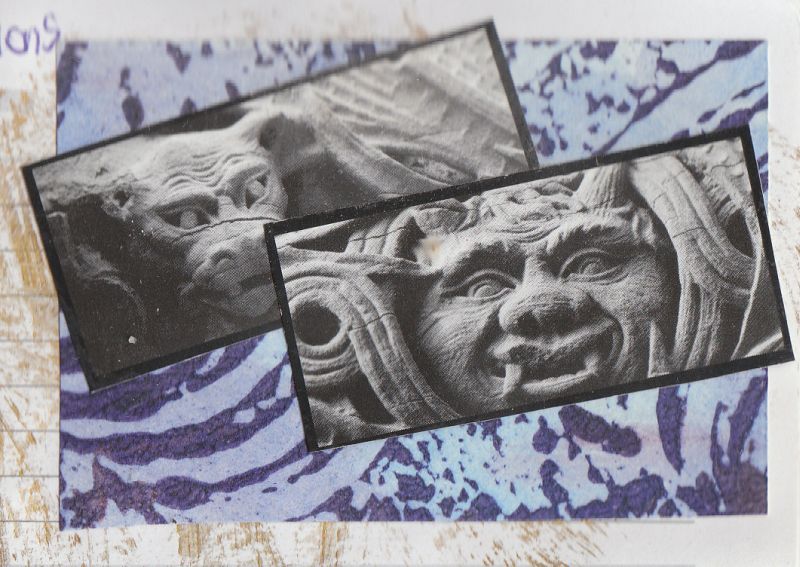
demons
EPrata collage

Notwithstanding the issue of slavery, the owners of the girl were using her to get rich. She had a demon and that demon could access the world behind the veil and prophesy unknown things. Since people have always been curious about the future and what is hidden to us, they paid good money to hear fortunes told.

When the owners saw that their means of gain was gone, they roused a riot and went to the lawmakers and decision-makers for redress.

They did not celebrate that the girl had been delivered. They were not happy that her very body was now released from use by a potent spirit. They did not care that this young, vulnerable girl had been used by demons. They were only ticked that their fortune was vaporizing.

This is exactly the same situation as a child molester kingpin now ticked that his best girl had been saved out of his grip. Exactly. The. Same. This is deep wretchedness. We are sinners through and through. Do not think for a moment that your sin (and mine) is not as bad. It is and it could and would wax worse and worse had not the Lord saved your soul.

This link goes to a short bio of this young girl from BibleGateway, called All the Women of the Bible: The Demon-Possessed Damsel. It is extremely interesting.

We are wretches, sinners and we are due the righteous penalty for our sin. But God…if not for Him…if not for His proactive election of those who would become His… Oh! Oh!

We love because he first loved us. (1 John 4:19).

He loved us despite our wretchedness. He loved us despite our dirtiness. He loved us anyway. I’m eternally grateful for His love. I’m eternally relieved He has dealt with my sin. It is now forgotten, nailed to the cross, and as far from the east is from the west.

Thank you Lord for dealing with my wretched sin in this magnificent way you have ordained.

unspeakable glory
EPrata art