Posted in encouragement, theology

Psalm 29: Praise and glory to the Highest!

By Elizabeth Prata

Enjoy this Psalm 29. As the MacArthur Commentary explains, it has the earmarks of earliest Hebrew poetry. Its general form is a hymn, proclaiming 3 representative realities of God as supreme and therefore praise belongs to Him alone:

1. Lord’s supremacy over heavenly beings
2. Lord’s supremacy over the “forces of nature” (references pagan gods)
3. Lord’s supremacy over humanity

It builds and in my opinion is a majestic and breathtaking poem/hymn. Happy Lord’s Day!

~~~~~~~~~~~~~~~~~~~~~~~~~~~~~~

Ascribe to the LORD Glory

A Psalm of David.
1Ascribe to the LORD, O heavenly beings,a
ascribe to the LORD glory and strength.
2Ascribe to the LORD the glory due his name;
worship the LORD in the splendor of holiness.

3The voice of the LORD is over the waters;
the God of glory thunders,
the LORD, over many waters.
4The voice of the LORD is powerful;
the voice of the LORD is full of majesty.

5The voice of the LORD breaks the cedars;
the LORD breaks the cedars of Lebanon.
6He makes Lebanon to skip like a calf,
and Sirion like a young wild ox.

7The voice of the LORD flashes forth flames of fire.
8The voice of the LORD shakes the wilderness;
the LORD shakes the wilderness of Kadesh.

9The voice of the LORD makes the deer give birth
and strips the forests bare,
and in his temple all cry, “Glory!”

10The LORD sits enthroned over the flood;
the LORD sits enthroned as king forever.
11May the LORD give strength to his people!
May the LORD bless his people with peace!

praise verse

Posted in encouragement, theology

Can We really Do All Things Through Christ?

By Elizabeth Prata*

What Christian isn’t familiar with one of the New Testament’s most famous comfort verses?

“I can do all things through Him who strengthens me.” (Philippians 4:13)

It is good to be reminded that it’s His strength and not our strength which propels us along in sanctification. It is good to be reminded that He is our all, and that all is possible.

However too many people misunderstand and misuse the verse. It does not mean I can attain whatever desire I have through Jesus. And it doesn’t mean Jesus plops all things or all strength down into us fully formed and ripe for use.

Let’s back up a little and take a look at what came before that verse. There is more to it than what many Christians of today take the verse to mean.

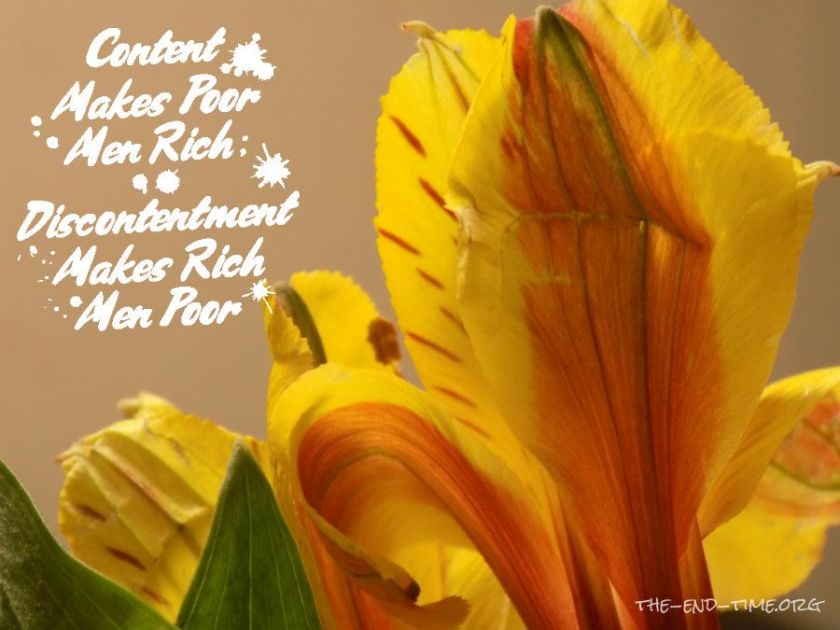
Paul said several times that he learned contentment. Learned it. He had to work at contentment, and learn the skill of practicing contentment over his long road of personal tribulation.

The two verses which precede the all things of verse 13 are:

“Not that I am speaking of being in need, for I have learned in whatever situation I am to be content. I know how to be brought low, and I know how to abound. In any and every circumstance, I have learned the secret of facing plenty and hunger, abundance and need.” [emphasis mine].

What Paul was learning is the power of Christ as the daily means of sanctification as he strove to holiness, and ultimately, contentment in all circumstances.

Paul had to consciously strive toward contentment through constant practice of cultivating it through reliance on God’s provision and promise. And he is not talking of self-sufficiency here, but of a diminishment of worldly desires as he strove to do all things God would have Him do in the name of Jesus.

Paul had many trials and difficulties. Paul isn’t saying that Jesus plopped down a supernatural contentment to his heart as he took a deep breath and relied on Him to do all things through Him. Not at all. As a matter of fact, Paul admits to dissatisfaction covetousness brings, in Romans 7:8. Through all his varied circumstances, Paul is saying, he had the opportunity to practice being content in the circumstances he found himself in, because those circumstances are divorced from earthly measures of contentment and joy. He had to learn it. This indicates an active participation on the part of the Christian.

Whenever Paul was low or high, had plenty or hunger, abundance or need, didn’t matter, because Christ was strengthening him in love, growth, joy and the other treasures we hold dear. If we divorce our joy or contentment from worldly things, what remains is Christ! Through Christ, all things are possible! Paul learned that. It took him a while and he had to work at it. But what glory for the Savior when we learn it.

So be careful what you are really saying when you say “I can do all things through Christ who strengthens me.” Are you working at learning how to do all things, apart from our flesh and distinct from the baggage of worldly wants? No matter your circumstances?

Phil Johnson preached on it recently, and this little note is a summary of what I took away from his sermon. I found his sermon exposition to be tremendously enlightening and inspiring. For a full explanation of what that verse means, I encourage you to take a listen and /or look at the transcript.

How to Find Contentment in a World of Discontent

Pastor Johnson ends his sermon this way:

“By the way, verse 13 contrasts wonderfully with Jesus’ statement in John 15:5: “Apart from me you can do nothing.” But “I can do all things through him who strengthens me.” If the boundaries for “all things” that you seek to accomplish are set by the express commands of God and the righteous example of Christ, then there truly is no limit to what you can do through His power. That is the secret to true contentment. It’s not really a complex mystery. But the reason it is so difficult to learn is that it entails the mortification of our worldly lusts, our carnal ambitions, our selfish pride, and our ungodly attitudes.


quote content poor

*This first appeared on The End Time in January 2013.

Posted in encouragement, theology

“I have confidence”

By Elizabeth Prata

When I was little I used to love the movie The Sound of Music. This slightly fictionalized version of the real life travails of the Von Trapp family first came out in 1965.

At the beginning of the movie were two scenes I loved. One was where the nuns are singing about a “Problem like Maria”. Maria was a candidate for the novitiate at Nonnberg Abbey in Salzburg. According to the movie version, Maria’s free spirit never settled down at the Abbey, and she had become a problem (in a mild way) such as being late for Mass, singing when she was supposed to be silent, and the like. When an opportunity to tutor the Von Trapp family children became available, the elder nuns thought Maria might be better suited for life outside the Abbey as governess to the Von Trapp children.

confidence 1

Leaving the comfort of the cloistered and familiar Abbey, Maria faces an unknown future. The movie depicts her walking along toward her destination, with her satchel in one hand and her guitar in another. Singing happily in order to bolster herself, she sings, “I Have Confidence.” Here is part of the lyrics:

I have confidence in sunshine,
I have confidence in rain.
I have confidence that spring will come again!
Besides what you see I have confidence in me.

It is a happy song, sung in a pretty setting. As Maria bounces along the byway she sings about having confidence in sunshine, in rain, in springtime, and in herself.

I loved it. I thought, I can have confidence, too! All I need to do is whip up some confidence from within! If I tell myself so, then my confidence will appear from nowhere and everything unknown or hard or scary can be faced!

That was my reasoning as a child, watching this movie.

I am no longer a child.

I wonder, where does confidence come from?

Cast not away therefore your confidence, which has great recompense of reward. (Hebrews 10:35)

Barnes’ Notes on the Bible explains the verse:

Cast not away therefore your confidence – Greek “your boldness;” referring to their confident hope in God. They were not to cast this away, and to become timid, disheartened, and discouraged. They were to bear up manfully under all their trials, and to maintain a steadfast adherence to God and to his cause. The command is not to “cast this away.” Nothing could take it from them if they trusted in God, and it could be lost only by their own neglect or imprudence

“Our” confidence comes from our hope in Jesus. We trust His promises, we trust His plan, we trust that what He is doing is for our good and His glory.

The Hebrews at the time were experiencing persecution. Their homes and lands were being plundered and confiscated. They were being publicly exposed to reproach. They’d had a hard struggle with afflictions. So the writer of Hebrews reminds them that they had suffered those things, yet had retained a joy and a confidence in Him that surpassed the earthly trials. He urged them to continue having confidence in Jesus.

Additionally, we read in chapter 4 of Hebrews,

Let us then with confidence draw near to the throne of grace, that we may receive mercy and find grace to help in time of need. (Hebrews 4:16).

The throne of grace is the place from which the fountain of our confidence stems. We turn to Jesus for everything. Apart from Him, we can do nothing. Even have confidence. Oh, we might generate a temporary euphoria in our own talents or abilities, but soon enough, that confidence evaporates. Indeed, Maria’s confidence disappears when she comes face to face with the grandeur of mansion in which she is about to reside. She suddenly feels very small.

confidence 2

confidence 3

However if one’s confidence is in Jesus, one never need feel small. One never need to feel insecure. We are a large part of His plan, and His fountain of grace never ceases. We can confidently approach and confidently drink there very time we feel low, scared, unsteady, or uncertain.

In other words, whatever you’re facing, a new job, medical issues, relationship woes, loss, or tragedy, He’s got this. Rest confidently in Him.

Posted in encouragement, theology

Some JI Packer Encouragement

Chapter 19 of J.I Packer book “Knowing God”-

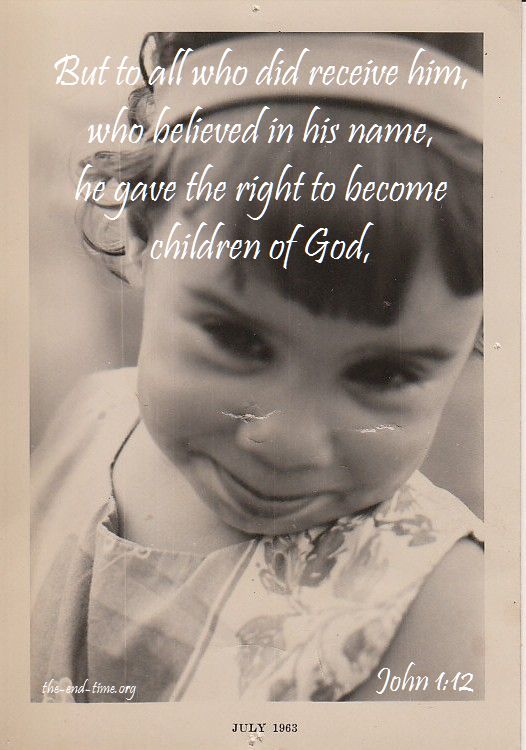
I am a child of God. God is my Father; heaven is my home; every day is one day nearer. My Savior is my brother; every Christian is my brother too. Say it over and over to yourself first thing in the morning, last thing at night, as your wait for the bus, any time your mind is free, and ask that you may be enabled to live as one who knows it is all utterly and completely true.

adopted

Posted in encouragement, theology

Stand: Do Not be Moved

By Elizabeth Prata

Our Sunday School class finished studying through Ephesians last Sunday. Ephesians 6 is the last chapter, and so rich with practical living.

We’re called to stand. After all the Ephesians chapters about doctrine (roughly chapters 1-3) and all the practical applications and commands (roughly chapters 4-6a), we come to Paul’s final thoughts. He wrote,

Finally, be strong in the Lord and in the strength of his might. Put on the whole armor of God, that you may be able to stand against the schemes of the devil. (Ephesians 6:10).

Therefore take up the whole armor of God, that you may be able to withstand in the evil day, and having done all, to stand firm. Stand therefore, having fastened on the belt of truth, (Ephesians 6:13-14a)

Four times within 4 verses he calls us to stand. Not chase the devil, not march against him, not blaming him on every failed desire disrupted event. Simply…stand.

The Christian life is one of battle. Paul often made military allusions in his verses. When he called for the Christian to “stand” he might have been thinking of the Roman Caligae.

Caligae (Latin; singular caliga) are heavy-soled hobnailed military sandal-boots known for being issued to Roman legionary soldiers and auxiliaries throughout the Roman Republic and Empire. Wikipedia

Worn by all ranks, no other shoes in history are as symbolic of the expansion of an empire as the famed Caligae. Rome Across Europe

The caligae are sandals and not a boot on purpose. It was a military footwear that laced up the ankle and calf, providing air to run through and preventing trenchfoot and blisters etc.

The soles were triple soles. The middle part had strong hobnails nailed into them and acted like cleats or crampons do.

When a soldier was fighting hand-to-hand they of course would not want to give ground. Firmly planting their caligae into the ground, no matter how bloody or muddy it became, they would not slide back.

It’s a powerful metaphor. “Stand”. Do we want to give ground to the enemy? No. Do we want to slide back? No. We are not wearing caligae today, but if the men who disciplined themselves, wore that armor and obeyed their commander, conquered a continent, we who are adorned with something much more powerful and effective can do so much more.

Imagine the terror of a population, hearing that hobnailed clatter on the cobblestones as a legion of 6000 hardened and disciplined soldiers marched into their city. How much more so that satan shudders when he hears disciplined and firmly standing soldiers of Christ proclaiming His word, marching on by standing firmly, unable to be moved or even pushed back.

We wear His armor, live and proclaim His Gospel, and possess His Spirit. We are God’s army, united in one cause, spread as a phalanx across the world. Wherever we are planted, stand. Housewife in Des Moines…stand. Pastor in Calgary…stand. Plumber in Portland…stand. Teacher in Kuala Lumpur…stand.

We stand against his schemes. We withstand all in the evil day. We stand firm.

Soldier on, ladies. By standing.

tower

Posted in encouragement, theology

Grace IS Amazing

By Elizabeth Prata

palm sunday

My favorite doctrines are Grace, followed by Providence.

Grace that is extended by our loving God is shocking and amazing and wonderful. I was saved later in life and I remember what it felt like to live a sinful life in rebellion against God. It was confusing and upsetting, most of the time.

I read a lot, and enjoyed historical books and the world’s myths. As I read books, all the world’s made-up gods were capricious or unloving or dismissive of humans. That seemed right to me. Even when I read of the Founding Fathers and learned about their deism, that god also seemed right to me. The deist god created everything – including humans – but then retreated from humankind’s affairs and let us wind down of our own accord.

Grace given by a loving God was foreign to me and unthinkable. Because that would mean He was involved with humans, lovingly. Weird.

But that and only that God is the one true God.

He came in the form of a baby who grew to be a man-God, teaching and loving and performing miracles. He died for our sins and absorbed the wrath of God on our behalf.

Amazing Grace! how sweet the sound
It was not a sweet sound to me then, but it is now.

That saved a wretch like me
I used to close my mouth if I happened to be at a Church service, like at Christmas, and this hymn came on. I wasn’t a wretch!, I’d utter. And close my mouth, refusing to say the lyrics.

I once was lost, but now am found
I didn’t know I was lost and I didn’t know I needed to be found.


Was blind but now I see
I didn’t know I was blind. Revelation 3:17 applies here:
For you say, I am rich, I have prospered, and I need nothing, not realizing that you are wretched, pitiable, poor, blind, and naked.

That the Lord of All would stoop to save a wretch like me, covered in mud and dwelling with the pigs, like the Prodigal, is amazing. That He would walk into Jerusalem, knowing the cries of Hosannah! would turn bloody and hateful a week later. That He went toward his kangaroo trials, his scourging, and his death, even death upon a cross, to save filthy sinners, is amazing. What grace!

Thank you Lord, for your grace!! How wonderful that even when we’ve been there 10,000 years, we’ve no less days to sing God’s praise than when we first begun. An eternity praising You is not enough, but what grace that I am able to do so in the first place.

Was blind but now I see…

Not by works of righteousness which we have done, but according to his mercy he saved us, by the washing of regeneration, and renewing of the Holy Ghost; Which he shed on us abundantly through Jesus Christ our Saviour; That being justified by his grace, we should be made heirs according to the hope of eternal life. (Titus 3:5-7)

Posted in encouragement, theology

The Beauty of God Reflected in Spring

By Elizabeth Prata

He has made everything beautiful in its time. He has also set eternity in the human heart; yet no one can fathom what God has done from beginning to end. (Ecclesiastes 3:11

Wow.

‘He has made everything beautiful in its time’. Babies, like babies. If you ever gazed on a sleeping baby you have seen beauty in its time. ‘He has set eternity in our hearts’, and if you are saved by grace and faith in Jesus, then you will experience eternity with Him, in joy. If you have not accepted Jesus as your savior then respond to that eternity in your heart, you know you’re yearning, asking, seeking.

Here where I live spring is in full swing. I love the orderly change from brownish grass and leafless trees to the sudden burst of energy, color, and beauty all around. Fruit trees blossom into color, bushes, wildflowers, all showing the glory that God gave them. Birds return and sing, swoop, build, nest, and feed their babies.

God controls all of it.

blossomsmockingbird in treestar of bethlehem flower 2

birdhouse new 2.jpg

‘No one can fathom what God has done from beginning to end’. No, I can’t, and that is the beauty of it, the eternity of it. Can we fathom a God who sends His Son to be crushed for our iniquities? Can we fathom the painful anguish of a Son separated from His Father? Can we fathom the love, boundless love of a God who became Man and hung on a cross for us?

A mysterious, omnipotent God who is unfathomable yet places Himself in our hearts and makes our souls beautiful. I am glad I know Him.

Posted in encouragement, theology

I’ve heard of wine pairings, or even tea pairings, but book pairings?

By Elizabeth Prata

You know how, in the foodie world, they pair different foods or drinks together for the eater to enjoy maximum flavor? “Sauvignon blanc is the classic wine pairing for goat cheese, but you could also try a crisp dry Provençal rosé…” Or, “This Sencha Green tea would be lovely with Arugula and lightly steamed vegetables…”

I do book pairings. If a book is a difficult one, I pair it with a modern treatment. Not modernized language, though that sometimes helps, but pairing an older author and a modern author who wrote about the same subject. Or simply read books by two modern day authors writing about the same subject.

I think these would be good pairings:

Work: Its Purpose, Dignity, and Transformation by Daniel M. Doriani
and
Work and Our Labor in the Lord (Short Studies in Biblical Theology), by James M. Hamilton Jr.

I’ve read the Hamilton book. Challies recommended the Doriani book yesterday in his 10 New and Notable Books for April blog essay, and I think that would be fun to read it and compare to the way Hamilton treated the subject.

This might also be a good pairing:

The Power of Christian Contentment by Andrew M. Davis
and
The Rare Jewel of Christian Contentment, by Jeremiah Burroughs

The Burroughs book was first published in 1648. Burroughs was an English Puritan preacher. His book on contentment is considered to be one of the gold standards on the topic, but the language is somewhat antiquated. Pairing the Burroughs book with the Davis tome (which I have not read) might be a good idea.

As a matter of fact, last summer I did pair a Puritan book with a more recently written book and it was very helpful to me in understanding the older one. I read –

The Enemy Within: Straight Talk about the Power and Defeat of Sin by Kris Lundgaard
and
Mortification of Sin in Believers by Puritan John Owen

The Lundgaard book drew heavily on the original Owen works on indwelling sin and the mortification of sin. Reading a chapter of Lundgaard’s book one day and then Owen the next helped my brain prepare for Owens’ more complex treatment of the subject in his Puritan language.

I’ve paired these and I am enjoying the double treatment of how to critically read a book-

Lit!: A Christian Guide to Reading Books by Tony Reinke is

A practical guide built on the gospel, Lit! models the skills needed to build a balanced reading diet of Scripture, theology, and devotional books, but without overlooking important how-to books, great stories, and books meant to be enjoyed for pleasure.

How to Read a Book: The Classic Guide to Intelligent Reading by Mortimer J. Adler and Charles Van Doren

Wikipedia’s blurb explains Adler’s 1940 book. “Adler co-authored a heavily revised edition in 1972 with Charles Van Doren, which gives guidelines for critically reading good and great books of any tradition. The 1972 revision, in addition to the first edition, treats genres, inspectional and syntopical reading.”

Adler’s book goes into much depth. Reinke’s book is a bit lighter. I like to read Reinke’s book and then the next day read Adler’s.

You might wonder, why go through all this trouble to ‘pair books’?

Because doing so helps train us, specifically in three higher order thinking skills: Analysis, Synthesis, and Evaluation.

  • Analysis refers to the ability to break down material into its component parts so that its organizational structure may be understood
  • Synthesis refers to the ability to put parts together to form a new whole
  • Evaluation is concerned with the ability to judge the value of material (statement, novel, poem, research report) for a given purpose. (Source)

We employ those skills when we read the Bible. We need to analyze the passages. We synthesize when we examine the different gospels, comparing them to each other. We synthesize when we strive to understand eschatology from different passages in the Old and New Testaments. Evaluation is an important skill in discernment- if we lack the ability to judge material for the purpose of edification of souls, then we open ourselves much that is false.

The Holy Spirit illuminates the scriptures’ meaning. But we still have to put in the hard work.

But solid food is for the mature, for those who have their powers of discernment trained by constant practice to distinguish good from evil.  (Hebrews 5:14).

Have nothing to do with irreverent, silly myths. Rather train yourself for godliness; (1 Timothy 4:7).

colbert windows
Pair up two books and see what you think

——————————————————-
Further Reading:

I’ve written two other essays about the ‘how to read’ issue.

One of them is here

The other one is here

Posted in encouragement, theology

Am I doing something wrong if I make a huge decision and don’t wait to hear from God?

By Elizabeth Prata

Does the Bible speak to whom we should marry? Which college to attend? Whether to join the Army? Should we relocate to another state? Change careers now, later, or never? Go back to college?

Christian decision-making … I’m often asked these very questions by women who care about being obedient to the will of God. But the Christian culture of the last generation has introduced a mysticism to decision-making (and to Christian life in general) that unfortunately includes waiting for personalized whispers, looking for signs, or other extra-biblical methods that will guide them along in deciding things that aren’t directly in the Bible.

Phil Johnson has explained about inner promptings and whispers, (transcript here from Super Session at the 2002 Shepherds’ Conference, audio here)

Now this kind of thinking is totally at odds with the principle of Sola Scriptura. We believe as Protestants don’t we, that the written Word of God – the Bible – contains everything necessary for our salvation and our growth in grace. 2 Timothy 3:16-17, All Scripture is given by inspiration of God and is profitable for doctrine, for reproof, for correction, for instruction in righteousness…listen to the next phrase…that the man of God may be PERFECT, thoroughly furnished unto all good works. Scripture alone is able to equip us thoroughly, perfectly for all good works. Everything we need in the process of our sanctification. There is no need for extrabiblical revelation. The Bible will equip you for all good works. It will give you all the explicit guidance you can possibly get from God. It contains principles to help you be wise and discerning as you pursue the course of your life, and beyond that we simply trust God in His providence to order our steps. You don’t need an explicit message from God telling you whom to marry, or where to go to school, or where to go to the mission field. [italics mine]

So how should we approach making decisions?

Any precursor to decision making would assume first that one is saved. Apart from Christ, we can do nothing. (John 15:5). Secondly it assumes that the thing you’re undecided about does not involve sin. We never decide toward sin, we flee from sin. ( 2 Timothy 2:22; Genesis 39:12). Thirdly, it assumes that you’re relying completely on God’s word. If the item you’re trying to decide about is directly in the Bible, follow that command. “Should I submit to my husband?” isn’t really a decision to ponder, because it is already commanded.

Fourthly, the decision-making process assumes that you’ve yielded yourself to the Spirit of Christ within you. You’re striving, repenting, obeying, praying, etc. You’re as much as a clean plate as you can be, being a sinner, lol.

Now, how to decide those things which are not directly addressed in God’s word?

As from a pamphlet I found online which no longer is online,  from Crossroad Bible Church,

Here are four questions to ask yourself:
• Have I yielded myself completely to Christ’s Spirit?
• Is there a clear Bible command concerning this decision?
• Is there a Bible principle that will guide me in this decision?
• Which choice would be most prudent in this situation?

The above wee fleshed out more with scriptures at their website but sadly is gone now.

Did you know that You Are Part of a Grand Plan? It’s not like you can mess it up. If you make this decision or that decision, it isn’t going to surprise God, or alter what He has planned for you. Providence, as mentioned above by Phil Johnson, is secure. His plan will be fulfilled, and your decision making isn’t going to change it. You aren’t going to miss out on anything. Beyond what is specifically prescribed in the Bible, and “we simply trust God in His providence to order our steps” as Pastor Johnson explained.

In my own life, I moved from Maine to Georgia. I wanted a place with lower cost of living, and warmer weather. That’s it. He would have worked it out of I’d chosen Texas or North Carolina.  Deciding on Georgia wasn’t a life-or death decision, just one that fit my life and made sense.

When I got to GA I applied for a number of jobs. I applied using common sense. What did I have experience in, was trained for, and was good at? It’s not like I consulted the Lord and waited for a sign or anything. I was following the biblical principle that he who does not work does not eat. I sought jobs I thought I had the best chance of getting and sustaining my means.

Some jobs I applied for were at the University in the journalism department, some with local magazines. The one I got (in His providential care) was for the Athens Banner Herald writing feature stories of people in my county as a freelancer. Later when I decided to go back to education – subbing at first and applying for parapro jobs, I didn’t consult the Lord. I just used common sense. The freelance job simply wasn’t paying enough. A job with the County Education system would:

-be fairly secure as jobs go (education is the largest employer in the county)
-had health benefits (I was soon to be 50)
-was what I was trained for. (formerly certified teacher with Masters degree)
-I’d be working with kids (something I love and I’m told I’m good at).

If I’d decided to get a job as a bungee jumper trainer, lol, that would not be common sense.

I knew the Lord would work it out. In His providence He did not ordain that I was given the first job I’d interviewed for as a parapro at another school, but a year later I got a job at the school I’m at now, a great fit. I’ve been there 11 years, 9 as a parapro. It’s not like there is only ONE decision or only ONE path.

I’ll conclude with Phil Johnson

If your life is in harmony with all the commands and principles of the Bible, you can actually do what you want to do without beating yourself up with introspection and fretting over whether God told you to do something or not. When Scripture says He orders our steps it’s talking about His guidance through His hand of providence. We step out in faith, and He guides our steps.

bible out loud

Posted in encouragement, theology

“He is coming soon” – Thoughts on sin, the world, and Jesus

By Elizabeth Prata

Word of the week: Sin. Societal, cultural, financial, economic, political. The world as we know it is winding down. (It has been this way since the Garden). Each week we see a precipitous decline, lurching forward in slow to great bursts, bringing the world ever closer to the consciousness that things will not remain as they have been. And still, as much as the world sees that the events we are experiencing for the worse, and perhaps never to be the same again, the world still insists that this has nothing to do with Christ. They say, ‘Oh, the world is changing, and the Zombie/Mayan/Cayce/Nostradamus apocalypse may be near, but it has nothing to do with that guy, Jesus.’

A prophecy from Peter: “They will say, Where is the promise of his coming? For ever since the fathers fell asleep, all things are continuing as they were from the beginning of creation. (2 Peter 3:4).

They say such things because they believe them. Satan has blinded the lost to the things of Christ. It has always been so. The Israelites taunted Jeremiah with the same:

Behold, they say unto me, Where is the word of the LORD? let it come now. (Jeremiah 17:15)

And why do they believe the Zombie/Mayan/Cayce/Nostradamus apocalypse and not the Christian Revelation of the promised Apocalypse? Because the aforementioned are from satan. Now satan, they’ll believe, because the world’s children are satan’s children. (1 John 4:5).

Technically, the world has been ending since Genesis 3, but the feeling of chaotic flying apart has increased dramatically of late. Remember Obergefell v. Hodges? It was a landmark civil rights case in which the Supreme Court of the United States ruled that the fundamental right to marry is guaranteed to same-sex couples by both the Due Process Clause and the Equal Protection Clause of the Fourteenth Amendment to the United States Constitution, according to Wikipedia’s summary.

That was in 2015. I can’t believe that was four years ago! Yet since then we have endured the Planned Parenthood undercover videos controversy, third-trimester abortion controversy, post-birth abortion controversy, advance of homosexuality and now pedophilia normalization, racial disharmony in the form of social justice and wokeness, and the beginnings of evangelical acceptance of and redefinition of the sin of homosexuality. Wow.

I remember the verse in Romans 1:30, where Paul is explaining God’s wrath upon sin. The passage describes the downward spiral of men as individuals but especially collectively. Paul lists tons of sins, and though the list isn’t meant to be exhaustive, he says

They have become filled with every kind of wickedness, evil, greed, and depravity. They are full of envy, murder, strife, deceit, and malice. They are gossips, slanderers, God-haters, insolent, arrogant, and boastful. They invent new forms of evil…(Romans 1:29-30).

Let that sink in. They invent new forms of evil. The extent of man’s sinfulness really knows no bounds. The only reason we are all not ravening madmen, slobbering over performing the deepest depravity, is due to the restraining influence of the Holy Spirit on the world in the form of God’s general ministry of common grace and the specific Holy Spirit ministry of restraint in His elect.

Barnes’ Notes explains inventors of evil quite well:

This doubtless refers to their seeking to find out new arts or plans to practice evil; new devices to gratify their lusts and passions; new forms of luxury, and vice, etc. So intent were they on practicing evil, so resolved to gratify their passions, that the mind was excited to discover new modes of gratification.

When the Holy Spirit releases his restraint upon the world after the rapture, watch out! Man’s inventiveness will no longer be toward beauty, art, music, science; it will be toward depravity, sin, and evil like the world has never seen before. (Matthew 24:21).

Though it’s disheartening to experience living in the world like this, the Bride is still resplendent, evangelism is still occurring, souls are being redeemed, the Church is still growing…and God is still on His throne.

I’m enjoying the Spirit’s sweet presence every day. Do you? I hope so. I enjoy my walk with Jesus in increasing amounts of awe and joy. I am encouraged by knowledge of the sovereignty of the Father. Seeing these world events and understanding where we are on the timetable of God’s prophetic clock, I’m struck with wonder at the vastness of His intelligence and the scope of human history- and grateful that I am a part of His kingdom.

Yes, the days are difficult, and I mourn for people who are lost in sin and I mourn for my own sins. But though the events we read about here and elsewhere far from saddening me, make me think of Exodus 15:11

Who among the gods is like you, LORD? Who is like you—majestic in holiness, awesome in glory, working wonders?

In the current phase of Christianity, many have lost that sense of awe. I think it is because many popular teachers and preachers have taught and preached a raised up man. The excessive focus on our prosperity, our self-esteem, our pits, our problems, combined emphasis of His love to us, His friendship with us, His “romance” of us the Bride, downplaying majesty, wrath holiness, and reverence, has resulted in a lowered God. With our eyes on man, we lose focus. Man is not awe-inspiring, man is ‘awe-ful’! Look to Christ.

Look unto me, and be ye saved, all the ends of the earth: for I am God, and there is none else. (Isaiah 45:22).

Too often Western Christianity looks to Him as a friend, (which He is) but in looking at Him only as friend, through that one facet, and not so much as Sovereign King, Judge, and Holy God. This looking exclusively at Jesus through one facet has allowed many to devolve His status in their minds from friend to ‘old buddy, pal o’ mine.’

Quite simply, western Christianity by and large does not have a transcendent view of God anymore, and thus a sense of awe is lost. This particularly applies to prophecy.

Only a Sovereign God expressing His will upon the world knows the end from the beginning. Only He at His will and pleasure states what will happen in a thousand years, or six thousand years, and it comes to pass exactly as He said!

Habakkuk finally got it, saying in chapter three:

Yet I will quietly wait for the day of trouble to come upon people who invade us. Then he said,

Though the fig tree should not blossom, nor fruit be on the vines, the produce of the olive fail and the fields yield no food, the flock be cut off from the fold and there be no herd in the stalls, yet I will rejoice in the LORD; I will take joy in the God of my salvation. GOD, the Lord, is my strength; he makes my feet like the deer’s; he makes me tread on my high places.

No matter how low the world gets, the Lord makes me tread on high places. Let our Holy awe of Him be a mixture of love, reverence, and fear.

He is coming soon. (Revelation 22:20).
coming again verse