Posted in discernment, ears tickled, faith, sound doctrine

Why Discernment is important, and what lack of discernment does to the body

“For the time is coming when people will not endure sound teaching, but having itching ears they will accumulate for themselves teachers to suit their own passions, 4and will turn away from listening to the truth and wander off into myths.” (2 Timothy 4:3-4).

Why is sound doctrine important? At the World View Weekend conference in Branson MO, Mike Gendron explained why. A former Catholic for 30 years, Mr Gendron became saved. He left a career as a rocket scientist (really) and evangelizes widely. He is specifically ministers in bringing the Gospel to Catholics. A graduate of Dallas Theological Seminary, he writes at Proclaiming The Gospel. He said at the conference,

“Why there is so little discernment in the church? Preachers preach what the people want instead of what they need. They don’t want sound doctrine, so pastors give feel good messages that tickle their ears build up their self-esteem. So without sound doctrine many in the church today don’t really think it matters what you call a Christian as long as you label it Christianity…they want to feel good, not made good by the preaching of God’s word. … So what’s at stake if we abandon sound doctrine? The glory and honor of our great Lord. The purity of the Gospel of Jesus Christ. Ultimately, the eternal destiny of those who are not hearing the truth from pulpits today. … Without discernment we will not know if we are believing and proclaiming the true gospel or a compromised distortion.”

Mr Gendron’s words echo what John MacArthur said, that lack of discernment is a number one problem today. In his sermon, Deliverance: From Sin to Righteousness, Part 2, we read,

“Today, as we’ve been saying, evangelical church and leaders are saying anyone who says he’s a Christian is a Christian. Anybody who says they believe in Jesus is a Christian…liberal, Protestants, charismatic, Roman Catholic, orthodox, sort of free-floating unattached people who believe in Jesus. Anybody who claims to be a Christian can be tested by truth and virtue. This is critical. Real deliverance produces a changed life.”

Remember not everyone who says they are a Christian IS a Christian. The proof is the fruit produced from a Holy Spirit empowered changed life. In order to even see fruit (or lack of fruit) we need to be discerning.

“If there’s any problem that outstrips all other problems in the church, it is this problem of a lack of discernment, the lack of spiritual discrimination because then everybody is vulnerable. And imagine living in a time when not only is the church undiscerning, but sees discernment as a threat to its life and unity. It’s just amazing. Widespread ignorance, shallow understanding of Scripture, superficiality interpreting the Bible, faulty reasoning, bad decisions just bring horrendous agony to the church. How foolish can we be? I mean, the Bible is so consistent in telling us beware of ear-tickling teachers, beware of departing from the faith, beware of heresies, doctrines of demons, destructive myths, perverse teachings, commandments of men, speculations, controversial issues, old wives fables, deceitful spirits, worldly tales, false knowledge, science falsely so-called, empty philosophy, traditions of men, worldly wisdom, adulterations of the Scripture and on and on and on and on.” “The Responsibilities of the Church

“As a result, evangelical Christianity, listen to this, is fighting for its very life. I’ll say that again, evangelical Christianity, in my view, is fighting for its very life. And our time cries out for people with discernment.” “A Call for Discernment, Part 1

You can see it nowadays, can’t you. Christianity is under assault from every direction, every day. The Lord said that His church will not fail, so we can thank Him for stalwart believers. But the assaults to the faith are real and very potent.

AW Tozer wrote, “The healthy soul, like the healthy blood system, has its proper proportion of white and red blood cells. The red corpuscles are like faith: they carry the life giving oxygen to every part of the body. The white cells are like discernment: they pounce upon dead and toxic matter and carry it out to the drain. Thus the two kinds of cells working together keep the tissues in good condition. In the healthy heart there must be provision for keeping dead and poisonous matter out of the life stream.”

It’s a vivid and apt metaphor, isn’t it? I can really picture how faith and discernment works in the body. I’d like to add one more medical metaphor to the situation, Paul’s use of the word gangrene in 2 Timothy.

“But avoid irreverent babble, for it will lead people into more and more ungodliness, 17and their talk will spread like gangrene. Among them are Hymenaeus and Philetus, 18who have swerved from the truth, saying that the resurrection has already happened. They are upsetting the faith of some.” (2 Timothy 2:16-18)

Paul’s use of gangrene is good here. In his time, the smallest cut could render a person dead in days. Even in the twentieth century, blood poisoning was an extreme issue. The Earl of Carnarvon died that way. George Herbert (Earl of Carnarvon) family was of the family that owns Highclere Castle, the setting for the well-known British production of the television show Downton Abbey. The 5th Earl of Carnarvon was the chief financial backer on many of Howard Carter’s Egyptian excavations, and sponsored the excavation that discovered King Tut’s tomb. While in Egypt on expedition on March 25, 1923, the Earl Carnarvon/George Herbert got a mosquito bite. He nicked it with his razor when shaving, and the bite became infected. He died on April 5th. It only took ten days for blood poisoning to kill a healthy man.

Gangrene was a worse killer in Paul’s day. It’s important to realize that the white blood cells (the discerning among the body) must leap on the toxic cell. The toxic cell is not there to unite with you, praise Jesus with you, or do good works with you. The toxic cell is there to kill you.

What does gangrene do to a body? Staying with the medical analogy for a moment, put into your mind the Tozer analogy of the white and red blood cells and the blood flowing in your veins. Blood actually flows in your body as it metaphorically flows in the body of Christ.

The medical definition states, “Gangrene is the death of tissue in part of the body.” We know the global born-again church is a body. Jesus uses the metaphor of us being the body and He being the head. (Colossians 1:18). Gangrene is literally the death of some of the living tissue by not allowing the blood to pass through. No blood means death to living tissue.

Gangrene spreads fast. Where the dead tissue exists, it must be cut out, or it will contaminate the adjoining tissue and kill it too. So in continuing the metaphor, if the infectious doctrine is not cut out  immediately, it will spread like a toxic wildfire and consume the flesh of all who come into contact with it and deny the blood. The corrupted flesh must be excised, either by a medical procedure called a debridement, or an amputation.

Jesus said in Matthew 18:8, “And if your hand or your foot causes you to sin, cut it off and throw it away. It is better for you to enter life crippled or lame than with two hands or two feet to be thrown into the eternal fire.”

The word is the answer. The word is always the answer! In order to proclaim it, one must read it and study it. Paul was speaking to Timothy as pastor, and we are all not pastors, but we are all evangelists. We must be ready in season and out of season to know our doctrine. The absence of sound doctrine means you could make a shipwreck of your faith. (1 Timothy 1:20).

When you’re at sea and in a storm, what’s the first thing they do for you? Throw out a life ring.

Wikipedia Commons
Source

If you hang on to sound doctrine, you will not be shipwrecked, you will be reeled back in. Knowing your sound doctrine means also that you will be discerning. If you think of it this way- reading your bible and studying sound doctrine is the most loving thing you can do not just for yourself, but for your brother. If you see a fellow sister or brother wandering off to myths and turning away, don’t you want to have the right tools to throw out to them?

Source

If your doctrine is weak, this is your tool-

And that’s just not helpful at all.

“And it is my prayer that your love may abound more and more, with knowledge and all discernment, so that you may approve what is excellent, and so be pure and blameless for the day of Christ, filled with the fruit of righteousness that comes through Jesus Christ, to the glory and praise of God.” (Philippians 1:9-11)

Posted in beth moore, contend for the faith, discernment, false teacher, judgment, personal revelation

Examining Beth Moore’s statement: the ‘Bride is paralyzed by unbelief’

Last night, I was thinking about something Beth Moore said. I want to look closely at the content of what Beth Moore said in this example I will show you. I am personally offended by it and I’m spiritually grieved by it.

In a LifeToday with James Robison, a televised Christian program, Mrs Moore said, [deleted from Youtube, can now see the video here) ,

“We could live our whole believing lives through, and never make it to our promised land. We get to heaven and go ‘You were not faithful to me! You didn’t do what you said you were gonna do!’ ‘Child, I was holding every single bit of that for you. But I will insist that you cooperate with me.’ What it says over and over in this particular chapter, the number one hindrance to our calling becoming a reality, is unbelief. This is the heart of our study. Listen carefully. What God began to say to me about five years ago, and I’m telling you it sent me on such a trek with Him, that my head is still whirling over it. He began to say to me, ”I’m gonna tell you something right now, Beth; and boy, you write this one down. And you say it as often as I give you utterance to say it: ‘My Bride is paralyzed by unbelief. My Bride is paralyzed by unbelief’ … Starting with you.’ ” … Amen.”

Let’s examine each part of what she said through a biblical lens.

1. Her ‘oh, no’, scare tactic, try-harder faith is on display here. This is Legalism, also exemplified here. Example; “We could live our whole believing lives through, and never make it to our promised land.” Really? We can lose our salvation and not make it to heaven? That’s not what the Bible says. (John 3:16, Romans 8:38-39, John 10:28-29). Perhaps she was talking about unbelievers, one may protest. No, she said “believing lives.” Another may protest that perhaps she meant believers may not make it to our promised land here on earth. But this is not what the Bible teaches, either. The Bible says we are not promised ease on earth. (John 16:33; Acts 14:22). As a matter of fact this earth isn’t even our home. We should not consider earth our promised land whatsoever.

2. She degrades the holy relationship with an almighty God and promotes an earth-centric focus. Example: “We get to heaven and we might say something like this to GOD: “You were not faithful to me! You didn’t do what you said you were gonna do!” Really? When we get to heaven we are going to still be greedy for the things on earth? No. (Matthew 6:20-21).

When we get to heaven we are going to argue with God? Not hardly. We will be so overcome by His glory we will fall down. (Revelation 4:10, Isaiah 6:5, Revelation 1:17). Even Daniel when confronted with an angel from heaven, he fell down. (Daniel 10:8). But Mrs Moore teaches that when we get to heaven we’re going to cry for the things of earth and make a charge against God for their lack. This is ludicrous. In my opinion, it is blasphemous.

In actuality, Zephaniah tells the people, “Be silent before the Lord GOD! For the day of the LORD is near; the LORD has prepared a sacrifice and consecrated his guests.” (Zephaniah 1:7). And the LORD tells Zephaniah to say it again, “Be still before the LORD, all mankind, because he has roused himself from his holy dwelling.”‘ (Zephaniah 2:13).

3. She says she is a prophet. No, she doesn’t come right out and say “I am a prophet”. But she uses personal revelation and biblical language about the context of her supposed revelations to teach people that she is hearing from God and has a message from Him to proclaim. Example: “boy, you write this one down. And you say it as often as I give you utterance to say it:”

Read how God interacted with the Prophets:

“Therefore say to them, Thus declares the LORD of hosts” (Zechariah 1:3)
“Write therefore the things that you have seen, those that are and those that are to take place after this.” (Revelation 1:19)
“Then the LORD replied: “Write down the revelation and make it plain on tablets so that a herald may run with it.” (Habakkuk 2:2)
“Therefore speak to them and say to them, Thus says the Lord GOD:” (Ezekiel 14:4)
“Boy, you write this one down. And you say it as often as I give you utterance to say it:” (Moore 1:1)

Just kidding on that last one.

Either Beth Moore is a prophet like John and the rest, or she should heed what Ezekiel, a true prophet, has proclaimed from the LORD,

“Her prophets have smeared whitewash for them, seeing false visions and divining lies for them, saying, ‘Thus says the Lord GOD,’ when the LORD has not spoken.” (Ezekiel 22:28).

4. She confuses people with internally contradictory statements. Example: “My Bride is paralyzed by unbelief.” First, who is the bride? Let’s get clear on that. GotQuestions says, “The imagery and symbolism of marriage is applied to Christ and the body of believers known as the church. These are those who have trusted in Jesus Christ as their personal savior and have received eternal life. In the New Testament, Christ, the Bridegroom, has sacrificially and lovingly chosen the church to be His bride (Ephesians 5:25-27).”

So the Bride is the Church. The Church is the body of believers.

So what Moore is saying is that the global church is in a state of paralyzing unbelief. She says God told her that the church doesn’t believe. This is impossible. If you believe, you’re a member of Christ’s church. If you do not believe, you aren’t. She speaks a self-refuting idea.

Also, about being “paralyzed”. If we take her statement to be true, then what she is saying is that the global body of believers on earth, the Bride, is not operating in the Holy Spirit. If the Spirit dwells in every true believer, (and He does) and every believer is frozen and paralyzed, (what she says) then this means the Spirit is not operating, or can’t. She is saying God said the Spirit is paralyzed, frozen, and inoperable. Can this be so? No. (2 Corinthians 4:6-7). Worse, she is saying Jesus told her this. Worst of all, she said Jesus told her to teach it.

The truth is, the Spirit indwells every believer, (Romans 8:4, Ephesians 1:13b-14), and we already know that the body of Spirit-filled believers is the Bride, so what Moore is saying is that the church isn’t working. In fact, the Bible says Christ is in us, and Christ is always working. John 5:17 and Ephesians 2:2 testify that all three Persons of the Trinity are always working. To say that He isn’t, that the Spirit in His Church is paralyzed, is malignant in the extreme. I’m serious. Only satan would say that the Holy Spirit, Jesus and God is frozen and paralyzed. It is the Modern Blasphemy of the Holy Spirit. Below, John MacArthur from the linked sermon:

“A way to perceive this would be to see it as a contrast to what we see in Matthew chapter 12, for example. The leaders of Israel committed the unpardonable sin and what was that unpardonable sin? It was attributing to Satan the work of the Holy Spirit. You remember that? It was attributing to Satan the work of the Holy Spirit, Matthew 12:31-32. What’s going on today is the opposite, attributing to the Holy Spirit the work of Satan. That’s what’s going on. Attributing to the Holy Spirit the work of Satan. Satan is alive and at work in deception, false miracles, bad theology, lying visions, lying dreams, lying revelations, deceptive teachers who are in it for the money and power and influence. Satan is alive and well and the work of Satan is being attributed to the Holy Spirit, that is a serious blasphemy just as attributing to Satan the work of the Holy Spirit is a serious blasphemy.”

5. Extra-biblical revelation is not to be trusted. I’ve focused on Moore’s claims of personal revelation before, here and here.

What does the Bible say about forthcoming revelation of God? (Hint: It ain’t happening).

Source

“But in the days when the seventh angel is about to sound his trumpet, the mystery of God will be accomplished, just as he announced to his servants the prophets.” (Revelation 10:7)

Did you catch that? Just as he announced (past tense). God announced to His prophets what He was going to do.  (Amos 3:7). That announcement is contained in the Bible. He has been working and will continue to do work. God’s work on earth will not be finished until the last trumpet, as Revelation shows us, but His announcement of it was. The revelation of His work on earth is concluded. Yet Beth Moore is making additional proclamations from God. Either God is lying, or Moore is. (Hint: Jesus IS the Truth, and the truth is in Him; John 14:6, Ephesians 4:21).  Friends, the canon is closed and the announcement of what God plans to do was already proclaimed.

Gill’s Exposition on Revelation 10:7 says: “As He said to Isaiah 60:3, &c. and Isaiah 66:8; and to Daniel, in Daniel 2:44 Daniel 7:25; and to Zechariah, in Zechariah 14:9, and others;” Beth Moore’s name is not on that list.

For those who want to cling to Beth Moore as a teacher and defend her, saying perhaps that she didn’t mean what she said: I’m sorry. The Bible says that teachers are held to a higher standard. (James 3:1). In order to even BE a teacher one must be mature, self-controlled, vigilant and possess a host of other qualifications that qualify a deacon/teacher/overseer. This is so they will teach rightly and they can spot a false doctrine in the first place- one aspect of protecting and feeding the flock. (Acts 20:28, John 21:17). Teachers are supposed to teach rightly. (2 Timothy 2:15).

Teachers rightly dividing the word for their pupils are raising up pupils who can then turn to the scriptures to see if these things are so. (Acts 17:11). This makes the student stronger. How can a student of Beth Moore examine the scriptures to see if these things are so, if they came from her head, or a vision, and not the Bible? They can’t. And so in this way, she actually raises up people who do not rely on the word, and are weaker.

The word is all-sufficient. (2 Timothy 3:15-17). That’s why we rely on it!

We don’t judge  a teacher as false by one thing they said, once. We give the benefit of the doubt, and watch carefully for a long time, comparing their words and teachings to scripture. One misstep does not make a false teacher, perhaps, but a long pattern of variance with the Bible, does.

Mrs Moore has passed the time of benefit of doubt and has proven over long years that her words, doctrines and actions are not to be trusted. I am not the only person who has compared what she says and does to the sterling Word and found that she is not to be recommended. The Christian Apologetics and Research Ministry has found the same, and so has Rev. Mike Abendroth of Bethlehem Bible Church, and Rev. Jim Murphy of First Baptist Church at Johnson City, NY, and Shai Linne, Modern Reformation, and Pastor Tim Challies, and so on.

In this post, I’ve striven to not only open your eyes to the poor theology and confusing doctrines of Beth Moore, but I’ve also striven to show you how to parse these things for yourself. To stop and really think about what a teacher is saying, phrase by phrase, and to compare it carefully to the Bible. The Bereans sought the scriptures to see if these things were so, and that bespeaks of having a constant stance of asking ‘are these things so?’ If they believed Paul on his face they would not have sought the scriptures, would they? Constantly testing all things, all spirits, is what we are called to do. (1 John 4:1). And don’t stop there. If you have found things that are NOT so, don’t keep it to yourself. The church at Thyatira tried to do that, (Revelation 2:20) and were charged by Jesus for it. Speak up. Be brave.

Do not rely on external feelings or teachers who claim to have had an experience. This today from No Compromise Radio, quoting BB Warfield:

Source

“In the history of Christian thought mysticism appears accordingly as that tendency among professing Christians which looks within, that is, to the religious feelings, in its search for God. It supposes itself to contemplate within the soul the movements of the divine Spirit, and finds in them either the sole sources of trustworthy knowledge of God, or the most immediate and convincing sources of that knowledge, or, at least, a coordinate source of it alongside of the written Word . . . There is nothing more important in the age in which we live than to bear constantly in mind that all the Christianity of Christianity rests precisely on “external authority.” (Benjamin Breckinridge Warfield, The Biblical Review, ii. (New York: The Biblical Seminary, 1917), 169-191.)

And what is that external authority? The One True God as revealed in the Holy Bible. Sola Scriptura!

Source
Posted in discernment, false, praydreaming

The latest Catholic craze: praydreaming, and discerning why it is false

Today I woke up and read a devotional a friend and pastor wrote on his Facebook page. It was filled with gratitude. It reminded me that it is refreshing to read of gratitude and to be grateful all the day long. The main thing that jumped out at me though was his phrase “pray for wholesome desires.” That hit me.

Not that I haven’t been praying along those lines, but the succinctness of the phrase was tremendous. It brought clarity to my mind of good desires and bad desires. It was a wonderful thing to meditate on. And meditate I did. No, I didn’t go ‘OHM’ in front of lit candles, I turned to the bible. When you want to read about proper desires and how to slay the old man, where else are you going to go but to the Psalms and Romans? I did a word search on the word desire, I read widely about desires in context, and I prayed. Then I wrote a response to the initial devotional, and it appears here:

Praying for Wholesome Desires

In the midst of that, a blog commenter wanted to know what I thought about the blending of New Age and Roman Catholicism into the world’s prophesied final religion. I researched about the RCC Mystics, and put together a long response. It got me thinking about Catholicism and its patron saints, mysticism and how mysticism really points the person back to one’s self, the opposite of what praying for wholesome desires does. I did some more thinking on good desires vs. evil desires.

As I finished both the blog entry and the long comment back to the commenter, I started to web surf. Immediately I saw an essay from AmericanCatholic.org by Mark E. Thibodeaux, S.J., “a spiritual director, retreat director, high school teacher and Jesuit priest. He holds a Master of Divinity from Weston Jesuit School of Theology in Cambridge, Massachusetts. He is the author of Armchair Mystic: Easing Into Contemplative Prayer“. The essay is called,

Praydreaming: Key to Discernment

Praydreaming? And what does that have to do with discernment? It sounds New Age. It seems like Mysticism.

It turns out that praydreaming is the exact opposite of what I had been researching and thinking of all morning. THAT is how the Spirit works. He is amazing!

Now I will write about “praydreaming”. I am writing this to you so that when you hear of this practice, and you will, just like you have by now heard of contemplative prayer, you will know what it really means.

The blog entry I wrote earlier today is an examination of how our internal desires are bad. When we read in the bible the word desires, it is usually spoken of in a negative way. Our heart’s desires are only bad and bring us into judgment. (Ecclesiastes 11:9).

As depraved people we have no hope of changing our desires to good ones that will please the Lord. The only hope we have is first salvation, and then, sanctification. We aid the Spirit in His sanctifying work by relying on HIM and HIS desires for us. We ask Him to instill in us wholesome desires and the strength to resist our own evil ones. This is what it means to be conformed to His likeness. (Romans 8:29). We are gradually transformed by the renewing of our minds and the rejection of being conformed to the pattern of this world (Romans 8:22) with all its evil desires.

Praydreaming is the opposite. The. Exact. Opposite. In this way, it is a component of a successful false religion (Catholicism) because it turns our mind and heart from Jesus back to the sinful desires of our own selves. It offers the false notion that our desires are good and we can instill them into our selves by ourselves by searching deep within ourselves. This lie forms the basis of every false doctrine. To be clear: avoid praydreaming like the gangrenous infection that it is. (2 Timothy 2:16-17). Here is why-

Praydreaming comes from St. Ignatius of Loyola, a Catholic priest in the 1500s and a religious leader during the Counter-Reformation. The counter-reformation was the push-back to the rejection of the Pope’s absolute authority that Martin Luther and others began in the reformation. Loyola’s devotion to the Catholic Church was characterized by absolute obedience to the Pope. Ignatius was a Catholic’s Catholic. The article in American Catholic about praydreaming explains Loyola’s teaching on praydreaming and it begins like this:

“We Christians don’t just decide things, we discern them. That is, we do our best to figure out what God is calling us to in every situation. We do our best to say yes to that divine invitation. But how do we discern God’s will for us? That’s the tricky part.”

1. Catholics are not Christians.
2. We do decide things.
3. God’s will for us is not tricky to discern. Discernment comes from being in His word, not from any other source, because no other source can be trusted. Within the first sentence he sets up a straw man.

But look how the article goes on.

[Loyola’s] insight was this: “Good discernment consists of prayerfully pondering the great desires that well up in my daydreams.”

See how already the Catholic pushes upon us the notion that discerning what is good and what is evil comes back to ourselves? And that what we spontaneously think of in our hearts is worthy? It is a false path he is leading you down. Good discernment prayerfully ponders the WORD, not our desires. The article continues:

“Are desires good or bad? Many spiritual writers of Ignatius’ day spoke of desires as obstacles to God’s will. One solution was to suppress one’s desires—to eliminate them whenever possible. Ignatius, on the other hand, held the radical notion that God dwells in the desires of a good person.”

Good people do not exist. “There is no one good, no, not one.” (Romans 3:10, Mark 10:18).

The article continues, “Not only are desires not evil, but they are one of God’s primary instruments of communicating his will to his children. God enflames the heart with holy desires, and with attraction toward a life of greater divine praise and service. Ignatius did not seek to squash desires, but rather sought to tap into the deepest desires of the heart, trusting that it is God who has placed them there.”

The primary way God communicates His will is the Word who is Jesus Christ. The primary way He communicates to us is the bible, that is where we find His will. It is written down in the bible. Blindly trusting that any particular desire we have comes from God- whatever it is- is a false notion. Satan inflames our hearts with desires, too.

“For it is from within, out of a person’s heart, that evil thoughts come–sexual immorality, theft, murder…” (Mark 7:21)

Now look how the author redefines what evil desires ARE.

“A teenager may want badly to have sexual relations with a girlfriend or boyfriend. Spouses may become sexually attracted to people outside of their marriage. Are these evil desires? No, they are merely disordered desires. Why do any of these people want intimate sexual relations? Because each craves oneness with another—each is created by God, for the experience of unity.”

By his definition, a priest’s desire to have sex with an altar boy is not evil, merely disordered.

Yet those are evil desires- they are fornication. They’re evil because they do not honor Jesus. The lust of the heart breaks a commandment and that is evil. (Matthew 5:28, Exodus 20:17). Colossians 3:5 says to put to death what is evil in us, and sexual immorality is one of those evil desires. What’s more, it is idolatry! “Put to death therefore what is earthly in you: sexual immorality, impurity, passion, evil desire, and covetousness, which is idolatry.”

Nowhere does it say that all desires are good but some are disordered, to just discern the desire under the desire, and praydream it! The bible is clear in describing what evil desires are, because it lists them. Then we read commands to slay these desires, not coddle them by peeking under them to find more and granting them light of day in God’s name.

Anything that does not honor Jesus is evil. There is good, and there is evil. It is an old trick to call evil good and good evil. Isaiah spoke of this in Isaiah 5:20-

“Woe to those who call evil good
and good evil,
who put darkness for light
and light for darkness,
who put bitter for sweet
and sweet for bitter!”

Pulpit Commentary explains, “This is the fourth woe. There are persons who gloss over evil deeds and evil habits by fair-sounding names, who call cowardice caution, and rashness courage, niggardliness thrift, and wasteful profusion generosity. The same men are apt also to call good evil; they brand prudence with the name of cunning, call meekness want of proper spirit, sincerity rudeness, and firmness obstinacy. This deadness to moral distinctions is the sign of deep moral corruption, and fully deserves to have a special “woe” pronounced against it.”

Doesn’t that say it all? The Catholic essay about praydreaming promotes a deadness to moral distinctions, and woe will be upon him. In the article, after giving a couple more examples of how what is clearly sin is not really sin, the article continues,

“We fall into sin when we are ignorant of the desires beneath the desires. Consider this way of understanding personal sin: We sin, not because we are in touch with our desires but precisely because we are not in touch with them! This is one of Ignatius’ most profound insights.”

Well he is right- now it is getting tricky. According to praydreaming methods promoted by Loyola, first, I have to discern my desires. Then I have to discern whether the desire is holy by mulling it over within myself. Then if it is unholy I have to discern the desire underneath that desire. How do I do all this? Via praydreaming, as we read next.

“How, then, do I tap into these great desires? I daydream, that’s how! I fantasize about great and beautiful futures. I let God dream in me and I sit in silent awe and wonder as these holy dreams come to life before the eyes and ears of my soul. Now that’s a different approach to prayer than most of us know. But that’s what St. Ignatius taught.”

He goes on at length in a teaching manner of how to praydream, by giving many different examples of life scenarios. I don’t recommend you read it because it will cause confusion and there is no profit in learning how to praydream. The author unwittingly reveals that Loyola’s method always brings a person back to themselves. The phrase “my dreams” occurs a lot. The upshot is, it is a method for dreaming what you want to do in the flesh and using God as a method of permission to accomplish them.

Finally, he says that when you praydream and discern properly what decision to make, a sweet inner peace will be “the telltale sign” that it is the right decision.

I have warned against a so-called ‘inner peace’ as a tell-tale sign before. There is a difference between confidence in God and an inner peace. Often, I have to do things that are outside my comfort zone, or are difficult, and I have a lot of angst about it. Feeling a sweet inner peace for me often means that I am making a wrong decision, because the calm feeling leads me to my own comfort zone which exists inside the circle of my own desires. Though sometimes I do have an inner peace, I do not have a sweet inner peace about many things I must do, but I do them anyway because I am a slave to Christ and I know that He is with me to help during the hard times.

As an example, do we think that any of the martyrs as they were led to their doom, had what Loyola says is a feeling of “sweetly, lightly, gently, as a drop of water that enters a sponge”? Tradition says that Peter’s wife was crucified before his eyes. Do we suppose that Peter’s decision to remain true to Jesus at that moment gave soul his gentle drops of water on his heart? Even Paul agonized over doing the right thing, and asked that the thorn in his side be taken from him because it was painful. Paul certainly felt peace, and he certainly felt angst, but neither of those feelings are a telltale sign of proper discernment for any given decision he made.

Beware of relying on feelings as the sole arbiter of discernment. Our feelings usually lead us falsely.

Even at the end of the article as the author explains how Ignatius urges the person to pray for confirmation of their decision, the method once again points the person to their own selves.

“Once we feel that we have reached a point of decision, Ignatius suggests we place that decision before God and await his confirmation. How will this confirmation come? In the same way that our initial discernment came. It will be through pondering the stirrings of our heart as we begin to take the first tentative steps toward our new option.”

The stirrings of our hart is the sign that I have made a right decision? But the bible says, “The heart is deceitful above all things, and desperately sick; who can understand it?” (Jeremiah 17:9).

Not once is the authority of scripture mentioned. Not once was the Catholic person urged to consult the word to see what it has to say implicitly or explicitly about a situation.

However, we born-again believers must believe in sola scriptura, the doctrine that “sola Scriptura has to do with the sufficiency of Scripture as our supreme authority in all spiritual matters. Sola Scriptura simply means that all truth necessary for our salvation and spiritual life is taught either explicitly or implicitly in Scripture. … it means that everything necessary, everything binding on our consciences, and everything God requires of us is given to us in Scripture.” (Scripture, Tradition, and Rome“)

Discernment comes by knowing the word of God from the bible alone, and obeying it. Jesus is called the Word, and He is The Word of God. (John 1:1, Revelation 19:13). We discern it by reading the word of God and by submitting to that as our sole authority. Not daydreams, not desires, not feelings, not the heart. We are called to be holy, in fact, to be patterned after Jesus who is Holy (1 Peter 1:15). If we can’t imagine that Jesus had a certain desire, then it is an evil desire.

There is a famine in the land and is it because of methods like praydreaming that we are hungry. Rev. Matt Slick writes,

“Spiritual discernment is lacking in the Christian community. Though there are faithful pastors and Christians who take the word of God seriously, there is an increasing number of Christians who are abandoning the clarity and commands of Scripture and substituting political correctness, feelings, and tolerance for biblical truth and its sometimes difficult revelations. They want to make Christianity more palatable so that the gospel offends no one, but they fail to realize that the gospel that offends no one is not the gospel of the Bible. Though we are not to purposely offend, in the name of truth offenses will come and we are not to shy away from them.”

“So, what do we do to develop better spiritual discernment? First and foremost, you must be born again (John 3:3; 2 Cor. 5:17) so that you may have the mind of Christ (1 Cor. 2:16). Second, you must study the Word of God and believe it. Third, you need to develop a proper biblical theology that includes the sovereignty and holiness of God found in both the person of Christ and in the Bible. Proper theology is the bedrock of discernment.”

Posted in discernment, jen hatmaker, monastic, simplicity, social gospel

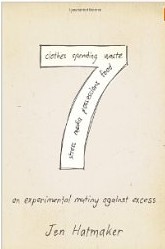
Book Review & Discernment- "7: An Experimental Mutiny Against Excess" by Jen Hatmaker, part 1

Part 2 here

The Shack got women talking. The Secret titillated them. A Thousand Gifts made them swoon. Now, 7:An Experimental Mutiny Against Excess by Jen Hatmaker is causing another stir among the female brethren. Here is the Amazon.com book blurb-

American life can be excessive, to say the least. That’s what Jen Hatmaker had to admit after taking in hurricane victims who commented on the extravagance of her family’s upper middle class home. She once considered herself unmotivated by the lure of prosperity, but upon being called “rich” by an undeniably poor child, evidence to the contrary mounted, and a social experiment turned spiritual was born.”

“7 is the true story of how Jen (along with her husband and her children to varying degrees) took seven months, identified seven areas of excess, and made seven simple choices to fight back against the modern-day diseases of greed, materialism, and overindulgence.”

“Food. Clothes. Spending. Media. Possessions. Waste. Stress. They would spend thirty days on each topic, boiling it down to the number seven. Only eat seven foods, wear seven articles of clothing, and spend money in seven places. Eliminate use of seven media types, give away seven things each day for one month, adopt seven green habits, and observe “seven sacred pauses.” So, what’s the payoff from living a deeply reduced life? It’s the discovery of a greatly increased God—a call toward Christ-like simplicity and generosity that transcends social experiment to become a radically better existence.”

Where do I begin.

OK, as always begin with the language that is being presented and carefully scrutinize it, and then compare it to the bible.

First, the impetus of the book worrisome. A kid called them ‘rich’ so they changed their life? Were they ashamed to be called rich by a poor child? Guilty of the blessings God had sent them? If they were prosperous in contrast to a poor kid, then it was an opportunity to do more with their means. It is not a sin to be rich, even by comparison to others. Abraham was wealthy. So was Job. David. Solomon. Nicodemus. Joseph of Arithamea. Joanna the wife of Chuza, the manager of Herod’s household, and Susanna; helped Jesus out of their own means. (Luke 8:3). It is the love of money that rots. Was this family loving money too much? Or just ashamed of what they had? There is a difference.

If they were attempting to shepherd their means in more Godly fashion, then that is fine. But it seemed that they were ashamed of their status in life. The bible has much to say about money, Godly living, shepherding resources, and excess, yet they did not consult with the word. They are off to a bad start.

What was their source for proceeding? They created a man-made outline to guide their behavior rather than consult the bible. By what standards did they decide on seven? On food, clothing, spending? What about giving?

Stress? Stress is part of life. Ask Paul. Peter. Stephen. Any martyr. Any Christian. We are at war with the powers and principalities of this world, and that is stressful. Do they think they deserve a stress-free life? What was the source of their stress? If they had made unGodly decisions about work, to the expense of their children, that is one matter. If they simply want the ‘good life’ that is another. Achieving it by man-made means and monastic ‘simplicity’ is not the way.

We have had a wave of these try harder “faith” type books these last couple of years. We suffered through Year of Living Biblically by AJ Jacobs and A Year of Biblical Womanhood Rachel Held Evans. In my opinion, this current wave of ‘do something, try harder, strip away the consumerism so we can get close to God’ kind of books began with David Platt’s “Radical: Taking Back Your Faith from the American Dream.” That was a book that made it seem like those who were not doing big and bold things for God and coming home after work to sit on their American couch were second rate.

This past January, I wrote,

“You might remember I talked about the time when David Platt’s book Radical: Taking Back Your Faith from the American Dream came out. Christians all over the place got on the bandwagon and decided that their plain-jane faith was unremarkable and they needed an adrenaline shot of daring and a radical change to prove to God that they’re really a Christian who means it. Let’s contrast the fancy lights and high volume indoctrination of charismatic faith preached at Passion 2013 with this-” and I linked to John MacArthur’s essay called “An Unremarkable Faith“.

MacArthur’s essay extolled the virtues of a plain old Godly life lived by biblical standards (which is actually harder to do than sell everything and run off to Burma.). And I mentioned Radical again this past March, referencing Southern View Chapel’s treatment of Platt’s book in fall of 2011. They write,

“A similar voice is David Platt’s and his book Radical: [Taking Back Your Faith from the American Dream]. Platt offers better balance than Chan but still propagates a two-tiered gospel composed of the true gospel of redemption and the social gospel. While Platt is careful to elevate the true gospel, the social gospel of feeding the hungry and giving to the poor is the primary focus of the book and accounts for its popularity.[26] He writes, “As we meet needs on earth, we are proclaiming a gospel that transforms lives for eternity.”[27] The author does not advocate the social agenda as opposed to true evangelism, as mentioned above, but he does say that caring for the poor is evidence of salvation. As a matter of fact “rich people who neglect the poor are not the people of God.”[28] However, when we turn to the New Testament, we find that, while Christians are to be loving and generous to all people, they are never told to attempt to remedy the consequences of the sin of unbelieving humanity through social action.”

7:An Experimental Mutiny Against Excess is a natural outgrowth of books like Platt’s Radical. We can see influences of Platt in the blurb when we read that following the author’s example will lead to “a radically better existence.”

Are we to seek a radically better existence for ourselves on this earth? It is not our home. It is our battleground. Are we to seek a radically better existence for others on this earth through experiments like social gospel? No. Better their book be titled “An Experimental Mutiny Against Sin because that is what Christians are called to do, witness for Christ against sin and Him alone as the way to overcome it.

I sidetracked about the Jacobs, Evans, and Platt books because I wanted you to see how these things are connected in waves. Platt’s book was seminal and damaging. We see that now.

Back to An Experimental Mutiny Against Excess. The blurb says the family discovered that once they dispensed with their stuff, they found “a greatly increased God”? So, God ‘increases’ if we recycle? People, God doesn’t change depending on what WE do.

The phrase in the blurb says it all: “a social experiment turned spiritual was born”. They didn’t consult the bible and adopt biblical standards in repentance and to seek God, they performed legalistic and rigid actions and a byproduct of that was that their own experience seemed to bring them closer to God. It’s backwards. That is how one knows they are false.

Now, let’s see what the bible has to say about riches.

Let’s substitute Abraham’s name for their name and see if this social experiment makes as much sense. From the blurb:

American life can be excessive, to say the least. That’s what Jen Hatmaker had to admit after taking in hurricane victims who commented on the extravagance of her family’s upper middle class home. She once considered herself unmotivated by the lure of prosperity, but upon being called “rich” by an undeniably poor child, evidence to the contrary mounted, and a social experiment turned spiritual was born.

From the bible-

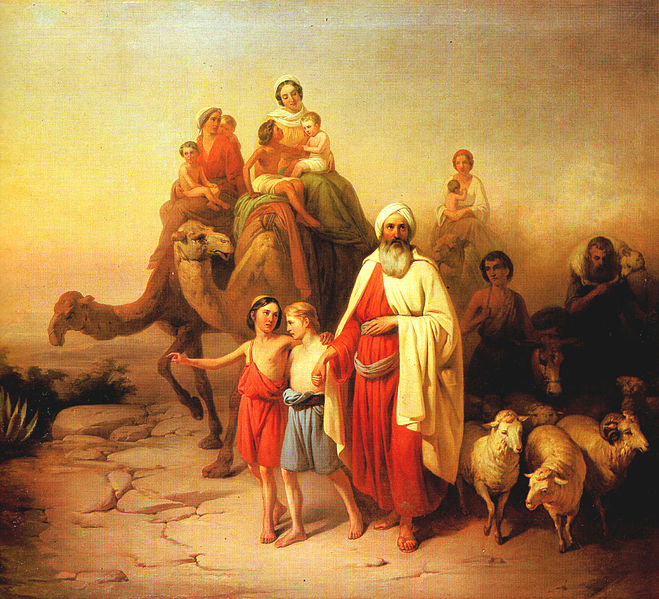
Now Abram was very rich in livestock, in silver, and in gold. And he journeyed on from the

A painting of Abraham’s departure by József Molnár

Negeb as far as Bethel to the place where his tent had been at the beginning, between Bethel and Ai, to the place where he had made an altar at the first. And there Abram called upon the name of the Lord. (Gen 13:2-4).

Blending the two-

“And Abram was called “rich” by a poor slave from Pharaoh’s house and Abram felt guilty for his excesses. And lo, Abram chose the number seven and gave 7 cows to the child, and 7 pieces of silver to the beggar by the gate and 7 pieces of gold to the cripple by the road. And a grand social experiment was born, and behold, Abram felt closer to God and God was increased because of Abram’s works.”

BAH HA HA HA — stupid, eh?

Now, it is not stupid to shepherd your means wisely. It is not stupid to care for the poor. It is not stupid to have compassion on those less fortunate. All those things are good. We are reminded of the Parable of the Talents (Matthew 25:14-30). Some people are richer than others and that is the way God set it up (Matthew 25:15). It is what we do with what we have that He is looking for. (Matthew 24:28). How we go about witnessing for Jesus regarding those important topics is what matters. How we share our means is what is at stake. Is what we are doing for the right reasons and done in the right way? Because there are right and wrong reasons and a right and a wrong way, as the parable shows.

In the next part of this book review, I’ll explore what the reference in the book’s “seven sacred pauses” means. The meat of the problem with the book “7: An experimental Mutiny Against Excess” is contained in that phrase, and I’ll explicitly tell you why this ‘discipline’ is very, very bad. Is what we are doing for the cause of Christ Godly and deep, grounded in His word? Or is what we are doing for the cause of Christ superficial and wrong headed, off track and thus of the kingdom of darkness? This book is in the latter group and in the next part I’ll clearly show you how they went about it in the wrong way, and thus why the book is to be avoided.

Part 2 here

Posted in average us, discernment

"The need for Discernment", Average Us, Glenn Beck

So sorry for the short blog today. I am in the middle of something and I can’t concentrate on anything else right now…again, apologies. Here is a starter paragraph from Mike Gendron at Proclaiming the Gospel. It is an excellent essay. I recommend reading the entire piece.

The Need for Discernment
Written by Mike Gendron on 18 April 2013.

“When asked, “What will be the signs of your return?’, the Lord Jesus mentioned several signs, but he repeated one sign three times. There will be false teachers, false prophets and false Christs who will deceive even the elect if possible (Mat. 24:4,11,24). Knowing this we must examine everything carefully so that we can hold fast to that which is good and abstain from every form of evil (1 Thes. 5:21). We need to identify and expose religious leaders who are servants of the devil carrying out his goal is to deceive the world (2 Cor. 11:13-15).”

more at link.

Here is a new blog I’ve found which I like very much. It is called Average Us. Recent entries have been
–Why Pastors Shouldn’t Teach Tithing”>Why Pastors Shouldn’t Teach Tithing
–Why People Hate
–Fourteen Reasons Hell Scares Me

Glenn Beck fulfilled his promise to go public with an angle to the Boston Marathon bombing, which he had stated would have the potential to bring down the United States because of a massive coverup. He updated it here with more details. I admire Mr Beck;s fervency in love for our country and doing all he can to bring truth tot he public. I remind Christians however (and Mr Beck is a Mormon, and thus not a Christian) that our home is heaven, and undue national fervency over our nation is unwarranted. We love America, but we love our heavenly home more. Which nation are we doing more for? Please don’t get wrapped up in details of government conspiracies and coverups. They exist. But the truth is ever harder to find with a compliant media and because of the days in which we live. One cold go crazy trying to get to the bottom of a quicksand pit, all the while taking our eyes off Jesus and what we should be doing for HIS kingdom.

Posted in challies, discernment, jesus, watchblog

Challies, in the crosshairs of discernment bloggers, and whether discernment ministries are any good at all

Pastor, book reviewer and discernment blogger Tim Challies recently wrote an essay titled “In the Crosshairs of the Discernment Bloggers.” His post is causing an uproar. The uproar is for a lot of reasons, but I am not here to write about those. I’m writing about the confusion that has resulted for some people.

In his essay, Mr Challies lumped all discernment bloggers, or “watch bloggers” into one category. The irony that he is a discernment blogger himself wasn’t lost on many. He wrote, “They are the playground bullies of the Internet, shaking their fists and demanding your lunch money; if you give it to them you go hungry, if you don’t give it to them, you get your head shoved in a toilet. Where the Bible calls us to approach conflict with equal parts truth and love, discernment bloggers operate by lies and fear–or half-truths and fear at the very least. It is an intimidating combination if you are the one who may face their wrath.”

Subsequent to his essay, I received a query from someone who said they were not in the habit of reading discernment blogs and supposed that there are all kinds out there, some who do right and some who do wrong. That was a wise statement, but it got me wondering about the new Christian and babes in Christ. What are they to think? Is the entire well of the discernment ministry polluted? I believe Mr Challies did much to discredit the ministry, adding his voice to a growing chorus who either overtly or implicitly (as Mr Challies did) discount the ministry altogether. This is dangerous.

The first problem is that the essay did not name the ministry with which he had issue. This does a disservice to him, the other ministry and to the body in general. As I said a moment ago, it added confusion instead of clarity. No one can go to the other blog and discern whether their words were judgmental or discerning. (Credit: The American Judicature Society).

In the book of Timothy, Paul was not shy about naming the names of the false teachers – he named 8 of them. The NT wasn’t shy about naming the names of the movements that were perpetuating falsity, either, naming two that come to mind: Judaizers, Nicolaitans.

I consider myself a discernment blogger. I was given by grace through the Holy Spirit, the gift of discerning of spirits, prophecy, and teaching, along with faith. Because He has been so abundant giving His gifts to me, there is a responsibility for me to use them for the edification of the body. That is why I blog every day.

In modern times, the body has widened in every day practical life to extend to the global body. Cell phones, blogs, twitter, Facebook, Skype, and many other media have allowed connection to and discussion among believers across the world. This has certainly impacted missions, as it has impacted the kind of ministries now present on earth. Who would have thought of the blessing and benefit ten years ago of The Shepherd’s Conference being live streamed, and being able to watch 3000 men sing hymns to God and listen to astounding preaching at the same time they were receiving it? Or to pray for them while they were receiving it? That is the blessing.

With a widened body connected through media, comes the danger. There are a lot of things to discuss. But there are also conspiracies, mud fights between denominations and individuals, sinful teaching everywhere, and the tendency is to speak on these things carelessly. My personal barometer before blogging is to ask myself two questions, “Does it exalt Jesus?” and “Does it bring clarity or confusion to the situation?”

My e-mailer was right- as with any ministry, people, or organization, there are the good and the bad. I do agree that many watchblogs are gleefully maniacal when it comes to ‘discernment.’ We need discernment to know which discernment blogs to read!

Dr. John MacArthur wrote on the topic of discernment in March 2013, in Pulpit Magazine. (Note that link has gone dead but here is another). The title is “The formula for Biblical Discernment.” I think it applies to what Challies was trying to say

“It is quite true, of course, that exercising real discernment and being merely judgmental are two vastly different things. There are people who seem to take sinful delight in fault-finding, and they do sometimes try to justify their censorious spirit in the name of biblical discernment. But it isn’t terribly hard to distinguish true discernment from mere judgmentalism. Watch out for the full-time critic who constantly reproves and rebukes others but rarely offers any edifying instruction or exhortation when he is the one doing the teaching. Beware the self-styled discernment expert who is always hostile, scornful, or angry toward the subjects of his criticism. There is a place for indignation, sternness, and even sanctified sarcasm, but animosity should not be anyone’s default mode. Also, be especially cautious when you encounter someone who seems to take delight in uncovering others’ sins or constantly publishing shocking exposés. Gossip, guilt by association, mud-slinging, and personal slurs are fleshly weapons. “The anger of man does not achieve the righteousness of God” (James 1:20). Some who fancy themselves skilled in the art of discernment are merely being fleshly and factious.”

Of course those are very wise words. The lengthy essay continues in describing what discernment is, why we need it, and how to apply it. I encourage one and all to go to the link and read the piece in full.

I liked how this website described the gift of discerning of spirits (1 Corinthians 12:10): “Discerning of

Spirits=Revelation Gift. Definitions: Recognizing what is of God verses the world, the flesh, and the devil. Example: Paul recognizing that the girl in Philippi had a spirit of divination.” They go on-

Discerning of spirits is the supernatural ability given by the Holy Spirit to perceive the source of a spiritual manifestation and determine whether it is of God (Acts 10:30-35), of the devil (Acts 16:16-18), of man (Acts 8:18-23), or of the world. It is not mind reading, psychic phenomena, or the ability to criticize and find fault.

Discerning of spirits must be done by the power of the Holy Spirit; He bears witness with our spirit when something is or is not of God. The gift of discerning of spirits is the supernatural power to detect the realm of the spirits and their activities. It implies the power of spiritual insight – the supernatural revelation of plans and purposes of the enemy and his forces. It is a gift which protects and guards your Christian life.

How to Test a Spirit

You can discern or test whether or not a spirit is of God by the following three ways:
–Observing what a person does. In Matthew 7:15-20, Jesus explains that false prophets are known by their fruit – by their conduct and actions.
–Observing whether or not a person exalts Jesus Christ as the Son of God and as Lord and Savior (1 Corinthians 12:3).
–By listening to what a person says (I John 4:1-3). Does their confession line up with the truth of God’s Word?

This is not to excuse the Christian to whom the Spirit has not bestowed the specific gift. We are all to display wisdom in our dealings. 1 Thessalonians 5:21 says “but test everything; hold fast what is good.” Rely on the Spirit for judicial and correct application of that verse and the others (1 John 4:1, 1 Cor 14:29) which will grow your skill in discernment even if you do not have the gift. However, Christians with the specific gift strive to use it in every area available to them to edify the body (1 Corinthians 14:3-5, 12, 17, 26; Ephesians 4:12). It is not to be carelessly used to gratify the ego, puff up personal pride, or sling mud.

Those with the gift of “discerning of spirits” or discernment do often run into a problem of pride, and/or of entrenched negativity due to the nature of the ministry. I have to watch out for that myself. With the ease of setting up a blog and gaining an audience, these kinds of sites have proliferated. Look at Jeremiah, depressed and petulant with God. Elijah, running away and then demanding fire from heaven instead of a still small voice. One can get pretty angry and negative. It is a tough, tough ministry. (Graphic, Bible Yellow Pages)

I’ve often said that it’s much more nice to be in a helps ministry. You bring cake. Everyone loves you. In a discernment ministry, you point out sin and call people to accountability and repentance. No one likes you. It always involves some sort of conflict. It gets tiring, and when one is tired they don’t guard against negativity. I combat that by praying and looking to Jesus. But someday I may start slipping. I pray good people will point it out to me if I slide toward constant negativity in tone or subject.

I give the Holy Spirit credit in Justin Peters’ case. He has been a discernment preacher for many years and he is still as gracious and gentle as he was when he started. A hard thing to do for the flesh is weak. Thereby we know it is the Spirit who strengthens Mr Peters. This is to the glory of Jesus.

Some people do not fall into negativity over time, but incorrectly use the concept of discernment as an excuse to bully right off the bat.

But worse, others take the “judge not” verse to the other extreme. That is what Challies is intimating in my opinion. It is what MacArthur was addressing, he said in the same article,

“It is tragic that real discernment is considered out of fashion by so many evangelicals, because the church has never been more desperately in need of sober, discerning hearts and distinct, authoritative voices to call the people of God back to the clarity and authority of His Word. … An undiscerning church has no defense against false teaching.”

Liberals unfortunately piggy-back on the proliferation of negative discernment bullies and use them to make the claim that discernment isn’t needed at all. “Judge not!” they say (a stance MacArthur addresses also in his essay.” Those ‘bullies’ are actually doing satan’s job for him because the more people pull back on discernment, the more satan infiltrates, and the more the few discerners out there have to do and point out. It is a downward cycle.

Friends, use discernment when reading discernment blogs, including mine. MacArthur’s words above are

wise. Is the blog a screed of hateful and gleeful finger pointing? Or is the finger pointing to Jesus in hopes that restoration and repentance can arise from the false teaching or bad situation being written about? It is not hard to detect the difference between judgmentalism and discernment, the Spirit is there to lead you. And if you ever want more wisdom, pray to the spirit and He will give it without reproach.

Posted in contemplative prayer, discernment, john piper, lectio divina, ravi zacharias

Why are mature men of the faith suddenly seeming to go off the narrow road of orthodoxy and saying or doing wacky things?

I’ve been watching the Christian field with perplexity and dismay lately. It seems that the organizations an individuals we rely on suddenly take a left turn and drive pell mell off the road. They had been doctrinally steady for years and decades, and then suddenly they are doing strange practices or recommending heretics.

It makes me scratch my head, for sure. Why do mature leaders of our faith suddenly go wacky in the doctrine department? How does this happen? That is what this blog entry will seek to discover.

It stands to reason that babes in Christ lack some discernment because discernment is a skill. It comes with testing, with age, with study, with prayer, and by the Holy Spirit. It is why there are pastors and elders who are given instruction on how to behave with and teach the younger ones. Not that younger Christians can’t have discernment, but it is a skill that is refined with practice.

However the perplexity comes when the mature ones who should know better suddenly start displaying a lack of discernment. Let me offer a few recent examples:

–Focus on the Family has been a strongly mature and reliable biblical resource for families 35 years, but there are some with influence at the organization who have fallen hook, line, and sinker for Roma Downey and her Bible miniseries crowd. They have endorsed, even backed the series, and hosted a function to match up Downey and Burnett with gaming folks to create The Bible miniseries computer game, a game like “Where’s Waldo”.

Answers in Genesis is an organization founded 35 years ago by Ken Ham. It is dedicated to bible apologetics with a particular focus on supporting young Earth creationism and a literal interpretation of the Book of Genesis. They have been strongly biblical for decades. Yet at least one reviewer on staff deemed the bible miniseries fairly acceptable, mostly because it played to their bias and presented Noah and the flood as historical. They stated,

“Nevertheless, even as a stand-alone production, The Bible will likely lead many to Christ. Why? Because it presents the Bible’s history as real history—instead of eroding trust in God’s Word from the very first verse…”

I believe the series has shown itself undeniably to have eroded the word of God. As a matter of fact, it has eroded it so much that AIG says the following in the same review, prior to the above statement:

“It unfortunately lacks a clear presentation of the gospel message like that included at the end of the 1979 Jesus Film AIG also notes because the mini­series has about 4,100 years of history to cover in just 10 hours, many of the events are compressed and shuffled, resulting in “a few things out of order and even a few outright discrepancies with biblical history.”

“Obviously, if you or your children are troubled by the presence of some factual errors, then you should consider not watching the film,” AIG notes.

We don’t come to faith because we believe the bible is historical fact. We don’t say, ‘hey it was pretty good, despite being unclear on that whole Gospel thing’. We don’t say, “gee, despite getting some things flat out wrong, the bible miniseries was acceptable!” We don’t say, “If you’re overly sensitive to our inerrant bible having error polluted by pagans with an antichrist agenda, maybe it’s not a good idea to watch it, but for the rest of us who don’t mind our blood-bought word presented corruptedly, it’ll be a comfy evening with the telly!” Except…they did say it.

–John Piper has been a pastor for 30 years and has authored 50 books. He is well regarded as a pastor, having just retired this month. Yet of late has participated in a Lectio Divina, a Catholic mystical practice involving prayer, endorsed it and offered resources on his website on how to perform it, and hobnobs with heretics, all at this late date in his career. (He retired this week).

If you don’t know what Lectio Divina is or contemplative prayer (or centering prayer) know that it is a method of prayer that does not treat Scripture as texts to be studied but a is mystical exercise of substituting for study an intuitive experience of having emptied the mind to receive a special revelation from God directly. The following bloggers have explained why Contemplative prayer and lectio divina are bad.

Sola Sisters: Piper encouraging Lectio Divina
Do Not Be Surprised: Biblical silence vs. mystical silence.
Christian Apologetics and Research Ministry: Centering prayer
Wretched Radio explains contemplative prayer and discusses Piper’s promotion of Lectio Divina at the Passion 2012 conference.

–Ravi Zacharias is a Canadian-American evangelical Christian apologist. Zacharias is the author of numerous Christian books, including Gold Medallion Book Award winner Can Man Live Without God? and bestsellers Light in the Shadow of Jihad and The Grand Weaver. He is the founder and chairman of the board of Ravi Zacharias International Ministries and host of the radio program Let My People Think. He is a high-end intellectual, brilliant and wise, gentle and profound. He has stood on the bible and its doctrines as the only truth for decades.

That is why I was stunned when he appeared on heretic Joyce Meyer’s show and worse, said she was “a great bible teacher” and that “God was using her”. I can understand if he wanted to appear on her program to reach her lost followers, John MacArthur was asked to speak at the Mormon temple and they still invited him after he stated he was going to present the Gospel and say what he had planned to say. But this wasn’t that. It was Ravi endorsing Meyer as a bible teacher and announcing that God was using her. I went totally off my rocker when I saw that.

Youtube link here

If it is news to you that Joyce Meyer is a heretic, go to CARM to read why. Also in Justin Peters’ updated bible teaching titled A Call For Discernment, he uses Meyer’s material to show why and where it is false.

We are all scratching our heads, saying WHAAAAT is going on? It is a fact that these strange and unsettling things are happening. My question is, why?

The number one issue related to the church, pastors answer when asked, is that its people lack discernment. As John MacArthur says

“Today’s church is like the religious leaders of Jesus’ day, who could tell the difference between superficial things like pleasant and stormy weather, but not between truth and error (Matt. 16:1-3). So many churches have relinquished biblical ethics and doctrine, a deep reverence and worship of God, repentance over sin, humility toward God and fellow believers, and a profound understanding of God’s character and work. All that has resulted in a low-level commitment to holy living.”

However, the men I’ve quoted are individuals or are with credible organizations. It does not seem to me that Ravi Zacharias has made a low-level commitment to holy living. Nor John Piper. So what’s the deal?

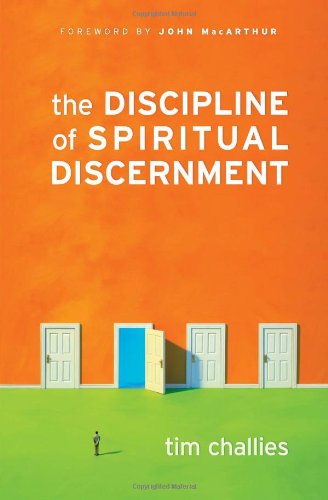
Tim Challies wrote a book on discernment. He says that lack of discernment leads to backsliding. That is a good thought. Personally, I think that backsliding, or unaddressed sin, also leads to a lack of discernment. I do know that the bible says we cannot be mature without discernment, but the perplexing lack of discernment we are seeing is from many mature, elder pastors and men of the faith who have demonstrated steadily mature discernment for decades. Could it be they have had a failure to repent of some unaddressed sin which is causing dullness of hearing? Perhaps. Hebrews 5:11-14 says–

Warning Against Apostasy—  About this we have much to say, and it is hard to explain, since you have become dull of hearing. For though by this time you ought to be teachers, you need someone to teach you again the basic principles of the oracles of God. You need milk, not solid food, for everyone who lives on milk is unskilled in the word of righteousness, since he is a child. But solid food is for the mature, for those who have their powers of discernment trained by constant practice to distinguish good from evil.

The writer of Hebrews here is talking of a regression. They should be more advanced than they were but the writer despaired of even going forward with what he originally wanted to say because they had become ‘dull of hearing’ and it would be pointless. What causes dullness of hearing? I think anyone can make a mistake, and anyone can have an unaddressed sin in their life. But if one does not repent of it, compounds the tendency to regress back to milk, and the refusal/inability to hear leads to more drifting. This is a deadly trajectory. Again we go to Hebrews, this time chapter 2.

“Therefore we must pay much closer attention to what we have heard, lest we drift away from it. For since the message declared by angels proved to be reliable, and every transgression or disobedience received a just retribution, how shall we escape if we neglect such a great salvation? It was declared at first by the Lord, and it was attested to us by those who heard, while God also bore witness by signs and wonders and various miracles and by gifts of the Holy Spirit distributed according to his will.” (Hebrews 2:1-4)

At The Expository Files we read, “The first reason for this exhortation is that there is a real danger of “drifting.” It is actually possible for us to “drift away” from our salvation. In 2:3 we learn that we can “neglect” our salvation. Later in 3:12-14 we are told that we can “depart” from God. In 6:4-6 we are told that we can so “fall away” that it becomes impossible to renew us again to repentance. And then in 10:26:27 we are told that we can reach a point where the sacrifice of Christ is no longer available for our sins. So the danger of “drifting” is very real!

(Go here to see how the Hebrews verse is NOT talking about a solid Christian losing their salvation)

The verse does not say we plunge. It doesn’t say we plummet out of faith. It seems to happen slowly. We drift. It happens when we neglect, and we fail to pay attention.

In the novel “Watership Down” a fictional story of rabbits searching for a new field to create a warren in, they would entertain each other with tales and myths. They had sayings. One of them was about the weather, and the onset of bad news, “One cloud feels lonely.” Let’s change that to my own motto, “One sin feels lonely”.

If there is a sin, and it’s not addressed, it hardens us a little bit. It makes us a little bit sluggish in the spiritual department. We get wax in our ears. Jeremiah 7:11 says “But they refused to pay attention and turned a stubborn shoulder and stopped their ears that they might not hear.” You refuse to pay attention, and your ears get dull. More sins come. Just look at what happened in the Garden, and pretty quickly, too. Genesis 3. They disobeyed, they blamed, they hid. By the next generation, there was murder. It doesn’t take long for sin to pile on!

Matthew 13:15 also speaks of the hard hear and dull ears. In all three cases, (Hebrews, Jeremiah, Matthew) it was the person’s refusal to hear. They did it deliberately either through neglect or through rebellion.

This drifting, this regressing, is a process. It’s spoken of in 2 Timothy 3:13 “while evil people and impostors will go on from bad to worse, deceiving and being deceived.” Once the trajectory is begun, they go from bad to worse.

It is really important for a mature person who deviates from the solid food of doctrine, if not caught early, will fall away and it will be impossible to restore them to repentance. Hebrews goes on in chapter 6 thus:

“For it is impossible, in the case of those who have once been enlightened, who have tasted the heavenly gift, and have shared in the Holy Spirit, and have tasted the goodness of the word of God and the powers of the age to come, and then have fallen away, to restore them again to repentance, since they are crucifying once again the Son of God to their own harm and holding him up to contempt. (Hebrews 6:4-6)

So you see the danger. When we see mature elders suddenly veer off, it is either they were false all along and their true colors are coming out (something I hesitate to believe in the above cases) or they have some unrepented-of sin, have become dull, neglected some aspect of their faith walk, and are sliding and drifting away. In the latter case, perhaps when we see a perplexing behavior or doctrine come out of them that makes us scratch our heads, that is the first signal. The check engine light just came on, and it better get checked, because one sin feels lonely.

It always strikes us at the heart when a person is uncovered who suddenly seems to be lacking in the discernment department, and disheartening too. However, we have the privilege of praying for them and others that we may know who seem to suddenly be coming up with unorthodox behavior or doctrines. We can ask for discernment (wisdom). The glory is that Jesus promised to deliver it to us if we ask. (James 1:5).

Posted in discernment, doctrine, last days

Discernment: Why is it important?

Justin Peters is an ordained minister and preacher, but is more well-known for his creation of the seminar “A Call for Discernment”. It is an in-depth, biblical critique of the Prosperity Gospel/Health-Wealth false gospel. This false gospel is also known as a Word Faith Movement, perpetuated by Benny Hinn, Joel Osteen, Joyce Meyer and many others.

His bio says that as a teenager, Justin himself attended faith-healing services in hopes of being delivered from his Cerebral Palsy. Though the potential was there to shake his faith in the Lord, in the long run, these experiences had the opposite effect. He says he has learned that his CP is a blessing because it keeps him dependent on God in his own weakness.

What is Discernment and why is it important? Are we supposed to “judge” or not? Are we told to discern even if we do not have the spiritual gift of discernment? In this seminar, Peters shows that discernment is a duty for all Christians, not only to detect issues in Word-Faith preaching, but in all aspects of a Christian’s life.

You might have heard people say, “I don’t need to know doctrine. I am not a theologian. I just loooove Jesus.” Peters says, that is a foolish statement. You cannot know someone unless you study them and know who they are. If you want to love Jesus, become a student of Him, and study His word. It is a false humility to say you don’t need doctrine.

Here is a link to the session’s .pdf outline that you can read along with the seminar clip below.

If you don’t want to or don’t have time to watch the entire video above, here is Todd Friel of Wretched Radio & TV, interviewing Justin Peters, discussing the Word of Faith movement in this 7-minute clip.

The Lord is gracious and kind. He gave us His word in the bible so we would not be unaware of satan’s schemes (2 Corinthians 2:11). I believe the battle is growing more deep and fierce. Satan is scheming mightily to make the unwary drift away (Hebrews 2:1-4). Keep your anchor dug in- the anchor is Jesus. He is the rock, the foundation of our faith. There is no greater joy than in clinging to Him. Never fear: no one can ever snatch us out of His hand. (John 10:29).

Love Jesus by getting to know him, in His word. Doctrine matters. So does discernment. Ultimately the scriptures tell us why doctrine and discernment are important:

“For whatever was written was given to us for our learning, that through patience and comfort of the scriptures we might have hope.” (Romans 15:4 KJV)

HOPE! What a blessed word in dark days! Light shines and hearts melt and love reigns. Hope! Hope in Him, learn about Him, He is the treasure!

Posted in authority, discernment, hell, scripture, visions, wiese

Discernment: are people’s visits to hell actually true?

So many people these days have had a trip to heaven or hell. Jesse Duplantis, Beth Moore, Colton Burpo, Don Piper, Rick Joyner, Kenneth Hagin, Rebecca Springer, Richard Eby, Dr. Mary C. Neal, Kim Walker Smith of Jesus Culture … the list of people taking a tour of heaven or having had a personal visit from Jesus in another dimension goes on and depressingly on. And hell is not to be left out, either, several people claim to have been personally escorted by Jesus in the underworld as well, such as Victoria Nehale, Mary K. Baker, Bill Wiese.

So what are we to make of all this?

Lies. All lies.

Let’s take a look at the visits to hell. I’ve written several times about the trips to heaven. The bible says that even though you may have had a personal experience, we have a more sure word. Peter wrote that, and he was referring to his own personal visit from Jesus at the Mountain, and having seen the heaven glory and Jesus transfigured. Even Peter says that the word is more sure than a personal experience!

“And we have something more sure, the prophetic word, to which you will do well to pay attention as to a lamp shining in a dark place, until the day dawns and the morning star rises in your hearts, knowing this first of all, that no prophecy of Scripture comes from someone’s own interpretation.” (2 Peter 1:19-20).

Peter is saying that the prophetic word, which is the word spoken by the prophets, is sure. Remember Jeremiah 23:16, “Thus says the Lord of hosts: “Do not listen to the words of the prophets who prophesy to you, filling you with vain hopes. They speak visions of their own minds, not from the mouth of the Lord.”

Peter is not saying we should not interpret scripture, he is talking about the source of it. In 1 Peter 1:10, Peter wrote, “Concerning this salvation, the prophets who prophesied about the grace that was to be yours searched and inquired carefully,”

In other words, the prophets heard the word from the LORD, and they carefully searched out what it meant. The false prophets did not have to search out what it meant because they made it up. Explaining it was just as easy- they made up the explanations. And the word was almost invariably happy, too. See what Jeremiah says,

“They say continually to those who despise the word of the Lord, ‘It shall be well with you’; and to everyone who stubbornly follows his own heart, they say, ‘No disaster shall come upon you.’” (Jeremiah 23:17).

Sound familiar?   I know that it does.

Peter’s credentials were impeccable, being hand chosen by Jesus and endowed with miraculous powers to heal, raise from the dead, and preach! Every single person who came after Peter has credentials which are less stellar, so by default, if he says not to trust his experience, we trust the bible and not our own experience. Otherwise you’re saying, “I trust Jesus Culture’s Kim Walker Smith’s experience of seeing a Gumby Jesus, she seems to be more credible than Peter.”

Laughable, isn’t it? The word is sure!

Now about the people who travel to hell, what of them? Well, those visions and visits are false, too. How do I know? Look at Lazarus.

“The rich man also died and was buried, and in Hades, being in torment, he lifted up his eyes and saw Abraham far off and Lazarus at his side. And he called out, ‘Father Abraham, have mercy on me, and send Lazarus to dip the end of his finger in water and cool my tongue, for I am in anguish in this flame.’ But Abraham said, ‘Child, remember that you in your lifetime received your good things, and Lazarus in like manner bad things; but now he is comforted here, and you are in anguish. And besides all this, between us and you a great chasm has been fixed, in order that those who would pass from here to you may not be able, and none may cross from there to us.’ And he said, ‘Then I beg you, father, to send him to my father’s house— for I have five brothers—so that he may warn them, lest they also come into this place of torment.’ But Abraham said, ‘They have Moses and the Prophets; let them hear them.’ And he said, ‘No, father Abraham, but if someone goes to them from the dead, they will repent.’ He said to him, ‘If they do not hear Moses and the Prophets, neither will they be convinced if someone should rise from the dead.’” (Luke 16:22b-31)

If we are to believe the people who visited hell, then we are to disbelieve the holy word. First, because we would believe that Jesus changed His mind about sending people from hell to tell the story, and secondly that before, while we are told that people would not believe even a dead brother returned to life telling his family, but now they will believe an unknown person telling the world on Youtube.

Wiese says that he encountered Jesus in hell, who told him to tell other people that hell is real. This varies directly with the word. Do we have a more sure word, or do we not have a more sure word?

Some people are totally unbelievable and are obvious charlatans. Others, like Wiese, or Don Piper, for example, are likable and sincere. However, sincerity of their message does not make it true. Only the word is surely true, and if what someone says is against what the bible says, you must disregard the person’s message and not the bible.

However, isn’t that the point of what satan is doing, with all these Charismatic visions and visits? Even though Piper or Wiese’s message may be good, the source is demonic. Look at what Paul did when the fortune-telling slave girl followed him around.

“She followed Paul and us, crying out, “These men are servants of the Most High God, who proclaim to you the way of salvation.” And this she kept doing for many days. Paul, having become greatly annoyed, turned and said to the spirit, “I command you in the name of Jesus Christ to come out of her.” And it came out that very hour.” (Acts 16:17-18)

What was Paul’s problem? After all, she was saying something that was true. The problem is, her source was from satan, and a divided house cannot stand. Clarke’s Commentary says, “The Gentiles, finding that their own demon bore testimony to the apostles, would naturally consider that the whole was one system; that they had nothing to learn, nothing to correct; and thus the preaching of the apostles must be useless to them.”

Jamieson-Fausset-Brown Bible Commentary explains, “Paul being grieved-for the poor victim; grieved to see such power possessed by the enemy of man’s salvation, and grieved to observe the malignant design with which this high testimony was borne to Christ.”

Isn’t the phrase ‘malignant design’ so very wonderful!

Matthew Henry says of the slave-girl, “Satan, though the father of lies, will declare the most important truths, when he can thereby serve his purposes. But much mischief is done to the real servants of Christ, by unholy and false preachers of the gospel, who are confounded with them by careless observers.”

So even though the message at one point or another from one false prophet or another, may be true, satan’s malignant design in using the message will always be dishonoring to Christ. Bill Wiese and Mary K Baker may be sincere, but satan’s design is to usurp the authority of the Word, just as he was trying to do against Paul (who was speaking the true word) in using the slave-girl who was possessed.

Be discerning about these visits to heaven and hell, and of people’s tales of visitations from Jesus in visions. It is not enough that their message borne from experience may seem consistent with the bible, the bible tells us that we have a more sure word in the Prophets. And that is enough, more than enough, for me. I hope it is for you too.
————————–

FMI:

Justin Peters essay “Your Best Afterlife Now: (An examination and critique of claimed visits to heaven and hell”

Tim Challies reviews Heaven Is For Real and 90 Minutes In Heaven.

Pertinent part begins at 41:14–

Posted in antinomianism, discernment, joel osteen, legalism, truth

Discernment: How two seemingly opposite doctrines can actually be the same

I think it’s interesting that Legalism and Gnosticism are really one and the same. A great lesson for me last year was learning how all the false religions and the false doctrines are drawing closer to one another. Those which seem like polar opposites are really the exact same thing, just a different flavor. Here is another example of how two opposing doctrines are really one and the same: Antinomianism and Legalism.

In the wonderful series, “Drive By Discernment“, short lectures on the topic of discernment edited by Todd Friel, Pastor RW Glenn is speaking of this exact thing. He is talking about how Antinomianism and Legalism are the same, and clearly shows how.

First, CARM.org defines Antinomianism:
“The word antinomianism comes from the Greek anti, against, and nomos, law. It is the unbiblical practice of living without regard to the righteousness of God, using God’s grace as a license to sin, and trusting grace to cleanse of sin.”

And CARM.org defines Legalism:
“In Christianity, legalism is the excessive and improper use of the law (10 commandments, holiness laws, etc). This legalism can take different forms. The first is where a person attempts to keep the Law in order to attain salvation. The second is where a person keeps the law in order to maintain his salvation. The third is when a Christian judges other Christians for not keeping certain codes of conduct that he thinks need to be observed.”

So how can living in excessive license and living in excessive restriction…be the same? Here is Pastor RW Glenn: [excerpts]

There are people who embrace Jesus as Lord and Savior and people who avoid Jesus as Lord and Savior. And what’s interesting is that you can avoid Jesus as Lord and Savior either by being bad, OR by being good. Religious moralists avoid Jesus as Lord and Savior by developing a system of moral righteousness to put God in their debt. In other words, my obedience and religious devotion is going to beef up my spiritual resume such that I don’t need Jesus to rescue me anymore. And where there are gaps in my resume I use Jesus to fill them in. By and large I don’t need rescue, all I need is a boost. They avoid Jesus as Lord and Savior by relying on their own righteousness. They avoid him by being “good”. … [Thus] Rule keepers and rule breakers are all identical because they avoid Jesus as Lord and Savior and are on the broad road to destruction.

See, Pastor Glenn explains that there is a demand of the Gospel, and there is a comfort of the Gospel. Legalism over-emphasizes its demand, while Antinomianism over-emphasizes its comfort. Over-emphasizing one or the other dilutes the Gospel. Paul said He had not hesitated to preach the whole counsel of God. (Acts 20:27). Of that important balance in keeping the Gospel whole, Barnes’ Notes says:

“I have not shunned – I have not kept back; I have not been deterred by fear, by the desire of popularity, by the fact that the doctrines of the gospel are unpalatable to people, from declaring them fully. The proper meaning of the word translated here, “I have not shunned”, is “to disguise any important truth; to withdraw it from public view; to decline publishing it from fear, or an apprehension of the consequences.” Paul means that he had not disguised any truth; he had not withdrawn or kept it from open view, by any apprehension of the effect which it might have on their minds. Truth may be disguised or kept back:

(1) By avoiding the subject altogether from timidity, or from an apprehension of giving offence if it is openly proclaimed; or,

(2) By giving it too little prominency, so that it shall be lost in the multitude of other truths; or,

(3) By presenting it amidst a web of metaphysical speculations, and entangling it with other subjects; or,

(4) By making use of other terms than the Bible does, for the purpose of involving it in a mist, so that it cannot be understood.”

How does one keep back one part of the Gospel at the expense of the other? Pastor Glenn finishes:

Legalism over-emphasizes the demand of the Gospel. Matthew 5:48 – Be perfect as your heavenly Father is perfect. That is a gospel demand that legalism overemphasizes. Antinomianism overemphasizes the very real comfort of the Gospel. Matthew 6:26- You are more valuable than many sparrows. The challenge of the Gospel is that there needs to be an equal emphasis on both the demand of the Gospel and the comfort of the Gospel. As Jesus said to the woman caught in adultery “Neither do I condemn you, go and sin no more.” Equal emphasis. I do not condemn you, go and sin no more. If you don’t eventually emphasize both of those you lose the Gospel.

Glenn said that there are three tests to determine if a teacher is false. The character and conduct of the teacher (Colossians 1:28, Titus 2:2, Matthew 5:1-12) the complexion of their followers (Luke 6:40, 2 Timothy 4:3), and the content of their teaching (Matthew 12:33, 2 Timothy 4:2-3).

With this information in mind, now think of pastors who preach one at the expense of another. Or perhaps, do you preach or teach one at the expense of the other?

Remember two things. First, all other doctrines except the Gospel are false, and thus are the same, no matter how different they look on the outside. And second, satan is the most subtle creature in the Garden (Genesis 3:1). It is not hard for him to come up with different flavors of the Gospel and lots of false doctrines. I mean, if Baskin Robbins can come up with 31 flavors of ice cream… the most crafty creature in all the garden can certainly come up with enough false doctrines!

This week the Christian Post (which increasingly should be called the Post-Christian) reported on Joel Osteen’s Night of Hope in Las Vegas. It is reported,

“Lakewood Church pastor Joel Osteen, who along with wife, Victoria Osteen, will be leading “A Night of Hope” in Las Vegas, Friday night, has said that he avoids speaking on controversial issues because he doesn’t want anyone to feel excluded from his messages.”

However, Osteen’s definition of ‘controversial issue’ is really code for “sin.” Sin is always controversial. Preaching the whole counsel includes passages such as 1 Timothy 1:10. Yet Osteen declares that he avoids it. Avoid 1 Corinthians 6:9. Revelation 21:8? Avoid. Titus 1:16, Galatians 6:20, 2 Peter 2:6…the list is endless of ‘things to avoid’ so that ‘all will feel included.’ But we’re all sinners. If Osteen wants to preach so that all will feel comfortable, he either needs to preach to no one, because the flavors of sin are endless and odds are someone will feel ‘excluded’ (i.e. convicted), or Osteen needs to preach only the comfort of the Gospel, which is not the whole counsel. You see how devastating the imbalance is?

Osteen maintains that his style of preaching is consistent with the bible. Christian Post says, “His messages of hope and encouragement, as well as his trademark smile, also draw criticism among Christians who feel he fails to address sin and suffering, but Osteen shakes off such criticism. “I believe there needs to be more joy in the world…” But it is not true that this style is consistent with the bible.

Jesus spoke hard sayings. Not everyone felt included! On the contrary. However, Jesus did not alter the Father’s message in order to make it easier for fleshly ears to hear. In John 6:60-62, 66 we read,

“When many of his disciples heard it, they said, “This is a hard saying; who can listen to it?” But Jesus, knowing in himself that his disciples were grumbling about this, said to them, “Do you take offense at this?” … After this many of his disciples turned back and no longer walked with him.”

So we see that false teachers are not true ambassadors (Ephesians 6:20, 2 Corinthians 5:20). In both those verses, the word ambassador means one who is authorized to speak as God’s emissary, representing His kingdom. Osteen takes it upon himself to alter the message of God. He cannot be a true ambassador, because he brings an unauthorized message. This is what all false teachers do. Jesus knew the hearts of men and He still preached a message that fell on hard hearts, in obedience to the Father. Osteen, and all false teachers, dare to disobey delivering the Father’s message and the example of Jesus in preaching it. This ‘daring’ will have terrible consequences:

Tim Challies dealt with this issue in his essay “Smilingly leading you to hell.”

In Drive By Discernment, Pastor Glenn did a good job of explaining how false teachers subvert the Gospel by preaching only half. As always, the most important thing is to check ourselves, first.

Do we preach all demand and no comfort? “Do more, be better, try harder”? Or maybe our Gospel is all comfort and no demand. “My sin isn’t a big deal…I’m forgiven anyway.” Or is your Gospel, “neither do I condemn you, go and sin no more?!” If you want to be an expert on false teachers, you need to be an expert in the Gospel. The more familiarity you have in the Gospel, the more familiarity you will have with the genuine article. When those counterfeits come your way – and they will – you will be able to say, ‘counterfeit!’ Why? because you’re resting in the Christ who says “Neither do I condemn you, go and sin no more.” (John 8:11).

The Lord is Great, isn’t He?!?!

——————–
More on Osteen:

A true knowledge of the true God
Apostasy in the church: Angels of light
Can Christians live their best life now?

And here is an essay on the opposite problem,

 Legalism, Cults, and abuse of authority