Posted in bible, discernment, weaker vessel, women

Are you a weak woman, or are you a weak woman?

By Elizabeth Prata

The Bible says some women are weak, and it is meant in a bad way. The Bible also says Christians are to be weak, but it’s meant in a good way. Let’s look at the two ways.

Weak in a bad way

For among them are those who creep into households and capture weak women, burdened with sins and led astray by various passions (2 Timothy 3:6)

The Greek word for weak here is gunaikarion, a contemptuous term meaning a silly, foolish, little woman.

Jamieson, Fausset, & Brown Commentary says,

laden with sins—(Isa 1:4); applying to the “silly women” whose consciences are burdened with sins, and so are a ready prey to the false teachers who promise ease of conscience if they will follow them. A bad conscience leads easily to shipwreck of faith (1Ti 1:19).

JFB Commentary

Weak in a good way

Weak woman is strong. She prays and relies on Jesus.

For the sake of Christ, then, I am content with weaknesses, insults, hardships, persecutions, and calamities. For when I am weak, then I am strong. (2 Corinthians 12:10).

Gill’s Explains it this way:

for when I am weak, then am I strong; when he was attended with all the above mentioned infirmities, when laden with reproaches, surrounded with necessities, followed with persecutions, and brought into the utmost straits and difficulties, and was most sensible of his weakness in himself to bear and go through all these things; then was he upheld by the divine arm, and strengthened by the power of Christ; so that he was not only able to sustain the conflict, but became more than a conqueror, and even to triumph in the midst of these adversities;

The difference is that silly weak women are loaded down with unrepented-of sin, which clouds their mind and they fall prey to untruth. Weak women who rely on the glorious Divine Arm to lift them are wise, strong, and in His power. They know the truth and see Him clearly. They possess virtue and radiate calm wisdom.

Repent often. Pray frequently. Consult the Word repeatedly. Then we will not be silly, foolish, or an embarrassment to the faith.

So. Are you a weak woman or are you a weak woman?

Posted in discernment, holy living, kings, opposing false doctrine

Failure to actively oppose false doctrine/false teachers is a sin

By Elizabeth Prata

In reading 1 and 2 Kings, patterns emerge. In a blog essay a few years ago I’d mentioned that reading the books of the Kings is like watching the tide go in and out. The king was good, the borders enlarged. The king was bad, the borders came in. In and out. Repeat.

Another pattern is seen in the LORD’s declaration of where on the spectrum the king’s goodness or badness was. Sometimes the King was declared by God as outright evil. Sometimes not so bad. Sometimes good. Here is an example. In 2 Kings 3:2a this is what is declared of Jehoram the son of Ahab who became king over Israel in Samaria:

“He did what was evil in the sight of the Lord, though not like his father and mother,”

Why wasn’t he as bad as Ahab and Jezebel? After all, “he put away the pillar of Baal that his father had made.” (2 Kings 3:2b). But Jehoram also clung to the sin of Jereboam which had made Israel sin, and this angered the LORD.

The lesson is twofold. Leaders set the example. When they are below reproach, the followers follow suit, also falling below reproach. In addition, you can’t repudiate some sins, you must repudiate all sins. There is no picking and choosing.

Now, how about Jehu, tenth king of Israel??

Thus Jehu wiped out Baal from Israel. But Jehu did not turn aside from the sins of Jeroboam the son of Nebat, which he made Israel to sin—that is, the golden calves that were in Bethel and in Dan. And the Lord said to Jehu, “Because you have done well in carrying out what is right in my eyes, and have done to the house of Ahab according to all that was in my heart, your sons of the fourth generation shall sit on the throne of Israel.” But Jehu was not careful to walk in the law of the Lord, the God of Israel, with all his heart. He did not turn from the sins of Jeroboam, which he made Israel to sin.” (2 Kings 10:28-31).

Did you catch that? “All His heart”. King David was a man after God’s own heart. (Acts 13:22). This is a high honor bestowed on a man. Why was David given such an honor in the bible? He loved and feared the Lord. He had absolute faith in God. You might wonder, David was a great sinner, how could he be deemed a man after God’s own heart? He sinned, but he repented, fully. His heart was always pointed toward God.

David loved God’s law. (Psalm 119:47-48) He delighted in it! Yet you note that despite Jehu doing what was in the LORD’S heart, he “was not careful to walk in the law of the LORD.”

David was grateful for God. God was not a means to a kingly end for David, God was the end. (Psalm 26:6-7; Psalm 100:4).

In another case of the LORD deeming a king pretty good, we see Amaziah. “And he did what was right in the eyes of the Lord, yet not like David his father.” (2 Kings 14:3). Amaziah did not remove the high places and the people still sacrificed to other gods there. (2 Kings 14:4). However he did follow through on a point of God’s law whereupon ‘he struck down his servants who had struck down the king his father’ but correctly did not kill the children of those, as the Law states. (2 Kings 14:5-6).

As you read through the Kings the recurring theme is worship of other gods on the high places. The First Commandment is to have no other gods before Him. That the King worshiped God wasn’t good enough, he must set the example by destroying the altars of other gods. Leaving them in place is an implicit agreement with them.

Photo by Efe Kurnaz on Unsplash

This theme is seen in most of the NT books whereupon the Apostles or authors of almost every book decries false teaching. Following false teaching is following another god. Failure to repudiate false teaching is also a sin. See Revelation 2:20,

But I have this against you, that you tolerate that woman Jezebel, who calls herself a prophetess and is teaching and seducing my servants to practice sexual immorality and to eat food sacrificed to idols.

The church at Thyatira knew this woman, a Jezebel-type, was teaching falsely, and they tolerated it. Some of them weren’t following her, which was good, and Jesus said that was good.

But they did not strike her down from her high place, as it were. The Lord commended them for not following actively (Revelation 2:24) but was still against them that they didn’t dig out the cancer of her false teaching and protect the daughters of hell she was creating. (Revelation 2:23).

Discernment is active on all fronts. It means relying on the Spirit to open our eyes to false teaching, and actively asking Him to do this. It means practicing discernment by reading the word and testing what teachers teach against it (Acts 17:11). It also means when you see brethren falling under the beguiling sway of false teachers, to do something about it. Don’t tolerate it. If you do, thee Lord has that against you. Do what it right in the sight of the Lord!

So whoever knows the right thing to do and fails to do it, for him it is sin.” James 4:17)

Posted in discernment, paths, satan

The old paths

By Elizabeth Prata

Thus says the LORD: “Stand by the roads, and look, and ask for the ancient paths, where the good way is; and walk in it, and find rest for your souls. But they said, ‘We will not walk in it.’ (Jeremiah 6:16)


Watch the path of your feet And all your ways will be established. (Proverbs 4:26)

In all your ways acknowledge him, and he will make straight your paths. (Proverbs 3:6)

My foot has held fast to his steps; I have kept his way and have not turned aside. (Job 23:11)

All our righteous walking with Jesus is not without intervention by angels, strength of the Holy Spirit, and the will of God, because satan the adversary always tries to hinder us. He attempts to knock us off the path. He works to misdirect us.

because we wanted to come to you—I, Paul, again and again—but Satan hindered us. (1 Thessalonians 2:18)

Gill’s Exposition says of the Thessalonians verse,

Satan does all he can to hinder the preaching of the Gospel, the hearing of the word, the profession of religion, and the saints coming together, and having spiritual conversation with each other; being, as his name “Satan” signifies, an enemy to Christ and his interest, and to the souls of men: indeed he can do nothing but by divine permission, nor can he hinder the will of God, and the execution of that, though he often hinders the will of man, or man from doing his will; he hindered the apostle from doing what he willed and purposed, but he did not hinder the will of God, which was that Paul should be employed in other work elsewhere. 

Stay true to the Lord and His ways. Stay in the Word, and stay praying. God promised to those who walk in His paths that they will find rest for their souls. Though as we see in the Jeremiah verse, some refused to walk in His ways.

The old way isn’t the popular way! It is being abandoned daily by people who have decided that new is better. They are leaving the Bible, the old songs of the faith, old fashioned worship, praising the Lord, and preaching. Seeker services are replacing old time worship of the Lord. Yet, God has not changed, Heb. 13:8. I can find no room to change myself. I think I’ll ask for the old paths and walk in them. How about you? The enemies are changing the signs, but the Lord will knows the way. Let’s ask Him and He will lead! (source)

Amen!

If satan changed the signs on your path, would you still know which way to go?

Posted in discernment, Uncategorized

Practical magic’s resurgence

By Elizabeth Prata

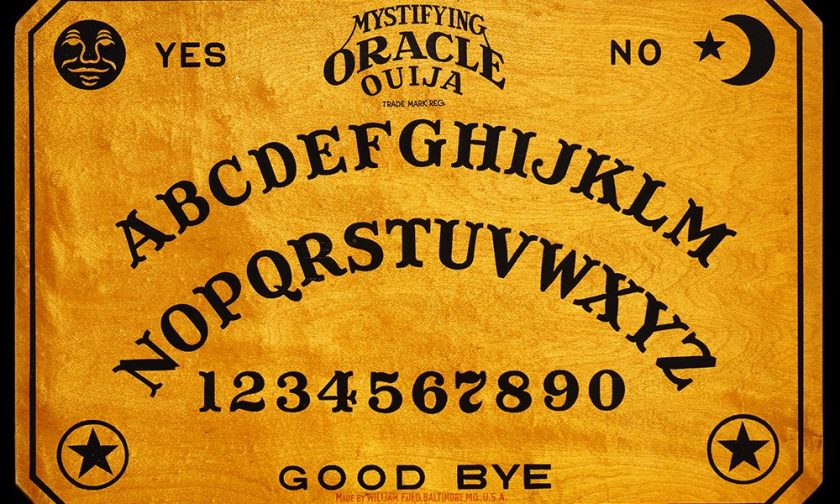
The NY Times published an article titled The modern charm of practical magic. I found it interesting for many different reasons. I was not saved by grace of the Lord Jesus until I was 42 years old. I spent all of my adulthood prior to the salvation moment, searching for the magic key to the magic in life, the unexplainable, explained. I dabbled in lots of different kinds of magic. Ouija boards, Kirlian aura photography, dreamcatchers, sage burning, Reiki, astral projection, summoning spirits & spirit guides, clairvoyance…

We all want to know what’s on the other side. We do enjoy peeking behind the veil, knowing the unknowable. Because, the unsaved person knows there is a higher power. (Romans 1:19-20). They just deny Who it is. ‘Oh it can’t be God. It must be runes…solstice…labyrinths…”

The NYT article says that they notice more than ever, people seeking answers through magic,

You may have noticed it at work. Perhaps your co-worker has ornamented her cubicle with rose quartz crystals? Has a friend uploaded an I Ching app onto his phone? Or maybe your boyfriend blamed his failure to respond to your text messages on Mercury being in retrograde? 

Why magic, and why now? The lack of religious faith so prevalent in our age is an anomaly in history. Magic, which usually does not demand faith in a particular deity, or the sometimes exclusionary imperatives of organized religion, allows people to access a sense of the miraculous on the level of the quotidian.

The article concedes the yearning for a higher power but subtly warns against it actually being God,

There is relief to be found in simply accepting a higher order, in letting go, but what of appeals to reason? Is it not important to disbelieve things that aren’t real? Might faith in the healing powers of a vibratory sound bath lead the next day to outlandish conspiracy theories?

I liked this NY Times article, for many reasons but mainly for its use of my favorite word, quotidian. Where else are you going to read an essay where the author uses such a fancy word which means mundane?

The Christian is bombarded with practical magic all the time. Did you know that? The fads are part of the devilish worming into your home of these magical activities. Labyrinths, Breath prayer, mantras, prayer beads, Mandala coloring books, the false gospel of telling you your words have power, drawing prayer circles, horoscopes, seeking the Presence (which is actually summoning spirits)…and more, are just different kinds of old magic that satan is using to take your eyes off Jesus.

Beware of the charm of practical magic, brethren. The warning is not just for unbelievers, but for believers. Satan insinuates practical magic into our lives under the guise of it being Christian, but it never is. We have the answers. We have the mind of Christ. (1 Corinthians 2:16). Our answers are in the all-sufficient Bible. We do not need additional practices that promise to deliver information, (but never does), or promises to give added insight (but won’t) or gives a special closeness to Jesus (but never does).

Here are some resources about the dangers of Christian magic:

Desiring God:Jesus vs. the Occult

Critical Issues Commentary: Contemporary Christian Divination

GotQuestions: What does the Bible say abut Divination?

Posted in discernment, joel osteen, victoria osteen

The “good” in God’s plan for your life

By Elizabeth Prata

Here is an exchange on Twitter that occurred, one of many like these.

The Prosperity gospel/Word of Faith that the Osteens and their kind promote is a deathly error. It drags away the unwary, it devastates the witness of the true Christians, and it condemns the Osteens to hell.

The “good” plan for your life, according to the Osteens, is a healthy checkbook, a large house, health, and happiness.

However the “Good” that Jesus plans for us may or may not include any of the above. Peter was told by Jesus that Peter will stretch out his hands and go where he will not want to go (crucifixion. John 21:18). Paul was told he will be tormented in every city will he ever travel to.

And now, behold, bound in spirit, I am on my way to Jerusalem, not knowing what will happen to me there, except that the Holy Spirit solemnly testifies to me in every city, saying that bonds and afflictions await me.” (Acts 20:22-23)

Stephen was bashed in the head with rocks, dying a martyr’s death. This does not sound like “a good plan for your life.”

Victoria Osteen

What satan offered Eve was a temptation involving the lust of the flesh, the pride of the eyes and the pride of life. (1 John 2:16). In other words, the world. And the Osteens offer the world, too, wrapped in a veneer of prosperity and ‘happiness’.

Was Stephen happy when he was being stoned? No but yes. He was in pain but also saw Jesus in glory standing at the right hand of the Father. Was Paul “happy” when he was beaten and left for dead? Or put in chains in jail? No but yes. He wrote in Philippians 4:4, “Rejoice in the Lord always; again I will say, rejoice.

I have a feeling if Victoria Osteen was beaten and left for dead she would not have the wherewithal nor the capacity to shout Rejoice! That is because the Osteens attach happiness to their worldly circumstances. Paul did no such thing. He rejoiced with friends at supper, while teaching in the synagogue making disciples, sewing a tent, or while sitting in chains in the sewer sludge. That’s because his ‘happiness’, prosperity, joy, came from above, not the world.


The ‘good’ in God’s plan is Good not because we receive pleasant things from the world. It is good because:

  • God made the plan and everything God does is good. We proclaim this by faith, and
  • All things work together for the good of those who love Him, to them who are the called according to his purpose. Romans 8:28, and
  • God receives glory from the perfect outworking of His plan. The good is the glory He gains when saints acknowledge Him as good, no matter their circumstances. The ‘good’ in our lives is Jesus, not the world nor the things in it.

We do not seek the things the world calls good, but the things that God calls good. 

We do not say in our greetings and our letters and our prayers, “I want a mansion, perfect health, and a fat checkbook for myself” but we say –

May mercy, peace, and love be multiplied to you (Jude 1:2) because it was multiplied to us. Now that’s good!

~~~~~~~~~~~~~~~~~~~~~~~~~~~~

Further Reading 

Al Mohler: The Osteen Predicament

Posted in 90 minutes in heaven, burpo, discernment, heaven is for real, heaven tourism, visions

"Heaven is for Real" is Unreal. What near death experiences tell us, and what they don’t tell us

By Elizabeth Prata

At the Library book sale last week, I saw several of these heaven tourism books kicking around, still. Heaven Tourism is a phrase coined (I think) by evangelist Justin Peters, to indicate a book written by a person who allegedly was given a personal tour of heaven through a vision or even a personal, bodily visit, while still alive, guided by an angel or even by Jesus.

In 2010 a book was released called “Heaven is for Real“. A Wikipedia page describes the plot thus:
The book documents the report of a near-death experience by Burpo’s then-four-year-old son, Colton. The book tells how the boy began saying he had visited heaven.”

And at the end of the page it says, “See Also”:
23 Minutes in Hell
90 Minutes in Heaven
The Boy Who Came Back From Heaven
Proof of Heaven

The book was immediately optioned to be made into a movie, which was released in April 2014.

Heaven Is for Real
A small-town father must find the courage and conviction to share his son’s extraordinary, life-changing experience with the world.”

I used the word ‘immediately’ because the book was a runaway bestseller. It spent eight weeks at No. 1 in 2011. It was on the NY Times bestseller list for a total of 138 weeks, spurred on by the movie release.

This is incredible to me. That people in the first place would seek any information about God’s dwelling apart from God’s word is amazingly undiscerning. And to be attracted to such information from a four-year-old-boy is just beyond comprehension.

I kind of understand. I feel the attraction to wanting to see peeks of the other side. As Christians, we resist such thoughts and desires, because they aren’t profitable. When I was an unsaved person, though, I was intrigued by near-death experiences (NDEs).

Besides near-death experiences, there are now post-death experiences. Science and medicine has advanced to the point currently where doctors can put a person to death for a period of time in order to operate or repair a body, and then bring them back to life in controlled circumstances.

I wasn’t saved until I was 43 years old. That is a lot of years as a teen and an adult to ponder the mysteries of the other side. And ponder I did. There is a certain logic to Christianity that the unsaved mind suppresses. (Romans 1:18). Intuitively it seemed that evolution would not have gone to all the trouble to evolve us bodily AND in addition, give us a mind, a conscience, and self-awareness- and then we die off after only 40, 50, 70 years and then…poof, nada? Obliteration? It didn’t seem likely. What was the point of life, then? But the ‘Jesus thing’ as I termed it, made less sense.

Secondly, it seemed that every culture in the world since recorded time and history began has celebrated or worshiped a deity or deities. I often wondered, why are we all wired to worship? And which deity is the right one? There must be something to religion, if every culture from north to south, east to west, has worshiped someone or something. But my mind rejected Jesus as the answer.

Third, I always wondered why so many people reported having a near death experience, and why those experiences seemed so similar.

It was more than reasonable that religion was real, my pagan brain decided, the other side was real, that heaven was real.

Then I became a Christian by God’s grace and the drawing of the Holy Spirit, (Ephesians 2:8, John 6:44). I learned through the bible that heaven IS real. I read what it looks like. I read who will go there. I read about worship there. All about heaven, it’s in the Bible. How great and glorious God is to provide us this glimpse.

Four men went to heaven in visions and three came back authorized to tell about it. (Paul said he heard things he was forbidden to tell. 2 Corinthians 12:2. John also was told not to tell of one of the things he’d heard, the Seven Thunders, Revelation 10:1-7). Isaiah, Ezekiel, and John went to heaven in visions and were shown wonderful things. How glorious the Lord is to give us these peeks that are now recorded in His word! We can trust them.

It is not likely that Isaiah, Ezekiel, and John were the only men for thousands of years but then ALSO Colton Burpo, Don Piper, Beth Moore, Jesse DuPlantis, Bill Wiese and others all strolled around heaven, or in Wiese’s case, hell).

And if you think about it, ONLY FOUR men were given visions of heaven. Job, who was called righteous by God, wasn’t escorted around heaven on a personal tour. King David, a man after God’s own heart, wasn’t given an individual advance visit. John the Baptist, whom Jesus said no other man born of woman had risen greater than, wasn’t given an opportunity to stroll around and take in the sights.

But four year old Colton Burpo was. He and his dad wrote “Heaven is for Real.” In Colton’s version, people had bodies. In the Bible it says people haven’t been given their glorified body yet. That won’t happen until the resurrection. And we’re supposed to believe the boy?

Dr Eben Alexander was given a tour. He wrote “Proof of Heaven.” Dr Alexander, a former surgeon, has been fired from multiple hospitals, is the subject of several malpractice suits, and is charged by doctors with lying in his book about the events leading up to his NDE. Others found discrepancies in his book on other matters. He is a Christ-rejecting pagan who believes in reincarnation. And HE was given a tour of heaven?

What near death experiences don’t tell us is, what heaven is like, because NONE of the people who claim to have gone there, really went there. The details of their trip contradict not only the Bible, but they contradict each other. Any detail, glimpse, peek, or curiosity you have about heaven will not be satisfied in these books or movies. Though they may indeed have had some sort of experience, the details related to heaven are all untrue imaginings brought on by severe bodily stress, mental derangement, or outright lies.

What NDEs do tell us is what we already know from the Bible: the conscious mind continues.

There is no doubt that near death experiences happen. They are consistently reported by millions of people. Eight million people in the US alone have reported having such an experience. And most of them have similar elements. The NDE FAQ page defines those elements this way:

No two NDEs are exactly identical, but within a number of experiences a pattern becomes evident. Researchers have identified the common elements that define near-death experiences. Bruce Greyson argues that the general features of the experience include impressions of being outside one’s physical body, visions of deceased relatives and religious figures, and transcendence of egotic and spatiotemporal boundaries. (source)

There is no doubt that in some of the NDEs, spiritual forces are at play. However, the fact of having a near death experience does not by default make the experience true. There is such a thing as lying demons. (1 Kings 22:19–23). Here is the Stand to Reason blog explaining this very concept in their discussion of “Heaven is For Real“.

“What we can’t conclude from these experiences that appear to be real is that what they heard and learned during these experiences are necessarily true. An experience can be real without the conclusions of the experience being accurate. That happens to us all the time even in this life. We have an experience, but we’re mistaken about what we think about it. It can happen in death, too. After all, once we have evidence for a non-physical world, we have reason to believe from the Bible, which tells us about this world, that there are beings there that deceive us.”

Why would we believers even want to pursue such rabbit trails that lead only to deception?

All that NDEs can tell us is that the conscious mind continues (we already knew that) and people experience things after death (we already knew that too). Anything other than that are fanciful thoughts and images that have no place in biblical mind and a Jesus-loving heart.

Though ‘Christian’ movies that are made with Hollywood production values are rare these days, movies about the afterlife, the soul and angels are common. Interest in the topic of the afterlife among the unsaved (and unfortunately the saved) is what’s real.

In 2004 John Hagee Ministries put together a movie called “Escape From Hell.” In it, a psychiatrist who counsels people who have had near death experiences becomes consumed with learning whether there is an afterlife for real or not. He induces a medical death for himself and calls a friend to come revive him before it is too late. With that, he passes out and begins his tour. The doctrinal errors in this film are too numerous to mention, but a movie reviewer called CBC Pastor wrote this:

When we seek to add error to increase the scare effect, we deny the power of God’s Spirit to work through truth… Movies that stretch the truth to this level only hurt evangelism through those that will laugh themselves right out of our churches and ignore the truth of genuine warning.

That is exactly what these heaven tourism books and movies do. They deny the power of the Spirit to work through truth, and isn’t that how the Spirit promised to work? Through truth? Not through lies.

Here are some credible reviews and essays on heaven tourism. I’ll tell you ahead of time, they are all negative. I am purposely listing these in order to help you or to help you help a family member or friend who insists that these visions and trips to heaven are real. Heaven IS for real. I know this because Jesus told me so, not a little boy, or a disgraced doctor or a well-intentioned pastor or any man in the flesh. As Pastor Tim Challies succinctly said of Heaven is for Real,

The point of it all is to encourage you that heaven is a real place. Colton went there and his experience now validates its existence“.

Ridiculous in the extreme, isn’t it?!

~~~~~~~~~~~~~~~

Further Reading

Heaven is For Real, book review by Tim Challies

Heaven Tourism, essay by Tim Challies

The Burpo-Malarkey Doctrine , essay by Phil Johnson

To Heaven and Back, review by Randy Alcorn

Justin Peters explains why trips to heaven don’t line up with the Bible video

This proves that heavenly tourism books and movies are a total scam. (Wretched video)

The Berean Library, Heaven is for Real

Posted in AA, discernment, macarthur, spurgeon

A saying that sounds pious but isn’t- “Let Go and Let God”

By Elizabeth Prata

Jesus took issue with the Pharisees and Scribes because they had become whitewashed tombs. (Matthew 23:27). This means that they were sick with sin on the inside and were only doing external things that hid their sin but did not address it. They were dead inside but performing rituals as if that would bring them alive. Their rituals had no meaning, and as Solomon would say, they were only striving after wind. (Ecclesiastes 1:14).

People say things today that sound pious but aren’t. These sayings are just as dead as a whitewashed tomb, and are only striving after wind.

However, these sayings sound legitimate on their surface. It is sometimes hard to tell what truly is Christian and what merely sounds Christian. Charles Spurgeon wisely said, “Discernment is not a matter of simply telling the difference between right and wrong; rather it is telling the difference between right and almost right.

So what is right and what is almost right (AKA ‘wrong’) about these sayings?

Some of these mottos are:

  1. “Let go and let God”
  2. I don’t use commentaries because they’re men’s wisdom. I only use God’s Word when I study.
  3. We can’t know for certain what the bible means, I’m not that smart”
  4. Pray big because we have a big God.”
  5. He’s so heavenly minded he’s no earthly good

Let’s look at the first one.

EPrata photo

. “Let go and let God.” In this pious-sounding saying, the person is trying to indicate that they submit to the sovereignty of God by letting everything go and allowing Him to roll circumstances over us as He will. However if we unpack that a bit we’ll see actually that ‘Let go and let God’ actually contradicts the Bible. Here are two sources which speak to the subject, GotQuestions, and Ligonier Ministries.

GotQuestions: Are We Supposed to Let go and Let God?:
Let go and let God” is a phrase that cropped up some years ago and still enjoys some popularity today. Actually, the Bible never tells us to “let go and let God.” In fact, there are so many commandments about what we are to do that it completely contradicts the way most people interpret “let go and let God.” The popular idea of “letting go” is to adopt a sort of spiritual inertia wherein we do nothing, say nothing, feel nothing, and simply live allowing circumstances to roll over us however they may.

The Christian life, however, is a spiritual battle which the Bible exhorts us to prepare for and wage diligently. “Fight the good fight of faith” (1 Timothy 6:12); “Endure hardship…like a good soldier of Christ Jesus” (2 Timothy 2:3); “Put on the full armor of God so that you can take your stand against the devil’s schemes” (Ephesians 6:11). Letting go in the sense of sitting back and watching events unfold however they may, is not biblical.

Having said that, though, we have to understand that the things we are to do, we do by the power of God and not on our own steam. The truth is that working at “letting go” is just as much as an effort-filled work as anything else we try to do for God and not nearly as easy to do as some things. (Source)

So true! If it was that easy to ‘let go’ our sin, we would have done it! If it was that easy to ‘let go’ our worry, we’d be all set! If it was that simple as to let go our our will, we wouldn’t need God! “Letting go” is just as difficult as hanging on. Submit, yes. But even that is a daily struggle we’re told to perform as we pick up our cross (Matthew 16:24) and to pray daily for the will and help to submit. (Matthew 6:9-13).

Andrew Naselli at Ligonier Ministries explains, “Why “Let Go and Let God” Is a Bad Idea“. He says, in looking at the origin of this two-tiered theology from the 1875 Keswick theology movement, that letting go and letting God promotes in part,

–Perfectionism: It portrays a shallow and incomplete view of sin in the Christian life.
–Quietism: It tends to emphasize passivity, not activity.
–Pelagianism: It tends to portray the Christian’s free will as autonomously starting and stopping sanctification.
–Methodology: It tends to use superficial formulas for instantaneous sanctification.
–Impossibility: It tends to result in disillusionment and frustration for the “have-nots.”
–Spin: It tends to misinterpret personal experiences.

You can tell that Keswick theology has influenced people when you hear a Christian “testimony” like this: “I was saved when I was eight years old, and I surrendered to Christ when I was seventeen.”

By “saved,” they mean that Jesus became their Savior and that they became a Christian. By “surrendered,” they mean that they gave full control of their lives to Jesus as their Master, yielded to do whatever He wanted them to do, and “dedicated” themselves through surrender and faith. That two-tiered view of the Christian life is let-go-and-let-God theology.

I am aware that the motto ‘Let go and let God’ is a heavily used precept in Step 3 of the Alcoholics Anonymous recovery plan. AA has helped millions recover from their addiction to alcohol, and in this sense, AA is helpful. But don’t mistake AA’s Christianese for legitimate biblical principles. Here is more information:

How does Alcoholics Anonymous compare with the Bible?

The language may sound pious but it collapses under scrutiny. The fact remains, let go and let God does not align well with biblical standards of behavior for a Christian.

As Jim Vander Spek asked, “The problem with making “Let God” the focus is that it pushes the burden back on Him. If things don’t work out, will you blame Him?

Source. Labeled for reuse

The New Testament is replete with active verbs aimed at the believer. We are supposed to strive, walk, run, persevere, wrestle, fight… none of those sound as passive as ‘letting go and letting God’ do they? No, friend, keep walking, strive to maintain your position on the center of the road and doing our part in the sanctification process.

Further Reading

What is wrong with the popular saying, “Let go and let God”?

Posted in discernment, false teacher, jesus, prophecy, rick warren

SBC pastor Rick Warren was always false: Exhibit A, co-preaching with archbishop at Catholic convention in 2015

By Elizabeth Prata

Saddleback Church pastor Rick Warren made headlines again this past summer 2022 when he opined at the Southern Baptist Convention about how wonderful he is, listing alleged spiritual and ecclesiastical accomplishments for which he took credit, not giving glory to the Lord at all.

In May 2021, he made headlines again, when he, at his church, ordained three women pastors.

I dug this one out of the 2015 archives, when Warren co-preached at a Catholic Conference. The Bible says not to be unequally yoked with false religionists in spiritual pursuits.

We should also not forget that in 2008 Warren prayed the prayer at the US Presidential Inauguration, praying in the name of the Muslims’ false god ‘Isa’, and had been partnering with Muslims in spiritual pursuits, even claiming they worship the same god as our God. Warren has been false for a long time.

Continue reading “SBC pastor Rick Warren was always false: Exhibit A, co-preaching with archbishop at Catholic convention in 2015”
Posted in colossians, discernment, false teachers, lloyd-jones, spurgeon

Don’t let anyone disqualify you from the prize!

By Elizabeth Prata

One of the most surprising things to me after my salvation was that there were people claiming to be Christian who would try to draw me away from the truth. I had been relieved to enter the kingdom, and I felt literally like I was stepping into a safety zone, an oasis of calm after having lived in turbulence and chaos for 42 years. It was a jolt to my system that though peace reigned between me and God, turbulence between false professors and true believers was abounding.

False professors are people who profess Christ but do not possess the Spirit. I.e., false believers.

Colossians is a tremendous book. Of this verse in Colossians, let’s first focus on the first five words, Paul’s warning, underline mine-

Let no one keep defrauding you of your prize by delighting in self-abasement and the worship of the angels, taking his stand on visions he has seen, inflated without cause by his fleshly mind, (Colossians 2:18, NASB).

Other translations say let no one disqualify you from the prize.

There were some spiritual elites going around Colossae, intimidating the new believers there. They threatened them with disqualification from the faith, and the newbies were buying it. Now, a true believer can never actually be separated from Christ, but the elites claimed the newbies were under a threat of failure in the faith if they did not believe and practice things in addition to Christ. This is what the book of Colossians is about- Paul re-teaching that Christ alone is sufficient.

Christ was not all-sufficient to these elites. They said the new believers must also practice one or more of three things: self-abasement (humility), worshiping angels, and visions.

True humility is a true virtue. The elites in Colossians were not practicing it though. They evidenced a prideful humility that pointed to themselves. Which isn’t humility at all, of course. They delighted in their humility, in effect, saying, ‘Look how humble I am! I’m sooo godly! I’m sooo faithful!’

Secondly, worship of angels in Colossae was an issue well into the fourth century. Worship of angels destroys the one thing believers are commanded to do: “worship the Lord your God, and serve Him only.” (Matthew 4:10b).

And visions. Oh, my, let’s talk about visions. They were a problem in the first century and they are a problem in the twenty-first century. People who are errant in their beliefs and know there is no biblical support for these beliefs, (if diligent believers go looking) the false professors instead try to buttress their beliefs with experiences and visions.

John MacArthur preached,

What is he [Paul] saying? “Don’t let anybody tell you you’re disqualified from attaining the prize of spirituality because you haven’t reached the level of self-abasement, you haven’t understood the worship of angels, you haven’t had the right visions.” … They’ve said, “It’s Christ plus my visions; plus my experiences with the angels; plus my deeper experience, my higher experience.” (MacArthur, “Spiritual Intimidation, part 1“)

No. Just…NO. Christ alone. Satan’s wiles have always been to sway a believer from the path to Jesus feet, and bundle belief with other beliefs, actions, rules.

Spurgeon said in his excellent sermon on the verse titled “A Warning to Believers“,

THERE is an allusion here to the prize which was offered to the runners in the Olympic games, and at the outset it is well for us to remark how very frequently the Apostle Paul conducts us by his metaphors to the racecourse. Over and over again he is telling us so to run that we may obtain, bidding us to strive, and at other times to agonize, and speaking of wrestling and contending. Ought not this to make us feel what an intense thing the Christian life is—not a thing of sleepiness or haphazard, not a thing to be left now and then to a little superficial consideration?

These elites have “fleshly minds” as the verse indicates. They were puffed up with their visions and boasting of humility and spiritual pride of ‘knowing more’ (mysticism). They had no reason to be secure. Their minds were flesh, not of Christ.

There is a tendency in human nature to move from objectivity to subjectivity-to shift the focus from Christ to experience. This has always intimidated weak believers and threatened the church.” (MacArthur, Commentary on Colossians & Philemon.)

False doctrine is not only a corruption in the church, it does damage to you individually. One way false teaching and false teachers harm you is that following them even temporarily and certainly for a longer period disqualifies you for the prize. It is the false teacher’s intent to try and disqualify you. Even if they make you doubt, they have succeeded. Even if they make you wander, thus diminishing your effectiveness for a time, they have succeeded. That is why Paul wrote such a strong warning.

For the strong believer, what is inferred is a stronger believer’s responsibility to our brethren who are following a false teacher. How will it be when they are judged, when told to give an account of themselves (Romans 14:12, 1 Corinthians 3:11-15) and we hear Jesus say that a friend has lost some prizes because they followed a false teacher and thus were disobeying Jesus, while we knew all along and never said anything.

Jude says, But you, beloved, ought to remember the words that were spoken beforehand by the apostles of our Lord Jesus Christ, that they were saying to you, “In the last time there will be mockers, following after their own ungodly lusts.” These are the ones who cause divisions, worldly-minded, devoid of the Spirit.

Catch that. They are devoid of the Spirit. This means they do not possess the Spirit. i.e. unsaved. But Jude goes on in Jude 1:22-23,

And have mercy on some, who are doubting; save others, snatching them out of the fire; and on some have mercy with fear, hating even the garment polluted by the flesh.

This means, snatch them from wandering, grab them to prevent disqualification, help them understand in love and in discernment the person they are following will lead them AWAY from the prize.

Let’s end where we started. Don’t let anyone defraud you of the prize. The ultimate prize is Jesus, His faith, His comfort, faith in Him and Him alone.

EPrata photo
Posted in beth moore, billy graham, charles spurgeon, discernment, I am the door, martyn lloyd-jones, salvation

Jesus is the door: what do these famous testimonies reveal about their understanding of Christ?

EPrata photo

I am the door. If anyone enters by me, he will be saved and will go in and out and find pasture. (John 10:9)

This is one of the famous I AM statements by Jesus. Here they all are.

Continue reading “Jesus is the door: what do these famous testimonies reveal about their understanding of Christ?”