We’re losing the meaning of our uniquely Christian words.
I listened to a Phil Johnson interview where he talked about being caught off guard this spring with the flooding-in and vehemence of the social justice movement and the racial equality woke movement.
It is a true fact that many of our younger people think that ‘social justice’ is the same thing as ‘biblical justice’ when they certainly are not.
Biblical illiteracy is high, and with the lack of actually reading the Bible, younger people are losing the meaning of foundational words like justification, sanctification, glorification. It doesn’t help when venerable theologians choose to use phrases like “future justification; instead of ‘justification’ and confuse, well, just about everybody.
Some years ago I enjoyed the Apologetic Index’s listing of the Emerging Church: Glossary of Emergent Terms For Those New to the Conversation. It was funny, if you were up on the movement. It was also sad to see how devastatingly accurate those writers were about the co-opting of normal terms and made to mean something new. Like this entry to their ‘dictionary’-
Christ – An incredible, outstanding man in the Bible who left behind a valuable story that enables us to make the world a better place. Some people (including some in the emergent conversation) say he is a divine being, but this concept is subject to deconstruction.
Since we in our native countries speak a language to each other and are subsequently understood, we tend to think that language stays the same. It doesn’t. Language isn’t static. Meanings shift and move all the time. Hogwash was a word that came into use, rise int he 1700s, peaked in the 1800s and now you rarely see it written anymore and even more rarely, spoken. Lots of words that are currently in use weren’t a existence when I was a kid, because the thing the word refers to wasn’t invented. Compact Disc (and even that is dwindling as digital music takes over), surf-n-turf, head trip, grok, miniseries, and biohazard were words that were new when I was growing up.
New words today would include adulting, sup, suh, trill…sigh, are currently trendy words.
Or words still exist but change meaning. When I was growing up, incontinent means liable to pee one’s pants. 2 Timothy 3:3 uses the word incontinent-
Without natural affection, trucebreakers, false accusers, incontinent, fierce, despisers of those that are good,
No it does not mean that men everywhere will be dribbling. The word in the 1300s-1400s used to mean without self-control emotionally and physically, now it evokes only the lack of control over the bladder. We don’t use the word dayspring much anymore. Suffer in the old translation of “suffer the little children to come unto me” has a different meaning now. We don’t see words like froward, graven, cleave, or husbandman in common use these days.
So words fall in and out of use, new words emerge, and old words shift meaning.
However the thread of Christianity depends on a unity from one generation to the next of mutual understanding of our important words. Words handed down that form the bricks of our faith must be used, taught, and widely understood. We must understand the important terms.
Defined by Baker’s Exegetical Dictionary, public domain. More at link
Justification is the declaring of a person to be just or righteous. It is a legal term signifying acquittal.
Accordingly it is not surprising that salvation is often viewed in legal terms. The basic question in all religion is, “How can sinful people be just (i.e., be justified) before the holy God?” Justification is a legal term with a meaning like”acquittal”; in religion it points to the process whereby a person is declared to be right before God. That person should be an upright and good person, but justification does not point to qualities like these. That is rather the content of sanctification. Justification points to the acquittal of one who is tried before God. In both the Old Testament and the New the question receives a good deal of attention and in both it is clear that people cannot bring about their justification by their own efforts.The legal force of the terminology is clear when Job exclaims, “Now that I have prepared my case, I know I will be vindicated” ( Job 13:18 ).
Justification means that God brings down the gavel and declares a person righteous, despite their crimes, because they have passed through the Righteous Door of Jesus. This was enacted when Jesus died on the cross, becoming sin for us, and then His righteousness was imputed to us. Therefore God can and does declared His elect justified, i.e. no longer under penalty for their crimes.
Phil Johnson wonderfully explains it here in this sermon-
Our church has a healthy demographic of college kids. The other day I was watching an Instagram video story a young friend posted of a bunch of the youths in high spirits romping around the college campus at midnight, then heading to CVS for sodas, laughing and pushing and giggling.
I smiled, remembering my own hi-jinks and clean fun- road trips and loud laughter and silly fun. Ahhh, youth.
Those kind of memories are satisfying because that is how youths act, college or no. They’re boisterous, they’re lively, they’re carefree, they’re happy.
Kim Shay at The Upward Call blog published a good essay a few days ago about older women not being a trope. (In TV or Movies a trope is a common overused theme or device). In many TV shows, the older women is depicted as silly, or a gossip, or a busybody. Think Hyacinth Bucket (Bou-quet) or the sanctimonious Church Lady of Saturday Night Live by Dana Carvey. Or Mrs Bridgette McCarthy on Father Brown, a church secretary, gossip, and often at odds with and acerbic toward other characters.
It was a look at how older women should act according to Bible verses that command reverence and sober-mindedness.
I’m an older woman now I’m almost 58 years of age. I have completely white hair, overweight, a lumbering stiff walk, and oh my achin’ back. All the things that come with old age, including sagging skin, age spots, and general droopiness.
Not me. Yet.
I remember being a teen at a friends’ house listening to the latest music laying upside down, college road trips, my car stuffed with gangly youths, a young adult with my posse playing bar trivia…it was yesterday. Ladies, age creeps up on silent cat feet (with apologies to Carl Sandburg). The boisterous hi-jinks no longer suit. If I were to gadabout at CVS at midnight with pals, they’d lock me up for being crazy. Why? That’s not how older women act.
They line the wall at dances sitting in folding chairs, purses firmly atop lap. They tut-tut at the beauty and litheness of the young ones sailing by. They cook and serve the meals with a knowing nod and quiet hospitable satisfaction. They accept collect calls from grandkids at midnight when the car breaks down on the way home from hi-jinks. They rearrange the potlucks on the sagging table, they form the cleanup swat team afterwards. I should say instead, we. I’m a we now.
I know some of these are a writing trope in themselves, but they are tropes because they are true.
Kim wrote: “My husband once asked me with regard to the women who have spoken at my church’s women’s conferences: “Why is the speaker always young and beautiful instead of old and plain?”
I was noticing that, too. So many of the speakers at conferences now are younger women (in addition to all ages of men). Do younger women have something to say? Yes, but so do older women. And the elder females have been at it longer.
So since we have been at it longer what do we say about how to conduct ourselves? Well, whatever the Bible says about our conduct. Before I get into the nuts and bolts of biblical behavioral standards, I’ll mention that whenever I discuss behavioral standards, particularly applied to false teachers, these comments receive the most negative feedback of all the kinds of comments I make online. People hate to be reminded that the Bible endlessly outlines behavioral standards of any kind. There are general calls for certain kinds of good behavior, there are specific calls for individual demographics, and there is a reminder that we will be judged on how we behaved as well as what we believed.
In one set of verses we read about how we are to act, and the reason for it-
as servants of God we commend ourselves in every way: by great endurance, in afflictions, hardships, calamities, 5 beatings, imprisonments, riots, labors, sleepless nights, hunger; 6 by purity, knowledge, patience, kindness, the Holy Spirit, genuine love; 7 by truthful speech, (2 Corinthians 6:4-7a)
Why? “so that no fault may be found with our ministry” (2 Corinthians 6:3b).
But what specifically of elder women? If we are married to a overseer, act in ways that aid him in keeping order in the household. (1 Timothy 3:4). If married to a deacon, the same, (1 Timothy 3:12. Additionally, deacon’s wives must be dignified, not slanderers, but sober-minded, faithful in all things. (1 Timothy 3:11). I am assuming that wives of pastors and deacons aren’t entirely youthful because the qualifications for pastors are not to be recent converts (1 Timothy 3:6) and to have built up a good reputation- which takes time. (1 Timothy 3:7).
If we are a widow, Paul in 1 Timothy 5 described real widows as: “Now she who is a widow indeed and who has been left alone, has fixed her hope on God and continues in entreaties and prayers night and day.” Which reminds me of Anna at the temple in Luke 2.
A widow could be put on the list for church aid if she had behaved in the following way-
A widow is to be put on the list only if she is not less than sixty years old, having been the wife of one man, 10having a reputation for good works; and if she has brought up children, if she has shown hospitality to strangers, if she has washed the saints’ feet, if she has assisted those in distress, and if she has devoted herself to every good work.
An elder married woman is not to be contentious, as Syntyche and Euodia were. (Philippians 4:2). Titus 2 is the famous verse that outlines how older women are to act-
Older women likewise are to be reverent in behavior, not slanderers or slaves to much wine. They are to teach what is good, and so train the young women to love their husbands and children, to be self-controlled, pure, working at home, kind, and submissive to their own husbands, that the word of God may not be reviled.
Reverent in behavior. Self-controlled. Kind. These are not hard to understand and not unreasonable to ask. When I write about behavioral standards other women rush to scream and rant, but really, what is there to rant against? They want to lose control? Be irreverent? Unkind?
Anyway, the Bible outlines behavioral standards for all ages. As I pass through the aging eras and enter the golden gate of elder womenhood, I’ll try to be mindful of how the Bible expects me to behave, so as not to discredit the ministry. Plus, I’ll try not to be a trope!
Further Reading
This makes a nice companion piece. Jared Wilson, that whippersnapper at age 42, not only muses on growing old, but provides some helpful tips to grow old gracefully.
I was destined for great things. My mother promised. Women can do anything. My mother said. We should be feminists. My mother urged. All in our family are successful- entrepreneurs, professors, businessmen, doctors. So that was proof.
I was indeed on that trajectory when Christ interrupted my plans, humbled them, humbled me, and plucked me from the secular notion of success and began the long road of transforming my mind into acceptance of Christian success.
It took a long while of shaving, sharpening, and altering before I ceased to yearn for the worldly conception of fame, honor, and prosperity. Perhaps that is why I’m so sensitive to unsuitable female Christian yearning. Perhaps there are still vestiges of the old yearnings in me still. Likely both.
It’s been discouraging to see the speed with which women who claim to be Christian push and clamor for secular notions of worldly success. They set aside the Bible’s promises, commands, and duties for greener grass. They know not that the grass will wither and burn. The biblical framework for female duty and contentment is no longer enough, if it ever was, and swing out sister there they go into the world of fame, honor, and prosperity.
We read recently of so-called Bible teacher Beth Moore’s yearning for opportunities for leadership she lamented would never come her way, so she quit seminary.
1988:
“After a short time of making the trek across Houston while my kids were in school, of reading the environment and coming to the realization of what my opportunities would and would not be, I took a different route.” (source)
And he said to them, “Take care, and be on your guard against all covetousness, for one’s life does not consist in the abundance of his possessions.” (Luke 12:15).
We read of author Sarah Young, author of Jesus Calling, and her yearning ‘for something more’ … because the Bible wasn’t enough.
2004:
I knew that God communicated with me through the Bible, but I yearned for more. Increasingly, I wanted to hear what God had to say to me personally on a given day.
All Scripture is breathed out by God and profitable for teaching, for reproof, for correction, and for training in righteousness, (2 Timothy 3:16).
We read of Elizabeth Graham’s letter to the Southern Baptist Convention, and her yearning to be more than just a wife and mother, sent in 2009 and resurfaced this week.
2009
“I have aspirations of being a wife and mother, but I also desire to be more than that, and I see very few opportunities within the SBC to do so.”
Give thanks in all circumstances; for this is the will of God in Christ Jesus for you. (1 Thessalonians 5:18).
Discontent! Feminism, First Wave, Second Wave, Third Wave, wave upon wave of secular assault has taken its toll. It has infected women. Gangrenously killing the healthy flesh even while it races about the body calling for more, ever more yearnings that suck the blood from healthy tissue and turns it dead as it stands.
Discontent is a killer.
Satan whispers to women that being a wife and mother isn’t enough. That unless you are a leader, out there, in front, you’re behind. That staying at home means you are missing all the opportunities, all of them! … for what, he doesn’t say. He just stirs up discontent with where women are, with what they have.
Now there is great gain in godliness with contentment, for we brought nothing into the world, and we cannot take anything out of the world. But if we have food and clothing, with these we will be content. (1 Timothy 6:6-8).
If there is great gain in contentment, there is great loss in discontentment. It’s safe to say that is a corollary.
From the 1990s television comedy show Seinfeld, we see a conversation between Kramer and George. It takes Kramer less than a minute to infect George, who goes from jaunty and content, to craving, to yearning, to having no reason for getting up in the morning. Discontent works just that fast in the Christian body.
How long has this discontent in women been present on earth? Since the beginning. Eve had a conversation with Kramer, the serpent, and suddenly she was discontent because she wasn’t like God, she didn’t know good and evil. She yearned.
In researching for this essay, I discovered an incredible, hilarious, and bulls-eye essay about the poison of “Discontented Women”. It was written in 1896 in the height of the Suffragette movement of First Wave Feminism. Its author Amelia Barr (1831-1919) was a mother, widow, and novelist. The 10-page essay is found easily online in lots of places, and I am also going to quote liberally from it below. It was published in the North American Review in 1896.
Discontent is a vice six thousand years old, and it will be eternal; because it is in the race. Every human being has a complaining side, but discontent is bound up in the heart of woman; it is her original sin. For if the first woman had been satisfied with her conditions, if she had not aspired to be “as gods,” and hankered after unlawful knowledge, Satan would hardly have thought it worth his while to discuss her rights and wrongs with her. That unhappy controversy has never ceased; and, with or without reason, woman has been perpetually subject to discontent with her conditions and, according to her nature, has been moved by its influence. ~Amelia Barr, 1896
Puritan Thomas Boston argued that discontent is actually a violation of the Tenth Commandment, expressed in his monumental sermon “The Hellish Sin of Discontent.” He wrote:
Question: “What is forbidden in the Tenth Commandment?” Answer: “The Tenth Commandment forbiddeth all discontentment with our own estate, envying, or grieving at the good of our neighbor, and all inordinate motions and affections to anything that is his.” … [Discontent] is the hue of hell all over.
Amelia Edith Huddleston Barr
“But, but”, women say, “changing diapers and wiping noses is boring! Tedious! Monotonous! Being out in the world is better!” Mrs Barr replies,
In the van of these malcontents are the women dissatisfied with their home duties. One of the saddest domestic features of the day is the disrepute into which housekeeping has fallen; for that is a woman’s first natural duty and answers to the needs of her best nature.
It must be noted that this revolt of certain women against housekeeping is not a revolt against their husbands; it is simply a revolt against their duties. They consider house- work hard and monotonous and inferior, and confess with a cynical frankness that they prefer to engross paper, or dabble in art, or embroider pillow-shams, or sell goods, or in some way make money to pay servants who will cook their husband’s dinner and nurse their babies for them. And they believe that in this way they show themselves to have superior minds, and ask credit for a deed which ought to cover them with shame. For actions speak louder than words, and what does such action say?
In the first place, it asserts that any stranger — even a young uneducated peasant girl hired for a few dollars a month — is able to perform the duties of the house-mistress and the mother. In the second place, it substitutes a poor ambition for love, and hand service for heart service. In the third place, it is a visible abasement of the loftiest duties of womanhood to the capacity of the lowest paid service. A wife and mother can not thus absolve her own soul; she simply disgraces and traduces her holiest work.
Mrs Barr pulls no punches! Of these women who eye the world as their salvation and a salve for their discontent, I am reminded of one of the women of the She Reads Truth Bible study online organization. Diana Stone loves to write, so much so that at first she employed a nanny in the home part-time to help with her daughter, and then decided to load her daughter to day care, so Diana could return home and write. And so, any stranger could and did substitute a poor ambition for love.
Mrs Barr continues:
Suppose even that housekeeping is hard and monotonous, it is not more so than men’s work in the city. The first lesson a business man has to learn is to do pleasantly what he does not like to do. All regular useful work must be monotonous, but love ought to make it easy; and at any rate, the tedium of housework is not any greater than the tedium of office work. … And as a wife holds the happiness of many in her hands, discontent with her destiny is peculiarly wicked.
Lest one think that Mrs Barr was writing from a catbird seat, she emigrated to New York from England with her husband, leaving her home country behind forever. Her husband’s business prospect failed, so they moved from New York to Texas, where her husband and four sons promptly died of yellow fever, she lost many other of her 12 children, she managed on her own, eventually moving back to NY and began teaching and writing novels and poetry. She never remarried.
Mrs Amelia E. Barr wrote, like Sarah Young, Beth Moore, Diana Stone wrote. Mrs Barr did it out of necessity, working away so as to put food on the table for her children. Not, as Diana Stone says, because she made writing a priority over her children and returned to a comfy home after unloading her kids at a daycare. Not like Beth Moore, who wanted ‘opportunities’ but quit seminary because those opportunities (read, teaching men) were denied her because she is a woman. Not like Sarah Young, who yearned for more besides the only truth given to us (the Bible). Writers all. Whiny discontents, all.
Mrs Barr wrote in her autobiography,
“In my life I have been sensible of the injustice constantly done to women. Since I have had to fight the world single-handed, there has not been one day I have not smarted under the wrongs I have had to bear, because I was not only a woman, but a woman doing a man’s work, without any man, husband, son, brother or friend, to stand at my side, and to see some semblance of justice done me.”
She did it, and she did it cheerfully and wholeheartedly. In 1850, without air conditioning, without kitchen appliances, without word processors, without a smart phone, and with 12…9…6…3 kids under her feet. She wrote:
Don’t fail through defects of temper and over-sensitiveness at moments of trial. One of the great helps to success is to be cheerful; to go to work with a full sense of life; to be determined to put hindrances out of the way; to prevail over them and to get the mastery. Above all things else, be cheerful; there is no beatitude for the despairing. ~Words of Counsel: 9 Tips for Success, Amelia E. Barr
Mrs Barr concludes her essay Discontented Women,
In conclusion, it must be conceded that some of the modern discontent of women must be laid to unconscious influence. In every age there is a kind of atmosphere which we call “the spirit of the times,” and which, while it lasts, deceives as to the importance and truth of its dominant opinions.
Many women have doubtless thus caught the fever of discontent by mere contact, but such have only to reflect a little, and discover that, on the whole, they have done quite as well in life as they have any right to expect. Then those who are married will find marriage and the care of it, and the love of it, quite able to satisfy all their desires; and such as really need to work will perceive that the great secret of Content abides in the unconscious acceptance of life and the fulfillment of its duties — a happiness serious and universal, but full of comfort and help. Thus, they will cease to vary from the kindly race of women, and through the doors of Love, Hope and Labor, join that happy multitude who have never discovered that Life is a thing to be discontented with.
Happy is the woman who unashamedly says “I am a wife.” “I am a mother.” If we are not ashamed of the Gospel, we are not ashamed of any element within it, including the role He has given us to reflect His glory and image. ‘Just a mom’? Might as well say ‘Just a Christian’ when in fact being a woman, a wife, or a mother is all, because we have all, in Christ.
Further Reading
I heartily recommend the full Amelia Barr essay Discontented Women. And these other items as well
Paul opens his massive and majestic letter to the Romans with effusive rhapsodies of his love for the Roman believers and his gratitude for their faith- which he said is known the world over. He speaks of his intense desire to come to them so that he can be encouraged by their faith. Paul mentions them all the time to everyone. And so on.
First, we note Paul’s ministerial desire for his flocks and his obedient submission to his ordained role as Christian, pastor, sufferer. He is surely a super-Christian, if one such designation existed.
In the iconic movie The Princess Bride, Inigo is sailing a boat with all due speed in attempt to get away with a kidnapping. He looks back at one point and sees a distant boat on the horizon. The breeze is gentle and the night is long, so he has no worries. When he looks up again, he sees the boat is now close. And after a while, closer, then closer… This perplexing phenomenon causes him to utter the well-known line,
It’s like that with Paul. We might say, “I wonder if he is using the same Spirit we are using?” and the answer would be “Yes”. I am awed by Paul’s fervor, dedication, diligence and deep obedience never having wavered. He died poured out as a drink offering, a rushing torrent of obedience and love spilling across the altar of his beloved Savior.
Then in verse 15 of chapter 1, Paul says this-
So I am eager to preach the gospel to you also who are in Rome. (Romans 1:15).
Wait, what?
Hadn’t Paul confirmed the Roman believers’ solid faith, their well-known faith, their doctrinal and loving faith? Yes.
Some could interpret the verse as Paul being anxious to come minister to them, which is definitely true. But he didn’t say only that. He said he is eager to come preach the Gospel at Rome to Greeks and barbarians, to the wise and the foolish, “and also to you.” The Greek word for Gospel in this verse is euaggelizó which means bringing or preaching the full Gospel of Christ.
Some could interpret this as Paul’s eagerness to preach the Gospel indiscriminately to all, and that would also be true.
But do believers need the Gospel?
The answer would be “Yes.”
The Gospel is not a once-for-all mechanism that saves a person from the wrath of God and installs him into the kingdom as a child of God. Not only. It is the launching pad, and the eternal linchpin. It is the indispensable necessity for life eternal in the believer on earth and forever. The Good News is always Good News, and it continues being so, even for believers. Especially for believers.
The Good News is the fullness of Jesus, the encompassing message, the total plan of God, the victory of Jesus over sin, death, and hell. It is a message of resurrection, triumph, power, and abundant life. We all need this message, every day! Paul knew this. The Gospel is the mighty rushing wind of power and sustenance for every believer on earth who lives by the Spirit. We are reminded of the verse from 1 Thessalonians 1:5a
because our gospel came to you not only in word, but also in power and in the Holy Spirit and with full conviction.
Paul said in the very next verse, Romans 1:16 these famous and everlastingly glorious words:
For I am not ashamed of the gospel, for it is the power of God for salvation to everyone who believes, to the Jew first and also to the Greek. 17For in it the righteousness of God is revealed from faith for faith,e as it is written, “The righteous shall live by faith.”
The faith we live by is that Gospel, Good News of the savior Jesus Christ. We needed it when we were foolish, wise, Greeks, and barbarians. Now that we are saved, it’s a message “And also to you.” The gospel necessity never ends.
Journaling is the act of consistently writing down one’s thoughts, feelings, and events in a notebook, as the definition goes. Some people do that to track growth, or to leave as a legacy to coming generations, or to vent. Journaling is distinct from many other kinds of diaries, like food diaries people keep for medical reasons, or weather diaries farmers keep, stress or anger management diaries, and the like. Journaling expressly focuses on one’s conscious inner thoughts, sensations, and feelings. It is a method of emotional self-examination.
I’ve never gotten into journaling. I like to experience the day and then move on. As someone on the autism spectrum, I’m not that in touch with my feelings anyway, seeing them as not precisely unnecessary, but usually as unhelpful. Yet many others see journaling as very helpful–
Ever wondered why history’s great minds including Isaac Newton, Abraham Lincoln, Andy Warhol, Leonardo Da Vinci, Marcus Aurelius, Charles Darwin, Winston Churchill, Benjamin Franklin, Ernest Hemingway, George Bernard Shaw and Maya Angelou would spend so much of their precious time writing things that will never be seen by another soul? … Many famous creatives, writers, innovators and original thinkers of our generation keep journals— for many, it is a creative necessity, for others, a place for exploration, and for some an art form in and of itself. (Source)
For Christians, some self-examination is good. It is worthwhile to examine one’s self to see if one is in the faith. Scripture admonishes us to do just that. (2 Corinthians 13:5, 2 Peter 1:10-11).
In the Christian spheres, Charles Spurgeon, the Prince of Preachers, kept a diary and also wrote letters constantly. Those became his autobiography after he died. The great theologian Jonathan Edwards kept a journal. In it, he penned his famous 70 resolutions. As the pastors say at the Netherlands Heritage Reformed Congregation, “these resolutions were birthed out of his felt weaknesses and known deficiencies, not his personal attainments. They represent, therefore, his sanctified, biblically-conditioned aspirations.”
My personal journal: In my journal below, I am trying to figure out from the Bible
about the different resurrections.
Christian journaling can be very good.
However caution abounds. Ligonier says that self-examination is important, but must be done rightly. Faulty self-evaluation, the passage tells us, is an obstacle to walking by the Spirit. If after examining ourselves we “conclude that we are superior to others” the self-examination is faulty, but alternately if we conclude that “if we consider our gifts inferior to those of others, thinking we are unable to assist burdened believers” it is also faulty.
So the Bible does call for some self-examination to be done, and there is a right way and a wrong way to do it.
But is a good thing, ever too much of a good thing? It can be. In her article, Journaling: The Pitfall We Should Recognize, DebbieLynne Kespert says that she journaled for 17 years, venting feelings, writing experiences, and meditating on her disappointments, her frustrations and her fears. Then she had an epiphany. She wrote:
So when someone uses a personal journal to ruminate on their feelings, should it surprise us that we wind up wallowing in self-absorbtion? Self-absorbtion, however, is the antithesis of Biblical Christianity. Christ demands that His followers actually die to ourselves for His sake.
It’s the tendency of sinful man to wallow in self-absorption to begin with. Journaling only increases that tendency. Excessive navel-gazing is not good as it takes our eyes off Jesus, upon whom we are supposed to fix our eyes. (2 Corinthians 4:18, Hebrews 12:2).
Unhealthy introspection is a daily threat to our joy in Christ. Many of us tend to examine ourselves in a way that is excessive, inaccurate, and leads to discouragement. God calls us to examine ourselves (2 Corinthians 13:5; Lamentations 3:40), but healthy self-examination is a difficult and dangerous duty. The flesh seizes self-examination as an opportunity to turn our thoughts against us. Introspection is deceptive because it often looks like we’re doing the right thing: we’re not indifferent to our sin — we want to seek it out! But when that introspection makes us self-absorbed instead of Christ-absorbed, we undermine our faith.
Providentially, Randy Alcorn wrote an interesting piece a few days ago as well. It didn’t center on journaling per se, it was about self-control, but it speaks to the where we want our mind to go:
What is your mindset? Do you dwell on selfish, envious, jealous, bitter thoughts? Or do you dwell on what pleases God? Do you focus on God, His Word, and His mighty works on our behalf, or do you focus on woes and misfortunes and abuses suffered at the hands of others? According to Scripture, the choice is yours.
The choice is yours. Journaling can be good when the Christian employs self-control during the introspection process. Do you journal? Do you enjoy it? Has it become simply a way to focus attention on one’s self? Let me know int he comments what your experience has been.
This essay first appeared in November 2010 on The End Time
I hear people all the time say that there are bible codes. That there is some secret, esoteric knowledge hidden within the 66 books of the bible that only people perspicacious enough can unlock and benefit from. This is bunk. God is not the author of confusion and He laid everything out plainly within those pages, so that His knowledge, plan, and wisdom for us would be clear.
They cite, for example, Bullinger, who derived a whole system of meanings from numbers in scripture. Some numbers do have meaning, but not to the extent Bullinger worked up. And anyway, Bullinger believed that the soul died between life and resurrection. He was also an ultradispensationalist, believing that (among other things) the church did not begin at Pentecost but at Paul’s conversion. Um…no.
In another code, “The Bible Code”, it is purported in a paper by Yoav Rosenberg that there was strong statistical evidence that biographical information about famous rabbis was encoded in the text of the Bible, centuries before those rabbis lived. Wikipedia says of the method of extracting the meaning from the coded language is
“the Equidistant Letter Sequence (ELS). To obtain an ELS from a text, choose a starting point (in principle, any letter) and a skip number, also freely and possibly negative. Then, beginning at the starting point, select letters from the text at equal spacing as given by the skip number. For example, the bold letters in this sentence form an ELS. With a skip of -4, and ignoring the spaces and punctuation, the word safest is spelled out.”
No again.
Of course, the primary fault with Bullinger’s numerical code and Rosenberg’s word codes is that the Holy Spirit is taken out of the equation. Believing in codes means man in his own mental acuity can unlock the secrets of the bible, the Spirit is not needed…which is exactly the opposite of what God said would be so.
The question is, “Are there hidden codes in the bible?” The answer is NO. John Macarthur addressed this question quite well, here. His short answer is below.
One of the foundational qualities of the Bible is its clarity (sometimes called perspicuity). That means Scripture’s main teachings are plain enough to be understood without the need of special expertise or church-sanctioned interpretations.
The Bible frequently speaks about its own clarity. Psalm 119:130 says, “The unfolding of Thy words gives light; it gives understanding to the simple.” The average person who humbly reads the Bible can say, “I have more insight than all my teachers, for Thy testimonies are my meditation” (Psalm 119:99). Psalm 19:7 teaches, “The testimony of the Lord is sure, making wise the simple.”
The idea of hidden codes in the Bible contradicts all of that by limiting accessibility to the real message of the Bible to so-called experts who can decipher the cryptic messages God “hid” in the Scriptures. But such “experts” aren’t needed because the Bible contains no hidden codes.
One hidden-code theory works like a common word-search puzzle–hidden messages are supposedly embedded diagonally within the Hebrew text. But that’s as foolish as turning your daily newspaper into a word-search puzzle and expecting to find meaningful stories hidden in it. Newspapers aren’t written to convey messages in secret code, and neither was the Bible. Both should be read using ordinary rules of language.
Of course there are concepts in the Bible that are hard to understand–even the apostle Peter admitted that (2 Peter 3:15). But the way to discover the meaning of those hard passages is not by seeking out hidden messages, but by engaging in diligent study that accurately handles the word of truth (2 Timothy 2:15).
Take heart! The Bible is clear and even the most untrained reader can understand it. God wants you to understand the Bible, and He has provided the Holy Spirit as a guide. After all, “man does not live by bread alone, but…by everything that proceeds out of the mouth of the LORD” (Deuteronomy 8:3).
The LORD is not the author of confusion (1 Cor 14:33) but reveals Himself to one and all. If you have the Holy Spirit in you, you have an equal chance to understand what He wrote in it as anyone else. As MacArthur said, prayer, study, and diligence will “unlock” His Word. Not codes. If you believe codes exist in the bible then you accept that the Spirit is out of the equation and people like Bullinger have extra advanced knowledge that you must rely on HIM to unlock for you. No, let it not be so!
One thing I get tired of is the culture blaspheming the Lord.
Psalms 74:10 O God, how long shall the adversary reproach? shall the enemy blaspheme thy name for ever?
Deuteronomy 16:21 – “Do not set up any wooden Asherah pole beside the altar you build to the LORD your God,”
Barnes’ notes on blasphemy:
The word “blaspheme” originally means to speak evil of anyone; to injure by words; to blame unjustly. When applied to God, it means to speak of him unjustly; to ascribe to him acts and attributes which he does not possess; or to speak impiously or profanely. It also means to say or do anything by which his name or honor is insulted, or which conveys an “impression” unfavourable to God.
Eaton’s Bible Dictionary: sacrilege-
The sin or crime of violating or profaning sacred things; the alienating to laymen, or to common purposes, what has been appropriated or consecrated to religious persons or uses.
In 2 Corinthians 6:16 Paul was urging the new believers not to join in with the wicked and the profane, not to attend the festivals where vestiges of the old false gods and the vibrancy of the new false gods still were worshiped openly. He said not to join in any way with their sacrilegious activities. Believers must separate from these activities, soundly and firmly, visibly and demonstrably. Paul wrote: “What agreement is there between the temple of God and idols? For we are the temple of the living God. As God has said: “I will live with them and walk among them, and I will be their God, and they will be my people.”
The issue here is an issue of sacrilege. All false religion is demon worship. Listen, now remember an idol is nothing. You can carve an idol out of wood, you can make an idol out of stone, you can make an idol out of silver, you can make one out of gold. You can do whatever you want to paint one on a wall. You can form one out of marble, whatever it is. When you’re done with it, it’s nothing. But the religion and the ideology that it stands for is the teaching of demons. It is lies from the pits. It is the doctrines of demons coming from seducing spirits. So that what happens is demons impersonate the idol and you worship a demon in the idol, though you don’t know it. It is a demon who creates the religion, who conducts the relationship with the worshiper. It is demon communion.
MacArthur was speaking of Manasseh in 2 Kings 21:1-4-
Manasseh was twelve years old when he became king, and he reigned in Jerusalem fifty-five years. His mother’s name was Hephzibah. He did evil in the eyes of the Lord, following the detestable practices of the nations the Lord had driven out before the Israelites. He rebuilt the high places his father Hezekiah had destroyed; he also erected altars to Baal and made an Asherah pole, as Ahab king of Israel had done. He bowed down to all the starry hosts and worshiped them. He built altars in the temple of the Lord, of which the Lord had said, “In Jerusalem I will put my Name.”
He put the idols back into the Temple where the name of the ONE HOLY God’s name resided! One of the false gods they worshiped idolatrously was Asherah. Those old gods are NOT GONE. Satan still perpetuates them, or recycles them. In Josiah’s day it was Asherah. In Paul’s day it was Diana. In our day, Molech has become “Abortion.” The queen of heaven mentioned in Jeremiah 7:18 and Jeremiah 44:17-25 is now Mary, Co-redemptrix of the Catholics.
GotQuestions explains that blasphemy is:
to speak with contempt about God or to be defiantly irreverent. Blasphemy is verbal or written reproach of God’s name, character, work, or attributes.
Blasphemy was a serious crime in the law God gave to Moses. The Israelites were to worship and obey God. In Leviticus 24:10–16, a man blasphemed the name of God. To the Hebrews, a name wasn’t just a convenient label. It was a symbolic representation of a person’s character. The man in Leviticus who blasphemed God’s name was stoned to death.
The truth is, every time we misrepresent God in word or in behavior, we blaspheme. It’s not just actively worshiping a stone false god that enacts a blasphemy but our own misrepresentation of Him. He is holy and perfect. We should be careful, oh so careful, to ensure that our lives and our words represent Him rightly as the God He is.
Who is like You among the gods, O LORD? Who is like You, majestic in holiness, Awesome in praises, working wonders? (Exodus 15:11).
Earlier this week I reviewed the notable book Christy, the novel based on a true story of a woman teacher set in the fictional Appalachian village of Cutter Gap, Tennessee, in 1912. It was released as a faith book, and as such, aside from the wonderful descriptions of the scenery and well-drawn mountain folk characters, I reviewed it on that basis. It came up short.
One issue I’d had with the theology in the book was the ending. It ended with an illness and a trip to heaven, lengthy descriptions and all of what appears on the other side. In one scene, the character peering beyond the veil sees her friend who had died previously, noting that her worry lines were removed from her face and her youthful appearance and bounce in her step as she cavorted among the hillside flowers. The problem is that we don’t have our resurrection bodies yet, and no one knows what we “look” like in the current intermediate state, dead but awaiting resurrection into glorified bodies.
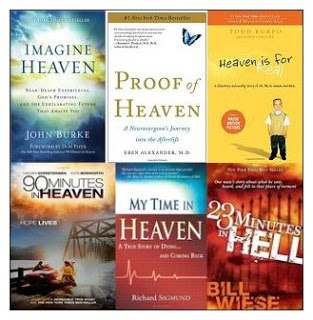
Leaving Christy aside for a moment, I’d like to focus on heaven tourism in general. It’s a cottage industry of late, many authors tout their trips to heaven, having claimed a visit there. Or hell, some have said they went to hell and returned to tell the tale.
Heaven is God’s abode. It is where he sits enthroned in majesty and power. It is where the holy angels worship Him, where the souls of the dead abide, where things are expressed and seen that no man may utter, as Paul noted in 2 Corinthians 12:4.
was caught up to paradise and heard inexpressible things, things that no one is permitted to tell
And yet, they tell.
Foremost, heaven is God’s abode. It’s where He dwells in His home.
Now, you, dear reader, have a home. You love your home. You pay for it, upkeep it, decorate it, raise children in it, have your life in it. As humble or as grand as your home may be, it’s yours and you are rightly proud of it.
Let’s imagine that you have a friend, maybe she lives across the country or she is an internet friend. She has never been in your home. She has never seen a photo of it. You’ve described it to her in words a few times, here and there but she has has no real knowledge of what your home is like in any real way.
Now let’s say that your friend has a popular blog with a million subscribers, or writes a book that sells millions of copies. She writes about your home. She writes that you have diamonds sewn into your curtains so as to make the sunlight twinkle as it streams in. You have gold faucets and a gold dipped bathtub, in which you bathe nightly in milk and honey. She writes that you have special light bulbs to make a lovely yellow-gold glow in the home, even though that costs you $1,000 a day. She writes that you have a thousand butlers lining the driveway to simply wave at you as you drive in, and an elevator pad to lift you and your car to the third floor of your home where when you step out, you are given champagne and a tiara served on a ruby-edged silver platter.
All these are fanciful lies, of course, but your friend wrote it anyway. She never referred to any of the letters you had written, describing your home the few times you mentioned it. She simply went forward and made up ridiculous scenes and wrote stupendously outlandish claims. Now she is getting rich from the lies.
How would you feel? Angry? Violated? Upset?
How does GOD feel when these people do that about HIS home? When people never consult the Bible, His love letter written to humankind, with the actual scenes from the Homeowner describing what it is like? How does He feel when people make money off their outlandish lies about His home?
We know the biblical reasons that the heavenly tourism books and blogs are wrong. No man has seen God…no man may express…No one who has No one has ascended into heaven except the One who descended from heaven… (John 1:18, 2 Corinthians 12:4, John 3:13).
I live in a two-room apartment all of 400 square feet. It is humbly filled with second hand furniture and hand me downs. I am proud of it and I like how it looks. I want it to appear homey and be comfortable in case someone comes over to visit. I’d feel angry and upset if someone wrote about what my home looked like if their writing was full of lies and delusions. That’s treachery. When such lies involve God’s home, it’s blasphemy.
What about respecting the honor and dignity of the Holy One of Israel? The Ancient of Days who sent His Son to die a cruel death and be separated from His Father and become a curse, so that He can make a way for us to be given a heavenly home? Do we disrespect it with fanciful tales of imaginary joyous reunions and large gates and sunlight on a hill? With lies and imaginings? Is this how we repay Him who is preparing a place for us?
Please avoid books and essays about visits to heaven. They are lies upon lies and they are not only unbiblical, they dishonor the Homeowner, our precious and loving Father God, His Son Jesus, and His Holy Spirit.
Christians today have many opportunities to attend any conference of one’s choosing. Might I say a plethora of choices?
There’s conferences for men.
T4G. Sing! MLK50. TGC West Coast. G3. Cutting It Straight. ShepCon. LigCon. Right Now.
There’s conferences for youth.
Passion. Urbana18. RiseUp. GraceLife Youth conference. Salt & Light. Momentum. Ignite. KingdomYouth.
There’s conferences for women (mostly false).
Living Proof Conference. Unwrap the Bible. IF:Gathering. The Word Alive. Women of Joy. Love Life by Joyce Meyer Ministries. Women of the Word. Women of Purpose. Extraordinary Women.
There’s conferences for (mostly) false teachers and (mostly) false Christians.
Bethel Conference. Catalyst Conference. Amplify. Charisma.
Of course there are many more. And many more on other continents. Conferences (and their simulcasts) are a thriving cottage industry in the global church. And of course each conference has its own claims of how good and necessary it is for you, the pastor/man/woman/youth/church planter/missionary/any demographic to attend.
The Outreach Summit is unlike any other church leader conference. Only at The Summit will you meet and hear from the pastors of the most innovative and fastest growing churches in America.
The Gateway Conference desires to share practical wisdom for cultivating real growth by …
MinCon quickly gained the reputation as a conference of excellence, offering an incredible hands-on experience at an affordable price for teams and churches all across the Pacific NW.
Catalyst West is a 2-day conference to help leaders like you build great churches, grow strong teams, and be a catalyst for change
We’ve gathered some of the nation’s best leaders to share their wisdom with you. (Small Town Pastor’s Conference has a list of leaders different from the other conference sharing wisdom with you…)
We’ve gathered some of the nation’s best leaders to share their wisdom with you. (Right Now Conference has different speakers than the other conference sharing wisdom with you…)
We hope that during your time with us, you will be able to relax, build new relationships, and leave more excited about this calling than ever before.
When you discover how to leverage your talents as an entrepreneur, leader, or pastor, you cultivate a more meaningful impact in your business or leadership endeavors. (This was a PASTOR’s conference…not a Google or Amazon business practice gathering, believe it or not)
Some of the ones I read sound like a business model more fitting for Google or AT&T than a church.
Is it too much of a good thing? Is it possible that there are too many conferences that, mixed with the good ones, the bad ones draw away congregants and introduce false notions? Can even the good ones be potentially problematic? I believe so. Though there are many good conferences, I believe the time has come to be more discriminating and skeptical of what today’s Christian conference is offering. Please bear with me as I share some thoughts on why many conferences can be dangerous to one’s spiritual health.
1. False confessions
A few years ago as I followed David Platt taking the reins of the International Mission Board as President in August 2014. Known for his dedication to missions, Platt was to speak at the annual Student Missions Conference at Urbana in St. Louis MO in December 2015 (as he usually does each year.) The conference is aimed at college students. Curious, I tuned in. The conference’s own language describes it as a “catalytic event” in a “sacred space”. A catalytic event means they want to use the speeches, emotional reactions from music, and teenage momentum to get attendees to DO something in missions. The conference is the catalyst for that. It’s their aim.
Though the conference is not aimed at non-Christians because it’s a mission oriented event and not an evangelistic conference, the organizers acknowledge that non-believers do attend. Therefore at the conclusion of the main event, speakers put out a Gospel call to make a decision for Christ. At Urbana 15, Mr Platt asked attendees who had “decided for Christ” to raise their glowsticks and wave them. It was later stated that 681 students did.
Is this how people come to the cross and enter the kingdom? By responding to a one-hour lecture and deciding, and waving a glowstick? Perhaps the Spirit did use the event to regenerate some, but in high-emotional and religious-pressured environments, at events where youths are separated from parents and other adults, is a concoction rife with potential for false conversions. I had a hard time believing that 681 people were converted at once, though @UrbanaMissions claimed 681 were by calling them new Christians. The same thing happens at the youth-aimed Passion conference. Photos, and more explanation about Urbana 15’s decisional regeneration and pronouncement of new believers, here.
2. False Doctrine
At far too many conferences lay the potential to propagate false doctrine. Churches are supposed to be tightly closed. There are membership standards, behavioral expectations, stringent qualifications for leaders, and biblical discipline. In the best of worlds, that is how it’s supposed to work. Because it used to be hard for satan to get into the pulpit, satan develops ways to get around that. The Sunday School curriculum, the Children’s Ministry leader, the book clubs for woman, the church library, parachurches. And now in modern times, with travel so easy – conferences. I don’t think I need to use many specifics here, you know what I’m talking about.
The ridiculous conferences are easy enough to spot, and even the solid ones have a hard time maintaining the gate these days, as the issue with Grace To You/Grace Community Church & TGC West Coast recently showed us. Executive Director of GTY, Phil Johnson, said of the of GCC Elders’ decision to bow out of hosting TGC West Coast’s “Enduring Faithfulness” conference was ultimately that,
Some of the seminars featured points of view or speakers that stand in stark opposition to what we teach at Grace Church and Grace to You. Other seminars seemed merely to miss the point of “enduring faithfulness” entirely, and some were also arguably tangential to any core gospel truths. We felt the seminars collectively failed to convey what is most necessary for cultivating true, steadfast faith.
3. Too Many Speakers to Vet
In the past, conferences used to feature just a few well-known speakers. By “well-known” I don’t mean celebrity pastors, but faithful pastors who have endured long and have a proven track record as to their doctrine. Nowadays, some conferences feature up to 200 speakers. While you could look up the keynote speakers to check, though that in itself is time consuming as the roster of keynote speakers grows, it is impossible to “vet” all the speakers of breakout sessions. So when one of the members of your church attends a breakout session, it could be led by someone who is teaching an unbiblical doctrine, or one that your church does not hold. As a matter of fact, given the times we live in and the methods satan uses, this is likely. In fact, this was one of the reasons that Grace Community Church elders decided to bow out of hosting The Gospel Coalition West Coast Conference. Though they had trust in the keynote speakers, a number of other speakers were added afterwards. As Phil Johnson explains, this was problematic.
Some of the seminars featured points of view or speakers that stand in stark opposition to what we teach at Grace Church and Grace to You.
Below on the left, a screenshot of the recent MLK50 conference speaker lineup, on the right, The Gospel Coalition West Coast Conference this coming October 2018. How is a parent/husband/discerning person supposed to vet all of them? Can’t.
4. Many Conferences Feature Stretched Complementarian Boundaries
One of the most hotly contested areas of doctrine in church culture (and secular culture) today is the role of women. The correct biblical stance is that women are not to be teachers of men, leaders over men, or pastors in the local church. They are not to have authority over men. (1 Timothy 2:12). However, women can teach children, or other women, or in a home setting as Priscilla did with Aquila. This tiny bit of leeway has given satan an inch, and he has taken it by a mile. I’ve noticed over the recent years how many women are now speakers at mixed-gender conferences. Young women at that.
While women are permitted to discuss biblical theology in a mixed group setting such as a Sunday school class, women teaching children or other women (Titus 2), or in a private setting such as with Apollos’ instruction that was gleaned from meeting with Priscilla and Aquila—biblical teaching, when among the church as a whole or a mixed audience should be led by men. It seems clear that Paul was addressing an issue that was taking place in the life of the church and needed to be corrected.
When it comes to teaching men in our present day, we have the conference culture that often stretches these complementarian boundaries. This is a dangerous practice, since conferences are designed to strengthen the church and to in many ways model what the local church should be promoting in their local assemblies—ie., expository preaching, sound biblical theology, and other important, if not essential, practices. Therefore, to have women stand and open the Bible and teach a group of men in a conference setting is not beneficial to the Church represented in the conference from many different local churches. Such stretching of the boundaries is a common practice in our day and we should be cautious when we see women teachers invited to speak to a mixed audience.
5. We are being made merchandise of
2 Peter 2:3 says that the false teachers will exploit the believers and make merchandise of us. Barnes’ Notes says,
Make merchandise of you – Treat you not as rational beings but as a bale of goods, or any other article of traffic. That is, they would endeavor to make money out of them, and regard them only as fitted to promote that object.
There are conferences that have a goal to teach well, and to serve hard. Shepherds’ Conference is one that I know of. But too often the case is the opposite. There is a reason many conferences’ blurbs sound like an entrepreneurial business advertisement- because they are a business. The larger the conference gets the more the organizers have to recoup money from renting the venue, paying accommodations and travel expenses, or the like. The false teachers flock there to flog their book, sell their latest book. Tee shirts, trinkets and more is all for sale.
I attended one conference where the food vendors inside the arena were selling food at fantastical prices. Simple game day type food like pizza and hot dogs were for sale at high prices. Perhaps the organizer had nothing to do with this and could not prevent it, but the atmosphere left one feeling, well, exploited. We had just arrived after a long drive, had no time to go anywhere else for food, and the conference was about to start. We were trapped and had no alternative but to pay the demanded prices.
Just as the money changers at the Temple began as a good idea, soon filthy lucre made its way into the courtyard and what started as a service soon became exploitation. It is no different now.
I think conferences can be great. Pastors can gather with other pastors and be refreshed. The ebullience of youth can accomplish much when properly directed. Woman believers, many of whom are stay-at-home moms, can collect with other women and be edified.
However there are dangers to be considered. When believers are away from their home church, especially youths and women, satan can enter in more easily. Remember what happens to the limping gazelle in all the wildlife programs. Separated out from the herd, they are vulnerable. (1 Peter 5:8)
False doctrine spread by false teachers or unknown or unvetted teachers can be propagated in their lectures or their books. These seeds of evil can be brought home and planted in the home church. Boundaries can be stretched, poor models of lifestyle presented, discontent sown. Please consider carefully when desiring to attend a large conference. Many are good. But of late, they can more often be an entrepreneurial business opportunity for the organizers, and you their potential merchandise … or spiritual target.
And whenever the harmful spirit from God was upon Saul, David took the lyre and played it with his hand. So Saul was refreshed and was well, and the harmful spirit departed from him. (1 Samuel 16:23).
Since the Lord rejected Saul as king, He withdrew His Spirit; and Saul received an “evil spirit.” The identity of this “evil” spirit has been disputed. Some believe that it was a demon. Others argue that it was a troubling spirit causing emotional disturbance (see Judg. 9:23). Some have suggested that the Lord permitted Satan to afflict Saul as punishment for his sin (see 2 Sam. 24:1 with 1 Chr. 21:1). What is clear is that this spirit was sent by the Lord (see 1 Kgs. 22:20–23) to show that Saul had been rejected. It caused Saul to experience bouts of rage and despondency. Christians do not have to fear that the Lord will remove His Spirit from them, since the Spirit is the believer’s permanent possession (Rom. 8:9, 12–17; Eph. 1:13; 4:30). Holman concise Bible commentary (pp. 114–115).
I wanted to note in this passage that the evil spirit came and went. The situation was different in the Old Testament, in that the believers were not given the Spirit to indwell them. In the NT, we are. Once indwelling, we can never again be lost nor will the Spirit depart. However if we are is absent the Spirit, no amount of moralizing behavior will keep the evil spirits away. Eventually they enter in. Or eventually, they return.
You see this expressed in the New Testament verse of Matthew 12:43-45.
When the unclean spirit has gone out of a person, it passes through waterless places seeking rest, but finds none. Then it says, ‘I will return to my house from which I came.’ And when it comes, it finds the house empty, swept, and put in order. Then it goes and brings with it seven other spirits more evil than itself, and they enter and dwell there, and the last state of that person is worse than the first. So also will it be with this evil generation.
The house being swept is the person deciding to straighten up and fly right. “I’ll be good!” they say, “I’ll be moral.” they promise. But without the Spirit’s seal in us, the evil will return at some pouint, and the person will be even worse off.
Think of drug addicts who leave rehab only to do worse drugs in their relapse. The drunk who had yet to hit bottom but hits a new low on the way down. The dieter who puts on more weight after the diet than before. The flirt who acts on his flirtation this time. The unaided flesh can’t be restrained.
As for Saul, Matthew Henry said:
How much better friends had they been to him if they had advised him, since the evil spirit was from the Lord, to give all diligence to make his peace with God by true repentance, to send for Samuel to pray with him and to intercede with God for him! then might he not only have had some present relief, but the good Spirit would have returned to him. But their project is to make him merry, and so cure him. Matthew Henry’s commentary on the whole Bible
Curing your evil without the Spirit is hopeless. Saul did not seek Him, and attempted to use music as a symptom reliever. Play the lyre, sweep the house, try and try again. You can only cover up symptoms for so long. We all need the only cure, the final cure: Jesus and His Gospel.












 the-end-time.org