Posted in christian, encouragement

The Autistic Christian, part 3

The Autistic Christian, part 1
The Autistic Christian, part 2

As an autistic person, albeit high functioning, life is a struggle. The world is awesome in its complexity. It

By Michael, Creative Commons

contains all the customary codes of social conduct, a myriad of occupations and vocations, behavioral nuances of every description, emotional obligations, and ethical standards. All of those escape me.

In addition, I’m afraid of or intensely dislike the color orange, the telephone ringing, conversation, interruption in my routine, loud noises, certain locations, running into people I know when I’m out of the house, Jiffy Pop, raucous laughter, makeup, fingerpaint, non-symmetrical things, unanswered questions, unfinished conversations, any and all games, unsolved mysteries, and so on. I have issues with sympathy and empathy, I’m a bundle of nerves and I need notes in my pocket to help me remember what to say when I am one-on-one. I’m a loner, eschew fellowship, people in general, and like to study one subject until I exhaust it.

I rigidly adhere to routines, demand my apartment looks a certain way with everything in its place, and only eat a limited range of foods. I haven’t been out of my geographical range for five years.

For 43 years I never knew why I thought the thoughts I had, or behaved the way I did, I just knew I was different. I was a disappointment to loved ones, a mystery to teachers, someone pitied by my friends.

Public Domain

I am autistic.

In the previous two essays I related my life from birth to 2004 when I was 43 years old. I was not saved and never had steady religious instruction nor attended church in any meaningful way. I was an enemy of Jesus, a craven sinner.

I was lost.

In December 2003 I was saved. In only two weeks, on January 2004 I made some important decisions. I bought and began to read the bible. I grew rapidly in Christ and 18 months later in mid 2006 when I finished my work in Maine I moved to Georgia. I began attending church.

In 2008 I was faced once again with a conundrum of how to maintain myself financially and professionally. Just like going to college in 1978, after my divorce in 1986 and after my other divorce in 2004, I was alone and needed employment in order to support myself. I had sold my business and was living on the proceeds and also supplementing my income with freelance writing for the daily newspaper here in GA. My savings was dwindling fast. I needed a steady job.

Frankly, I was frustrated with myself. Why was it that I never seemed to be able to maintain long-term relationships? Why was it so tough to support myself? Why did I put something on the stove, wander off, and burn it so the smoke alarm goes off and the pan is ruined? Like, every night? Why did I forget to pay bills? Why did I dread being with people? Why was I so rigid in my routine? Why was everything so hard?

Did not he who made me in the womb make him? And did not one fashion us in the womb?
(Job 31:15)
I decided to go back to the last job I’d formerly had, in 1990, teaching. I added my name to the sub list and began substitute teaching in my county. The next year I was hired as a Special Education para-professional.

It was through my job I discovered my autism. In working with autistic children, and in studying the Encyclopedia of Autism, and speaking with the professionals I worked with, I finally understood the answers to all the above questions, and more.

However, now I had different questions.

Ice Crystal by yellowcloud

Why did God make me this way? What was it about my personality and brain that could glorify Him uniquely? What were my spiritual gifts?

Being in Christ meant that I was at long last docked in a world where things finally made sense. I finally had found a worthy Person to serve: Jesus. Truth was the highest priority. Finally, the unvarnished truth was valued! Holy living by His set of standards was also the priority. The rules were clearly laid out in the bible. I love that. I have a manual that explains how to love, love, relate, and worship!! It’s all written down! No more guessing for me, no sir. And… at long last I’d found a subject I couldn’t exhaust. God is infinite and the bible is an infinite training manual. (2 Timothy 3:16).

While media often depicts an autistic person obsessively studying and talking about one subject their whole lives, like trains for instance, all subjects are finite. Eventually one reaches the end of the road with learning it. Or at least I had gone as far as I could given the resources I’d had. For example, I earned a 4.0 in my Masters program of Literacy Education and the only next step I could take was obtaining a PhD, something that would require a great amount of expense and travel for over two hours to the nearest University that offered one in my area of learning. I exhausted journalism, mollusks, heraldry, King Arthur, and education, topics I’d studied at different points in my life. There is no new information to be added to the collection of information about King Arthur, once you’ve studied it all, you’re done. This is disconcerting to an autistic person. I constantly worried about the end, and what to study next.

The bible is infinite!! There never will be an end to it! What a relief!

In addition, the bible lays out clear rules for living, and many how-to’s. The routine of going to church is a comfort.

Thus says the Lord, your Redeemer, who formed you from the womb: “I am the Lord, who made all things, who alone stretched out the heavens, who spread out the earth by myself, (Isaiah 44:24)In actuality, Christianity seemed like a perfect fit. In secular life, there are many speculations from unsaved people about the autistic brain and whether an autistic person can accept religion.

Autism May Diminish Belief in God
People who have more traits of autism are less likely to believe in God that those that do not have such traits, according to new research that suggests that belief is boosted by the ability to see into the minds of others. This ability, often called theory of mind, or mentalizing, is diminished in people with autism spectrum disorders, a cluster of conditions marked by communication and social difficulties. Because people’s beliefs in God are often marked by feelings of having a personal relationship with the deity, prayer and worship may require a sense of what God could be thinking, researchers report Wednesday (May 30) in the journal PLoS ONE.

Religious Belief Systems of Persons with High Functioning Autism
Persons with autistic spectrum disorder were much more likely than those in our neurotypical comparison group to identify as atheist or agnostic, and, if religious, were more likely to construct their own religious belief system. Nonbelief was also higher in those who were attracted to systemizing activities, as measured by the Systemizing Quotient.

HOGWASH!

Though those articles claim that it is harder for an autistic person to believe in God, personally I believe it is easier. First, the Lord put eternity in the hearts of all men (Ecc 3:11), and “what can be known about God is plain to them, because God has shown it to them”. (Romans 1:19). So in that respect, it is easy to believe in God. But because men are depraved, they suppress what they know about God in unrighteousness. (Romans 1:18). So everyone, autistic or not, has an innate sense of God’s existence simply by being alive on His planet.

For you formed my inward parts; you knitted me together in my mother’s womb. (Psalm 139:13)Secondly, I mentioned that I spent a great deal of time in the natural world. As a child growing up it was where I went to decompress. I also lived on a sailboat for two years, and in a camper van camping outdoors for three months across country. I traveled a lot and hiked, walked, or otherwise saw many amazing natural sights. It was obvious and logical to me that this world was not an accident from a big bang. It was created. And since it had to have been created, God must have created it. Logically, this conclusion seemed to me to be almost a given.

Thirdly, even though God obviously made the world, I was not so sure about the name of Jesus. God was one thing but Jesus and the whole blood, wrath, and sin thing was another. However every person on the planet who lives nor or who ever lived, except for Jesus, has a sin nature and denies Jesus and their need for a savior as a matter of course. (Romans 3:11; Psalm 53:2). So no one comes to saving grace unless the Spirit draws him, autistic or not. Hence the hogwash comment, scientists. (1 Timothy 6:20). No one can believe in Jesus but everyone can plainly see there is a God (Romans 1:18-21).

I see now in hindsight that Jesus gave me the talent of writing, honed over many decades, so that after I was saved, I could write about Him. He gave me and honed in me the talent of speaking/teaching so I could support myself. When the time came, He gave me the spiritual gift of teaching. (Romans 12:7).

What a grand thing it is as an autistic person to be given an almost inability to lie and a severe love of the truth, and then come into His Truth so as to proclaim it! This is the gift of exhortation. (Romans 12:8). And as an autistic person constantly researching my favorite subjects, I have a tremendous ability to quickly sift through massive amounts of information and dispense with the invalid or useless and detect the useful. Also I can organize massive amounts of information into a coherent progression of thought. And thus He gave me the spiritual gift of Distinguishing of Spirits, or discernment. (1 Cor. 12:10).

I am a spiritual snowflake.

John MacArthur has some thoughts on the spiritual gifts and the dispensing of them

Josef Reischig, Wikimedia CC

I believe that every Christian is a spiritual snowflake. Just like you are literally the only one of your kind, even if you’re a twin you’re different than your twin. Your fingerprints are different, your teeth are different, and other parts of you are different. Every one of us stamped with absolute uniqueness, we are all creative idiots, in that sense. We are peculiar, we are unique. There’s no one like us. We are spiritual snowflakes. And I believe that when the Spirit of God gives to every believer gifts, He gives them individually to each believer absolutely peculiar to that believer. 

You say, “Well, you know, there’s only about a dozen of them listed here. How you going to divide a dozen gifts up among millions of Christians and make them all different?”

Let me tell you how. I believe you have a list of gifts in Romans 12, a list of gifts in 1 Corinthians 12. The fact that they are different shows how much latitude there is in their definition. Paul lists some in the Roman passage, he lists some in the Corinthian passage and there is some duplication and some non‑duplication. And it’s almost as if he’s just suggesting broad categories. The best way to understand it would be that they’re like colors on a palette and each gift would be a color and as God takes His brush and paints you, He dips into different color categories and paints you a unique color. You’re not the same as someone else. Even if you had fifteen people or twenty or five thousand who all had a gift of teaching, you could have them all teach and they would all teach differently, uniquely. (source)

As the Spirit does with all people, He gives gifts in various amounts to glorify Jesus so that each one of us uniquely can exalt Him through our walk.

Certain of my struggles in Christianity might be unique to autism but the fact that I am a human being who struggles with sins or with obedience to Jesus is not unique at all. We all have that, no matter who we are. Where the bible says to speak the truth (Ephesians 4:15a) I can do this even when it is uncomfortable. However the verse says to speak the truth in love, and this is harder. I am unfamiliar with the usual expressions of love and I have to work a little harder to be sure not to be ungentle.

2 Timothy 3:14-17 says to study the bible, which is a great and easy thing for me to do because I love to have a study-hobby that will be ever changing and inexhaustible … now with the eternal benefit of learning about an infinite Savior, but it also says to fellowship and meet together, (1 John 1:3, Hebrews 10:25) something that is very hard for me to do.

So I struggle with fellowship, restoring gently, and mercy, but what human doesn’t struggle with some aspect of church life, obedience, or sins? Some struggle with coveting, others lying, or forgiveness. All humans find certain aspects of the rules for holy living difficult. This is a human thing, not necessarily an autistic thing.

My LORD made me. The same hand that knitted me together, autistic brain and all, also stretched out the universe. Since He made me, and all that He does is Good, then it must be good that I am the way I am. The only thing that remains is to revel in His goodness and seek ways to exalt and honor Him.

God created every snowflake in this scene unique, and perfect in its uniqueness. We are all on the same road to glory, which ends at the feet of Jesus.

Iain Thompson, Creative Commons

Who am I to question His knitting of me? He put me on this earth, HIS earth, to enjoy His creation, to live and develop talents, and at His timing to be brought into the Kingdom a repentant sinner so as to glorify Him by the gifts He gave me. It does not matter who is male or female, who is young or old, who is gifted with mercy or who is gifted with teaching. It does not matter who is autistic, who is a paraplegic, who uses a cane to walk into church and who bounds up the steps with energy. It does not matter who was saved young and who was saved old.

There is neither Jew nor Greek, there is neither slave nor free, there is no male and female, for you are all one in Christ Jesus..” (Galatians 3:28).

In Christ, I am not autistic. The only label that eternally matters is that I am called a child of the Most High God. What a glorious label!

for in Christ Jesus you are all sons of God, through faith. (Galatians 3:26)

~~~~~~~~~~~~~~~~~~

Further reading

The Autistic Christian, part 1
The Autistic Christian, part 2

The Christian Institute on Disability 
How should Christian parents respond if their child has a learning disability? 
What effects do conditions like autism, attachment disorder, ADHD, etc., have on the Christian life?
 

Posted in christian

The Autistic Christian, part 2

In part 1 of The Autistic Christian, I’d shared about my life from birth to high school. This part will be about adulthood, relationships, and employment for the autistic person. Part 3 will be the Autistic Christian. The Lord made me this way and gave me spiritual gifts uniquely formed and perfectly suited for an autistic person to glorify Him. I don’t normally like to talk about myself. Rather, it’s all about Jesus. But I’ve looked for resources about the autistic Christian and have found very little. What I did find was not helpful. Therefore, in the interest of perhaps encouraging someone else, I’ll speak about my experience.

~~~~~~~~~~~~~~~~~~~

Toward the end of high school I’d had a growing awareness of other people in relation to myself. To put it more bluntly and truthfully, I became aware that other people existed. More than that, they mattered. Autistic people know there are other people, of course, it’s just that we aren’t aware of our own impact on them nor of them on us. My constant headaches and stomach troubles were physical manifestations of the nervousness, worry, and stress I felt being among people. I can’t make conversation, my conversational topics differ from most people, and I hate chitchat and greetings/goodbyes. I am unable to screen out most stimuli, so colors, emotional faces, sounds, and lighting impact my ability to speak casually. All this adds up to the fact that I am unable to understand how to interact successfully. Cognitively I was unaware of the fact of feeling the stress, nor did I understand why I felt like I did. Hence, the physical pain.

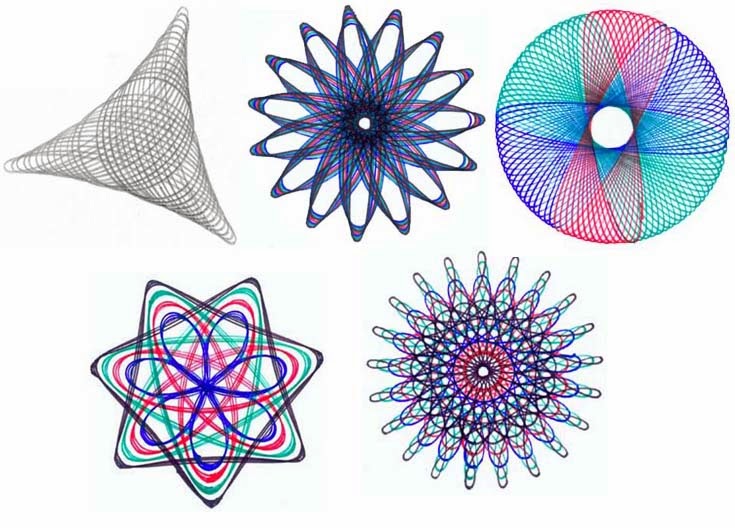
It’s like Spirograph.

Spirograph: Wikipedia commons

Spirograph was invented in 1900 but released as a children’s toy in 1965. As an autistic child, I saw people each as one of the above designs, and as an island unto itself. As an older teen and young college adult, I began to understand that I was but one point or dot within each design. I was part of a complex system, traveling in circles, crossing paths with others, and I impacted them and they impacted me. This was a problem.

In choosing which college to attend, I had different criteria than non-autistic people. I wanted to go as far away from my home base as possible, yet stay in New England. I wanted the distance because I thought that all the bad memories and crushing events were because everybody where I lived was the problem, and if I went to a new place, all would be well. The staying in New England part was because I instinctively recognized that going to a completely new geographic area would be too much to absorb. There would be a new climate, new accents, new flora and fauna, new foods, etc. New England was safer. I chose a state university because I wanted a large population of people around me. It is easier to hide in a crowd than in a small group. So I chose University of Maine, college population 11,000.

College was a shock. It was a shock because I had all of the same social and emotional problems I’d had in Rhode Island. The problem was me and I can’t outrun me, but I didn’t know it at the time. So I kept on having headaches and stomach aches.

In addition, it was shocking because now I had to do for myself what my mother had done for me for 18 years: feed me, get me clothes, and provide a safe haven into which to retreat. In this aspect, autistic kids are the same as NT kids. We all have these first-year college issues, just different flavors of them. Feeding was the least problem. I lived in the dorms, and I bought a cafeteria pass. If I showed up at the right time the lunch ladies would feed me. Even with my food issues I’d find something to keep me alive. Because stores were too overstimulating and malls (just being invented then) were anathema, I decided I’d keep the clothes I had and be very careful with them. Of course, I hadn’t counted on gaining the “Freshman 15” so when my pants got too tight I found a small thrift store in the opposite direction people usually went to get clothes. Instead of Bangor, I went to Old Town.

The safe haven was an extreme issue. It was a time of America’s colleges and universities being overcrowded. At the end of WWII a baby boom occurred. My generation (1960) was the tail end and we were the last of the big post-war baby group to go to college. I was in an overflow dorm room off-campus with two other girls. I’d never lived in the same bedroom with someone before. Suddenly there was no safe haven.

An Autistic person absolutely requires a place to go and reduce stimuli. We literally cannot screen out all the world’s noise, smells, sights, sounds. It all goes in and through us like we’re sponges under a fire hose. But in my room there were two other girls playing music and covering their beds with bedspreads in horror colors (for me, it’s orange), the entire dorm was a teeming mass of loud, drinking, horsing around kids.

Thankfully the overcrowding evened out by mid-semester with kids moving or dropping out and I was moved on-campus to a room with an older roommate who had friends in other dorms where she went most of the time. Phew.

Academics were a dream because once I got the basic required classes over with I could elect what I wanted to study. For me that was liberal arts, English, history and the like. My hunch about hiding in plain sight was correct, no one noticed me. Lecture halls were large with 200 or more students and I didn’t have to say a word, just show up and listen. I was used to being on my own and managing my time so structuring study times wasn’t hard. I didn’t engage in extra-curricular activities so that was that. By sophomore year I felt that maybe I could do this living in the world thing.

I’d said in part 1 that high school dating was too stressful and was fraught with issues I couldn’t handle. Social conventions like conversation are hard for me to engage in. Small talk and chitchat are ridiculous wastes of time. Conversational greeting and closing language is superfluous. Talking about any subject except the one I’m currently entranced by is not gonna happen. I’m a dream date, right?

I met a man in the first dorm I’d lived in and by sophomore year we moved in together. (I was not saved by Christ until I was 43 years old). That was occurring societally a lot by 1979, 1980. People lived together. We found an efficiency apartment adjacent to the campus which was cozy, found some bare furniture and a 9 inch tv, and with cable’s invention, we were all set, domestically.

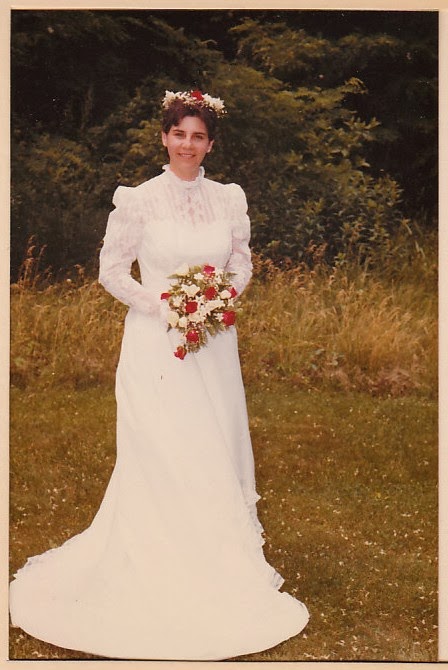
I nixed the veil. Nothing can be on my face

An autistic person does have emotions, we just express them differently. We handle relationships differently. While it is hard to feel empathy or sympathy, we do feel extreme loyalty to those with whom we decide are safe to love. My kindergarten teacher was one. The one friend in high school was another. Now this man.

I finished college and we got married. Of course I’d chosen someone unsuitable for me. You saw my decision-making process for college. It was the same with relationships. I had a wrong set of criteria. I thought people were basically mix-N-match, all the same and any relationship could be handled logically. Anyone who is married knows this isn’t true.

We moved a bit south in Maine, found jobs and began adult life. My goal was to get a Masters and a PhD and teach college. Several of his family members were teachers and they encouraged me to get a job substituting while I saved up for graduate school. It turned out I could teach well and connected with children admirably.

An autistic person lives for information. Information is king. We seek patterns in the world. Discovering about Fibonacci’s sequence was a delight. Reading Flatland was an eye-opener. I thought if I chronicled it enough that a pattern would emerge. I felt if I knew enough I could control things. The most loving gift I could give someone was information that would help them. That is one reason why we talk a lot to certain people. Here is how a situation might go. If a co-worker has a sick child in the hospital, and I knew that the child loved Legos, instead of the usual comforting chitchat non-autistic people say like “I’m sorry your son is in the hospital, how is he doing?” I might say,

“A new Lego man was just released by Hasbro last week.”

In my mind, if the sick child loves Legos, and I tell the mom that a new piece was available, she might go to the store and buy it and give it to her son, who would then become happy. I see the connections clearly but most often, the person I’m trying to converse with doesn’t. What I say is just a weird non-sequitur.

In 1982, after one month of general subbing, my principal asked me to substitute for a 5th grade teacher who was going to be out for the rest of the year. (She had cancer). The next year he gave me a job as a kindergarten parapro. A year after that, I had earned my teaching certificate and taught first grade.

Being regularly employed is hard for the autistic person. Social rules mean getting along with a large array of people, many of whom are different from you. It means not speaking up when something is stupid, especially to your boss. It means doing things that are not useful, if you want to stay employed. It means being nice in the way the world wants us to be nice. That meant putting a lid on talking about our favorite subject, not telling your boss he’s wrong, and even our humor isn’t appreciated. Once one of my bosses told me that my humor at staff meetings wasn’t understood or accepted by my peers and basically to shut up.

For the record, I got the hippo joke. I thought it was funny…except he should have said stones, not marbles. It is one of my autistic traits to constantly correct or edit. Things have to be right.

An autistic person adheres to certain qualities above all else, or at least I do. I have to be careful about making generalities because autism is a spectrum and my placement on the spectrum is different from another’s. My peeves are correct information, justice, truth, and patterns.

In this paper, “Living the categorical imperative: autistic perspectives on lying and truth telling,” it is stated of autistic people, “Lying is a common phenomenon amongst human beings. It seems to play a role in making social interactions run more smoothly. Too much honesty can be regarded as impolite or downright rude. Remarkably, lying is not a common phenomenon amongst normally intelligent human beings who are on the autism spectrum. They appear to be ‘attractively morally innocent’ and seem to have an above average moral conscientious objection against deception. … From a care ethics perspective, on the other hand, a way should be found to allow the high-functioning persons with autism to respect the feelings and needs of other persons as sometimes overruling the duty of truthfulness.”

Ha ha, you can try, academic person, but nothing overrules the duty of truthfulness.

I learned however that bosses or co-workers don’t appreciate it when you tell them they are doing it wrong. While some lying is expected, (“Yes, you look great in that dress!”) it is impossible for us to do. If you ask me a question I’ll answer plainly and truthfully. (“No, that dress is a waste of money and you look fat in it.”) I remember my mother asking me what I wanted to major in and be when I graduated. I said “Maybe a diplomat.” She laughed so hard she doubled over. I was offended at her laughter and I asked why she thought me being a diplomat was so funny.

“Because you’re the most tactless person I ever met.”

This week a sick co-worker said “I feel terrible.” I said, “I know. You look horrible.” I still lack tact but there are occasional successes when I DON’T say the thing I want badly to say. Not that time though.

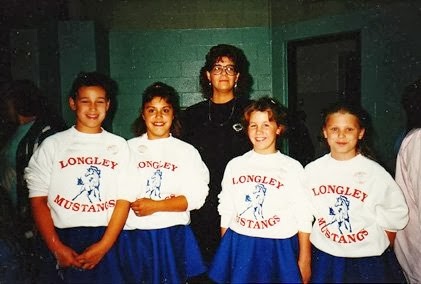
My old school with some of the school’s cheerleaders.
I taught 4th grade at that time

Teaching was a good profession for me because I could deliver information to children, who were also brutally honest, but the colleague and boss thing was problematic. So was the husband, we divorced in 1986. He had an affair and left to marry another woman. During the in-between time of finding out and not yet divorced, it was easier for me to live with the adultery than his  deception about it. The lying was the deal breaker. I cannot abide liars. If information is king, and truth is to be told above all else, then I have no patience for false information. The worst thing you could possibly do to me is lie.

In 1990 I quit teaching. It was the last time I was regularly employed in a system or corporation (my brief foray into retail was a huge fail) until 2008. I lived by reducing my expenditures and freelancing, either writing or research. I also married again in 1994, this time to a rich husband. We divorced in 2004, but at least it kept me alive until I figured out how to live on my own. This is a constant struggle for an autistic person, especially because employment is so difficult to maintain. As a result, we often go into relationships for the wrong reasons. Parents of autistic kids, watch for that. LOL, ALL parents have to watch for that, don’t they. Autistic kids are the same as NT kids in many ways.

For the third time, (1978, 1986, 2004) I was adrift in a world I didn’t understand and didn’t understand me. I wanted to be where there was truth and justice above all else, where relationships would be based on externally known and mutually agreed upon truth, relationships were based on mutual trust and an unalterable set of rules, where the rules were laid out clearly and concretely, where I could speak the truth and it would be appreciated, and where the subject I study would never be exhausted. You see where this is going: Coming up, part 3: The Autistic Christian.

~~~~~~~~~~~~~~~~

The Autistic Christian, Part 1
The Autistic Christian, part 3

What is Autism?

Posted in asperger's, christian

The Autistic Christian, part 1

The Autistic Christian, part 2
The Autistic Christian, part 3

~~~~~~~~~~~~~~~~~

I am an Asperger’s person. Aspergers is part of the Autism spectrum. Wikipedia defines “A spectrum (plural spectra or spectrums) is a condition that is not limited to a specific set of values but can vary infinitely within a continuum.”

When a person has pneumonia, they have a discrete set of particular symptoms. Autism isn’t like that. In the past, and perhaps even today after years of education about what autism is, people think of an autistic person as only the uncontrollable person wearing a helmet banging their head against the wall and screaming loudly. Not so.

Autism spectrum disorder (ASD) and autism are both general terms for a group of complex disorders of brain development. These disorders are characterized, in varying degrees, by difficulties in social interaction, verbal and nonverbal communication and repetitive behaviors. With the May 2013 publication of the DSM-5 diagnostic manual, all autism disorders were merged into one umbrella diagnosis of ASD.” (source)

So now I guess I should say I’m autistic, rather than Asperger’s. This will be a multi-part series about autism and the Christian, from a first-person point of view. This part is birth through high school. Part 2 will be about adulthood, relationships, and employment for the autistic person. Part 3 will be the Autistic Christian. The Lord made me this way and gave me spiritual gifts uniquely formed and perfectly suited for an autistic person to glorify Him.

I don’t normally like to talk about myself. Rather, it’s all about Jesus. But I’ve looked for resources about the autistic Christian and have found very little. What I did find was not helpful. Therefore, in the interest of perhaps encouraging someone else, I’ll speak about my experience.

~~~~~~~~~~~~~~~~~~~~~

I was born in December 1960 four weeks premature at a little over 3 pounds. I was in an incubator for a month. I had pneumonia and a host of other issues. It is a wonder I survived. The Lord knew.

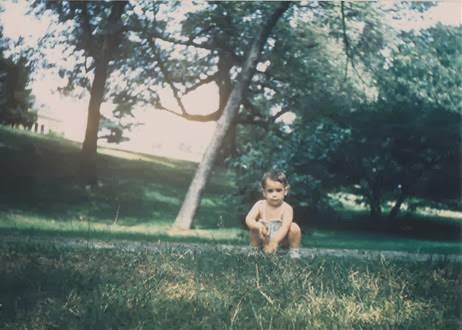
18 months old. I always liked the feel of grass under my feet

Growing up in the 60s was an interesting experience. My very first memory was of the Beatles making an appearance on the Ed Sullivan Show. I had turned three years old just 8 weeks prior. I got all ready, laying on the floor on my tummy, with a pillow and my chin in my hands. When The Beatles came on, I remember being aggravated that I couldn’t hear the music. Everyone was talking about The Beatles and I’d wanted to see what all the hubbub was about, but the screaming from the audience kept me from hearing the actual music. I thought that was stupid. Ed Sullivan should quiet them down. I thought that people should just be quiet and assess things and get on with it. The silly girls screaming and covering their faces and crying were dumb. Plus, they scared me.

Right off the bat there are three issues that I still deal with today:
–in that situation, it wasn’t logical to scream
–expressions of extreme emotion are difficult or even scary to be around (twisted faces, threatening hand gestures, tears)
— excessive noise

I think it’s funny that my very first memory is one of being irritated at the world, people’s behavior, and how things were being run. It is an attitude that carries through to this day, 50 years later.

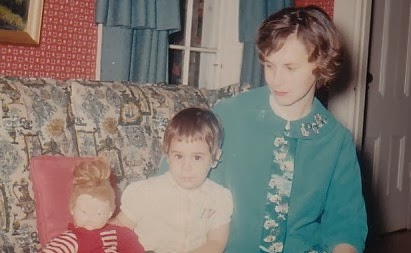
Age 3 in the house I lived in until age 8, with mother

By age 8 I was experiencing massive health issues. I had debilitating migraines and terrible stomach aches. Autistic people often are diagnosed with gastrointestinal issues, and the headaches were from being unable to screen out all the stimuli that was flowing through my brain.

Many people with an autism spectrum disorder (ASD) have difficulty processing everyday sensory information such as sounds, sights and smells. This is usually called having sensory integration difficulties, or sensory sensitivity. It can have a profound effect on a person’s life.

Our central nervous system (brain) processes all the sensory information we receive and helps us to organise, prioritise and understand the information. We then respond through thoughts, feelings, motor responses (behaviour) or a combination of these.

We have receptors all over our bodies that pick up sensory information, or ‘stimuli’. Our hands and feet contain the most receptors. Most of the time, we process sensory information automatically, without needing to think about it much. People with sensory integration difficulties – including many people with an ASD – have difficulty processing everyday sensory information. People who struggle to deal with all this information are likely to become stressed or anxious, and possibly feel physical pain..” (source)

My parents took me to doctor after doctor, psychiatrists and psychologists and counselors, and if there had been witch doctors they would have taken me there too. I even had a spinal tap, and the pain from that gives me shudders to this day. I asked my mother what the result of all this was and she said one word:

Psychosomatic“.

The definition of psychosomatic is (of a physical illness or other condition) caused or aggravated by a mental factor such as internal conflict or stress

Age 8. See the smile? I’m ecstatic.
It’s the beach!! And the soft robe! We summered on Cape Cod.
The water in front of the sand bar was always warm.

and that was not far from the truth of what was known about autism in 1968. In 1968, autism was not even included as its own diagnostic category in the second release of the DSM. So when I asked my mother what it meant, she said,

It’s all in your head.”

I knew it was not all in my head. I knew it. I knew what I was experiencing was real, and to me, it was normal. Everything was very logical, usual, and in fact, I was perfectly content. After all that pain and endless doctor visits and intrusive questions, shots, questionnaires, and time spent, they still couldn’t tell me why I had such terrible headaches and stomach-aches? Immediately I gained a disdain for doctors and I distrusted them from that point on. This is an attitude that carries to this day. I distrust any and all doctors.

Lunchtime in the cafeteria was a nightmare. It was loud and the unpredictable movements of 300 kids in one small space was scary. I hated the food, too. The foods I’d eat were extremely limited. I rarely ate and I remember the adult duty teacher always walking by and tapping my tray and saying “eat, eat.” I’d come home and my mother would ask what I ate and I’d describe it. However I described it as it looked to me, not as it actually was. So I’d say something like, the meat was gray and hairy and there was something blue and gross and it all tasted bad. I said all this with great conviction. Enough days of that and my mother had a conference with the school lunch ladies and they assured her that all the food was normal.

At home I’d drive my mother nuts at dinner time. For example, if she served chop suey I’d patiently pick out all the hamburger before I’d eat a bite. Of course everyone was done eating long before and I’d still be sitting there picking out the hamburger. She would yell for me to just eat it. I thought the logical thing to do would be to serve me some without the hamburger. But there you go.

Food was always an issue. In High School all us kids would go to the creamery after the movie and get sundaes. I didn’t like ice cream so I’d get an English muffin and hot tea. They called me weird but to me it was a perfect meal. Picture a gang of boisterous teens sitting at the ice cream counter laughing uproariously and me sitting in the middle of all that sipping tea and looking perplexed and/or grumpy and not saying anything at all the whole time. To this day I have a limited number of foods I’ll eat and I am very, VERY happy eating the same thing over and over every day.

Not my school but a cafeteria in 1967. Source, OK to reuse

After the doctor debacle, my parents kind of got tired of trying to figure out what was “wrong” with me and they pretty much gave up and left me to my own devices. Which to an autistic kid, is heaven. Those were the days when kids were able to roam far and wide in the neighborhoods, fields, and streets at will and without adult supervision until streetlights came on and moms on porches hollered for the kids to come home. I’d spend great amounts of time in the cemeteries in back of and in front of my house (it was quiet there), in the brook dabbling my feet in the water and looking at tadpoles, (rhythmic water sounds are relaxing) or reading under a tree in the woods behind my house. I liked studying the natural world and being in it. I was alone and I was content. But my parents worried I had few if any friends.

I was content alone because I’d do the same thing over and over in the same way at the same time every day. I read every Nancy Drew book in order and when I was done I’d read them again. I’d lay on my bed under the eaves and reach up to trace all the wallpaper flower patterns with my finger. I had a routine that nobody else understood and finally they gave up trying to get me to explain it. It was my security blanket, an island of safety in an insane world.

The rest of my elementary years were full of cycles of homework, teachers, recess (which I couldn’t see the point of), Phys Ed (ditto) and phrases overheard at conferences such as “Could try harder” “has more potential than she reaches” and “no affect.”

Since age three when I remember my brain waking up to coherent thought, I classified information, people, and experiences as useful, or not useful. Everything has a function and if it wasn’t useful there was no point in trying to get me to go with it. For example, screaming audience members at the Beatles concert on Ed Sullivan was not useful. Algebra was not useful. For the love of Pete, what is the point of tetherball?? And since everything has a function and if the thing, information, or person doesn’t function in my world by being useful, there is no point going on with it. End of story. The word “stubborn” came up a lot when adults referred to me. I tuned it all out.

My sister’s baptism. It’s not that I never smiled,
it’s just that I forget to smile. My resting face
always looks like this unless I animate it

No affect (AFF-ekt) meant that I rarely had an expression on my face. It simply wasn’t animated. I never looked happy, even though I was inside. As my elementary years grew to my middle and high school years, many people would tell me, daily, “You look sad.” It drove me crazy. I was FINE. I felt good, normal, content. But the problem was, my face didn’t reflect any of that. Even today my resting face looks somber when drained of emotion. And as an aside, looking at other people’s faces when theirs is full of emotion is scary, difficult, and repellent. To this very day. I close my eyes a lot at church, a place where people tend to get emotional and cry.

As for no affect, sometimes today as an adult when I forget to animate my face, people think I’m angry. This isn’t usually a problem for me, because I don’t care what people think, except at work. (In another part I’ll discuss the adult autistic person and employment). I came to understand that people have feelings that get hurt and I don’t want to hurt the feelings of my co-workers, so I try to remember to be animated. Sometimes I carry a note in my pocket that says how to look during certain situations. I dream about working where there are only autistic people and no one has to worry about feelings or if we do, then we just logically explain whatever emotional misunderstanding occurred and I know the other person will understand…

In high school things began to change. I became more aware of myself compared to how peers were feeling and thinking. I began to see I was “not normal.” My mother used to say I was not normal but I dismissed those comments as extraneous. Of course I was normal. Since I knew I was normal, so I decided the rest of the world was not normal. But in High School with a larger school population of kids and independent social activities away from home, I saw that I had few of the same interests other kids had and they acted much much different than I did. If I was at a friend’s house, her phone rang constantly. My friends would talk and laugh and it would all be so easy for them. I never knew what to talk about and my phone never, ever rang. This was perplexing but not especially worrisome.

The ‘no facial affect’ was still an issue. There was one High School counselor who tried to get my parents to pay attention, saying I was depressed. I must have seemed so, a hulking, ungainly, uncoordinated child with no friends moping around the school with a grumpy expression, sitting in the courtyard bench looking at the trees for long periods… lol. I didn’t like school dances (too loud, also too much emotion). I hated pep rallies (LOUD), football games, hockey games, basketball games (what was the point?) or extracurricular activities (I had more fun by myself). I tried dating. It didn’t go well. There were too many social conventions and emotional nuances for me to process, so I gave it up until a later time when I could handle it better.

I remember once as a teen having a fight with my mother. She was furious with me about something, and got right up in my face. Excessive facial emotions on other people at a distance are hard enough to deal with but inches away was too much to bear. I closed my eyes in order to screen it out and so I could listen to her better. From her point of view I was being completely disrespectful. She got even more angry and smacked me across the face so hard my glasses flew off and landed in the kitchen sink garbage disposal. Being a parent of an autistic kid must be very hard.

The awkward teen years. These are very difficult years
for any child but as an autistic kid, they’re torture.
Social expectations are more demanding, it’s harder to hide,
and those hormones make emotions very hard to deal with

An example of becoming aware I was different was going to movies. I had one friend, and to this day I don’t know why she was my friend because I was morose, silent, and not interested in any kid things, but anyway because she was popular and I went where she did, there were times I was in a group. Star Wars came out in 1977. I was 16. As we left the theater, all the girls were talking at once, saying their opinions of the film. I was quiet. They asked me what did I think, but I couldn’t answer. It is extremely difficult for me to say what I think of an event immediately after the event. I need a looong time to be quiet and process it. I have to think about it first. I literally cannot say what my thoughts are at that time, only later.

Of course, being 16 year old girls, by the time I was ready to say what I thought, which was the next day or the next week, they had moved on with their conversation. But how can you know what you think about something without thinking about it first? First impressions are usually wrong, and of course I didn’t want to be wrong. Careful thought was called for. Not so the non-autistic person. They just blabbed whatever. This was astounding to me, and uncalled for. I learned at that time that people think differently than me and I decided from then on that conversation was pointless.

I did enjoy studying. I loved history and literature. I had an English class where we studied King Arthur. I latched onto that and studied it obsessively. I was always like that, grabbing onto one subject and studying it exhaustively. That subject and only that subject would do.

As I reached the end of High School, I began wondering why I seemed like the only person who hated the typical High School activities and 300 other kids liked them. For example, in Junior year our Homecoming float didn’t win the competition and people cried. It was obvious ours should have won, being light years ahead of the other three classes, but there was no use crying over it. It was just another confirmation that people were usually wrong.

Academically, the ‘not trying’ became more of an issue too. Flunking algebra meant I might not graduate high school. So I was sent to summer school. When I showed up, clutching books to chest, overly large and thick eyeglasses, in a purple velour pantsuit (more on texture later) all the other kids were shocked to see me. “But we thought you were a Brain?!” they exclaimed. That was the first time I realized other people had thoughts about other people.

I graduated High School and went off to college. College was a shock. A total shock. More on that and on adulthood in part 2.

University of Maine, Orono, 1978
~~~~~~~~~~~~~~

The Autistic Christian, part 2
The Autistic Christian, part 3

Posted in christian, focus on the family, genuine faith

Focus on the Family, Bono, & who is a Christian?

This series of posts will look at one issue divided into three parts:

1. Focus on the Family’s increasing apostasy
2. Whether Bono is a Christian
3. Lack of discernment in Christians today/ not everyone who claims Jesus is a Christian

Part 1: Focus on the Family

When the History Channel’s miniseries “The Bible” came out in the spring of 2013, many individuals, pastors, and churches recommended the series to their flocks, most notably, the Christian organization Focus on the Family (FOTF). Lots of Christians who should have known better declared the series pretty good, or almost good, or nearly good, or good enough… to eat as holy food.

They were wrong. The Bible miniseries was shown to have omitted foundational portions of the Gospel, twisted scripture, presented Jesus incorrectly, and over-or-under dramatized important passages. It was created by people who have shown they do not know Jesus as savior. This kind of half-hearted, casual approach to presenting the Word of God is not acceptable but is inevitable when written by people who don’t know Jesus. More on that below.

However, let’s begin nearer the beginning. FOTF’s downward slide away from the purity of the cross has been going on for a while. No apostasy is sudden. Their eyebrow-raising involvement with The Bible miniseries and the apostates who created it was not the beginning of and obvious lack of discernment. It just takes a while for its sins to arise from the heart and mind and be noticed externally.

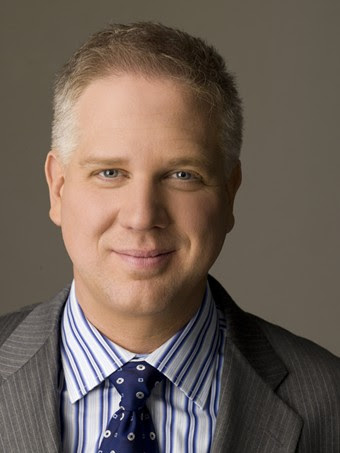
In 2008, controversy arose when FOTF interviewed Mormon Glenn Beck and appeared to be endorsing Mormonism. They later pulled the interview down from their website as the heat rose.

Mr. Dan Gilgoff of God & Country was disappointed in FOTF’s retraction of the Beck interview, saying that the long-standing pattern of interfaith dialog FOTF had evidenced was squandered in this case. He wrote of then-FOTF President James Dobson, “Dobson deserves credit for helping the evangelical movement build political alliances with other faith traditions, including the Mormons, or Church of Latter-day Saints. … Focus could have used the Beck episode as another opportunity for interfaith bridge-building, perhaps by leaving the interview up, even if it meant adding a clarification that the organization doesn’t endorse Mormonism. Another setback for interfaith dialogue, which seems to be all too rare these days.”

If I was an evangelical I would be very worried if I was named as having built political alliances, because that is not our calling.(James 4:4, John 15:19). I would be equally worried about having been identified as engaging in interfaith dialog and being unequally yoked in activities with those who are not of the faith. (2 Corinthians 6:14).

In 2009, FOTF endorsed a book published by Zondervan which promoted the practice of contemplative spirituality. Contemplative spirituality has been amply demonstrated on this and other blogs as a mystical practice originating in the apostate Romans Catholic Church.

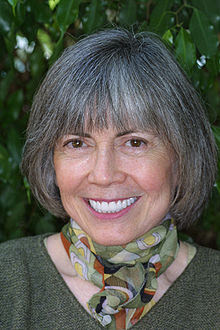
In 2008, FOTF hosted Roman Catholic occult writer Anne Rice on the show.  Way of Life writer David Cloud wrote at the time, “The spiritually-dangerous nature of Focus on the Family (FOF) was evident in a reply that was given to a Christian who wrote to them about having Anne Rice, the Roman Catholic author of occultic horror novels, on the Focus radio program. In a reply dated December 3, 2008, Timothy Masters wrote the following for Focus on the Family: “It’s worth adding that anti-Catholic sentiments like those you’ve expressed are more than just uncharitable and un-Christlike. They’re also harmful to the richness of your own Christian experience.  …  To dismiss the Roman Catholic Church wholesale is to obliterate the first fifteen centuries of Christian history.”

Mr Cloud rightly noted of FOTF’s response to the concerned listener, “This statement reflects gross ignorance both of the Bible and of church history. The Bible plainly teaches that it is impossible to be saved apart from the one true gospel of the grace of Christ (Galatians 1:8-9). Since the Roman Catholic Church teaches a false gospel of sacramentalism (e.g., the Council of Trent, which has never been rescinded, cursed those who say that salvation is by God’s grace alone), it is impossible to be saved if one believes what Rome teaches.”

Later, Mrs Rice publicly quit Christianity. Of course, being a Catholic she already showed she was not a Christain, something the FOTF interview should have been clear about. (1 John 2:19).

In 2011, FOTF declared that they had lost their fight against homosexual marriage, blaming the culture as being too overwhelming. FOTF President Jim Daly said at that time, “We’re winning the younger generation on abortion, at least in theory. What about same-sex marriage? We’re losing on that one, especially among the 20- and 30-somethings: 65 to 70 percent of them favor same-sex marriage. I don’t know if that’s going to change with a little more age—demographers would say probably not. We’ve probably lost that. I don’t want to be extremist here, but I think we need to start calculating where we are in the culture.”

The world is a system which satan rules and therefore we must be in it but apart from it, that’s “where we are in the culture.” (John 17:14-15)

Source

Yet the article’s author says “Daly has taken a more conciliatory approach to to traditional hot-button issues than his predecessor at Focus, James Dobson, so perhaps it shouldn’t come as too much of a surprise to see him speak so candidly.”

Again, I would be very worried if the ultra-liberal publication Mother Jones was saying if I, someone who declares myself and my organization as evangelical, was being conciliatory on hot-button issues.

In early 2013, the FOTF organization took part in the History Channel miniseries development and promotion of “The Bible” as I mentioned at the start. This raised many eyebrows.

As a matter of fact FOTF was one of the organizations behind the series on the consulting level. They were supposed to be overseers of the theology. The problem was, that oneness pentecostal believer TD Jakes and prosperity/word of faith promoter Joel Osteen, and rabbis and Catholics were also theological overseers. Mr Jakes & Mr Osteen are not known for their solid preaching of the whole counsel of God, and Catholics and rabbis do not subscribe to a saving doctrine of Jesus Christ alone.

Devastatingly, Matt Kaufman of Focus on the Family’s blog wrote that “Part of the reason for the ratings is that viewers have a degree of trust in the people behind the series. Producer Mark Burnett (Survivor) and his wife, Roma Downey (Touched by an Angel), are Christians who consulted with ministry leaders (including Focus on the Family President Jim Daly) during its development. So going in to the series, Christian viewers got strong signals of the producers’ good intentions. That’s not something they normally can expect from Hollywood.”

Good intentions mean nothing. Proper execution is all. Preaching the whole counsel of God in spirit and in truth is what matters. (Acts 20:27, John 4:24, Philippians 3:3)

It also matters that FOTF lent its credible name to a project that blasphemed Jesus, yet many people took their endorsement and watched a program that did more harm than good. That is why it is especially devastating when a formerly credible organization becomes unequally yoked with unbelievers. Downey and Burnett are most certainly not Christians. I can say that with biblical confidence because neither Downey nor Burnett evidenced the fruit of the spirit in their production. I say this also because they adhere to doctrines which do not save, including Catholicism and New Age spirituality. For FOTF to bring them and their false doctrines under the umbrella of our faith is devastating to the faith and shows a massive lack of discernment.

Doing this also muddies the waters on who a Christian IS.

In mid-2013, FOTF did it again. They had already brought in Anne Rice, Roma Downey, and Mark Burnett under the umbrella of our faith, and this week, they brought Irish singer Bono under the umbrella.

Bono is not a Christian, despite what FOTF President Mr Daly asserts. Bono is well-known for his well-intended work on many social activist causes, including HIV awareness and reducing poverty. However, despite naming Jesus as atoning savior, the blend of beliefs that Bono has stated in this week’s interview as well as previous interviews unfortunately demonstrates more confusion than belief.

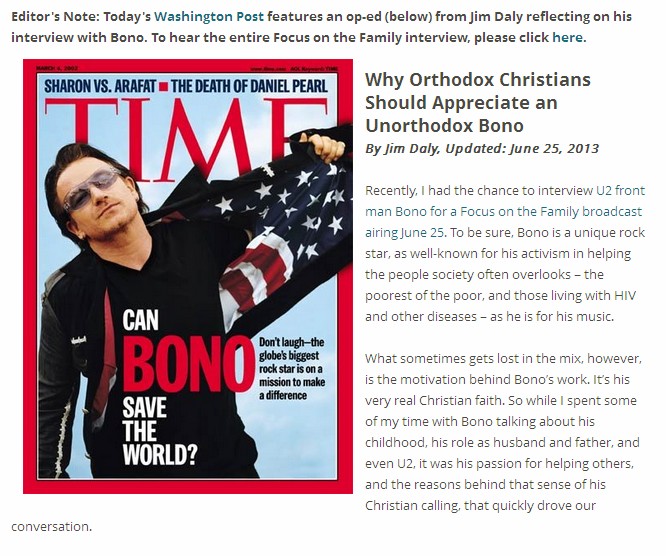
Obviously impressed with Bono, FOTF President Daly wrote a piece in the Washington Post subsequent to his interview with Bono, titled, “Why Orthodox Christians Should Appreciate An Unorthodox Bono“. Her is how Focus on the Family presented Mr Daly’s piece on their blog, accompanied by this week’s Time Magazine cover: (click for larger)

FOTF has swallowed the blue pill of “social justice” as being the proper expression of Christianity, and lost their discernment of who is a Christian. It is Jesus who saves the world, not a confused Irish rock star.

Next up, looking at why Bono is not a Christian, and why it matters.

Part 2 here
Part 3 here
~~~~~~~~~~~~~~~~~~~~~~~~~~

Further Reading:

The End Time: Why I am not watching History Channel’s “The Bible

The End Time: Why I am not watching The History Channel’s “The Bible”, part 2

The End Time: Watching The Bible miniseries is like eating brownies 

What does the bible say about social justice?