Posted in bible study, life, summer

Switching to summer mode

I am a 54-year-old kindergarten special education teacher’s aide. School with the kids let out a week ago, and teachers and staff finished Friday. That means this is the first official summer day for me, being the first week-day I am not headed to school for a 7:15am starting bell.

I don’t like to write a lot about myself, but occasionally I believe it’s warranted. People need to get a context of who I am and what I am about so they can assess credibility. There are many Christian bloggers who aren’t members of a local congregation, or who don’t believe in real life ministries, don’t perform a service, don’t submit to oversight of pastors or elders, or who don’t read the Bible. I am not one of those.

The Lord made it clear to me that I am not to be married. It is also clear that He gave me a delight in and a talent for teaching children. I was formerly a certified teacher but stopped some years ago to do other things like travel and become editor of a weekly newspaper. When I moved from Maine to Georgia, I returned to education once again but as a vastly different person. This time I came to education as a single, born-again, elder woman whom the Lord wants to use for His glory both at school and out of school. He designed my life so that I can be fulfilled in working with children in a not-too-stressful job, use it as a ministry both to kids and colleagues, but also to have lots of time off to write blog essays, based on the available time He has blessed me with.

So when the school vacations and summer rolls around, I am aware that I have a duty to redeem the time He has afforded me and to use the talents He has given me as a spiritual retreat and opportunity to dig into His word in a way I would not if I had a more stressful job, or a husband & family.

So I do. I’m filled with gratitude at the life He has given me and want all the more to glorify His name in all I think, say, and do.

However I am fleshly and given large quantities of time I can easily sink into laziness and simply end up watching endless episodes of “Sea Patrol” and reading easy novels in between naps.

In order to stay diligent and productive, I make a schedule. This is my day.

When I awake I am pretty refreshed and I after making coffee I sit down and begin study immediately. I pray through my prayer list. I then study.

I begin with reading the Bible. I recently finished 1 Corinthians so I sought advice from my teaching-pastor as to next steps. The past two summers he has given me a project to do and these have proved helpful in giving me summer structure. He suggested I read Galatians-Ephesians-Philippians-Colossians. He suggested I compare and contrast, and also look for the similarities in each books’ use of presenting the indicative before the imperatives.

I love my Logos 6 software so I plugged in the four books into the software and generated a reading plan that would take 50 days to complete.

I am blessed with having lots of study aids, which I’ll get to in a minute, but I believe that the best approach is two-fold: first prayer, then study the actual Bible. I read it directly.

After I read the designated chapters and have prayed in thanks, then I move to some study aids. Whatever the Spirit has pricked in me is what I go forward with next. Was I interested in looking at a map or atlas to see where Galatia is? Is there an archaeological dig with recent discoveries I can learn from? Did I get hung up on a word and need to do a Greek or Hebrew word study? Was there an animal or plant mentioned I’d like to follow upon? Is there a doctrine I would benefit by comparing to others in the NT? Is there a person mentioned I can learn more about by studying their biography? What does the Commentary say?

After the discipline of reading with prayerful attention, then I let loose my mind and see where the Spirit will take me. In the past, this combination has worked well for me. I believe this is one of the ways, with me anyway, He knits together a wider perspective and a greater understanding. I first put in the work to read His word, and it’s not always easy, then He takes a seed and blows it and I follow. He directs my steps. Almost always, after reading the Bible I will look at my MacArthur commentary and usually the Matthew Henry Commentary to flesh out ideas.

Quite often this is when I receive an idea for a blog essay. Not always, but usually something from my morning reading will spark me into a direction, or will dock with another idea I’d had previously and I’ll follow up on it and write. I put the idea down in draft and then I make breakfast and get dressed.

I don’t like to hang around in my PJs all day. I think it’s important to be dressed early just as if I was headed for work, albeit a few hours later 😉

I’ll write. This takes me hours. For the better part of the next four or five hours I’ll write a blog essay on and off, combined with study, cleaning up the kitchen, looking at Twitter or other people’s blogs and listening to sermons or other Christian-oriented audio while I putter.

For the record, I can heartily recommend the following Bible teachers as trustworthy expositors:

John MacArthur
Phil Johnson
David Martyn Lloyd-Jones
S. Lewis Johnson

and also
Alistair Begg, Sinclair Ferguson, Adrian Rogers. I also enjoy Voddie Baucham and RC Sproul but not on the eschatological texts.

Yes here’s the ubiquitous study photo. Bible, commentary, notebook, theological book
I’m currently reading, coffee, laptop with Logos 6,
and tissues because studying the Word is so moving

In the afternoon I slow down and around 3:30 or 4:00, about the time I’d be coming home from school, I’ll switch to personal stuff. Then and only then do I watch Netflix or Hulu. I might read a novel. I listen to sermons while I craft at the kitchen table. I play with my photographs in post-processing software, I’ll cook, go outside and take photos in the softening light. I answer emails.

Mixed in with these usual days are real-life discipling opportunities I do with people once per week, and church twice per week. It’s important to stay connected with a local congregation. Virtual ministry doesn’t substitute for real life ministry. I also go out once per week to get groceries. I try not to use the car much because summer is a time I can save on fuel consumption as one of the only discretionary utility bills I have control over. The less I browse and shop the less I crave and covet, so I restrict my shopping to groceries and try to stay away from Amazon, too, lol, though I LOVE to buy books. Pay for a teacher aide in Georgia is not too high but the Lord provides me with all I need to survive and thrive. I value time more than money. I really do have everything I need here in this little apartment that during the summer I call The Hermitage.

So that’s it. I am a writer/blogger who studies the Word and I really am a member of a Baptist church and I really do serve in real life ministries, as well as all the stuff I do online.

I thank each and every one of you. So many of you have written to me to encourage me or provide oversight or offer sympathy or ask great questions. I love you my brethren, and I’m grateful not just for the time here to write and study but I’m humbled by and grateful to you, real people who bless me with your comments and questions. You keep me continually realizing that our faith constitutes a kingdom of people from all over the world! Because of you I don’t get myopic or depressed at the state of things. I’m encouraged by you and energized by you, the thriving Kingdom of people whom Jesus loves and the Spirit indwells and God in His timing will glorify. Just imagine the Day when we all meet each other in the air!

Let me not forget to mention Study Aid #1: Bert

Study Aid #2: Luke. He’s saying, “Hey it’s my turn!”

Not to be outdone, Murray is on scene below, Study Aid #3

Posted in bible study, logos 6

Logos 6 review

I’d mentioned over Christmas vacation that I’d taken the plunge and bought Logos 6 bible software. I’d been watching it since Logos version 3, and the reviews were so good that when an updated version #6 came out, I took the plunge.

Coincidentally a week or two later, pastor and blogger Tim Challies reviewed Logos 6 because he also decided to commit to it. In his concise way, he wrote about it from a pastor’s perspective and I recommend his review here, if you are at all interested in learning more. He said in one paragraph I particularly liked,

The greatest strength of Logos is its wider system. What a Logos book offers that a printed book does not is integration into that system. When you add a new book to your Logos library, you increase the power and usefulness of the entire system, because that book now links to and from every other book. It is less like adding a printed book to a bookcase and more like adding a new Christian with his spiritual gifts to your congregation—it improves and strengthens the entire system.

He also said that it doesn’t do the work for you. Having the software system won’t make you read the bible more. It won’t get you to pray more. It is just a tool. He’s right.

As for me, I’m a layperson. For me it’s great. I love it. I enjoy the automatic reading plan. I plug in what book I want to read and at what pace, and the software organizes it for me, marking where I left off and where I need to begin. It also lets me know when I’m behind, lol. I always seem to be behind.

I get lost in the photographs of the Earthly Footsteps of the Man of Galilee, a 120 year old tome containing photos from the late 1890s. I enjoy looking at what Israel used to look like back then and push my mind back a bit farther to imagine those scenes in Jesus’ day.

The books I can read or refer to, the plants of the bible, animals of the bible, dictionaries, pronunciation guides, maps, even videos., are all stellar. I have a wealth of material even though I’d bought the lowest base package. It is plenty for me, really.

The commentaries are especially helpful. I am falling in love with Matthew Henry’s Complete Commentary of the Whole Bible. I have access to the Concise Commentary online but the Complete Commentary deepens the background and elicits so much from the verse I can barely stop reading.

Something else I like is the home page. Excerpts of various books or essays are posted. Today there is one explaining salt and light, being missional, survivor’s guilt, bond servant of Jesus Christ, Context Matters: Dr. John Walton Explains Why, and Perseverance, among many other items, including explaining some of the great art of the biblical scenes, and Logos promotions (they are unabashed about it).

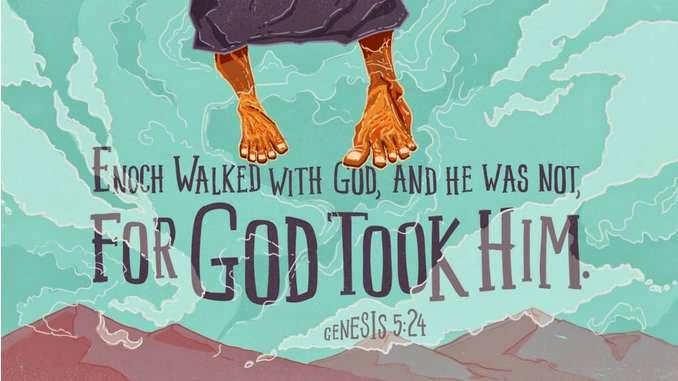
One thing that Brannon Howse said in one of his programs on World View Weekend, when he was discussing his purchase of Logos 6 and why he liked it, is the Art of the Day. He was very excited about the home page daily verse put to art. I didn’t understand his enthusiasm for it until I purchased Logos 6 and began seeing the amazing creative work the Logos artists do in putting abstract theology to visual art. Here is today’s example. It is the verse noting Enoch’s rapture.

Add caption

It was an expensive purchase but worth it.

Posted in bible study, encouragement, exhortation

Shallow vs deep bible study: do you want to really see?

Moreover the word of the LORD came unto me, saying, Jeremiah, what do you see? And I said, I see a branch of an almond tree. Then said the LORD unto me, You have seen well: for I am ready to perform My word.” (Jeremiah 1:11, 12.)

Charles Spurgeon said in sermon #2678, “Lesson of the Almond Tree”,

OBSERVE, first, dear Friends, that before Jeremiah becomes a speaker for God, he must be a seer . The name for a Prophet, in the olden time, was a “seer”—a man who could see—one who could see with his mind’s eye, one who could also see with spiritual insight, so as vividly to realize the Truth of God which he had to deliver in the name of the Lord.

Learn that simple lesson well, O you who try to speak for God! You must be seers before you can be speakers. The question with which God usually begins His conversation with each of His true servants is the one He addressed to Jeremiah, “What do you see?” I am afraid that there are so me ministers, nowadays, who do not see much. Judging by what they preach, their vision must be all in cloudland, where all they see is smoke, mist and fog. I often meet with persons who have attended the same ministry for years—and when I have asked them even very simple questions about the things of God, I have found that they do not know anything.

It was not because they were not able to comprehend quickly when the Truth was set forth plainly before them, but I fear that it was, in most cases, because there was nothing that they could learn from the minister to whom they had been accustomed to listen. The preacher had seen nothing and, therefore, when he described what he saw, of course it all amounted to nothing.

No, my Brother, before you can make an impression upon another person’s heart , you must have an impression made upon your own soul. You must be able to say, concerning the Truth of God, “I see it,” before you can speak it so that your hearers shall also see it. It must be clear to your own mind, by the spiritual perception which accompanies true faith, or else you will not be able to say with the Psalmist, “I believed, therefore have I spoken.” Let me say again that sentence which I uttered a minute ago—the speaker for God must first be a seer in the Light of God.

I often cry out to the Lord that I want to see. I want to plumb the depths of His word and learn more about Him all the time. I want to go deeper, see more, understand Him. I know I see through a glass darkly now, and it will only be later that I fully know, but still, can I know You more today than yesterday, please? (1 Corinthians 13:12).

It’s a double edged sword though. Knowing Him better through His word means I get to know myself better, also. In reading Who He is, we get to know ourselves better to, positionally. I get convicted, repentant, and sorrowful over my own sin and the sin of the world.

This is the analogy.

If you know the size of RI, the ocean is never very far, since RI is so small. Moreover, my grandparents had a house on the bayfront, and we kids and all the cousins would visit constantly. Weekly, just about daily in summer. And we always had a boat.

Lubec Harbor, ME. Murky Atlantic waters hide rocks & great hazards.
EPrata photo

In the book The Wind in the Willows, Water Rat is extolling the virtues of being on the water to Mole, who has never been in a boat. Mole wants to know if it’s nice.

“Nice? It’s the only thing,” said the Water Rat solemnly as he leant forward for his stroke. “Believe me, my young friend, there is nothing—absolute nothing—half so much worth doing as simply messing about in boats.”

The bay or the ocean has many charms, and all of them are interesting to a child. We splashed on the water, swam, messed around on the boat, played at the water’s edge. We collected shells and we dove off the dock and we raced to the mooring buoy and we lazed on the grass. We loved the water.

Snorkeling is the practice of swimming on or through a body of water while equipped with a diving mask, a shaped tube called a snorkel, and usually fins. Use of this equipment allows the snorkeler to observe underwater attractions for extended periods of time with relatively little effort.

As we grew older, we became fascinated with what was under the water. We’d fight for the masks and snorkel gear and paddle along, looking in fascination below the surface at the pretty pebbles the small waves were rolling along the sand. Or a hermit crab curling into his house shell as we swam over him, darkening his shallow water sky. Sometimes we’d forget we were in such shallow water and scrape our knees as we kicked along the beach’s edge, heeding our grandmother’s warning to stay close to shore.

As we grew even older, we wanted to see what was under the surface, really deep. Could we see horseshoe crabs? Fish? The anchor of the boat as it bobbed in the calm waves under a sunny sky? What was under there!? It was frustrating, the waters were not clear and even with a mask and flippers, we couldn’t get down far enough to see the bottom. Under the surface was still a mystery to us.

Then I sailed in The Bahamas. The waters are clear there. It was both fascinating and disconcerting to say the least! Suddenly I could see all the way down, but what the clear water revealed was another world, and one fraught with dangers, toils, and snares. Our keel passing over a coral head, we didn’t know if the coral was inches below the surface and ready to open the underside of our boat like a sardine can, or was in fact as deep below as the charts said. Predator barracudas were everywhere. And actually seeing the bottom was sometimes not a blessing, because it gave us an aquatic vertigo, always unsteady in thinking the boat as about to run aground in what looked like mere inches of water but was in fact fathoms.

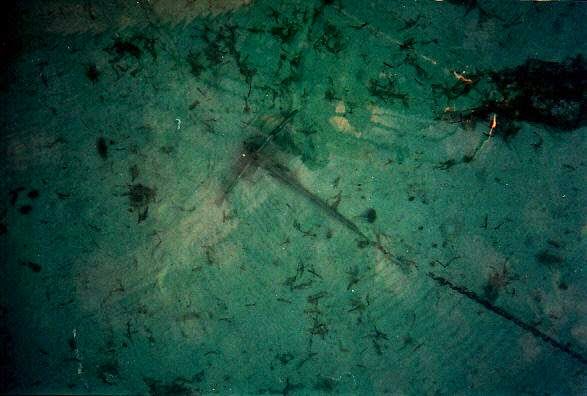
In this photo, it was so clear that we could see our own anchor,
in 30 feet of water. In the moonlight. EPrata photo

Being able to see the depths under the surface of the waters revealed another world. It was as if the surface of the ocean was simply a thin veil, covering a vast and mysterious and beautiful world, hidden until now. It was a world that existed with ours, was immediately adjacent, and in this bit of Bahamian clarity, was in equal parts scary, dangerous, and destabilizing.

Do you want to go deeper? Do you want to see? Really see, as Spurgeon described? I hope you do. As we grow in sanctification we do not stay in the shallow water for long. We should desire to peer into the depths of the ocean of truth and see what the Lord will reveal.

“Like newborn infants, long for the pure spiritual milk, that by it you may grow up into salvation…” (1 Peter 2:2)

The milk here is the spiritual food good for building up. When we’re born-again as babes we begin feeding on the pure spiritual milk. We crave it with intensity like a baby cries for his bottle! We need it every few hours! When we have capacity to understand more, we still thirst, and we go deeper into the Living Waters.

But we must be ready to withstand its glories. We remember who we are and in taking in all truth, we see our depravity compared to His holiness. We cry out, as Isaiah did,

And I said: “Woe is me! For I am lost; for I am a man of unclean lips, and I dwell in the midst of a people of unclean lips; for my eyes have seen the King, the LORD of hosts!” (Isaiah 6:5)

Reading the bible deeply, coming so close to His glory as revealed in the bible, some days I might as well say something similar, “Woe is me! For I am lost; for I am a woman of unclean lips, and unholy heart, and I dwell in the midst of a people of unclean lips; for my eyes have read the words of the King that the Spirit has delivered to us and revealed in His word!”

And yet we desire more, deeper, to see. Or we should.

The word is to be desired with appetite as the cause of life, to be swallowed in the hearing, to be chewed as cud is by rumination with the understanding, and to be digested by faith” [Tertullian].

Or…stay in the shallow end. It’s up to you.

Posted in bible, bible study, hebrews, Judy Luenebrink

An introduction to Hebrews, by Judy Luenebrink of Grace Community Church

Ladies, you might enjoy this terrific bible study presented by Grace Community Church (John MacArthur’s church) from the Women’s Ministry. Grace Community Church’s Judy Luenebrink is the teacher.

An Introduction to Hebrews (mp3)

A Word document of an outline to the above lesson

Judy Luenebrink’s watercolors page
Watercolors by Judy Luenebrink  

Enjoy!!!

Posted in bible study, end time, prophecy

How can I go deeper into the bible?

This is a lesson oriented lesson blog entry about how I go deeper from the bible. This morning I posted an essay about the parable of the wheat and the tares. Another word for tares in some translations is weed, and they both refer to darnel.

How did I know it was referring to darnel? I didn’t. But I did notice that in my bible there is a little footnote for verse 25. It led me to the bottom of the page, where the note said “c- 25 Probably darnel, a wheat-like weed.”

Darnel (left) is a weed that’s wheat-like? Hmmm. In going deeper in study, don’t stop there. Find out about darnel. I find it useful to ask questions. “Why darnel? Why not dandelion weed? What is it about darnel that the Spirit decided to use that representation for the weed in the parable, and not another? What does darnel look like?” And so on.

You notice later on in Matthew 13, the disciples went to Jesus and asked questions. They wanted to know the deeper meaning of the parable they’d heard. “Then he left the crowd and went into the house. His disciples came to him and said, “Explain to us the parable of the weeds in the field.” They took the initiative. The Holy Spirit delivers wisdom without reproach to all who ask, according to James 1:5.

I’ve found that having a book on the natural history of Israel is very helpful. Occasionally I check it out from the library. Someday I’d like to buy one for myself to have on hand all the time. I’ve looked up references to the animals, trees, birds, topography, and so on, many times. It always helps deepen my understanding of the Word, and also grounds me in the location.

So in pursuing the information about the qualities about darnel, I go to the Jewish Virtual Encyclopedia, or just Google ‘darnel’, and click on the sites that result in the search list that look credible.

I read a lot about darnel. I learned its agricultural properties and also the history of its use in either sowing an enemy’s field and the legal ramifications and also the medicinal properties of it that cause a poison-like reaction in people who consume it warm.

There are a multitude of parables, metaphors, and examples in the bible that are agriculturally related. America is an industrial society. Without looking deeper into the natural history references and understanding the agriculture, we miss so much. Here are some quick examples:

In Psalm 29:5 where it says “The voice of the LORD breaks the cedars; the LORD breaks in pieces the cedars of Lebanon.” If you know that the cedars of Lebanon are exceptionally tall, straight and strong, (up to 130 ft high and 8 ft in diameter) it deepens the passage to understand that the LORD’S voice is quite powerful indeed to break such a sturdy tree.

The parable of the mustard seed means more when you learn that the seed is the smallest seed but grows the largest bush.

Knowing the topography of the Sermon on the Mount, that it is a natural grassy ampitheatre where the acoustics would have carried Jesus’s voice very far without amplification, is an interesting fact. Modern sound engineers have tested the place and concluded that a crowd of 7,000 would have had no trouble hearing Jesus’s words. According to the website See The Holy Land,

Salvadora Persica, Mustard tree

“About 1km northeast of Tabgha is a small bay with exceptional acoustic qualities. Here it is believed Jesus taught the Parable of the Sower (Mark 4:1-9) from a boat moored in the bay. The semicircular bay, at the foot of the Mount of Beatitudes, is one of the most attractive places along the shoreline. It is called Sower’s Cove or the Bay of the Parables. The slope of the hill forms a natural amphitheatre, rather like a Roman theatre. Acoustical research has demonstrated that as many as 7000 people could hear a person speaking from a boat in the bay. Pilgrims who test the acoustics, usually by reading the Gospel account, are amazed at how far the voice carries. This location was also an appropriate setting for the story of the sower and his seeds. There is fertile black earth, rocky ground and plenty of thorns and thistles.”

So to sum up about going deeper:

–ask questions to yourself about the passage, verse, or word. Not to doubt, but to enhance. Ask yourself why this word, what are the qualities of the tree/animal/plant that is being used as an example, etc. Get in the habit of asking questions. If you don’t have time to follow up then, keep a notebook next to your bible and just jot the questions down to look up later. For example, Acts 16:14 describes Lydia as “And a certain woman named Lydia, a seller of purple, of the city of Thyatira…was a worshiper of God” so of course you would ask, “what is a seller of purple?” “What does it mean to be a worshiper of God (it meant something different in those days than it does now).

–Read the cross-references, and the footnotes. If a cross-reference sparks a memory or another verse but you do not have time to follow it up right then, jot it in the notebook- and then really look it up later.

–Use maps to see where the events took place, and note the place names around it. For example it helps to know that the ancient name for Damascus is Rabbah, and Salem is another name for Jerusalem.

–Take time to study the natural history, topography, and agriculture of ancient Israel. Knowing how they winnow, thresh, make olive oil, ferment wine, etc enhances the picture for you. In the Proverbs, there are four inconspicuous animals/insects that are lauded; the ant, the rock badger, the locust (grasshopper), and the spider. It would be fun to compare the real-world behaviors of each to see why the Lord applauds what these animals do.

Just yesterday in studying winnowing, I learned that the threshing-floor David bought from Ornan is atop Mr Moriah where the Temple was…and that it is also the place where Abraham (almost) sacrificed Isaac. Doesn’t it resonate, knowing that the the son of Abraham was almost sacrificed on the spot where the Son of Man actually was sacrificed? And that the threshing floor became the temple which will also be the spot that Jesus lands at the Second Coming?

This short lesson only discusses the agriculture, natural history or topography. Going deeper also involves looking at the original language, the historical context, and always accompanying prayer, among many other methods of going deeper. And at the most basic, just reading the text for what it is, a gift and a pleasure!

What do you do to go deeper into the bible?