Cut to the Chase is a short-form, bulleted list of reasons to avoid a certain Christian teacher or ministry. Today I look at Priscilla Shirer.
1. Priscilla Shirer relies on experience.
In the past, Shirer has said “Mrs Shirer explains that she became sad at the daily ‘chore’ of the spiritual disciplines such as prayer and Bible study because “He just wasn’t knocking my socks off anymore, and I wasn’t sure why.”’ (source).
“In the clip, she is saying that having a preacher teach the scripture is insufficient and not personalized enough, that it gets stale, old, and is a mark of immaturity to not seek more. In contrast, it is a sign of growth and wisdom to want more than that, and so seek some “revelation” that is new, fresh, and personalized just for you.”
God doesn’t perform tap dances for us for our entertainment and satisfaction. We submit to HIM. If you want more than the Bible, you’re the problem.
2. She sees Jesus as her boyfriend.
Shirer describes her connection with God in ways she says reflect “a feminine heart,” and might scandalize a secular reader. “My God reached down from the heavens, dipped his finger into the depths of my being, and began to rouse in me a desire for a real relationship with him,” she wrote in her most recent book, “One in a Million: Journey to Your Promised Land.” Her account of spiritual stagnation sounds like a marriage on the rocks…” (source). It is also an errant view and the description more than a bit gross.
3. Priscilla Shirer lives a feminist lifestyle in violation of Titus 2 exhortations.
“Mr Shirer spends much of the day negotiating Priscilla’s speaking invitations and her book contracts. In the afternoon it’s often Mr Shirer who collects the boys from school. Back home, Priscilla and Jerry divide chores and child care equally. “Jerry quit his job to run his wife’s ministry. Priscilla now accepts about 20 out of some 300 speaking invitations each year, and she publishes a stream of Bible studies, workbooks and corresponding DVDs intended for women to read and watch with their girlfriends from church. Jerry does his share of housework and child care so that Priscilla can study and write. He travels with his wife everywhere. Whenever possible, they take their sons along on her speaking trips, but they often deposit the boys with Jerry’s mother.” (source).
4. Priscilla Shirer teaches we should hear from God
(Source), (Source), (Source). Shirer is cagey on this one, she has said in interviews she never actually hears the voice of God, but teaches right up to the line and in sound bites continually uses the phrase “hearing God”, like so: “Drawing a clear connection between obedience and hearing God is a critical piece of discerning God’s will and His ways.” Hebrews 1:1-2 says that God spoke (past tense) thought His Son. The canon is closed. (Revelation 22:18). See Chris Rosebrough’s more thorough review of Shirer’s sermon about hearing from God, below.
5. Priscilla Shirer preaches, even Sunday Morning messages to churches.
Priscilla’s circuit includes teaching alongside Beth Moore, Sheila Walsh, Christine Caine, Joyce Meyer, and Lisa Harper. Romans 16:17 says not to do this but instead mark them and avoid. Also 1 Timothy 6:3, 2 Thessalonians 3:6.
Priscilla Shirer os an excellent communicator but what she communicates is not healthy for your spiritual life.
This weekend, a new Kendrick Brothers movie opened. Authors and directors of previous Christian films such as War Room, Courageous, Facing the Giants, and Fireproof, The Forge opened in 1,800 theaters nationwide.
Facts from Deadline: “Meanwhile, Sony Affirm’s faith-based The Forge received five stars from its moviegoers and an 88% definite recommend, all of whom spent $600K Thursday night off showtimes that began at 2 p.m.“
For Christians seeking family friendly faith based movies, the Kendrick Brothers movies from Sherwood Pictures have beenthe go-to series for many. Originally from Athens GA, the Kendrick Brothers are Shannon, Alex and Stephen. The latter two attended college, were ordained as ministers. Alex accepted a call to Roswell Baptist Church as staff, then later to Sherwood Baptist Church in Albany GA as associate minister of media. Stephen joined him there two years later. Shannon completed college and accepted a job at IBM.
It has been a lifelong dream of Alex and Stephen to make full-length Christian movies, and at Sherwood Baptist that dream came to fruition in 2003 with the independent production of their first film collaboration, Flywheel. After that came Facing The Giants, a huge hit in 2006, Fireproof in 2008, a bigger hit which starred their first bona fide professional actor Kirk Cameron, and then Courageous in 2011, yet another hit with secular validations of climbing the NY Times Bestseller lists and gate take to the tune of tens of millions of dollars. And so on.
After War Room, the brothers split from Sherwood Pictures/Sherwood Baptist as their base for production and formed their own company, Kendrick Brothers Productions. Shannon, the eldest brother who had been working at IBM all this time, resigned to help his siblings with the management of their new company. Along the way much merchandise has been sold under the auspices of each film, notably the Love Dare and the LoveDareTest among LOTS of other merchandise from Fireproof, and the Courageous Resolution from Courageous, among LOTS of other merchandise from the aforementioned film. (2 Peter 2:3). More on that below.
Many folks are pleased that faith-based movies are being made which they say honor Christ, and are even more pleased that much merchandise is available to re-stock the movie company coffers so that these movies can keep being made. Churches hype the films and in their church sanctuaries host previews, events, marital retreats, Courageous ceremonies, and ‘Bible’ lessons accompanied by all the paraphernalia and curricula associated with the movies. Marriages are being saved. Fathers are returning to biblical duty. It’s all good.
Isn’t it?
I’d like to offer a different view.
My first introduction to the Kendrick Brothers was as a newbie Christian, bystander of the waves of hype when Facing the Giants was released. The Baptist church I’d been attending at the time heavily promoted the film and everyone was encouraged to attend. No doubt, the movie was a tearjerker, a feel good movie that seemed right with Jesus- on the surface. I was discomfited by the thread throughout that when one submits totally to God is when things begin to work in your earthly life and all your temporal wishes will come true, like winning football games and getting a new truck. It seemed to me a kind of slick Christianity. But I was new to the faith and more to the point, new to church life, and didn’t know for sure.
Yes, it’s true that when one submits to God, we will be blessed, but the biblical Stephen was ‘blessed’ with a vision of heaven before the last killing stone crushed his head. Paul was ‘blessed’ with a thorn in his side which tormented him God called sufficient grace. Peter was ‘blessed’ with a long career preaching in a persecuting world that ended with martyrdom on a cross. Facing the Giants bought into and promoted every Western Christian cliché imaginable. I would like to have seen the coach get fired even if he had won the championships. Or what would have happened to their faith if they hadn’t won the championships. Or if they never had gotten pregnant. What then? Would THAT kind of faith hold true? But Facing the Giants isn’t that kind of movie.
Then Fireproof came out and I was more discomfited. The hype was louder and tsunami-like this time. There were parts in Fireproof I enjoyed but my discomfort with the doctrine in Fireproof was more coalesced this time.
I was aghast at main character Catherine (the wife’s) adultery and more aghast that it was never addressed. I was stunned that her act of filing for divorce with her signature on the decree was never addressed as unbiblical. She was never shown as repenting.
Worse, it was not clear from the hype, plot synopsis, or posters that Catherine was not a Christian. This is a similar theme in War Room, as Justin Peters discussed in his review linked below. Either one or more partners are not Christian, and their unbalanced partnership is not discussed biblically. OR, one or both characters are Christian but errantly presented as backslidden (AKA living a sinful life without godly sorrow).
This may be the second time they’ve made a commitment to this marriage… …it is the first time they’ve done so on a foundation of faith in Jesus Christ.
So if one or both parties is not of Christ, then we can see that the theme of the movie is how you act (demonstrate unconditional love, and overlook sin)is what brings a marriage together, not Christ. This secular reviewer hit the nail on the head when he wrote:
What about that message? There was really very little, if any, explanation of why Christianity had anything at all to do with the saving of Caleb and Catherine’s marriage. That’s what made the message so weak. All the actions shown from the “love dare” book were secular in nature, except the day where Caleb was supposed to pray for Catherine, which he admitted he didn’t do… which seems to be showing that, even without the religious parts, the marriage was saved.
An issue in the Kendrick movies is that there tends to be a subtle or even overt thread of Word-Faith doctrine. Justin Peters said of War Room, “The entire film is saturated with Word-Faith/N.A.R. spiritual warfare lingo.” In fact, in 2015, Alex Kendrick was a keynote speaker at Word of Faith false teachers at the Missions and Marketplace Conference. (Source)
Reddit readers said of the movie Overcomer,
“The scene where the school head says to a teenager who’s going through an extremely difficult phase something like ‘have you accepted the ways of Jesus yet?’ And in the very next scene literally all of her problems are solved…”
“Pretty much every conflict in this movie is solved by 2 minute chunks of dialogue.”
It’s tricky to negatively review Fireproof or any Kendrick Brothers movie, because it’s true that Jesus needs to be the center of marriage/prayer/manly growth, etc. In War Room it’s good that prayer is emphasized. In The Forge just out this weekend it’s good that biblical mentoring and manliness in God is emphasized.
The Kendrick Brothers make emotional movies. People respond to their filmmaking and storytelling. It’s great to have that skill. However, there are underlying issues, some of which I’ve noted already, that are masked by the intense emotional response their movies give rise to.
I won’t go into length over this, but the Kendricks in my opinion make merchandise of us. For example, “In 2013, adding to the impact of The Love Dare book, [from Fireproof] the brothers partnered with LifeWay research on LoveDareTest.com, a free online marriage and parenting assessment, and then completed The Love Dare for Parents (released July 2013), a 40-day challenge to help parents win the hearts of their children.“
The Forge will capitalize on Christian’s willingness to be made merchandise, too: (2 Peter 2:1-3 KJV) – “Lifeway has teamed up with the Kendricks and Shirer to provide a suite of new resources to accompany the film and address discipleship, including a book by the Kendrick brothers titled “Devoted to Jesus,” “I Surrender All” by Shirer and “Count Me In,” a book for teens written by Travis Agnew and the Kendricks.” (Source)
“The Kendricks hope to launch a discipleship movement within churches. In conjunction with the movie’s release, [The Forge] small group Bible studies and discipleship-themed books are being released.” (Source)
I do not want a movie to lead me to Jesus. I want the Bible to do so.
A second issue is, as ordained ministers formerly operating under the oversight of their home church, (but no longer) listen to how the brothers decide to move forward with the themes for each of their movies. It isn’t from the Bible. Kendrick claims God tells them.”
We go through the better part of a year, saying, ‘Lord what do you want us to focus on, what do you want the plot be?’ It’s usually near the end of that year. It could be eight months, ten months, or a full year… it’s almost like he downloads something to us. … It wasn’t something where we sat in a room and said ‘What do you want to do?’ We’ve never done that.
For the movie Fireproof, Kendrick says his team heard God give them a theme of marriage. For the movie Courageous, fatherhood. And so on. He speculates that upcoming themes may be military faith, motherhood, or teen issues, but says he won’t really know until God downloads. [emphasis mine]
“We want to present stories that would draw people to a relationship with the Lord and a greater depth of faith with God,” says Kendrick.
That statement is highly ironic since the Brothers use a method ‘of getting closer to God’ that is extrabiblical and highly dubious.
This approach to decision making is at minimum is mystical. At maximum it leads to monstrosities like Sarah Young’s Jesus Calling and most things false teacher Beth Moore. Do pastors sit in a prayer closet for 10 months and ask the Lord what to preach on, and wait until He downloads a theme? But this “Ask the Lord and He will tell you” method is all too common today. Is it wrong to seek the Lord in all you do? No. Is it wrong to consult with one another and say, “Let’s do a movie on the importance of prayer”?
Of course not. Christians have been making decisions this way for millennia. It’s called “making a decision.” However, attributing the theme of your movie to God because He downloaded it to you or personally revealed it does not inspire my confidence, it diminishes it, because now I’m concerned with their discernment. This concern revolves around several fronts. One, the aforementioned Mystical-Method of Hearing From God. Second, their choice of casting.
In this Youtube interview years ago regarding the release of War Room, the Brothers stated,
We pray over every single role
We want Christians playing Christians in these movies, we want to know they believe what they are speaking in these roles
We want no hypocrisy, [we hire Christians who show that] we believe what this movie is about then live it out, outside the credits
Rebuttal:
They pray over the movies but wait to hear directly from God.
They want Christians playing roles in their movies and call Priscilla “… an amazing woman of God,” which we know is not quite true. She sees Jesus as her boyfriend, claims to hear directly from Him, teachers others how to do the same, preaches, and lives a feminist lifestyle. Not so Godly.
It’s good not to want hypocrisy, but when the Brothers quit their church to make movies and found their company, they appeared to also abandon accountability or doctrinal oversight.
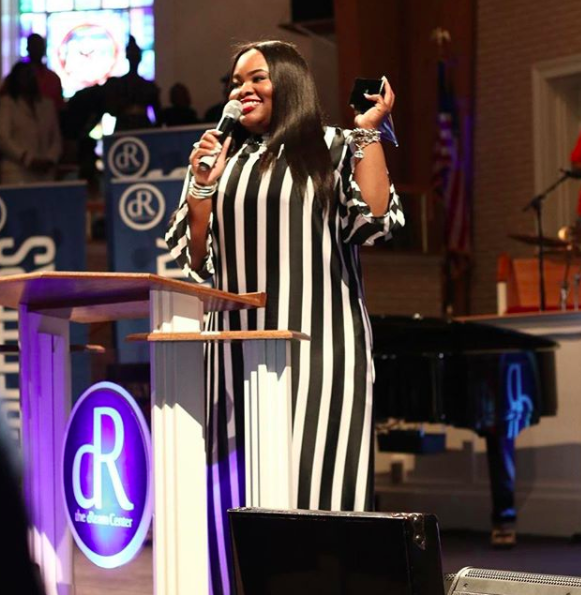
Perhaps also the Kendricks’ choice of musicians to provide the soundtrack isn’t the most solid, either. Lecrae has several issues. There’s Hulvey who he says God told him to drop out of college to pursue music. Aaron Cole demanded a sign from God. “I want to know right now” he said. Tasha Cobbs-Leonard “is not only a Grammy award-winning Gospel artist, she’s also a pastor and a prophet! Cobbs-Leonard’s m.o. is to quickly reference a passage of scripture, manipulate its context then, for the next 40 minutes, somehow apply it to the hearers’ breakthrough, purpose, destiny, dreams, goals or whatever else their itching ears desire to hear. Meanwhile, the Lord is an after-thought.”
So much for the Kendricks surrounding themselves with actors and singers who are solid Christians.
Yes, they make clean, emotional movies. What’s the harm, you ‘get off my lawn’ church lady?! Well, consider this final thought: Would you rather spend time in entertainment that’s clean but from a secular background that you KNOW is against God and therefore more strongly guard your mind? Or ease into a ‘Christian’ film with a relaxed mind thinking everything is hunky dory which could allow false notions about God and false doctrine to enter? Satan is subtle. If you have strong discernment and an ability to guard against satan’s subtlety then maybe you feel you can risk it.
But is 2 hours of entertainment worth the risk? Missionary William Carey fell in with some friendly Mystics early in his walk, who offered a closely biblical but just a bit off biblical worldview. It distressed, confused, and troubled Carey for three years till a friend who was more solid helped clarify truth to him.
The emotionalism is strong with this one. Think about it.
Below you will find a 14-minute collage of 3 clips. Speaking are Justin Peters, Paul Washer, and Gabe Hughes of WWUTT. In different ways, all three men explain from the Bible that modern Apostles don’t exist today. The Bible does talk about ‘apostle’, lower case ‘a’, which means “sent”. Anyone who is “sent” is technically an apostle, as in church planter, evangelist, missionary, etc. But the office of Apostle, capital ‘A’, as described in the Bible, is closed to newcomers. When Apostle John died in 90AD, the final Apostle died, closing that office with it.
Are you one of a partly hidden minority in the body of Christ who has felt led by the Lord to remain single and celibate for all your days? I’m not talking about unbiblical vows of celibacy like the false Roman Catholic Church forces on its priests and nuns. I’m wondering if you are one of the blessed recipients of what apostle Paul called a gift of singleness.
Though marriage is the norm for most people, and it is indeed an institution created by God, and it is a picture of our coming union with Christ, marriage is not given to everyone. Never mind that the average person on earth is single for a good portion of their lives. Americans now spend more years of their adult lives unmarried than married.
The trend toward spending more time single is not specific to the United States. Across 192 countries, people who, by age 30, had always been single, increased from 15% in the 1970s to 24% in the 1990s. The increase was greater for developed countries: In the 1990s, 38% of the women and 57% of the men reached the end of their 20s without ever marrying (World Fertility Report, 2003). Source: Single Women Fact Sheet
These demographics are reflected in the average church congregation. Yet ministry and interpersonal attitudes have not kept up, and some permanently single people feel marginalized or overlooked.
In part one I introduced these and other facts. In part 2 & 3 I looked at specific verses and passages that address marriage, singleness, celibacy, and eunuchs (old and modern-day). In this part I’ll look at the impact that single people have made for the kingdom. I’m not focusing on the status of temporarily single people who will marry at some point. I am looking at those people who are beneficiaries of the God-given gift of singleness, a status designed purposely by God for His glory through His use of these individuals. (1 Corinthians 7:6-7).
I admire married people with children who labor in the church. I can’t imagine their exhaustion, the time it takes to raise children, and still have time to study that Sunday School lesson he will be teaching, or her volunteer work in the nursery, or their ministry to the community hungry…and remain diligent in personal Bible study and family devotions. Phew! There seems not to be enough hours in the day. Jesus designed it so that a majority of people will at some point in their lives marry and most of these will likely have children. Their focus is naturally on their family lives. And naturally, their interests are divided. (1 Corinthians 7:33, 35).
We know of famous married couples in the Bible, Adam and Eve, Ruth and Boaz, Jezebel and Ahab, Abram and Sarai, Jacob and Rachel/Jacob and Leah, David and Michal/David and Bathsheba, Solomon and all his wives, Mary and Joseph, Zacharias and Elisabeth, Priscilla and Aquila, Ananias and Sapphira…In each case God ordained for the person a spouse and in each case their marriage as recorded in scripture became something the Lord used for His glory and our instruction.
However, remember, marriage is not an institution that will last forever. In his exposition of 1 Corinthians 7:25-40, S. Lewis Johnson said,
The central thought of the apostle is that celibacy is desirable; it’s not demanded. Why? … Well, from reading the passage here and from knowing the things that our Lord had said with which the apostle was familiar, evidently for him he thinks of marriage as a temporary covenant for the propagation of the human race. But the relation to the Lord is an eternal relation — relationship.
And so in the light of that, what he seems to be suggesting to us is that we, as believers, should remember that we are heading to an eternal destiny in the presence of the Lord. … He wants to focus our attention upon the fact that we are on our way to eternity. And this is temporary. And we are to spend ourselves during this temporary period of time in seeking the Lord and ministering as believers for him in the society of which we are apart. I gather that that’s what — that’s why Paul says the things that he says when he says, “Marriage is good. It’s alright to marry, but it’s better to give yourself holy to the Lord.” And now he is going to talk about why it is so.
The unmarried man or women does not have divided interests and can focus solely on pleasing the Lord. (1 Corinthians 7:32, 34b). Let’s look at some people in the Bible who were specifically and notably single, devoting all time and energy to ministering to Him. First will be people from the Old and New Testaments we know were single, and then a list of others we can say might have been or were probably single.
Jeremiah, by Michaelangelo
Jeremiah
A prophet of the Lord and author of the book of Jeremiah and Lamentations, Jeremiah never married or had children.
The word of the Lord came to me: 2“You shall not take a wife, nor shall you have sons or daughters in this place. (Jeremiah 16:1-2)
The LORD said He was planning to still the voice of the bride and bridegroom, and plagues and hardship were going to come upon the land. Gill’s Commentary explains Jeremiah’s single status,
Thou shall not take thee a wife,…. Not because it was unlawful; for it was lawful for prophets to marry, and they did; but because it was not advisable, on account of the calamities and distresses which were coming upon the nation; which would be more bearable by him alone, than if he had a wife, which would increase his care, concern, and sorrow.
Apostle Paul alludes to the times also as a reason not to marry. (1 Corinthians 7:26). Sometimes God ordains singleness not to test a person in endurance or deny a person a pleasure, but to spare a person grief in coming calamity.
Anna
St. Anna the Prophetess by Rembrandt Van Rijn
Here is a woman who lived in apostate times, the worst of times. Her generation had drifted fully from the Old Testament law and lived under the oppressive and false rule of Pharisaical law, as we know from the many admonitions and warnings Jesus gave to the Pharisees, and Paul’s initial terrorism against the early Christians. God had been silent 400 years, since the close of the Old Testament canon in Malachi in approximately 430BC. The last chapter of Malachi is short, but contains a warning about the Day of the LORD, a warning to follow the Law given to Moses, and this, the last words Israel heard said to them by God–
“Behold, I will send you Elijah the prophet before the great and awesome day of the Lord comes. And he will turn the hearts of fathers to their children and the hearts of children to their fathers, lest I come and strike the land with a decree of utter destruction.” (Malachi 4:5-6)
Malachi’s warning was not without cause. The Jewish people were mistreating their wives, marrying pagans and not tithing, and the priests were neglecting the temple and not teaching the people the ways of God. In short, the Jews were not honoring God. (Source)
Things only worsened as 400 years ground on. Yet there were a few that remained pure in heart and pleasing to the LORD. In approximately 27-29BC, Jesus was born and was presented at the Temple according to the Law. Anna was there.
And there was a prophetess, Anna the daughter of Phanuel, of the tribe of Asher. She was advanced in years and had lived with her husband seven years after her marriage, and then as a widow to the age of eighty-four. She never left the temple, serving night and day with fastings and prayers. At that very moment she came up and began giving thanks to God, and continued to speak of Him to all those who were looking for the redemption of Jerusalem. (Luke 2:36-38).
A widow can know what it is to face a long, lonely and cheerless life, and a solitude made more acute because of the remembrance of happier days. But it was not so with Anna. When as a young, motherless wife, God withdrew from her the earthly love she rejoiced in, she did not bury her hope in a grave. In the place of what God took, He gave her more of Himself, and she became devoted to Him who had promised to be as a Husband to the widow, and through her long widowhood was unwearying in devotion to Him. She “trusted in God,” and her hoary head was a crown of glory (Proverbs 16:31). Repose of soul was hers for eighty-five years because the one thing she desired was to have God’s house as her dwelling place all the days of her life. Source.
Paul
Paul writing his epistles. Valentin de Boulogne
In 1 Corinthians 7:6 Paul declared he himself had the gift of celibacy, so we know that he was not at that time married. Had he ever been married? We don’t know for sure. At some point, if Paul had been married, his wife either had died or was not in the picture. Paul’s tremendous conversion showed that the redemption available in only Jesus Christ is not beyond even the “chief of sinners”, a murderer and terrorist of His people. (1 Timothy 1:15).
In his life lived and in the strength of Christ, Paul founded churches all over the region in his three missionary journeys, pastored them, discipled young men for the future labor in Christ, contended for the faith alongside many men and women, ‘redeemed’ a slave and reconciled him with his master, and wrote Romans, 1 and 2 Corinthians, Galatians, Philippians, 1 and 2 Thessalonians, Philemon, Ephesians, Colossians, 1 and 2 Timothy and Titus.
From conceited, legalistic terrorist, Paul became a humble, powerful witness for the glory of Christ.
Mary/Martha/Lazarus
This sibling trio were single. They were used mightily of Jesus. In His Incarnation He lodged with them, all three of whom He loved. (John 11:5). He used Lazarus to show the glory of God, Martha illustrated her “love and piety alike found adequate and satisfying expression at all times in the ordinary kindly offices of hospitality and domestic service” according to Lockyer, and Mary loved to sit at her Lord’s feet and absorb heavenly truths.
Philip’s four unmarried daughters
These women (Acts 21:8-9) prophesied.
Philip’s household included four virgin daughters who were prophetesses. That Luke describes them as virgins suggests that they may have been set aside by God for special ministry (cf. 1 Cor 7:34).
(Source: MacArthur Commentary on Acts).
Apocalypse of Lorvao.
The 144,000 Revelation 7:1-8 and Revelation 14:1-5 records that the Lord reserves 144,000 virgins and will supernaturally seal them from harm during the judgments of the Tribulation, in order to use them for His glory. They will evangelize the world during the Tribulation. Multitudes and myriad come to faith in Jesus Christ during this time, thanks to the supernatural energizing of these unmarried singles.
We, in the Christian church, perhaps in our day are not giving proper credit to those who, by the grace of God, have given themselves to a celibate or single life. The unmarried woman, for example, and the unmarried man who have given themselves to service for the Lord and have eschewed marriage; we should give them credit for what they have done. ~S. Lewis Johnson, Marriage Counsel III
Lydia
This woman ran a profitable business and had a home large enough to accommodate the entire missionary team. (Acts 16:14, 15, Acts 16:40). No husband is mentioned in association with ‘Lydia’s business’ and ‘Lydia’s household’ so it was likely she was single via widowhood. She provided a safe haven for Paul and his mission team time and again, in loving hospitality so they could rest and recover. Her home is where Paul and Silas went after being released from prison, and it was there the brethren received solace and encouragement. Baumgarten says,
“This assembly of believers in the house of Lydia was the first church that had been founded in Europe”.
Of Marriage and singleness in general, S. Lewis Johnson remarked,
I never quite understand why married people who have the comforts of home often speak in a disparaging and unkind way of unmarried people. It should be that if marriage is so delightful, that married people would speak in a very tenderness and — tender and sympathetic way of people who have not married. But instead of that, they speak sometimes in such a contentious way. I never like to hear people say, “Oh she’s just an old maid’ or “he is just an old bachelor.” Wait a minute! He whom you so designate may be glorifying the Lord in a way he could not have done if he were the head of a household and she of whom you speak, may be one who is rendering wonderful service to God and humanity. I repeat, some of most devoted Christians I have ever know have been unmarried men and women who gave themselves holy to the work of the Lord Jesus Christ. All honor to them. I agree with that. ~S. Lewis Johnson, Marriage Counsel III
In modern times we can point to many people who chose to remain unmarried for the sake of the kingdom, like Pastor John Stott, for example, who was single all 90 years of his life and served the Lord actively as pastor for 65 of them. Some chose to stay unmarried after the death of a spouse, Rachel Saint, for example. MacArthur says of Mrs Saint,
Rachel Saint served as a single missionary among the Auca Indians of Ecuador for many years without companionship. She poured out her life and her love to the indians and found great blessing and fulfillment. (source)
Many of the missionaries who have gone out from the shores of the United States have been women missionaries who’ve gone out, spent their lives in heathen lands and the jungles, and in the countries where things are not nearly so nice as the United States of America, and have been responsible for many, many people having an opportunity to hear the Gospel of the Lord Jesus Christ. I’ve known of some who have gone to Mexico, translated the language of tribes themselves and then written the Bible for them, so to speak, translated it, and made it possible for people to have the Bible in their own language. What a marvelous ministry. And when you remember that we are here just a short time and eternity is fairly long, you can see what a marvelous choice has been made by some people to not be entangled in marriage.
Whether God has destined a mate for you, or has consecrated you to Himself as an unmarried/single earlier than eternity, His glory always shines through His people when we submit all to Him. Whether married or unmarried, single temporarily or permanently, we are His children, loved perfectly and endowed with His Spirit to do His work. We have all been gifted, and when we look upon each other, we should not see married or single, at odds in misunderstanding or apprehension, but equally gifted individuals co-laboring for Christ’s name and His glory.
The past 2 entries in this 4-part series have discussed both the current Christian milieu of how people seem to view singles in church, and looks at what the Bible says about marriage vs singleness.
Today let’s finish a discussion on how the church views singles before moving tomorrow to famous biblical singles.
It’s often other believers who seem discontent for the content single, a concern that deepens the more the contented single asserts his or her state of unmarried peace. Jesus spoke acceptance of singleness in Matthew 19:12.
For there are eunuchs who have been so from birth, and there are eunuchs who have been made eunuchs by men, and there are eunuchs who have made themselves eunuchs for the sake of the kingdom of heaven. Let the one who is able to receive this receive it.
Here, Jesus classifies the 3 kinds of single/celibate persons. There is the one who was born with congenital deformities or other diseases which make marital relations impossible and conceiving children nonviable. Others have been made that way by men. In the Bible times, men were purposely castrated if they were destined to work in a harem, for instance, or as a court administrator, as we read in 2 Kings 20:18, Esther 2:3, or Acts 8:27. The Lord’s care for those who were born or made eunuchs was stated in Isaiah 56:3b-5, where God welcomes all believers, without distinction of persons, under the new economy of salvation-
and let not the eunuch say, “Behold, I am a dry tree.” For thus says the Lord: “To the eunuchs who keep my Sabbaths, who choose the things that please me and hold fast my covenant, I will give in my house and within my walls a monument and a name better than sons and daughters; I will give them an everlasting name that shall not be cut off. (Isaiah 56:3b-5)
dry tree—barren (compare Lu 23:31); not admissible into the congregation of Israel (De 23:1–3).(Source: Jamieson, Fausset, Brown, Commentary)
How comforting God is when announcing that those who are not by their own choice unmarried, childless, celibate eunuchs will be given a monument and a name. Their marital and family status were a lament to them but they still sought God’s glory and chose the things that pleased Him. What comfort and care He gives to the person who is made eunuch through no act of their own. What a Godly example given to show that no matter what the physical state of a person or their marital status, one can and should seek the things that please the LORD.
MacArthur explains in his commentary,
Unlike the other two forms, this one is not physical…Jesus is speaking of voluntary celibacy of those to whom the gift has been granted by God (v. 11). In that case, celibacy should be used for the sake of the kingdom of God and be pleasing to Him and used by Him. Paul had the gift of celibacy and strongly exhorted others who had the gift to be content with it and use its obvious advantages for Gods glory. (1 Corinthians 7:32-34).
You may have noticed I shifted from discussing divinely given permanent singleness to the topic of celibacy. That is because the two are entwined. One cannot be without the other. If you are single, you are to be celibate. Outside of marriage, celibacy is a mandate from God. We are NOT to be fornicators. (1 Corinthians 6:9, Hebrews 13:4, 1 Corinthians 5:9, 1 Timothy 1:10, 1 Corinthians 5:10, Revelation 21:8). Whether young or old, virgin or widowed or divorced, we are to be chaste. (1 Timothy 2:2, 1 Timothy 5:2, 1 Timothy 4:12, Galatians 5:23, 2 Corinthians 6:6
God provides. God sustains. If He gives to some the gift of singleness, would He not also provide the strength to refrain from lust and remain chaste for His name? MacArthur’s commentary again,
Although celibacy us good for Christians who are not married, it is a gift from God that is not given to every believer. Just as it is wrong to misuse a gift we have, it is wrong to try to use a gift we do not have. For a person who does not have the gift of celibacy, trying to practice it brings moral and spiritual frustration. But for those who have it as God’s gift, singleness, like all His gifts, brings great blessing.
Both Jesus and Paul make it clear that the celibate life is not required by God for all believers and that it can be satisfactorily lived only by those to whom God has given it.
Married brethren are rearing children for His name and leading and teaching us, so their kingdom work is equally valuable as mine or anybody else’s! We are a body, each formed uniquely as a snowflake, spiritually given gifts in unique hues to benefit each other and most importantly, Jesus, and this gift also includes the fewer who are gifted to remain single for His name.
God’s care for the celibate, permanent single is obvious from scripture. Singles of any kind are not second class citizens, nor are they in a waiting room for marriage (read: maturity and acceptance). Jesus does not look at us that way and nor should the church. Celebrate His diversity in installing people in the Body from all demographics to labor for His good and glory.
While some singles are waiting impatiently for God to change their circumstance, other singles are not walking in a fog of depression but joyfully serve from His gift.
Singleness in the church today. Singleness in the Body Christ is for His glory. Though there is a rightly heavy focus on married couples in preaching, ministering, and fellowship life, there are single people in the church. We know this by the data the Census and the Christian church demographics. Yet as the number of singles in the church increases, churches are grappling with how to effectively minister to this demographic of the family of Christ.
Many single people report that they feel left out, overlooked, or worse, are treated as second-class citizens in church life.
This is part two of a series on being single in today’s Christian church. I’d said in part one that we can drill down even further into examining what the Bible has to say about being single. In my view, there are two branches of singles. Some people are single because they are going through a life phase in God’s timing where marriage hasn’t happened for them yet, or they were married and are now widows or widowers, perhaps to marry again. I’m not discussing these singles, these precious folks who trust that God will provide a mate for them. The other type of single today are men and women Jesus calls and ordains as single permanently. It’s the divinely ordained singles I’ll discuss. These are modern-day ‘eunuchs’, as Matthew 19:12 illustrates. The Bible directly teaches the gift of singleness, the status whereupon Jesus is forming people for His glory who will never marry, or if they were married, will never marry again. Rarely does preaching, ministry, or church fellowship reflect this biblical reality.
EPrata photo
In this part I’ll look at what the scriptures have to say generally about singleness. In part 3 I’ll look at specifically named single individuals in the Bible and their work for the glory of Jesus.
In dividing singles into the two branches, the temporarily single as a phase of life and the sovereignly ordained single as a permanent status, it allows churches to edify each by uniquely focusing on their special gift or need. Teaching about the gift of singleness also honors the Word of God as we preach or teach about this segment of our family demographic from scripture. The Bible specifically addresses the ordained single- but these verses seem to be invisible in today’s preaching and as a result, these folks are often invisible also.
But this demographic certainly was not invisible in the Bible! Yet with article titles like these, –Why So Many Singles? –Surviving Church as a Single –Are Singles the Lepers of Today?
Is it any wonder many permanent singles wonder where and how to minister to the Body and honor Jesus in church?
I’ve always felt encouraged by how singleness is addressed from the pulpit. I hear how, being single, I have the opportunity to love and serve God in a way that’s undivided and different from how I can do it when I’m married. But things get a little more challenging in the foyer. It’s there I hear things like, “So, have you started dating anyone?” Or, “Whatever happened with you and that guy?” Or, “You’re so great. I can’t believe you’re not married!” These questions, though well-meaning, can come across as invalidating my singleness or as insinuating that the only goal of singleness is to end it.
John Stott, famously single to the end
The entire chapter of 1 Corinthians 7 focuses on marriage, singleness, lust, celibacy, and the duties of each person whether married at the time or not. Above all, one should understand that some people today in the body of Christ have been gifted with singleness. God has given a gift to the person and by extension to His Son’s Body.
Acknowledging this is paramount, an important step in puncturing church conceptions about permanent singles. Not to say some singles are better than anyone else, but simply to say that their lifestyle has been given them by Holy God and that ministering through this gift will bring blessing to His body of believers that seems uncommon today.
The great preacher John Stott was single for 90 years. His period in office was 1945–2010. He was interviewed specifically about singleness, in this article appearing just after his death in 2011.
We must never exalt singleness (as some early church fathers did, notably Tertullian) as if it were a higher and holier vocation than marriage. We must reject the ascetic tradition which disparages sex as legalized lust, and marriage as legalized fornication. No, no. Sex is the good gift of a good Creator, and marriage is his own institution.
If marriage is good, singleness is also good. It’s an example of the balance of Scripture that, although Genesis 2:18 indicates that it is good to marry, 1 Corinthians 7:1 (in answer to a question posed by the Corinthians) says that “it is good for a man not to marry.” So both the married and the single states are “good”; neither is in itself better or worse than the other.
We know marriage is a gift from God. In 1 Corinthians 7:6-7, Paul specifically addresses singleness as a gift for some.
Now as a concession, not a command, I say this. I wish that all were as I myself am. But each has his own gift from God, one of one kind and one of another.
John MacArthur said in his commentary on 1 Corinthians 7:6-7,
His comments were not meant as a command for every believer to be married. Marriage was instituted by God and is the norm for man-woman relationships, and it is a great blessing to mankind. But it is not required for believers or anyone else. His point was, if you are single, that is good, if you are married or get married, stay married and retain normal marital relations for that is of God. Spirituality is not determined by marital status.
This biblical truth is countered and overshadowed by “Christian” writers who unfortunately have much influence, especially over young women. Mommy bloggers like eventual apostate Glennon Melton who claim to be a ‘truth teller and hope spreader’ wrote in her oddly titled (and now deleted) essay “Ways to Secure your Happyish Ever After“,
“Marriage is still the best chance we have to become evolved, loving people.”
Of course it is not true, as we see in the scripture above. Sadly, Melton’s insinuation is not uncommon, that if one is not married, one cannot become “evolved” or be loving in he same way the lucky marrieds can. Yet it is the Spirit Who grows us (if that is what is meant by ‘evolved’). Further, it is the Spirit Who delivers the spiritual fruit of love. (Ephesians 5:9, Galatians 5:22). Marriage is a God-given institution but it is not the marriage itself that grows a Christian into maturity. MacArthur commentary continues,
The attitude among Christians today about singleness, however, is often like that of the Jewish tradition in Paul’s day. It is looked upon as a second class condition. “Not so,” says the apostle. If singleness is God’s gift to a person, it is God’s will for that person to accept and exercise the gift. If that person is submissive to God, he can live in singleness all his life in perfect contentment and happiness.
Though this article still makes the assumption that all singles are going to be married, I can forgive it because many singles ARE going to be married. However for the permanent single, there is good advice for you here too— Desiring God: Single, Satisfied, and Sent: Mission for the Not-Yet Married
Life does not begin at marriage. Life begins in the exact moment when we submit ourselves to Christ and make Him Lord, when the Holy Spirit comes to dwell within us and take residence within us.
In Matthew 9 there is a passage with a mention of mourners.
Professional mourner was a job in ancient Palestine. In our culture we are self-contained. We don’t sob at the Wake or the Memorial. We try to keep a stiff upper lip and contain the tears at funerals.
In ancient Palestine, it was considered acceptable, even required, to sob loudly, wail, and express one’s self with high emotion upon the occasion of a death. Professional mourners were brought in to help create an atmosphere of bereavement, and they didn’t hold back.
Mourning: The practice of grieving through crying and vocalization, most typically for the loss of someone.
Family members’ mourning typically involved sitting on the ground and trembling, tearing one’s clothes, putting ashes on one’s head, wearing sackcloth, or walking barefoot. Family members on a rotating basis would stay with the body so it was not left unaccompanied. Burial was rapid, as embalming was not a customary practice among Jews.
Until burial, though, during the grieving period, “To enhance the atmosphere of grief professional women mourners would be invited (Jer. 9:17).” Negev, A. (1990). In The Archaeological encyclopedia of the Holy Land.
Professional mourners were usually women, who tend to express emotions more easily and was more socially acceptable for that gender. Professional mourning was actually an acceptable job for a woman in ancient Israel. It was a good way to make money if a woman needed to. The more professional mourners there were the wealthier a family was seen to be. Hired mourners helped the family through their grief and offered comfort.
And when Jesus came into the official’s house, and saw the flute-players and the crowd in noisy disorder, (Matthew 9:23).
The word in the verse, ‘disorder’ is from the Greek thorubeó and it means “to make an uproar”.
Their job was to make a clamor. They wailed, lamented, chanted praises in death songs, played instruments. You can imagine the noise with all this lamentation, crying, flute-playing, plus the regular noise any crowd makes as people talk, cry, and move about.
“These mourners are neither somber nor reserved. “Commotion” is from the Greek root word thorubos which means noise, clamor, and public disorder. “Wailing” is from the Greek root word alalazo. It’s the “alala” sound soldiers made when rushing into battle, similar to what is referred to as ululation.” Source: BibleRef.com.
Jeremiah 9:17 mentions professional mourners, one of many places in the Bible that mentions this job: “Thus says Yahweh of hosts, “Carefully consider and call for the mourning women, that they may come; And send for the skillful women, that they may come!“
The amount of time spent mourning for the dead varied in the Bible from person to person. Jacob was mourned seventy days (Genesis 50:3); Aaron (Numbers 20:29) and Moses (Deuteronomy 34:8) were mourned thirty days; and for Saul only seven days (1 Samuel 31:13). In 2 Samuel 3:31-35, we have a description of the great mourning for the death of Abner. (Source Christians Answers).
Also Amos 5:16, Mark 5:38 mention professional women who mourn on behalf of a family. Professional mourning as a job was quite common, very normal. Here is a short Youtube clip of some professional mourners in Sardinia, filmed in 1963. This gives you an idea of the ‘clamor and disorder’ mentioned in the Matthew verse above:
Professional Mourners of Sardinia, from “Women of the World”. Filmed around 1963, from the Italian documentary “La Donna Nel Mundo” and is narrated in English by Peter Ustinov. Clip is 1:55. Sardinia is a large Island of Italy in the Mediterranean sea and north of Tunisia.
It also gives rise to a question in my mind. Death came frequently in ancient Israel. Sickness and tragedy were common. In the clip, it was stated that this group of professional mourners left their hired place of mourning at 4:00 am so as to attend another mourning job in a different village. What was it like to spend one’s days crying and lamenting? Was it hard to work up tears after a while? Or easier? Did their natural outlook become depressed and gloomy, since their entire professional career was to express sadness and grief? Did it take a toll on the emotions of the woman after a while?
In any case, the custom of professional mourning women was a thriving job for these women who chose it. It was a job for which there would always be a need.
I long for the day when death will be no more! No more wailing, crying, no more funerals, no more professional mourning industry! What a day that will be.
Funeral passing by below our hotel room, Elba, Italy
Fun fact: the name for professional mourners is moirologists
Poetry by Kay Cude. Used with permission. Right click to open larger in new tab. Or read below
JEHOVA-ELOHIM OEverlasting God, El-Olam, who can compare with Thee? Who, O Lord God, is there named amongst all creation, amongst all mankind-yea, amongst all earthly and spiritual kingdoms, principalities, powers and authorities who can speak and by his breath, creation is? Only Thee O God, THE I AM…
Who is like unto Thee, O God, EL-Elyon, The Lord God Most High? Who can by his unspoken will instruct each star, each planet – yea, all of the universes and the trillions of galaxies, to suspend themselves in the appropriate locus? Who is able to command them – and their order and their paths and their seasons of ingress and transit, are? Only Thee O God, THE I AM…
El Shaddai, Almighty God, The Ancient of Days, who is able to sit above the circle of the earth and the beginning from the ending of each celestrial orb, or by his hand stretch out the heavens as a curtain to spread its spanse over all creation as a tent? Who can’ by his word, cause the sun and the moon to stand still in their circuits, and by such, testify that he is The God, The El Shaddai, The Adonai? Only Thee O God, THE I AM… kay cude, March 2016 AD
IN THE BEGINNING, IN THE BEGINNING, IN THE BEGINNING, GOD CREATED THE HEAVENS AND THE EARTH IT IS… “By the Word of The Lord the heavens were made, and by the Breath of His Mouth all their host.” Psalm 33:6
“You alone are The Lord. You have made the heavens, the heaven of heavens with all their host, the earth and all that is on it, the seas and all that is in them. You give life to all of them and the heavenly host bows down before You.” Nehemiah 9:6
“Lift up your eyes on high and see Who has created these stars. The One who leads forth their host by number, He calls them all by name, because of the Greatness of His Might and the Strength of His Power not one of them is missing.” Isaiah 40:26
Satan convinced a third of the angels to follow him and not God. How? He spoke. His tongue seemed like it was a quicksilver miracle speaking truth and beauty. But it was actually a serpent tongue speaking lies and corruption.
That is the second instance in the Bible of how powerful the tongue is. (The first is God Himself speaking the universe into existence, but humans do not have that power). We see the fall of Lucifer was caused by his tongue in Ezekiel 28:16, 18 where satan’s evil beginnings are recounted. He turned from his beautiful, righteous self to a person of corruption and profaneness:
“By the abundance of your trade You were internally filled with violence, And you sinned;” (Ezekiel 28:16).
“By the multitude of your wrongdoings, In the unrighteousness of your trade You profaned your sanctuaries.” (Ezekiel 28:18).
What is this ‘trade’ spoken of? Other translations say “merchandise.” Was satan running a store? He had items to sell? No, obviously.
“One of the elements of Satan’s sin was his widespread dishonest trade. The word for trade comes from the verb rāḵal which means “to go about from one to another.” Source- The Bible Knowledge Commentary.
He wasn’t trading hard goods. Satan was trading suggestions, gossip, and slander. His very name of Lucifer changed to a title, devil, which means slanderer. He is called an accuser in Revelation 12:10.
The Bible warns against sins of the tongue many times. God hates slander, lies, and gossip. This sin is even in one of the Ten Commandments! Thou shalt not bear false witness against thy neighbor, says Exodus 20:16.
When my Sunday School class was going through Esther, I learned much. One of the notes I took was the difference in speech between Esther, Haman, and Xerxes (Ahasuerus). King Xerxes was known for being rash, mercurial, and inconstant. These qualities were also part of his speech as well. He rashly made a decree at the urging of his serpent-tongued right hand man Haman, to kill all the Jews. Haman also used his tongue unwisely. He grumbled and complained to his wife and friends, he bore false witness against Mordecai, he gossiped and slandered intemperately.
In contrast, Esther held her peace. She considered what to say and when to say it. She listened more than spoke. Esther listened to the advice of Mordecai (Esther 2:10; 20), to the King’s eunuch Hegai and his advice (Esther 2:15), and to King Ahasuerus (Xerxes) (Esther 4:10). When she did speak, her words carried the gravity of God with them.
Queen Esther, by Andrea del Castagno (1420–1457). Public Domain
Speaking quickly often carries with it the layer of our flesh and its desires. That’s when we get into trouble with our tongue. We are warned to speak less than we listen. Listening then speaking deliberately more often carries with it the words and desires of God.
Jesus listened to sinners for the same reason that He spoke to them: because He loved them (Mark 10:21). He conversed even with those who were seeking to kill Him, and even to them He said, “I say these things so that you may be saved” (John 5:34). Jesus did not listen to the musings or even the accusations of sinners in order to quickly formulate a rebuttal that would “put them in their place.” Rather, He listened to them in order to engage them with the good news of His love so they could be saved (John 3:17). Thus, when we grow as good listeners, we are not only reflecting God’s image; we are reaching out with God’s love. From TableTalk Magazine, September 2019.
Even when Jesus overturned the tables in the Temple, He was not speaking rashly. He stopped and made a cord whip first, (John 2:15) thus acting deliberately and considering what His Father would have Jesus say.
We should model our speech after Jesus, who listened first, then spoke words of God to the listeners.
I read through 1 Corinthians. In 1 Corinthians 7, Paul outlines responsibilities of life to marrieds & singles, and mentioning young men, virgins, and widows. It is a great chapter. Paul is specific, loving, and clear, focusing on marriage, lust, and conjugal duty.
Marriage is God’s foundation block of society, procreation is strongly urged, (Genesis 1:28, Genesis 9:7, Psalm 128:3, Proverbs 31:27), and divorce is considered a violent act, (Luke 16:18; 1 Corinthians 7:15; Matthew 5:32; Matthew 19:6,8; Genesis 2:24). As a matter of fact, unauthorized divorce prohibits men from serving in leadership capacity, (1 Timothy 3:2) so it is no wonder that churches spend a good deal of time preaching to and discipling marrieds. There are many marriage retreats, books, Sunday School curricula, and sermons given over to the subject. This is a good thing.
Marriage, the Bible tells us from the beginning of the Book of Genesis, is a divine institution. That is, it is something established by God. It is a covenant that is given by God and for that reason it is traceable to him. It has also been consecrated by him, for he has blessed the marriage relationship. And, of course, it’s the means of the preservation of the human race. ~S. Lewis Johnson, Marriage Counsel, part 1
However oftentimes so much attention is given to married couples and their issues, that an overly myopic focus descends upon any given church that leaves the other half of the population out. There are young unmarried men and women, honorably divorced folks, and widows and widowers. Because of the excessive focus on marriage and married Christians’ concerns, one would be led to believe the entire church was composed of couples. But it is not so.
Census data from 1970 show that 70 percent of American households contained a married couple. The 2006 report from the Census Bureau disclosed that fewer than half of American households are now maintained by married couples. Eye on Unmarried America
In this series I’ll focus on singleness, its joys, benefits, church life, and ministry and civic opportunities. There are several kinds of singles: singles who are frustrated in the waiting for what they know will be God’s gift of marriage to them, or who have had that gift and are now widows or widowers and are grieving the loss. Some in today’s world are simply single because the Lord has not given them a spouse yet. Maybe He will in time, or maybe a person is destined for permanently single life. Some singles yearn for a spouse.
EPrata photo
Those aren’t the singles I am discussing. For some of these singles, they are content with the life God has set before them. I’ll address the fact that even if some singles are acknowledged and gasp! ministered to, not all singles are in a waiting room for marriage. Some, like me, know they will be single forever, and are happy with that gift. Yes, gift. Rarely is the gift of singleness discussed in the church, or even preached about, looked upon as an enhancement to the Body, let alone acknowledged as a normal segment of the family He is creating.
Churches are so committed to the idea of a family-centered church that they’re just not sure how to handle rising rates of singleness. “Are Single People the Lepers of Today?“
Further, I’ll reject the subtle cloud that usually attaches to a discussion of singles: depression, sadness, longing. There are singles out there whom God has granted a life of joy and fulfillment, with nary a search for the soulmate in sight, but only having eyes for the Groom.
For there are eunuchs who have been so from birth, and there are eunuchs who have been made eunuchs by men, and there are eunuchs who have made themselves eunuchs for the sake of the kingdom of heaven. Let the one who is able to receive this receive it. (Matthew 19:11).












 the-end-time.org
