By Elizabeth Prata
Occasionally I’m asked if so and so is a false teacher or a credible one. I like these kind of questions because it assures me there are women out there who care about their soul and what they absorb into it.
The advent of the internet and all its social media platforms and availability of widely distributed material is a blessing, especially for those in closed countries, disabled, or are without other means of reaching Christian content. However it is also a curse, because of course satan uses it to promote his agenda, which is to disseminate false material and raise up false teachers to confuse the sheep.
There are many preachers, evangelists, and teachers out there who occupy and use the biblical title. Some are good, others are false. But beyond those, there are an abundance of what we call Christian Influencers or Christian Content Creators who do not occupy a specific title (and some aren’t even attached to a specific church) but they still influence the sheep within the faith by publishing Christian content. Singers/bands, counselors, bloggers (like myself), para-church ministries (like Ligonier and IF:Gathering), podcasters, writers…the list goes on.
All are claiming your attention and many claim to be the real deal within Christianity. Not all are the real deal.
To that end, we hone our discernment before allowing such a one inside our home, access to our children, or inside our mind.
Now while I always hope that people can do their own research into discerning the answers, I’m always happy to help those who are unsure. This reply is as much a ‘how-to’ find out information in order to form a basis for discerning, as it is a single answer.
Recently I was asked about Leslie Vernick and Madaline Mikayla. Today I’ll answer about Vernick. In a day or two I’ll answer about Madaline Mikayla.
Here is what I found in researching Leslie Vernick. You may find different results in your own research or come to different conclusions.
Leslie Vernick
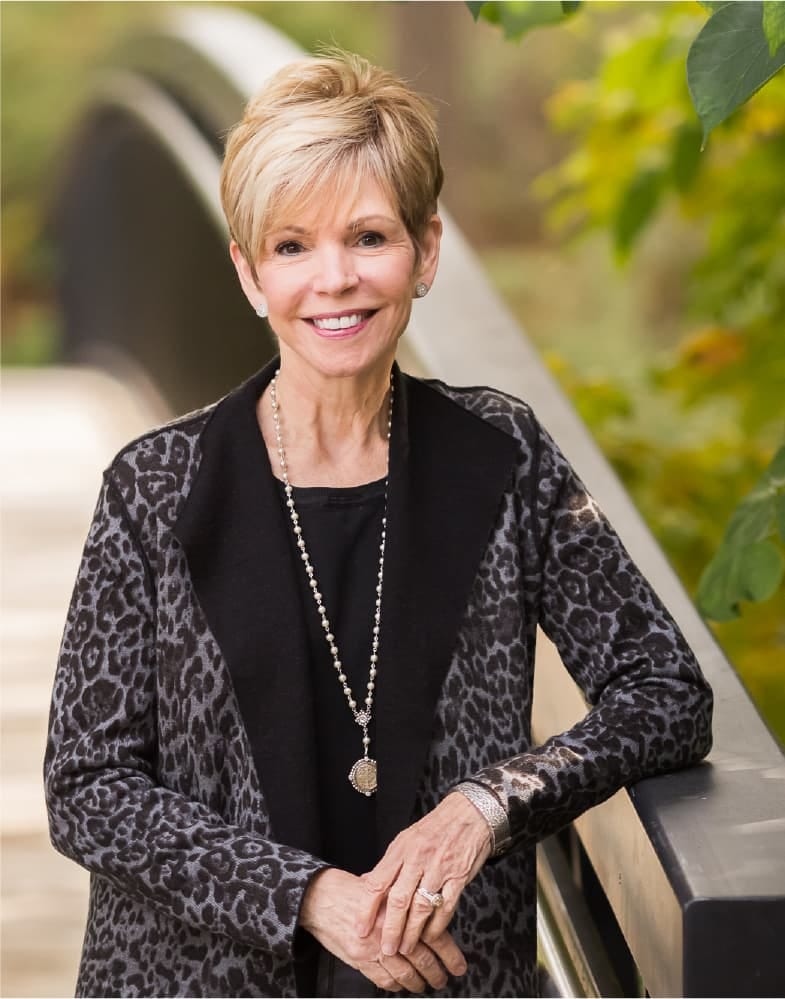
I always start with a biography of the person. What does she say about herself?
BIO: From her About page at Amazon: “For more than 35 years, Leslie has worked as a biblical counselor and licensed clinical social worker. She is a licensed clinical social worker (Academy of Certified Social Workers- ACSW), and Licensed Clinical Social Worker- (LCSW) who has her own private counseling practice and more than twenty years of experience counseling Christians from a biblical worldview” as the About states.
She received her Master’s degree from the University of Illinois and is an adjunct professor at Philadelphia Biblical University (which was renamed Cairn University in 2012). Leslie has authored several books. She said in a recent video that she has been married to the same man for 50 years this year, and has 2 grown children.
Then I looked up ACSW and LCSW, and learned what those initials stand for. Answer is in the above paragraph. It’s the licensing for social workers.
Leslie is a member of the American Association of Christian Counselors (AACC). This is not to be confused with the Association of Certified Biblical Counselors (ACBC). Vernick conducted her postgraduate training in biblical counseling and cognitive therapy.
Cons
The difference is that the Association Leslie belongs to uses secular psychology and professional clinical methods overlaid onto the Christian faith, whereas the ACBC rejects secular psychology and relies strictly and exclusively on the Bible for counseling. Many have warned about using secular psychology in biblical counseling. Or is is Christian counseling? Confusing. Here is an excerpt explaining, from Got Questions:
On a related note, what is usually called “Christian counseling” is different from “biblical counseling” in that Christian counseling often uses secular psychology in addition to the Bible. This is not to say that a Christian counselor is not also a biblical counselor, but often Christian counselors are Christians who integrate secular psychology into their counseling. Biblical or nouthetic counselors reject secular psychology wholesale.
Leslie does contribute to the Association of Biblical Counselors (ABC) which is broader philosophically, looser denominationally, and contains a greater openness to clinical research than is ACBC.
Though Vernick identifies herself as a Biblical Counselor, I asked Google how much of her therapy uses clinical psychology. This reply is from AI, which I am using because I am not familiar enough with the terms and strategies in professional Clinical Therapy sessions. The answer was yes, Vernick heavily uses psychology.
Heavily Rooted in Cognitive Behavioral Therapy (CBT)
Vernick’s core approach to personal transformation is clinical cognitive therapy.
- Identifying Cognitive Distortions: Her “Roadmap Strategies” focus on identifying the “lies” or faulty core beliefs that individuals maintain.
- Reframing Action: Her CORE framework teaches clients to actively challenge irrational or destructive self-talk, which is the textbook application of Albert Ellis’s Rational Emotive Behavior Therapy (REBT) and Aaron Beck’s CBT.
Is secular psychology helpful or unhelpful to use when counseling Christians? John MacArthur gives a logical answer.
After scanning some of Leslie’s content on her page, on her Youtube, and downloading her ‘Quick Start’ bundle, I saw that Leslie Vernick is a counselor who focuses on women in difficult marriages. Every professional has a niche or specializes on a topic. Difficult marriages is Vernick’s chosen niche.
I notice that Vernick’s motto on the About page states-
“We believe God wants you to live with safety, security, and emotional strength – whether your spouse changes or not.
Does this square with the Bible’s admonitions for life on this present earth? No. Nowhere in the Bible does God promise safety or security before He comes again. It’s the opposite. In addition, Jesus emphasizes through His word spiritual strength- which then gives rise to emotional strength. Example, Mary’s spiritual strength was well in place before her emotional trial. This allowed her to emotionally endure the taunts of her community believing she was a wanton fornicator.
There are many difficult marriages in the Bible, or marriages presenting with significant emotional obstacles. Adam and Eve, Sarai and Abram, Abigail and Nabal, Leah and Jacob, Esther and King Ahasuerus, Hosea and Gomer, Joseph and Mary…
As for ‘safety’, Paul lived one of the unsafest lives ever as a Christian. What God wants is for us to grow in His likeness, obey Him, and pursue sanctification by mortifying our sin.
I also notice Leslie focuses on ‘emotional abuse’. Emotional abuse is real, but difficult to define. In my opinion it is such a nebulous term that practically anything can be called emotional abuse and then the phrase is then used to justify things that the Bible doesn’t allow.
Leslie apparently offers helpful tips and strategies to help women in difficult marriages. I can sympathize. I was an observer of my parents’ difficult marriage and was in my own difficult marriage (neither were Christian marriages). I think being in a difficult marriage is one of the hardest paths a woman can walk.
Leslie said in an interview, that God values the safety and sanity of the people in a marriage more than sanctity of the marriage. I’m not so sure about this. Nebuchadnezzar was married, yet God made him go insane for 7 years. Didn’t God care about the King’s wife? God put Esther in a position to be killed by her husband when she approached Xerxes. Didn’t God care about her safety?
Leslie also said in that same interview that the verse in Malachi 2:16 stating “God hates divorce” “is mistranslated in the KJV. Whether you want to get involved in this interpretive dispute, and it IS a dispute, further in Malachi it says that whoever divorces splatters his garments with filth. Jesus reiterated God’s standard of marriage as a one-flesh, permanent union in Matthew 19. I can’t see in the Bible where it says the wife may divorce a husband because the husband is emotionally stunting the wife.
Pros
On the plus side, Vernick has been featured many times on interviews and podcasts at Focus on the Family.
Her adjunct work seems to be in a solidly biblical higher educational setting.
Also, Cairn University is stated to have a firm commitment to Biblical fidelity. All students at Cairn U must take a Bible minor. The University adheres to a conservative, Protestant outlook and has a strong focus on biblical integration into life.
Conclusion
Whether you agree or disagree with the extent, if at all, that clinical psychology should be used in counseling will determine your conclusion as to whether to absorb Vernick’s material. I am suspicious of secular psychology and if it was me, I’d choose an ACBC therapist or her materials instead. Others may differ in this opinion. Of those Christian or Biblical counselors who integrate psychological frameworks into their professional settings, Vernick may be the best of those hybrid counselors- IF you want to open the door to a fortress of philosophy that needs to be torn down.

Personally, I’d advise looking for an ACBC counselor instead. Recommended counselors’ materials are the passed-away David Powlison, Martha Peace, and Greg Gifford. If you wish to find an ACBC counselor in your area to meet with, here is the ACBC find page:


