
By Elizabeth Prata
Tag: reading
Summer Reading: Paradise Lost
By Elizabeth Prata
When someone says “summer reading” it usually brings to mind beach reads, AKA light novels, that are aimed to entertain. Since people take vacations in summer, they bring with them a novel that isn’t mentally demanding, just aiming to soak up the book in their hand and the sun above as they escape briefly from their workaday life.
I’m the opposite. Summer reading for me means I choose demanding books because I’m off work for the summer. During school my mental capacities are stretched to the max. I teach reading to a succession of 6 small groups over 4 different grades using 3 different reading programs. It’s a lot. I love it, but it drains me mentally.
When I get home, I’m a zombie and it takes a pot of tea and an hour to recover. I have nNo capacity for demanding novels.
So in the summer when I’m off and I’m not being challenged mentally, it’s the perfect time to make my TBR stack of classics, or ‘books I’ve always wanted to read but haven’t yet’ or ‘a book that is hard for me. Four summers ago I tackled Moby-Dick. Then it was Treasure Island. Then Joseph Conrad’s Heart of Darkness. So this summer it’s going to be…
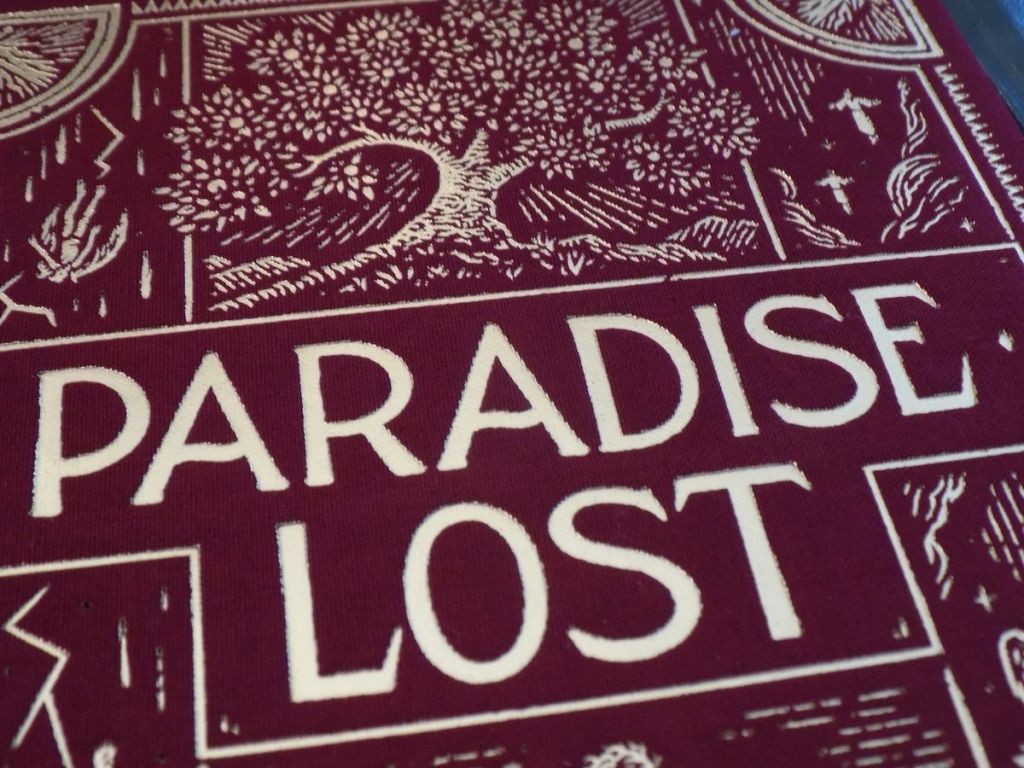
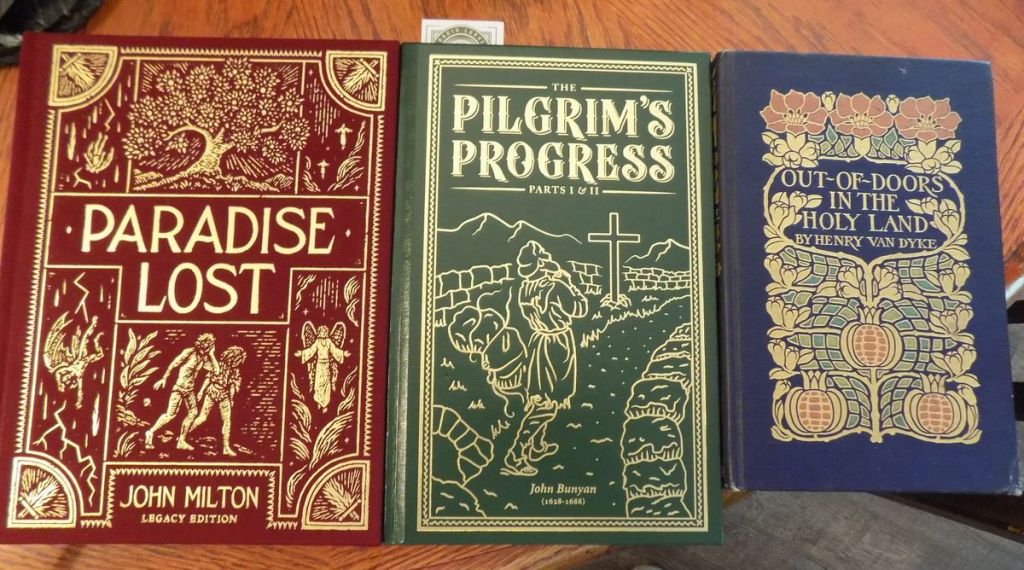
I saw it advertised on Grace Books’ website and it is not only one I’ve always wanted to read but this edition is a beautiful book. I mean, you had me at ‘gilt edged’. And ‘cloth bound’. Yes, I judge a book by its cover. Come at me, lol.
It’s John Milton’s epic poem, “Paradise Lost’. Written in 1667, the publisher promises that it is an unabridged version but there are margin notes for unfamiliar words. So already I know the language is going to be demanding. And harder for me personally, is the fact that it is written as an Epic Poem. I have a rough time with poetry, I just don’t understand it.
An Epic Poem is (according to Encyclopedia Britannica), “long narrative poem recounting heroic deeds. Outstanding examples of the written epic include Virgil’s Aeneid and Lucan’s Pharsalia in Latin, Chanson de Roland in medieval French, Ludovico Ariosto’s Orlando furioso and Torquato Tasso’s Gerusalemme liberata in Italian, Cantar de mio Cid in Spanish, and John Milton’s Paradise Lost and Edmund Spenser’s Faerie Queene in English.”
I read The Aeneid, The Odyssey and The Iliad, when I was in my early 20’s. Forty-five years later – ahem – my brain may have dimmed somewhat. In fact, I when I was in High School and just after, I read most of the standard classics listed in top 100 lists and I’m glad I did back then because reading or re-reading them now is much harder. But every summer, I select a classic to read or re-read, and that is my Summer Reading!
The version issued by Grace Books was on 40% off the regular price at the time (it’s still 10% off now), so of course I could not resist. The book itself (according to the blurb) contains:
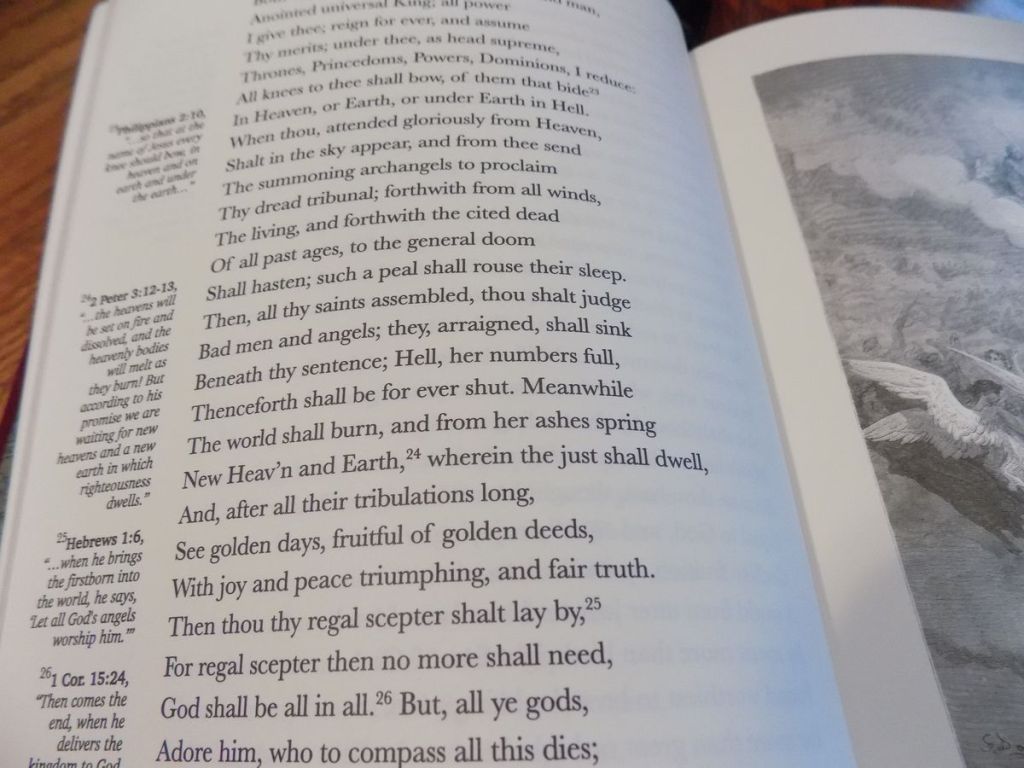
Explanatory notes are included in the margins for allusions to Greek mythology and obscure words.
- Introduction by Dr. Leland Ryken
- Cover design by Stephen Crotts
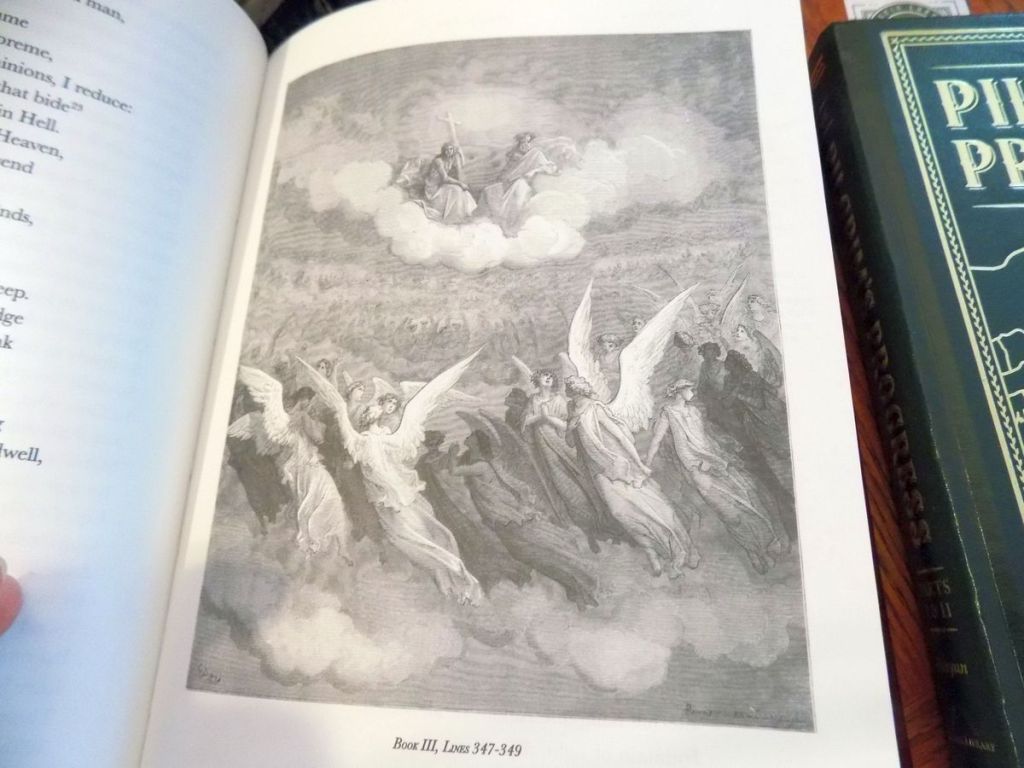
- 50 vintage illustrations by the renowned Gustave Doré; modified to cover nudity
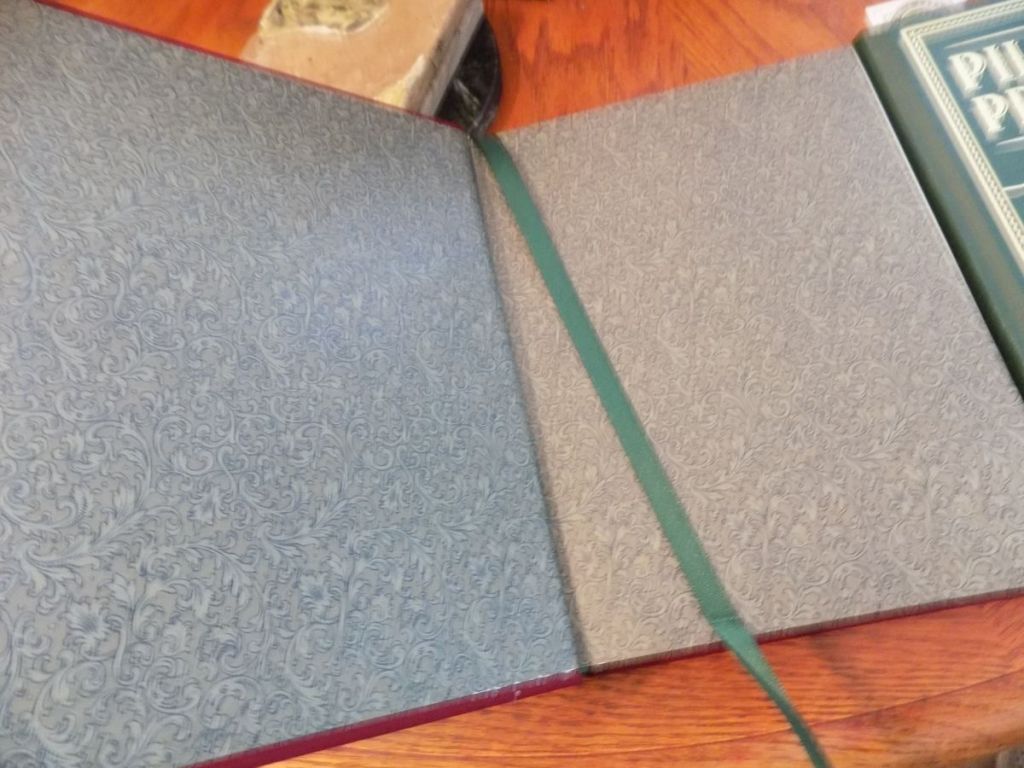
- Genuine cloth cover with gold foil print and a ribbon page marker
What is Paradise Lost about? Adam and Eve’s rebellion and humanity’s fall from grace. One reviewer of this edition on Amazon said,
“Having biblical backgrounds in its plot of being about Adam and Eve‘s temptation and humanity’s fall from grace, “Paradise Lost” should be read for its unparalleled sonorous language, it’s profound exploration of human freedom, disobedience and rebellion, and its impact on Western literature. It offers a complex, timeless, psychological portrait of Satan serving as a foundational text for understanding the archetypal antihero.”
OK, this should keep me busy! Here are the photos of this beautiful edition. I appreciate Gustave Doré’s illustrations. He was a famous French artist, printmaker, and caricaturist who died in 1883. He is best known for his wood-engravings illustrating classic literature, especially Dante’s Divine Comedy. What I really appreciate in this edition is that though the language has been left alone, the illustrations have been lightly edited to cover up the nudity in Doré’s illustrations.
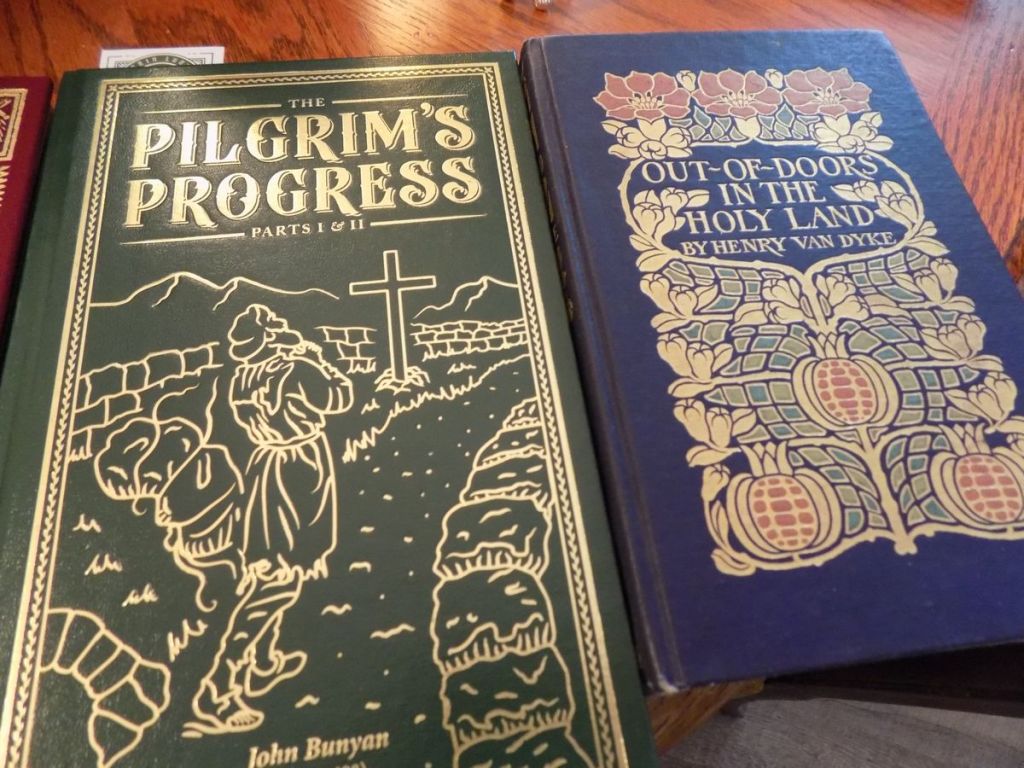
I mentioned I do judge a book by its cover. Here are two others I’ve recently acquired. The Pilgrim’s Progress was a free gift from Chapel Library, and the Van Dyke I bought myself. See what I mean? If I am going to own books, they might as well be beautiful. My other reading selection this summer is a re-read of Pilgrim’s Progress. I’ll also finish the Grisham I started, as well as Lady Audley’s Secret, Lord willing and the eyes don’t fail!
Happy reading and book-ing this summer! What is on your TBR list?
Book Review: From digital fatigue to analog renewal- Thom Rainer’s “The Revival of the Analog Church”
By Elizabeth Prata
Introduction
Have you heard of the new trend sweeping through our society from Gen Z-ers to Boomers? It’s analog. Yes, the new fashioned word for an old fashioned life- one filled with tactile hobbies like knitting and crosswords in real books and newspapers. Design trends where prospective house buyers seek a home like grandma had- with real rooms, not open concept, afghans, wallpaper, hardwood floors, sunrooms, even sewing rooms. They call it ‘a grandma house.’
The last 30 years has seen a rise of the digital, and a resulting loss of the tactile. People are tired of the constant notifications, intrusive surveillance, annoying advertisements/pop-ups, and anxiety known as FOMO (Fear Of Missing Out). When we’re always ‘connected’, we tend to compare our lives to others and covetousness, jealousy, and unease rises. Frankly, we’re tired.
The Book
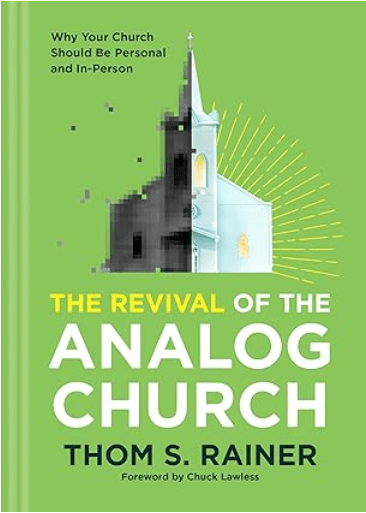
The church has not escaped the impact of the rise of digital lifestyles. Into this rising trend of concern and yearning for simpler times is Thom Rainer’s forthcoming book, “The Revival of the Analog Church: Why Your Church Should Be Personal and In-Person (Church Answers Resources)”. It is due out in October 2026, and it is being published by Tyndale Momentum.
The Problem
The church never escapes being influenced by the world around us. Even diligent churches that resist worldly trends have to fight hard to push back. Church is composed of people, and people for the last 30 years have grabbed onto all things digital. Many churches have suffered for it.
Rainer wrote, “Have we digitized what was meant to be deeply personal? The digital world gave us tools. Helpful ones. We could reach farther and faster. Sermons went online. Groups went virtual. Resources were available with a click.”
But all these tools come with a cost. We are suffering from ‘digital fatigue’ and this includes churches. It’s no so much the tools that churches use, such as streaming the sermon or digital Bibles, it is the pace at which the digital world has taught us to run. It is the brain, always pumping for more, the new, the next. Digital is a tool, but it has overpowered us and taught us that we need to always be moving. This constant movement includes a hurry-up pace in church. Yet, Rainer writes, church is exactly the place where we need to slow down, pray pensively, linger in relationship, be present emotionally, mentally, physically. He advocates for “the sacred simplicity of a Sabbath-like presence.”
Rainer’s point is synopsized with this- we are digitally numb, and ‘Digital numbness leads to spiritual numbness.’
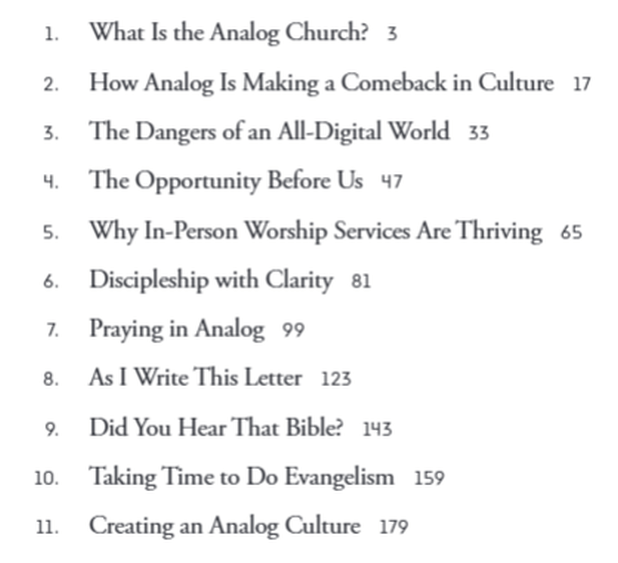
The chapters, 11 of them, describe the problem and offer solutions. Rainer includes reflection questions at the end of each chapter.
My Review
Rainer begins with a solid explanation of the difference between analog and digital, and how this is impacting the church. He humbly relates that he himself had fallen into the fast-paced digital world, at one point, to the detriment of his family. He loves the digital and assures the reader he is no naysayer, writing, “We have not sinned by embracing digital tools.”
However, Rainer makes the case that we must mindfully slow our pace, be present at church, and restore an unhurried worship.
This book is positioned well to capture this wave of analog yearning to return to an unhurried pace with real relationships. The realization that digital has its limits is fueling the desire to return to unhurried worship and discipleship in its fullest sense. In his book, Rainer describes how.
There is no doubt that digital media has drastically changed how people communicate and how people commune with each other, and the change has impacted not only worship but witnessing and evangelism. This must be a concern for us all.
His point is that “People are weary of a life that feels like it’s always in motion but never truly grounded.” It’s true that the digital world has taught us to live in fragments, when Jesus actually taught to live by thinking deeply, slowly, and intentionally in worship.
Positives:
–The author captures and crystallizes and amorphous unease many people seem to be dealing with regarding the digital lifestyle,
–His end-of-chapter questions are thought provoking,
–Rainer provides solutions, not just identifying the problem,
–He Humbly includes himself in the digital problem.
Negatives:
–I saw a few scriptures, maybe 3 or 4. I’d like to see more scripture use in a book about the importance of relational worship,
–His likening of listening to vinyl records or playing board games to church life as examples of analog were a bit of a stretch. In my opinion, he could have written more deeply about analog church life. I felt the book was more overview than deep theology. Of course, this is fine for someone new to the concept of the problem of digital vs. analog.
–The writing style was very much digital. Too many sentences beginning with ‘And’, staccato short bulleted sentences, and lots of “it’s not this, it’s that.” Rainer mentioned several times how he has absorbed and enjoyed the digital life and pace, and this absorption shows through in his writing, which definitely mimics the digital.
Conclusion
If you are new to the idea that digital fatigue is rising and beginning to permeate our society -and the church- from the oldest adult generation to the youngest, then this would be 4-stars for you. If you are already familiar with the concept and want a more deeply theological examination of the issue, then this book is a 3-star for you, with other suggestions below.
Further Resources:
Out-Of-Doors in the Holy Land by Henry van Dyke. Published 1908 and considered a classic of Holy Land travelogues. Blurb: “Van Dyke’s beautiful descriptions and thoughtful reflections on the landscape, the people, and the spiritual significance of the places he visits make this a must-read for anyone interested in travel, religion, or culture. This work has been selected by scholars as being culturally important”. The premise is that Christianity was an out of doors religion, where walking, pondering, contemplating and considering were all slow processes.
Digital Minimalism by Cal Newport. (2019). Blurb: “a book that proposes a philosophy for using technology intentionally to support your values, rather than letting it control you, advocating for a focused life by drastically reducing low-value digital activities”.
Twelve Ways Your Phone is Changing You, by Tony Reinke. (2017). Blurb- “Drawing from the insights of numerous thinkers, published studies, and his own research, writer Tony Reinke identifies twelve potent ways our smartphones have changed us—for good and bad. Reinke calls us to cultivate wise thinking and healthy habits in the digital age.”
Competing Spectacles by Tony Reinke. (2019). Blurb- “We live in a world full of shiny distractions, faced with an onslaught of viral media constantly competing for our attention and demanding our affections. These ever-present visual “spectacles” can quickly erode our hearts, making it more difficult than ever to walk through life actively treasuring that which is most important and yet invisible: Jesus Christ.”
God, Technology, and the Christian Life by Tony Reinke (2022). “Highlights: Biblical, Informed Look at Technology; Gathers Ideas from Industry Experts and Theologians by Interacting with Christian and non-Christian sources on technology and theology including John Calvin, Herman Bavinck, Wendell Berry, and Elon Musk, and is Educational: Discusses the history and philosophy behind major technological innovations.”
Amazon Bio: Thom S. Rainer is the founder and CEO of Church Answers. Prior to Church Answers, he served as president and CEO of LifeWay Christian Resources. He also served at The Southern Baptist Theological Seminary for twelve years where he was the founding dean of the Billy Graham School of Missions and Evangelism. He has been a pastor of four churches and interim pastor of ten churches. He has written several books, including “I am a Church Member” and “Simple Church”.
DISCLAIMER- My Advanced Reader Copy was provided via NetGalley. I received a free digital copy of this book from Tyndale, the publisher, in exchange for an honest review.
Not Every Christian Book Is Safe
By Elizabeth Prata
SYNOPSIS: Examining trends in Christian publishing, the article warns that bestselling breakout books often gain popularity through marketing and consumer demand rather than sound doctrine. Because false teaching can spread through widely read titles, believers should approach popular books cautiously, seek counsel, and practice discernment carefully.
Continue reading “Not Every Christian Book Is Safe”Year end wrap-up: Looking Toward 2026 with Grace-given Faith
By Elizabeth Prata

In a few weeks I will have been blogging here at The End Time for 17 years straight. I’ve mainly posted a blog a day. This blog comprises 7,105 essays, with few repeats. That is not a testament to my skill or ingenuity, but a testimony of how unfathomable the depths of scripture are and how infinite this seemingly finite book is.
The earliest blogs from 2009-2010 didn’t transfer from Blogspot when I exported them to WordPress here, because there was a byte limit to the export. That’s OK, many of them were newspaper eisegesis anyway. I grew out of that thanks to the Spirit but I still remember and value the initial rush of understanding post-salvation. I was amazed to have at hand so many answers to the complex questions of life that I’d futilely searched for, such as ‘why are the Jews so hated?’ ‘what is the point of life?’ ‘why are there earthquakes and other natural disasters?’ ‘why is there always turmoil in the Middle East?’ and so on. The Bible held those answers and early blogs were my outworking of my theological education on those matters as I then saw the world with new eyes.
As for 2025 here at the blog (and the podcast- which I have been highly irregular on recording), the answers continue. The essays are still an outworking of my own processing of matters I’m studying. They are also answers to reader questions, using the Holy Spirit-given spiritual gift of discernment He has dispensed to me. Or encouragement for ladies in these dark times. Those remain my focus 17 years later: theology/doctrine, discernment, and encouragement.
2025 wrap-up
I began 2025 with this essay on January 1: 7 bullet points on why the Passion Conference is one to avoid. I had spent some time in 2025 re-vamping some of my discernment articles into shorter essays, with added content, and to that end, I created the ‘bullet point’ series. Attention spans have shortened in the last 17 years. Also, some people just need a ‘cut to the chase’ moment, so that is what I named the series.
In 2025 I published 361 posts. My streak of ‘every day/365’ was interrupted by a period of illness. Working in a school, lol, I get sick a few times a year. This year I had a high fever for a few days and did not produce an essay. One of the days I missed posting was because I’d lost power for 24 hours, sigh. It was a rough day being launched back to the 1800s with no electricity! lol.
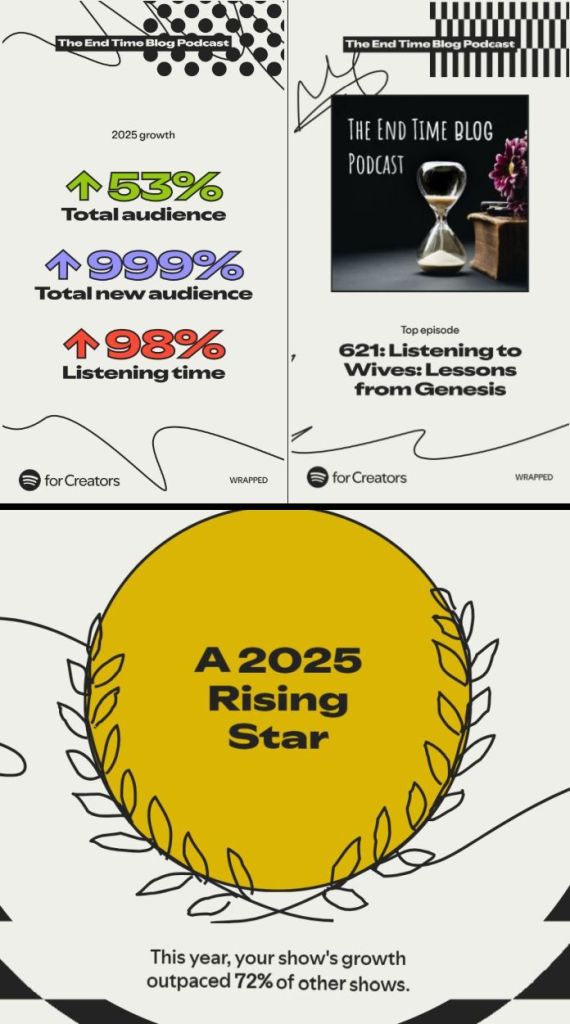
In my “Spotify end of year round up” I learned that the most listened to podcast essay was the one titled: Listening to Wives: Lessons from Genesis. It was played 215 times more than any other episode. I wonder what caught the people’s attention? If you prefer reading to listening, the essay is here to read.
Spotify says my listening audience increased 53% over last year. 999% of those listeners were new. So I feel doubly bad I have not paid as much attention to recording my essays as I should.
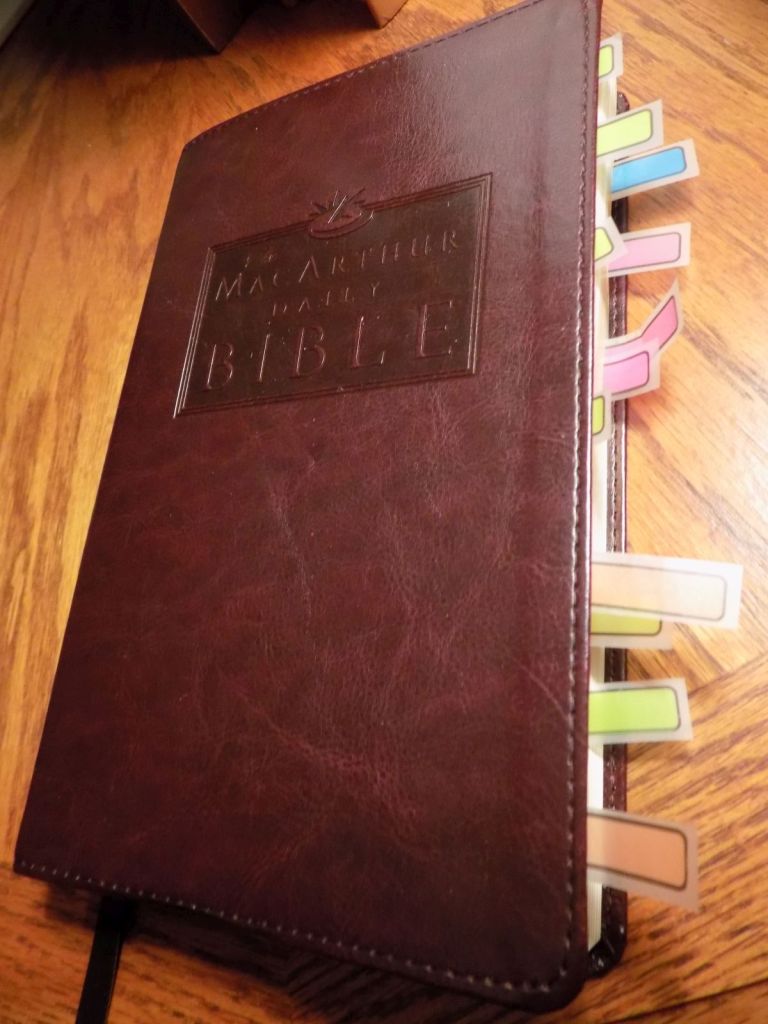
This year for my Bible reading plan, I used the John MacArthur Daily Bible: Read the Bible in One Year, with Notes from John MacArthur, NASB. I loved it and I’ll use it again. I liked the leather binding, the easy to read pages, and of course the content is wonderful. I never write in my Bibles, I use arrow post-its. You can see all the interesting things I’d tabbed for follow up!
Other Bible Reading Plans I have used in the past have been the McCheyne, Grant Horner, G3 (several inside a bundle), and one a friend wrote that was chronological. Justin Peters is reading what appears to be M’Cheyne’s plan, (the link is to Jan 1 reading,) https://youtu.be/ewqy6JKOhAM. Ligonier lists many choices for Bible Reading Plans in 2026, here.
The ever-dependable and solid Michelle Lesley has a roundup of Bible Reading plans by type, here.
Other links: Grant Horner’s , M’Cheyne‘s , MacArthur Daily Bible , G3 5 Day Bible Narratives Reading Plan (free downloads accompany this bundle, listed below:)
Free Downloads
- 5 Day Bible Narrative Reading Plan
- 52 Week Religious Affections Catechism
- Personal Journal
- 2023 Reading Plan csv
- Reading Plan on Google Calendar
Books
These are the book I’d read in 2025. I listed the religious ones first (10 of them), and secular ones next (16 of those) for a total of 26 books read this year.
- Human Nature in its Fourfold State, Thomas Boston (not finished yet)
- Innumerable pamphlets like Free Grace Broadcaster and others from Chapel Library,
- Jonah & Nahum: Grace in the Midst of Judgment: (A Verse-by-Verse Expository, Evangelical, Exegetical Bible Commentary on the Old Testament Minor Prophets – MOTC), John MacArthur,
- The Scandal of False Teaching, James Durham,
- The Greatness of the Soul and Unspeakableness of its Loss Thereof, John Bunyan,
- Christmas According to the Gospel, Allen Nelson IV,
- Christ Triumphs Over Sin and Death: The King’s Victorious Return, John MacArthur,
- Love Came Down at Christmas, Sinclair Ferguson,
- A Word Fitly Spoken: Theology of Communication, Aaron Garriott (not finished yet),
- Finishing Well, John MacArthur
- The Bookshop, Penelope Fitzgerald (novel),
- The Bookshop: A History of the American Bookstore, Evan Friss (non-fiction),
- Bendigo Shafter, Louis L’Amour,
- Laced (Regan Reilly Mysteries, #10), Carol Higgins Clark,
- Land of My Heart (Heirs of Montana, #1), Tracie Peterson,
- The Unselected Journals of Emma M. Lion: Vol. 3, Beth Brower,
- The Unselected Journals of Emma M. Lion: Vol. 2, Beth Brower,
- The Unselected Journals of Emma M. Lion: Vol. 1, Beth Brower,
- Midnight at the Blackbird Café, Heather Webber,
- Wreck of the Medusa: The Tragic Story of the Death Raft, Alexander McKee,
- Beautiful Day, Elin Hilderbrand,
- The Innkeeper of Ivy Hill (Tales from Ivy Hill, #1), Julie Klassen,
- The Rural Life, Verlyn Klinkenborg,
- The Full Cupboard of Life (No. 1 Ladies’ Detective Agency, #5), Alexander McCall Smith,
- The Berry Pickers, Amanda Peters,
- Morality for Beautiful Girls (No. 1 Ladies’ Detective Agency, #3), Alexander McCall Smith
What’s Next in 2026?
I plan to keep writing, as long as I feel that is what the Holy Spirit wants. I do plan to try and record more essays. I received a free gift from Chapel Library of Pilgrim’s Progress parts I and II, and I will read that. I also ordered booklets from Chapel Library (for free) Bunyan’s The Fear of God and The Acceptable Sacrifice: The Excellency of a Broken Heart – Bunyan.
I inventory all my books using LibraryThing (a free online system but you can set it to private) and I was surprised to find that after John MacArthur, the authors I have the most books from are RC Sproul (28), and John Bunyan, (17). Next was Jonathan Edwards with 11 books by him or about him.
Chapel Library is a ministry offering older theological material to download or sent through the postal mail in hard copy for free.
Chapel Library: “Classics to read and share! Want a packet mailed to you FREE? Chapel Library will ship 1 order of up to $20 value per month to your door free of charge.”
What a blessing they are.
2025 was a big year in my opinion. We had the Steve Lawson adultery scandal in 2024 and a few months later Lawson breaking his silence in 2025. Josh Buice, president of G3 Ministries outed as a liar and a hypocrite. We lost Voddie and MacArthur and James Dobson. The assassination of Charlie Kirk shook evangelical political conservatives to the core. It seemed to me that Kirk’s killing caused a major shift of some kind from which we are still feeling the fallout.
False teacher Jennie Allen shifted her sadly growing “If:Gathering” conference to a streaming global event. It was 24 hours of featuring many false teachers such as Allen, Francis Chan, Christine Caine etc on every continent (except Antarctica & Greenland.) The internet and streaming are boons for those behind closed countries, homebound, and the general person who wants access to a wide variety of Christian material and preachers. However it is fraught with pollution that satan is so good at infiltrating. Gather25 was a discerner’s disappointment.
People look at the numbers and say foolish things like “But look how If:Gathering has grown so much in 10 years! God MUST be behind it!” No. Look at how fast sin had grown from the garden to the Flood, from Genesis 3:1 to Genesis 6:5. Satan was behind THAT. Growth and speed are not always God-given indicators of theological solidity.
So my goals this year in 2026 are to keep reading, keep praying, keep writing, record and publish the podcast more regularly, keep attending my church and serving and worshiping there, keep working at school, keep loving the people around me. In my opinion, the key to the Christian life is consistency. This blog essay by John MacArthur addressing the unremarkableness of a normal Christian life (outwardly) caught my attention when it was published almost 15 years ago. Here it is again, if you are feeling disadvantaged, useless, inconsequential because you are not doing “BIG THINGS!” for Christ, don’t feel bad. Jesus wants unremarkable faith in ordinary, consistent lives. He grows us incrementally as we make steps, sometimes strides, sometimes stumbling, only to be picked back up by grace to continue plodding ahead.
Sometimes he raises up a Paul or a Martin Luther or a John MacArthur. You can count on one hand those men or women who have made a huge, positive, detectible impact for the faith. But we cannot count the innumerable Christians who lived faithfully all their believing lives and died in obscurity- who made impacts too. That’s you and me. And remember, heaven is not a place for Christian celebrities. There is only one celebrity there. JESUS.
Happy New Year to all my readers. I wish you a frutiful and thriving 2026!

The Joy of Collecting Books: A Personal Journey
By Elizabeth Prata

I blogged earlier in the week that I enjoyed attending the annual Book Fair put on by a literacy organization where the public can enter the well-organized warehouse and browse for books and take up to 100 of them for free.
I found some books for the school library, friends, and some for my own shelves.
I’ve been blessed with the opportunity to live in a nice apartment that has two bedrooms. I don’t need two bedrooms- I live small. However, the second bedroom is a blessing because I’ve always wanted a personal, home library. And now I have one!
One of my hobbies is collecting books. Searching for books, reading books, and living with books are separate things. Related, but separate. As far as searching goes, I like the thrill of the hunt. I almost found a first edition of Dune. A 1st edition of that science fiction book would bring in five figures. It turned out to be a first ‘book club’ edition, which is worth significantly less, but still a thrill to find. Or when I found a first edition of CS Lewis “Till We Have Faces”, worth about $200-400.
It’s an ‘Antiques Roadhouse’ sort of thing, where you come across a book at a yard sale that has an original Dali sketch inside, or a valuable first edition, or just THE book you’ve been wanting to read.
The other pleasure with books is organizing them. I use LibraryThing as an inventory software so I know which books I have and by what author etc. Very helpful since even though I have a good memory, I can’t remember all of them. So before I add one to my library I double check. Or after I get a few books, I add them tot he inventory. If there are any duplicates, I know which ones to give away!
Once I’ve obtained a book, and once I’ve inventoried it, I enjoy organizing the shelves. I have mine arranged by genre. Of the theological portion of my library, I have them arranged by topic and the commentaries I arranged in order of the Bible’s order.
Thus, Commentaries on Genesis start off the shelf and Revelation commentaries are at the other end. Missionary biographies are together, and the topics of heaven, grace, fearing God, prayer, and so on are also all together. I have one bookcase dedicated to the commentaries by MacArthur and his authored books that GTY has sent me or that I’ve purchased, and another bookcase with a shelf dedicated to Sproul. One large section next to the Sproul shelf is my Puritans section.
So it’s enjoyable to place a recently obtained book where it should go, and to then sit in the library and be among all my books and look at them, which by now are like friends.
It has taken me 35 years to accumulate them. I was always a reader and enjoyed library book sales and yard sales and finding books even before I was saved. When I moved from Maine to Georgia, though, I halved my personal library, after calculating the weight and the cost of hiring the mover to haul them 1500 miles.
When I moved within Georgia from one apartment to another, I halved them again, for the same reason, and because I was moving from a 800 sf apartment to a 400 square foot apartment. By then I was saved and I had started looking for theological books, anyway. I didn’t mind abandoning the books I left behind because many were not acceptable reading for a Christian. Dream interpretation/New Age books, spiritual but not doctrinal books, romances, and the like…all went bye bye.

This was a blessing because not only were my shelves cleaned and purified but now I had room to accumulate books about missionaries, commentaries, doctrinal books and so on. And for the last 21 years I have been doing just that.
With this last batch I’ve accumulated, inventoried, and placed lovingly on my shelves, I realized now my shelves are full! I realized I literally have no more room to put one more book. This is both a sadness and a joy.
I never really collected anything other than books. I like function, and books are functional. Early in my life, like when I was 10, 11 years old I began collecting glass figurines. In the Mall (when there were malls) there used to be glassblowers selling their wares at kiosks. I had bought a delicately glass-blown small tall ship, a ballerina, and several other figures. My brother in a fit smashed them all one day. I thought “Well, that’s that.” I decided not to collect ‘things’ as they might one day be destroyed and render the whole collecting endeavor pointless.
As an adult I don’t like collecting ‘things’ because you have to dust them, and they take up space. I prefer empty or nearly empty flat surfaces. But books are living, so to speak. They’re friends you can turn to for entertainment, for comfort, to learn from. I came from a family of readers, so it seemed like a natural fit to collect them.
I remember once in the mid 1990s when my husband and I were traveling from Maine across the southern tier of the US for a few months. We made it to Los Angeles. My cousin lived there, which seemed exotic to us New Englanders to have a family member living so far away. We got together and visited, and he took us to a taping of the Tonight show. At that time Jay Leno was the host, and old time comedian Jonathan Winters was the main guest.
We were standing in line to get the free tickets, and since this was pre-cell phone days, we each took out a book to read as we were waited, me from my purse, my husband and cousin from their back pockets. Reading was what we did at any spare moment. We always carried a book or had one nearby.
I know some people don’t mind books in piles, books laid down on top of standing books on the shelves, books everywhere. I am too structured for that and I’d decided not to have any book piles when my shelves became full. So if my shelves are full, that means no more books. I’ve winnowed down twice, and the books I have are the books I want, so I won’t be dispensing with any unless something changes in me, my apartment, or my circumstances.
I love my books and now I get to love the ones I have and there will be no more additions for the time being. There will be no more collecting. I am happy to be a reader, to live a live of books, and to own so many wonderful possibilities for picking one up and mentally journeying whenever I want.


Whatever hobby you have, whatever leisure you choose, I pray it brings you enjoyment and comfort.
The Importance of Reading for Christians: Advice from Puritan Richard Baxter
By Elizabeth Prata
SYNOPSIS
I present the importance of reading for Christians, yet advocate for the Bible as the primary text. I reference Puritan Richard Baxter’s advice on selecting books that enhance scriptural understanding and do not present stumbling blocks to growth. Christians should be readers of all kinds of appropriate books.
Chick Lit with a Touch of Magic: Blackbird Café Review
By Elizabeth Prata
SYNOPSIS
In my review of a book set in Wicklow, Alabama, the protagonist, Anna Kate, returns to bury her grandmother and confront her family history while grappling with magic realism. I explain the genre of ‘magic realism’, discuss my genre preferences, and note that some genres present stumbling blocks to some while not to others.
Continue reading “Chick Lit with a Touch of Magic: Blackbird Café Review”Why Christians Should Embrace Reading Fiction
By Elizabeth Prata
I discuss reading fiction as a Christian. Despite the notion that some people have that “God’s word is enough” and that other reading isn’t required, I and others argue that fiction enriches our understanding of human experience and offers valuable leisure. I share insights from Leland Ryken and Tony Reinke, urging people to consider the importance of good literature in a busy life.
Continue reading “Why Christians Should Embrace Reading Fiction”Book Review: The Invisible Life of Addie LaRue
By Elizabeth Prata
SYNOPSIS
I express disappointment in contemporary books, mentioning my struggle to find engaging stories. I specifically critique a novel about Adeline Larue, who makes a Faustian bargain, resulting in a dull, unmemorable existence. I find the writing pretentious and the character unlikable, thus choosing to stop reading, continuing my search for better literature.
Continue reading “Book Review: The Invisible Life of Addie LaRue”
