
By Elizabeth Prata
SYNOPSIS
Balaam’s talking donkey reveals his spiritual blindness and greed, contrasting Moses’ reverent response to God at the burning bush, illustrating how false prophets miss divine presence while pursuing personal gain. Balaam ridiculously argued with his donkey!
God is amazing, transcendent, and all-powerful. Of course He is so much more as well. In the dim, pre-dawn of human history, He created all the animals on Days 5 and 6. Day 6 is when He made the donkeys.
Cut to 1400 BC. The Prophet Balaam had been hired to curse the Israelites. God frowns upon His people being cursed, (Genesis 12:3), so Balaam has a problem on his hands. As Balaam travels on his trusty donkey to the cursing destination, The Angel of the LORD stood in the donkey’s way. Most people consider The Angel of the LORD to be a pre-incarnate appearance of Jesus, an event called a Christophany.
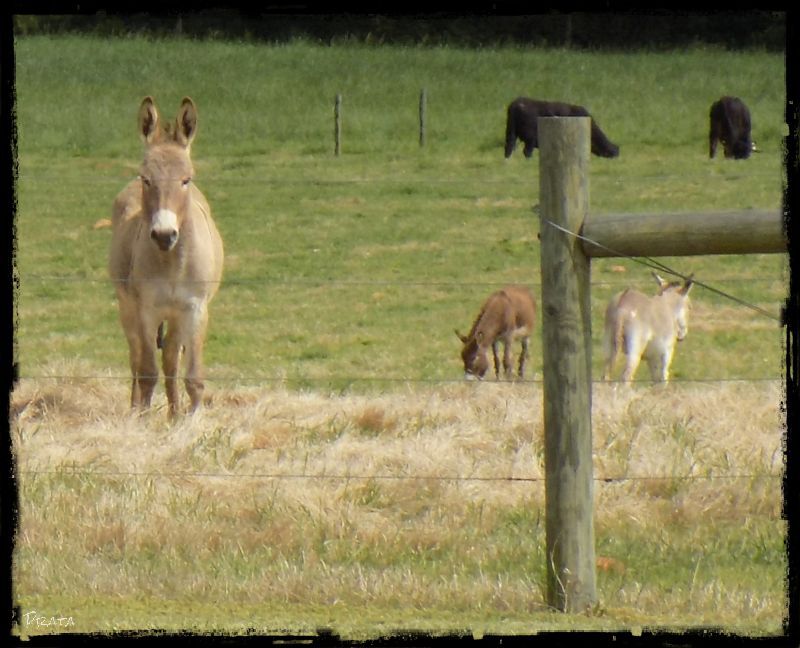
What ensued is both mystifying and hilarious. Read Numbers 22:21-35 for the scene. Three times the Angel blocked Balaam riding his donkey. Balaam did not see the Angel, but the donkey did. And three times when the donkey saw, he turned aside, shrank against the narrow stone wall, or laid down. Three times Balaam struck the donkey for refusing to proceed.
The Lord then ‘opened the donkey’s mouth’ and the donkey asked Balaam why he keeps hitting him.
Then the Lord opened the mouth of the donkey, and she said to Balaam, “What have I done to you, that you have struck me these three times?” And Balaam said to the donkey, “It is because you have made a mockery of me! If only there had been a sword in my hand! For I would have killed you by now!” But the donkey said to Balaam, “Am I not your donkey on which you have ridden all your life to this day? Have I ever been in the habit of doing such a thing to you?” And he said, “No.”
Now, people who have a hard time with this passage, it’s the fact that the donkey talked. Not me. The serpent in the garden talked, and Balaam’s donkey talked. Fact. The LORD not only opened the mouths of those animals, he closed the lions’ mouths so they did not eat Daniel in the arena.
What I am mystified by is the fact that Balaam argued with the donkey! He didn’t seem to notice (or care) that the donkey was suddenly talking. He was more angry that it ‘made a mockery’ of Balaam! By this point Balaam should have known that something supernatural was goin on. But he was too consumed with his upcoming appointment with money (for cursing) and with his feelings than to stop and immediately intuit that God was nearby.
Hint #1 that you may be a false prophet: fail to recognize the God whom you serve when He is standing right in front of you. And Balaam was false. (Revelation 2:14).
In contrast, I was thinking of Exodus 3 and Moses’ reaction to seeing the bush that was burning but not consumed. He called it a marvelous sight and said he must stop immediately to see it. When God said ‘It is I’, Moses hid his face, for he knew God is holy.
Balaam knew God but his personal god wasn’t Elohim, it was money. (2 Peter 2:15; Jude 1:11). False prophets are motivated by greed. “But those who want to get rich fall into temptation and a trap, and many foolish and harmful desires which plunge people into ruin and destruction,” says 1 Timothy 6:9. Balaam’s way was error, and he loved the reward of unrighteousness. (2 Peter 2:15).
Moses and Balaam show us the fact once again, that there are only 2 reactions to Jesus. Moses recognized the situation was supernatural and thus, the holiness of our august God. Balaam ignored the supernatural-ness of the situation and argued with his donkey.
Further Resources
Creatures born to be killed, part 2, sermon
Gain from wrongdoing, devotional

 the-end-time.org