By Elizabeth Prata

We’ve all read Matthew 11:28-30, “Come to Me, all who are weary and burdened, and I will give you rest. Take My yoke upon you and learn from Me, for I am gentle and humble in heart, and YOU WILL FIND REST FOR YOUR SOULS. For My yoke is comfortable, and My burden is light.”

We all know what a yoke is. Even if we don’t live in farming country, we understand the idea that whoever puts a yoke on an animal it means the person is master over that animal. When the master puts a yoke on an animal he will cause the animal to work for him, able to turn it this way or that. The master might make the animal work hard and long, or short and sweet, but he has control over that yoked animal. The animal is ‘owned’.
Left, are the yoke references in the Bible, extending back as early as Leviticus and ending with 1 Timothy. Most are agricultural references.
Yet we also discover in ancient times, the Romans (and others) had a method of subjugating their enemies. When an army conquered an army they had three choices. They could kill them all (a waste of potential human usefulness to the victor), they could keep them as prisoners (hard to feed and house that many), or they could absorb them into their culture’s life. But first, there had to be some kind of ritual to impress upon the vanquished that they were indeed subjects under a master and not at liberty any more.
The Romans would plant two upright spears in the ground and tie a third across it, kind of low. They would strip the conquered to their underclothes, and make them go under. This ritual was called “passing under the yoke.” The Latin phrase was sub iugum mittere. The Roman alphabet didn’t have a ‘j’, it was ‘i’. This is where we get the English word, subjugate.
Definition subjugate: bring under domination or control, especially by conquest. make someone or something subordinate to.
In earliest examples, Livy tells us, the ritual was used to remove blood guilt from the vanquished, so as to allow them to become slaves then potentially freed-men eventually.
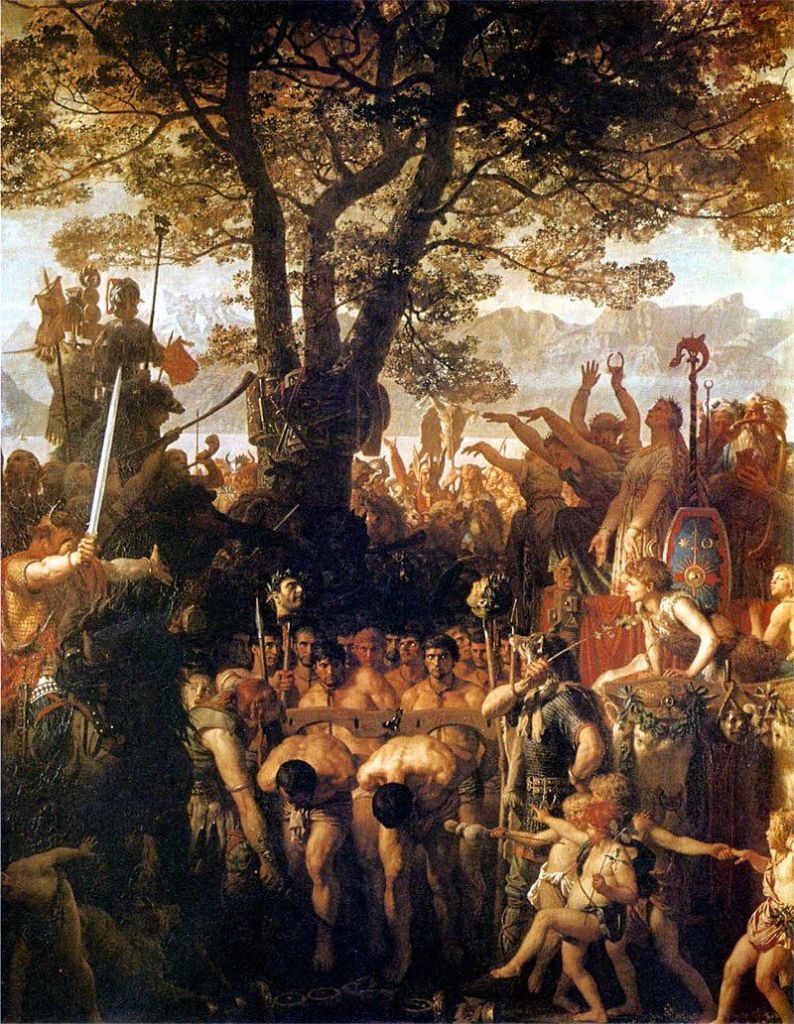
Below is Charles Gleyre’s artistic rendition of the ritual, titled The Helvetians Force the Romans to Pass Under the Yoke. Their victory didn’t last long, the Romans soon arrived with reinforcements and re-conquered the Helvetians (the Swiss). Gleyre takes some liberties here. The yoke new subjects were made to pass under was not an actual animal yoke, it was the three spears.
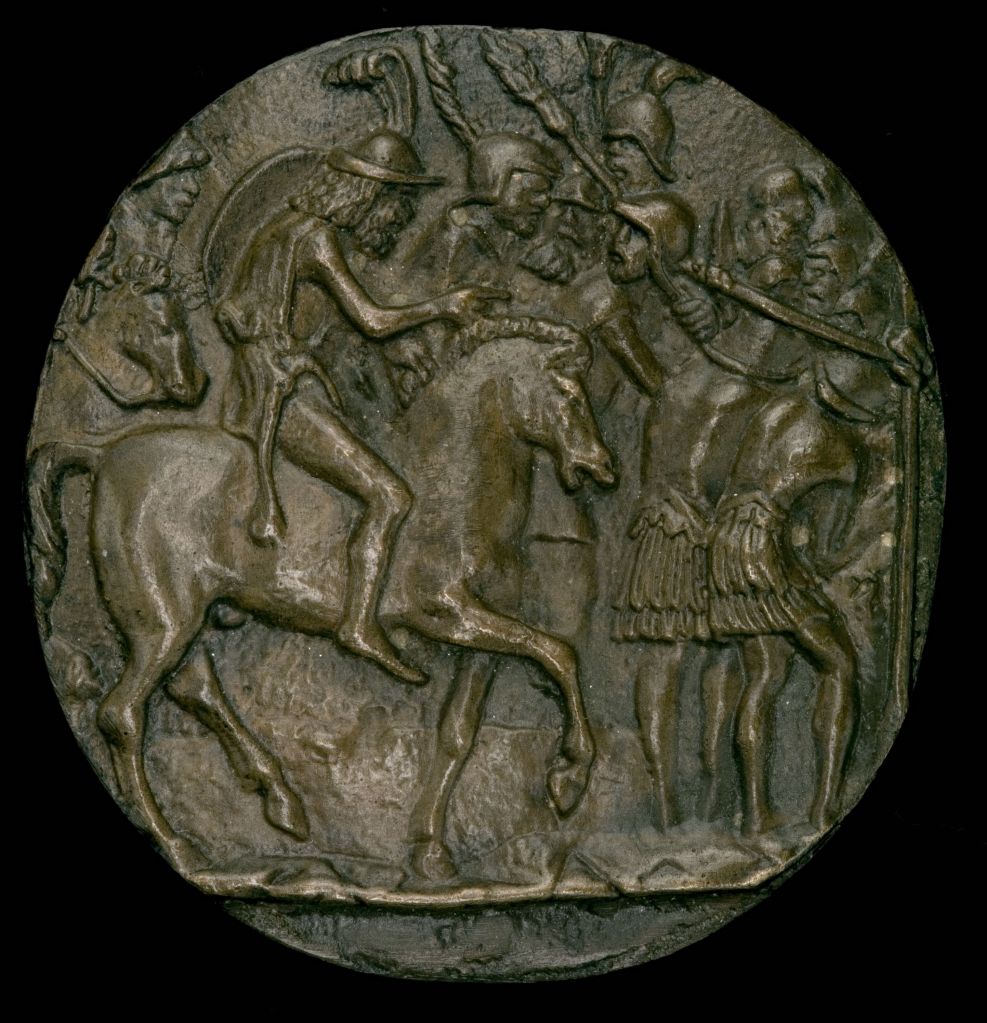
We see a truer depiction here of a medallion depicting the Romans being sent under the yoke by the Samnites (Pseudo-Melioli, c. 1500). Source Wikipedia
When we read Matthew 11:29, Take my yoke upon you, as the Jamieson, Fausset, Brown Commentary says it’s “the yoke of subjection to Jesus”.
In today’s easy peasy salvation and sanctification religion, we often forget the abjectness with which we must come to Jesus. And though our position after salvation is one of an adopted child of God, we still must remember to Fear God, and be Humble. Our position and lifestyle should be one absent of pride, unless it is boastful pride in our perfect Savior and His work. This author, explaining the Roman method of making people pass under the yoke, said,
They had to be brought out of one status into another; they must not be any longer the same beings they were before the deditio; ~W. Ward Fowler, “Passing Under the Yoke” The Classical Review, 1913.
We come to Him bowed, low, naked, and stripped of attachments to this world and of our former identity (as hopeless sinner). We pass under His yoke. Our status changes, we are changed. Rather than staggering under the terrible burden of sin, we now are “glad and lightsome, and said with a merry heart, ‘He hath given me rest by His sorrow, and life by His death,’ said Christian in John Bunyan’s book The Pilgrim’s Progress.
With all this information in mind, hear Jesus say the words again, ‘As opposed to the rough yoke of oppressors in a defeated kingdom, MY yoke is easy. MY burden is light. Pass under it.’
O, but doesn’t it seem heavy when looking at the spears and contemplating the humiliation of repentance! Look at the solders’ faces in Gleyre’s painting! Side-eye, suspicion, skepticism. We sinners think, “No, not THAT! Anything but that!” But yes. Bring yourself low, whether passing under the yoke of Jesus for the first time for salvation, or as you repent of sin even though you walk with Him. His yoke is easy! His burden is light!
Do you need to repent to be saved by the blood of Jesus? Do it! Do not hesitate! If you are born again, do you need to repent for something you have done? Do it! Do not hesitate! Passing under the yoke of Jesus you will find rest for your soul.


AMEN!
LikeLiked by 1 person