Posted in theology

Summer Reading: Paradise Lost

By Elizabeth Prata

When someone says “summer reading” it usually brings to mind beach reads, AKA light novels, that are aimed to entertain. Since people take vacations in summer, they bring with them a novel that isn’t mentally demanding, just aiming to soak up the book in their hand and the sun above as they escape briefly from their workaday life.

I’m the opposite. Summer reading for me means I choose demanding books because I’m off work for the summer. During school my mental capacities are stretched to the max. I teach reading to a succession of 6 small groups over 4 different grades using 3 different reading programs. It’s a lot. I love it, but it drains me mentally.

When I get home, I’m a zombie and it takes a pot of tea and an hour to recover. I have nNo capacity for demanding novels.

So in the summer when I’m off and I’m not being challenged mentally, it’s the perfect time to make my TBR stack of classics, or ‘books I’ve always wanted to read but haven’t yet’ or ‘a book that is hard for me. Four summers ago I tackled Moby-Dick. Then it was Treasure Island. Then Joseph Conrad’s Heart of Darkness. So this summer it’s going to be…

I saw it advertised on Grace Books’ website and it is not only one I’ve always wanted to read but this edition is a beautiful book. I mean, you had me at ‘gilt edged’. And ‘cloth bound’. Yes, I judge a book by its cover. Come at me, lol.

It’s John Milton’s epic poem, “Paradise Lost’. Written in 1667, the publisher promises that it is an unabridged version but there are margin notes for unfamiliar words. So already I know the language is going to be demanding. And harder for me personally, is the fact that it is written as an Epic Poem. I have a rough time with poetry, I just don’t understand it.

An Epic Poem is (according to Encyclopedia Britannica), “long narrative poem recounting heroic deeds. Outstanding examples of the written epic include Virgil’s Aeneid and Lucan’s Pharsalia in Latin, Chanson de Roland in medieval French, Ludovico Ariosto’s Orlando furioso and Torquato Tasso’s Gerusalemme liberata in Italian, Cantar de mio Cid in Spanish, and John Milton’s Paradise Lost and Edmund Spenser’s Faerie Queene in English.”

I read The Aeneid, The Odyssey and The Iliad, when I was in my early 20’s. Forty-five years later – ahem – my brain may have dimmed somewhat. In fact, I when I was in High School and just after, I read most of the standard classics listed in top 100 lists and I’m glad I did back then because reading or re-reading them now is much harder. But every summer, I select a classic to read or re-read, and that is my Summer Reading!

The version issued by Grace Books was on 40% off the regular price at the time (it’s still 10% off now), so of course I could not resist. The book itself (according to the blurb) contains:

Explanatory notes are included in the margins for allusions to Greek mythology and obscure words.

  • Introduction by Dr. Leland Ryken
  • Cover design by Stephen Crotts
  • 50 vintage illustrations by the renowned Gustave Doré; modified to cover nudity
  • Genuine cloth cover with gold foil print and a ribbon page marker

What is Paradise Lost about? Adam and Eve’s rebellion and humanity’s fall from grace. One reviewer of this edition on Amazon said,

“Having biblical backgrounds in its plot of being about Adam and Eve‘s temptation and humanity’s fall from grace, “Paradise Lost” should be read for its unparalleled sonorous language, it’s profound exploration of human freedom, disobedience and rebellion, and its impact on Western literature. It offers a complex, timeless, psychological portrait of Satan serving as a foundational text for understanding the archetypal antihero.”

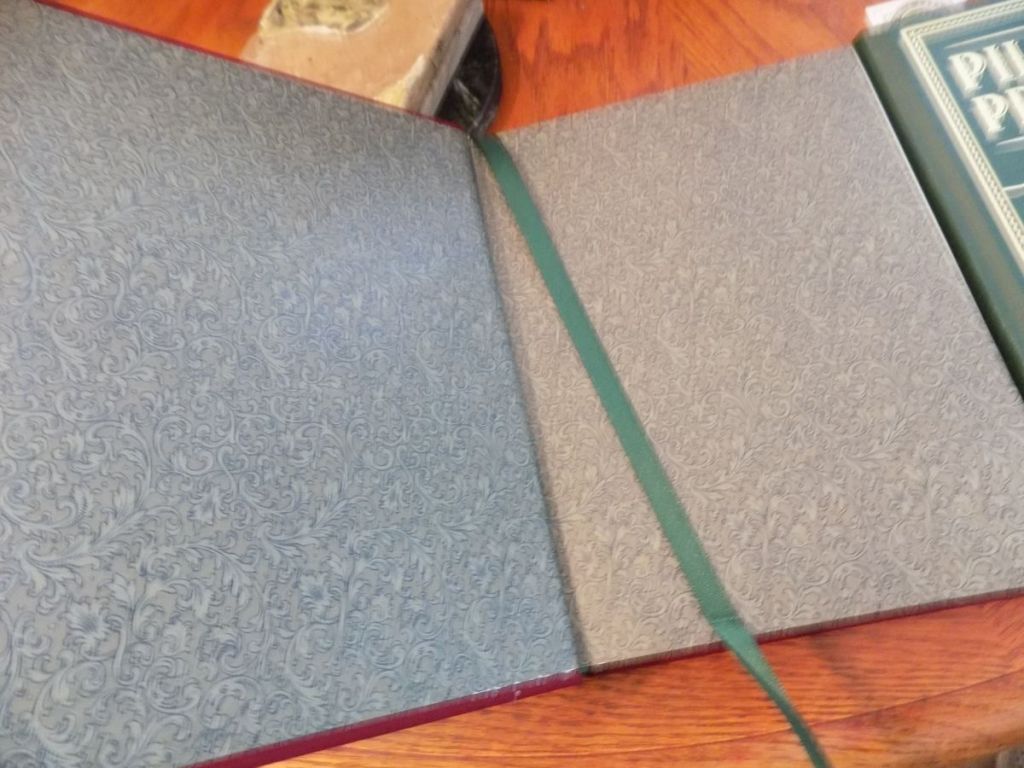
OK, this should keep me busy! Here are the photos of this beautiful edition. I appreciate Gustave Doré’s illustrations. He was a famous French artist, printmaker, and caricaturist who died in 1883. He is best known for his wood-engravings illustrating classic literature, especially Dante’s Divine Comedy. What I really appreciate in this edition is that though the language has been left alone, the illustrations have been lightly edited to cover up the nudity in Doré’s illustrations.
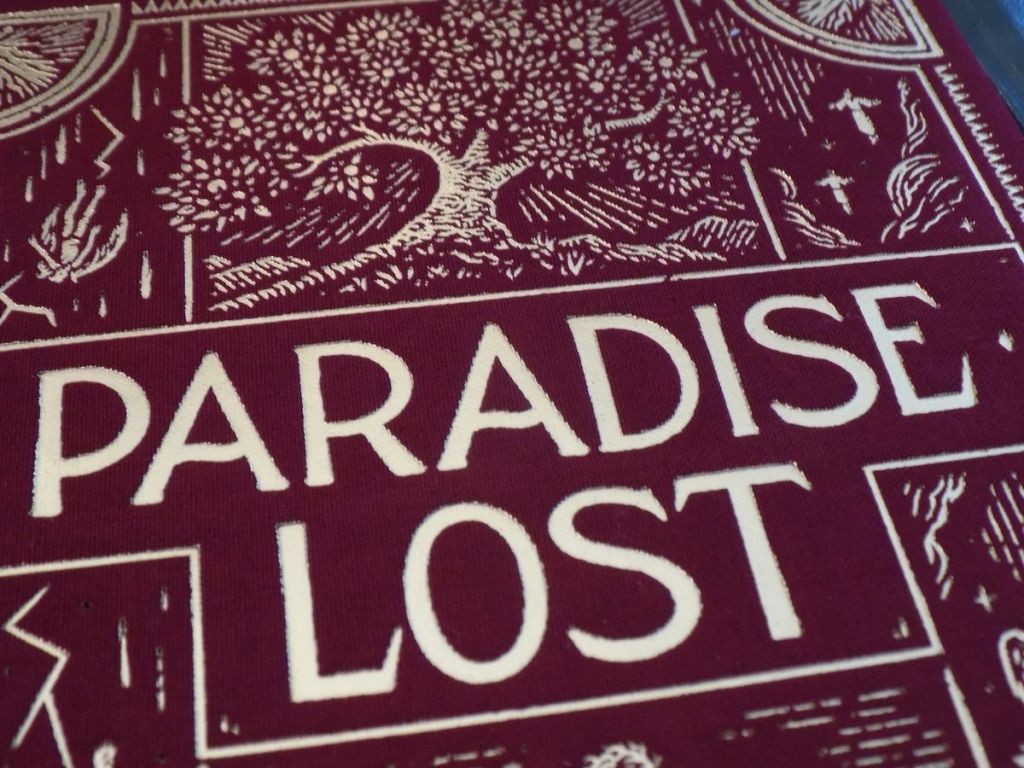
Beautifully illustrated cloth cover
Gorgeous end papers!! AND a ribbon!
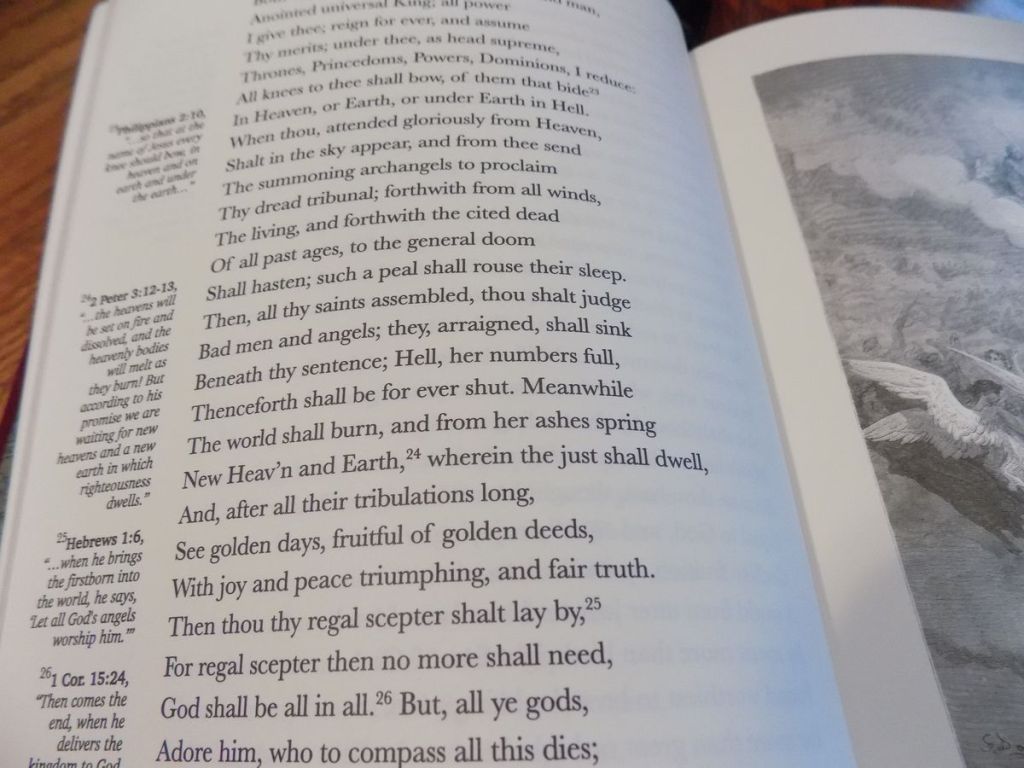
Crisp font and white pages for easy reading, side notes with explanations and scriptures.
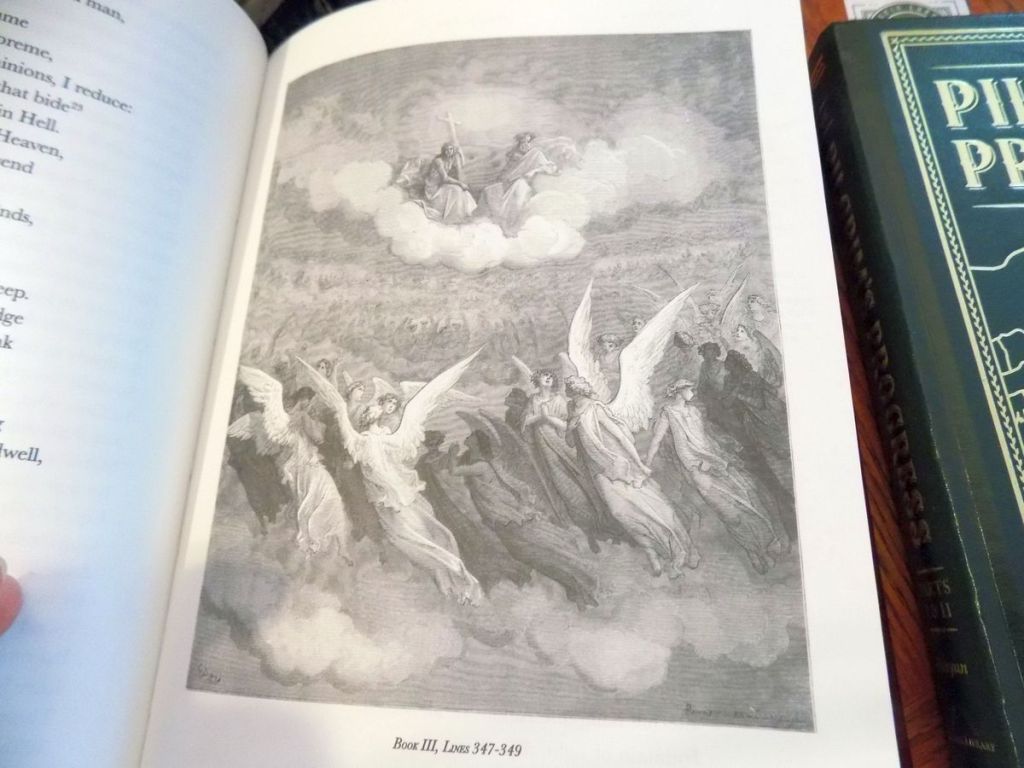
One of Dore’s illustrations. He was a master at his craft.

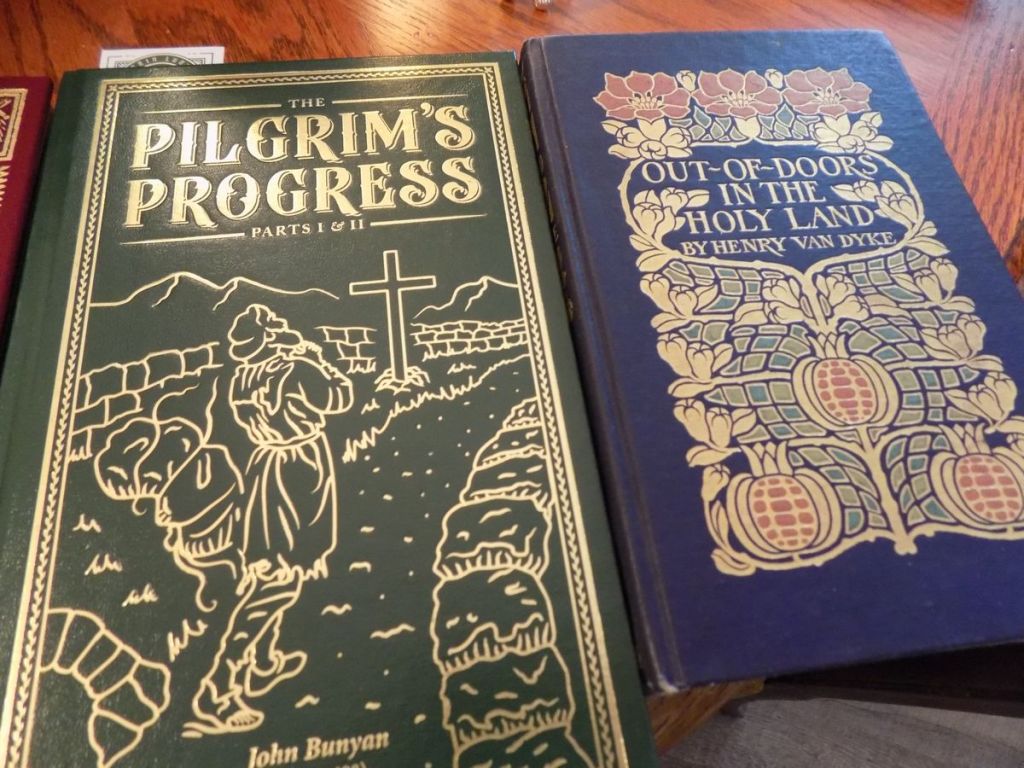
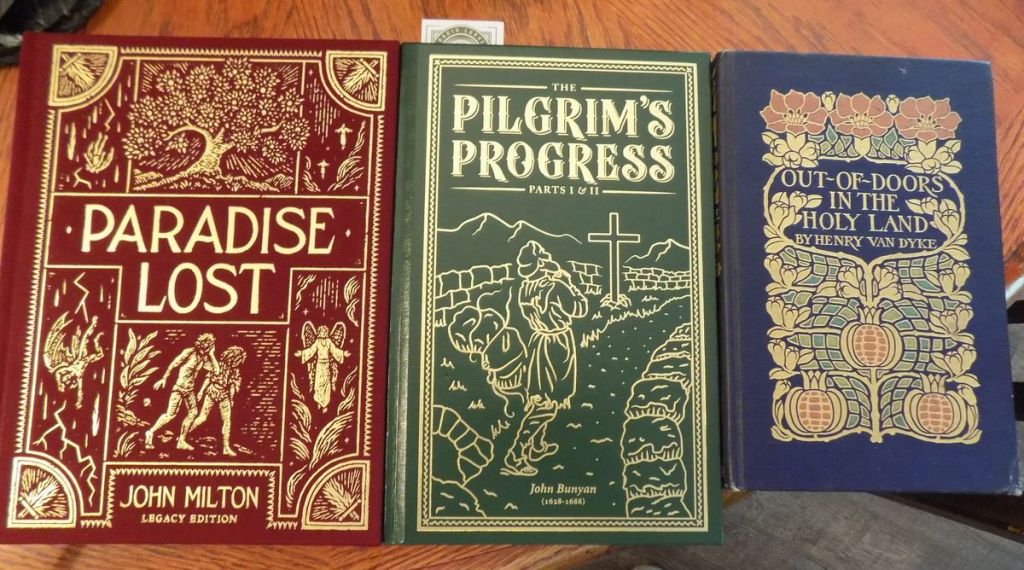
I mentioned I do judge a book by its cover. Here are two others I’ve recently acquired. The Pilgrim’s Progress was a free gift from Chapel Library, and the Van Dyke I bought myself. See what I mean? If I am going to own books, they might as well be beautiful. My other reading selection this summer is a re-read of Pilgrim’s Progress. I’ll also finish the Grisham I started, as well as Lady Audley’s Secret, Lord willing and the eyes don’t fail!
Happy reading and book-ing this summer! What is on your TBR list?
Posted in theology

My 2024 Year in Books

By Elizabeth Prata

It’s taking stock time. It’s turning over last year’s leaf into a new leaf. It’s time to make decisions. It’s New Year 2025 (almost)!

I took a look at my Goodreads list. I’m not a huge fan of Goodreads, I find the site cumbersome and hard to use. But it is useful. I didn’t record all the books I read this year (2024) on it but I did keep track in my hard copy planner. [I’m old school- a chronicler from 1968, I prefer hard copy]. So I added the books from my planner to Goodreads and it calculated my Year in Reading.

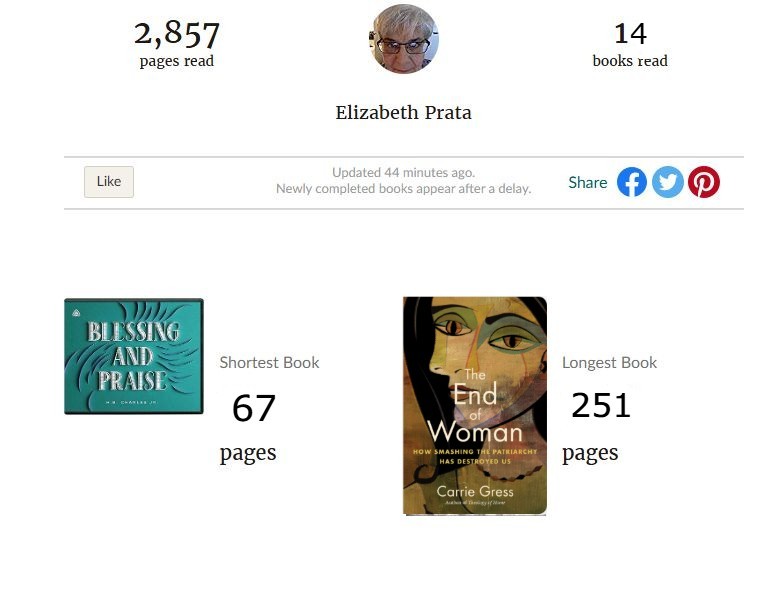
First of all, and I say this every year, I didn’t do as badly as I thought I did. I always consider myself a reading failure but that’s because I really don’t remember the books I’ve read. I read 14 books this year and that is about 10 more than I thought I did.

The book Blessings and Praise: Benedictions and Doxologies in the Bible is by HB Charles and it’s a workbook. It was part of a video study course I took from Ligonier earlier in the year. It is EXCELLENT! Highly recommended.

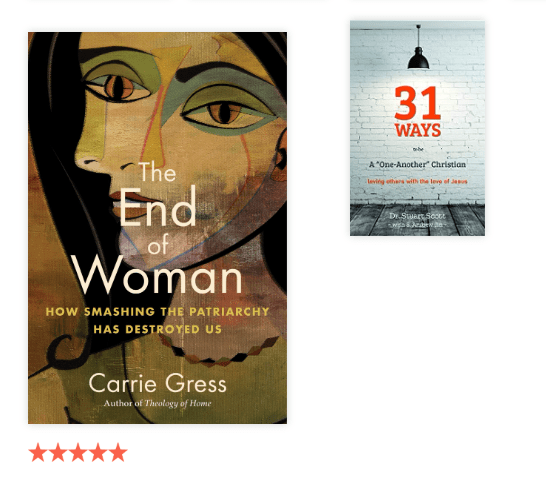
The other one is The End of Woman: How Smashing the Patriarchy Has Destroyed Us by Carrie Gress. It’s a thoroughly researched and extremely well edited book on the origins of feminism and their threads throughout the 1700s, 1800s, 1900s to the 2000s. When I say well edited, it’s because Gress researched voluminously, but crafted such a compelling narrative that puts in exactly the right facts and leaves out anything that would bog down the reader. With a massively researched topic spanning 300 years, it’s hard to know what to put in and what to leave out, and that is what an editor does- does those decisions which makes the story readable. By the way, feminism is evil, but WAY MORE evil than I thought. Ms Gress has the story.

I picked up the Harry Potter book this past summer. I read the first two when they came out, now more than 20 years ago. This summer I thought, well, let me see if I connect with them again, or not.

I mentioned this online and holy guacamole, lots of people got hot under the collar right away, accusing me of all sorts, because Potter is occult! the witchcraft! it’s evil! Etc. I asked sincerely if HP was any different from Lord of the Rings with, you know, wizards and supernatural events and stuff, but they just kept complaining and harassing. So I ignored them and read the first two books again.

Interestingly, Samuel Sey of @slowtowrite asked the following question on Twitter/X and I enjoyed the discussion, which was pretty civil. That debate is here if you want to read it.

Samuel Sey, @SlowToWrite asked – “Are there still Christians who believe people should avoid the Harry Potter books/movies because of its depiction of witchcraft? If so, I’m truly curious: What makes the witchcraft in Harry Potter more acceptable than the witchcraft in Lord of the Rings?

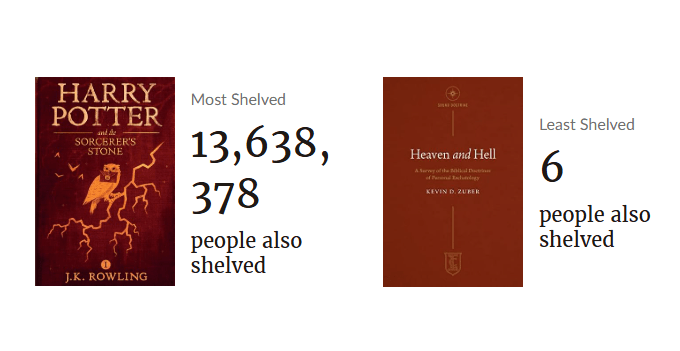
I thought Harry Potter book #1 was engaging enough because it’s well written, creative, and different. But halfway thru book #2 I lost steam and put them aside. Just like 20 years ago. As for the most shelved vs least shelved books on Goodreads as seen above, it’s no surprise to me that HP is on many millions of shelves but Heaven and Hell is only on 6, lol.

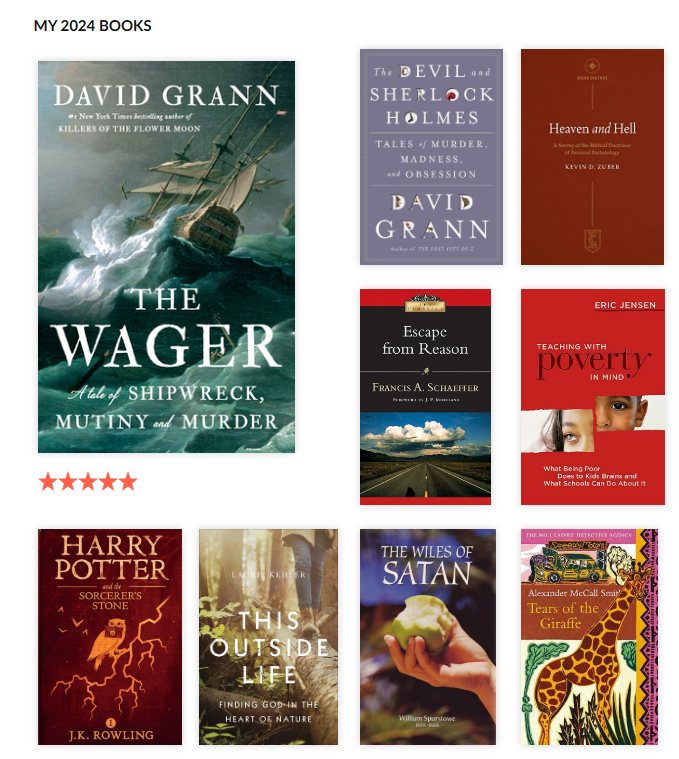
My books for 2024 are as follows

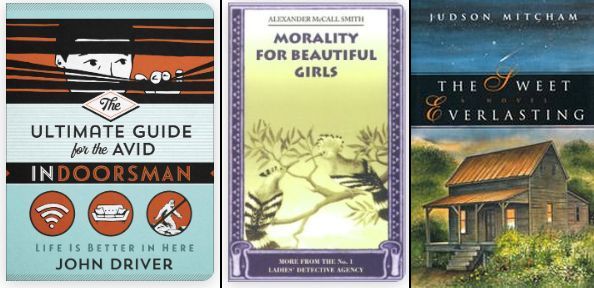
Confession- I have not read Morality for Beautiful Girls yet but I plan to read it today, so technically…

My goals for reading this year 2025 are to…read. I am increasingly tired when I get home from a full day of work as a reading interventionist in an elementary school. My eyes are tired too, they get dry and then they spasm. So I just want to keep the habit going without putting too much pressure on myself. I’ve enjoyed this Christmas break, and summer break I do read a lot, but absent a break, Saturdays seem to be the only day my mind is ready for reading.

I am reading the very long William Carey biography and I’ll continue that. Maybe the book on the ascension called Taken up to Heaven by Derek Thomas. I started Unlawful Killings by Wendy Joseph, a UK judge explaining about how the British court system works and reminiscing on her memorable cases. Beyond that I’ll see what comes up.

In 2023 I read The Art Thief: A True Story of Love, Crime, and a Dangerous Obsession, the one by Michael Finkel not the other similarly named book, and These is my Words: The Diary of Sarah Agnes Prine, 1881-1901 by Sarah Agnes Prine. Those two books were standout books, two of the best I’ve read in years. Absorbing and memorable. I’m still thinking of them over a year later. I hope I find a couple of books in 2025 equally as good as those.

If you are into Christian Reading Challenges, Challies always has a good one, you have to sign up for his newsletter but there is no cost involved and you can unsubscribe if you don’t like the newsletter. G3 has a reading challenge too. Reading challenges are when the organization sets a theme for the books they suggest you read, such as “Read a book over 100 years old” or “Read a book published this year”.

If you want a secular reading challenge, Barnes & Noble has one. Their themes are ones such as a selection of adventure books, meditative, dystopian. In their Empowerment suggestions, I’d avoid Rachel Hollis’s book, and in the Translated section I’d avoid Emily Wilson’s translation of The Iliad. I’d avoid the Memoir section completely. Secular books always come with risks. (Christian books too, but less so). Alternately, you could take just their categories and vet and select your own books.

It’s good to have a goal. Apparently last December 31 at Goodreads I’d set a goal of 13 books. I met it plus one. I find that absent a set goal, I fritter the time away and before I know it, I haven’t done much of anything. Having a Bible Reading Goal is good. I decided on the John MacArthur Daily Bible for my plan and I’ve included Dustin Benge’s Hearts Aflame Puritan reading devotional podcast, with a page of Valley of Vision Puritan prayer devotionals in the afternoon. Setting any goal is good, and setting it down in writing even better. Having set goals provides structure, limits, boundaries and it feels good to meet one’s set challenges.

Happy New Year and thank you for a great year and I pray your year of 2025 is in the Lord- now much else to say because all He does is good for those who love Him and for His glory!