
By Elizabeth Prata
Tag: paradise lost
Invented word: Pandemonium
By Elizabeth Prata
If you’ve ever been to a full-to-the brim animal shelter during puppy and kitten season, you know it can be a chaotic situation. After a winning football game with fans streaming onto the field, the first day of Pre-Kindergarten class, the courtroom when an unexpected verdict is announced…it’s pandemonium.
Merriam Webster defines the word pandemonium as: “a noun that refers to a wild uproar, tumultuous noise, or utter chaos and disorder. It typically describes a situation where people are confused, excited, angry, or frightened, resulting in loud, unmanageable bedlam.”
‘Unmanageable bedlam.’ I like that description.
Prior to 1667, the word pandemonium did not exist. John Milton invented it. He is the author of Paradise Lost, and his use of the word first occurs in Book 1 of the Epic Poem, line 756.
As with any Epic, the author begins the poem in the middle of the action, or in media res. Paradise Lost opens in the chronological middle of the plot, where Satan and his evil cohorts have been found to be sinners and tumbled from heaven into the deeps of hell. After recovering from the shock, Satan and his evil angels build a castle fortress in hell, and it is called “Pandemonium.”
Etymology Online describes the origin of the word:
“1667, Pandæmonium, in “Paradise Lost” the name of the palace built in the middle of Hell, “the high capital of Satan and all his peers,” and the abode of all the demons; coined by John Milton (1608-1674) from Greek-
–pan- “all”
-Late Latin daemonium “evil spirit,”
So…’pandemonium’ means ‘all demons’.
The meaning of the word by 1779 came to be understood as “place of uproar and disorder”. source.
In Rome, you might know of the building the Pantheon, you see the word ‘pan’ again. Pan means ‘all’ and theon meant gods. The word ‘panorama’ is pan meaning all and orama meaning ‘view’.
As I’ve mentioned before, words change. Our commonly understood vocabulary does not remain static, but changes over time. Old definitions drift away. New words come in. In fact, Shakespeare invented about 1700 words by changing nouns to adjectives and vice versa, combining words, and totally inventing new ones.
Words like accuse, courtship, blushing, dishearten, elbow…all from The Bard.
Pandemonium is such a good word to depict the author of Chaos’ evilly erected fortress out of the Lake of Fire. His Infernal Council as Milton terms it, when the unholy ones roused themselves after being cast out of heaven, the highest evil one situated atop his dastardly throne, debating war plans and strategizing from the fellow ‘gods’ such as Molech and Baal… contrasts with the peace of heaven’s throne, orderliness of God’s foreknowledge and perfectly unfolding plan for the universe, heaven, and humanity…
We know there are only two gates. There is pandemonium with the flesh of all pagans kicking against the goads… or peace with God and a stilled and forgiven soul for those who have repented to Jesus.
John Martin 1841, his interpretation of Pandemonium-
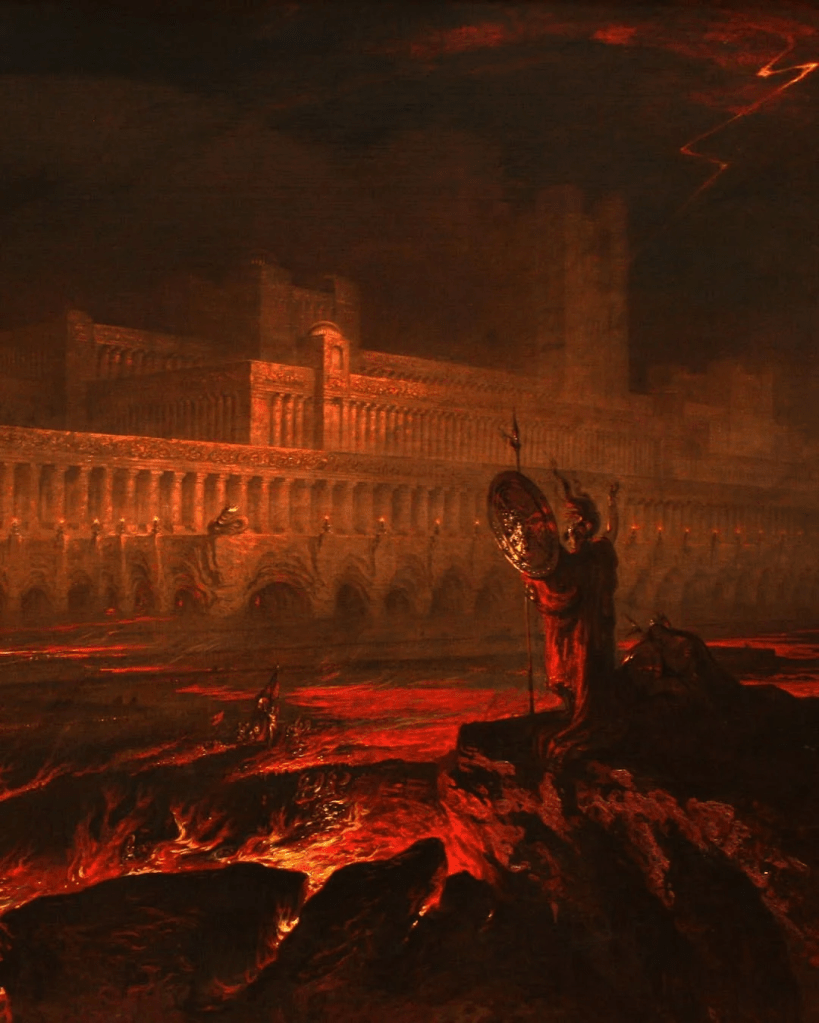
Above- “In Paradise Lost (Book I), Milton describes Pandemonium as a grand, opulent palace built by fallen angels under Satan’s command, rising from Hell’s fiery landscape with “stately height” and adorned like a temple. Martin captures this by portraying towering, temple-like structures with Babylonian and classical architectural influences, wreathed in flames and smoke. The painting’s monumental scale and intricate details show Milton’s vision of a city that rivals heavenly splendor, symbolizing the fallen angels’ pride and ambition.” Description source.
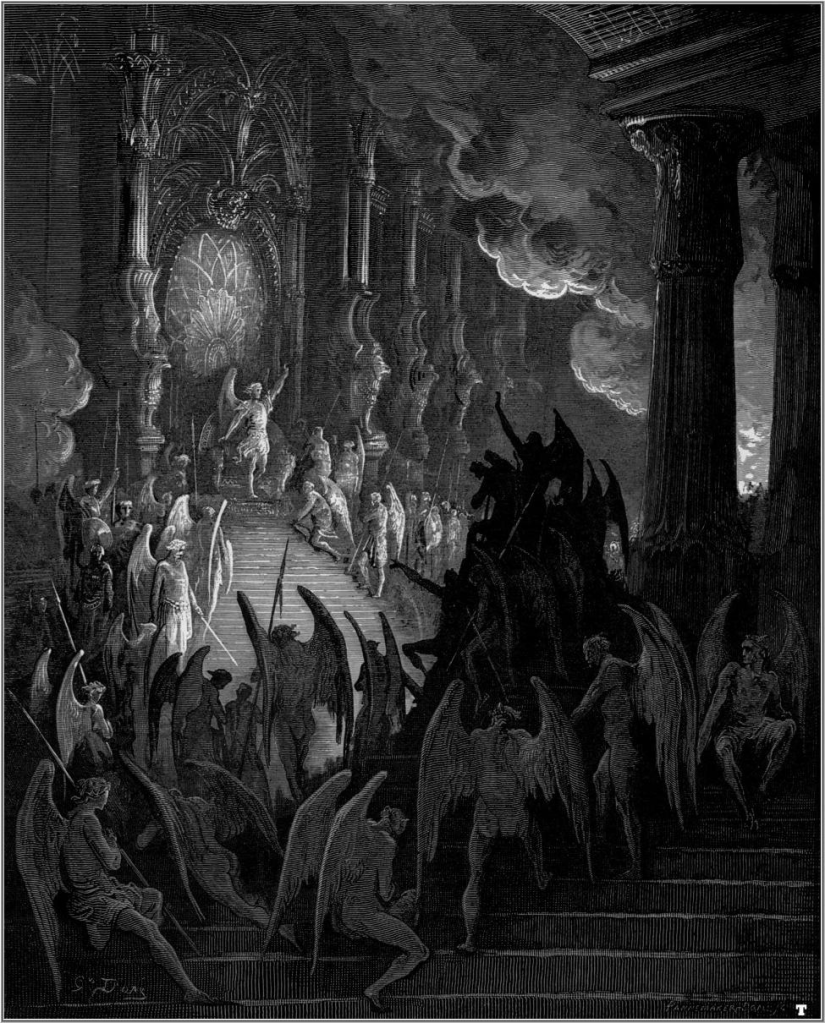
Below, Gustave Dore’s interpretation of Pandemonium and the engraving that is included in my edition:
How many names of Satan can Milton come up with? John Milton’s Mastery of Words
By Elizabeth Prata
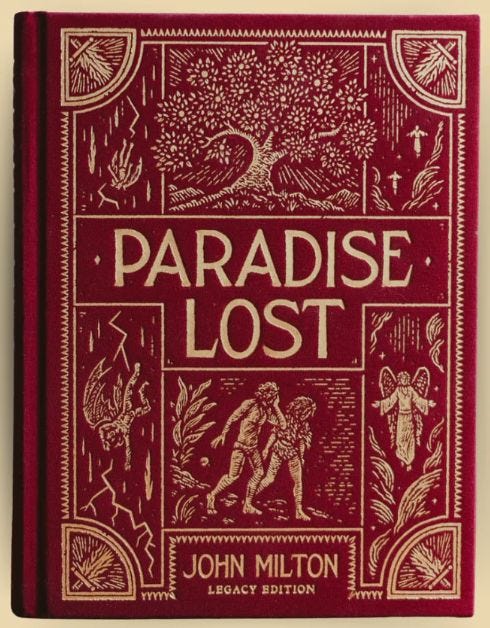
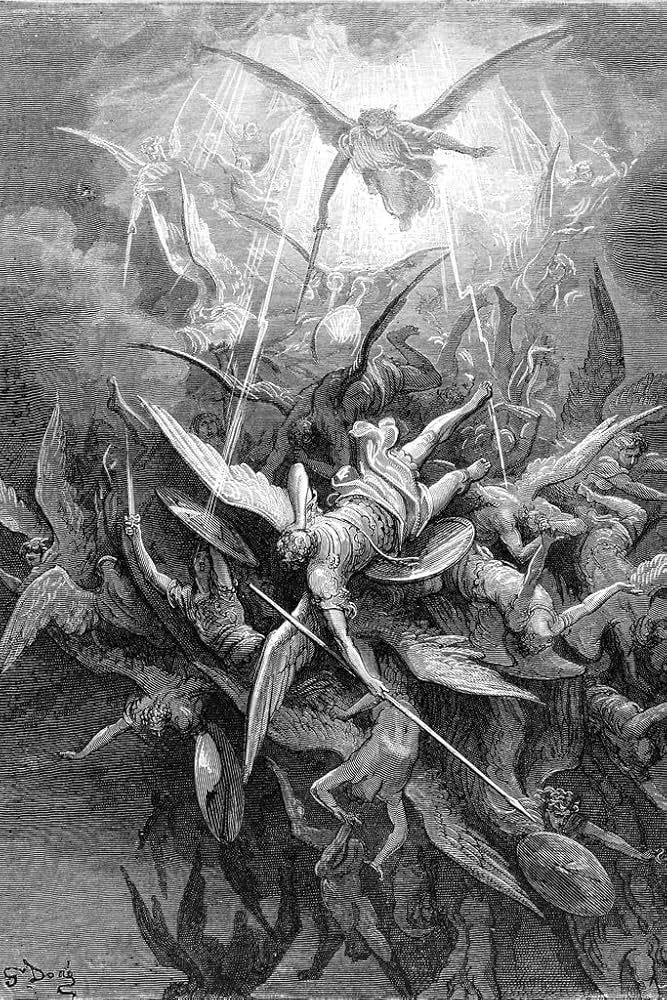
This summer for my chosen classic to read, I picked Paradise Lost, first published in 1667. I had seen that a new edition was out in a gorgeous binding, with notes, AND Gustave Dore’s illustrations (even better, lightly edited to cover nudity.) I was immediately thrilled, and I bought the book. It’s the Paradise Lost Legacy Edition by Lithos Kids, in a fabulous binding and cover. It’s so beautiful. Here is what it looks like: photos from Lithos Kids-
Author John Milton’s use of language is genius. He can describe the celestial realms movingly and with just enough detail so the imagination catches its edges but vague enough because no one knows what the heavenly throne room looks like apart from the few glimpses in scripture. Milton’s descriptions of Eden contain enough detail to ground us but vague enough to evoke a pleasant and relaxing lushness… It’s a wonder how he maintains this balance.
It’s the same with his descriptions of the parallel in hell with satan mounting his throne there and evilly plotting with his fallen cohorts how to regain heaven. Milton’s speeches between the angels holy and unholy, God’s pronouncement of His Son as heir, Adam’s comfort to Eve all use words and evoke images that are either thrilling to the spirit, or incite dread (the hellish realms…). I’m just amazed.
As I go through the book, and I’m halfway now, on Book 6, Milton uses extremely inventive names for satan. Here are two I saw just from yesterday’s reading,
Seditious Angel, Proud Aspirer.
I have noticed the names as I’ve read along in Books 1-5, but I didn’t note them. However, this blogger did–
Author of All Ill
the Grisly King
Infernal Serpent
Arch Enemy
Apostate Angel
Arch Fiend
Satan
Lost Archangel
Superior Fiend
Author of All Ill
Matchless Chief
Antagonist of Heav’n
Hell’s Dread Emperor
Adversary of God and Man
Flying Fiend
Undaunted Fiend
Traitor Angel
False Fugitive
Hellish Pest
Subtle Fiend
Wary Fiend
Mighty Leading Angel
Adversary
Fiend
Devil
False Dissembler
Fraudulent Imposter Foul
Arch Felon
First Grand Thief
Grisly King
Prince of Hell
Sly Hypocrite
Lucifer
Grand Foe
Tempter
Prince of Darkness
Antagonist of Heav’n’s Almighty King
Adversary Serpent
Prince of Air.
Milton’s favorite name to call satan is Fiend. I love that word. I don’t think we use it enough. The Merriam-Webster Dictionary defines it as “devil, demon, “a person of great wickedness or maliciousness”.
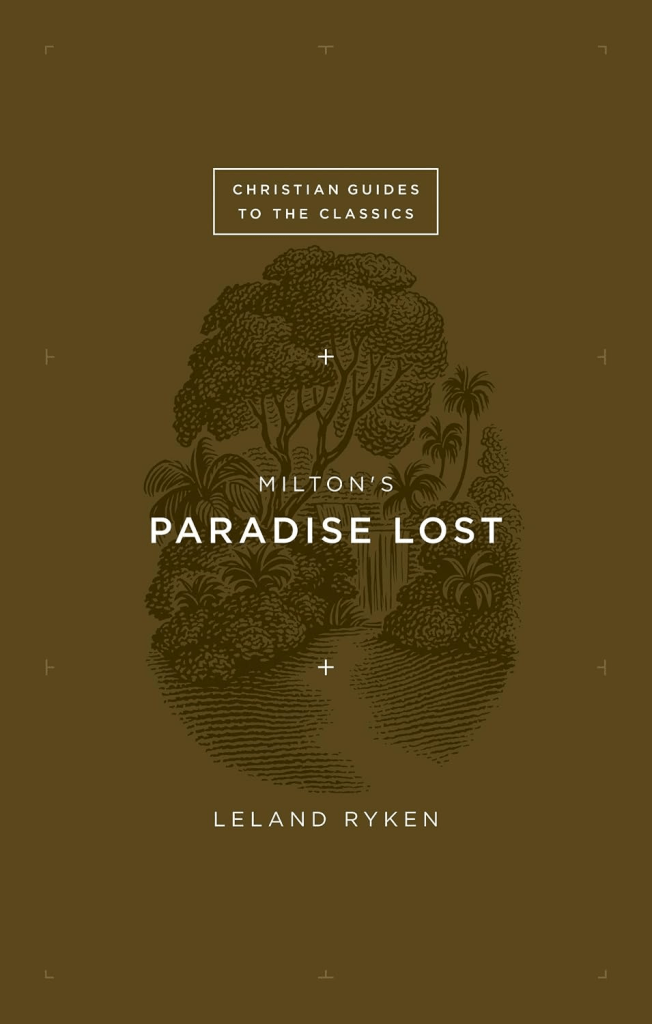
Prior to buying the Lithos Kids edition of Paradise Lost I also happened to own Leland Ryken’s study guide. Ryken has studied Milton for decades and is quite familiar with the genre of Epic that Paradise Lost is. The study guide is helpful. It is part of the Christian Guides to the Classics. It’s just 96 pages.
So, that is my reading update for the moment. I hope summertime affords you some time to read anything or everything from magazines to beach reads to strenuous classics, and everything in between. The point is, to read! Your Bible of course but other texts too. Enjoy!

