
Posted in theology

Jesus’ Oracles: Woes on Cities

By Elizabeth Prata

Recently I wrote about what oracles are. Oracles are mentioned in both the Old Testament and the New. These are divine communications from God to man, usually sought by man in answer to a specific question. Many Old Testament oracles involved political type queries to God from a King asking if he will win a battle, and the like.

Quite often in the discernment world, if I call out a false doctrine or a false teacher, replies pour in charging me with being mean, and I “should be more like Jesus.” These commenters do not seem to know or to remember that Jesus is God, and He is love, yes, but He is also wrath for sin.

In the New Testament, Jesus pronounced oracular woes. He pronounced doom for peoples, individuals, nations, kings. He also predicted doom for entire cities!

NYC.jpg
NYC as seeen from the East River. Photo by EPrata

Of those cities that reject Him, He said-

be sure of this: The kingdom of God is near. I tell you, it will be more bearable on that day for Sodom than for that town. (Luke 10:11b-12).

Jude wrote that the destruction of Sodom was for sin but also for an example to the ungodly. (Jude 1:7).

Woe to you, Chorazin! Woe to you, Bethsaida! For if the mighty works done in you had been done in Tyre and Sidon, they would have repented long ago, sitting in sackcloth and ashes. (Luke 10:13).

In both verses, the Jude and the Luke verse, we read that the ‘mean Old Testament God’ destroyed cities but that the ‘nice New Testament Jesus’ will also destroy cities. They are the same God, in character and in holiness.

And the sense of the whole is, that though the iniquities of Sodom and Gomorrah were very great, and their punishment very exemplary; yet, as there will be degrees of torment in hell, the case of such a city, which has been favoured with the Gospel, and has despised and rejected it, will be much worse than the case of those cities, which were devoured by fire from heaven; and than that of the inhabitants of them in the future judgment, and to all eternity; See Gill on Matthew 10:15. Gill’s Exposition of the Entire Bible

Scoffers set a city aflame,
but the wise turn away wrath.
(Proverbs 29:8)

And what IS wisdom? Fear of the LORD. Nineveh was wise:

Then the people of Nineveh believed in God; and they called a fast and put on sackcloth from the greatest to the least of them. When the word reached the king of Nineveh, he arose from his throne, laid aside his robe from him, covered himself with sackcloth and sat on the ashes. He issued a proclamation and it said, “In Nineveh by the decree of the king and his nobles: Do not let man, beast, herd, or flock taste a thing. Do not let them eat or drink water. But both man and beast must be covered with sackcloth; and let men call on God earnestly that each may turn from his wicked way and from the violence which is in his hands. Who knows, God may turn and relent and withdraw His burning anger so that we will not perish.” (Jonah 3:5-9)

Bethsaida and Corazin were not wise, they were scoffers at the Gospel presented to them. Therefore, whole cities will come under judgment!

The oracles of Jesus are also interesting to me for the sake of the false notion that the OT God and the NT God are different. People often point to a meek and gentle Jesus speaking softly to the woman at the well about her adulteries, or mournfully but silently pitying the Rich Young Ruler who rejected Him because he wanted his own lands and wealth more than eternal life. But Jesus pronounced DOOM for entire cities, that means populations of thousands if not millions. The five Cities of the Plain were a connected, sprawling metropolis with enormous populations. When Sodom and Gomorrah were smote for their sin the doom also included the cities of Admah and Zeboiim. (Deuteronomy 29:23). Four of the Five Cities of the Plain gone. Zoar was also meant to be destroyed but Lot begged to take haven there so the angel relented.

Jesus came in humility the first time, as a servant offering the Gospel and warning about rejecting it. He will come in wrath the second time. He is Jesus, and He hates sin.
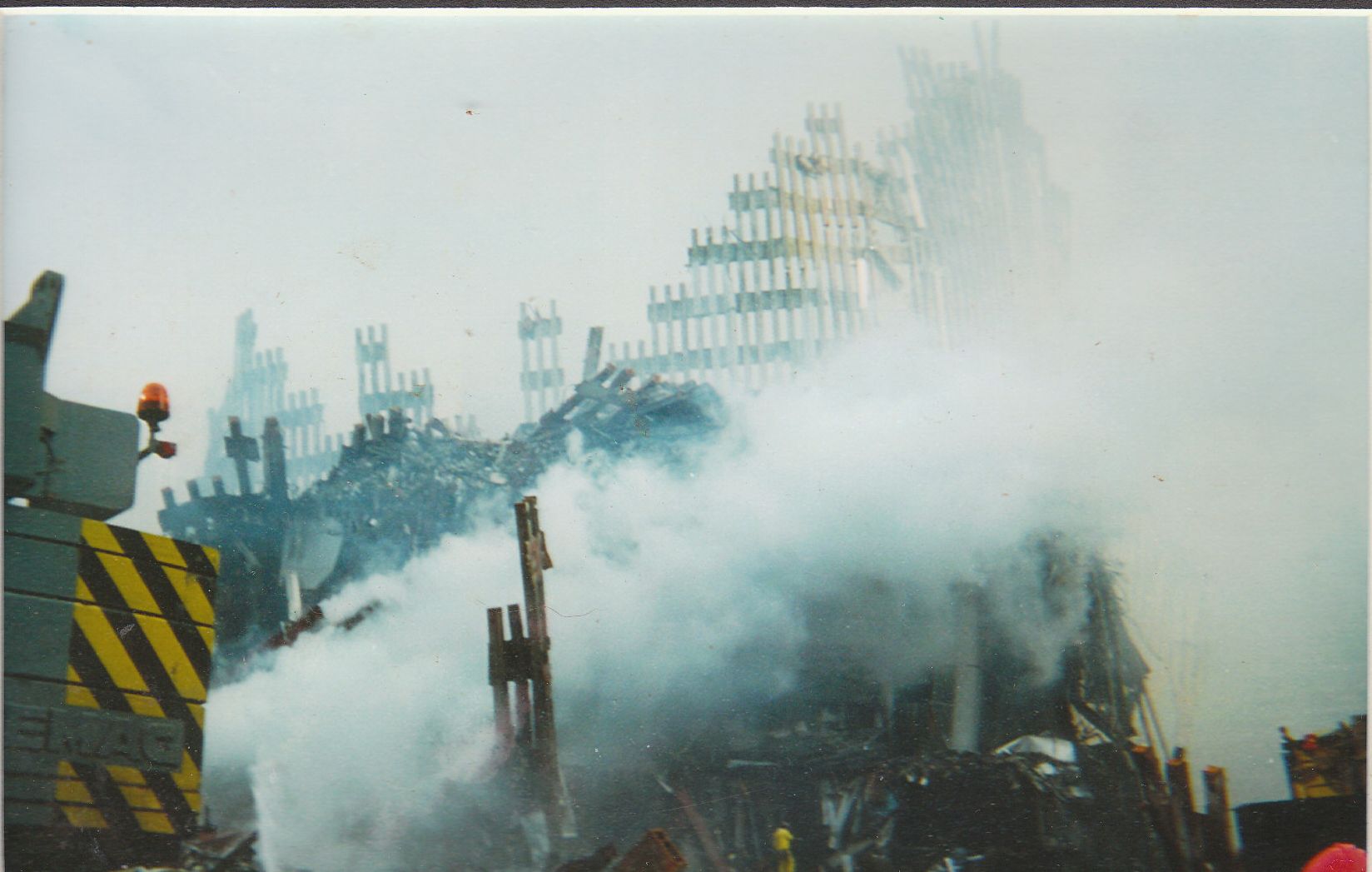
nyc1
NYC on 9/11/2001

Posted in theology

Exploring Divine Communication: What are Oracles?

By Elizabeth Prata

Lately online the most disagreements among the women I engage with involve the fact that they believe God is speaking to them directly.

He isn’t.

But crickey, is this truth resisted. Friends, the canon is closed and all scripture as given is sufficient for our life and growth in sanctification. All moral guidance, spiritual guidance, and wisdom is in the Bible. For anything we need to know or do that isn’t in the Good Book, we just decide. Yes, decide. I’ll be writing an essay about deciding later this week.

For now, let’s see about oracles.

The Lexham Bible Dictionary defines oracle as

A divine message communicated through a human mediator to one or more human recipients. Wells, S. (2016). Oracle. In The Lexham Bible Dictionary.

And Balaam lifted up his eyes and saw Israel camping tribe by tribe. And the Spirit of God came upon him, and he took up his discourse and said, “The oracle of Balaam the son of Beor, the oracle of the man whose eye is opened.” (Numbers 24:2 ESV).

So how is an oracle different from a prophecy? Technically they both are divine messages delivered from God to man.

However, oracles were usually something that humans sought from God, instead of Him delivering a message to and through a Prophet, unprompted by human inquiry, as usually happened with prophecy. These oracles were specific, someone was seeking an answer to a specific question.

Photo by vasim kt on Unsplash

Many oracles were sought by kings and leaders for political purposes (“Will I win this battle?”) but the lay-people could ask God in an oracle too. (e.g. 1 Kings 22:1-7)

Some prophets or seers received compensation for oracles, like Balaam, but sadly the tendency was then to deliver favorable oracles so the money would keep flowing.

Anyone who has read about ancient Greece and Rome has heard about the “oracles.” Two famous oracles were the oracles of Apollos at Delphi and Zeus at Dodona. The Greeks and Romans believed that the gods took a personal interest in their lives, so they would go to these places to seek advice from the gods about their lives. The gods were supposed to answer them through these oracles. But the oracles were often very difficult to interpret, even for the priests of the temples. The expression “oracle of God” shares some of the same denotations, with one major exception: it is the one and only God who speaks—and He does so clearly”. In Holman treasury of key Bible words.

Delphi: A Greek city and sanctuary famous throughout the Graeco-Roman period for its temple of Apollo, which housed the oracle of Apollo. Photo by Sergio García on Unsplash

Are there oracles in the New Testament? Yes, oracles are mentioned.

When we come back to the New Testament, we see that Christian teachers, functioning as prophets, also spoke the “oracles” of God. Peter said, “Whoever speaks, let him speak, as it were, the oracles of God” (1 Pet. 4:11 ESV). The author of Hebrews also used the word oracles to describe the words of God that had originally been communicated to the believers (Hebrews 5:12 ESV). Source: In Holman treasury of key Bible words

You might remember the Magic 8 Ball. It was a black ball made of hard plastic that a child could hold in two hands. It had a clear window at the top and you asked it a question, shook the ball, and waited until an icosahedron floated to the window with a message in it. The answers always disappointed me as a kid. “Try again later,” or “Maybe.”

Wikipedia says “Oracles were thought to be portals through which the gods spoke directly to people“. Frustratingly, when seekers arrived and asked the oracle a question, answers that came were often vague. So if you were frustrated as a kid receiving vague answers from the Magic 8 Ball, imagine the seekers at Delphi or Dodona!  Yet still, many thousands still came to seek answers from the ‘gods.’

“To look at it simply, a Magic 8 ball online is a fortune telling tool that has made its way into popular culture as a game or novelty item.” source https://magic-8ball.com/

Preserved Assyrian oracles from Nineveh include the deity’s name, the recipient’s name, and the name and gender of the prophetic mediator. Most oracles are uttered on behalf of the goddess Ishtar.” The Lexham Bible Dictionary. Lexham Press.

Wow, the Assyrians were dedicated to their oracles, weren’t they! Well preserved, each and every one, to this day. Yet as Christianity took hold, the other ‘oracles’ fell silent.

In the New Testament, the Apostles sought God’s direction, of course. Earlier on, they might hear back in an audible voice or a tangible way (dream, vision, angel…). But as time went on the Apostles’ questions were answered through God using other people, such as Ananias to Saul/Paul, or when Cornelius (at an angel’s prompting) sent for Peter via his men.

In these days, Jesus said that He knows we need food and clothes and financial support. It pleases Him when we ask Him in trust and do not doubt. It pleases Him so much more when we ask for wisdom, discernment, the meaning of a passage, or a growth in sanctification, because tangible things are needed, but temporary. Our spiritual life is permanent. But do not expect a visible, audible reply back. His oracle is now the Bible, and everything in it is sufficient for us.

Of course, there is only one God. Only God knows the future, because He is the creator of the universe, the originator of time, and the architect of history. Seek answers from His word and trust that He hears your questions and concerns in prayer.

Posted in prophecy, Uncategorized

The pride of cities

By Elizabeth Prata

Atlanta. EPrata photo

I read Isaiah 23. In it, was Isaiah’s prophecy against Tyre. Tyre was a major city on the coast, to which many ships from afar brought their goods to trade and sell. Tyre was held in high esteem by all around. (Isaiah 23:8). It had prestige and renown.

Is this your exultant city whose origin is from days of old, whose feet carried her to settle far away? 8Who has purposed this against Tyre, the bestower of crowns, whose merchants were princes, whose traders were the honored of the earth? 9The LORD of hosts has purposed it, to defile the pompous pride of all glory,c to dishonor all the honored of the earth
. (Isaiah 23:7-9)

When a city becomes so vaunted, the leaders of the city become proud. Hence the reason for Isaiah’s oracle against Tyre. (Isaiah 23:9). They attributed their success and fame to themselves, and not to God.

Empire State Building, view from the East River. EPrata photo

This situation reminded me of the scene in Daniel 4. King Nebuchadnezzar displayed the same problem.

and the king answered and said, “Is not this great Babylon, which I have built by my mighty power as a royal residence and for the glory of my majesty?” (Daniel 4:30).

He attributed the city of Babylon’s success and fame to himself, and not to God. For his selfish boastfulness and pride, God determined to remove the kingdom from Nebuchadnezzar for 7 years, wherein he would live among beasts as a mad person and eat the grass of the field. When 7 years was over, God restored reason to the king and also the kingdom. Nebuchadnezzar praised God for all His glory.

When we see the glittering towers of the city, its cathedrals, towers, strongholds, and castles, we tend to become proud of our accomplishment in building them. We admire the Eiffel Tower, the Statue of Liberty, the Sears Tower, the Windsor Castle, the Taj Mahal… We enlarge our sea ports and construct airports and enjoy the trade and commerce merchants willingly bring to the city.

We applaud man’s ingenuity in building these majestic buildings, we love the fame and renown these landmarks bring to the city and we become boastful inhabitants. But we forget that we have no strength of our own, and no intellect, or ability unless God grants it.

EPrata photo

Tyre was razed in 332 BC when Alexander the Great conquered it. And Babylon, we know was felled in one night as described in Jeremiah 51:8 and Daniel 5:30.

If a prophet were to prophesy today, what oracle might be spoken about New York City? Los Angeles? Paris? Beijing? Tokyo? Ezekiel 38:20 prophesies a future day when all walls will crumble to the ground. This page shows how many times God said He will destroy a city for its pride and rebellion. We know He destroyed four Cities of the Plain in one night, Sodom, Gomorrah, Admah, Zeboiim.

The end result of pride, is destruction. This is reiterated in the New Testament, in today’s reading of Matthew 11. There is a section between verses 20-24 called “Woe to Unrepentant Cities” such as Chorazin, Bethsaida, Tyre, Sidon, and Capernaum.

Pride goes before destruction, and a haughty spirit before a fall. (Proverbs 16:18). The verse applies to cities as well. The Isaiah verse we’d read yesterday is warning about this.

milan duomo
Milan, Italy Duomo. EPrata photo

Posted in theology

Jesus judges whole cities

By Elizabeth Prata

Recently I wrote about what oracles are. Oracles are mentioned in both the Old Testament and the New. These are specific communications from God to man, usually sought by man in answer to a specific question. Many Old Testament oracles involved queries to God from a King asking if he will win a battle, and the like.

In the New Testament, Jesus pronounced oracular woes. He pronounced doom for peoples, individuals, nations, kings. He also predicted doom for entire cities!

NYC.jpg
NYC as seeen from the East River. Photo by EPrata

Of those cities that reject Him, He said-

be sure of this: The kingdom of God is near. I tell you, it will be more bearable on that day for Sodom than for that town. (Luke 10:11b-12).

Woe to you, Chorazin! Woe to you, Bethsaida! For if the mighty works done in you had been done in Tyre and Sidon, they would have repented long ago, sitting in sackcloth and ashes. (Luke 10:13).

for Sodom—Tyre and Sidon were ruined by commercial prosperity; Sodom sank through its vile pollutions: but the doom of otherwise correct persons who, amidst a blaze of light, reject the Saviour, shall be less endurable than that of any of these. Jamieson-Fausset-Brown Bible Commentary

And the sense of the whole is, that though the iniquities of Sodom and Gomorrah were very great, and their punishment very exemplary; yet, as there will be degrees of torment in hell, the case of such a city, which has been favoured with the Gospel, and has despised and rejected it, will be much worse than the case of those cities, which were devoured by fire from heaven; and than that of the inhabitants of them in the future judgment, and to all eternity; See Gill on Matthew 10:15. Gill’s Exposition of the Entire Bible

One wonders with the advent of New York City’s rejection of the Gospel and acceptance at its highest levels the horrific infanticide of babies, what their judgment will be.

Scoffers set a city aflame,
but the wise turn away wrath.
(Proverbs 29:8)

And what IS wisdom? Fear of the LORD. Nineveh was wise:

Then the people of Nineveh believed in God; and they called a fast and put on sackcloth from the greatest to the least of them. When the word reached the king of Nineveh, he arose from his throne, laid aside his robe from him, covered himself with sackcloth and sat on the ashes. He issued a proclamation and it said, “In Nineveh by the decree of the king and his nobles: Do not let man, beast, herd, or flock taste a thing. Do not let them eat or drink water. But both man and beast must be covered with sackcloth; and let men call on God earnestly that each may turn from his wicked way and from the violence which is in his hands. Who knows, God may turn and relent and withdraw His burning anger so that we will not perish.” (Jonah 3:5-9)

Bethsaida and Corazin were not wise, they were scoffers at the Gospel presented to them. Therefore, a whole City is to come under judgment!

This writer below seems pretty heated about the pastoral silence, especially of certain NYC pastors cough-Keller-cough, on the holocaust of the babies under the new abortion law. I don’t agree that every cultural sin requires pastoral comment in a specially developed topical sermon. I am sympathetic with most of his stance. It is an affront to me as it is obviously to him that New York preachers who have specifically trumpeted their intention to bring Gospel light to a dark city have been eerily silent on the deepest darkening of that city in decades, and whose tongues have been silent in bringing needed light and clarity for its members to understand the seriousness of their city’s sin.

The silence of the shepherds on the abortion of the lambs

The oracles of Jesus are also interesting to me for the sake of the false notion that the OT God and the NT God are different. People often point to a meek and gentle Jesus speaking softly to the woman at the well about her adulteries, or mournfully but silently pitying the Rich Young Ruler who rejected Him for his own lands and wealth. But Jesus pronounced DOOM for entire cities, that means populations of thousands if not millions. The five Cities of the Plain were a connected metropolis with enormous populations. When Sodom and Gomorrah were smote for their sin the doom also included the cities of Admah and Zeboiim. (Deuteronomy 29:23). Four of the Five Cities of the Plain gone.

Jesus came in humility the first time but will come in wrath the second time. We can be praying for our leaders, that the Lord would instill in the Christian leaders courage to withstand the secular tsunami of sin that inevitably comes against them. We can pray for the unsaved leaders for God to instill repentance into their heart and then they may do good in His name within their position.

We can also be praying for Jesus to call His Bride home in the Rapture. (2 Timothy 4:8, Revelation 22:20).

nyc1
NYC on 9/11

————————————————————————-

Further Reading

The majestic Chapter 8 of Moby-Dick, of which is mentioned in the Silence of the Shepherds article above, describing Father Mapple and his pulpit

Semon: Abortion and the Campaign for Immorality

Posted in prophecy, Uncategorized

The pride of cities

In our Bible Reading Plan we’d read Isaiah 23. In it, was Isaiah’s prophecy against Tyre. Tyre was a major city on the coast, to which many ships from afar brought their goods to trade and sell. Tyre was held in high esteem by all around. (Isaiah 23:8). It had prestige and renown.

Is this your exultant city whose origin is from days of old, whose feet carried her to settle far away? 8Who has purposed this against Tyre, the bestower of crowns, whose merchants were princes, whose traders were the honored of the earth? 9The LORD of hosts has purposed it, to defile the pompous pride of all glory,c to dishonor all the honored of the earth
. (Isaiah 23:7-9)

When a city becomes so vaunted, the leaders of the city become proud. Hence the reason for Isaiah’s oracle against Tyre. (Isaiah 23:9). They attributed their success and fame to themselves, and not to God.

This situation reminded me of the scene in Daniel 4. King Nebuchadnezzar displayed the same problem.

and the king answered and said, “Is not this great Babylon, which I have built by my mighty power as a royal residence and for the glory of my majesty?” (Daniel 4:30).

He attributed the city of Babylon’s success and fame to himself, and not to God. For his selfish boastfulness and pride, God determined to remove the kingdom from Nebuchadnezzar for 7 years, wherein he would live among beasts as a mad person and eat the grass of the field. When 7 years was over, God restored reason to the king and also the kingdom. Nebuchadnezzar praised God for all His glory.

When we see the glittering towers of the city, its cathedrals, towers, strongholds, and castles, we tend to become proud of our accomplishment in building them. We admire the Eiffel Tower, the Statue of Liberty, the Sears Tower, the Windsor Castle, the Taj Mahal… We enlarge our sea ports and construct airports and enjoy the trade and commerce merchants willingly bring to the city.

We applaud man’s ingenuity in building these majestic buildings, we love the fame and renown these landmarks bring to the city and we become boastful inhabitants. But we forget that we have no strength of our own, and no intellect, or ability unless God grants it.

Tyre was razed in 332 BC when Alexander the Great conquered it. And Babylon, we know was felled in one night as described in Jeremiah 51:8 and Daniel 5:30.

If a prophet were to prophesy today, what oracle might be spoken about New York City? Los Angeles? Paris? London? Ezekiel 38:20 prophesies a future day when all walls will crumble to the ground. This page shows how many times God said He will destroy a city for its pride and rebellion. We know He destroyed four Cities of the Plain in one night, Sodom, Gomorrah, Admah, Zeboiim.

The end result of pride, is destruction. This is reiterated in the New Testament, in today’s reading of Matthew 11. There is a section between verses 20-24 called “Woe to Unrepentant Cities” such as Chorazin, Bethsaida, Tyre, Sidon, and Capernaum.

Pride goes before destruction, and a haughty spirit before a fall. (Proverbs 16:18). The verse applies to cities as well. The Isaiah verse we’d read yesterday is warning about this.

milan duomo
EPrata photo