Posted in theology

Jesus’ Oracles: Woes on Cities

By Elizabeth Prata

Recently I wrote about what oracles are. Oracles are mentioned in both the Old Testament and the New. These are divine communications from God to man, usually sought by man in answer to a specific question. Many Old Testament oracles involved political type queries to God from a King asking if he will win a battle, and the like.

Quite often in the discernment world, if I call out a false doctrine or a false teacher, replies pour in charging me with being mean, and I “should be more like Jesus.” These commenters do not seem to know or to remember that Jesus is God, and He is love, yes, but He is also wrath for sin.

In the New Testament, Jesus pronounced oracular woes. He pronounced doom for peoples, individuals, nations, kings. He also predicted doom for entire cities!

NYC.jpg
NYC as seeen from the East River. Photo by EPrata

Of those cities that reject Him, He said-

be sure of this: The kingdom of God is near. I tell you, it will be more bearable on that day for Sodom than for that town. (Luke 10:11b-12).

Jude wrote that the destruction of Sodom was for sin but also for an example to the ungodly. (Jude 1:7).

Woe to you, Chorazin! Woe to you, Bethsaida! For if the mighty works done in you had been done in Tyre and Sidon, they would have repented long ago, sitting in sackcloth and ashes. (Luke 10:13).

In both verses, the Jude and the Luke verse, we read that the ‘mean Old Testament God’ destroyed cities but that the ‘nice New Testament Jesus’ will also destroy cities. They are the same God, in character and in holiness.

And the sense of the whole is, that though the iniquities of Sodom and Gomorrah were very great, and their punishment very exemplary; yet, as there will be degrees of torment in hell, the case of such a city, which has been favoured with the Gospel, and has despised and rejected it, will be much worse than the case of those cities, which were devoured by fire from heaven; and than that of the inhabitants of them in the future judgment, and to all eternity; See Gill on Matthew 10:15. Gill’s Exposition of the Entire Bible

Scoffers set a city aflame,
but the wise turn away wrath.
(Proverbs 29:8)

And what IS wisdom? Fear of the LORD. Nineveh was wise:

Then the people of Nineveh believed in God; and they called a fast and put on sackcloth from the greatest to the least of them. When the word reached the king of Nineveh, he arose from his throne, laid aside his robe from him, covered himself with sackcloth and sat on the ashes. He issued a proclamation and it said, “In Nineveh by the decree of the king and his nobles: Do not let man, beast, herd, or flock taste a thing. Do not let them eat or drink water. But both man and beast must be covered with sackcloth; and let men call on God earnestly that each may turn from his wicked way and from the violence which is in his hands. Who knows, God may turn and relent and withdraw His burning anger so that we will not perish.” (Jonah 3:5-9)

Bethsaida and Corazin were not wise, they were scoffers at the Gospel presented to them. Therefore, whole cities will come under judgment!

The oracles of Jesus are also interesting to me for the sake of the false notion that the OT God and the NT God are different. People often point to a meek and gentle Jesus speaking softly to the woman at the well about her adulteries, or mournfully but silently pitying the Rich Young Ruler who rejected Him because he wanted his own lands and wealth more than eternal life. But Jesus pronounced DOOM for entire cities, that means populations of thousands if not millions. The five Cities of the Plain were a connected, sprawling metropolis with enormous populations. When Sodom and Gomorrah were smote for their sin the doom also included the cities of Admah and Zeboiim. (Deuteronomy 29:23). Four of the Five Cities of the Plain gone. Zoar was also meant to be destroyed but Lot begged to take haven there so the angel relented.

Jesus came in humility the first time, as a servant offering the Gospel and warning about rejecting it. He will come in wrath the second time. He is Jesus, and He hates sin.
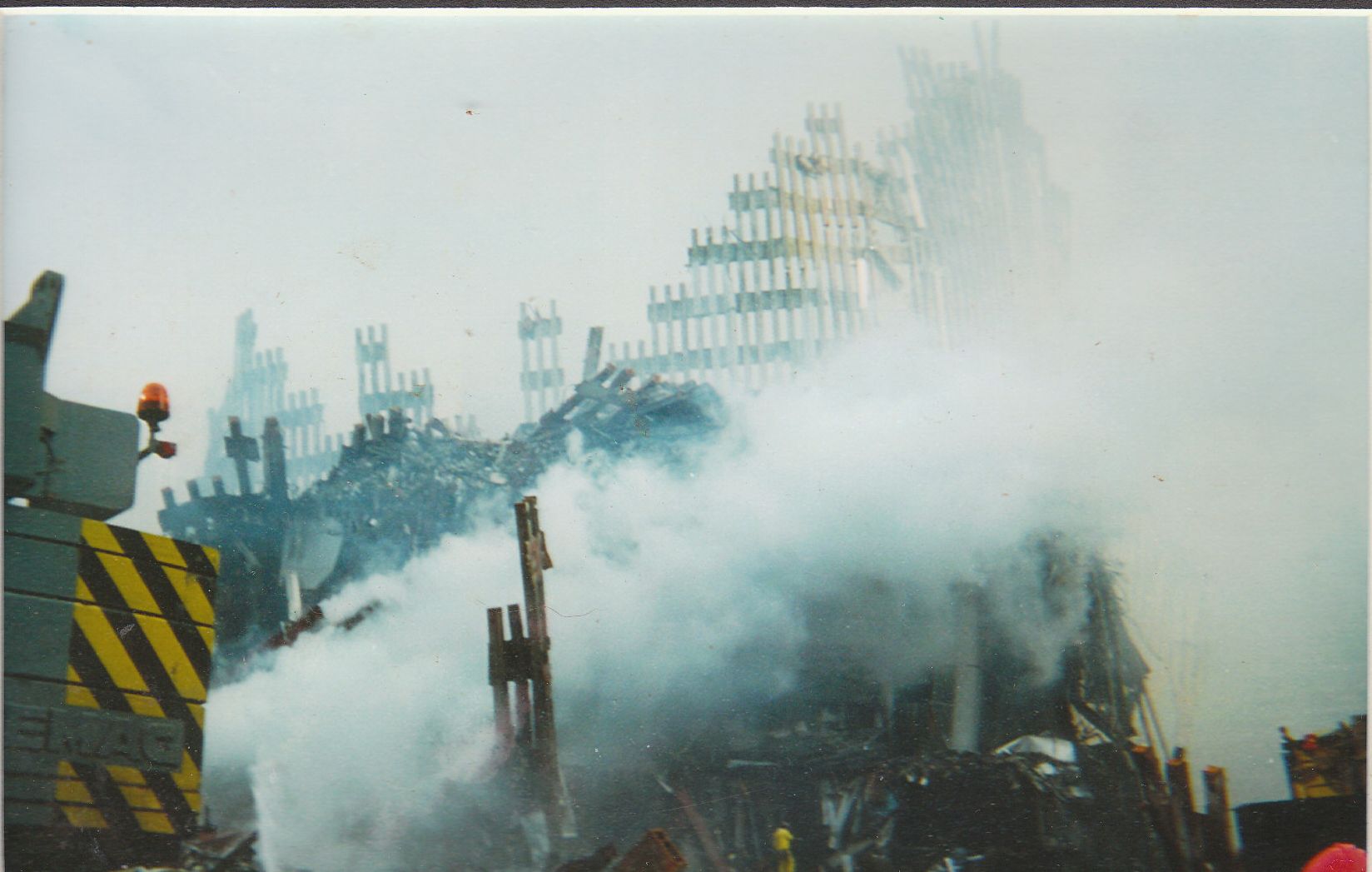
nyc1
NYC on 9/11/2001

Posted in Uncategorized

A Tale of Two Gods?

In this corner, with the wizened face and long white beard, God, also known as Ancient of Days and sometimes as simply I AM. Aged, ancient, and some say, outdated. Audience, give it up for God in the white robe, the Old Testament God!

In this corner, with the scarred face and hands, smallish stature and nothing beautiful or majestic to attract us to Him, don’t underestimate this Humble Servant, the Man of Sorrows, whose name is Jesus! Give it up for the man in the crimson-stained robe, the New Testament God!

Through this playful anecdote I hoped to bring to your mind a vivid picture of what I see as a problem today in the mainline churches. They try to say that there are two Gods, an “Old Testament God” and a “New Testament God.” This reveals a basic misunderstanding of who God is in both testaments. He is the same God. The Old Testament God as He has revealed Himself is a holy God concerned with sin, redemption, and righteous living for the sake of His holy name. In many, many OT chapters, He reveals His profound love for His creation, man, in promising a better future and adhering to those promises again and again.

In the New Testament, God as He has revealed Himself through Jesus is a holy God concerned with sin, redemption, and righteous living for the sake of His holy name. While throughout many, many NT chapters, His Spirit reveals Jesus’s profound love for man, His creation, in promising a better future and adhering to those promises again and again by dying on the cross and resurrecting, He also promises wrath. Just read Revelation. It could be just as factually stated that the ‘OT God’ is a God of love and the ‘NT Jesus’ is a God of wrath. Think about it.

In the entire bible there is wrath and there is love. There are plagues and there is redemption. There are covenants kept by God and broken by man. There are prophesies made, fulfilled, and to come and there is a hope and a future. There is no Old Testament God and there is no New Testament God. There is just I AM.

In the New Testament we see that the wrath of God is still “being revealed from heaven against all the godlessness and wickedness of men who suppress the truth by their wickedness” (Romans 1:18). The God who came to earth and cleansed the Temple with a bullwhip (Mark 11:15-19) is the same God who in the Old Testament “abounds in love and exceeding patience” (Exodus 34:6).

Though the Jesus of the New Testament is depicted all too unfortunately as a meek and mild, politically correct good teacher holding love-ins on the hill while making daisy chains, He was not. He directly confronted evil, He pointed fingers, He spoke hard sayings, and when the people left, and they did, (John 6:66) He let them go.

God is the same God as He lovingly and compassionately reveals Himself throughout the 66 books of the bible. He is love, He is wrath, but utmost, He is HOLY. His concern for His people is of our sin, and repentance. There is no comparative religion, there is only the superlative religion (L. Ravenhill). There is no OT God and no NT God, there is only God. He is unchanging.

“Every good gift and every perfect gift is from above, coming down from the Father of lights with whom there is no variation or shadow due to change”. (James 1:15.)

And deep down, aren’t we relieved that there is no difference in our God from one covenant to the next?

He reveals Himself to us in various ways. We know of Him through the the creation (Rom 1:18), directly person to person (Gen 3:8, Gen 5:22, Ex 33:11; Adam, Eve, Enoch, Moses), through the prophets, (Heb 1:1), through Jesus (Col 2:9), through his Spirit (2 Tim 3:16), through the Word (John 1:1-5). But though He reveals Himself in various ways, the qualities inherent in that revelation of Himself do not change from covenant to covenant, testament to testament. He remains the same.

If you find yourself saying “Old Testament God” stop for a moment and ponder the gravity of those words. He does not change. He reveals Himself to us as He does and as He will. Is it fair to say ‘OT God’ and ‘NT God’? Is it right? Does it send a good message to hearers? It doesn’t. “Jesus Christ is the same yesterday and today and forever.” (Hebrews 13:8). “I the Lord do not change.” (Malachi 3:6)