This advent season, we reflect on the miraculous birth of Jesus, highlighting the significant roles of angels. From announcing His birth to guiding the Wise Men, angels were actively involved throughout His life. Their presence serves as a reminder of God’s ongoing engagement in human affairs.
SYNOPSIS The essay explores whether Nativity depictions violate the Second Commandment, emphasizing idolatry as the true prohibition. Drawing on Scripture and RC Sproul, ultimately deciding that conscience and worship—not nativity images themselves—determine faithfulness, urging grace toward differing convictions among believers.
The Bible is intentionally blank where Jesus’ boyhood is concerned. After His birth, the Bible is silent on what Jesus was doing. All we know is He lived in Galilee. We know as a child, not a baby, He was taken by his parents to Egypt, to flee Herod’s rage. And now suddenly He is 12 years old and in the Temple.
With Him are wisdom and might; To Him belong counsel and understanding (Job 12:13).
Other than the Magi’s visit to the child, this alone stands out as the sole incident recorded in the Bible about Jesus childhood, or even adulthood before the first Miracle at Cana. Since the Holy Spirit chose to include this single event in the boy Jesus’ life, it bears study.
Further Reading:
The Day Jesus Went AWOL Second, in this account are recorded the very first words of our Lord Jesus. Naturally, no words were recorded from the birth and infancy of Christ. Many of our Lord’s words were recorded from His later ministry. But the words of our Lord in this text are His first recorded words, and very important words they are indeed.
Twelve-year-old Jesus goes to the Temple After the host of witnesses to Jesus in Luke 1:5–2:40, Jesus now speaks for himself for the first time. This is the literary climax of Luke’s initial section and shows the sense of mission and self-awareness Jesus possesses. Jesus has a unique relationship to God and a clear sense of his calling, one that transcends his relationship to his earthly parents.
The Son of God at twelve years old This is the only story in the gospels about Jesus between his infancy and his public ministry as a man. Some have argued that the story is a legend created by the early church to fill in some of the gaps in their knowledge of Jesus’ life. What shall we say to this claim?
We are still in the section of verses from the Bible depicting the prophecy of Jesus’ coming, His arrival, and His early life before ministry. With two more days to go, afterward we shift into looking at Jesus Himself, His earthly ministry, and the different aspects of Himself that He displayed in His incarnation.
John MacArthur preached on Jesus’ brother James in a sermon called James: The Brother of Our Lord. In it, MacArthur discusses the early home life of Jesus and contrasts it to the rest of Jesus’ siblings. From the siblings’ point of view, especially the focus of James, what was it like to grow up with literally a perfect brother? The venerable theologian proposes this:
“I don’t know how many times Joseph and Mary said this, but they must have said it more than they ought to, “Why can’t you be like your brother?” which doesn’t really help either.”
LOL.
There are not many verses recounting the childhood and pre-ministry life of Jesus, but there are a few. Here is one:
What happened during Jesus’ childhood? (GotQuestions) Other than Luke 2:41–52, the Bible does not tell us anything about Jesus’ youth. From this incident we do know certain things about Jesus’ childhood. First, He was the son of parents* who were devout in their religious observances. As required in the law, Joseph and Mary made the yearly pilgrimage to Jerusalem for the Feast of the Passover. When Jesus was 12 years old, they brought Him along on the trip to celebrate the Feast with them. Luke paints a picture of a typical boy in a typical family of that day.
The boyhood of Jesus (Biblehub) Although the boy Jesus was gifted with a wisdom far beyond His years — a wisdom which was His because He was the Son of God, yet He lived much as other boys lived, doing the tasks that were given Him by His parents and being subject to them in all things.
Many people worshiped Jesus during His earthly ministry. They bowed before Him and called Him the Messiah, Son of God, or other titles indicating they knew they were worshiping the one True God. Some people worshiped extravagantly. We think of Mary with her bottle of expensive nard, or Joseph of Arimathea lavishly preparing His body with the most expensive ointments. Or from the OT, David worshiping God with all his might before the ark processional.
No one came farther or brought more expensive tokens of worship than the Magi, known as the Wise Men from the East. Their journey of about 900 miles was difficult, fraught with danger, and took months. Their gifts of gold and frankincense and myrrh were expensive. But that was nothing to them. They journeyed, they found the child, they knelt before Him in humble worship. Though they themselves were considered rulers of sorts, when they saw His place they rejoiced exceedingly with great joy. (Matthew 2:9). They knelt before a little child and presented their gifts of adoration.
During this Advent, let us do the same. We do not have the blessing of an incarnated Messiah in front of us to bow to, that will happen later, but we can rejoice today with exceeding joy and present to him our precious gift: our bodies as a living and holy sacrifice. (Romans 12:1).
Further Reading:
Grace To You: What the Magi Mean To Christmas Just exactly who are they and why are they there? Well, the question as to why they’re there is answered in the text, and that is to worship Him. They came to worship. That becomes absolutely clear. In chapter 2 and verse 2, they say, “We have come to worship Him.” That is their point. Herod even acknowledges this in verse 8 and says, “Come back and tell me when you find Him, that I too may come and worship Him.” Answers in Genesis: We Three Kings The Magi Arrive These magi followed the star, which moved ahead of them, bringing expensive gifts of gold, frankincense, and myrrh to Jesus—who was now a young child living in a house (Matthew 2:9–11).5 They worshipped the Christ Child (Matthew 2:11). Jesus is called a “young child” (paidion, Matthew 2) instead of babe (brephos, Luke 2:16) at the time that the magi arrived. Brephos specifically refers to a baby, whether born or unborn, while paidion refers to an immature child, possibly an infant (Matthew 2:11), so we should not be dogmatic about His age. Love Worth Finding: The Gifts of the Wise Men and Our Gifts to Jesus It’s that time of year again…time for gift-buying, gift-wrapping, and gift-exchanging. What are the gifts we could bring Jesus this Christmas? One way we can discover that is to look at Matthew 2:1-12, which tells of the gifts the wise men brought Him on the night when God became flesh and dwelt among us.
The Bible is intentionally blank where Jesus’ boyhood is concerned. After His birth, the Bible is silent on what Jesus was doing. We know is He lived in Galilee. We know as a child, not a baby, He was taken by his parents to Egypt, to flee Herod’s rage. And now suddenly He is 12 years old and in the Temple.
With Him are wisdom and might; To Him belong counsel and understanding (Job 12:13).
Other than the Magi’s visit to the child, this alone stands out as the sole incident recorded in the Bible about Jesus childhood, or even adulthood before the first Miracle at Cana. Since the Holy Spirit chose to include this single event in the boy Jesus’ life, it bears study.
Further Reading:
The Day Jesus Went AWOL Second, in this account are recorded the very first words of our Lord Jesus. Naturally, no words were recorded from the birth and infancy of Christ. Many of our Lord’s words were recorded from His later ministry. But the words of our Lord in this text are His first recorded words, and very important words they are indeed.
Twelve-year-old Jesus goes to the Temple After the host of witnesses to Jesus in Luke 1:5–2:40, Jesus now speaks for himself for the first time. This is the literary climax of Luke’s initial section and shows the sense of mission and self-awareness Jesus possesses. Jesus has a unique relationship to God and a clear sense of his calling, one that transcends his relationship to his earthly parents.
The Son of God at twelve years old This is the only story in the gospels about Jesus between his infancy and his public ministry as a man. Some have argued that the story is a legend created by the early church to fill in some of the gaps in their knowledge of Jesus’ life. What shall we say to this claim?
We are still in the section of verses from the Bible depicting the prophecy of Jesus’ coming, His arrival, and His early life before ministry. With two more days after today to go, then we shift into looking at Jesus Himself, His earthly ministry, and the different aspects of Himself that He displayed.
John MacArthur preached on Jesus’ brother James in a sermon called James: The Brother of Our Lord. In it, JMac discusses the early home life of Jesus and contrasts it to the rest of Jesus’ siblings. From the siblings’ point of view, especially the focus of James, what was it like to grow up with literally a perfect brother? The venerable theologian proposes this:
“I don’t know how many times Joseph and Mary said this, but they must have said it more than they ought to, “Why can’t you be like your brother?” which doesn’t really help either.”
LOL.
There are not many verses recounting the childhood and pre-ministry life of Jesus, but there are a few. Here is one:
What happened during Jesus’ childhood? Other than Luke 2:41–52, the Bible does not tell us anything about Jesus’ youth. From this incident we do know certain things about Jesus’ childhood. First, He was the son of parents* who were devout in their religious observances. As required in the law, Joseph and Mary made the yearly pilgrimage to Jerusalem for the Feast of the Passover. When Jesus was 12 years old, they brought Him along on the trip to celebrate the Feast with them. Luke paints a picture of a typical boy in a typical family of that day.
The boyhood of Jesus Although the boy Jesus was gifted with a wisdom far beyond His years — a wisdom which was His because He was the Son of God, yet He lived much as other boys lived, doing the tasks that were given Him by His parents and being subject to them in all things.
The Nativity, Bernardo Daddi, circa 1330. The Nativity is set in a stable whose wooden supports and thatched roof are visible, located in a rocky landscape. Mary is seated next to the manger, in which she gently lays the Christ Child, accompanied by the ox and the ass. Two hosts of angels, five on the right and five on the left, enter the picture, celebrating the birth of the Saviour.
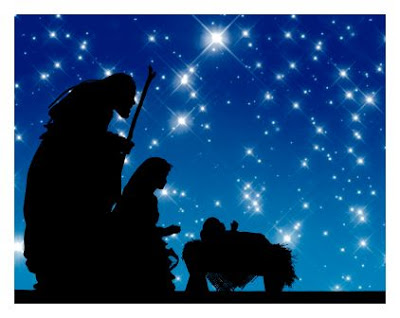
It’s the time of year when we regard the Nativity. The Babe’s miraculous conception, His soon arrival, and the lowly circumstances of his birth. During this time it is natural to center thoughts, sermons, devotionals, etc, on Mary, the Messiah’s mother. Her submission to the News, her Magnificat of praise, and her visitation with cousin Elizabeth- who has a miracle of her own to report- are crucial elements of the story.
There can be a tendency to exalt Mary’s role beyond its bounds. By the same token, a tendency to downplay her role as a reaction to not wanting to exalt her.
RC Sproul wrote in “The Messiah’s Mother,” over-exaltation of Mary can be blasphemous.
[A]nyone familiar with Roman Catholicism also knows that pleading for Mary to intercede on one’s behalf is central to Roman Catholic piety. By contrast, evangelicals laudably and unambiguously affirm the biblical truth that there is only “one mediator between God and men, the man Christ Jesus” (1 Tim. 2:5).
Sproul again,
In so doing, however, we often reduce Mary’s role to the extent that she is almost an afterthought in the Lord’s plan of salvation.
As with everything, let’s take a balanced and clear-eyed look at Mary. As Sproul noted, Mary IS “blessed among women” (Luke 1:42), and she is also a “favored one.” (Luke 1:28).
She is, as the Council of Chalcedon affirmed, the theotokos—”God-bearer” or “mother of God.” This title was not given to Mary to confer quasi-divine status upon her; rather, it was given to defend the truth of the deity of Christ. That is, the title is for Jesus’ sake. (Sproul).
Yet it is comments like this one below that display one’s interior restlessness and discontent with the facts of the Nativity as they are revealed in scripture:
The overwhelming male-ness of the nativity scene felt jarring. For millennia and across many cultures, including in the days of Jesus, birth was an exclusively female event: a laboring woman was attended by midwives and female family members. Only after the groans of productive agony had ceased and the blood and afterbirth were cleaned up were men permitted to enter. There is little reason to suppose Jesus’ birth was any different. (feminist ElleK “The Forgotten Women of the Nativity”).
Luke 2:7 sets the scene: “[Mary] gave birth to her firstborn son; and she wrapped Him in cloths, and laid Him in a manger, because there was no room for them in the inn.”
That verse is explicitly concerned with a lonely birth. There were no midwives, no assistance to Mary at all. The Bible doesn’t even mention that Joseph was present. Perhaps he was, but if he was typical of first-time fathers, he would have been of little help to Mary. She was basically on her own.
Mary brought forth the child; she wrapped Him in swaddling cloths; and she laid Him in a manger. Where usually a midwife would clean the baby and wrap Him, there was no one. Mary did it herself. And where usually there would have been a cradle or basket for the baby, there was none. Mary had to put Him in an animal’s feeding trough.
When Christ entered the world, He came to a place that had some of the smelliest, filthiest, and most uncomfortable conditions. But that is part of the wonder of divine grace, isn’t it? When the Son of God came down from heaven, He came all the way down. He did not hang on to His equality with God; rather, He set it aside for a time and completely humbled Himself (Philippians 2:5-8).
The feminist writer above asserts that women are “written out” or “forgotten” in recorded histories. Laying aside the fact that the scriptures are perfect in their original languages because they are inspired by the Holy Spirit, it is a shame that the official record recorded that Mary was favored by God and chosen to bear and raise the Messiah. Sad that this is not enough for some.
But for us who know the miracle of a God who loves, who saves, who chose to depart glory and be born, live, and die in humiliating circumstances, it is MORE than enough! The wonder of the Nativity is multi-faceted, like a diamond among the straw. A jewel among the animals. A miracle of love. What more can we ask or even think of a God who would send His Son to do this? Who sends angels to bring Good News, to comfort, protect, and warn? Of a God who chose His people before the foundation of the world knowing we would hate Him until He touched our heart with the gift of repentance?
Praise Him for all His ways. He is the inscrutable God, who chose to reveal Himself in His Son, who as we view him this month, as a baby!
Many people worshiped Jesus during His earthly ministry. They bowed before Him and called Him the Messiah, Son of God, or other titles indicating they knew they were worshiping the one True God. Some people worshiped extravagantly. We think of Mary with her bottle of expensive nard, or Joseph of Arimathea lavishly preparing His body with the most expensive ointments. Or from the OT, David worshiping God with all his might before the ark processional.
No one came farther or brought more expensive tokens of worship than the Magi, known as the Wise Men from the East. Their journey of about 900 miles was difficult, fraught with danger, and took months. Their gifts of gold and frankincense and myrrh were expensive. But that was nothing to them. They journeyed, they found the child, they knelt before Him in humble worship. Though they themselves were considered rulers of sorts, when they saw His place they rejoiced exceedingly with great joy. (Matthew 2:9). They knelt before a little child and presented their gifts of adoration.
During this Advent, let us do the same. We do not have the blessing of an incarnated Messiah in front of us to bow to, that will happen later, but we can rejoice today with exceeding joy and present to him our precious gift: our bodies as a living and holy sacrifice. (Romans 12:1).
Further Reading:
Grace To You: What the Magi Mean To Christmas Just exactly who are they and why are they there? Well, the question as to why they’re there is answered in the text, and that is to worship Him. They came to worship. That becomes absolutely clear. In chapter 2 and verse 2, they say, “We have come to worship Him.” That is their point. Herod even acknowledges this in verse 8 and says, “Come back and tell me when you find Him, that I too may come and worship Him.” Answers in Genesis: We Three Kings The Magi Arrive These magi followed the star, which moved ahead of them, bringing expensive gifts of gold, frankincense, and myrrh to Jesus—who was now a young child living in a house (Matthew 2:9–11).5 They worshipped the Christ Child (Matthew 2:11). Jesus is called a “young child” (paidion, Matthew 2) instead of babe (brephos, Luke 2:16) at the time that the magi arrived. Brephos specifically refers to a baby, whether born or unborn, while paidion refers to an immature child, possibly an infant (Matthew 2:11), so we should not be dogmatic about His age. Love Worth Finding: The Gifts of the Wise Men and Our Gifts to Jesus It’s that time of year again…time for gift-buying, gift-wrapping, and gift-exchanging. What are the gifts we could bring Jesus this Christmas? One way we can discover that is to look at Matthew 2:1-12, which tells of the gifts the wise men brought Him on the night when God became flesh and dwelt among us.
The sweet nativity scenes…pregnant Mary on the donkey, Joseph patiently plodding by her side…but did you know there is no verse that says this? Only three lines describe their journey and none of them mention a donkey!
With Advent coming up, I thought I’d dig into this.
Joseph also went up from Galilee, from the city of Nazareth, to Judea, to the city of David which is called Bethlehem, because he was of the house and family of David, in order to register along with Mary, who was engaged to him, and was with child. While they were there, the days were completed for her to give birth. (Luke 2:4-6).
I searched “mary and joseph on the way to bethlehem” and all the pictures that came up were like this
The scene on Christmas cards, in nativities and other places, including our minds, is one of those that is invented and not actually biblical.
I mean, she COULD have ridden a donkey…but even then, beasts of burden cost money. When Mary and Joseph appeared at the temple to adhere to the Law regarding sacrifices,
and to offer a sacrifice according to what has been stated in the Law of the Lord: “A PAIR OF TURTLEDOVES OR TWO YOUNG DOVES. (Luke 2:24)
A pair of turtle doves.—The law of Leviticus 12:8 allowed these to be substituted for the normal sacrifice of a lamb as a burnt-offering, and a pigeon or dove as a sin-offering, when the mother was “not able” to offer the former. We may see, therefore, in this fact, another indication of the poverty of Joseph and his espoused wife. Source- Ellicott’s Commentary for English Readers.
So they were likely too poor to afford a donkey!
Perhaps Joseph borrowed a donkey. I mean, Mary was full term, heavily pregnant. It is sooo uncomfortable for women those last two months. They have bladder issues, backaches, no clothes fit, they can’t even see their feet! Simply putting on sandals would be hard. Maybe Joseph had acquired an animal from a friend for the duration. We just don’t know.
I do know it would have been hard for Joseph to see his wife in pain during the difficult and dangerous 80-mile walk to Bethlehem from Nazareth. How do I know this? Joseph was a sensitive man, caring for Mary even in the throes of believing she was a pregnant adulteress, because he sought to send her away quietly (Matthew 1:19). (Of course Joseph learned directly from heaven that Mary was a virgin and became pregnant by God’s Spirit).
Sometimes the things we think are in the Bible are not in the Bible. Cleanliness is next to godliness is not in the Bible. Justin Peters has a whole series of videos explaining the most misinterpreted verses, where people think they mean one thing but they actually mean another. The fruit that Eve ate was actually never identified, the Bible doesn’t say it was an apple.
In another nativity misinterpretation, we do not actually know how many Wise Men appeared at the child Jesus’ home. We assumed it was three because three gifts are mentioned, but in fact it was likely more than three men who traveled to see the child. (Jesus was a child then, not a baby, the Wise men never arrived on the night he was born…)
It’s not a huge deal, thinking that Mary in her late pregnancy rode a donkey to Bethlehem. She could have. She might have. It’s plausible, though not explicitly mentioned. However it is also a warning to us that we can become fixed in our mind about other things that DO matter, believing the Bible says something that it doesn’t.



 the-end-time.org