Posted in theology

‘It was the best of times, it was the worst of times’: Two reviews of the new animated movie ‘David’.

By Elizabeth Prata

The animated film “David”, a Bible character and a film devoted to parts of David’s life, is in theaters now. There is some buzz about it, with some Christians saying it’s good, and others saying it has some good parts but contains serious biblical flaws. I present two reviews to you from two people who have a large Christian following: Alisa Childers and Pastor Gabe Hughes. My comments with three points are at the bottom.

Alisa Childers is an American Christian author, speaker, podcaster, and former CCM singer from the group ZOEgirl, and is known for her work in Christian apologetics. Alisa’s review is on Twitter/X. These are screen shots. [She later posted it on her Facebook page, here is the link to it.]
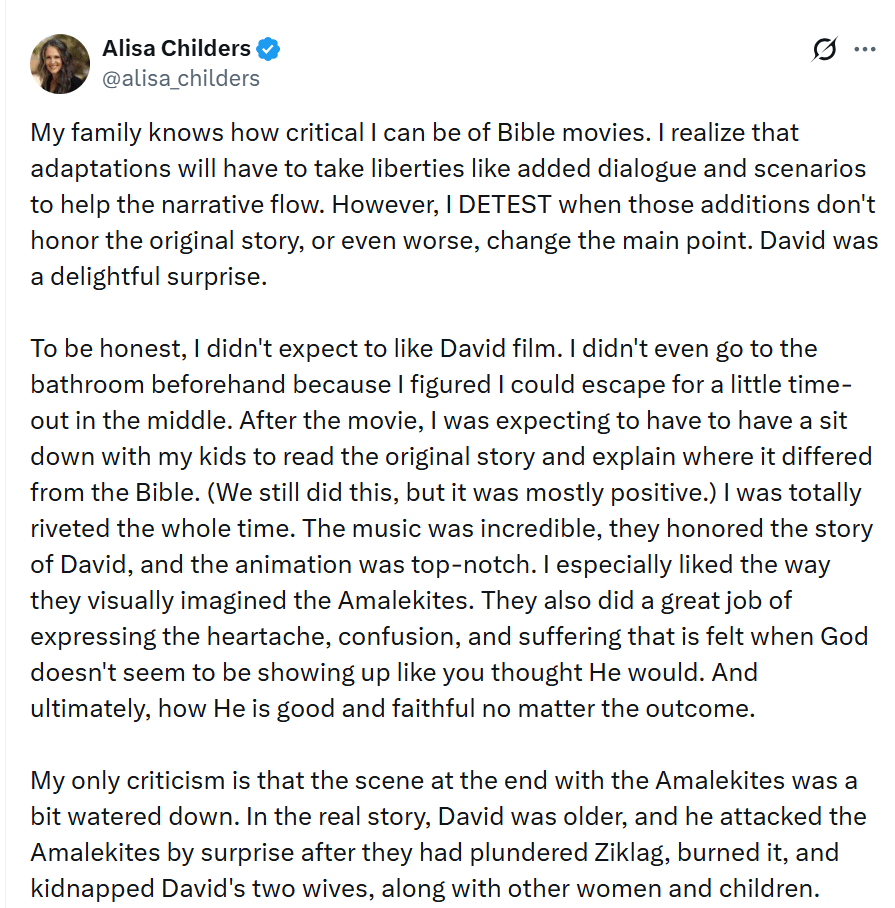
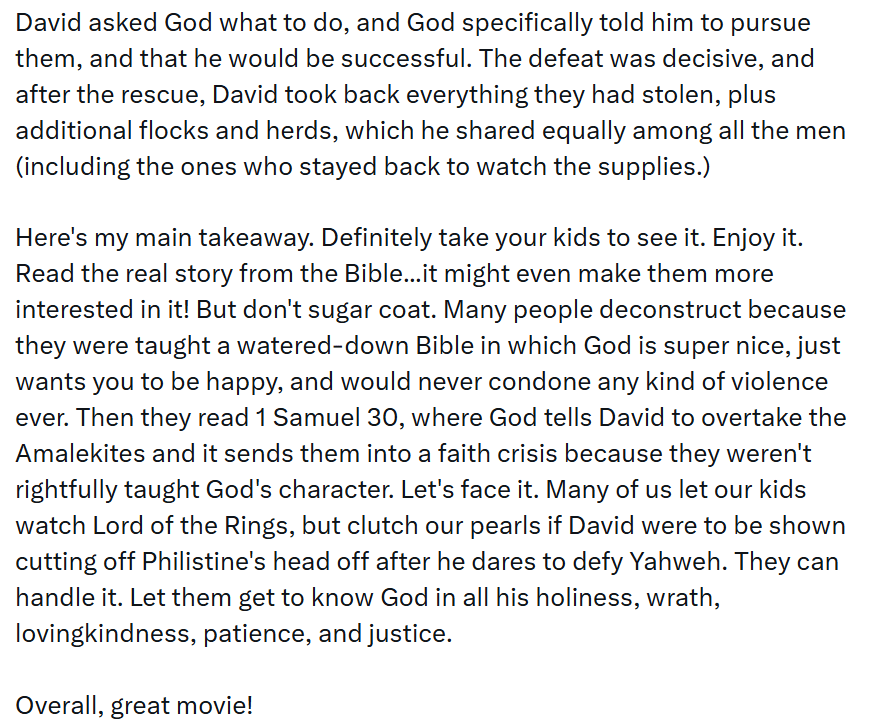
–end Alisa Childers review of animated film “David”.


Pastor Gabe Hughes is pastor of a church in Arizona and the long-running broadcaster of the online video/podcast When We Understand The Text (WWUTT). Here is his review of the movie. This is the link to the video of Pastor Gabe’s review if you would rather listen and watch than read:

https://youtu.be/dd0YFzRB09g?si=10c7JPKTbOj-xwcD

Pastor Gabe transcript of his review of the animated film, “David”:

I had the chance to see the computer animated film David. The animation was great. Can’t say the same for the rest of the movie though.

The movie simply entitled David and distributed by Angel Studios, owned by Mormons, is a musical epic of the life of David taken from the Bible story found in First Samuel chapter 16 through about chapter 31. It was hard to tell because that third act is a real mess. I’ll tell you what I liked about the movie, what I didn’t like, and then we’ll come back to that third act. So, you could call this the good, the bad, and the ugly.

The Good – What I Liked About the Movie

As I said, the animation looks great. The stylistic choices, set pieces, characterization, all were very good. And if we were just critiquing an animated musical, this was entertaining. But this is also a Bible story, and we must test all things according to the scriptures. It’s said in First Samuel 17:32 that David was ruddy and handsome. So, they make David a good-looking young man with reddish hair since ruddy means red. This David is charismatic and confident, much better than the David in this year’s Amazon series House of David, who was a wet blanket, scared of everything and even gets pinned to the ground by Goliath.

But this David, when he goes to face Goliath, he absolutely knows he will beat him. There is not a doubt in his mind because the battle belongs to the Lord. That’s much closer to the David that we have in the Bible. But they don’t remain consistent with this character. He gets much worse later.

The character of Saul is also well done. In First Samuel 9:2, we are told that Saul was taller than every man in Israel from the shoulders upward. So in this movie, we get a tall Saul. The actor who plays him has a great voice. And by the way, the acting in this film is all top tier, better than King of Kings, even though that movie had a cast of A-list actors.

The highlight of the movie is, of course, the battle between David and Goliath. The filmmakers made the decision not to show Goliath in any of the promotional materials, making his reveal all the more surprising. This might be the first depiction of Goliath with six fingers on one hand. That’s taken from First Chronicles 20. Another thing about Goliath is that he’s blonde and the whitest guy in the movie. Now, why did they do that? I have my speculations and I don’t think that any of it has to do with wokeness.

There is historical evidence that the Philistines had European ancestry, but that doesn’t mean that they were white and blonde. So, if I had to venture a guess, I would say that Goliath in this movie is actually an image of Hitler’s master race, the Aryan, who is killed by the anointed king of the Jews, whom Hitler hated and wanted to wipe out. But that’s just my theory.

One of my favorite lines from First Samuel is where David says of Goliath, “Who is this uncircumcised Philistine that he should defy the armies of the living God?” Yeah, that line is not in the movie. David and Goliath jaw back and forth, and it’s similar to what is recorded in First Samuel 17, except that in the Bible, David says that he’s going to cut off Goliath’s head. And of course, that’s not shown in the film. I think they still could have done that, though. After David knocks out the giant, he goes and draws his sword, and you see him swinging it without actually having to see the actual decapitation.

The battle with Goliath comes at about 40 minutes into the movie, and then everything starts to go downhill from there.

The Bad – What Does the Movie Get Wrong?

So, this is what I did not like about the film. Right after the Philistines are defeated, there’s this big parade and everyone is celebrating David. And he says, “No, no, don’t look at me. Look at God.” Except they keep celebrating David. So, he breaks out into this song that’s supposed to point everyone to God. Except it doesn’t. This is the signature song of the movie called Follow the Light. And the lyrics are not overtly Christian, nor do they point anyone to God. You could actually be agnostic and agree with everything in this song.

The movie has way too much of the follow your heart vibes that Disney movies have, except they’ve worded it as follow the light. The story does very little to point anyone to God. The biggest criticism with this film is that it deviates far too much from the biblical narrative.

I’ve seen people online saying, “Oh, they were so close to the Bible.” No, it’s really not. From the very opening scene, the movie begins with David defending his sheep from a lion, which he does not kill. The lion actually gets himself into a jam and David saves the lion’s life and lets it go. This is contrary to what he says in First Samuel 17:36 where he says, “Just as he killed the lion and the bear with his own hands, so will he also kill Goliath.”

Right after this, David is anointed by Samuel to be the next king. And when David comes into the room, Samuel says, “Are you ready for a great adventure?” Are you serious? What’s missing from this scene is one of the most well-known verses in the Bible. In First Samuel 16, when Samuel comes into the house of Jesse to anoint the next king of Israel, the oldest Eliab comes before him, and Samuel says, “Surely this is the Lord’s anointed.” But God says to him, “Do not look on his appearance or the height of his stature because I have rejected him. For the Lord sees not as man sees. Man looks on the outward appearance, but the Lord looks on the heart.”

That line is not in this film. God never speaks to anyone at all. It’s more about how people feel about God rather than knowing what he has actually said. And that again is the biggest problem with this movie. It doesn’t appear as if the filmmakers even care about what God has actually said. The first act is the most entertaining. The second act is much weaker. This is where David is running from Saul who’s trying to kill him, believing that David wants to take his throne. There’s not much to David’s friendship with Jonathan. David doesn’t marry Saul’s daughter as he does in the Bible.

So when we get to that third act when Saul and Jonathan are killed and a bunch of Israelites are kidnapped by the Amalekites, it doesn’t feel at all like the story in FIrst Samuel 30 and 31.

The Ugly That Messy Third Act and the Biggest Miss

This is where the movie really goes off the rails. David goes to rescue his people and he tries to beat the Amalekites with the power of song. Yes, I wish I was joking. This is not at all like the David who had defeated Goliath an hour earlier. David easily gets beaten up by the Amalekites. So, at least the storytellers have enough presence of mind to know this is not how you defeat bloodthirsty savages. The king of the Amalekites strings David up on ropes and is about to kill him when suddenly Eliab shows up in this Gandalfian-like appearance. The song Follow the Light plays again and the Amalekites are defeated by Eliab. Do you know how the Amalekites were actually defeated in First Samuel chapter 30? They were beaten by David who slaughtered Amalekites from sun up to sun down and recovered all that the Amalekites had taken.

In the movie, we went from this brave, courageous youth who fought Goliath to this ignorant singing fool who almost got himself and others killed with his music. And by the way, the music in this musical is really not good. And not because I don’t like musicals. I actually have a history in musical theater. I think making an epic about David and turning it into a musical is a great idea, but all the music in this film is modern contemporary Christian music. It’s not at all like the enduring God-exalting Psalms that we have in the Bible.

So, they took the most musical person in the Bible who wrote most of the songs in scripture and they did not use a single one of his songs. What a missed opportunity and a waste of a good story. I made a similar criticism of the film Journey to Bethlehem, a musical about Mary. Yet, the filmmakers did not use the song of Mary, the Magnificat, as found in Luke 1:46 to 55. That alone should tell you that the people who make these movies do not have a lot of reverence for the source material.

I will hear a lot of Christians say, “Well, we need to support movies like this so that they will make more of them.” No, I don’t want them to make more of them. If they’re going to take a story from the Bible and turn it into a movie, then it needs to be biblical. None of the creative liberties that they take with this movie tell a better story. Their own story falls apart by the end, and what we’re left with will lead people into error.

Closing Thoughts Needing the Gospel

I took three of my children to see this movie with me, and we talked about it when the movie was over. My 11-year-old daughter said that this movie needs the gospel. Well, I said to her, “The story of David happens a thousand years before Christ. So, how would you incorporate the gospel into this movie?” And this was her idea. She said the movie needed a narrator. And since the story is taken from Samuel, that narrator could have been Samuel. And at the end, he says that a king would come from the line of David who was even greater than David. He is the son of God, and he would die on the cross for our sins and rise again from the dead so that whoever believes in him will not perish but have everlasting life. That was her idea.

Kids can understand this stuff. Children don’t need the stories of the Bible to be dumbed down and rewritten. They need the truth of Jesus Christ. Whatever is good about the movie David couldn’t save it from the bad and the ugly. As the real David said of Christ in Psalm , “The Lord is at your right hand. He will shatter kings on the day of his wrath. He will execute judgment among the nations, filling them with corpses. Those who believe in Jesus will be saved from judgment.” When We Understand The Text.

Here is the video of Pastor Gabe’s review if you would rather listen and watch than read.

https://youtu.be/dd0YFzRB09g?si=10c7JPKTbOj-xwcD


I chose to present opposing reviews to you, dear readers, for two reasons. First, so you can read both from notable Christians, and make up your mind.

Secondly and more importantly, to highlight what I personally see as an ongoing issue with Alisa Childers’ discernment. Perhaps the superficial medium of X prevented a longer, more detailed review from Childers. That would be fair to say. But still, she thought about it, wrote it, and said “definitely take your kids to see it”, so there is the influencing part of her output.

What I liked about Pastor Gabe’s review is that he used a lot of scripture to point us back to. His response felt measured and considered. Alisa’s felt emotional and gushing, as well as less biblically knowledgeable than Gabe’s. It depends on what you look for in a Christian review, I guess, and in whom you have trust.

There was an issue with Mrs. Childers’ discernment capabilities recently. A few months ago as of this writing, Childers had indicated she will accept invitations to events where false teachers are present if she feels it’s a chance to reach the lost or call out error, a departure from her prior conviction to avoid such platforms. It is a stance fraught with biblical error and was a major disappointment for many who had followed her.

The third reason I presented the contrasting reviews is because of numbers. Mrs. Childers’ gushing, superficial, and error-ridden assessment reaches a quarter of a million subscribers on Youtube alone, not even counting her Instagram, Facebook, and popular podcast. I have nothing against Mrs Childers, and in fact she says a lot that is good despite some rising concerns I have regarding her discernment.

However, in her review, she urges parents to take their children to see the film. The nature of influence culture is that some, probably many, will see a review such as hers, or adhere to a stance such as hers on partnering with false teachers, and accept at face value without thinking it though further- meaning, not compare to the Bible. There’s influence for good and influence that is not healthy for the influenced.

It’s one reason I liked Gabe’s review more than Alisa’s, because when a person introduces numerous verses to their assessment of something- whether it be a movie, book, sermon etc, there is a confidence their opinion that produces trust in the recipient. You cannot instill more confidence than it being backed by scripture.

Anyway, food for thought, my dear readers and visitors.
Posted in theology

“Who has the right to govern our conscience?” Film Review: The Essential Church

By Elizabeth Prata

Wow.

This documentary packed a punch. And I’ve seen a lot of documentaries.

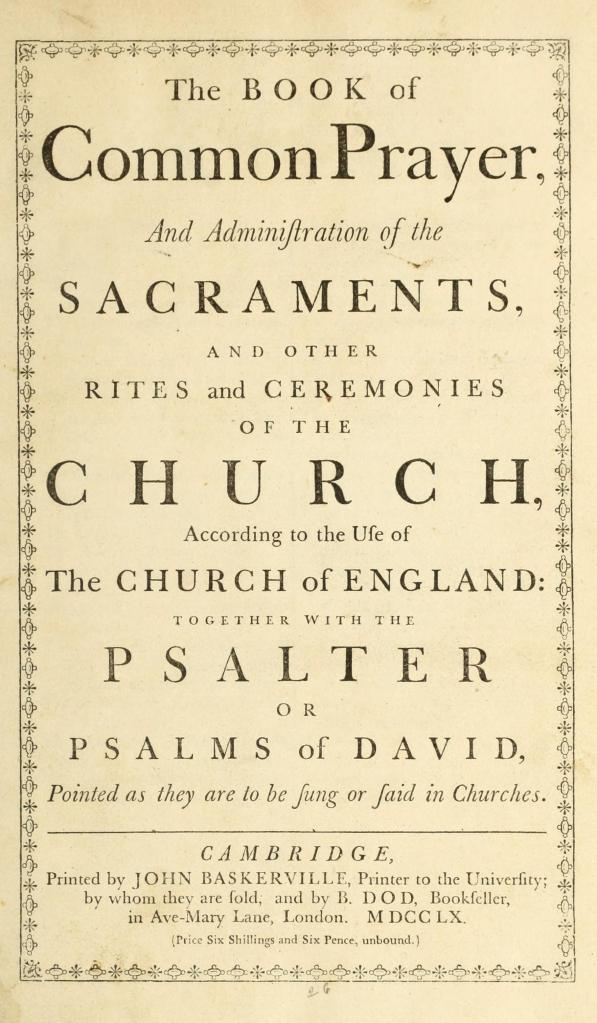
The film began with a recounting of a crucial moment in church history with the ever growing tension between King and Church. It was 1657 and Britain’s King Charles I had been encroaching on the sphere of the church with mandates of what to pray and from what book to pray. He had been insisting on using Episcopal rites and now, insistence on using the Book of Common Prayer added to the tension.

The final showdown occurred when the minister in St Giles’ Cathedral began reading from the Book of Common Prayer at a service in which Jenny Geddes was sitting. Outraged, Jenny, a lowly market women, threw her stool at the minister’s head, and is claimed to have yelled, “Devil cause you colic in your stomach, false thief: dare you say the Mass in my ear?”

A fracas ensued as others began picking up the beat.

Her act is reputed to have sparked the riot that led to the Wars of the Three Kingdoms, which included the English Civil War.

Many such moments have appeared in Church history, where the pushme-pullyou tension between government and church comes to a head. It doesn’t often begin with a splashy bigness. The Lord often uses the weak and insignificant as the spark. Individuals who retain a supernatural conviction in the midst of a storm, stalwart and unmoved by the pressure of the government coming against them.

The film continues with the struggle of the Scottish Covenanters movement that formed after Jenny threw her stool, to John Bunyan, the Great Ejection, and the Puritans from past history. Weaving into these pivotal moments in church history the film recounts a similar recent battle between the Canadian government and pastors James Coates & Tim Stephens, and John MacArthur and California’s intrusion into worship.

The Covid-19 so-called “pandemic” era struggle of three churches is highlighted as part of this long history of opposing the government when it dares to enter into church matters: California’s Grace Community Church led by Pastor John MacArthur and its elders, James Coates of GraceLife Church of Edmonton Canada, and Tim Stephens of Fairview Baptist Church of Calgary Canada.

Tim Stephens of Calgary Canada

The documentary interviews elders and the pastors concerned with the line between obeying government as the Bible says we must do, and defying government when it intrudes on matters only Jesus administers, also as the Bible says we must do. The thought process and final decision processes were described by all of the church players in this drama. [The government players refused to be interviewed].

The Canadian pastors were actually jailed in maximum security prison for continuing to hold in-person services during the time when government said no such gatherings were allowed. Pastor-teacher John MacArthur was threatened with jail.

James Coates of Edmonton Canada

The film then recounts the legal battle of Grace Community Church, the arrest and imprisonment of Coates and Stephens, and the effect on their families. The film did well illustrating the conviction of courageously certain believers of the past, unmoved and refusing to sign/agree/kowtow to governmental authorities who would press them to violate their conscience- even to the point of threatened death and martyrdom for some.

It sensitively portrayed the spiritual heartache of the currently embattles pastors who looked out upon empty pews, aching to deliver the precious word to their sheep. Their angst was palpable, their anguish real. So was the heartache of elders prevented from visiting their shut-ins and their hospitalized congregants. Men who labor for Jesus and His truth are knit to Him strongly and feel the weight of their calling to bring truth, song, fellowship and succor to their people. The empty pews, the scattered sheep, were a grief to them and makes the point how church is essential.

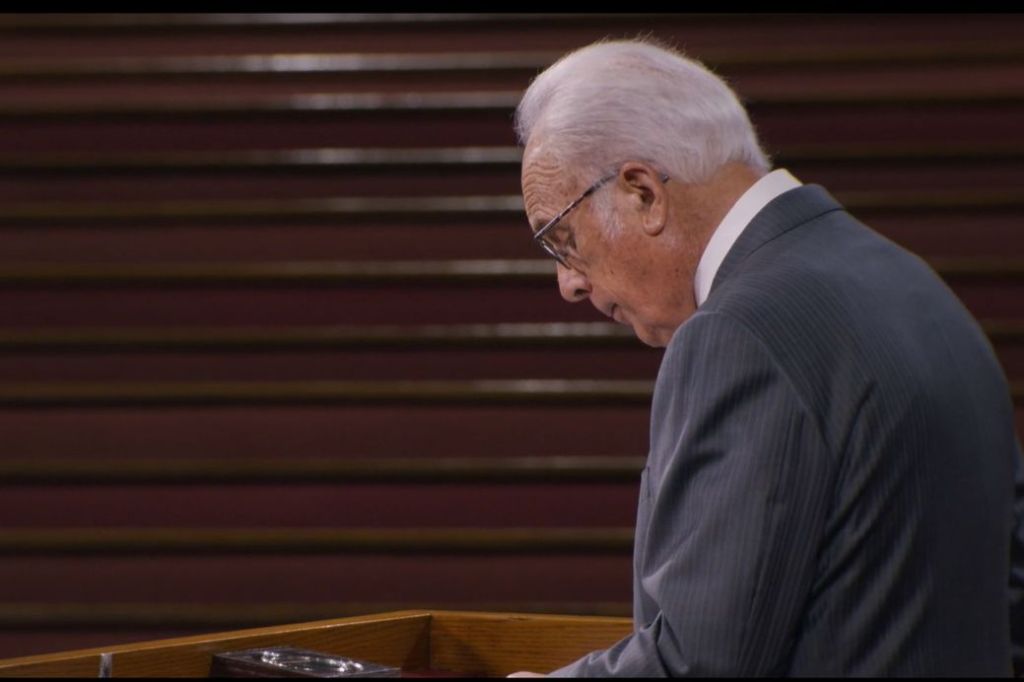
MacArthur preaching to empty pews and a camera lens

Rev. Ian Hamilton serves as minister of Cambridge Presbyterian Church and was interviewed several times. Hamilton asked what I believe was the crucial question of the movie. The film wasn’t about expose covid lies, although those were exposed. It wasn’t solely about a recounting of church history, though it was recounted. Nor was it to highlight the courage of Christian convictions in the face of terrible pressure and even death, though certainly that was present in the film. No. It was this:

“Who has the right to govern my conscience?”

The Essential Church is extremely well done, extremely. It ends with a warning and a hope. One of the final statements was by Phil Johnson of Grace Community Church. Even though the church was successful in court, the battle is not over. And then John MacArthur gave the Gospel.

MY REACTION

My opinion is that it is a pivotal film and one that everyone who believes in Jesus should see. We increasingly in these days are viewing a Romans 1 judgment tightening the noose around the false church and revealing the true. At some point, soon perhaps, each and every one of us will have to sift through the Bible’s precepts, apply them to our individual consciences, and make a stand.

Margaret Wilson, Scottish Martyr, killed at age 18. By John Everett Millais – DMVI, Public Domain

It was noted strongly in the film that government is not neutral. Yes, it was established by God to restrain sin, and to a large extent it does that, but it is also corrupt and hates both of the other spheres God has established- Family and Church. Church history shows that given even half an inch, government will tyrannically try to overpower both to become the dominant force in every human’s life.

In the end of the end, government will succeed (for a time).

I was glad I watched at home. I cried and cried and cried. I first cried in joy at the Lord’s provision of strong pastors. He raises up good men in each era to lead by conviction with a true heart for the people and His word. The Lord is good to keep our church leaders strong. I was glad to learn about Coates and Stephens. The Lord has many others all over the world at this moment who are unknown to us but laboring with lion-heart convictions. This is a blessing and an encouragement.

Then I cried in frustration and rage at recalling what the evil the government did to us during 2020-2022 – the frail and old dying alone in nursing homes, fomenting false fear based on lying science, BLM/rise of Marxism, and worst of all, Tim Stephens’ little boy sobbing as they arrested Tim, saying “bye daddy!” and his little hand reaching for dad as the police drove Tim away. Then cried at the end when JMac gave the Gospel, in crushing humility that the All Powerful One who saves, and saved me.

He is worthy.

The film is available for streaming for a fee at https://watch.salemnow.com/pages/home/d/salemnow

or preorder on Blu-Ray or DVD here https://essentialchurchmovie.com/


Further resources

Documentary Through the Eyes of Spurgeon (free)

Documentary (fee): Logic on Fire: Martyn Lloyd-Jones

Essay: The cost of loving Christ: The Two Margarets

Podcast (free): 5 Minutes in Church History with Stephen Nichols

Documentary series (fee): Puritan: All Life to the Glory of God

Posted in review, theology

Short Reviews: Books, Documentaries, and Movies

By Elizabeth Prata

During this short school break I managed to finish my book and watch a couple of movies. Here are some short reviews of them. In my opinion they are clean and good material, safe for Christians. Some of the diseases the explorers in the Amazon had were described – ahem – realistically…and in the three movies I do not remember any language and certainly no sexual situations. In The Booksellers one seller specializes in fringe books and a cover of a salacious book was briefly shown.

Book: The Lost City of Z: A Tale of Deadly Obsession in the Amazon, By David Grann

“In 1925, the legendary British explorer Percy Fawcett ventured into the Amazon jungle, in search of a fabled civilization. He never returned. Over the years countless perished trying to find evidence of his party and the place he called “The Lost City of Z.” In this masterpiece of narrative nonfiction, journalist David Grann interweaves the spellbinding stories of Fawcett’s quest for “Z” and his own journey into the deadly jungle, as he unravels the greatest exploration mystery of the twentieth century.” Amazon synopsis

Grann is a superlative writer, and a fantastic researcher. HOW he got access to as many of the hidden, lost, and protected primary materials, I’ll never know. Some non-fiction writers don’t want to let go of all the research they did and cram it in, bogging down the story (as happened with my book on Jesse James). Others leave out too much of the research and the reader deals with gaps of information or lack of context. It’s a delicate balance. Grann nailed it. His engaging style and the wealth of information wrapped in great storytelling made for a rollicking book. I was fascinated from start to the fantastic ending.

He seamlessly switched between Fawcett’s expeditions of the past, and his own research expedition. I was fascinated with Fawcett’s life as well as Grann’s own increasing curiosity about what happened to Fawcett. All the while gaining insight into the beginnings of the Royal Geographic Society and the early expeditions by these brave and sometimes foolhardy men. A good old fashioned story, just the way you like it. Recommended.

Of similar interest: these incidents in the Amazon were mentioned in Grann’s book, Movies Fitzcarraldo, Burden of Dreams (even better than Fitzcarraldo), and Aguirre Wrath of God. Similar adventure books are Out in the Cold: Travels North, by Bill Murray; and book The Lure of the Labrador Wild, by Dillon Wallace.

—————————————–

Documentary: The Booksellers. A behind-the-scenes look at the rare book world. I enjoyed this documentary so much. The rare book sellers are smart people, they use articulate words to fervently describe their passion, in bookish way, that is. The peek at selling books, fads in book collecting, the passion behind these important social artifacts, the history of book selling…was all touched on but in a personal way, through the eyes of people new to the profession all the way to third generation sellers. Stay on past the end credits, where Fran Liebowitz’s apparent dispassion for books is unwittingly revealed to be just as a heated passion for her books as everyone else’s, lol. Here is a review of the documentary from Variety. On Amazon Prime.

For more on the subject- Bibliostyle: How We Live at Home with Books. (Book)
Midnight In Paris, Movie (must watch).

—————————————–

Movie: Ride Like a Girl. Based on the true story of Michelle Payne, first woman to win the Melbourne Cup. Beautiful scenery, a good story, Sam Neill as the father was terrific. Michelle’s younger brother Stevie, with whom she is very close, is a Down’s Syndrome child, and he appeared as himself in the film. I think he stole the show. A clean, good, normal movie, made all the better because it is a true story. I hadn’t realized the emotional build-up until the end when the catharsis left me in tears. On Netflix. Hollywood reporter review.

Of similar interest: Walk Ride Rodeo, another film based on true events, and the series Free Rein, all also on Netflix.

—————————————–

Movie: Enola Holmes. Adding to the ever-present canon and satisfying an apparent audience clamor for more Sherlock Holmes stuff, comes this Netflix original. Adding a younger sister to the known family of Sherlock and Mycroft Holmes, the plucky gal has been raised by her eccentric mother (Helena Bonham Carter) who nurtured Enola’s brilliant brain as well as training her physically for challenges of a life of independence. Which is just as well, because when the mother goes missing, Enola sets off to find her. She outsmarts even her brilliantly deductive brother Sherlock, and saves a Viscount in the process. Aside from the usual feminism (women can do anything a man can do…we can change the world…yadda yadda…) the movie was attractive, interesting, rollicking, and felt Disneyesque (in Disney’s earlier more innocent days). Enola’s rated PG 13 for some mild violence (a man tries to drown Enola, she’s stabbed but survives due to the whalebone corset, etc). There is no language I remember and nothing sexual at all. I enjoyed Enola breaking the 4th wall, and loved all the interstitial slides of Victorian ephemera. It is a visually sumptuous movie. I liked it, and I went into it expecting not to like it. 🙂

Of similar interest: movie The Journey of Natty Gann, series Anne of Green Gables.

——————————-

I like working in an elementary school mainly because I love kids, but also because these short breaks come up every so often. I’m looking forward to the week off at Thanksgiving. I hope to put it to good use both with applying myself to spiritual things- I want to finish Saints and Sectaries (About Puritan Anne Hutchinson) and begin a book Blood Work by Anthony J. Carter, about the blood of Christ. And make progress in my The Masters Seminary course The Doctrine of Salvation with Mike Riccardi teaching.

But I also want to read and enjoy good movies and documentaries. My next book will be Out in the Cold, the travel adventure by Bill Murray I mentioned above. I plan to watch My Octopus Teacher soon or during the next school break, as well as The Social Dilemma (if I dare). I’m also interested in Joan Froggatt in Dark Angel, a story of the infamous Victorian poisoner Mary Ann Cotton.

I hope the above suits your entertainment needs and you enjoy!