The Bible offers a candid portrayal of human nature, showcasing both strengths and flaws. Acts 15 details a significant disagreement between Paul and Barnabas over John Mark, leading to their separation. This illustrates human conflict and the importance of reconciliation. Ultimately, believers are encouraged to learn from these examples while emulating Christ’s virtues.
Today in these times, there are a lot of women ‘teachers’ claiming that the best or only way to show women you value them in church is if they can lead and preach. The two biggest issues with alleged Bible teachers who go false, are that these women either claim direct revelation, or promote usurpation into a pulpit. Those are the two biggies.
History remembers. Revelation’s Jezebel was directly rebuked by the same Jesus she was allegedly hearing from in her false prophecies. I hope that threw cold water onto her sinful prophecies! Anne Hutchinson of the 1600s usurped and brought chaos to the Puritan colony. Beth Moore and Aimee Byrd stirred division in their respective entire denominations (Baptist and Presbyterian) with their prancing and their complaining. When women remain in their roles all goes well. When they don’t, chaos reigns.
There are so many wonderful examples of named women in the Bible who did submit to their roles and as a result the orderly workings of God’s plan proceeded apace, with many souls saved or many brethren edified. Isn’t this what we aim for in life? To glorify God by obeying Him and to love one another as ourselves? Yes!
Was Lydia’s or Martha’s hospitality for nothing? Was Dorcas’ sewing for naught? Was Susannah’s financial support for nothing? Did Anna waste her widowhood? Of course not!
Providentially, I learned of another woman who is engraved on the hearts of many in Baptist history. Martha Wallis of Kettering, England.
Beeby and Martha Wallis were staunch supporters of traveling evangelists, local preachers, and churches. They did all they could to help, including opening their home in Kettering. The Wallis’ were so well known for their hospitality, their home was fondly nicknamed The Gospel Inn. They were faithful members of Andrew Fuller’s church where Mr Beeby was a deacon for 24 years. Mrs Wallis was fully on board with her husband, helping for the last 20 years of hospitable service to those brethren who knocked at their door. Sadly, Mr Beeby departed this life on April 24, 1792.
Widowhood in the 1700s was no easy path. Even though she was still mourning, Mrs. Wallis continued the tradition of opening her home to the brethren for lodging, meetings, and support.
In October of 1792 there was one particular meeting of a local group of pastors that we know the details of to this day. At the prompting of William Carey, 12 pastors, one deacon, and one student, 14 in all, gathered at Wallis home AKA ‘The Gospel Inn’, and were served humbly by Mrs. Wallis, just as she had done these 20 years past for many others.
The group was to discuss how to catalyze the local ministers to support missions abroad. The Carey story is one that books and books written could not finish the glorious story. When William started out, circulating the idea that the Matthew 28 commission was a duty to fulfill in those 1700s times, he was called a “miserable enthusiast”. His group was thought of as “nobodies from nowhere”. Why?
Most of the men assembled led churches of fewer than 25 souls. Their congregations, indeed, the local area itself, was impoverished, illiterate, and ill-equipped to launch a global missions concept. Yet these men were undeterred by their congregation’s circumstances.
Mrs Wallis was undeterred as well, despite the loss of her beloved husband. By that standard, Mrs Wallis was as far as possible from what Jen Wilkin calls “visible leadership”, hosting then retreating so the men could discuss. Joseph Timms, who was a wool-stapler, had just been elected to fill Mr. Wallis’ place as a deacon, and Timms acted in Mrs. Wallis’ stead as official host. Martha Wallis was a nobody behind the nobodies!
Here we read from Carey’s great-grandson Pearce Carey,
“For the evening fellowship and bounty and business the ministers were welcomed, as so often before, into the hospitable home of the Wallis’s, the home that they used to call ‘ Gospel Inn,’ so many preachers having been guests there through the twenty years of its standing. Deacon Beeby Wallis himself had died just a while before : nonetheless his widow gathered them to her table, arranging, it would seem, with Joseph Timms (a wool-stapler) who had just been elected to fill her husband’s place on the Kettering diaconate, to act in her stead as nominal host.”
And what was the fruit of that propitious meeting? Global Missions! It was here the first churches decided to send, here that the organization that became The Baptist Mission Society was born. Here was the desire for faraway souls burst into flames. Here was the commitment to pursue the Great Commission. In a hospitable widow’s living room.
“After this fellowship and bounty they adjourned for the day’s chief business into the cosy lean-to back-parlour. The fire was lit within him, [William Staughton] always said, in Widow Wallis’s back- parlour. So American as-well as British Baptist Missions were in the womb of Kettering that night.” (Source “William Carey“)
How beautiful for a woman to provide a place where matters could be discussed, organized, cemented in the bosoms of men who go forth in loving honor for the Lord!
Mrs. Beeby Wallis continued her support and her hospitality until her death at about 1812. Her will bequeathed £400 to the minister and deacons of the Particular Baptist Congregation; as to £2 10s. to the minister for preaching occasionally in neighbouring villages, £2 10s. in Bibles and hymn books for poor of congregation, £5 to poor of congregation, £4 10s. in repair of Meeting House and residue for minister. (Source). She continued to take care of her people even after death.
The historic Wallis House is now the “Carey Mission House.” A featured attraction is the “Martha Wallis Court,” now a residential facility of the elderly. The room in which fourteen men met, on October 2, 1792, to form the Baptist Missionary Society, still contains the table and chairs they used.
That hospitable house, the Gospel Inn, is a place of honor today, to which many come to view, to see the spot where God moved momentously.
“There gathered thousands in 1842 to hold the first jubilee of modern missions, when commemorative medals were struck. There in 1892 the centenary witnessed a still vaster assemblage.” (Source)
“The little parlor which witnessed the birth of this society was the most honored room in the British Islands, or in any part of Christendom; in it was formed the first society of modern times for spreading the gospel among the heathen, the parent of all the great Protestant missionary societies in existence.” (Source)
The Carey House
engraving of Carey House scanned from ‘The Sunday at Home A Family Magazine for Sabbath Reading” dated 1862
There is a plaque in front. It reads:
“In this house on Octr. 2nd 1792, a meeting was held to form a society for propagating the Gospel among the heathen and £13.2s.6d was contributed for that purpose. Andrew Fuller was elected Secretary and Reynold Hogg Treasurer. William Carey to whose sermon at Nottingham in May of the same year, the movement was due, embarked for India on June 13th 1793. This meeting marks the founding of the Baptist Missionary Society and the inauguration of modern foreign missions.“
Yet millions of single women, (Gladys Aylward), widows (Anna, Martha Wallis), married couples (Prisca and Aquila, Katy and Martin Luther, Susie and Charles Spurgeon), and mothers (Mary, Monica) have helped shape Christianity on this side of the veil and have honored the Lord on the other side. We don’t serve in order to receive a plaque and to be remembered, but the LORD allows honor due those with whom He is pleased in His Son’s name. Mrs Wallis is one of those, her ‘simple’ service celebrated and respected to this day.
No service for the Lord is simple. No service is hidden. No service is lowly. Spiritual strumpets like Beth Moore, Jen Wilkin, Aimee Byrd and others prance around the pulpit stage, demanding to be installed in places where God has not intended, rejecting as useless and lowly the honorable biblical service God set before them. These women forget that on his knees, Jesus washed feet.
Finishing my missionary series, we end with a modern day missionary, or as some call Chau, a rogue adventurer. Either way, he did what he did, and his death caused a brief global conversation about unreached peoples and the cause for Christ.
In fact, a few months ago a National Geographic documentary was issued about the life of John Allen Chau, again, depicting Chau as an unmindful adventure seeker, whereupon Voice of the Martyrs’ Tom Nettleton considers him a hero. Nettleton had rebutted this perspective, after having “conducted extensive research for an in-depth backstory. Nettleton found in Chau’s journals and other primary sources that Chau underwent an intentional and intense training process to make first contact in order to obey Jesus’ command to “go into all the world and make disciples.” More here
So, what happened?
John Allen Chau, a 27-year-old American, was killed in November 2018 on Sentinel Island, part of a series of islands owned by India in the middle of the Bay of Bengal. They are restricted islands, due to the natives’ demonstrated hostility and their continued isolation with all the lack of immunity toward modern diseases. There was a buffer zone that even local fisherman were not allowed to penetrate.
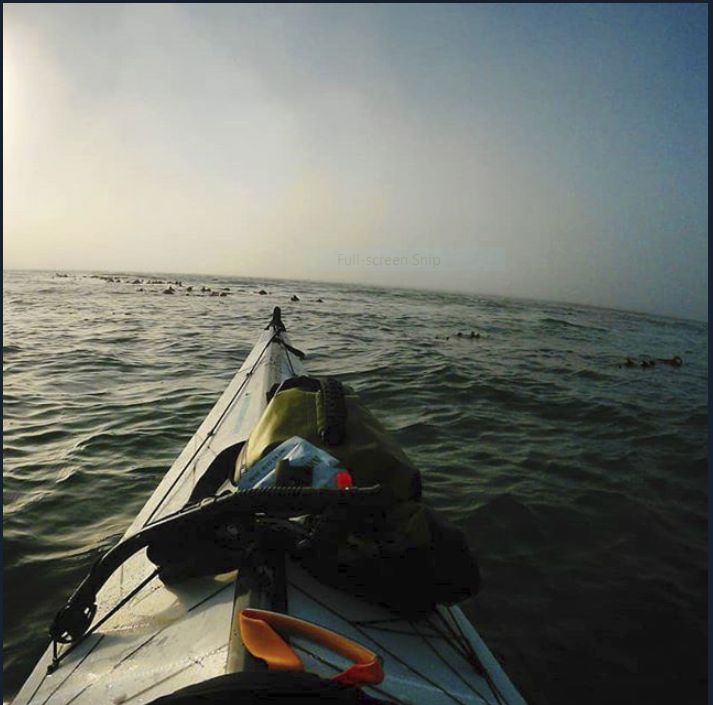
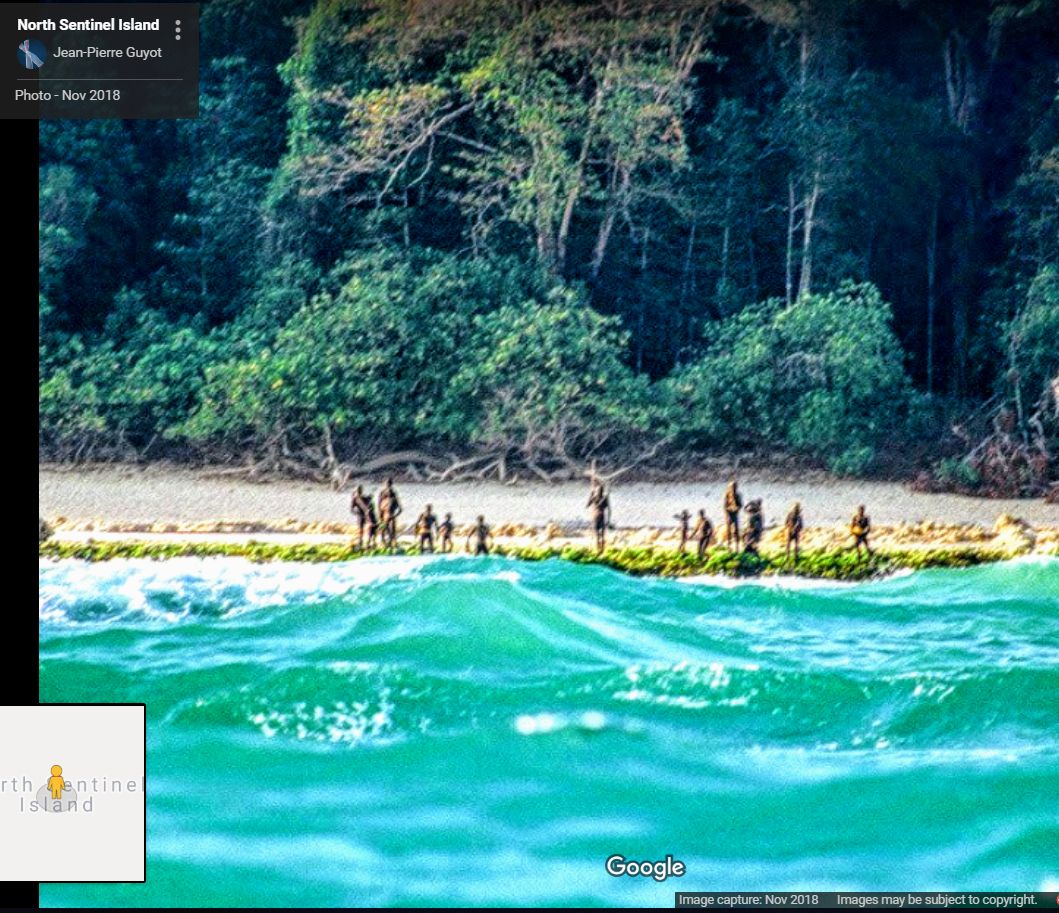
An isolated tribe dwells there with whom very few people have made successful contact over the last hundreds of years. Chau, desiring to contact the tribe for the purpose of telling them about Jesus, (as his notes and journal state), was appeared to have been speared on the beach by arrows. The same fate had awaited nearly all of the visitors to the island since written records first mentioned the place. [Photo above source]
It’s interesting to read and watch India news outlets on this story. Some there, believe Chau to have been a rogue adventurer out to get more likes on his social media. Others believe him to have been a passionate missionary desiring to share the name of Jesus. He hadn’t been trained by a missionary organization, or involved in any long-term way with a supporting church. He seemed pretty much a lone guy concerned that this isolated and unreached tribe didn’t know Jesus. Whether this was a black mark against him or a white mark for him, history will tell.
Chau’s arrival wasn’t the first visit to the island by Chau, who had gone to or near the Sentinelese at least 5 times previously. He had brought gifts such as safety pins, a football, and other trinkets in hopes of proving his friendliness. This had been hard to do, as the first recorded contact in 1880 by British Officer Maurice Vidal Portman ended badly and all subsequent contact since has demonstrated only hostility by the natives.
Portman was stationed at Port Blair on nearby South Andaman Island (the port from which Chau had departed on his ill-fated trip). Portman was fascinated with the tribe, who were painfully timid, he wrote, and ate roots and turtles. He absconded with two elderly tribe members and four children, bringing them back to his house on the nearby island for observation, where the elderly members promptly died, having been exposed to diseases against which they had no immunity. Portman returned the children to North Sentinel Island and called the foray a failure.
In more recent times, a NatGeo group attempted to land on the island to film the tribe in the 1970s, but they were repelled in a hail of arrows, one of them striking the director in the leg. Sadly, in 2006 two local fishermen were stranded there after their boat engine failed, and were also immediately killed. Their bodies were impaled and erected like scarecrows on the beach, perhaps as a warning to others who might want to venture near.
Chau had stated that he was motivated by a missionary zeal. This is commendable. However, I strongly caution all of us to be discerning about those who go forth to proclaim Jesus to the nations. Just because someone claims to be a missionary, doesn’t mean they have a firm grasp of who Jesus is. Some Mormons, Jehovah’s Witnesses, Jesuits and other Catholics call themselves missionaries, yet they do not know Jesus. Chau also graduated from Oral Roberts University, which is not known for teaching the most solid of doctrine. We don’t know Chau’s doctrine. We don’t know which Jesus he was proclaiming. One hopes and prays that he was a true believer, laying down his life for his friends.
“The poor Heathen knew not that they had slain their best friends” ~John G. Paton
But moving on from that caution, Chau was motivated by a strong urge to proclaim Jesus to an unreached tribe. His writings demonstrate this.
His joy turned to sorrow as he was killed on the beach. Fishermen observed the natives dragging Chau’s body and burying it in the sand. Some still held out hope that Chau is alive, that the arrows did not slay him. This is not likely, however.
There are many facts and circumstances around the death of John Allen Chau that aren’t known yet. Some may never be known. However, I am satisfied that this death has captured the world’s attention. The lost do not know why Christians are willing to die in order to proclaim Jesus. Though there are Christian missionary deaths every day, sometimes in large groups at once, the fact that this death, a young man, solo, on the beach, with an unknown stone age tribe hostile to outsiders, captured the world’s attention for over a week and is still going strong. A week is a long time in the minute by minute news cycle.
Google Earth
Because of this, people now know of the tribe and are praying. Additionally, it’s sparked a discussion about dying for the Gospel. It has baptized the ground for Jesus and for perhaps an awakening to come.
People made many comparisons of Chau’s death to the 5 Ecuadorean martyrs in 1956 (Jim Elliot, Nate Saint, Ed McCully, Peter Fleming, and Roger Youderian) but I see the comparison more toward the missionaries to the New Hebrides Islands in the 1800s. This is an excerpt from missionary to the New Hebrides, John Paton’s book, Thirty Years among the South Sea Cannibals-
Glance backwards over the story of the Gospel in the New Hebrides may help to bring my readers into touch with the events that are to follow. The ever-famous names of Williams and Harris are associated with the earliest efforts to introduce Christianity amongst this group of islands in the South Pacific Seas. John Williams and his young Missionary companion Harris, under the auspices of the London Missionary Society, landed on Erromanga on the 30th of November 1839. Alas, within a few minutes of their touching land, both were clubbed to death; and the savages proceeded to cook and feast upon their bodies. Thus were the New Hebrides baptized with the blood of Martyrs; and Christ thereby told the whole Christian world that He claimed these Islands as His own. His cross must yet be lifted up, where the blood of His saints has been poured forth in His name! The poor Heathen knew not that they had slain their best friends; but tears and prayers ascended for them from all Christian souls, wherever the story of the martyrdom on Erromanga was read or heard.
Again, therefore, in 1842, the London Missionary Society sent out Messrs. Turner and Nisbet to pierce this kingdom of Satan. They placed their standard on our chosen island of Tanna, the nearest to Erromanga. In less than seven months, however, their persecution by the savages became so dreadful, that we see them in a boat trying to escape by night with bare life. Out on that dangerous sea they would certainly have been lost, but the Ever-Merciful drove them back to land, and sent next morning a whaling vessel, which, contrary to custom, called there, and just in the nick of time. They, with all goods that could be rescued, were got safely on board, and sailed for Samoa. Say not their plans and prayers were baffled; for God heard and abundantly blessed them there, beyond all their dreams.
When these Missionaries “came to this Island, there were no Christians there; when they left it, there were no Heathens.”
Subsequent missions were more successful, and within some years, 3500 natives had thrown away their idols and been converted to the name of Christ. One may hope and pray, just as Williams and Harris, though killed almost immediately upon meeting the tribe in New Hebrides, that further approaches at North Sentinel Island will be met with Gospel success.
Time will tell of the results of Chau’s death. I do have a fear that we still do not know his doctrine, thus, ‘which Jesus’ (Acts 1:11) Chau proclaimed, but the Lord will take the global conversations, the worldwide shock, and the questions about these ‘strange Christians’, and open many hearts, I am sure. The slumbering world, immune to knowledge of the wrath to come, was awakened by one man’s lone act, his death ‘for Jesus’ both angering and perplexing it.
Below are some resources regarding the John Allen Chau issue and missions in general.
I’ve been posting some missionary bios the last few days. The links to previous essays are at the end.
I post mission-minded posts, to remind us of the importance of evangelizing the lost not just near, but far. The letter from Judson to Ann’s father was extremely touching and reminded me once again of the danger that missionaries then and now face every day.
When missions began in earnest, missionaries often sent more ‘glowing’ letters back to the home church or overseeing Board. They needed support (translate, $$) and knew that people reading more positive reports tended to give more. Amy Carmichael didn’t do that and in fact, her accounts of the reality of the darkness she faced horrified readers. Her reports were rejected with notes to positive it up a little. She replied with a book titled “Things as They Are”.
John G. Paton knew he’d never see his father again, and Paton’s account of saying goodbye to him as Paton sailed for the South Pacific from Scotland was extremely touching. Below, Judson wrote clear-eyed to his fiancé’s father. We we a debt to the missionaries who submitted their lives to discomfort, danger, snares, seemingly fruitless toil, betrayals, sleepless nights, and hardship unimaginable.
illustration of Judson and wife Ann
In 1813, Adoniram Judson sailed to Burma from America with his wife Ann.
Before they married, Judson wrote a letter to Ann’s father asking for his blessing in marriage. This is what he wrote in the letter:
“I have now to ask whether you can consent to part with your daughter early next spring, to see her no more in this world?
Whether you can consent to see her departure to a heathen land, and her subjection to the hardships and sufferings of a missionary life?
Whether you can consent to her exposure to the dangers of the ocean; to the fatal influence of the southern climate of India; to every kind of want and distress; to degradation, insult, persecution, and perhaps a violent death?
Can you consent to all this, for the sake of perishing immortal souls; for the sake of Zion and the glory of God?
Can you consent to all this, in hope of soon meeting your daughter in the world of glory, with a crown of righteousness brightened by the acclamations of praise which shall resound to her Saviour from heathens saved, through her means, from eternal woe and despair?”
Soon after accepting Judson’s proposal of marriage and the life of a missionary, Ann wrote to a friend where she said the following:
“I feel willing, and expect, if nothing in providence prevents, to spend my days in this world in heathen lands. Yes, Lydia, I have about come to the determination to give up all my comforts and enjoyments here, sacrifice my affection to relatives and friends, and go where God, in his providence, shall see fit to place me.”
Ann became sick and died only a few years into their ministry.
Judson spent 38 years there until his death at 61.
Judson organized and published the Burmese dictionary.
Judson translated the Bible into the Burmese language.
Judson wrote gospel tracts and distributed tens of thousands in the first 6-years before seeing his first convert.
Judson preached the gospel faithfully.
Judson, along with his wife Ann, demonstrated what it was like to deny yourself, take up your cross daily, and follow Christ (Luke 9:23).
*Quotes taken from Courtney Anderson’s book: “To the Golden Shore: The Life of Adoniram Judson”
I often post mission-minded posts, to remind us of the importance of evangelizing the lost not just near, but far. Here, I re-post a thread from Twitter written by Josh Buice. The letter from Judson to Ann’s father was extremely touching and reminded me once again of the danger that missionaries then and now face every day.
illustration of Judson and wife Ann
Here is Dr. Buice:
𝙅𝙤𝙨𝙝 𝘽𝙪𝙞𝙘𝙚, @JoshBuice Do you know what it looks like to deny yourself and follow Christ?
In 1813, Adoniram Judson sailed to Burma from the shores of America with his wife Ann.
He was 24.
His wife Ann was 23.
They spent their lives for the glory of Christ among unreached peoples.
Before they married, Judson wrote a letter to Ann’s father asking for his blessing in marriage. This is what he wrote in the letter:
“I have now to ask whether you can consent to part with your daughter early next spring, to see her no more in this world?
Whether you can consent to see her departure to a heathen land, and her subjection to the hardships and sufferings of a missionary life?
Whether you can consent to her exposure to the dangers of the ocean; to the fatal influence of the southern climate of India; to every kind of want and distress; to degradation, insult, persecution, and perhaps a violent death?
Can you consent to all this, for the sake of perishing immortal souls; for the sake of Zion and the glory of God?
Can you consent to all this, in hope of soon meeting your daughter in the world of glory, with a crown of righteousness brightened by the acclamations of praise which shall redound to her Saviour from heathens saved, through her means, from eternal woe and despair?”
Soon after accepting Judson’s proposal of marriage and the life of a missionary, Ann wrote to a friend where she said the following:
“I feel willing, and expect, if nothing in providence prevents, to spend my days in this world in heathen lands. Yes, Lydia, I have about come to the determination to give up all my comforts and enjoyments here, sacrifice my affection to relatives and friends, and go where God, in his providence, shall see fit to place me.”
Ann became sick and died only a few years into their ministry.
Judson spent 38 years there until his death at 61.
Judson organized and published the Burmese dictionary.
Judson translated the Bible into the Burmese language.
Judson wrote gospel tracts and distributed tens of thousands in the first 6-years before seeing his first convert.
Judson preached the gospel faithfully.
Judson, along with his wife Ann, demonstrated what it was like to deny yourself, take up your cross daily, and follow Christ (Luke 9:23).
*Quotes taken from Courtney Anderson’s book: “To the Golden Shore: The Life of Adoniram Judson”
Jordan Standridge wrote today of The Pain of Seeing People Go. His is a timely essay, as I’ve been drafting one exactly like it on the same topic.
I’m talking about when God sovereignly moves fellow believers to a new city. I happen to pastor at a church that has a lot of coming and going. People move to Washington DC for a couple of years, they become part of our family and then suddenly get taken away. It is like your heart is being ripped away.
Our church was founded with the intention of being missional. We are in the heart of a University city with many of the founding members in college or Graduate School. It’s an influx and outflow church. About thirty have left over these last few months, but about thirty new people have been sent in by the Spirit.
Whether a person the elders raised up would be on mission in our local city or across the world, we wanted people to grow, and if they felt the call, leave with the heart full of joy in evangelism and our support. It’s purposeful, but it’s hard, too, to see them go.
And many have done just that. They are veering off to Canada for training as a Wycliffe Bible Translator. They are headed to Malaysia as teachers of English. They have gone to other US states to head up college Navigators organizations or other Christian jobs. They’ve gotten married and headed to different states with their husbands, having been trained up in the Gospel so well by our elders. They have obtained jobs as High School Bible teachers. And many more.
I’ve been happily saddened by the departure of some of our original members this summer. I miss them, their smiles, their fervor, their dedication. But I’ve been uplifted by the knowledge that they are serving the Lord there just as they did here, and that I’ll see them again someday.
Now we are on to the next round of raising up men, guiding families, serving the new members in all ways so that there will someday be a new crop to fly out into the world with the Spirit-given gifts and talents that have been shepherded in them. We are just as busy encouraging the next crop being raised up as much as we support and love the ones who remain. Milkweed seeds that fly on the breath of the Spirit driven wind, into the world to again serve and labor there as they once did here. And so on. Repeat.
I’m grateful for the church’s commitment to raise up men. It’s no doubt wearisome as the people come and go, our lives a cycle of ebbs and flows in saying goodbyes and then creating new relationships forged in His spotless name. The congregation’s own smiles, verve, and excitement at laboring in our God-given tasks is infectious. It helps that we know that the Word of God says do not grow weary in the well-doing. I pray the Spirit gives me just as much joy in meeting new members as I’d had for the ones who helped found the original congregation.
I pray frequently that the Spirit gives us energy and wisdom, as also pray that the Spirit sends us new people. I’m looking forward to the next ring of seeds to come up and waft out onto the winds of the Spirit.
For all things are for your sakes, so that the grace which is spreading to more and more people may cause the giving of thanks to abound to the glory of God. Therefore we do not lose heart. (2 Corinthians 4:15-16a).
John Allen Chau, a 27-year-old American, was killed a few weeks ago on Sentinel Island, part of a series of islands owned by India in the middle of the Bay of Bengal. An isolated tribe dwells there with whom very few people have made successful contact over the last hundreds of years. Chau, desiring to contact the tribe for the purpose of telling them about Jesus, (as his notes and journal state), was appeared to have been speared on the beach by arrows. The same fate had awaited nearly all of the visitors to the island since written records first mentioned the place. [Photo above source]
It’s interesting to read and watch India news outlets on this story. Some there, believe Chau to have been a rogue adventurer out to get more likes on his social media. Others believe him to have been a passionate missionary desiring to share the name of Jesus.
Chau’s arrival wasn’t the first visit to the island by Chau, who had gone to or near the Sentinelese at least 5 times previously. He had brought gifts such as safety pins, a football, and other trinkets in hopes of proving his friendliness. This had been hard to do, as the first recorded contact in 1880 by British Officer Maurice Vidal Portman ended badly and all subsequent contact since has demonstrated only hostility by the natives.
Portman was stationed at Port Blair on nearby South Andaman Island (the port from which Chau had departed on his ill-fated trip). Portman was fascinated with the tribe, who were painfully timid, he wrote, and ate roots and turtles. He absconded with two elderly tribe members and four children, bringing them back to his house on the nearby island for observation, where the elderly members promptly died, having been exposed to diseases against which they had no immunity. Portman returned the children to North Sentinel Island and called the foray a failure.
In more recent times, a NatGeo group attempted to land on the island to film the tribe in the 1970s, but they were repelled in a hail of arrows, one of them striking the director in the leg. Sadly, in 2006 two local fishermen were stranded there after their boat engine failed, and were also immediately killed. Their bodies were impaled and erected like scarecrows on the beach, perhaps as a warning to others who might want to venture near.
Chau had stated that he was motivated by a missionary zeal. This is commendable. However, I strongly caution all of us to be discerning about those who go forth to proclaim Jesus to the nations. Just because someone claims to be a missionary, doesn’t mean they have a firm grasp of who Jesus is. Some Mormons, Jehovah’s Witnesses, Jesuits and other Catholics call themselves missionaries, yet they do not know Jesus. Chau also graduated from Oral Roberts University, which is not known for teaching the most solid of doctrine. We don’t know Chau’s doctrine. We don’t know which Jesus he was proclaiming. One hopes and prays that he was a true believer, laying down his life for his friends.
“The poor Heathen knew not that they had slain their best friends” ~John G. Paton
But moving on from that caution, Chau was motivated by a strong urge to proclaim Jesus to an unreached tribe. His writings demonstrate this.
His joy turned to sorrow as he was sadly killed on the beach. Fishermen observed the natives dragging Chau’s body and burying it in the sand. Some still hold out hope that Chau is alive, that the arrows did not slay him. This is not likely, however.
There are many facts and circumstances around the death of John Allen Chau that aren’t known yet. Some may never be known. However, I am satisfied that this death has captured the world’s attention. The lost do not know why Christians are willing to die in order to proclaim Jesus. Though there are Christian missionary deaths every day, sometimes in large groups at once, the fact that this death, a young man, solo, on the beach, with an unknown stone age tribe hostile to outsiders, captured the world’s attention for over a week and is still going strong. A week is a long time in the minute by minute news cycle.
Google Earth
Because of this, people now know of the tribe and are praying. Additionally, it’s sparked a discussion about dying for the Gospel. It has baptized the ground for Jesus and for perhaps an awakening to come.
People make many comparisons of Chau’s death to the 5 Ecuadorean martyrs in 1956 (Jim Elliot, Nate Saint, Ed McCully, Peter Fleming, and Roger Youderian) but I see the comparison more toward the missionaries to the New Hebrides Islands in the 1800s. This is an excerpt from missionary to the New Hebrides, John Paton’s book, Thirty Years among the South Sea Cannibals-
Glance backwards over the story of the Gospel in the New Hebrides may help to bring my readers into touch with the events that are to follow. The ever-famous names of Williams and Harris are associated with the earliest efforts to introduce Christianity amongst this group of islands in the South Pacific Seas. John Williams and his young Missionary companion Harris, under the auspices of the London Missionary Society, landed on Erromanga on the 30th of November 1839. Alas, within a few minutes of their touching land, both were clubbed to death; and the savages proceeded to cook and feast upon their bodies. Thus were the New Hebrides baptized with the blood of Martyrs; and Christ thereby told the whole Christian world that He claimed these Islands as His own. His cross must yet be lifted up, where the blood of His saints has been poured forth in His name! The poor Heathen knew not that they had slain their best friends; but tears and prayers ascended for them from all Christian souls, wherever the story of the martyrdom on Erromanga was read or heard.
Again, therefore, in 1842, the London Missionary Society sent out Messrs. Turner and Nisbet to pierce this kingdom of Satan. They placed their standard on our chosen island of Tanna, the nearest to Erromanga. In less than seven months, however, their persecution by the savages became so dreadful, that we see them in a boat trying to escape by night with bare life. Out on that dangerous sea they would certainly have been lost, but the Ever-Merciful drove them back to land, and sent next morning a whaling vessel, which, contrary to custom, called there, and just in the nick of time. They, with all goods that could be rescued, were got safely on board, and sailed for Samoa. Say not their plans and prayers were baffled; for God heard and abundantly blessed them there, beyond all their dreams.
When these Missionaries “came to this Island, there were no Christians there; when they left it, there were no Heathens.”
Subsequent missions were more successful, and within some years, 3500 natives had thrown away their idols and been converted to the name of Christ. One may hope and pray, just as Williams and Harris, though killed almost immediately upon meeting the tribe in New Hebrides, that further approaches at North Sentinel Island will be met with Gospel success.
Time will tell of the results of Chau’s death. I do have a fear that we still do not know his doctrine, thus, ‘which Jesus’ (Acts 1:11) Chau proclaimed, but the Lord will take the global conversations, the worldwide shock, and the questions about these ‘strange Christians’, and open many hearts, I am sure. The slumbering world, immune to knowlege of the wrath to come, was awakened by one man’s lone act, his death ‘for Jesus’ both angering and perplexing it.
~~~~~~~~~~~~~~~~~~~~~~
Below are some resources regarding the John Allen Chau issue and missions in general.





 the-end-time.org