Dr. John MacArthur’s passing at 86 years old sparked deep sadness. His consistent, steadfast preaching over 56 years provided reassurance and stability in a chaotic world. MacArthur’s dedication to the Gospel and call for faithfulness remains a profound legacy, marking the end of an exceptional era in Christian leadership.
There are two Salomes in the Bible. Both are New Testament women, but have vastly different characters.
Salome #1 is not named in Matthew 14:6-11; Mark 6:22-28, but only says she was the “daughter of Herodius.” Josephus tells us her lineage and her name: Salome. Salome #1 danced for Herod and Herod was pleased. He promised her anything she asked for. She wanted the head of John the Baptist on a platter, and she got it.
The Salome #2 that I focus today on appears later in the New Testament. She IS named, and appears several times. —Matthew 20:20-24; 27:56; Mark 10:35-40; 15:40, 41; 16:1, 2. Mark tells us her name, and Matthew goes further and names her as the mother of Zebedee’s children. Zebedee was the prosperous fisherman who was mending his nets when Jesus came along and called his sons to discipleship. Who were these two sons? Mark 3:17 reveals their identity: James the son of Zebedee and John the brother of James (to them He gave the name Boanerges, which means, ‘Sons of Thunder’).
So, the family is Zebedee, Salome, James, and John
Given that when Jesus called the sons away from their father and the father’s work, and Zebedee did not argue or restrain them, it seems likely that he had more than likely trained his boys (now men) in the admonition of the Lord. Salome, the mother, also seems to have been spiritually prepared to accept Jesus as Messiah. She began following Jesus as well. And in the end, she along with the other women, were present through His earthly ministry, the crucifixion, and after His death when even her two sons had fled.
Salome as any mother wanted the best for her sons. Having followed Jesus through His ministry, having identified Jesus as the Messiah, she boldly but reverently asked Jesus for something…
Christ Meeting Sons and Mother of Zebedee by Paolo Veronese, 1565
Then the mother of the sons of Zebedee came to Jesus with her sons, bowing down and making a request of Him. And He said to her, “What do you desire?” She said to Him, “Say that in Your kingdom these two sons of mine shall sit, one at Your right, and one at Your left.” But Jesus replied, “You do not know what you are asking. Are you able to drink the cup that I am about to drink?” They said to Him, “We are able.” (Matthew 20:20-23).
Mark 10:35-40 has the same scene but Salome is omitted and it’s James and John asking. Warren Wiersbe says,
Before we criticize what they did, let’s notice some commendable features in this event. For one thing, they did believe in prayer, and they dared to believe the promise Jesus had given about sitting on thrones (Matt. 19:28). The word “regeneration” in that verse means “new birth,” and refers to the new world over which Jesus and His followers will reign when He returns to earth. It must have taken faith on their part to believe He would establish these thrones, because He had just told them that He was going to die.
But there were several things wrong with the request, as well. Wiersbe again,
Little did Salome realize that the path to the throne is a difficult one. James was the first of the disciples to be martyred, and John had to endure hard days on the Isle of Patmos. These three believers wanted their will, not God’s will, and they wanted it their way. Wiersbe, W. W. (1996). The Bible exposition commentary (Vol. 1, p. 75). Victor Books.
Remember, these Bible people are human, just like us.
Most assume Salome was part of the crowd of women present, “who were mourning and grieving for Him” when Jesus turned to them and said “Daughters of Jerusalem, do not cry for me…” in Luke 23:28.
Salome was present at the crucifixion but a little far off as Mark records. But they were there.
Now there were also some women watching from a distance, among whom were Mary Magdalene, Mary the mother of James the Less and Joses, and Salome. (Mark 15:40).
Lockyer says, “Salome, along with the other women “stood afar off,” probably because of the malicious crowd, the rough soldiers, and the horrors of the cross, all of which was sufficient to make them timid. They were full of love and sympathy, even though they stood afar off. With tear-filled eyes with which they had shown their devotion on the way to the cross (Luke 23:28), they still beheld Him as He hung there in death.”
Salome was faithful not only to the end, but afterwards:
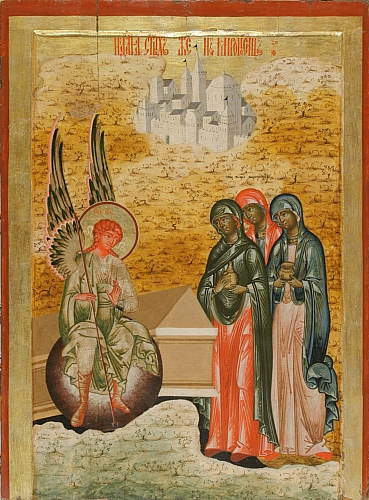
The Resurrection – When the Sabbath was over, Mary Magdalene, Mary the mother of James, and Salome bought spices so that they might come and anoint Him. (Mark 16:1).
Salome was faithful with her husband in raising their children and providing a model for worship and patience waiting for Messiah to come. Probably never did she believe it would happen to her in her lifetime. When it did, she was all-in. She must have been spiritually satisfied that her sons were following. She followed, she learned, and she loved Jesus. Her sorrow at His crucifixion was real and deep. Her dedication was evident when she bought the spices to anoint His body in the little time between His death and sunset when Sabbath began. It was evident again when she arrived at pre-dawn 3 days later to anoint His body.
Salome’s godly motherhood and worshipful model in following Christ is an example to us. James was the first apostolic martyr and John the last to pass into heaven. Even if Salome was not alive to endure that grief, as Lockyer said, “The mother sought earthly crowns for her sons, but through losing their lives for Christ’s sake, they gained greater honor in heaven. … Happy and grateful are those Christian parents who live to see their offspring wholly dedicated to the service of the Lord.“
Yesterday was the last day of school for teachers. I said goodbye to the kids on Tuesday, ending a year of COVID, stress, uncertainty, perseverance, and eventually, victory.
I said goodbye today to my dear friend and boss of ten years, the person who hired me, supported me, encouraged me, prayed for me, and loved me despite my ridiculous quirks, Angie. After 32 years of service in this same school, she retired. I also said goodbye to sweet friend and sister in Christ, retiring school secretary Jeannie.
Also in the last week, I gave up my new stray cat Sully to the shelter, since he was so unhappy and never adjusted to inside life nor to me, and I was unhappy since I could not comfort him enough for him to calm down, but I’m still wracked with guilt.
But the fruit of the Spirit is love, joy, peace, patience, kindness, goodness, faithfulness, gentleness, self-control; against such things there is no law. (Galatians 5:22-23).
The word we’re focusing on this week inside the fruit of the Spirit list is- faithfulness.
As a reminder, the fruit of the Spirit is love. All other fruit stems from that one fruit. There is one fruit of the Spirit, it isn’t a plural. It’s one bundle.
pístis (from 3982/peithô, “persuade, be persuaded”) – properly, persuasion (be persuaded, come to trust); faith.
Faith/pistis) is always a gift from God, and never something that can be produced by people. In short, “faith” for the believer is “God’s divine persuasion” – and therefore distinct from human belief (confidence), yet involving it. The Lord continuously births faith in the yielded believer so they can know what He prefers, i.e. the persuasion of His will (1 Jn 5:4).
Pistis in secular antiquity referred to a guarantee (warranty). In Scripture, faith is God’s warranty, certifying that the revelation He inbirthed will come to pass.
Faith (4102/pistis) enables the believer to know God’s preferred-will (cf. J. Calvin; see 2307/thelçma).
Reflection: Faith is only (exclusively) given to the redeemed. It is not a virtue that can be worked up by human effort.
Faith is another fruit of the Spirit in our lives (Gal. 5:22). But when the Apostle refers to faith, he speaks not merely of “believing in God.” Paul also calls us to “believe God.” Believing in God is not that remarkable — even demons do that. What the Lord wants is a people who trust in His promises alone (James 2:14–26).
Faithfulness is believing that God is Who He says He is and continuing in that belief despite the vagaries of life. Functionally, that means we trust what God says in the Bible, and not necessarily what the world or our own eyes tell us. We trust He will work out everything for good. We trust He will work His will in us. And we trust that our situation on earth is nothing compared to our future reward in heaven. The only way we can have such faith is by the Holy Spirit’s influence. He testifies to the truth and impels us to seek God. The Spirit makes us faithful.
Arthur W. Pink:
Faith endures as seeing Him who is invisible (Heb. 11:27); endures the disappointments, the hardships, and the heart-aches of life, by recognizing that all comes from the hand of Him who is too wise to err and too loving to be unkind. But so long as we are occupied with any other object than God Himself, there will be neither rest for the heart nor peace for the mind. But when we receive all that enters our lives as from His hand, then, no matter what may be our circumstances or surroundings—whether in a hovel or prison-dungeon, or at a martyr’s stake—we shall be enabled to say, ” The lines are fallen unto me in pleasant places” (Ps. 16:6). But that is the language of faith, not of sight nor of sense.
But the fruit of the Spirit is love, joy, peace, patience, kindness, goodness, faithfulness, gentleness, self-control; against such things there is no law. (Galatians 5:22-23).
The word we’re focusing on this week inside the fruit of the Spirit list is- faithfulness.
As a reminder, the fruit of the Spirit is love. All other fruit stems from that one fruit. There is one fruit of the Spirit, it isn’t a plural. It’s one bundle.
pístis (from 3982/peithô, “persuade, be persuaded”) – properly, persuasion (be persuaded, come to trust); faith.
Faith/pistis) is always a gift from God, and never something that can be produced by people. In short, “faith” for the believer is “God’s divine persuasion” – and therefore distinct from human belief (confidence), yet involving it. The Lord continuously births faith in the yielded believer so they can know what He prefers, i.e. the persuasion of His will (1 Jn 5:4).
Pistis in secular antiquity referred to a guarantee (warranty). In Scripture, faith is God’s warranty, certifying that the revelation He inbirthed will come to pass.
Faith (4102/pistis) enables the believer to know God’s preferred-will (cf. J. Calvin; see 2307/thelçma).
Reflection: Faith is only (exclusively) given to the redeemed. It is not a virtue that can be worked up by human effort.
Faith is another fruit of the Spirit in our lives (Gal. 5:22). But when the Apostle refers to faith, he speaks not merely of “believing in God.” Paul also calls us to “believe God.” Believing in God is not that remarkable — even demons do that. What the Lord wants is a people who trust in His promises alone (James 2:14–26).
Faithfulness is believing that God is Who He says He is and continuing in that belief despite the vagaries of life. Functionally, that means we trust what God says in the Bible, and not necessarily what the world or our own eyes tell us. We trust He will work out everything for good. We trust He will work His will in us. And we trust that our situation on earth is nothing compared to our future reward in heaven. The only way we can have such faith is by the Holy Spirit’s influence. He testifies to the truth and impels us to seek God. The Spirit makes us faithful.
Arthur W. Pink:
Faith endures as seeing Him who is invisible (Heb. 11:27); endures the disappointments, the hardships, and the heart-aches of life, by recognizing that all comes from the hand of Him who is too wise to err and too loving to be unkind. But so long as we are occupied with any other object than God Himself, there will be neither rest for the heart nor peace for the mind. But when we receive all that enters our lives as from His hand, then, no matter what may be our circumstances or surroundings—whether in a hovel or prison-dungeon, or at a martyr’s stake—we shall be enabled to say, ” The lines are fallen unto me in pleasant places” (Ps. 16:6). But that is the language of faith, not of sight nor of sense.






 the-end-time.org