Posted in theology

God’s allotment, our service

By Elizabeth Prata

Consider this verse-

For through the grace given to me I say to everyone among you not to think more highly of himself than he ought to think; but to think so as to have sound judgment, as God has allotted to each a measure of faith. (Romans 12:3).

Paul began the chapter with talking about our bodies as a living sacrifice, and continued after verse 3 with tying it to the spiritual gifts and our entwinement with each other as members of the Body. The concepts here are service and sacrifice.

“Measure of faith” is defined at Logos as “A biblical term referring to the spiritual capacity or level of belief given by God to individuals.”

But translating and understanding what God meant by ‘measure of faith’ turned out to be not so easy. But I loved wrestling with scripture.

Martyn Lloyd-Jones explains the measure of faith is not justifying faith. We all have that equally. It is not the spiritual gift of faith, only some have that. He used George Muller as an example of someone given the gift of deep, trusting faith “who was was able to pray with confidence and assurance and the amazing things happened that we can read“.

So what IS the ‘measure’ of faith? Commenter Marvin Vincent (1887) wrote that it is a difficult phrase to translate. I found this to be true. Preachers or commenters Martyn Lloyd Jones, John MacArthur, RC Sproul, Matthew Henry etc all interpreted it slightly differently. However, there are three concepts that stood out- first, God gives the faith, second, for the measure of faith we are given, we use in conjunction with our spiritual gifts to serve. Thirdly, we must not become conceited about our faith or our gifts nor think more highly than ourselves over another person.

Here, J. Witmer in John Walvoord’s The Bible Knowledge Commentary acknowledges Paul’s ‘involved word play’ in this verse:

“By his involved word play on various forms of the verb phroneō, “to think,” Paul emphasized that human pride is wrong (cf. 3:27; 11:18, 20) partly because all natural abilities and spiritual gifts are from God. As a result every Christian should have a proper sense of humility and an awareness of his need to be involved with other members of Christ’s body. As Paul explained, a parallelism exists between a believer’s physical body which has parts with differing functions and the community of believers in Christ as a spiritual body (cf. 1 Cor. 12:12–27; Eph. 4:11–12, 15–16). The point is that each member functions to serve the body, not the body to serve the members.”

Marvin Vincent in Word Studies in the New Testament, (1887) focuses on the word measure, saying our entry into the Kingdom at conversion means we now see ourselves measured against God as our new standard of measurement-

“Faith, in introducing him into God’s kingdom, introduces him to new standards of measurement, according to which he accurately determines the nature and extent of his powers, and so does not think of himself too highly. This measure is different in different individuals, but in every case faith is the determining element of the measure. Paul, then, does not mean precisely to say that a man is to think more or less soberly of himself according to the quantity of faith which he has, though that is true as a fact; but that sound and correct views as to the character and extent of spiritual gifts and functions are fixed by a measure.”

As usual, the solid and trustworthy Matthew Henry in his commentary on the whole Bible (1704) brought Jesus into the discussion-

“Because God deals out his gifts in a certain measure: According to the measure of faith. Observe, The measure of spiritual gifts he calls the measure of faith, for this is the radical grace. What we have and do that is good is so far right and acceptable as it is founded in faith, and flows from faith, and no further. Now faith, and other spiritual gifts with it, are dealt by measure, according as Infinite Wisdom sees meet for us. Christ had the Spirit given him without measure, Jn. 3:34. But the saints have it by measure; see Eph. 4:7. Christ, who had gifts without measure, was meek and lowly; and shall we, that are stinted, be proud and self-conceited?”

It seems to me after chasing down all these winding trails and mulling this phrase for the last few days, that my conclusion is we need to employ trust in our Christian church relationships. We of course remember the primary notion, we are each given a measure of faith in which we operate our spiritual gifts. Do not disparage the weaker brother or be jealous of the stronger brother. We all have a different measure.

So, when we hear preaching, trust that the preacher is operating to the widest extent in his good service to Jesus. When we see hospitable women hosting the sisters, trust that she is operating her faith and using her gifts to the fullest extent according to the measure given her. And so on for each person and each gift. We are one body, and what one does affects the others.

Simply put, use grace to think more highly of others. If we are going to measure anything, measure ourselves in sound judgment to ensure we are serving Jesus with all our mind, heart, soul, and body.

Posted in theology

Born to Be Destroyed: The Stark Language of 2 Peter

By Elizabeth Prata

Something that always surprises me is how tolerant and soft-hearted people are when you mention so-and-so is a false teacher. They look at the person being named as false, and not at Jesus. Certainly they aren’t looking at their Bible. False teachers are of satan. But when you say someone like Joyce Meyer is false, or Beth Moore, they look at Meyer and see a woman who smiles and has a large following and has a Bible in her hand, so they say “But she’s not THAT bad”, or “Have you prayed for her?’ or “Leave her alone- God will sort it out.”

All of those are wrong responses to any named false teacher.

While many people will agree that false teachers exist, when I match the person to the claim, they will balk.

Yet the Bible describes these false ones in the starkest of terms. In just one example, we turn to 2 Peter 2:13-14 which says, ‘they revel in their deceptions’.

suffering wrong as the wages of doing wrong. They count it a pleasure to revel in the daytime. They are stains and blemishes, reveling in their deceptions as they feast with you, 14having eyes full of adultery that never cease from sin, enticing unstable souls, having hearts trained in greed, accursed children;

John MacArthur preached about these false teachers from the 2 Peter 2:13 verse. He said –

“Further describing their action, Peter with obvious disgust says, “They are stains and blemishes.” Boy, those are absolutely vivid words. The word “stains” is the word filth spots, dirt spots. The word “blemish” is the word scab, or the word defect. It is the idea of dirt spots, defects, filth spots, scabs. They pollute. They’re dirty.  They’re foul. They’re diseased. And he says they’re reveling in their deceptions.” Creatures born to be killed.

That means someone like Joyce Meyer is a filth spot. Joel Osteen is a defect. Beth Moore is a scab. THAT is how awful a false teacher is. I’m not saying these things, the Bible is!

Next, do you notice the word revel is used twice in the same verse?! What does revel mean here?

HELPS Word-studies says
tryphḗ (from thryptō, “to break down due to over-indulgence, i.e. living in excessive luxury”) – properly, feebleness brought on by self-indulgence (luxury); (figuratively) moral and spiritual breakdown (“enfeeblement”) from over-indulging in dainty (“delicate”) things, i.e. “dainty living” that deteriorates soul and body.

Their Reveling (2 Peter 2:13–14a), as Warren Wiersbe in The Bible exposition commentary interprets the verse, says-

The words translated “riot” and “sporting” carry the meaning of “sensual reveling.” They also contain the idea of luxury, softness, and extravagance. At the expense of those who support them (2 Peter 2:3), the apostates enjoy luxurious living. In our own society, there are those who plead for funds for their “ministries,” yet live in expensive houses, drive luxury cars, and wear costly clothes. When we remember that Jesus became poor in order to make us rich, their garish lifestyle seems out of step with New Testament Christianity.

Not only do they deceive others, but they even deceive themselves! They can “prove” from the Bible that their lifestyle is right. In ancient times, it was expected that people would revel at night, but these people dared to revel in the daytime, so convinced were they of their practices. A person can become so accustomed to his vices that he sees them as virtues.

These false teachers are born to be killed. Jude 1:4 says certain men were born for condemnation. The 2 Peter verse says they will be destroyed. MacArthur again,

The Greek text actually reads this way, “In their destroying they shall be destroyed.” And that’s…that’s another way to read this, that in the destructive work that they do as they lead people to destruction through their witless, non-reasoning stupidity and living off their passionate instincts, as they consume others in that operation, they will themselves be consumed. They are abandoned to destruction, born for the flesh, born to perish. Sermon- Creatures born to be killed part 1.

It is important to look at the Bible when discerning about false teachers. Because we are sinners, our sin clouds our judgment of others when assessing their output against the Bible. We need the clear word of God to remind us that these teachers whose father is satan, are not just as good as us or just as bad as us. Do not think, “Well, no one is perfect”, or “Well, I sin too.” False teachers are an entirely different beast.

These are springs without water and mists driven by a storm, for whom the black darkness has been reserved. (2 Peter 2:17).

Springs without water are empty, like the promises of false teachers. They are reserved for blackest darkness in the future. Don’t follow them.

Posted in theology

The splendor of the temple, the beauty of the Savior

By Elizabeth Prata

In my church we are going through Mark. We are up to Mark 13, the much anticipated (by me) the Olivet Discourse. This is the time that Jesus spent answering a series of questions the disciples asked, and Jesus sat down and taught them while they were on the Mount of Olives (hence the name of the discourse).

Mark 13:1-2 says,

As He was going out of the temple, one of His disciples said to Him, “Teacher, look! What wonderful stones and what wonderful buildings!” And Jesus said to him, “Do you see these great buildings? Not one stone will be left upon another, which will not be torn down.”

The disciples must have been shocked. When we see a great building and its sturdiness, the huge blocks from which it is built, its towering presence, we think that it will last forever. The Twin Towers in New York fell after the terrorists’ planes crashed into them. I remember seeing that in wonder and amazement. How could such a strongly built building fall? But it did. Here, my pastor begins preaching and teaching in this verse by showing how massive and strong the Temple was:

One of the 12 disciples, we don’t know who, turned around and looked back toward the temple.

Whoever this was marveled at what he saw. And according to verse 1, he called out to Jesus, look teacher, what wonderful stones and what wonderful buildings. What caught the eye of this disciple was the grandeur of the temple. in all of its magnificent adornment and scale. Viewed broadside, it would have been impressive. It was the largest of all the temples in the Roman Empire, and surely the wealthiest as well.

In fact, someone has remarked that if it hadn’t been a Jewish temple, it would have been considered one of the wonders of the world during its time. Nevertheless, anyone who saw it would have been awestruck. The first century Jewish historian Josephus said that it lacked nothing that could astound either mind or eye. No one had seen anything like it. One reason for its impressiveness was its sheer scale. It was massive.

The temple complex encompassed over 1.5 million square feet, equivalent to 35 football fields in size, and covering one-sixth of the area of Jerusalem. The perimeter of the complex, if you walked around it, stretched nearly a mile in total length. The cornerstones of the complex weighed more than 100 tons, and a stone along one side has been found to weigh over a million pounds. viewed from the Mount of Olives across the valley. The temple complex rose 160 feet above the Kidron Valley below, and the temple itself rose another 150 feet from the center of the complex.

The magnitude of the temple complex far exceeded any other temple in the ancient world. Another reason for its impressiveness was its sheer beauty. One contemporary Roman historian called it immensely opulent. Much of the complex was constructed with polished white marble so that it gleamed in the sun. It was said that from afar the temple complex looked like a snow-covered mountain. The temple itself was adorned with much gold. The front exterior walls were covered in thick plates of gold that reflected the sun’s rays so brightly at sunrise that onlookers had to look away.” —end of sermon excerpt


Nothing on this earth will remain. Not Mount Everest, not the biggest buildings, not the most powerful person. The earth will melt away and be remade. With that in mind, rejoice we have Jesus to cling to! He transcends all earthly strength, power, majesty, and splendor.

Posted in theology

Being a ‘Crunchy’ Christian and avoiding New Age Influences

By Elizabeth Prata

Doreen “Dee” Virtue is a former New Age adherent who used to write books about angel spirituality. She converted to Christianity 9 years ago and with the scales having fallen from her eyes, now is a Christian. Virtue has renounced all her New Age beliefs, books, and practices, and is happily and unashamedly a Christian. She has a Youtube channel, here.

Ashley Sheatz, wife to Trevor and his ministry On the Mount, mom to 3, has several social media accounts. Facebook, Instagram, On the Mount ‘s Youtube.

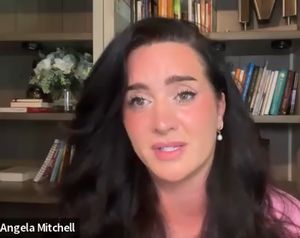
Angela Mitchell’s ministry is called Raising Apologists. She is a married stay-at-home-mom, who writes on Instagram, Facebook, and her blog called Raising Apologists, on the topics of discernment, homeschooling, and encouraging mothers and women.

These three ladies, well versed in a biblical worldview and walking uprightly in Jesus, discussed “Crunchy Christians Avoiding New Age Deception“. They talked about what is crunchy Christianity, discerning good wellness advice vs. unhealthy advice, and how New Age ideas can seep into even the most well-meaning mother’s worldview, corrupting it with syncretism.

Doreen Virtue has a knack for asking insightful questions, illustrating her skill to deeply listen then follow up with a question that elicits even more information. Her choice of guests is also wise. The two ladies here explain themselves so well I decided to transcribe portions of the discussion that impacted me, and interspersed with my own thoughts. I urge you to listen to the entire conversation. It will be even more impactful when you hear it in context.


In this first quote, I loved what was being said. Social media has risen to levels that greatly affect us. People with large followings are even called “influencers”. The influence is to entice listeners to buy their product, read their book, heed their advice. Many times their books or advice is good. But sometimes the advice is unfounded, unscientific, or unChristian. We must learn to research widely, and confirm what we hear or see from social media from credible sources.

For example, many people know of Dr. Josh Axe. He usually places the honorific in front of his name. People use the honorific when speaking of him. But he is not a Doctor of Medicine. He cannot diagnose or treat medical conditions or prescribe pharmaceutical drugs. He holds a Dr. of Chiropractic degree, a Dr. of Natural medicine and is a certified nutritionist. But not a medical doctor. Some people don’t research, see the ‘Dr.’ and believe all his advice is trustworthy. It isn’t.

Many social media accounts either purposely or unintentionally add other spiritualities into their advice. Even practicing Christians do this.

2020 was hard on us all, and we lost our trust in the medical profession. Ashley and Angela both speak to this. Nature abhors a vacuum, so the hole has to be filled with something else. Hence, the rise of social media medical advice from people who may or may not be credentialed professionals, or even credible.

ASHLEY SHEATZ:

My warning is don’t get all of your health advice from Instagram because you’re probably going to be led astray. You need to back it up with also your own research and googling stuff and verifying it. There’s a lot of false information on Instagram. But I think one of the key takeaways if you are on Instagram and you are getting a lot of good health knowledge- because there is a lot of it out there- is sticking to accounts that are focusing on just whole foods or more ingredient focused rather than bringing their spirituality into it. So I think that’s a good way to guard your mind is to not even as a Christian to not even follow accounts that are talking about a false spirituality or are saying things that contradict the Bible.

There are so many great Instagram accounts that are just very health food focused. And if you are a Christian, there are also great biblical Christians who are in the health world and who do bring their faith in to the word of God. We just have to be really cautious with following people who are saying they’re spiritual, right?

If you’re married, talk to your husband with what you’re reading about and what you’re ingesting because God has placed your husband as your spiritual head to protect you. And if you’re just on your phone and you’re researching all these things and you don’t ever talk to him about it, I feel like there’s already like an open door for the devil and demons, honestly, to attack you there if you’re not open with your husband.


It’s hard for some people to let go of the teacher/advice/books etc from a favored teacher or influencer if told they aren’t the healthiest for your soul. They have invested and do not want to let go. They invest time, money, or reputation in this teacher or influencer and they don’t want to hear they have been deceived. Deception by investment has a powerful pull.

Often I’ll hear back that “But this teacher is good because his method worked… But my prayer came true… But my thing resolved…”

ANGELA MITCHELL

They’ve really put some trust in this method and they’ll say, “But it works.” And my push back to that is always we’re not pragmatists, which means we don’t just do something because it works. We’re Christians. We have to ask why. We have to ask, ‘Is this ‘glorifying the Lord?’ ‘Is this changing my worldview?’ And so, a lot of the times what I’m seeing is women is, their worldviews are changing.

There’s syncretism. Now syncretism is when you take parts of one religion and you’re mixing it with Christianity. But we know in Deuteronomy and Exodus that the Lord specifically warns against syncretism. I mean we see in Exodus where Aaron creates a golden calf and says, “We’re going to use this to worship God.” And God says absolutely not. This is disobedience. It’s the same thing when we go to something for help that isn’t of God. It’s idolatry.


I see some rigid perfectionism in this crunchy movement. Women become involved with it, then absorbed in it, then myopic about it, having tunnel vision. That’s ground ripe for Legalism. A rigid adherence to a protocol, tradition, or method that the person thinks will save them, or gain ‘points’ with Jesus (or her church).

I understand the ‘crunchy’ movement is wide, with varying levels of commitment or a variety of applications. But sometimes I hear women adhering to a rigid method and thinking that if they achieve it 100% this will somehow put them in better standing with Jesus.

DOREEN VIRTUE:

How do we guard against taking our eyes off the cross and instead thinking that if we just make everything in our house and our diet 100% perfect that that will somehow save us.

ASHLEY SHEATZ:

So as the unbeliever, they are searching and seeking to control all aspects of their life. This is the only life to them and they want to make it long and healthy. But I mean even if you are doing all the right things, some of the most healthy people in the world still get cancer. I mean even you could do all the healthy things in the world and still die in a car crash tomorrow. So there’s certain things that are just completely out of our control. And God has also given us blessings to enjoy in this life. Like if you enjoy going to Chipotle. I use Chipotle because I love Chipotle.

If you enjoy those things and you can sit down and enjoy that meal with joy…how we guard against perfectionism is realizing we’ll literally never be perfect in this life and the reason why you want to have good health and pursue good and healthy foods is to feel good today so you can serve the Lord later. It’s not about preserving your life. Our days are already numbered.


That rigidness rears its head. I’ve heard of women who won’t attend a dinner at someone’s house because their food is served from plastic containers, or their eggs are from a store. That’s perfectionism again, where your preference for something interferes with your ‘one another’.

ANGELA MITCHELL:

I think keeping in mind what stewardship looks like per family is going to be different. And now I’ve had people say that it’s more biblical to raise your own meat, to live on a farm. Kind of like a tradlife culture. Like, ‘you need to not buy eggs from the store’. I can’t do that. I live with an HOA. They won’t allow chickens. So we have to be really careful what we say is biblical and what we say is God-glorifying because we all have different circumstances.

The key word here is “preference”. Desiring to eat or feed your family farm fresh eggs, for example, or locally butchered meat, is a preference. Nothing in the New Testament commands you one way or another on that level of specificity of food or lifestyle.

ANGELA MITCHELL:

There there’s things with hospitality that we have to think- are my preferences ruling out love? I’m seeing a rise in eating disorders because of crunchy culture because it can just take over your mind. Everything becomes about what you’re putting in your body, and that can lead to idolatry. And anytime we create a disordered thinking where we’re thinking about all the time. It’s controlling our thoughts. It’s controlling our behaviors. It’s controlling our speech. We’ve created a functional God. And I would really caution women in crunchy culture to not do that to each other and to not do that to themselves.


Doreen asked about women who may be listening or watching to the video who are going through a health challenge and is becoming desperate. Many times when we go through an unexpected illness or health issue and prayer, patience, and standard medicine is not working, we become desperate. That is a risky time, because our decision making is clouded.

ANGELA MITCHELL:

I would also encourage women, if you have a woman in your life that’s suffering, she needs your prayers. She needs your friendship. She needs you to point her to God’s word before giving her crunchy advice.

I would say what do we believe about God? Do we believe that he actually means to do us good and not harm? Do we believe he’s in control? Do we believe we can trust him? Is he a good God?

I do like to ask questions. What is your desire for being crunchy? Is it a fear of death? Are do you think that you control can control getting cancer? Do you think you can control not getting disease? Do you think your good choices is going to somehow sway the hand of God even though he says you can’t add one hour to your life? I think sometimes we can have a real fear of death and crunchy culture kind of pacifies us with that. But as believers, we know where we’re going. We’re going to be with our God. To be absent from the body is to be present with the Lord. And to live is gain and to die is gain. And I just want my sisters in Christ to remember that that God loves you and he cares for you and he cares for your health. 


It was a great conversation. I encourage you all to take a listen here Crunchy Christians Avoiding New Age Deception“. All three women are a good follow. They are consistent with encouragement and advice from a biblical worldview.

Posted in end of days. prophecy, end time

The Faith to Cut the Rope

By Elizabeth Prata

I was reading Acts 27 and the seafaring language was a wonderful reminder of days when I lived on a sailboat. Some days were lazy, drifting along in puffs of wind on a glassy sea. Other days were tempestuous, the sea raging and the boat beating into waves that seemed to grow ever higher. There was one rough overnight passage we made along the coast of New Jersey. When daylight came we saw that the dinghy we’d trailed behind our yacht was missing. The rope had snapped.

It was a disconcerting feeling to be separated from what would need to be our lifeboat if it ever came to that.

Continue reading “The Faith to Cut the Rope” →
Posted in theology

When should a pastor retire? Copeland v. MacArthur

By Elizabeth Prata

Most jobs are jobs we retire from and think nothing of it. It’s the natural course that we retire from long haul trucking, bricklaying, nursing, teaching. I’m going to be 66 soon and I’m thinking about retiring from my school job.

But when a man is called to be a pastor, and he goes through training (usually seminary), and walks up to his pulpit for the first time, for these men it’s a lifetime commitment. To them, the responsibility is so heavy, they care for their flock so much, the call feels permanent. He stays at the pulpit, unless the Lord takes him home or he falls under reproach and disqualifies himself.

Not that pastors can’t or shouldn’t retire. The Levites were to serve in the tabernacle until age 50. But in today’s times, the Bible does not give a standard for when a man should step down. The qualification is that he should be “able to teach”. (1 Timothy 3:2; 2 Timothy 2:24). There are other considerations, too.

Continue reading “When should a pastor retire? Copeland v. MacArthur” →
Posted in exaltation

Jesus, the name high over all

By Elizabeth Prata

“And after six days Jesus took with him Peter and James, and John his brother, and led them up a high mountain by themselves. And he was transfigured before them, and his face shone like the sun, and his clothes became white as light. And behold, there appeared to them Moses and Elijah, talking with him. And Peter said to Jesus, “Lord, it is good that we are here. If you wish, I will make three tents here, one for you and one for Moses and one for Elijah.” He was still speaking when, behold, a bright cloud overshadowed them, and a voice from the cloud said, “This is my beloved Son,a with whom I am well pleased; listen to him.” When the disciples heard this, they fell on their faces and were terrified. But Jesus came and touched them, saying, “Rise, and have no fear.” And when they lifted up their eyes, they saw no one but Jesus only.” (Matthew 17:1-8)

I was listening to Drive By Pneumatology , and in lecture 10 by Emilio Ramos, I was struck by some insights by the lecturer.

The Holy Spirit’s ministry is to point to Christ (John 16:13-14). Christ is the pre-eminent Person in all the universe (Colossians 1:18). Peter, in his boundless and sometimes unthinking enthusiasm, wanted to make a tabernacle for all three of the glorified beings he saw before him. One for Moses, one for Elijah and one for Jesus. In verse 4 Peter makes it clear, he says it twice, ‘three tents’ and then explains, ‘one for you and you and you…’

WHILE He was speaking, God interrupted Peter. Peter was off on the wrong track. We cannot put anything or any one equal to Jesus. He is preeminent.

 God said, “This is my beloved Son, with whom I am well pleased; listen to him” God says it twice, ‘this is My Son,” and ‘listen to Him.’

Do we get the message?

Jesus is preeminent. He is counted to have more glory than Moses (Hebrews 3:3). he speaks with more authority than Elijah, the prophet, and all the prophets. (Hebrews 1:1-2).

My prayer for you is that you put Jesus at the highest exaltation point in your mind and heart. He is pre-eminent, better than our idols, our celebrities, our traditions, and better than any picture or shadow of anyone else in the bible.

“Therefore God has highly exalted him and bestowed on him the name that is above every name, so that at the name of Jesus every knee should bow, in heaven and on earth and under the earth, and every tongue confess that Jesus Christ is Lord, to the glory of God the Father.” (Philippians 2:10-11).

Jesus, the Name High Over All, written by Charles Wesley
Posted in theology

Why should the church always be on guard?

By Elizabeth Prata

The Lord will build His church. It will never fail. That’s not to say that it won’t be under attack. It’s under attack every day. So the Holy Spirit inspired the Bible authors to warn us in many of the books to stay vigilant.

From the John MacArthur Daily Bible, entry on July 18,

Why should the church always be on guard?

“Paul told the Ephesians that he had declared to them “the whole purpose of God” (Ac 20:27). The entire plan and purpose of God for man’s salvation in all its fullness: divine truths of cre ation, election, redemption, justification, adoption, conversion, sanctification, holy living, and glorification. And now that he was leaving, he gives them a warning.”

“False teachers were already plaguing the churches of Galatia (Gal 1:6) and the Corinthian church (2Co 11:4). “Be on guard for yourselves” (v. 28), a warning that proved true by later events at Ephesus (1Ti 1:3-7, 19-20; 6:20-21; Rev 2:2). Paul repeated this call to self-examination to Timothy when his young son in the faith served as pastor of the Ephesian congregation (1Ti 4:16; 2Ti 2:20-21). The “overseers” are the same as elders and pastors. The word stresses the leaders’ responsibility to watch over and protect their congregations- an appropriate usage in the context of a warning against false teachers. Church rule, which minimizes the biblical authority of elders in favor of a cultural, democratic process, is foreign to the New Testament (1Th 5:12, 13; Heb 13:17).”

“He warns of “savage wolves” (v. 29)-a term borrowed from Jesus (Mt 7:15; 10:16). This metaphor stresses the extreme danger false teachers pose to the church. “From among your own selves” (v. 30). Even more deadly than attacks from outside the church are the defections of those (especially leaders) within the church (1Ti 1:20; 2Ti 1:15; 2:17; Jude 3, 4, 10-13). These wolves would speak “perverse things.” The Greek word means “distorted” or “twisted.” False teachers twist God’s Word for their own evil ends (13:10; 2Pe 3:16).”

“And now I commend you to God and to the word of His grace, which is able to build you up” (v. 32). The Scriptures, the record of God’s gracious dealings with mankind, is the source of spiritual growth for all Christians. And since the church is “the pillar and support of the truth” (1Ti 3:15), its leaders must be familiar with that truth.” –end quoted MacArthur Bible entry


Stay vigilant. Be vigilant of our flesh and kill our own sin. Be vigilant over what we absorb from the world, which is at odds with the Lord Jesus. Stay vigilant over enemies and spies who come into the church, either your physical church or the digital Christian world via speeches, books, podcasts and the like. Jesus commended the church at EPhesus for being vigilant-

I know your deeds and your labor and perseverance, and that you cannot tolerate evil people, and you have put those who call themselves apostles to the test, and they are not, and you found them to be false; and you have perseverance and have endured on account of My name, and have not become weary. (Revelation 2:2-3).

How do we remain on guard but not get weary expending that energy? Rely on the Lord. His sustenance is the word, prayer, and fellowship with the saints. These things revive us.