The text discusses the debate surrounding women’s roles in church leadership, emphasizing that women are biblically unqualified to pastor. It challenges modern fanciful interpretations of scripture, advocating for adherence to the plain scripture of the Bible. The author argues against female pastors, citing specific biblical passages and historical context while encouraging women to fulfill their rightful roles in accordance with scripture.
The Proverbs 31 wife has a husband at the gates, Her husband is known in the gates, When he sits among the elders of the land. (Proverbs 31:23).
The famous Ishtar Gate, before 4BC. now in Pergamon Berlin Museum. Note the scale, compare the people to the gate. Photo By Rictor Norton – CC BY 2.0. Nebuchadnezzar II inscribed the gate and gave credit to ‘Marduk, lord of the gods’. He will learn later Marduk does not exist.
Gates. I never thought much about ’em until I moved to rural Georgia. My first apartment here in the south had a horse gate. I had to stop my car and get out, unlock and push open the gate, drive through, then repeat the procedure in reverse. Many farm driveways have a cattle gate. Same with a lot of homes that have animals of one kind of another. Big gates, small gates. Gates.
EPrata photo
What does this mean, ‘sitting at the gates’?
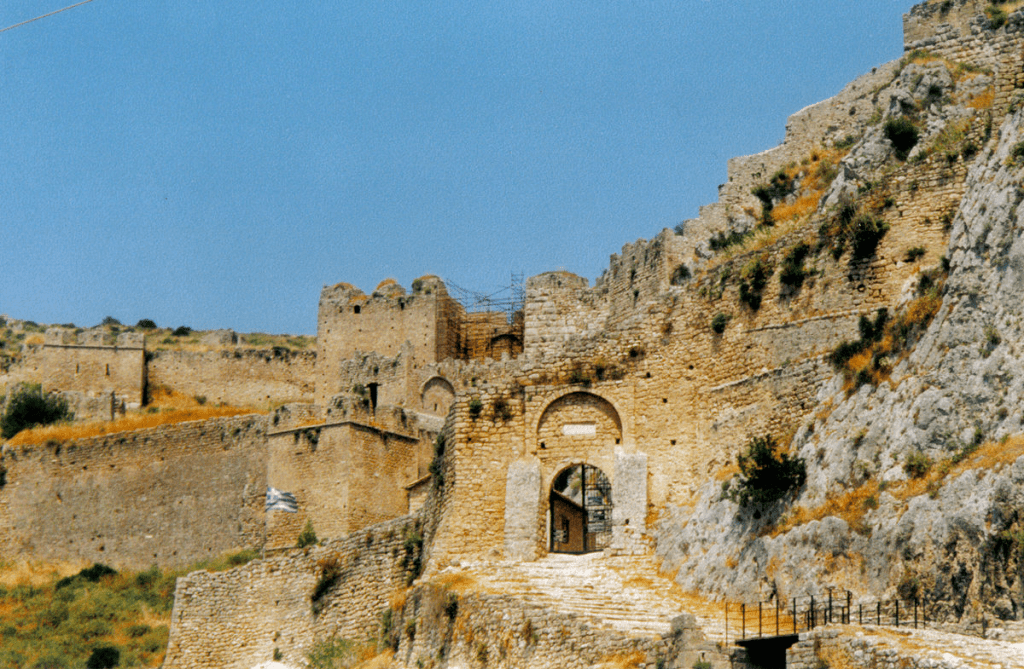
In Bible times the cities were walled and you could only enter by a gate. The bigger the city, the bigger the wall. Nineveh with a population of 120,000 and three days’ walking breadth had walls so wide a chariot could run along the top.
At the gates of cities courts of justice were frequently held, and hence “judges of the gate” are spoken of (Deut. 16:18; 17:8; 21:19; 25:6, 7, etc.). At the gates prophets also frequently delivered their messages (Prov. 1:21; 8:3; Isa. 29:21; Jer. 17:19, 20; 26:10). Criminals were punished without the gates (1 Kings 21:13; Acts 7:59). Source, Illustrated Bible Dictionary and Treasury of Biblical History, Easton, M. G. (1893).
The gate wasn’t like what we may think of with a wall, an open gate, then voila, you’re in. Since the gate was the most vulnerable part of the city’s defensive system, there was a gate, then some chambers, or barriers. Or, more gates.
“During the Iron Age, the period of Israelite monarchy, two-, four-, and six-chamber gates are found. … Undoubtedly, the development of new weapons, including more effective battering rams, required new defensive strategies. Among such innovations were the introduction of inner and outer gate structures. Such double-gate structures may well have been intended to strengthen defenses. Assaulting an outer-gate structure would not give access into the city proper; it would only lead through a narrow passage (where an invading army would be under continual assault by defenders on the walls above) to an inner-gate structure, likewise well defended. Sites with inner- and outer-gate structures include Tel Dan, Megiddo, and Lachish.” Source- Holman Illustrated Bible Dictionary.
Typically, the city’s market or bazaar would be close to the gate, so merchants would not have to drive their animals through the whole the city. Since there was so much activity coming and going at the gate, this is where the elders sat to judge, mediate, and consider city business.
EPrata photo
Below we see a photo of the inside of a city gate, a four-chambered one. Photo and caption by Ian Scott:
“This is one of the four chambers that line the gate complex of Iron Age Gerar. Note the well-preserved bench running around the inside of the chamber. This is where soldiers might prepare to repel invaders who penetrated the outer gate. It is also in such gate chambers that the town elders would pass hot days, hear complaints, and adjudicate disputes.”
Lot had a position at the gate. This means he was an elder of the city of Sodom. Genesis 19:1 says, “Now the two angels came to Sodom in the evening as Lot was sitting at the gate of Sodom.”
Boaz was an elder at the gate, too. Now Boaz went up to the gate and sat down there, and behold, the redeemer of whom Boaz spoke was passing by, so he said, “Come over here, friend, sit down here.” And he came over and sat down.” (Ruth 4:1).
Eli was at the gate. When he mentioned the ark of God, Eli fell off the seat backward beside the gate, and his neck was broken and he died, for he was old and heavy. And so he judged Israel for forty years. (1 Samuel 4:18).
Gates where were a triumph was proclaimed, or prisoners of war displayed. A conquering King and his men would stand at the gate to show their victory, because the gate was considered the place of authority, economy, justice, and was actually the all-in-all life-blood of the city.
Much is made of Deborah’s position as Judge and Prophetess in the Bible. People who wish to imbue women with more authority than the Bible gives often revert to Deborah as the model and example. No. Further, it is interesting to see that Deborah did not sit “at the gate” as was customary. She was not located in a city. She judged under a palm tree in the hills of Ephraim. (Judges 4:5).
So perhaps that is more than you wanted to know about gates and elders sitting at the gate, but I thought it was interesting architecturally and theologically.
We read of Jael in the Bible Reading Plan today. God’s providential intervention is evident in today’s reading.
Jael
Jael was the wife of Heber the Kenite. Sisera had been cruelly oppressing the Hebrews for 20 years. The people cried out. Deborah was civic leader at that time, prophesying and judging. She sent for Barak, the military leader and told him to go take care of the problem. Barak could freely decide what to do. He could go or he could not go, the choice was his. He said he would not go unless Deborah came with him. (Judges 4:8). His answer was in effect, no. Deborah replied that she would go with Barak, but it would be an embarrassment to him because God would deliver Sisera into the hands of a woman, and Barak would not get the military glory for the victory.
Barak freely made his choice, but now the outcome would occur from another quarter, just as Mordecai had said it would if Esther decided against her action.
Into the story enters Jael. After Barak routed Sisera’s army, Sisera fled. Sisera aimed toward the tent of Heber the Kenite. Sisera knew there was peace between Jabin the king of Hazor (Sisera’s King) and the house of Heber the Kenite. Heber had separated from the Kenites and was settled far from the action. Sisera ran, believing he was safe to go toward the area where there was no fighting and where there was peace between the parties. Normally he would be right, especially since hospitality customs were so strong in protecting those who are invited into the tent. However in this providential case, Sisera was wrong. Jael invited Sisera into the tent, gave him drink, and covered him as he fell asleep.
Note that Sisera fell asleep. He had a hard day of fighting, but even though his life was in peril he felt comfortable enough where he let down his guard and fall asleep. Women in those days were responsible for pitching the tents and so Jael was strong enough and familiar enough with how to efficiently hammer a tent peg into the ground. As Sisera slept, she drove a tent peg into his temple and pinned his head to the ground. The verse succinctly states, “So he died.” (Judges 4:21b).
And behold, as Barak was pursuing Sisera, Jael went out to meet him and said to him, “Come, and I will show you the man whom you are seeking.” So he went in to her tent, and there lay Sisera dead, with the tent peg in his temple. 23So on that day God subdued Jabin the king of Canaan before the people of Israel. (Judges 4:22-23).
Barak had kind of said “I will go” but not really. Placing conditions on your obedience to God isn’t really obedience to God. I like how the verse says God subdued Jabin.
Whether Esther went in or didn’t go in, God would deliver the Jews from Haman. Whether Barak went to battle or didn’t go to battle, God would deliver the Jews from King Jabin and Commander Sisera. Both Esther and Barak freely decided on a course of action. Yet both outcomes occurred at the providential hand of God.




 the-end-time.org
