Posted in david platt, missional, prosperity gospel, radical

Is ‘uncomfortable’ Christianity the only real Christianity?

By Elizabeth Prata

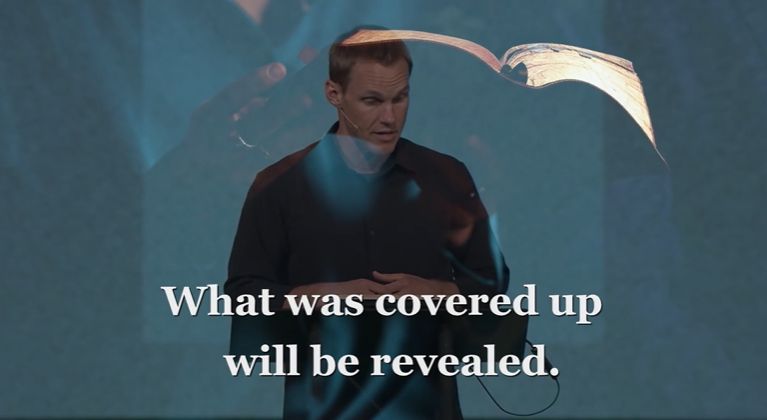
Seeing recently that David Platt, though exposed for malfeasance and deception in the documentary The Real David Platt, is still a sought-out speaker on the Conference Circuit, it got me thinking again about his book Radical. Radical was published in 2010, but like many Christian books, started an ongoing cottage industry of related merchandise, podcast, and so on.

Platt’s stance was that particularly American Christians, have had their holy senses dulled by comfort and prosperity. That our call is sometimes to be uncomfortable and abandon all to God and go on mission. A gross simplification, but that is essentially Platt’s stance.

Except! the book heavily intimates that UNLESS you are doing the hard thing and abandoning all for the cause of the Gospel, you’re not a real Christian. That was the overtone.

The Prosperity Gospel

I agree that the American church has a lot to answer for when we all meet Jesus. The prosperity gospel has sunk in deep and permeated every corner of the US. Now it’s exported abroad, and polluting churches in India and Africa and elsewhere. The prosperity gospel is no gospel. It teaches congregants to indulge their flesh, seek worldly things, and keep their eyes focused laterally instead of vertically. Joel Osteen is a master of this kind of gospel.

Joel Osteen flatly laid out the main precepts of Prosperity gospel out in a 2005 letter to his flock. “God wants us to prosper financially, to have plenty of money, to fulfill the destiny He has laid out for us,” Osteen wrote.

No, that’s not what God wants us to do. God wants us to live holy lives, pick up our cross, obey Him, be witnesses for His name, worship Him, be wise, and share the true Gospel all over the world, among other things. (1 Peter 1:15, John 4:24, Matthew 16:24, 1 John 5:2-3, Matthew 10:16, Matthew 28:19). The destiny he laid out for us includes trouble, persecution, hatred, and hardships, (John 16:33, John 15:18, Acts 14:22, 2 Corinthians 6:4).

The “prosperity gospel,” an insipid heresy whose popularity among American Christians has boomed in recent years, teaches that God blesses those God favors most with material wealth.
Cathleen Falsani

Wikipedia gives a quick overview of how this insidious gospel came to the fore:

It was during the Healing Revivals of the 1950s that prosperity theology first came to prominence in the United States, although commentators have linked the origins of its theology to the New Thought movement which began in the 1800s. The prosperity teaching later figured prominently in the Word of Faith movement and 1980s televangelism. In the 1990s and 2000s, it was adopted by influential leaders in the Charismatic Movement and promoted by Christian missionaries throughout the world, sometimes leading to the establishment of mega-churches. Prominent leaders in the development of prosperity theology include E. W. Kenyon, Oral Roberts, A. A. Allen, Robert Tilton, T. L. Osborn, Joel Osteen, Creflo Dollar, Kenneth and Gloria Copeland, David O. Oyedepo and Kenneth Hagin. Source

The Prosperity gospel was preached so heavily on televangelist tv channels throughout the 1980s, 1990s, and 2000s, that the 2010 David Platt book “Radical” touched a nerve and swept the pendulum rapidly in the other direction.

The Uncomfortable Gospel

The book blurb for Radical states:

It’s easy for American Christians to forget how Jesus said his followers would actually live, what their new lifestyle would actually look like. They would, he said, leave behind security, money, convenience, even family for him. They would abandon everything for the gospel. They would take up their crosses daily…But who do you know who lives like that? Do you?

The book challenged Americans to reassess their commitment to the Gospel and make changes if necessary. Making sure that we are living biblically in submissive commitment to Christ is a worthy reassessment, but many people feel (me included) that the book made it sound like if you were living a normal life that happened to include comforts, you were somehow less committed Christian. Tim Challies reviewed Radical in 2011, saying,

First, I think our attempts to live radically can ignore the Bible’s concern that we be radically godly in character. There is no doubt that I am called by God to live sacrificially and generously. My first calling, though, is to know God, to be shaped by him and on that basis to preach the gospel and to live as if it is true. I am called to do all of this right where the Lord has placed me. This means that there is great dignity and great value in doing whatever it is that I want to do, like to do, and can honor God doing. We do not all need to be foreign missionaries and evangelists; we do not all need to move to faraway lands. We can (and must!) primarily honor God in whatever it is he has given us to do. I am concerned that it is difficult to read this book and believe its message and not feel that normal life is dishonoring to God.

However despite book reviews of Radical stating these same concerns, and a subtle rebuttal by John MacArthur titled An Unremarkable Faith, the pendulum swung hard toward ditching everything and running off to Bali barefoot to evangelize whoever happened to be in the way. The collateral damage of this pendulum swing included a backlash against Suburban Christians and suburbia in general. This is where it gets personal.

I agree with Challies. I have not been called to be a missionary in Tonga. I am not called to be a preacher’s wife in the 10/40 belt. I am not a Bible smuggler living dangerously in China or North Korea. I am a white, middle aged Christian woman living in rural/suburban Georgia. I go to a boring ole Baptistic church with regular people who have a variety of blue collar jobs, or are farmers, or work in professional settings. I drive the 2 miles to school every day, assist children in Kindergarten, 1st, 2nd, and 3rd grades, and drive home. I enjoy covered dish suppers, grocery shopping at the same place where I know all the checkout ladies, and banking at a small town bank where they know my name when I come in.

I live where there are rural farms all around including my own rental property where the birds flit about the tall pines. But horror of horrors, there are also ‘suburban’ subdivisions nearby, malls a half hour away, and a Burger King within a mile.

I don’t make a lot of money and in fact have to watch every penny, but I know by global standards I’m rich. I am comfortable in every aspect of my life, from what I drive, to what I wear, to where I worship, to where I work. Suburbia has gotten a very bad rep. I live in suburban-ish America, and according to many liberal and hipster Christians, I’m doing Christianity wrong.

Hipsters: It’s cool to Hate the ‘Burbs

In his piece “Why Do We Hate The Suburbs?” author Keith Miller pointed out the flaw in ‘burb-hate.

Here are a few of the most prominent Christian objections to living in the suburbs. How many of them hold up to even a slight bit of scrutiny?

Suburbs are inauthentic: I confess to not quite understanding what this means. Yes, suburban things are often newer and feature less exposed brick, but how is that a moral argument?
Suburbs are consumeristic: No more than large cities.
Suburbs are morally repressive: Wait, overt exhibition of immorality is a good thing?
Suburbs lack diversity: The most diverse places in the country are suburbs.
Suburbs are full of a lot of Evangelicals who vote Republican: Oh, wait, now we are getting somewhere…

Obviously, each of these charges deserves a post of its own to address these issues with the requisite nuance, but even the one-liner responses should cause us to think. Why are we down on suburbs? Do we have a biblically grounded objection rooted in our personal experiences, or have we merely baptized a secular prejudice and called it Christian ethics?

Why do Christians hate the suburbs? Or if hate is too strong a word, why do so many disparage it? The question was asked by Matthew Lee Anderson in his 2013 article “Is Radical Christianity Radical Enough?

David Platt, Francis Chan, Shane Claiborne, and now Kyle Idleman are dominating the Christian best-seller lists by attacking our comfortable Christianity. But is ‘radical faith’ enough? … Really. If there’s a word that sums up the radical movement, that’s it. Platt’s Radical opens with it, by describing what “radical abandonment to Jesus really means.” Idleman says he’s going to tell us “what it really means to follow Jesus.” Furtick says that “if we really believe God is an abundant God … we ought to be digging all kinds of ditches [for when he sends the rain, as Elisha did in 2 Kings 3:16-20].” Do those who lead mediocre, nonradical lives for Jesus really believe at all?

Working in day to day jobs, raising children, Coaching Little League, and living holy where God places us IS the great Commission! One thing absent from all the talk against comfort, is that this is where the Lord placed us. Others heed the call to go to the hard places. And some heed the call to dwell in places without discomfort. Like Lydia, Abraham, and others one could name from the Bible.

And there is exposed the subtle two-tiered system that books like Radical instituted. Therein lay the insidious mindset by these holier than thous, that the millions of people living and worshiping and witnessing in suburbia are ‘lesser-than.’

living in suburbia. EPrata photo

I reject that notion because of one important factor. This is where God put me.

And he made from one man every nation of mankind to live on all the face of the earth, having determined allotted periods and the boundaries of their dwelling place, (Acts 17:26)

God made the nations and all the peoples in the nations. He placed each one of us where He wants us, whether it be India or Canada, suburban Ohio or metropolitan Paris. He is sovereign and in His will and plan it pleased Him to give me this life. Who am I to speak back to God? Or worse, who am I to disparage His plan for me and many others He has set forth?

Yes- it would be sin if I lived in a comfortable environment and felt the call to become a missionary in Burma and refused Him because I was comfortable. Yes, I understand the original intent of the book Radical was to get us to reject sinking into a mealy mouthed Christianity because we’re surrounded by comfort.

The true fact is, no matter where a person lives, if they are doing Christianity ‘right’, it is not comfortable. It takes commitment, energy, a proactive stance, and diligence.  Matthew Lee Anderson concluded his piece this way-

The Good Samaritan wasn’t a good neighbor because he moved to a poor part of town or put a pile of trash in his living room. He came across the helpless victim “as he traveled.” We begin to fulfill the command not when we do something radical, extreme, over the top, not when we’re really spiritual or really committed or really faithful, but when in the daily ebb and flow of life, in our corporate jobs, in our middle-class neighborhoods, on our trips to Yellowstone and Disney World—and yes, even short-term mission trips—we stop to help those whom we meet in everyday life, reaching out in quiet, practical, and loving ways.

The essence of Christianity is loving your neighbor. Suburbia needs loving neighbors ‘reaching out in quiet ways’ just as much as the poor need help in Calcutta or the lost need help in Afghanistan. The daily grind of being a faithful witness for Jesus occurs all over the world, in jungles, mountain villages, cities, farming communities, and suburban plats. I reject the Prosperity gospel, and I also reject the Uncomfortable gospel. I accept and live by the only Gospel.

The Wycliffe Bible Encyclopedia summarizes the gospel message this way: The central truth of the gospel is that God has provided a way of salvation for men through the gift of His son to the world. He suffered as a sacrifice for sin, overcame death, and now offers a share in His triumph to all who will accept it. The gospel is good news because it is a gift of God, not something that must be earned by penance or by self-improvement (Jn 3:16; Rom 5:8–11; II Cor 5:14–19; Titus 2:11–14).

The Uncomfortable Gospel is a pendulum swing from rejection of the Prosperity Gospel. A knee-jerk reaction to the crass consumerism and dulled senses of prosperity. Lot was lulled by prosperity of Sodom, Abraham wasn’t. It is not inevitable that living a quiet life in the suburbs, and doing the day to ay mundanities isn’t real Christianity. It is. So is death by martyrdom in the New Hebrides. Real Christianity is obeying to the best of our ability (and beyond) whatever the Lord has set before us.

Now I want to make clear for you, brothers and sisters, the gospel that I preached to you, that you received and on which you stand, and by which you are being saved, if you hold firmly to the message I preached to you—unless you believed in vain. For I passed on to you as of first importance what I also received—that Christ died for our sins according to the scriptures, 15:4 and that he was buried, and that he was raised on the third day according to the scriptures, and that he appeared to Cephas, then to the twelve…( 1 Corinthians 15:1-5)

Posted in theology

Cut To The Chase: The entire discernment series (David Platt, Beth Moore, Joyce Meyer, Jackie Hill Perry, Lori Alexander, Jen Wilkin, Priscilla Shirer)

By Elizabeth Prata

Last week I wrote a series on discernment in 6 essays. They are below. I called it “Wolf Week” because false teachers are called wolves in scripture. My own version of Shark Week, lol.

Wolf Week Intro: or, We DO know the heart
Wolf Week # 1: My two “starter false teachers”
Wolf Week # 2: Why Wolves?
Wolf Week # 3: Types of false teachers and their different methods
Wolf Week # 4: Has that false teacher REALLY ‘helped’ you?
Wolf Week # 5: Why does God allow false teachers?

A short follow-up series I am publishing contains 5 more essays in short form focusing on 4 influential ‘Bible’ teachers. I have written discernment essays on these four previously in years past, but those essays were longer. Nowadays however, people like to read less lengthy material. So I cut to the chase and made shorter essays showing why these folks are false.

Here they all are in one place:

Cut to the Chase: Priscilla Shirer

Cut to the Chase: Jen Wilkin

Cut to the chase: Six Reasons why Joyce Meyer is a false teacher

Cut to the chase: Five reasons to avoid Jackie Hill Perry

Cut to the chase: Four reasons to avoid Lori Alexander of godlywomanhood

Cut to the chase: Six reasons why you should avoid Beth Moore

Cut to the Chase: Three (probably four) Reasons to Avoid David Platt

Posted in theology

Cut to the Chase: Three (probably four) Reasons to Avoid David Platt

By Elizabeth Prata

Last week I wrote a series on discernment in 6 essays. They are below. I called it “Wolf Week” because false teachers are called wolves in scripture. My own version of Shark Week 🙂

Wolf Week Intro: or, We DO know the heart
Wolf Week # 1: My two “starter false teachers”
Wolf Week # 2: Why Wolves?
Wolf Week # 3: Types of false teachers and their different methods
Wolf Week # 4: Has that false teacher REALLY ‘helped’ you?
Wolf Week # 5: Why does God allow false teachers?

A short follow-up series I am publishing beginning today contains 4 more essays in short form focusing on 4 influential ‘Bible’ teachers. I have written discernment essays on these four previously in years past, but those essays were longer. In articles like that, I include sources, explain the teacher’s errors thoroughly, and provide examples. All this make the essays longer. Nowadays however, people like to read less lengthy material. So I cut to the chase and made shorter essays showing why these folks are false.

Having learned, hopefully, what was presented in the previous Wolf Week essays, these cut to the chase essays hopefully will edify you and give you skills to explore further, if you choose to.

This first one is about David Platt.

Continue reading “Cut to the Chase: Three (probably four) Reasons to Avoid David Platt”
Posted in theology

David Platt discernment bundle: “The Real David Platt” new film, Platt’s wokeness, Isa dreams, Radical, and more

By Elizabeth Prata

What is discernment?

Discernment is a gift and a skill. It is a gift when it is given to certain people, as listed in 1 Corinthians 12:10,

To another the working of miracles; to another prophecy; to another discerning of spirits; to another divers kinds of tongues; to another the interpretation of tongues: (KJV. underline mine)

and to another the effecting of miracles, and to another prophecy, and to another the distinguishing of spirits, to another various kinds of tongues, and to another the interpretation of tongues. (NASB).

It’s a skill ALL Christians have and should train constantly, as in Hebrews 5:14,

But solid food is for the mature, who because of practice have their senses trained to distinguish between good and evil. (NASB)

But solid food is for the mature, for those who have their powers of discernment trained by constant practice to distinguish good from evil. (ESV).

How I approach utilizing discernment

I have a “three-item” standard. In discernment work, we do not jump at the least little thing a public teacher or local pastor says. We use common sense, review the bulk of a ministry for context, and wait, watching alertly but remaining self-controlled and measured. We overlook something he or she said that’s the equivalent of a typo.

But if we see or hear of something bigger, something that can be tested against scripture, we raise our discernment alarm. One item can be a mistake. Two times could be a coincidence. But three things, now that’s a pattern. Here is my standard:

1st piece of information: Discernment unease
2nd piece of information: Discernment alert
3rd piece of information: Discernment alarm, go public

And so it was with my assessment of David Platt through the years.

Who is David Platt?

Platt “was senior pastor at the Church at Brook Hills in Birmingham, Alabama, from 2006 to 2014. At the time he was the youngest megachurch pastor in the United States. From 2014 to 2017, Platt was president of the International Mission Board. He became pastor-teacher at McLean Bible Church in 2017. He is the author of the 2010 New York Times Best Seller Radical: Taking Back Your Faith from the American Dream.” (Wikipedia)

- Discernment unease: Radical (2010-2012)

Radical was published in 2010. It hit conservative churches like a bomb. It was a push-back against the lives Platt saw of conservative faithful settling into a consumerism complacency instead of daring to be uncomfortable and taking the faith to the lost in dangerous places. Book blurb:

It’s easy for American Christians to forget how Jesus said his followers would actually live, what their new lifestyle would actually look like. They would, he said, leave behind security, money, convenience, even family for him. They would abandon everything for the gospel. They would take up their crosses daily…

Kevin DeYoung at the time (2010) wrote a fair review of Radical. “Getting to the Root of Radical“. One of DeYoung’s concerns tracked with my main concern: “It is easy to stir people to action by relating how little everyone else has and how much we have in America, but we are not meant to have constant low-level guilt because we could be doing more.”

Low-level guilt was a thread throughout the book I assessed as emotional manipulation. I’ve also seen it coined as Platt’s “poverty gospel”.

Anyway, I was asked to teach through the 6-lesson Radical Small Group Study that came out in 2012. I was uncomfortable with Platt after having read his book Radical, but he’d quoted and used a lot of John MacArthur in the curriculum, so I stuck to the MacArthur side of things, thereby doing diligence to the trust the pastors had placed in me but also not upsetting my conscience. Going through the lessons raised my discernment radar on Platt. I thought the book was emotional, unbalanced, and in the end, dangerous.

- Discernment alert- Urbana15 (2015)

It was at InterVarsity’s 24th student missions conference in 2015 I could not believe what I was seeing. Urbana is “One of the largest student missions conferences in the world, …and combines gospel proclamation, dynamic worship, and missionary connection to launch students into a life of reaching people with the good news.”

Platt spoke there as he often does.

Platt preached of the unnamed woman in Matthew 26 who poured out her expensive perfume, and compared that to pouring out our heart to the Lord. He did mention sin in his sermon, but never uttered the word “repent”. He emotionally pleaded to the thousands assembled there to “decide for Christ”, and said ushers would come by and give them a glowstick which the attendees should break “if they had decided to follow Jesus for the first time”, knowing “that Jesus is worthy of their heart and life”.

Screenshot: Platt explaining how to use the glowstick to indicate one’s decision to follow Jesus

He said to the impressionable youths to hold up the glowstick as a picture of their heart now poured out to Christ. There was a room they could go to where they’d be provided resources, and someone would pray with them to “celebrate God’s grace in you.”

Screenshot: A volunteer at Urbana 15 passing out glowsticks to those standing who’d indicated they ‘decided to follow Jesus’

No. No. No. One never declares a person saved on the spot. This leads to false conversions. Certainly not from a podium to a darkened room full of young people who’d just heard an emotional plea to follow Christ for the first time – but said plea was absent a plea for repentance of sins.

Urbana’s video of Platt at Urbana 15. Above, Youtube’s video of the same event. Youtube is convenient because it has the transcript.

Platt said for the kids to hold up their glowsticks in order to “express affection, adoration, longing, and love for Christ.” Emotional terms. But what about the plea for repentance, holy fear, submission, confession? All these terms were absent from Platt’s decisional altar call.

Devastating. My radar on Platt went to Discernment alert.

- Discernment Alarm: Isa Dreams (2018)

In 2018, then-International Mission Board President David Platt delivered a 6-minute report to the Southern Baptist Convention Annual Meeting affirming Isa as Messiah and conversion through Muslim dreams. He told of some Muslims in a closed country having dreams of Isa and reporting that “This formerly Muslim couple is now a follower of Isa the Messiah.

Isa is not the Messiah.

Interestingly, the SBC always fully published their leaders’ reports after the Annual Meeting, but in this particular case, the subsequent transcription published on the IMB website OMITS that Platt had stated that the couple is now following “Isa the Messiah”. Instead they transcribed that Platt said the couple is following “the Messiah”. Also interestingly, unlike in past years where the full report is published on Youtube or the IMB site, that year only a recap video was available. I transcribed his speech from the live video as it was being recorded by someone who was physically present, that’s how I know of the omission when I compared the two.

The following link of mine has the transcript. Blasphemy: Jesus is not Isa, Isa is not Jesus

Anyone who calls Isa a messiah of the faithful Christians is NOT to be followed. He is not credible. Done. Finito. It’s like calling Yahweh Molech or Dagon. This was the third nail in the discernment coffin for me as to who David Platt is. Why?

Isa is a made-up satanic entity in the Muslim tradition who is not deity, was never actually crucified, never died, where a substitute was placed on the cross to fool the Jews, (Suran al-Ma’idah 4:157), was raised to heaven alive (Surah al-Imran (3:55) and who will return to earth to worship the ‘one god’ [not Trinitarian] Allah and kill Christians, break the cross, remove jizyah (A Muslim tax) and rule (forcibly converted) Muslims “with justice.” (Surah al-Imran (3:55).

Critical Mass: Platt’s worst revealed, in new Documentary

A new documentary is coming out in 2024 in which a sneak peek of 10 minutes was published at Christmastime 2023.

The link includes describing Platt’s alleged leadership and financial malfeasance of McLean Bible church, allegations by former members and leaders. The film is called The Real David Platt.

It reportedly interviews many of McLean’s church members, elders, and leaders who have departed the church or who they say were forcibly excommunicated after having asked questions of finances and other issues. The interviewees describe their negative experiences there and outline their concerns and fear, often with tears for McLean church, its leaders, and fellow members.

It should be noted that the extended trailer does not include anyone representing from ‘the other side,’ that I saw, although I hope and pray in journalistic ethics the producers give McLean elders and Platt opportunity to speak in the full documentary. We do not know who is behind the documentary, although Jon Harris of Conversations That Matter (linked below) said he worked on intake of the interviewees for the film. He discusses the documentary below.

Conclusion

2010-2012- I’ve seen him off since the book Radical was published. I had concerns when asked to teach thru his Radical book curriculum in 2012 I saw more; and I disliked Platt’s guilt-tripping “poverty gospel”.

2015 when he touted 681 non-Christians made a decision of faith to follow Jesus, signified by glowsticks? at Urbana15

2018- Again in 2018 when Platt affirmed Isa dreams. I was done with Platt 6 years ago in 2018.

But for others, these indicators were not enough to call David Platt, evangelical darling, NYT bestselling author megachurch pastor, a wolf. However, by now at the end of 2023 there is plenty to show that Platt is not to be followed. There’s the Critical Race Theory/social justice/woke stances he spoke at public pulpits over the years, the lawsuit, and allegations of financial greed and authority misuse (internal documents supporting these allegations are promised to be shown in the full movie).

Sadly, we must strenuously urge people to stay away from his material, to repudiate his works, and if having promoted or followed him, to repent. Below are many other resources outlining issues with Platt, and this list is NOT comprehensive.

Further resources

The End Time: Blasphemy: Isa is not Jesus and Jesus is not Isa

Think on These Things: “An Evaluation Of Muslim Dreams & Visions Of Isa (Jesus)” “...one can rejoice in Muslim conversions while still expressing concerns about the messenger, especially since the Isa of Muslim dreams isn’t simply calling Muslims to believe in the Jesus of the Bible; he is calling them to believe in him (Isa).

Jon Harris at Conversations that Matter, discusses this new documentary The Real David Platt?

Here we have The Dissenter with a compilation of statements posted Aug 11, 2021 from Platt titled “David Platt’s Worst Woke Statements Ever“. They wrote: ” David Platt’s McLean Bible Church is currently in the midst of a crisis of division and disunity that was clearly caused by his unbiblical embrace of social justice, particularly, a worldly form of “racial justice,” as an outworking of the gospel. This montage is for the purpose of demonstrating that David Platt has clearly embraced all of this movement.”

Capstone Report: A chronological roundup of Platt’s woke trajectory. David Platt is Harming McLean Bible Church With Social Justice Theology

Evangelical Dark Web: David Platt’s Million-dollar Lawsuit

Posted in david platt, missional, prosperity gospel, radical

Do I have to live uncomfortably to be a real Christian?

By Elizabeth Prata

EPrata photo. The Andes of Ecuador

The Prosperity Gospel

The prosperity gospel has sunk in deep and permeated every corner of the US. The American church has a lot to answer for when we all meet Jesus. Now it’s exported abroad, and polluting churches in India and Africa and elsewhere. The prosperity gospel is no gospel. It teaches congregants to indulge their flesh, seek worldly things, and keep their eyes focused laterally instead of vertically. Joel Osteen is a master of this kind of gospel.

Joel Osteen flatly laid out the main precepts of Prosperity gospel out in a 2005 letter to his flock. “God wants us to prosper financially, to have plenty of money, to fulfill the destiny He has laid out for us,” Osteen wrote.

No, that’s not what God wants us to do. God wants us to live holy lives, pick up our cross, obey Him, be witnesses for His name, worship Him, make disciples, be wise, and share the true Gospel all over the world, among other things. (1 Peter 1:15, John 4:24, Matthew 16:24, 1 John 5:2-3, Matthew 10:16, Matthew 28:19). The destiny he laid out for us includes trouble, persecution, hatred, and hardships, (John 16:33, John 15:18, Acts 14:22, 2 Corinthians 6:4).

The “prosperity gospel,” an insipid heresy whose popularity among American Christians has boomed in recent years, teaches that God blesses those God favors most with material wealth.
Cathleen Falsani

The Prosperity gospel was preached so heavily on televangelist TV channels throughout the 1980s, 1990s, and 2000s, that the 2010 David Platt book “Radical” touched a nerve and swept the pendulum rapidly in the other direction.

The Uncomfortable Gospel

The book blurb for Radical states:

It’s easy for American Christians to forget how Jesus said his followers would actually live, what their new lifestyle would actually look like. They would, he said, leave behind security, money, convenience, even family for him. They would abandon everything for the gospel. They would take up their crosses daily…But who do you know who lives like that? Do you?

The book challenged Americans to reassess their commitment to the Gospel and make changes if necessary. Making sure that we are living biblically in submissive commitment to Christ is a worthy reassessment, but many people feel (me included) that the book made it sound like if you were living a normal life that happened to include comforts, you were somehow less committed Christian. Tim Challies reviewed Radical in 2011, saying,

First, I think our attempts to live radically can ignore the Bible’s concern that we be radically godly in character. There is no doubt that I am called by God to live sacrificially and generously. My first calling, though, is to know God, to be shaped by him and on that basis to preach the gospel and to live as if it is true. I am called to do all of this right where the Lord has placed me. This means that there is great dignity and great value in doing whatever it is that I want to do, like to do, and can honor God doing. We do not all need to be foreign missionaries and evangelists; we do not all need to move to faraway lands. We can (and must!) primarily honor God in whatever it is he has given us to do. I am concerned that it is difficult to read this book and believe its message and not feel that normal life is dishonoring to God.

However despite book reviews of Radical stating these same concerns, and a subtle rebuttal by John MacArthur titled An Unremarkable Faith, the pendulum swung hard toward ditching everything and running off to Bali barefoot to evangelize whoever happened to be along the way. The collateral damage of this pendulum swing included a backlash against Suburban Christians and suburbia in general.

I agree with Challies. I have not been called to be a missionary in Tonga. I am not called to be a preacher’s wife in the 10/40 belt. I am not a Bible smuggler living dangerously in China or North Korea. I am a white, older Christian woman living in rural Georgia. I go to a boring ole Baptist church with regular people who have a variety of jobs; some are farmers, some work in professional settings, some are blue collar. I drive 1 mile to school every day, assist children in the lower elementary grades, and drive home. I enjoy covered dish suppers, grocery shopping at the same place where I know all the checkout ladies, and banking at a small town bank where they know my name when I come in.

I live where there are rural farms all around including my own rental property where the lambs are about to be born any day! But horror of horrors, there are also ‘suburban’ subdivisions nearby, malls a half hour away, and a McDonald’s within a few minutes. Suburbia for sure.

I don’t make a lot of money and in fact have to watch every penny, but I know by global standards I’m rich. I am comfortable in every aspect of my life, from what I drive, to what I wear, to where I worship, to where I work. Suburbia has gotten a very bad rep. I live in suburban-ish America, and according to many liberal and hipster Christians, I’m doing Christianity wrong.

Hipsters: It’s cool to Hate the ‘Burbs

In his piece “Why Do We Hate The Suburbs?” author Keith Miller pointed out the flaw in ‘burb-hate.

Here are a few of the most prominent Christian objections to living in the suburbs. How many of them hold up to even a slight bit of scrutiny?

Suburbs are inauthentic: I confess to not quite understanding what this means. Yes, suburban things are often newer and feature less exposed brick, but how is that a moral argument?
Suburbs are consumeristic: No more than large cities.
Suburbs are morally repressive: Wait, overt exhibition of immorality is a good thing?
Suburbs lack diversity: The most diverse places in the country are suburbs.
Suburbs are full of a lot of Evangelicals who vote Republican: Oh, wait, now we are getting somewhere…

Obviously, each of these charges deserves a post of its own to address these issues with the requisite nuance, but even the one-liner responses should cause us to think. Why are we down on suburbs? Do we have a biblically grounded objection rooted in our personal experiences, or have we merely baptized a secular prejudice and called it Christian ethics?

I think the second question is the answer: we’ve ‘baptized a secular prejudice and called it Christian ethics.’ I reject that notion because of one important factor. This is where God put me.

Justin Bullington said on Twitter today, I continually find comfort in this truth: I am where I am in life because God has sovereignly and wisely placed me here.

Amen, brother!

And he made from one man every nation of mankind to live on all the face of the earth, having determined allotted periods and the boundaries of their dwelling place, (Acts 17:26).

When you sprinkle salt into your dish the salt crystals go everywhere. With God, though, He sprinkles His elect all over the world and directs each one of us specifically to where He wants us to go. And when we land, here we are, doing the Lord’s work. One place isn’t holier than another. And definitely not holier because it’s rougher than other places in terms of living status.

God made the nations and all the peoples in the nations. He placed each one of us where He wants us, whether it be India or Canada, suburban Ohio or metropolitan Paris or the Faroes. He is sovereign and in His will and plan it pleased Him to give me this life. Who am I to speak back to God? Or worse, who am I to disparage His plan for me and many others He has set forth?

Yes- it would be sin if I lived in a comfortable environment and felt the call to become a missionary in Burma and refused Him because I was comfortable. Yes, I understand the original intent of the book Radical was to get us to reject sinking into a mealy mouthed Christianity because we’re surrounded by comfort. It was intended, I think, to jolt us out of The Prosperity Gospel’s insidious tentacles.

The true fact is, no matter where a person lives, if they are doing Christianity ‘right’, it is not comfortable. It takes commitment, energy, a proactive stance, and diligence. Christians can easily be just as hated in the suburbs than in the impoverished Third World countries.

The essence of Christianity is loving your neighbor. Suburbia needs loving neighbors reaching out in quiet ways just as much as the poor need help in Calcutta or the lost need help in Afghanistan. The daily grind of being a faithful witness for Jesus occurs all over the world, in jungles, mountain villages, cities, farming communities, and suburban plats. I reject the Prosperity gospel, and I also reject the radical ‘Uncomfortable gospel’. I accept and live by the only Gospel.

Now I want to make clear for you, brothers and sisters, the gospel that I preached to you, that you received and on which you stand, and by which you are being saved, if you hold firmly to the message I preached to you—unless you believed in vain. For I passed on to you as of first importance what I also received—that Christ died for our sins according to the scriptures, 15:4 and that he was buried, and that he was raised on the third day according to the scriptures, and that he appeared to Cephas, then to the twelve…( 1 Corinthians 15:1-5)