The post discusses Elihu’s perspective in the Book of Job, emphasizing his respectful listening and patience despite being younger than Job’s friends. Elihu criticizes Job’s self-justification and highlights that suffering may serve purposes beyond punishment for sin, as the other 3 friends insisted. Ultimately, Elihu encourages trust in God.
I had a conversation with a young person about the man Job and his suffering. He thought everything happened all at once to Job. I said that at first satan asked to harass Job’s stuff and God said satan could, but don’t touch his body. Since Job didn’t renounce God, satan went back to God and complained that he needed to do more, and God said OK you can touch his body but spare his life.
I was sure I was right, but afterward I went back and checked anyway. Yes, that is Job 1 and Job 2, a two-stage attack from satan against Job. I got to reading it over again a few times, marveling at this amazing scene. So much to unpack. Isn’t it thrilling that every time you read the same passage over the years, something different ‘leaps out at you’?
This time, I began thinking about the suddenness of it all. I wondered, “How old was Job when this happened to him?” He was an adult and had been married a while. He had 10 adult children, many flocks, and servants. He had routines (making atonement sacrifices for his adult children), and they had routines (visiting each other). Job did his routines “continually”. (Job 1:5).
So as Sophia used to say on the TV show The Golden Girls, “Picture it, the land of Uz, 4000 years ago…” Job is living his life. Nothing remarkable happened. Oh, probably the usual servant issues, animals dying, an occasional tribal raid. But his life was stable and proceeding apace as the years went on. Like all of us, we think how it is now is how it’s going to stay. This attitude is even captured in the Bible where people are mocking, saying “For ever since the fathers fell asleep, all things continue just as they were from the beginning of creation.” (2 Peter 3:4b).
But it doesn’t stay like that. Apart from the certainty of God, the only permanent thing we can count on in this life is change. For Job, suddenly, BLAM! Life changed in an instant. We know why. He didn’t.
For us here and now, we sink into having the same attitude toward life. This marriage will last forever. This job will last forever. I bought my forever home. My health is good and will stay that way.
But then, BLAM! A drunk driver…a sudden onset disease…a boss closes the business…spouse hatefully departs or sadly passes away…
We all learn through reading Job about the sovereignty of God. The power of God. Man’s humble state before God. Not how about this also: the Book of Job teaches the fragility and the impermanence of life. How it is ALL in God’s hand.
Our lives here seem like they will go on the same. Until they don’t. One moment Job had ten thriving adult children and he was looking forward to next generations. Then not. He was rich, the next moment- poor. One moment a father, the next moment- no children or hope of grandchildren.
Now, we know the LORD graciously restored Job double what he had lost. (Job 42:10). He lived for 140 more years and saw his seed continue for 4 more generations. God did not have to do that. I’m glad for Job and Mrs. Job’s sakes that He did.
We read in the Bible verses like in James 4:14, ‘Yet you do not know what your life will be like tomorrow. You are a vapor that appears for a little while and then vanishes away.‘
Psalm 39:5, Behold, You have made my days as handbreadths, And my lifetime as nothing before You; Surely every man, even standing firm, is altogether vanity. Selah.
Psalm 78:39, So He remembered that they were only flesh, A wind that passes and does not return.
We skim them and say ‘Sure, yah, I believe that. Life’s short.” But do we REALLY believe it? The truth of it doesn’t impress itself on us as much as this verse,
As for the days of our life, they contain seventy years, Or if due to might, eighty years, (Psalm 90:10a)
and we think that is how long our life is going to be. We tend to think that our life will be long and “full of days”. It will follow a trajectory of growth to adulthood, a satisfying job, marriage, family, a long period of raising the family, then a comfy retirement and an easy death.
But God…may have other ideas about our life.
Life is short. Life in this flesh is impermanent. Life is fragile. Trust God, the permanent, unchanging One.
I’m sure you have read (and admired) the following verse from Job a million times. But have you ever considered the prophetic aspects of this powerfully packed scripture? Job 38 is the climactic chapter where God speaks to Job about His own sovereignty over creation, time, and over all the peoples of earth.
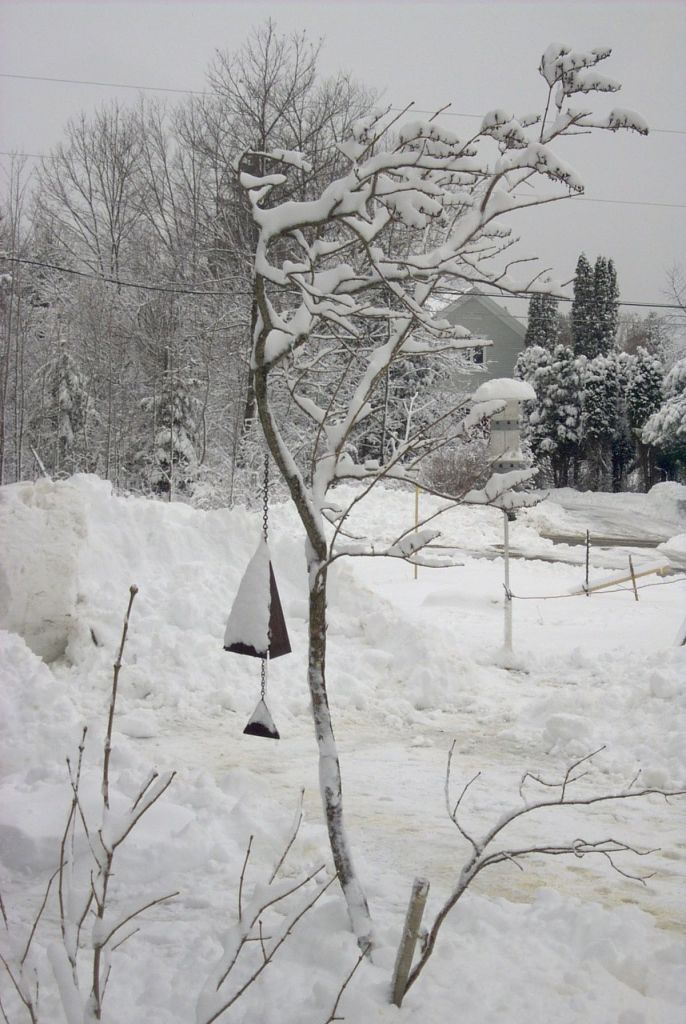
EPrata photo
“Have you entered the storehouses of the snow, or have you seen the storehouses of the hail, which I have reserved for the time of trouble, for the day of battle and war?” (Job 38:22-23)
Have you ever noticed the phrase, “the time of trouble”? Other translations say reserved for “the time of distress”. You will also notice the reference to “the day” of battle and war. These are standard phrases referring to the days of the Tribulation. (For example, Jeremiah 30:7, Obadiah 1:14, Joel 2:11).
God has used hail before in judgment and He will do so again. In the past, He used hail during the plagues He sent to Pharaoh, in themselves pictures of the Revelation judgments of the coming Tribulation.
“The hail struck down everything that was in the field in all the land of Egypt, both man and beast. And the hail struck down every plant of the field and broke every tree of the field“. (Exodus 9:25)
The future judgment will contain another plague of hail-
And great hailstones, about one hundred pounds each, fell from heaven on people; and they cursed God for the plague of the hail, because the plague was so severe. (Revelation 16:21)
Gill’s Exposition says of the Job 38 verse,
Of hail we have instances in Scripture, as employed against the Egyptians and Canaanites, Exodus 9:25; and of a reserve of it in the purposes of God, and in prophecy against the day of battle with antichrist, Revelation 16:21. And though there are no instances of snow being used in this way in Scripture, yet there is in history. Strabo reports, that at Corzena and Cambysena, which join to Mount Caucasus, such snows have fallen, that whole companies of men have been swallowed up in them; and even armies have been overwhelmed with them, as the army of the Gauls and such quantities have been thrown down from mountains, on which they have been lodged, that towns, towers, and villages, have been laid prostrate by them and in the year 443, a vast snow destroyed many.
I am so awed by prophecy. The (probably) oldest book of the Bible, Job, (~2000 BC?)contains a prophecy that is parallel to the last book of the Bible, Revelation (~90AD). God has His plan and who can thwart it? He has set aside some for eternal condemnation and others for eternal joy. He has stored aside His wrath to be unleashed upon them, and hail will be part of that stored-up unleashing. He is precise and will do what He says and it will come to pass to the Nth degree.
The Bible is awe-inspiring in its depiction of our God, who authored it and revealed to us what He wants us to know. Part of that knowing is seeing His prophetic mind and His plans come to pass. I praise Him for all His plans, ways, perfections, prophecies.
The purpose of prophecy is:
The disclosing of the will and purposes of God through inspired or Spirit-filled human beings. The OT emphasises the importance of prophecy as a means of knowing God. Many OT prophecies find their fulfilment in Jesus Christ.
Manser, M. H. (2009). Dictionary of Bible Themes: The Accessible and Comprehensive Tool for Topical Studies. London: Martin Manser.
1. Contents of Prophecy
That which is given by the Spirit to the prophet can refer to the past and to the present as well as to the future. However, that which is revealed to the prophet finds its inner unity in this, that it all aims to establish the supremacy of Jehovah. Prophecy views also the detailed events in their relation to the Divine plan, and this latter has for its purpose the absolute establishment of the supremacy of Jehovah in Israel and eventually on the entire earth.
von, O. C. (1915). Prophecy, Prophets. In J. Orr, J. L. Nuelsen, E. Y. Mullins, & M. O. Evans (Eds.), The International Standard Bible Encyclopaedia (Vol. 1–5, p. 2464). Chicago: The Howard-Severance Company.
Above all, prophecy shows who is LORD over all creation. It points to Jesus. It is history unfolding as it was laid down from the beginning. The LORD has stored up hail and snow, reserved for the day of distress. He will do it.
Further Reading
The Institute for Creation Research has a great intro to Job: Introduction to the book of Job – “It contains more references to Creation, the Flood and other primeval events than any book of the Bible except Genesis, and provides more insight into the age-long conflict between God and Satan than almost any other book. Remarkably, it also seems to contain more modern scientific insights than any other book of the Bible.”
Chuck Swindoll, Job, “Instead of asking where God is in the midst of your pain, the book of Job affirms God’s control and asks us, “Where are we in our pain? Are we trusting our Creator, even though we cannot understand our circumstances?”
Grace to You, “The Book of Job, “The author recounts an era in the life of Job, in which he was tested and the character of God was revealed. New Testament writers directly quote Job two times (Rom. 11:35; 1 Cor. 3:19), plus Ezekiel 14:14, 20 and James 5:11 show Job was a real person.”



 the-end-time.org