Grace Gems: Deliverance from the power of darkness What is the power of darkness, and how God delivers us from it. The Apostle speaks of “the power of darkness.” I shall, therefore, with God’s blessing, explain first what “darkness” is, and then enter into the meaning of the expression “the power of darkness.”
Today is a pause for a moment in the progression of verses showing the Life of Jesus from inception to second coming, in order to ponder the incredible gift of eternal life his work from manger to ascension gives us. Christmas means many things. Today let’s think about His eternality.
Jesus is the Son of God. Jesus is God. Jesus co-existed in eternity with God, perfectly self-sufficient and satisfied with His communion with the other two persons of the God-head.
But God…loved us and He sent His Son Jesus to seek and save the lost, enacting this magnificent plan of the sacrifice, the cross, the resurrection- the Gospel.
Jesus was and is and is to come. He existed before time and He will be living after time ends. His incarnation and life on earth, death, and resurrection means He will be bringing his people into eternity with Him, to live as co-heirs of all there is. Angels aren’t eternal, they had a moment when they didn’t exist but then were created. Humans aren’t eternal either, we have a moment when our own creation begins (Adam then Eve, then all of us formed in the womb by the hand of God.)
The verse today affirms these truths. Jesus said “Before Abraham was, I AM.” I am, meaning He is always in the present. All of those who are in Christ Jesus are also given the gift of eternity…to be with Him, to dwell with Him in joyous worship, to serve Him forever.
Propitiation. A hard word to pronounce…and a hard word to understand, but we have to try, since the verse says this is the reason God sent His son.
An offering that turns away the wrath of God directed against sin. According to the NT, God has provided the offering that removes the divine wrath, for in love the Father sent the Son to be the propitiation (or atoning sacrifice) for human sin (1 John 4:10). Pocket dictionary of theological terms (1996).
by which it becomes consistent with his character and government to pardon and bless the sinner. The propitiation does not procure his love or make him loving; it only renders it consistent for him to exercise his love towards sinners. In Easton’s Illustrated Bible Dictionary. (1893)
The Easton’s definition uses the word ‘consistent’. God is able to do anything but it would not be consistent with His holy character to abandon his promise to punish wrongdoers for their sin. He could turn away His wrath by deciding to do so, but it would destroy His perfectly just nature to be inconsistent. No, God is consistent, Jesus Christ is the same yesterday and today, and forever. (Hebrews 13:8). “For I the Lord do not change; therefore you, O children of Jacob, are not consumed“. (Malachi 3:6).
So He sent His Son to be that sacrifice and absorb God’s wrath for our sins, though Christ was sinless.
Further Reading
GotQuestions: What is Propitiation? The word propitiation carries the basic idea of appeasement or satisfaction, specifically toward God. Propitiation is a two-part act that involves appeasing the wrath of an offended person and being reconciled to him.
Ligonier Ministries: What Do Expiation and Propitiation Mean? Let‘s think about what these words mean, then, beginning with the word expiation. The prefix ex means “out of” or “from,” so expiation has to do with removing something or taking something away. In biblical terms, it has to do with taking away guilt through the payment of a penalty or the offering of an atonement. By contrast, propitiation has to do with the object of the expiation.
Bible Hub Topical Bible- Propitiation That by which God is rendered propitious, i.e., by which it becomes consistent with his character and government to pardon and bless the sinner. The propitiation does not procure his love or make him loving; it only renders it consistent for him to execise his love towards sinners.
From Day 12-16 we are looking at verses that focus on Jesus as The Son. Yesterday we read the scripture from John 3:16, how God so loved the world that He sent His only begotten Son. Today we read how God was pleased with His Son whom He sent.
Jesus has been incarnated and ill-treated. (Herod’s aim to wipe Him out caused the cataclysmic genocide of all children in the region under the age of two).
While growing up, Jesus was obedient in all things to his earthly parents. God was pleased with this. Now is the time where Jesus emerges on mission to seek and save the lost. He is baptized by John.
In those days Jesus came from Nazareth in Galilee and was baptized by John in the Jordan. And immediately coming up out of the water, He saw the heavens opening, and the Spirit, like a dove, descending upon Him; and a voice came from the heavens: “You are My beloved Son; in You I am well pleased.” (Mark 1:9-11).
Just think, a nexus point on earth where all three Persons of the Trinity were congregated, initiating the extraordinary plan of God to save His people.
And so begins the most incredible period of time on earth there ever was.
Further Reading
Gill’s Exposition: God is pleased in whom I am well pleased. Jehovah the Father took infinite delight and pleasure in him as his own Son, who lay in his bosom before all worlds; and was well pleased with him in his office relation, and capacity: he was both well pleased in him as his Son, and delighted in him as his servant, Isaiah 42:1 he was pleased with his assumption of human nature; with his whole obedience to the law; and with his bearing the penalty and curse of it, in the room and stead of his people: he was well pleased with and for his righteousness, sacrifice and atonement; whereby his law was fulfilled, and his justice satisfied. God is not only well pleased in, and with his Son, but with all his people, as considered in him; in him he loves them, takes delight in them, is pacified towards them, and graciously accepts of them.
Ligonier devotional (2-min read)The Baptism of Christ Matthew 3:13–17 records our Lord’s baptism by John in the Jordan River, and as we read the account we can relate to John’s confusion. In verse 14, John essentially asks Jesus why He needs to be baptized. Actually, John wanted to deny baptism to Him, and we have to admit that John was not entirely off-base.
John MacArthur sermon: The Commissioning of the King as we come to Matthew 3:13, we read the words, “Then cometh Jesus.” And really, for the first time, the Lord Jesus appears upon the stage. Up until this time it has been preparatory. Matthew has been commenting on various elements in the beginnings of Jesus: His birth, the things surrounding His birth, His forerunner, etc. But now, finally, Jesus steps onto the stage. Jesus takes the place of prominence.
We’ve flowed through the first section of this series, in looking at verses that prophesy Jesus’ coming, His arrival, and His early life.
Starting today, from Day 12-16 we will look at verses that focus on Jesus as The Son.
~~~~~~~~~~~~~~~~~~~~~~~~~~~~ Further Reading
Ligonier: What does ‘the world’ mean in John 3:16? Understanding how undeserving the world is of God’s love is the key to John 3:16. Only then will we appreciate the unexpected gift that God gives. This point was well made many years ago by the esteemed theologian Benjamin Breckinridge Warfield. In his sermon “God’s Immeasurable Love,” Warfield probes the meaning of the term “world” (Greek kosmos) in John 3:16 in order to plumb the depths of God’s love. What is the meaning of “world” in this passage?
Ligonier: John 3:16 and man’s ability to choose God It is ironic that in the same chapter, indeed in the same context, in which our Lord teaches the utter necessity of rebirth to even see the kingdom, let alone choose it, non-Reformed views find one of their main proof texts to argue that fallen man retains a small island of ability to choose Christ. It is John 3:16: “For God so loved the world that He gave His only begotten Son, that whoever believes in Him should not perish but have everlasting life.” What does this famous verse teach about fallen man’s ability to choose Christ? The answer…
Crosswalk: Why John 3:16 should be more than a slogan For many people John 3:16 reads like a Hallmark card sent from God. In fact, when some Christians speak of the Gospel they use a play on the words of the Hallmark corporate slogan: “God cared enough to send His very best.” But John 3:16 is not a message of sentiment. When God sent His Son into the world, He was not having an emotional response to the tragedy of sin.
Spurgeon: Devotional on John 3:16, His Love, His Gift, His Son This text is a polestar, for it has guided more souls to salvation than any other Scripture. It is among promises what the Great Bear is among constellations. Several words in it shine with peculiar brilliance…
With today’s post, we’ve flowed through the first section of this series, in looking at verses that prophesy Jesus’ coming, His arrival, and His early life.
Starting tomorrow, from Day 12-16 we will look at verses that focus on Jesus as The Son.
From Day 17-26, verses will focus on the preeminence of the Son, His works, and Ministry.
Days 27-36, His resurrection, ascension, and return.
Yes, there are more than 30 verses, lol. There’s a postlude.
Coffman’s Commentaries on the Bible
The precocious wisdom of the boy Jesus, and his certain consciousness of his unique relationship to the Father in heaven, were not looked upon by Jesus as sufficient to his earthly mission; he recognized himself still to be a child. The hour of his emergence as the world’s Saviour would be awaited by him until some sure indication of the Father’s will informed him that “his hour” had come. In the meanwhile, he would not disgrace himself as a child prodigy. He manifested the noblest quality of youth, that of loving submission to his earthly parents.
Jesus honors the authority of His Father through complete obedience. A very clear but seldom pondered truth of the New Testament is that Christ’s entire life and ministry were orchestrated by His Father and that Jesus was careful to carry out every detail according to the will of His Father. “Then I said, ‘Behold, I have come . . . to do thy will, O God’” (Hebrews 10:7).
~~~~~~~~~~~~~~~~~~~~~~~~~~~~~~~~~~~~~ Thirty Days of Jesus Series-
The Bible is intentionally blank where Jesus’ boyhood is concerned. After His birth, the Bible is silent on what Jesus was doing. We know is he lived in Galilee. We know as a child, not a baby, he was taken by his parents to Egypt, to flee Herod’s rage. And now, this, He is 12 years old and in the Temple.
With Him are wisdom and might; To Him belong counsel and understanding (Job 12:13).
Further Reading:
The Day Jesus Went AWOL Second, in this account are recorded the very first words of our Lord Jesus. Naturally, no words were recorded from the birth and infancy of Christ. Many of our Lord’s words were recorded from His later ministry. But the words of our Lord in this text are His first recorded words, and very important words they are indeed.
Twelve-year-old Jesus goes to the Temple After the host of witnesses to Jesus in Luke 1:5–2:40, Jesus now speaks for himself for the first time. This is the literary climax of Luke’s initial section and shows the sense of mission and self-awareness Jesus possesses. Jesus has a unique relationship to God and a clear sense of his calling, one that transcends his relationship to his earthly parents.
The Son of God at twelve years old This is the only story in the gospels about Jesus between his infancy and his public ministry as a man. Some have argued that the story is a legend created by the early church to fill in some of the gaps in their knowledge of Jesus’ life. What shall we say to this claim?
“Men are oppressing us with an overreach in their interpretation of a few verses”
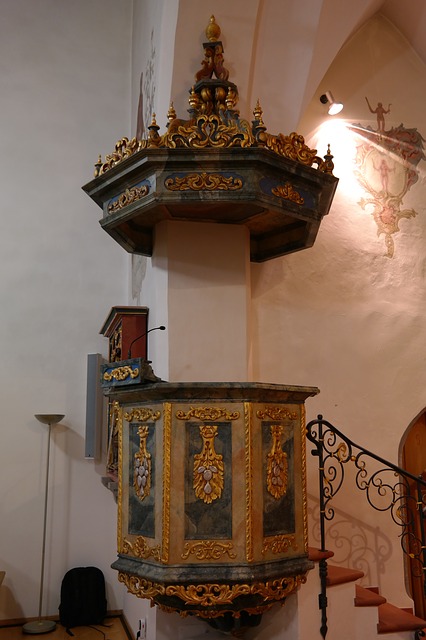
These are statements I read and hear feminist women say when confronted with verses that affirm God’s plan for men to lead the church. These are not infrequent comments nor are they limited to a small group. The push to get women into the pulpit has heated up and is a massive groundswell.
But, do you notice some things about those statements?
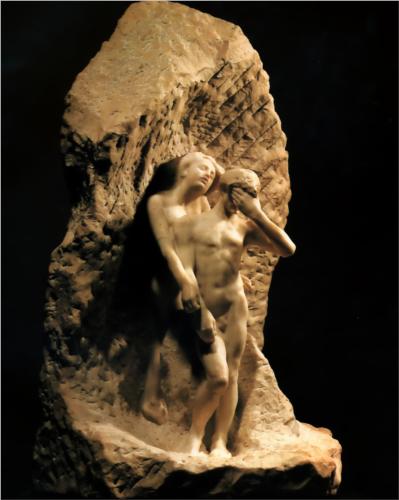
1. They are similar to the conversation in the Garden when the serpent awoke the woman’s desire for more than what had been given, and for what she couldn’t have. Rather than focusing on all the bounty around her freely given and available without cost to her, the woman instead became desirous of the one thing she may not eat. Suddenly she thought that God was holding out on her and that He was not a Good and Perfect God. This is deadly thinking. It’s terrible sin, too.
It’s a similar vein with the usurping women who want the pulpit. The Lord gave women so many opportunities for ministry in order to glorify His name. Childbearing &childrearing is one- we have an opportunity to shape the minds and hearts of the gracious gift of children for His name. We can teach, perform administrative tasks, host, do mercy ministry, so many ways to work for Jesus. Yet, rejecting those, the usurpers want what is forbidden.
2. Gratitude. We have a God who includes sinful humans to share His name, to minister to Him, to come to his throne freely, to glorify Him with our work on earth, to be co-heirs! What a God! We should be grateful He wants us to do ANYTHING for Him, that He justifies us, sanctifies us, adopts us, is in union with us, rewards us, gives us His word, gives us His Spirit, gives us understanding of His word, and gives us LIFE. Being discontent and grasping for the one thing that He put out of reach is demonic in the extreme. It’s the Garden all over again. It is a desire worthy of spiritual death and banishment from His paradise.
God assigned men to lead Has church. He is allowed to do that, He’s GOD! If that is His design, so be it. We content ourselves with every bit of what He HAS given us to do, and we look forward with joy at the future with Him. If women complain, want more, strive for that forbidden fruit, they are being Eve influenced by satan. It is as simple as that.
If you are a woman who wants roles not assigned to you (preaching in church, teaching men) you should ask yourself why. Look at God as revealed in the Bible; holy, just, perfect. Look at yourself; sinner, polluted, depraved- and think why you are not content with what the Lord has given you. He has given us so much. Was God pleased to crush His Son on our behalf just so we could complain that we can’t stand in front of the church and preach? Did Jesus die a horrible death just so we can say what He has given us to do isn’t enough, we want more? Check yourself, woman.
Pride goeth before destruction, and an haughty spirit before a fall. (Proverbs 16:18 KJV)
We are still in the section of verses from the Bible depicting the prophecy of Jesus’ coming, His arrival, and His early life before ministry. With two more days after today to go, then we shift into looking at Jesus Himself, His earthly ministry, and the different aspects of Himself that He displayed.
There are not many verses recounting the childhood and pre-ministry life of Jesus, but there are a few. Here is one:
What happened during Jesus’ childhood? Other than Luke 2:41–52, the Bible does not tell us anything about Jesus’ youth. From this incident we do know certain things about Jesus’ childhood. First, He was the son of parents* who were devout in their religious observances. As required in the law, Joseph and Mary made the yearly pilgrimage to Jerusalem for the Feast of the Passover. When Jesus was 12 years old, they brought Him along on the trip to celebrate the Feast with them. Luke paints a picture of a typical boy in a typical family of that day.
The boyhood of Jesus Although the boy Jesus was gifted with a wisdom far beyond His years — a wisdom which was His because He was the Son of God, yet He lived much as other boys lived, doing the tasks that were given Him by His parents and being subject to them in all things.
Many people worshiped Jesus during His earthly ministry. They bowed before Him and called Him the Messiah, Son of God, or other titles indicating they knew they were worshiping the one True God. Some people worshiped extravagantly. We think of Mary with her bottle of expensive nard, or Joseph of Arimathea lavishly preparing His body with the most expensive ointments. Or from the OT, David worshiping God with all his might before the ark processional.
No one came farther or brought more expensive tokens of worship than the Magi, known as the Wise Men from the East. Their journey of about 900 miles was difficult, fraught with danger, and took months. Their gifts of gold and frankincense and myrrh were expensive. But that was nothing to them. They journeyed, they found the child, they knelt before Him in humble worship. Though they themselves were considered rulers of sorts, when they saw His place they rejoiced exceedingly with great joy. (Matthew 2:9). They knelt before a little child and presented their gifts of adoration.
During this Advent, let us do the same. We do not have the blessing of an incarnated Messiah in front of us to bow to, that will happen later, but we can rejoice today with exceeding joy and present to him our precious gift: our bodies as a living and holy sacrifice. (Romans 12:1).
Grace To You: What the Magi Mean To Christmas Just exactly who are they and why are they there? Well, the question as to why they’re there is answered in the text, and that is to worship Him. They came to worship. That becomes absolutely clear. In chapter 2 and verse 2, they say, “We have come to worship Him.” That is their point. Herod even acknowledges this in verse 8 and says, “Come back and tell me when you find Him, that I too may come and worship Him.” Answers in Genesis: We Three Kings The Magi Arrive These magi followed the star, which moved ahead of them, bringing expensive gifts of gold, frankincense, and myrrh to Jesus—who was now a young child living in a house (Matthew 2:9–11).5 They worshipped the Christ Child (Matthew 2:11). Jesus is called a “young child” (paidion, Matthew 2) instead of babe (brephos, Luke 2:16) at the time that the magi arrived. Brephos specifically refers to a baby, whether born or unborn, while paidion refers to an immature child, possibly an infant (Matthew 2:11), so we should not be dogmatic about His age. Love Worth Finding: The Gifts of the Wise Men and Our Gifts to Jesus It’s that time of year again…time for gift-buying, gift-wrapping, and gift-exchanging. What are the gifts we could bring Jesus this Christmas? One way we can discover that is to look at Matthew 2:1-12, which tells of the gifts the wise men brought Him on the night when God became flesh and dwelt among us.





 the-end-time.org