Then the LORD God formed the man of dust from the ground, and breathed into his nostrils the breath of life; and the man became a living person. (NASB)
It is a glory for us to be able to worship a God who is so intimate with mankind. He didn’t speak man into existence like He did the grass or the cows or the stars. He formed man personally. Then He breathed into man his own breath, giving us a soul.
In reading the Genesis verse, I was reminded also of the verse in Psalm 139:13,
For you formed my inward parts; you knitted me together in my mother’s womb. (ESV).
He isn’t an indifferent Allah. He isn’t a multi armed, capricious god. He isn’t a fish-god. He is GOD, and He is involved with mankind, each man and women. He formed us. He knit us together from the womb, to have this personality, these physical features.
Matthew Henry’s Commentary makes another connection,
When our Lord Jesus anointed the blind man’s eyes with clay perhaps he intimated that it was he who at first formed man out of the clay; and when he breathed on his disciples, saying, Receive you the Holy Ghost, he intimated that it was he who at first breathed into man’s nostrils the breath of life. He that made the soul is alone able to new-make it.
And He gave us a soul. Matthew Henry again,
To God that gave us these souls we must shortly give an account of them, how we have employed them, used them, proportioned them, and disposed of them; and if then it be found that we have lost them, though it were to gain the world, we shall be undone for ever.
From the beginning, God has been intimately involved with man. Not from a distance, not apathetically. Involved.
To the end God has been involved with man (“It is finished”). And He is involved as we continue through the the epilogue of His finished work; as He develops His Church, raises up His Bride, sustains His people to the end of the end when we’re all resurrected in glory living in New Jerusalem. We serve an amazing God.
For the time will come when they will not endure sound doctrine; but wanting to have their ears tickled, they will accumulate for themselves teachers in accordance to their own desires…(2 Timothy 4:3)
Do you notice that word “endure”? The verse does not say “they will not like sound doctrine…” It does not say “they will not enjoy sound doctrine…” It doesn’t even say “they will not accept sound doctrine.” It uses the word endure. When you endure something, you writhe. You wish you were not there in the midst of it. If anyone has ever undergone physical therapy, you know that you have to endure it but if you could you would shoot out of the gym so fast you’d be like a speeding bullet. If anyone has ever had to get a root canal, you know that you endure it. You do not seek it, you do not like it, and if you could, you go away from it.
That is the process by which lukewarm Christians, fake Christians, and unholy pastors feel about the true Gospel of Jesus Christ. To be sure, the true Gospel of the Risen Savior is full of warm fuzzies. He loves us. He prospers us. He sends angels to us.
But the True Gospel is also full of truth, the unpalatable truth that the lawless cannot endure: we are sinners. Rejection of the remedy for your sin means you will spend eternity in torment, apart from God. That there is nothing good in us. That we are fallen, craven, and deserve judgment. No, they will not endure that. So they don’t.
Instead they seek teachers to tempt us with what the devil has always tempted us with, and tempted Jesus too: health, wealth, fame. They may find it in some “preachers” and in some “churches”, but it is for a season. Most do not find prosperity in health, wealth and fame. The only ones becoming famous and rich are the false pastors who urge the hapless and desperate to send money.
A watered down gospel removes the book-end to the love parts that they seek. That other book-end is judgment. They will not endure sound teaching that His holiness involves love but it also includes righteous judgment.
“I have sworn by Myself, The word has gone forth from My mouth in righteousness And will not turn back, That to Me every knee will bow, every tongue will swear allegiance. “They will say of Me, ‘Only in the LORD are righteousness and strength.’ Men will come to Him, And all who were angry at Him will be put to shame. (Isaiah 45:23-24)
The true word absorbed by submissive believers is sweet. But it is also sometimes accompanied by a bitterness felt by even the most beloved of followers, even the most obedient of disciples. Sometimes the true word is hard to hear and bitter even for believers, because it reveals to us the true state of our sinfulness and the fate of those who refuse His hand, those mockers and scorners whom we mourn over-
I took the little scroll from the angel’s hand and ate it. It tasted as sweet as honey in my mouth, but when I had eaten it, my stomach turned sour. (Revelation 10:10)
The only way to endure the knowledge of judgment that is coming is to rest on His truth and His promises. Those who do not rest in that truth, bitter as it sometimes is, do not endure it. Not only have they stopped asking the Spirit for wisdom, but they simply stop ingesting the sweet Words of the LORD and they flee away, being unstable in all they do.
If you seek sound doctrine but have had a hard time finding it, I encourage you to enjoy the teachers I have been enjoying.
Alistair Begg is a good one. He is at Truth for Life. RC Sproul at Ligonier.org S. Lewis Johnson at Believers Chapel John MacArthur at Grace to You tells it like it is, compassionately. Many people don’t like that he tells it like it is, but what he tells is the word of God, from the Bible, demonstrating once again that people can’t/won’t endure the word of God applied to their heart and mind.
Has solid preaching become an endurance test for you? Or are the hard but truthful words uplifting to you and filling in every way? If you have recently changed churches because the pastor is “a little too Bible thumping for my taste”, or have you drifted away from regular worship lately because the sermons are too long, too convicting, or demand endurance on the part of your deceitful heart, then ask yourself if you are really just trying to accumulate a teacher in accordance with your own desires, and are wanting your ears tickled with a less filling but great tasting sermon. If so, you may be at risk.
Out from the throne come flashes of lightning and sounds and peals of thunder. (Revelation 4:5)
In the Bible, God’s voice is often depicted as thunder, or, alternately, when thunder occurs, people believed it was God speaking. (Acts 9:7, John 12:29). We remember the people at Mt Sinai were scared out of their wits upon hearing the thunder and begged Moses to ask God not speak aloud again. (Exodus 20:19).
We recall Revelation 10:1-4 and the mystery of the Seven Thunders. We know they will be judgments, but we do not know what they are.
“And I saw another angel come down from heaven clothed with a cloud: and a rainbow was upon his head, and his face was as it were the sun, and his feet as pillars of fire. And he had in his hand a little book open: and he set his right foot upon the sea, and his left foot on the earth. And he cried with a loud voice, as when a lion roars: and when he cried, seven thunders uttered their voices. And when the seven thunders had uttered their voices, I was about to write: and I heard a voice from heaven saying to me, Seal up those things which the seven thunders uttered, and do not write them.“
Thunder, when it is not a God-controlled weather phenomenon, is shown in the Bible to be a representation of God’s power. Even adults startle when a particularly loud boom of thunder claps above us.
EPrata photo
The throne of God is surrounded by thunder. “From the throne came flashes of lightning, rumblings and peals of thunder. Before the throne, seven lamps were blazing. These are the seven spirits of God.” (Revelation 4:5).
God spoke to Moses and the people heard thunder. “When the sound of the trumpet grew louder and louder, Moses spoke and God answered him with thunder.” (Exodus 19:19).
When Jesus spoke to Paul on the road to Damascus, those who were with Paul heard thunder. God said to Job, “Hast thou an arm like God? or canst thou thunder with a voice like him?” (Job 40:9).
The Bible shows us that sometimes when God spoke, it sounded like thunder. It’s a way of presenting God to us that uses terms our finite mind can understand.
But in these days, not every thunderclap is God speaking. Sometimes it is simply one of the forces of nature controlled by God.
Nowadays God speaks through His Son the Word, through His word. I think of the power of God’s voice at Mt Sinai thundering and the people quailed in fear; and yet Jesus, who IS the incarnate God, spoke with compassion and mercy to the people. He could have thundered! He spoke of His gentleness and lowliness instead.
He also in these days speaks to a believer’s conscience through the convicting work of the indwelling Holy Spirit.
But if I hear thunder, I would like to use that startled moment to acknowledge a merciful God and ask Him to awaken me to His tremendous power … He demonstrates His tremendous mercy by using only an infinitesimal amount of that power, otherwise we would surely surely die.
After a terrible natural disaster, people often wonder, “Where was God in all this?” Others wonder “Did God cause it? Did He allow it? Did Satan do it? Was it just the natural outcome of a fallen world?” And the biggest question, “Why?”
In the Garden, He would walk in the cool of the day. (Gen 3:8). With Moses He spoke face to face. (Exodus 33:11). Or through a bush! (Exodus 3:1).
He spoke to the the prophets (Jeremiah 36:2). In this way He sent the Law and then later He sent the Spirit to inspire the words of the bible, written down by the chosen apostles and disciples. (1 Corinthians 2:12-13; 2 Timothy 3:16-17). He sent angels with messages (Acts 8:26; Luke 2:9). He speaks to us through discipline (Hebrews 12:5-11) and trials (1 Peter 1:6-7). Sometimes He even uses a donkey (Numbers 2:28).
He uses symbols. “And God said to Noah: I will make a covenant with you. Never again will all men die because of a flood. This is my token to remind you of my promise. I will set a rainbow in the sky.” (Genesis 9:11-17). Bread is a symbol of Jesus’ life sustaining eternal truth. “And Jesus said unto them, I am the bread of life…” (John 6:35)
If you think about the myriad ways God spoke to us in the past, it is amazing. There is another way He speaks. He uses ‘natural’ events. Earthquake, fire, hail, thunder, drought…are all ways God had sent His people His word and expresses His will.
In today’s time He still allows or causes natural disasters, but unlike the Israelites of the past, we can’t know that THIS disaster is specifically tied to a judgment or exactly what God might be saying through it. We do know He is sovereign over it all, and when it happens, we should acknowledge that God is sending or withholding the rain- for whatever reason.
God is the creator of the earth and all the universe. (Psalm 24:1). He can and does use anything in it to get His point across. In Revelation we see 100 pound hailstones, a sun that turns up the heat, earthquakes, and at one point, no rain for three and a half years. (Revelation 11:6).
Remember that everything that happens on the earth, God either indirectly allows to happen, or directly causes to happen. Allows, or causes. That’s it. When people mock the notion that a particular natural disaster event was due to God, they are wrong. We don’t always know the reason behind the event’s occurrence but because God is sovereign, He either caused it or allowed it. Here is God causing an event:
“Then the LORD’s anger will burn against you, and he will shut the heavens so that it will not rain and the ground will yield no produce, and you will soon perish from the good land the LORD is giving you.” (Deuteronomy 11:1)
Let’s focus on drought as one of God’s vocabulary words. Drought is not a sudden cataclysmic event like an earthquake. It takes a long time to happen and its build-up is more creeping than instant. That is what makes it even more amazing. Only God who knows the end from the beginning, knows how to start a drought years prior and allow its progression to increase to the point of pain just at the moment the people need to be pricked. That is the heavenly dynamic.
“While much of the weather that we experience is brief and short-lived, drought is a more gradual phenomenon, slowly taking hold of an area and tightening its grip with time. In severe cases, drought can last for many years, and can have devastating effects on agriculture and water supplies. … In general, drought is defined as an extended period–a season, a year, or several years–of deficient rainfall relative to the statistical multi-year average for a region.”
Australia is susceptible to droughts– “Why are droughts dangerous? When there is a drought, there is less water available for growing crops, farming animals, industry and our cities. Droughts also impact the environment by causing erosion, harm animals by destroying their homes and cause people to pay more for food and affect our water supplies. Droughts are hard to predict and also hard to live with.” (Source)
Places in Africa are in a terrible drought. “Two of Africa’s impoverished drylands – the Horn of Africa in the East and the Sahel in the West – have experienced devastating droughts and famines in the past two years: the rains never came, causing many thousands to perish, while millions face life-threatening hunger.”
This verse is a direct example in the Bible of how He had uses the language of drought to squeeze His people and warn them they need to repent-
“When I shut up the heavens so that there is no rain, or command the locust to devour the land, or send pestilence among my people, if my people who are called by my name humble themselves, and pray and seek my face and turn from their wicked ways, then I will hear from heaven and will forgive their sin and heal their land. Now my eyes will be open and my ears attentive to the prayer that is made in this place.” (2 Chronicles 7:13)
God is telling us a few things here. First, He controls the heavens and allows or disallows rain. Second, when God shuts up heaven and prevents rain it was because they have turned their faces away from Him. Third, He makes a promise, if they repent and turn their faces toward Him, He will re-open heaven. What a blessing! God is holy- He hates sin. God is kind, He warned His people.
In this next biblical example, God is telling us that His decision to send drought or rain is extremely precise. He is very much in control.
“I also withheld the rain from you when there were yet three months to the harvest; I would send rain on one city, and send no rain on another city; one field would have rain, and the field on which it did not rain would wither;” (Amos 4:7).
Annie Vallotton Amos 4:7 illustration Good News Bible “Still you did not come back to Me”
In the book Famine and Drought by Ellis, R. B. (2003), we read:
Drought was the most common cause of famines mentioned in the Bible. Drought caused famines in the time of Abraham (Gen. 12:10), Isaac (Gen. 26:1), Joseph (Gen. 41:27), and the judges (Ruth 1:1).
Famine and Drought as the Judgment of God God created the world as a good environment that would normally provide ample water and food for mankind (Gen. 1). However, the productiveness of the earth is related to people’s obedience to God. For example, the sins of Adam, Eve, and Cain resulted in unfruitfulness of the earth (Gen. 3:17–18; 4:12).
Israel’s relationship with God also directly affected the fertility of the promised land. When the people obeyed God, the land was productive (Deut. 11:11–14).
However, when they disobeyed, judgment came on the land by drought and famine (Lev. 26:23–26; Deut. 11:16–17; 1 Kings 8:35). Furthermore, the NT reports that famine will be a part of God’s coming judgment of the earth in the last days (Matt. 24:7; Rev. 6:8).
While the Bible states that some famines and droughts are the judgment of God (2 Sam. 21:1; 1 Kings 17:1; 2 Kings 8:1; Jer 14:12; Ezek. 5:12; Amos 4:6), not all such disasters are connected to divine punishment (Gen. 12:10; 26:1; Ruth 1:1; Acts 11:28).
When God did send drought and famine on His people, it was for the purpose of bringing them to repentance (1 Kings 8:35–36; Hos. 2:8–23; Amos 4:6–8). Moreover, the OT contains promises that God will protect His faithful ones in times of famine (Job 5:20, 22; Pss. 33:18–19; 37:18–19; Prov. 10:3). See Ben-hadad; Jerusalem; Nebuchadnezzar; Samaria; Water. Bob R. Ellis. Famine and Drought. (2003).
God either directly causes or indirectly allows each thing to happen on this earth and in heaven. Every drop of rain is noted by Him. Each arid seed blowing down a Kansas drought-stricken path is seen by Him. God speaks to us in many ways, praise His name! One way is through what the secular world calls ‘natural disasters’…but I call it the loving Hand of an angry God who seeks to turn His rebellious children from their sinful ways, One who sends the rain to bless the obedient and the sinful alike.
Yesterday I started a short series on the Language of God in Natural Disasters. I explored the questions of where is God when a tsunami happens? Does God send the hurricane, or is it merely the result of the proper meteorological elements coming together?
Today I want to start looking at some specific disasters that happened in the Bible, and today we’ll start with hail.
Two summers ago I looked long and hard for a reasonably priced, reasonably reliable used car. I finally found one with the help of a church buddy, and when I saw it I loved it. Lowish miles, good engine, clean interior. The only thing wrong was it had hail damage. The roof and hood was pockmarked with lots of tiny dents, and the side was scratched. Cosmetically the car wasn’t tip top, but I could live with it.
Living in a town, hail doesn’t bother me much. If I was a farmer, hail would bother me a lot. Hail can ruin crops. It can kill animals. Hail is a problem. Hail are ice particles that fall from the sky in various sizes. The meteorologists have a rating scale for when they talk about hail. Weathermen relate the size of the hail to food or familiar objects when discussing it. The following chart is from the National Weather Service:
Pea Size (1/4 inch) Mothball, peanut, USB Plug Penny Size Nickel Size Quarter Size Half Dollar Size Ping Pong Ball Size Golf Ball Size Lime or medium sized Hen Egg Tennis Ball Size Baseball Size Large Apple Softball Grapefruit (4 1/2 inches)
The NWS said if a hailstone is bigger than 4 1/2 inches, well-
4 1/2 Probably a record sized hailstone for Idaho or Oregon Freeze it, Measure it, Notify the NWS.
If you’re still alive that is. They consider anything from pea sized to nickel sized as non-severe. From quarter sized to lime sized, “At this size, a hailstone can fall from approximately 25-40 mph, which is enough to tear up crops, dent vehicles, crack windows, damage housing, and injure both humans and animals alike.“
Hail stones from tennis ball to grapefruit sized are considered high-end severe. Hail at that size can fall from upwards of 100 miles per hour. They can shatter windows, tear up the roof, or kill things outside.
How does God get our attention? Through many ways, and one of them is hail. God uses hail to demand attention, it is one of His signature calling cards. It behooves us to return to the Bible to see when and how He used hail to make His name known.
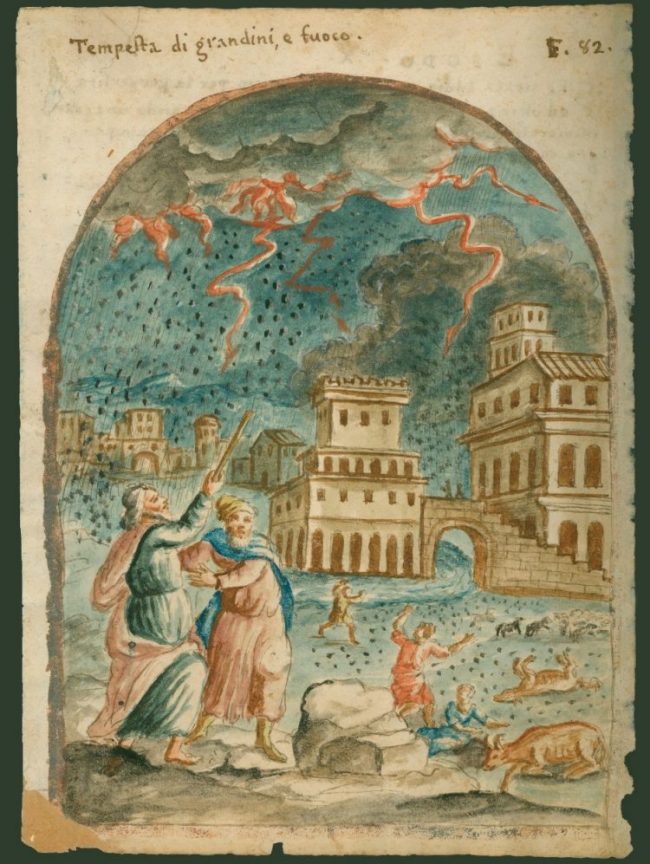
“Hailstorm Plague”. Page from Old Testament Bible manuscript, hand painted watercolor. N. Italian, c. 1650. Herbert Kraft Collection – MSS 0029. Courtesy of Archives and Special Collections. Source
The most famous case of hail was the one God promised to send to Egypt. God told Moses to visit Pharaoh and tell him-
Behold, about this time tomorrow, I will send a very heavy hail, such as has not been seen in Egypt from the day it was founded until now. 19So now, send word, bring your livestock and whatever you have in the field to safety. Every person and animal that is found in the field and is not brought home, when the hail comes down on them, will die. (Exodus 9:18-19).
And it was so. Even the trees were shredded, all the crops smashed, and any living still outside died.
“Throughout Egypt hail struck everything in the fields–both men and animals; it beat down everything growing in the fields and stripped every tree.” (Exodus 9:25)
Initially awed by God’s power, Pharaoh acknowledged that he had sinned. However when the rain and hail stopped, He sinned again. God specifically used a massive hailstorm to indicate His power over the earth, and to know that the earth is the LORD’S. Pharaoh did not acknowledge God’s sovereignty.
God has storehouses of hail (Job 38:22). It’s a metaphor. I don’t think there are barns in heaven with iced-up hail waiting to be unleashed (by angels? With shovels?) No, lol. But the metaphor is picturesque, something we finite humans can understand.
God uses hail to warn the unrepentant to come back to Him. “‘I smote you and every work of your hands with blasting wind, mildew and hail; yet you did not come back to Me,’ declares the LORD.” (Haggai 2:17).
He uses hail to render justice upon the wicked. “I will make justice the measuring line and righteousness the plumb line; hail will sweep away your refuge, the lie, and water will overflow your hiding place.” (Isaiah 28:17). In one example, the LORD hurled hail down onto the Amorites at Azekah, as a vengeance against the wicked. (Joshua 10:11)
God plans to use hail again in the future: “The great city was split into three parts, and the cities of the nations fell, and God remembered great Babylon, to make her drain the cup of the fury of his wrath. And every island fled away, and no mountains were to be found; and great hailstones, heavy as a hundred-weight, dropped on men from heaven, till men cursed God for the plague of the hail, so fearful was that plague.” (Revelation 16:18-21).
In today’s times we have weather forecasters alerting us to foul weather, and we can prepare. We board up the windows for a hurricane, put the cars in the garage for hail, and buy ice-melt for the coming blizzard. Imagine the shepherds in the fields, they did the best they could predicting the weather by looking at the signs in the sky (Matthew 16:3). But when severe hail began to fall, they had nowhere to run. Farmers mourned the loss of crops and animals. I’m sure that some might have died.
Terrible hail storms have always been and will be part of God’s language to an unrepentant and wicked people. But in today’s times we simply do not know that THIS hail storm was a judgment or THAT hailstorm was a warning or if it was just a collision of air masses. We do not have prophets explicitly telling us God’s mind and plans in these days but we do have the completed canon to look to for comfort over anxiety with coming bad weather or after a disaster.
Yahweh also thundered in the heavens, And the Most High gave forth His voice, Hailstones and coals of fire. (Psalm 18:13)
When or if a severe hailstorm happens near you, what we can do in these modern days is look to the sky and acknowledge God’s sovereign hand over the weather and humankind, and praise Him for His involvement in the world. It may be hard to do if your car is crushed or your flock has been killed, but all things work together for good for those who love God.
After a terrible natural disaster, people often wonder, “Where was God in all this?” Others wonder “Did God cause it? Did He allow it? Did Satan do it? Was it just the natural outcome of a fallen world?” And the biggest question, “Why?”
These questions have interested man since the beginning. Even in the Patriarchs age of Abraham and Jacob and Isaac, man wondered. The Covenant with the Hebrews that God instituted starting with Abraham, gave the People an attitude of specialness. They believed that they were protected by God from these things, and if these things happened, it must be because of sin. Deuteronomy 28 is entirely about what would happen if they obey (I will prosper you) and what will happen if they disobey (I will curse and punish you).
God promised “to send” everything against them: boils, military defeat, feverish heat, plagues, fever, mildew, enemies, famine, blight, tumors, rash, scabies, drought, oppression, robbers, insanity, blindness, confusion of mind, rapists, traffickers, military occupation, robbers, consumption, mistreatment.
You notice in that Deuteronomy 28 list there are individual bodily curses, general against-the-people curses, and natural disaster curses.
The People’s theology was based on reaping-and-sowing, disaster cause-and-effect right through to Jesus’ day. If you were bad, then bad things happened to you. If you were good, then good things happened to you. Eliphaz spent chapter after chapter pressing Job on this point. Eliphaz asked Job sarcastically in Job 22:4,
“Is it because of your reverence that He punishes you, That He enters into judgment against you?“
They brought that reaping-and-sowing direct judgment idea to the New Testament. Remember the man born blind? The disciples asked Jesus who sinned, him or his parents? (John 9:2). Jesus said it was neither, but that the works of God might be shown in him. And the discussion about the Tower of Siloam- Jesus explained it fell not because the 18 who were killed were worse sinners than anyone else. (Luke 13:4).
And we do see personal, individual judgment in the Bible. Herod was struck down. Uzzah was struck down. Ananias and Sapphira were struck down.
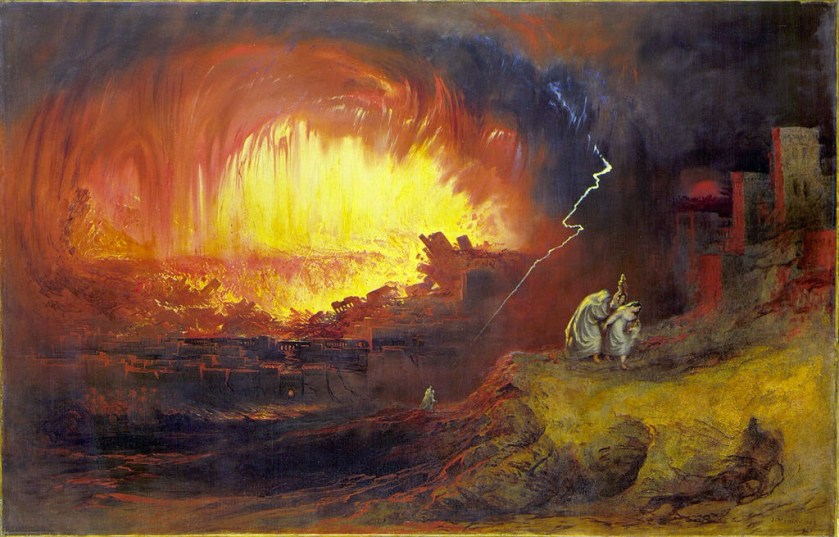
And the destruction of Sodom, Gomorrah, Admah, and Zeboiim, four of the five Cities of the Plain, were directly destroyed by God specifically as a judgment. And the Book of Revelation is full of ‘natural disasters’ that are specifically judgments sent by God.
So what are we in these times currently to think when a disaster like lightning, flood, hail, or drought happens? 1) Did God send it as a judgment? 2) Or is it the natural consequence man’s Fall? 3) Or as a consequence of man’s failure to keep the Garden and work it correctly, as in, landslide happened due to overbuilding on tenuous soil, or the tower fell because of sub-par materials…
Yes. All three.
In today’s time there are direct judgments and there are indirect judgments.
But, and here’s the caveat, we can’t know which disaster is a judgment and which is a natural outcome of something else, because we can’t know the mind of God in every specific case. Only the believers living during the time of the Revelation judgments will know for sure that certain natural disasters are judgments, because they are specifically prophesied to happen during that era and in certain ways. They will know the heat, drought, fire from heaven etc. are from God because Revelation records that they will be from God.
As for today, when Hurricane Katrina happens or the Japan tsunami or Joplin tornadoes…are they from God? Does He control the tornado to go here and not there? Does He form the hurricane and send it to Florida or Mexico? Does He create the earthquake as a magnitude 7.2 here but over there he makes it be a 4.6?
In a sense, all ‘natural disasters’ are a result of God’s judgment, because In Genesis 3:17 God told Adam that God will curse the ground because of what Adam did. Between the global curse and God’s sovereignty, yes, He controls the tragedies that occur.
“Well, of course God controls everything, directly or indirectly – I mean, that is to say, did God blow the wind? No, not immediately – but mediately, God controls everything. God is – God allows everything that occurs; there is nothing outside the purview of His will and His purpose. We know that clearly from Scripture. [But] Does God create the forces in the moment that they act? That’s another question.”
“I mean, did God all of a sudden say, “Okay, hurricane, you go there,” or is this the conflux of all those providential elements that God has placed into existence that effect perfectly His will, even to the exact and precise life and death in every individual case? Yes.”Source
EPrata photo
As John MacArthur explained in a sermon called When God Abandons a Nation, he outlined different kinds of wrath as seen in the Bible. There’s
–Eternal wrath– the judgment upon a non-believer after death, –Consequential wrath– the reaping of what is sown, as in, be an alcoholic, you get cirrhosis of the liver; you’re promiscuous, you get venereal disease or AIDS; you’re a criminal, you might die in a shootout, –Eschatological wrath– the prophesied wrath the Old Testament prophets warned of and Jesus warned of in the Olivet Discourse and the wrath seen in the book of Revelation, –Wrath of Abandonment, promised in Romans 1 when God gives a people over to their sin, lifts His hand of restraint and lets them go their way, –Cataclysmic wrath– tornadoes and tsunamis and hurricanes etc.
God is in control over all of it. He calmed the storm on the Sea of Galilee. He sent fire and brimstone to Sodom. He is sovereign over satan, who sent a wind/whirlwind/tornado from all directions to destroy Job’s house.
Jerry Bridges recounted a terrible earthquake in Mexico that killed 6000 people. Bridges said that a friend had asked his daughter-
“Do you know what caused the earthquake?” He planned to answer his question with a simple explanation of fault lines and shifting rocks in the earth’s crust. His seismology lesson quickly turned into a theological discussion, however, when his eight-year-old daughter replied, “I know why. God was judging those people.” Though my friend’s child had jumped to an unwarranted conclusion about God’s judgment, she was theologically correct in one sense. God was in control of that earthquake. Why He allowed it to happen is a question we cannot answer (and should not try to), but we can say, on the testimony of Scripture, that God did indeed allow it or cause it to happen. (Source)
Further, Bridges said,
Whenever we are affected by the weather—whether it is merely an inconvenience or a major disaster—we tend to regard it as nothing more than the impersonal expression of certain fixed meteorological or geological laws. … But God has not walked away from the day-to-day control of His creation. Certainly, He has established physical laws by which He governs the forces of nature, but those laws continuously operate according to His sovereign will. A Christian TV meteorologist has determined that there are over 1,400 references to weather terminology in the Bible. Many of these references attribute the outworking of weather directly to the hand of God. Most of these passages speak of God’s control over all weather, not just His divine intervention on specific occasions.
Though God sometimes uses the weather, and other expressions of nature, as an instrument of judgment (see Amos 4:7-9), He most often uses it as an expression of His gracious provision for His creation. Both saint and sinner alike benefit from God’s gracious provision of weather.
God’s sovereignty over nature does mean that, whatever we experience at the hand of the weather or other forces of nature (such as plant diseases or insect infestation of our crops), all circumstances are under the watchful eye and sovereign control of our God.
‘Wynter wakeneth al my care’ is one of the earliest surviving winter poems in English literature. Its language is Middle English of the 1300s.
It’s a poem about the brevity of life – a memento mori – which is a poem or trope reminding one about the inevitability of death. It is designed to remind one about that inevitability to come upon everyone, and to reflect on what happens after death.
We don’t so much reflect on these things in current days, nor do preachers preach much on it. I remember Jonathan Edwards’ famous sermon Sinners in the Hands of an Angry God which was ALL about death and our eternal destination, reaping the rewards of sin, therefore repent. Not a common subject today.
Perhaps because death is so removed from us moderns, we are not as familiar with the Grim Reaper anymore personally. The body is taken to a funeral home, sequestered in Intensive Care Units, it isn’t prevalent in every day life as it would have been for the ancients who saw death all the time. Even warfare is partly done by bombs and missiles from afar, unlike hand to hand combat in former times, killing by one’s own sword or bayonet.
Here is the original poem:
Wynter wakeneth al my care; Nou this leves waxeth bare. Ofte Y sike ant mourne sare When hit cometh in my thoht Of this worldes joie: Hou hit geth al to noht!
Nou hit is, ant nou hit nys, Also hit ner nere, ywys! That moni mon seith, soth hit ys: Al goth bote Godes wille; Alle we shule deye, Thath us like ylle.
Al that gren me graveth grene; Nou hit faleweth al bydene. Jesu, help that hit be sene, Ant shild us from helle, For Y not whider Y shal, Ne hou longe her duelle.
Here is the translated poem:
Winter awakens all my sorrow; Now these leaves grow barren. Often I sigh and sadly mourn When it enters into my thought Regarding this world’s joy: How it goes all to nought!
Now it is, and now it isn’t, As if it had never been, indeed! What many a man says, true it is: All passes except God’s will; We all shall die, Though we dislike it.
All that seed men bury unripe; Now it withers all at once. Jesus, help that this be known, And shield us from hell, For I know not whither I’ll go, Nor how long here dwell.
“What impressed the writer was the tragic change that comes over the appearance of the woods and the meadows. The whole point of his song is that he actually sees, as did Shakespeare, hideous winter confounding the beauty of summer-stripping the branches and turning the green into the sere and yellow leaf. That sight-the death of the season-plunges him into melancholy, for he knows that life itself is as brief as summer and that for man death is as unescapable as winter.” Source, article “Wynter Wakeneth Al My Care”, by Edward Bliss Reed Modern Language Notes, Vol. 43, No. 2 (Feb., 1928).
The Lord’s Day is a good day to reflect on death, which to the Christian is still a sad subject but one that is laced with HOPE. We know our eternal destination post bodily death is eternal life. Jesus the Savior gives life to those who repent, and we will live forever with Him! A subject that has joy behind it because of the promise of reunion, happiness, and life triumphant in glory.
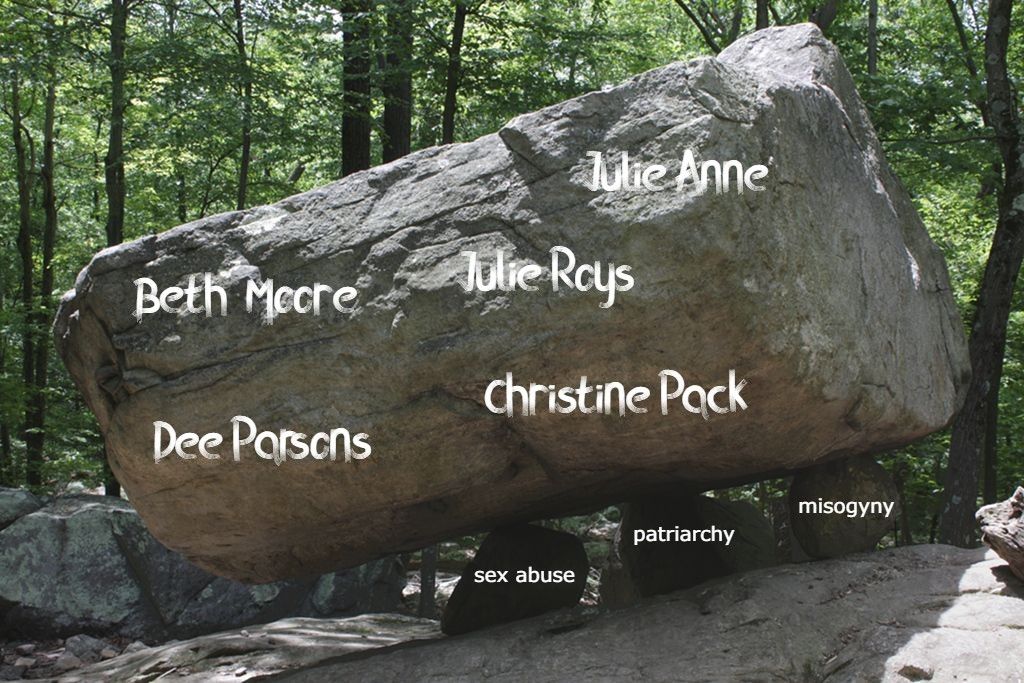
“A glacial erratic is a glacially deposited rock differing from the type of rock native to the area in which it rests. Erratics, which take their name from the Latin word errare (“to wander”), are carried by glacial ice, often over distances of hundreds of kilometres.” ~Wikipedia
Keep that definition in mind. Keep that picture in mind too.
We should absorb the whole counsel of God. We should share the whole counsel of God. As Christians, we seek balance in our learning. As with anything in life, we strive to be well-rounded.
That’s not to say that we don’t have favorite doctrines. If we’re a layman or if we’re a teacher we may have a niche interest of study. RC Sproul was known for holiness and philosophy. Phil Johnson is known for his expertise on the Psalms. And, there are niches to be studied. The Doctrine of Providence. The Doctrine of Eschatology. The Doctrine of Hamartiology (Study of Sin). It’s OK to have a focused interest.
However, we should not camp on one doctrine to the exclusion of others, or delve so exclusively into our niche that our outlook becomes distorted.
In true discerning communication, there is always an attempt to point toward the good, not simply to highlight the bad. Throwing rhetorical hand grenades is pretty easy. Building a positive and convincing position is much harder.
That quote could be applied to any study, not solely in discernment blogging, but in any Christian writing, any Christian study, any Christian life. Balance is important. Some have lost that balance in employing discernment. Others have lost it in studying eschatology. Now today, I’m speaking of a set of women who hyperfocus on sin: one sin in particular, that of sexual abuse.
Hamartiology is the study of the Doctrine of Sin, granted, but these women who constantly focus on a supposed plague of sex abuse in the church aren’t studying sin for the glory of Jesus. They are studying one sin for the besmirching of the church.
I am offended at these feminist women claiming Christ who perpetuate the myth that all churches are misogyny hatcheries, and every man, woman, and child in them are past, current, or future victims of sexual abuse. No.
Biblical odds are that since church gathers hundreds/thousands of people, some aren’t truly saved, despite professing. So, sin happens, like abuse. Also thievery, deception, adultery, embezzlement, etc. happens too. But sexual abuse has been skewed as THE one, only, main sin happening today in churches. It isn’t.
I’m reminded of John 16:2, where Jesus told his disciples,
They will ban you from the synagogue, yet an hour is coming for everyone who kills you to think that he is offering a service to God. John 16:2.
These women believe they are doing a service to God by constantly raising up alleged or even real cases of sex abuse they have no business in, that didn’t happen in their own church but others’, that happened 10 or 30 years ago, giving a platform for victims to recount in lengthy detail their abusers’ acts…
They think they’re helping. They aren’t helping.
Yes, the Ravi Zacharias abuse issue was horrific. Yes sexual abuse happens more and more in this world as all flavors of sin increase. Given how many apostate churches there are and how infrequently pastors preach a true gospel that includes wrath for sin, sadly, it happens in churches too.
Yet-
Jesus’ Church is beautiful, full of redeemed saints as part of His Bride. Yes, sin happens. Yes, unredeemed sinners stalk His gatherings, but the true church is glorious.
What do you think happens when a person (who professes Christ) constantly harps on one sinful topic? Especially that topic? Just as the Grinch’s heart grew three sizes that day when he discovered the true meaning of Christmas, (love),
that person’s heart will shrink,
For this people’s heart is waxed gross, and their ears are dull of hearing, and their eyes they have closed; lest at any time they should see with their eyes, and hear with their ears, and should understand with their heart, and should be converted, and I should heal them. (Matthew 13:15 KJV),
What does the verse mean? Barnes’ Notes:
“The meaning in both places [parallel Isaiah 6:9-10] is, that the people were so gross, sensual, and prejudiced, that they “would” not see the truth, or understand anything that was contrary to their grovelling opinions and sensual desires; a case by no means uncommon in the world.“
We should be mindful about our view of the Bride of Christ and how we speak about it. Today’s culture even in professing Christendom, people play the victim so as to gain influence, their moment of fame, or just to join the chorus. Not to diminish real pain experienced from real sin – WHATEVER that sin against you was – but ‘going public’ after the matter is resolved is often NOT necessary or even wise.
I opened with a photo of a glacial erratic. These huge rocks are pushed by a glacier as it moves inexorably along. When the glacier finally melts the huge rock is deposited where those kind of rocks don’t normally appear. It’s out of place. Erratic is from a Latin word meaning “wander”. Often perched precariously atop other rocks, or slanted on a cliff, the erratics look like they will slide away or fall down any minute.
These women hade wandered far from orthodox theology, only to have come to rest on a tenuous set of perches far from their normal location, ready to slide away any moment. They truly are glacial, and erratic.
These and other women have created a theology that perches precariously atop their skewed outlook that sex abuse is everywhere. Their perspective rests entirely on a precarious pet subject…and it isn’t Christ
As you may come across these women in your social media travels, here are some questions to ask yourself:
Are they being careful how they speak of the saints, Jesus’ church, and God’s people, especially pastors?
Does it seem they think of our Jesus as a Savior who doesn’t overlook sin, but sees His redeemed as without blemish?
Do they act like they are walking in love? Do you get the feeling they view the Church as holy and blameless?
Do you get the sense that these women care for the perpetrators, too? That they pray for them because they know they need the Gospel? Or is the prevailing sense you get from their attitude is that ‘men are nasty; church is unsafe’?
In their overall ministry, is there a sense of hope, a pointing to the true, the good, the holy?
Is there an attitude of evaluating people as being in Christ, this same Christ who has triumphed over these unsavory sins? And if repentant, that the perp is forgiven? Do you get the sense they would welcome a repentant and forgiven sex abuse perp to their church? Sit with them at church suppers?
Would you want to attend church with these women, who focus so deeply on man’s flaws instead of Christ’s perfections? Would YOU feel safe with these women if they discovered a sin in you?
Or do these sex abuse reporters display relentless, pitiless scrutiny on solid men who lead solid churches?
Or do these sex abuse reporters display relentless, pitiless scrutiny on solid men who lead solid churches?
Do you feel your own perspective shifting from believing the church is triumphant and beautiful to a view that is rife with nastiness and stain? It’s this issue that prompted me to write. So many younger women are coming to the latter belief now, instead of the former. Dogged mudslinging will do that.
These women’s continual focus is not a service to God but simply a way for them to satisfy their own prurient interests, to delve into lasciviousness, while appearing to the unwary as pious and spiritual. Or, to satisfy their lust for fame and attention by muckraking and digging up victims whom they heartlessly exploit for hits. Avoid these women like the plague they are.
Yesterday was the last day of a two-week school Christmas Break. It was eagerly anticipated and much needed. I’ve enjoyed it.
I set goals for the time off. I allow myself to “slunge” the first 4 days till after the actual Christmas day. Slunge is a made up word I use that’s a combination of slack and lounge. After a few days of rest, I energize myself to meet other goals and get some things done I’ve been wanting to do.
Anyway those first few days I binged media content and read a lot. The bingeing consisted of Season 17 of Project Runway, the first season of Reacher, and season 2 of Homicide Hills (A light hearted German police comedy. Yes, the Germans can be funny…).
I also watch a lot of Youtube police-suspect roadside interactions and court dockets. I love law stuff. Some years ago I considered attending Law School but opted for something else instead. With the advent of Youtube now I can be an armchair lawyer, lol. Current favorite judges are Judge Gauthier in MI and Judge Boyd in TX. I also like Judge Cedric Simpson. Anyway, the police-suspect videos, I’ve gotta stop watching. They aren’t edifying, except maybe to illustrate biblical points about sinful man’s nature.
But in my watching roadside interactions with suspects over the last year or so and my binge last week, I noticed something. The roadside suspect is one who is accused of crimes like criminal trespass, shoplifting, or driving under the influence. It is interesting to see the suspect’s reaction to an authority who has stopped them and is asking them to account for their erratic behavior.
The first thing to notice is their utter disregard for legal authority over them, embodied by the police. Very few if any of these people are polite and compliant. I realize that the videos uploaded to Youtube are probably mostly the ones that show something dramatic, and a polite suspect easily placed in handcuffs isn’t going to generate hits and views. But anyway, these suspects argue with the cops, ignore the cops, deny their crime, or run away from the cops (either on foot or in the car).
Fleeing and resisting are two things in a tense encounter with the police that will always get you into handcuffs. And so it is. As the police finally wrestle the person into the cuffs, one thing the suspecty always yells:
Over and over, they play the aggrieved innocent, asking what was the cause of their arrest. ‘What did I doooo?’
The police answer. Over and over. They explain, tell, list, all the behaviors that got the person restrained and into the police car. The person rejects the facts, and continues asking ‘What did I do?’
This is an interesting pattern with perps. In one incident, the woman fled in her car for miles with police on her tail with lights and sirens. When finally cuffed, she not only kept asking ‘what did I do’, but complained that there was no secure place to stop. The crawl on the video from the uploader stated,
“The suspect passed 7 parking lots, 2 turn lanes, a gas station, and a church before finally pulling over.”
Another kept asking what did I do, and the police told her that she hit 2 cars, a light pole and she’d been driving with sparks flying from her tireless rim for a mile, with all fluids leaking out.
These suspects know what they did. They know because they just did these acts moments before. Their mind is either busy rejecting their lawless acts, or they are so deep into their drug or alcohol induced mania that they can’t think straight.
You know where this is going, probably. Matthew 7:21-23,
21“Not everyone who says to Me, ‘Lord, Lord,’ will enter the kingdom of heaven, but the one who does the will of My Father who is in heaven will enter. 22Many will say to Me on that day, ‘Lord, Lord, did we not prophesy in Your name, and in Your name cast out demons, and in Your name perform many miracles?’ 23And then I will declare to them, ‘I never knew you; LEAVE ME, YOU WHO PRACTICE LAWLESSNESS.’
Lawless sinners will meet the Lord one day. They will be amazed and shocked that their lawless deeds were not overlooked. They had convinced themselves that their deeds were reasonable, lawful, or non-existent. They’d denied, denied denied. They literally can’t think straight. Sin has made them drunk and their thinking is futile. (Romans 1:21). The mind of the lawless is amazing in its ability to suppress the truth. (Romans 1:18).
The suspect always seems totally ignorant of their crime, or denies it, or argues it away. It is amazing to see that done to an authority like the cops. But they will still do it in the Judgment to THE Authority, Jesus.
They THOUGHT they were OK. Even if deep down, they kind of knew they weren’t-
Remember Lot’s Wife: her will was never really brought into a state of obedience to God; her affections were never really set on things above. The form of religion which she had was kept up for fashion’s sake and not from feeling: it was a cloak worn for the sake of pleasing her company, but not from any sense of its value. She did as others around her in Lot’s house; she conformed to her husband’s ways; she made no opposition to his religion; she allowed herself to be passively towed along in his wake—but all this time her heart was wrong in the sight of God. The world was in her heart, and her heart was in the world. In this state she lived, and in this state she died. ~JC Ryle, tract, excerpt “Remember Lot’s Wife“.
For disobeying God by watching Sodom‘s destruction, Lot’s wife is turned into a “pillar of salt” while Lot and their daughters escape (Monreale Cathedral mosaic) Public Domain
Don’t let this be you. I plead frequently in prayer to the Holy Spirit for Him to assure me that I am not performing religion, but that my heart is truly converted and submitted to the will of God. The ability to delude one’s self is potent. The warning from Jesus Himself to “Remember Lot’s wife”.
It means we must be sure to be submitting to the right authority.
“Joab was David’s captain; Gehazi was Elisha’s servant; Demas was Paul’s companion; Judas Iscariot was Christ’s disciple; and Lot had a worldly, unbelieving wife. These all died in their sins.” JC Ryle, “Remember Lot’s Wife“.
Proximity to religion will not save you! Arguing with the authority after the fact will not save you! Jesus knows the heart. Only the converted, repentant, faithful heart will be the standard by which He accepts anyone into His kingdom.
Let’s do our best to witness by word and by our lives, to pray for the lost, and to encourage one another to good deeds. We do not want to be the ones at the Final Court asking, “What did I do wrong?”
Sermons hit different people differently. Some say it was the best they’d ever heard, others say meh. It’s why I don’t usually post sermons claiming such things, the Holy Spirit emphasizes different things to different people. What I think is blockbuster the next person can take or leave, and vice versa.
Individually, like for myself, I can’t tell what the Spirit is doing. I can’t tell if I’d advanced in sanctification a lot or a little that day, month, year. There aren’t bells or alarms that indicate such things.
But, we KNOW that the Holy Spirit leads us. We KNOW that He advances us in Christlikeness day by day. But can we detect it?
Not usually. But sometimes.
Allow me to share my experience. In November of this past year, I tuned in to a sermon from The Master’s Seminary because I was curious about the title: “The Secret to Endurance”. It was delivered by Dr. Abner Chou. I’ve listened to him before. I went through his Seminary course in Job, twice. And Exodus. I’ve heard his sermons and Chapel talks. He talks fast and is high-level. Many times I can’t keep up. But I keep at it.
Anyway, I was curious about ‘the secret.’ I tuned in. His text was Remember Jesus Christ, risen from the dead, descendant of David, according to my gospel, (2 Timothy 2:8). The sermon was aimed at pastors and soon-to-be pastors but it is highly applicable to anyone in ministry, AND any lay person who just wants to endure.
Remember Jesus Christ, risen from the dead, descendant of David, according to my gospel, (2 Timothy 2:8)
I enjoyed the sermon. It’s good. As happens many times with the Holy Spirit, one particular thing ‘jumped out at me.’ The word “remember”.
Abner Chou can wring out more truth from one word than I think any man alive. He spent some time setting up the premise for Paul telling Timothy to remember, then explained the word remember’s meaning.
Remember Jesus Christ…
I took that part of the sermon to heart. It imprinted in me. Since early November to early December, every time I heard the word remember, I thought of that sermon. In December it drove me batty enough so I tuned back in and re-listened to that part, except longer before and after the part I was wrestling with.
And again throughout December, every time I heard the word remember. I brought it back up and read the transcript.
This morning someone posted on Twitter a JC Ryle link to a short essay called Remember Lot’s Wife. I’m curious about that scene in the Bible as well so I downloaded the link and read the essay. It’s a really good essay. (free download here).
The word remember, remember, remember kept coming up in my mind, so I looked up the sermon AGAIN today. This time I re-listened to the entire thing. Though I enjoyed it the first time in November, this time, something was happening. I cried tears after tears listening to all the explanations about the power of Jesus, the Person of Jesus, the preeminence of Jesus. Paul’s use of the term Jesus Christ, Paul’s entire goal in life to honor Jesus, verses and more verses.
Even though I’d heard the sermon before in its entirety and in parts 2X after that, this time I sat stock still, eyes glued to the screen. I did not multitask. I did not move. All I did was get tissue after tissue and listen, amazed at the beauty and grace of Christ presented through the eyes of Paul to Timothy. The Spirit was obviously doing something. What, I do not know. Knitting truth to my soul…transforming my mind…
It HAS to be the Spirit. I wasn’t moved over a romantic comedy. I wasn’t moved reading a story over a lost cat. I didn’t have tears over a sad news story. It was scripture. And if it’s scripture, it has to be the Spirit, who uses scripture to point to Jesus.
We cannot grow if we do not absorb the scriptures (hearing it or reading it for ourselves). We need to meet with Jesus to learn about Him and be pliable to have the Spirit form Christlikeness in us. If you hear something or read something and your mind keeps turning back to it, follow it up. I’m not talking about mystical signs or omens. But if you keep meditating on a scripture, or part of scripture, then, what are you waiting for? Keep digging. It may be an example of the Spirit leading you. Even if it isn’t, it’s a good thing to return to a verse and keep praying over it for deeper meaning. And if it is, you will have glorified Jesus whom the Spirit is leading you to meet with.
I humbly bow to the power of the Spirit-filled word. I am grateful to the Savior for fashioning for me a life where I can listen to sermons like this, to have time to do so and space to ruminate on the powerful preaching. He is a good, good God. I will remember.













 the-end-time.org