Spring is bursting all out around here. I know that in the rest of the country people are suffering from rain, ice, snow, and wind. But for now, things are calm in the south. The daffodils are popping up, forsythia is blooming, crepe myrtle is budding. The pear trees are coming along with their delicate blooms. Feb-March is my favorite here in Georgia. It’s warm but not hot. Outdoors is coming to life, including the trees filled with returning birds. No bugs yet. Ahhh, perfect. I hope you’re enjoying whatever season you’re in!
The movie “Jesus Revolution” is out. I wish that Christian films weren’t either bad, or well produced but heretical. I know we can’t have everything, but I wish there was SOME Christian media I could watch without cringing over the production quality or the doctrine. In Jesus Revolution, we have concerns over the doctrine presented, and by the way, there’s some revisionist history too. G3 reviews the movement so you can compare to the movie IF you see it-
False teaching will distress [those who fear the Lord], not because it contradicts their views but because it impugns [God]. — Michael Reeves
Yup!
In this article from TableTalk, we learn about nitpicking. The Oxford English Dictionary defines a nitpicker as “a pedantic critic; one who searches for and over-emphasizes trivial errors.” Here, Keith Mathison asks if we nitpick the Sunday service on the way home…
Missionaries…what salt they are and were in the world! Here, we learn of The Judsons: Six Years, No Converts. Jason Duesing muses on how the missionary couple rested in the promises of God during the years of hard plowing.
Many seemingly innocuous activities, like horoscopes, are in fact, dangerous. Here, an ex astrologer shows why-
Most believers are called to marriage. Some (like me) are called to singleness. I know I’m supposed to be single. Most young women feel sure they are called to marriage. But what about the in-between, when you’re yearning to be married but not married yet? What about dating?
Well, Tim Challies has reviewed a brief but pointed book that covers that very question. It’s called “Water for my Camels” and it’s reviewed positively. Author Paul Grimmond says, “Navigating the space between singleness and marriage when the Bible doesn’t talk about dating.” I know, ladies, the waiting can be hard.
LIFESTYLE-
Here are 26 Command hook hacks. I love hacks. I love Command hooks. It all worked out!
I love looking at homes. AirBNB is one website that is like Open House any time. It lets me to look at homes, and how people arrange their furniture and how they decorate. Country Life UK is a British Magazine offering real estate and estate lifestyle essays of a financial strata a billion levels above me. Want to buy a castle? AN Abbey? An ancient home, like this one, a place that has an actual ‘reception hall’? An exquisite home near Canterbury that dates back to the 14th century is now for sale for £2.75 million . Go peek. Drool. Enjoy.
Mine were almond flour pancakes. EPrata photo
I had pancakes for dinner the other night. Here is Jessica at Good Cheap Eats with way better recipes than the one I used for pancakes for dinner!
In my Bible reading the other day I read the following:
Who understands the power of Your anger And Your fury, according to the fear that is due You? (Psalm 90:11).
God has fear due Him? Let’s unpack this.
One of God’s expressions of displeasure is wrath. It is the ultimate expression of his displeasure, some would say. I feel it is my duty to present to you honestly and forthrightly, all of God. That means, that even though I am a ministry aimed at women, I do not hide the more “unpalatable” attributes of God in favor of the lovey ones. (As if God could in any way be unpalatable). His anger, His wrath, His displeasure over sin is part of who He is. We should not hide from that. God is all in all, He is every attribute that is holy, wrapped up into one God in Three Persons. In fact, the more the evangelical world focuses on “God is love,” the more I feel compelled to remind that He is also wrath.
You cannot swing a cat in the Psalms without running into His wrath, His anger, or His displeasure. I read Psalm 90. verse 11 states,
Who understands the power of Your anger And Your fury, according to the fear that is due You? (Psalm 90:11).
The ‘fear that is due you’ caught me. Here it means the awe-inspired reverence due our God because of who He is.
Matthew Henry’s Whole Commentary on the Bible says,
"They are taught by all this to stand in awe of the wrath of God (v. 11): Who knows the power of thy anger? 1. None can perfectly comprehend it. The psalmist speaks as one afraid of God’s anger, and amazed at the greatness of the power of it; who knows how far the power of God’s anger can reach and how deeply it can wound? The angels that sinned knew experimentally the power of God’s anger; damned sinners in hell know it; but which of us can fully comprehend or describe it?"

"Few do seriously consider it as they ought. Who knows it, so as to improve the knowledge of it? Those who make a mock at sin, and make light of Christ, surely do not know the power of God’s anger. For, according to thy fear, so is thy wrath; God’s wrath is equal to the apprehensions which the most thoughtful serious people have of it; let men have ever so great a dread upon them of the wrath of God, it is not greater than there is cause for and than the nature of the thing deserves."

"God has not in his word represented his wrath as more terrible than really it is; nay, what is felt in the other world is infinitely worse than what is feared in this world. Who among us can dwell with that devouring fire? Henry, M. (1994). Matthew Henry’s commentary on the whole Bible: complete and unabridged in one volume (p. 876)".
Verse 11.Who knoweth the power of thine anger? Moses saw men dying all around him: he lived among funerals, and was overwhelmed at the terrible results of the divine displeasure. He felt that none could measure the might of the Lord’s wrath. Even according to thy fear, so is thy wrath.
Holy Scripture when it depicts God’s wrath against sin never uses an hyperbole; it would be impossible to exaggerate it. Whatever feelings of pious awe and holy trembling may move the tender heart, it is never too much moved; …What the power of God’s anger is in hell, and what it would be on earth, were it not in mercy restrained, no man living can rightly conceive.
Modern thinkers rail at Milton and Dante, Bunyan and Baxter, for their terrible imagery; but the truth is that no vision of poet, or denunciation of holy seer, can ever reach to the dread height of this great argument, much less go beyond it.
The wrath to come has its horrors rather diminished than enhanced in description by the dark lines of human fancy; it baffles words, it leaves imagination far behind. Beware ye that forget God lest he tear you in pieces and there be none to deliver. God is terrible out of his holy places. Remember Sodom and Gomorrah! Remember Korah and his company! Mark well the graves of lust in the wilderness!
Nay, rather bethink ye of the place where their worm dieth not, and their fire is not quenched. Who is able to stand against this justly angry God? Who will dare to rush upon the bosses of his buckler, or tempt the edge of his sword? Be it ours to submit ourselves as dying sinners to this eternal God, who can, even at this moment, command us to the dust, and thence to hell.–-end Spurgeon
The false teacher will want to redirect your thinking from these sad but essential truths. Payment for sin must occur. Jesus took God’s wrath bodily on the cross for the sins of all who would believe. Those who refuse to repent of their sins will pay for it themselves. This is something we must keep in mind every day- the untenable position of the ungodly. For who can stand when God’s wrath is unleashed?
A balanced view of God is necessary for proper worship. We who are saved have escaped that wrath by the grace of God and through no merit of our own. Yet millions are still under that dark cloud of hellish expectation. What will it take to remove that cloud and replace it with the beams of holy light? The GOSPEL.
Sharing the truths of His wrath and moving toward the glorious majesties of His character in mercy, grace, and love will do it. But don’t forego the first part! For who can stand when God’s wrath is finally unleashed in full? The dregs, O the dregs,
Psalm 75:8, For a cup is in the hand of Yahweh, and the wine foams; It is full of His mixture, and He pours from this; Surely all the wicked of the earth must drain and drink down its dregs.
The other day I was scrolling around online, and I passingly saw a quote from John MacArthur. “God is holy. We are not.” It was a simple phrase, common, a regularly spoken thing. I see that kind of sentiment frequently and it never affected me like it did at that moment. It wasn’t even scripture, just a spiritual/doctrinal concept.
But my spirit was immediately overcome. I teared up, I bent over in my chair, I whispered aloud, “Praise the Lord”. I kept praying for a while, tearing up at the sweetness of such a simple but true concept.
Where’d THAT come from? I wondered…
It had to have been the Holy Spirit in me knitting Himself to the Lord of Lords in truth. It was a mini-event. To use a trite phrase, “a God thing”. But it was a potent reminder. When we go about our daily lives in public, whether online or in real life, we never know which scriptures or which scriptural concepts will be flung into a heart and pierced with eternal truth. Especially to the lost.
If you don’t know how Spurgeon was saved…he had been wrestling with the issue of his sin and longing for redemption for a few years. But to no avail. It wasn’t until he stumbled into a small church during a snowstorm, knowing he would not make it to his intended church destination. The pastor of that church couldn’t make it either so a layman took the pulpit. Hardly knowing what to say, he simply repeated the verse several times, mispronouncing along the way, and added a bit of his own commentary in his own halting, simple manner. But the words grabbed Spurgeon with a vise-like grip and would not let go. Here was the verse-
Look unto me, and be ye saved, all the ends of the earth: for I am God, and there is none else. (Isaiah 45:22 KJV).
After that, the layman substituting for the regular pastor just kept saying, Look! Look! A simple verse, a simple man, but it did the work and the heart of the soon to be Prince of Preachers was pierced.
If you don’t know of the conversion of John Bunyan…
John Bunyan…”The thing that gave Bunyan any notoriety in the days of his ungodliness,” writes his biographer, Dr. Hamilton, “and which made him afterwards to appear to himself such a monster of iniquity, was the energy which he put into all his doings. He had a zeal for idle play and an enthusiasm in mischief which were the perverse manifestations of a forceful character.” (source)
Bunyan was notorious in his raucous doings among the town. He was well known for being a rake. In fact, he was a hardened sinner – yet deeply disturbed by his own sin. He experienced a prolonged conviction of sin and tried in his own strength at various times to remove this burden from himself by reforming his character. Of course, this did not work. His sinful nature always re-emerged, to Bunyan’s despair.
One day Bunyan passed some women sitting in the doorway in the sun, talking of Godly things, the graces the Lord had afforded them, satan’s wiles and resisting temptation. Bunyan later wrote,
And methought they spake as if joy did make them speak; they spake with such pleasantness of Scripture language, and with such appearance of grace in all they said, that they were to me as if they had found a new world, as if they were people that dwelt alone, and were not to be reckoned among their neighbours (Num. 23.9). (Source)
There were actually about ten things over time that entered Bunyan’s bosom and rested there, until the appointed day they should come together and knit a glorious salvation into his soul, but the women’s plain talk was one of them, a significant point of entry on his path toward eternal glory. Regular women, salted conversation.
Augustine: a rotting, foul, fetid sinner, by his own characterization, Augustine was definitely one who by man’s eyes would seem beyond redemption. But his mother Monica prayed. And prayed. And prayed.
Augustine was tormented by his sin and inability to change the direction of his life. He had gotten to a point in his depravity it bothered even him, but more so, how he constantly lied to his mother. One day he heard a child in a garden singing simple words- Augustine later wrote,
I was saying these things and weeping in the most bitter contrition of my heart, when, lo, I heard the voice as of a boy or girl, I know not which, coming from a neighbouring house, chanting, and oft repeating, Take up and read; take up and read. Immediately my countenance was changed, and I began most earnestly to consider whether it was usual for children in any kind of game to sing such words; nor could I remember ever to have heard the like. So, restraining the torrent of my tears, I rose up, interpreting it no other way than as a command to me from Heaven to open the book, and to read the first chapter I should light upon —
Romans 13:13-14, Not in rioting and drunkenness, not in chambering and wantonness, not in strife and envying; but put on the Lord Jesus Christ, and make not provision for the flesh, to fulfil the lusts thereof
Gulp. The exact verse he needed to see himself reflected in scripture describing his flavor of sin in which he was drowning. Augustine was pierced through. He later wrote of his mother’s prayers, “whereby when I was cleansed, the streams of my mother’s eyes should be dried, with which for me she daily watered the ground under her face.”
Simple words, some, from a child. Scriptures, plainly stated. Godly conversation seasoned with salt and grace. We don’t have to be experts in nuance and knowledgeable of the Greek and Hebrew. Simple words carried by the winds of the Holy Spirit to minds and hearts will cause change in perspective unto conversion as much as a complex sermon from a seminary professor. The point is, do not be afraid to speak Godly verses, concepts, conversations. The hearers will be blessed.
Let no unwholesome word proceed from your mouth, but only such a word as is good for building up what is needed, so that it will give grace to those who hear. Ephesians 4:29
False teachers creep into the church almost unnoticed. They hide their true faith, which is faith in themselves, propelled by satan and satanic desires. In other words, they oppose God in every way. They aren’t believers, but God knows this and has already marked them out for condemnation.
They think that if they adopt the right outer garments, speak the right things, adopt the right behavior and perform the right postures, they will blend in. Some do, for a while. But sin always reveals itself eventually. Either their false doctrine or their sinful lifestyle will expose them to the discerning believer. The inner becomes outer.
They think they blend in, but God has stationed discerning faithful at his watchtowers of His churches. We can spot them. This is what they look like to us. Their faces betray the twisted inner self of their nasty soul.
AI generated
Nathaniel Jolly has written an essay for G3 Ministries about the danger false teachers pose. I urge you to go to the link below and read the piece in its entirety. He goes through the book of Jude and explains the five metaphors Jude uses to illustrate the danger of false teachers. And they are dangerous.
These false teachers are hidden reefs, clouds without water, autumn trees without fruit, waves of sea foam, wandering stars.
Their aim is to corrupt your soul. If you are not a genuine believer yet, their goal is to draw you away. If you are a genuine believer, you cannot lose your salvation, but you can lose time in producing fruit for the glory of the Lord. You can be swayed from the center line of the doctrines, and minimized in your effectiveness for His church during the time you followed such and such false teacher.
Therefore, false teachers pose a very real danger to you and your local church. Many safety officers advise being situationally aware:
situation awareness conscious knowledge of the immediate environment and the events that are occurring in it. Situation awareness involves perception of the elements in the environment, comprehension of what they mean and how they relate to one another, and projection of their future states. In ergonomics, for example, it refers to the operator’s awareness of the current status and the anticipated future status of a system,” According to the American Psychological Association.
In all the definitions I read, the ultimate goal of good situational awareness is so that the person can make good decisions. You gather intel from all the situations around you on a constant basis, being aware of locations, events, atmospheres. After collecting those elements, make your decision. It’s sometimes not even a conscious process, but it always an ongoing one. Or should be. In the case of the Christian in church, first we test all things, (1 Thessalonians 5:21), so that we can make good decisions. We collect information on teachings, hymns, concepts, of whatever comes across our path in church or out that has the name of Jesus attached to it. Then we make our decisions whether to follow that teacher, sing that hymn, watch that show. We decide whether to raise an alarm with elders, share with the spouse, or protect the kids.
As always when I speak of discernment, be vigilant. Be sober. (1 Peter 5:8). And read Nathaniel’s article! 🙂
John Owen wrote the following. Today is Sunday, the Lord’s Day. Please take a moment to contemplate the wonder of our being able to commune with the Father, in fellowship, love, and knowledge. Before we were saved, no such opportunity existed. No Light was in us. No possibility of peace. Yet, God loved us so He sent His Son to be the atoning sacrifice for our sin. Jesus died on the cross, was laid in the tomb, but no tomb could hold him and His Holy One did not see decay! He rose again, ascended to His Father, now our Father. We could not have designed a more perfect method for gathering a redeemed people to Him. God is sovereign, loving, and holy. He is pure and perfect. Worship Him today in truth and light.
OF COMMUNION WITH GOD THE FATHER, SON, AND HOLY GHOST, EACH PERSON DISTINCTLY, IN LOVE, GRACE, AND CONSOLATION; OR, THE SAINTS’ FELLOWSHIP WITH THE FATHER, SON, AND HOLY GHOST UNFOLDED.
BY John Owen 1657
Since sin entered the world, no man has had communion with God because of his sinful nature. He is light; we are darkness; and what communion has light with darkness? (2Cor. 6:14). He is life; we are dead. He is love; we are enmity. What agreement can there be between us? Men in such a condition have neither Christ, nor hope, nor God in the world, Eph. 2:12. “Being alienated from the life of God through their ignorance,” chap. 4:18. Now, two cannot walk together unless they are agreed, Amos 3:3. So, while this distance between God and man exists, they cannot walk together in fellowship or communion. Our first interest in God was so lost by sin, that no recovery remained in ourselves. We deprived ourselves of all power to return to him. And God had not revealed that there was any way to regain access to him. Nor did he reveal that sinners could approach him in peace for any reason. Nothing that God made, and no attribute that he revealed, provided the least hint of such a possibility.
The manifestation of God’s grace and pardoning mercy is the only door we have to such communion. It is committed only to the one who atoned. He is the one in whom it is evidenced. He is the one by whom grace and mercy was purchased. He is the one through whom it is dispensed, and from whom it is revealed from the heart of the Father.
But in Christ we now have boldness and confident access to God, Eph. 3:12. The saints of old were not familiar with this. This distance from God is removed by Jesus Christ alone. He has consecrated a new and living way for us “through the veil, that is, his flesh,” Heb. 10:20. The old way is sealed. “Through him we have access by one Spirit to the Father,” Eph. 2:18.”
John Owen. Source of illustration- Wikipedia
From Wikipedia:
John Owen Born 1616, Stadhampton, Oxfordshire, England Died August 1683 (aged 66–67) Ealing, Middlesex Occupation(s): Theologian, pastor, academic administrator Notable work: Communion with God, The Mortification of Sin, The Divine Power of the Gospel, The Death of Death in the Death of Christ Spouse: Mary Rooke Era: 17th century Tradition or movement: Nonconformist Puritan Reformed Theology
Changing the name of something helps to diminish attachment to it. Devalue it. Making a euphemism for it helps to conceal an unpleasant truth behind a nicer sounding phrase. Example: The Euthanasia Society became Society for the Right to Die. The Euthanasia Council became Concern for Dying and the act, a “mercy killing”. Death penalty has become capital punishment. A pre-born baby has become a fetus. An abortion has become terminating a pregnancy. A person is not anti-abortion, they are pro-choice.
These softening terms are purposely slipped into our vernacular. Many people don’t even notice our language is being manipulated. The phrase “all social engineering is preceded by verbal engineering,” recognizes that the mind is the first battlefield. This is Satan’s territory, the mind. As the late Rev. Adrian Rogers said so well,
“Ephesians 6:12 tells us that there is a war going on, and it’s of a spiritual nature. Satan’s desire is to conquer and control your thought life and then make it a citadel from which he can war against God.“
The battle first begins in the mind, and its weapons are words.
In Matthew 5:22, Jesus said, “But I say to you that everyone who is angry with his brother shall be guilty before the court; and whoever says to his brother, ‘Raca,’ shall be guilty before the Sanhedrin; and whoever says, ‘You fool,’ shall be guilty enough to go into the fiery hell.“
Here, Jesus is emphasizing that murder begins before the act, it begins when people view others as less than human. Euphemistic language helps this transition of devaluation of the sanctity of life. When we begin seeing a baby as tissue, a comatose person as a vegetable, thus begins the devaluing. Murder begins when people view others as less than human.
Today’s point is that I urge us all to be on guard mentally when we read or hear of terms that try to diminish the sanctity of life. The act of abortion murder is actually a lengthy process, and it begins in the mind, with the words you choose to use to describe human life that God gave us.
A baby is a baby from the moment of conception. Luke 1:41 says “And it happened that when Elizabeth heard Mary’s greeting, the baby leaped in her womb, and Elizabeth was filled with the Holy Spirit.“
The biblical position on abortion is here: Samson, Jeremiah, John The Baptist, Jesus, Paul were called to service from the womb.
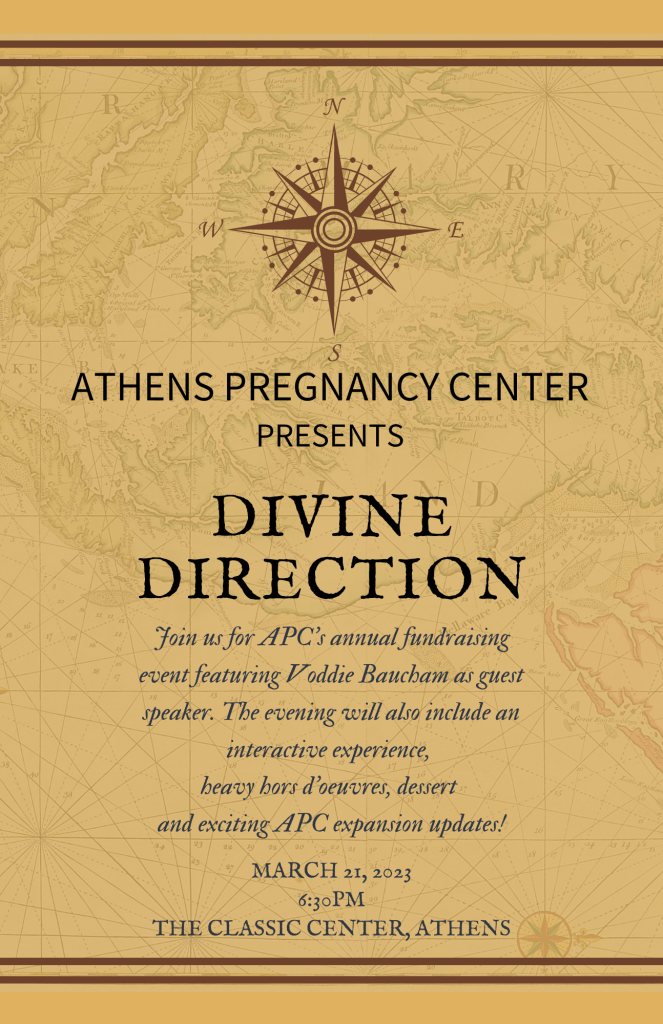
The local pregnancy center is having its annual fundraiser. This year the speaker is Voddie Baucham. Our church sponsored 10 tables and the seats have been filled by now with interested congregants who wish to attend, thereby offering moral, spiritual, and financial support to the idea that babies have a right to live. We have had people in our church adopt. We have people supporting foster children. We have many educators who dedicate their lives to the teaching and support of children. We have many newly marrieds who have been recipients of God’s gift of children. We believe that children are not a “choice” – they are a blessing from God.
We do not know until it happens, what God has called each child to. Some were prophets. Some were kings. Some were missionaries. Some were fishermen. Some ran businesses, sewed, or hosted. Each and every ‘clump of cells’ in a woman’s womb is somebody. Each one deserves a chance at life.
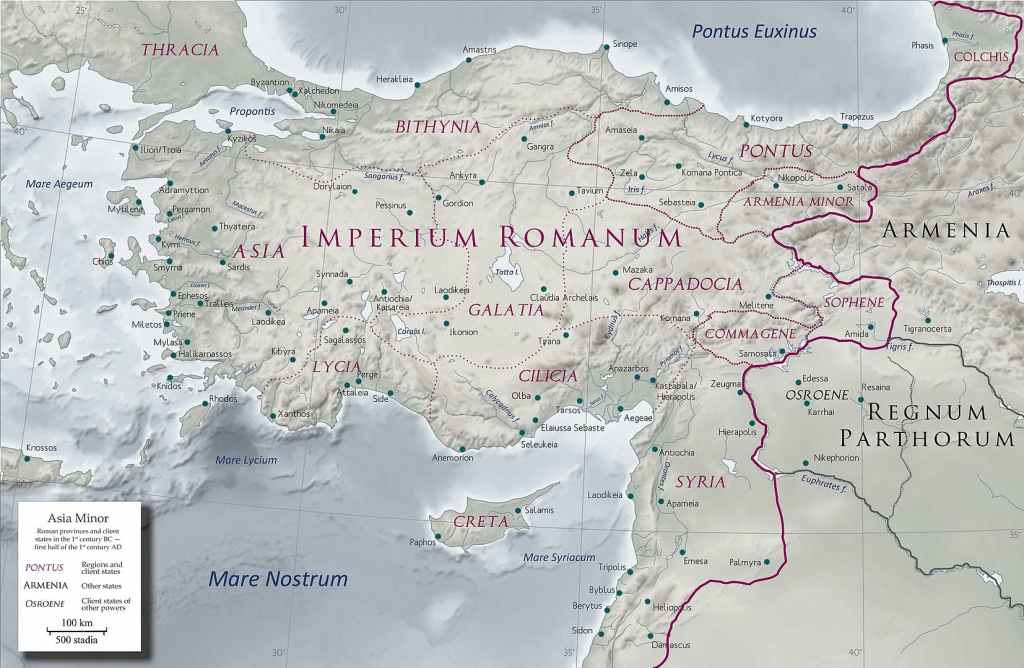
Peter, an apostle of Jesus Christ, To those who reside as exiles, scattered throughout Pontus, Galatia, Cappadocia, Asia, and Bithynia, who are chosen according to the foreknowledge of God the Father, by the sanctifying work of the Spirit, to the obedience of Jesus Christ and the sprinkling of His blood: May grace and peace be multiplied to you. (1 Peter 1:1-2)
Did you ever wonder where those places were/are? I do. I find it helps me to look at a map in order to orient myself to the places mentioned in the Bible. Here we go!
Asia Minor in the 2nd century AD – general map – Roman provinces under Trajan. CC BY-SA 4.0. Right-click to open larger in new tab
You notice the word “Thracia” in the northwest part of the map. Thrace, according to Wikipedia, “is a geographical and historical region in Southeast Europe. It is split among Bulgaria, Greece, and Turkey, which is bounded by the Balkan Mountains to the north, the Aegean Sea to the south, and the Black Sea to the east. It comprises southeastern Bulgaria (Northern Thrace), northeastern Greece (Western Thrace), and the European part of Turkey (East Thrace).“
Galatia is the region where Paul wrote to the Galatians to correct them in that Epistle. Notice the eastern part of the map, the location of the Tigris and the Euphrates, those mighty rivers. At the southern part of the map you see the city of Damascus. About 160 miles south of the city of Damascus is the Israeli border, and from Damascus to Jerusalem is about 200 miles.
You see the island of Cyprus, where the city of Paphos is mentioned at the southern end of the island. Acts 13:6 mentions Paphos, where the crew “met a magician, a Jewish false prophet whose name was Bar-Jesus,“
You see the region of Cilicia, that was the region that contained the city of Tarsus, where Apostle Paul was born. That area was known for its expertise in tent making, and we know Paul was a tentmaker. (Acts 18:3). After Paul’s conversion, he was mainly itinerant. He spent the most time in Antioch, the closest place to a home he had until he gained heaven. He mentioned several times that he was self-supporting, not wishing to be a burden to anyone. He likely employed his skills at tent-making throughout his missionary career.
This map area is called Asia Minor. World History website says “The earliest reference to the region comes from tablets of the Akkadian Dynasty (2334-2083 BCE) where it was known as The Land of the Hatti and was inhabited by the Hittites. It was among the most significant regions of antiquity.” Genesis 15:20 mentions the Hittites.
On the western part of the map you see cities facing the Aegean Sea. Look for Smyrna, mentioned in Revelation 2:8, and Pergamum, mentioned also in Revelation 2. Pergamum was known for its incredible library, second only the the Great Library at Alexandria.
Asia Minor is riddled with difficult mountain ranges. Some of the steepest and most difficult to traverse were the Taurus Mountains. Some peaks extended upward of 12,000 feet. So when we read Paul went here or there, think of all his footsteps up mountains and down mountains… Amazing.
The earth is amazing and the LORD planned it to look and be exactly as He wanted. When the Flood happened, much of the earth’s topography was changed. Mountains formed, seas and lakes filled in, etc. When the events of Revelation occur, it is sort of an un-creation, a return of the topography to what it was before the flood. Mountains will flatten, islands will flee away, and so on. Then at the very end, the earth will be made anew, completely new. I can’t await to see what it looks like then… If you believe in Jesus Christ and have repented of your sins, you will also see it, and dwell on this beautiful earth forever.
I’m actually not following the event taking place at the Kentucky Christian college, Asbury University. Apparently after the usual required Chapel service, Theology Professor Tom McCall said on February 13,
But this past Wednesday was different. After the benediction, the gospel choir began to sing a final chorus—and then something began to happen that defies easy description. Students did not leave. They were struck by what seemed to be a quiet but powerful sense of transcendence, and they did not want to go. They stayed and continued to worship. They are still there.
The chapel service that allegedly set all this off was held on February 8. One person noted that the sermon was absent a discussion of sin, repentance, cross, confession of Christ as Lord. It’s been a week since. They are still there. It’s standing room only. People singing, praying, crying, repenting. They are confessing sin. They aren’t flopping around on the floor or emitting hysterical laughter. Is this a genuine move of God? Is it emotionalism? Groupthink? The debate has been ongoing in social media.
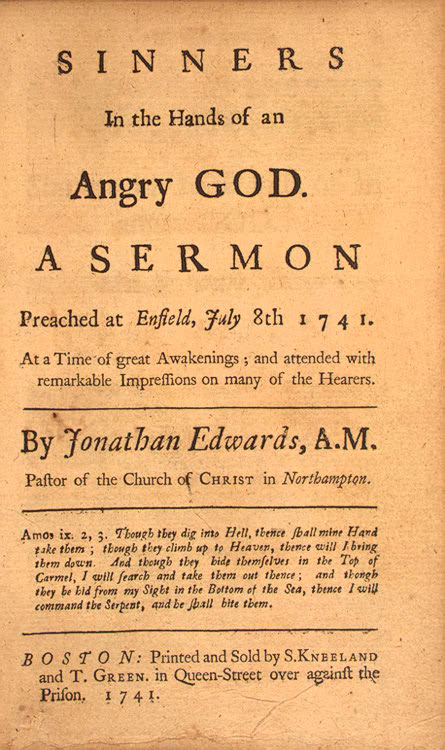
One of the most famous revivals in history was the First Great Awakening that began during church services in Northampton Massachusetts and Enfield Connecticut where Jonathan Edwards preached the sermon titled Sinners in the Hands of an Angry God. The sermon was delivered in 1741, but the awakening began in various parts as early as 1730. In England, John Wesley was preaching fervently during a revival there, and in the colonies here in what became the US, George Whitfield and Jonathan Edwards were preaching.
Edwards was also praying. He had prayed for a long time for revival, and God answered his prayers. During the height of it and afterward, Edwards thought much on the mechanism of revival, the definition of revival, and how to determine if a revival is genuine. He sought to reconcile the mind – which studies the Bible, and the heart’s affections for its Author – with revival as backdrop.
Edwards explains in several of his subsequent works, such as A Narrative of Surprising Conversions, (which can be read online at the link), The Distinguishing Marks of a Work of the Spirit of God, and An Account of the Revival in Northampton in 1740-42, (al linked below free to read online) that there are two underlying causes of biblical revivals: prayer and the preaching of God’s Word. True revivals are not the product of man’s efforts to bring it about, except for prayer and preaching.
Edwards relates that revival began the same way in a number of cases, great groups of people seemed to have “been seized” by the Spirit. Many who had previously been saved but doubted were now content in great assurance. Others who had not yet been saved, suddenly were preoccupied with religious things, including sermons, meeting together in groups to study and pray, and forsaking previous dalliances with immoral hobbies. They were dressing modestly, and their conversations were seasoned with grace and of the Savior. Edwards noted that rare was a day when people were converted past middle age, but that many in the elderly category as well as the young were converting.
Was it genuine? We all wonder when we are either participating or observing such a work and ponder if it is of God or of satan. Misattributing to one or the other in error would be disaster! Edwards pondered the same. In his treatise The Distinguishing Marks of a Work of the Spirit of God, which can be read online at the link, Edwards said,
And as to the fruits of this work, (which we have been bid so often to wait for,) blessed be God! So far as there has been time for observation, they appear to be abiding. I do not mean that none have lost their impressions, or that there are no instances of hypocrisy and apostacy. Scripture and experience lead us to expect these, at such a season. It is to me matter of surprise and thankfulness that as yet there have been no more. But I mean, that a great number of those who have been awakened are still seeking and striving to enter in at the strait gate.
“Sinners in the Hands of An Angry God, A Sermon Preached at Enfield, July 8, 1741,” by Rev. Jonathan Edwards, Printed by S. Kneeland and T. Green, Boston, 1741. Image courtesy of the Library of Congress, and the Rare Books Division, the New York Public Library.
The passage of time will always tell. The work God begins in a heart will continue until the Day. Others, for many reasons if not genuinely saved will fall away. The broad gate will beckon those.
Some, Edwards, noted, are prejudiced against the work of God in revival, and revile it. They do so out of ignorance of the facts, or jealousy- not having seen or experienced such a thing in their own spheres, or they “may dislike the present work, because it supports and confirms some principles which they have not yet embraced, and against which such prejudices hang about their minds, as they cannot easily shake off.“
Edwards did go on in the above linked booklet with noting marks of genuine revival. One of them, he warned, is that “A work is not to be judged of by any effects on the bodies of men; such as tears, trembling, groans, loud outcries, agonies of body, or the failing of bodily strength.” He said that a person not exhibiting such effects on the body may indeed be genuinely converted, or a person who does exhibit such effects might be apprehending the horrors of hell upon their soul, or apprehending their own wickedness in the face of a holy God- and trembling from righteous fear.
After giving negative marks of the true revival, Edwards continues with genuine marks of a true revival. He said foremost, “When the spirit that is at work operates against the interests of Satan’s kingdom, which lies in encouraging and establishing sin, and cherishing men’s worldly lusts; this is a sure sign that it is a true, and not a false spirit.“
It makes for interesting reading, to be sure. However, Jonathan Edwards was not the only person concerned with whether an Awakening, or a Revival, was genuine. The Second Great Awakening occurred in America in the late 1700s when Ebenezer Porter observed one between 1773-1778. He wrote his “Letters On Revival” and noted the results of revival: Changed lives (few examples of apostatizing professors; Assembly faithfulness, Unity, Humbled pastors, A spirit of gratitude. (excerpt from a study guide on Porter’s book, here).
The Chapel Library offers one of their entire magazines on Revival. The Free Grace Broadcaster Issue 223 has within it many good essays on revival. You can read this online or order a free hard copy mailed to you for free. Authors and topics include-
What Is Revival? Horatius Bonar (1808-1889): a helpful definition of and general introduction to the subject of spiritual awakening:
Motives for Revival: David Martyn Lloyd-Jones (1899-1981): many Christians pray and long for a mighty move of God’s Spirit in revival; but what should our motives for this be? This survey is a helpful answer to the question.
Preparation for Revival: Charles H. Spurgeon (1834-1892): an earnest exhortation for Christians to prepare their hearts for revival by agreeing with God, His Word, and His ways.
Pray for the Spirit: James W. Alexander (1804-1859): there can be no revival without a mighty outpouring of God’s Holy Spirit. God’s people must pray to our gracious heavenly Father for just such a blessing.
The Outpouring of the Holy Spirit: Robert M. M’Cheyne (1813-1843): a weighty, thoughtful discussion regarding the powerful changes God’s Spirit works in the human heart.
Solemn Pleadings for Revival: Charles H. Spurgeon (1834-1892): an ardent and solemn appeal for God’s people to plead with God for great works of grace and a call to renew our strength in Him.
The Men God Uses in Revival: Horatius Bonar (1808-1889): a challenging and provocative look at the kind of preachers God uses in spiritual awakening.
Preaching for Revival: William Reid (1814-1896): an overview of the all-important truths that men must proclaim if we would experience revival.
Crucial Doctrine and Revival: David Martyn Lloyd-Jones (1899-1981): a brief examination of two crucial doctrines God blesses to the salvation of souls.
The Effect of Revival: Jonathan Edwards (1703-1758): a first-hand observation of what God-sent revival really produces in sinful men and women.
Charles Spurgeon called the basement prayer room “The Boiler Room” because prayer and his people praying was truly the power of the church. Photo by Peter Herrmann on Unsplash
Paul Washer said of revival, “Many people have the idea that they are going to “pray in” a revival. Other people say, “Revival will come whether you pray or not.” I am not in either one of those camps. But I know one thing. When I see men, women, and young people all over the world praying for an awakening, to me that is the firstfruits of revival. And I can count on the fact that He Who gives these firstfruits will bring in the full harvest.“
Revival and Reformation- what do they have in common? in an essay called The Spirit of Revival, RC Sproul said,
“It is noteworthy that this period in history is commonly referred to as the Reformation and not the Revival. What is the difference between revival and reformation? As the etymologies of the words suggest, revival describes a renewal of spiritual life, while reformation describes a renewal of the forms and structures of society and culture. It is not possible to have true reformation without first having true revival. The renewal of spiritual life under the power of the Holy Spirit is a necessary condition for reformation but not a sufficient condition for it. Therefore, though it is not possible to have reformation without revival, it is possible to have revival without reformation’ –end Sproul
The most startling awakening was what occurred at Nineveh under Jonah’s preaching. Jonah was disobedient, but he was a true man of God. He preached of his Holy God to the pagans at cruel and inhuman Nineveh. They heard.
Jonah 3:5, 3:7-9, “And the people of Nineveh believed in God; and they called a fast and put on sackcloth, from the greatest to the least of them. In Nineveh by the decree of the king and his nobles: Do not let man, animal, herd, or flock taste a thing. Do not let them eat, and do not let them drink water. But both man and animal must be covered with sackcloth; and let men call on God with theirstrength that each may turn from his evil way and from the violence which is in his hands. Who knows, God may turn and relent and turn away from His burning anger so that we will not perish.”
The King was acknowledging the sovereignty of God there. He had put on sackcloth himself. God saw their repentance was genuine and he relented of the doom formerly pronounced upon the Ninevites.
In Acts 19:18-20 we read that the Spirit of God entered many at Ephesus and they repented.
Also, many of those who had believed kept coming, confessing and disclosing their practices. And many of those who practiced magic brought their books together and were burning them in the sight of everyone; and they counted up the price of them and found it fifty thousand pieces of silver. So the word of the Lord was growing mightily and prevailing.
Spencer Smith who was present at Asbury for 2 hours, said that people were openly confessing their sins. That’s the first part of a genuine revival as seen in the verse describing Ephesus. The second part remains to be seen. The college at Asbury is host to a nest of false organizations such as Passion Conferences and Bethel for the Collegiate Day of Prayer on campus next week. If the Collegiate Day of Prayer organizers are part of this revival, they will repudiate those organizations and not accept their presence and partnership any more, no matter the financial cost at this late date to stop their entry. Smith said actually, the Kenneth Copeland folks arrived on campus to enter the current revival – and they were asked to leave.
The word of God prevailing is the key.
Whether the event going in in the Asbury Chapel is a genuine move of the Spirit or not, time will tell. As Matthew 3:8 says, we must bear fruit in keeping with repentance. If the Asbury folks are truly repentant, they will not fall away and they will bear fruit for the glory of God.
As always, we pray for more to come to know the Lord, more and more prayer every day as the world darkens. We are the light. Has the Light come upon students in Kentucky? One hopes. No matter what, let us proclaim Christ, and not lose hope nor grow weary.
Encouragingly, whether the Asbury event is genuine move of the Spirit or not, people are hurrying to various sources to learn more about what revival is and isn’t and to the Bible to seek verses which may explain what is happening in Kentucky.
Two solid people went to the event and observed first hand. Alisa Childers and Spencer Smith. I’ll post both their comments below. Alisa’s video was 11 min, Spencer’s is about an hour.
Yesterday I wrote a post and published a podcast about the things that God hates. It is important to mention these things since they are half of the Gospel.
People rebut. Many people unfortunately don’t believe that the unsaved are due wrath from God, or that God hates anything at all. I repeat what Paul Washer said, ‘OK, well, you’re saved. What did He save you FROM?’
His wrath.
Anyway, I decided to follow up the bad tasting medicine from yesterday with a focus on a tender moment in the Bible. I have been reading commentaries on Habakkuk. I love the Minor Prophets. It is prophet-able to read them. Ha ha see what I did there? Habakkuk’s story is that in three short chapters, he went from doubt and angst, to full and complete trust and joy in God, despite the dire circumstances that Prophet was told to announce. Part of his story is a tender moment in chapter 2:1.
The Prophet had agonized over the sins of the wicked tribes that God was (seemingly) doing nothing about. Habakkuk was indignant. Chapter 1 is his lengthy charge against God. Chapter 2 begins with the Prophet having concluded his complaint to God, and saying he will return to his place at the watchtower, curl up and wait to “see what He will speak to me And how I may respond when I am reproved.” He has spoken out against God and he knew he was in a position to be turned to a cinder.
It’s like he then curled up into a fetal position, all tired out from the constant sight of the wicked prospering, and then protesting to God about it, and collapsing in a heap in the corner of his tower to wait for the lightning bolt.
But God.
But God did not send any lightning. Almost like a parent who bemusedly and compassionately watches their terrible two year old toddler have a tantrum, trying to grapple with emotions that are beyond their ability to control or even understand, when Habakkuk calmed down, the LORD put His arms around the prophet, lifted up his chin and allowed him to gaze upon the LORD of Glory while He explained the future.
Wow.
The LORD did not harshly reprove Habakkuk, instead He gently explained to the perplexed prophet what He was doing in the world and in future history.
There are many such moments in the Old Testament. The Lord tenderly speaking with a heartbroken Hagar (twice)… God sending an angel to be with depressed and broken down Elijah after the 400 Prophets of Baal incident. In that one, Elijah woke up with an angel touching him and offering bread and drink. (1 Kings 19:5-8).
The Lord our God is loving and tender. He loves His own with a heart that’s perfect, a mind that’s holy, with wisdom and compassion. I am grateful to know a God like this.
So many people have followed soft teaching women’s ministries for so long, with their constant focus on “God is love”, combined with an absence of teaching on sin, holiness, and wrath, that now we have slews of women who disbelieve God hates anything.
I had a Twitter interaction with a woman, who began her interaction with me by calling me a liar. I am very sad that civil discourse seems to have gone by the wayside, and people feel so free to resort to name calling to make their point, and worse, at the outset. She was commenting on my tweet thread on things God hates, which was accompanied by the verse from Proverbs 6. Ignoring the verse, she said that God doesn’t hate those He created.
I agree it would seem to be a contradiction, for God to make people and then hate them. But we must remember the beginning. It didn’t start out that way. He created Adam and then Eve. He created them in love, to have fellowship with them and for them to know Him and have fellowship. Then they sinned, bringing upon the world a curse, and upon themselves a sin nature which reverberates down to this generation and every human ever born (except for Jesus). God didn’t start out hating his created beings.
Remember also, He created the angels and He did not hate them either, until ‘Lucifer’ AKA satan the adversary sinned and brought a third of the angels with him in rebellion. Sin entered the world when he enticed Eve and she disobeyed. God hates sin. Always remember that.
And the phrase, “God hates the sin but loves the sinner”? It isn’t biblical. God does not cast only ‘sin’ into the Lake of Fire. He casts sinners into the Lake of Fire.
While I agree it isn’t profitable to focus only on His hate of sin, His wrath, and His punishment, it is also not good to focus only on His love, His care, and His tenderness in saving us. As my pastor says, there are two wings to the airplane. Love-hate, law-gospel, salvation-wrath, sin-repentance and so on. The plane is lopsided with only one wing, and it won’t fly right.
Our believing lives are two sides of one coin. While the redeemed are loved and no wrath is due us (because of our risen Jesus from the cross), even after salvation we should remember the position of the unredeemed. They dwell on an earth that’s cursed and they personally are dangling on an ephemeral spider’s web strand over the Lake of Fire to be dropped into it for all eternity if they fail to respond to the Gospel.
But that is where we are with so many women’s ministries. A decades-long hyper focus on love has given younger women the notion that no matter what, God is love only.
But God … is holy holy holy.
“Can God be good, and not move against wickedness? No. Can God be good and be apathetic towards evil? Absolutely not.” ~Paul Washer
God hates six things, no, seven…Haughty eyes, a lying tongue, And hands that shed innocent blood, A heart that devises wicked thoughts, Feet that hasten to run to evil, A false witness who breathes out lies, And one who spreads strife among brothers. Proverbs 6
And it isn’t even a comprehensive list of what God hates. Do you notice the last one? It isn’t just the sin God hates, but people who sin.
The title of this blog essay is a quote from Paul Washer. Below is an excerpt of a sermon he delivered years ago, called “The Hatred of God”. To paraphrase something he said in the excerpt of this sermon, ‘if you love babies…you must hate abortion. If you love African Americans…you must hate slavery. If you love the Jewish people…you must hate the Holocaust’. What he was describing there is the two sides of the same coin. One cannot have a holy hate unless you have love. You cannot have a Christian love unless you also hate. We MUST hate what God hates. Washer said:
You know that wonderful statement that goes something like this “God loves the sinner and hates the sin.” Just look at this text. [Psalm 5:5]. Is that what it teaches? It’s not what it teaches. I’m sorry, I know it’s a pretty thing to say and it looks good on the back of a contemporary Christian t-shirt, but it’s not what the scriptures teach.
[Ps 5:5] does not say here that God’s hatred is manifested towards the wicked deed. It says God’s hatred is manifested towards the one who commits it. ~Paul Washer
Don’t be fooled by ministries that omit half the Gospel. God does hate. How could He not? He’s perfectly holy. Therefore sin offends Him. Sinners offend Him!
BUT GOD: We are amazed and grateful that even though He is thoroughly offended by sin AND sinners, hates it, He sent Jesus to die for us!
Now- my disclaimer. This is not to say that we go around hating unbelievers who sin. They can’t help it. And, we redeemed are not perfected yet so we falter when we attempt to have a righteous indignation or a holy hate. Our motivations are born out of love for God so we try our best, but our sin nature can still corrupt the end result.
God is love. God does hate. Never forget that He is perfect, so His hate is perfect, always just the right amount and in the right degree and toward the right things. Dear ladies, please try to have a right view of God, a comprehensive view containing all of His attributes. Look at Him as He is revealed, through scripture, not through ourselves and our own notions of what love and hate is.
,Ladies please take a listen to this 19 minute clip. Washer at his best.















 the-end-time.org