Posted in theology

Three Bad Things

By Elizabeth Prata

I’m the kind of person where a major catastrophe could happen in front of me or to me and I’d go immediately into calm problem solving mode. But if a little thing happens I go to pieces.

Several events like that happened to me recently, which taught me lessons.

I drive only old cars. I mean like 15+ years old to near-antique cars. You expect old cars to break down. And they do. One of them was a champ till the end. Two others broke down constantly. I was alone by the side of the road numerous times. At night, in the rain, whatever whenever. Not my favorite thing. In fact, I am now highly skittish about the breakdown potentiality. I have a knot in my stomach every time I get behind the wheel. This car I have now is 17 years old.

A couple of weeks ago at the end of the day a staff member at school told me my rear passenger tire was very low. He offered to pump it up (school has a few gadgets to get people on their way again). There is a tire place a half mile from school so I headed there after work. The tire guy said all my tires were low and that one was extremely low. He assured me that is what it probably was, and since he is a tire guy who has a tire place and deals with tires, I thought, ‘well, OK’. Plumped up, my tires and me were on the road again.

Three days later that same tire was extremely low again. Repeat operation tire pump up at school. The person who helped me found a small hole and showed it to me. Again, off I went to the tire place. The guy jacked up the car enough to spin the tire and search for a hole or nail. He didn’t find it. He called for senior tire guy to come and he searched. Then began the treatment of customer as Nervous Nellie Old Lady. “You sure it was this tire?” My silent reply- “You sure you’d ask a GUY that question?!’ Out loud I politely replied, “Yes, I’m sure”. They did search diligently for a hole for a while longer but came up empty.

It had been flat twice in 5 days. There WAS a hole. There was no way I was leaving without a resolution. I asked if they had a good used tire. “Yes we do, in your size.”

EPrata photo. Not the tire place.

Five minutes later the man came out of the garage wiping his hands. “Sorry that used tire has a hole in it.” Internally I replied, “Sure you found THAT hole.” Out loud I said, I’ll buy a new one. How much?”

$130 later I was driving down the road with a new tire. I was aggravated, sure. But though these minor hitches occur in life, God is present in my life too, and He is bigger and better than the interruptions that He providentially orchestrates.

Lesson #1: I had driven 50 miles and back to church at 65mph on the highway. The tire could have blown or flattened and put me by the side of the road. Instead, God caused the staff member to glance over and see the tire (in fact, when I thanked him for seeing it, he said “God did”. It happened at work. I was safe at work. I had friends who could help me if the car was not drivable. I got safely to work and back both times. There was a tire place a half mile away. The situation was resolved within 15 minutes and I was on my way with minor inconvenience. Even the cost of a new tire wasn’t bad.

Try to see God in and behind things that happen, from major to minor. Think about how to praise Him even when inconveniences. Especially when inconvenienced.

Problem #2

When the air conditioner isn’t on in my apartment the humidity rises. Did you know that ACs work not by cooling the air but by removing the water in the air? At least that is how I understand it. I have a dehumidifier and of course it needs emptying once in a while. I get up at 4:30 am on weekdays and I noticed it had turned itself off, needing an empty. I carefully removed the bucket and slowly walked over to the bathroom sink. I tipped the bucket over into the sink. I missed the sink. Gallons of water went all over the counter, inside the under cabinet and on the floor. Welp. That’s one way to wake up in the morning!

The good in that is most of the water went onto the bathroom area rug. I carefully lifted the sopping rug, drained the water and laid large towels down and got up the rest. I threw them all into the sink, intending to wring and throw into the dryer when I got home.

This event tells me that the Lord is reminding me I am entering a new season of life. I’m about to be 64. I am not the same person I was at 34. I drop things frequently now, needing to remind myself that I must grip objects tighter than I think I do. The depth perception isn’t the same anymore, that is how I missed the sink (in the dark, no glasses on makes it worse too). I obtained an old lady grabber because I’ve shrunk in stature, I cannot reach the 2nd shelf any more.

I think the Lord is reminding me that as I age, reliance on Him is a daily necessity. Even though it’s true that it is ALWAYS a necessity to rely on Him, a new season of life means it needs to be at the forefront of my mind even more firmly. There are things I just can’t do like I used to. A boon is that as I muse over this, I delight in the fact that I have eternal life. I don’t know how people who are nearing the last quarter or less of their life who don’t know Christ cope with the fact that one day, death will come.

EPrata photo

Problem #3

So a third thing happened. It was Halloween. Halloween week at school is something non-educators just do not get. It is the national crazy holiday for kids. Because…CANDY. Not even Christmas presents top CANDY. You have no idea how much kids clamor for candy. It was also Red Ribbon week, so every day was dress up something. Halloween was costume day. There was also an assembly. Nuts I tell you. The whole week was nuts and Halloween day was nuttiest.

After school, though pretty tired, I decided to risk going up to Kroger for my weekly groceries. Thursday is a quiet day at the store, and I knew I’d be zonked on Friday. Weekends are monstrously busy. So Thursday it was. The weather was sunny, bright, and warm. I tootled up there contentedly and got my things and was feeling pretty happy with myself because I’d saved $21 and got out in less than 40 min, a personal best.

I opened my front car door and threw in my keys and purse, locked the door and closed it. OOPS! Groceries and me on the outside; keys, AAA car, spare key, and phone inside. Not good.

locked out!

I tried pushing the window down a crack like I used to be able to do with my other car. No go. A Spanish man saw what I was doing and said ‘Call policia.’ Good idea, I said, thanks.

I went inside and told the customer service lady what I’d done and asked if they could call a police non-emergency number on behalf of a senior citizen lady. By now I was internally panicking and ready to jump off a metaphorical cliff. So instead I prayed to Jesus for this to be resolved quickly and inexpensively and well, quickly. So quickly.

The service desk lady said usually the policeman makes his rounds at this time, but warned me that they do not usually unlock doors unless there is a baby or animal inside.

The non-emergency dispatcher said she would call back if an officer was going to come. IF?! Gulp. I had a dilemma. Should I go outside and look for the officer? Or stay by the phone? More panic, because I do not like dilemmas.

I looked to my left and who did I see walking down the aisle. My dear friend the school counselor! I ran over. She said “Hey! How are you doing?” I said “BAD.”

I related the sad story of how stupid I was. She came over with me to the service desk. She said, “Hey I saw a police car stopped out front, it looked like he was looking for someone.” I said, “That’s’ MEEE!”

We went outside together and the officer was kind and said he’d meet us at my car. He worked on the lock while my friend talked calmly to me. I felt so stupid, really stupid, because I don’t usually make mistakes like this. I was just so tired from the day and not thinking. She gave me a hug and then the policeman was successful with getting the door unlocked. Voila! She even loaded my groceries for me. She is truly in the right profession as counselor.

The Lord answered my prayer – it was resolved inexpensively and He sent me a friend just then. She had said she did not even need to come to the store early because her prescription was not going to be ready for another hour. Amazing! He allowed the officer to unlock the car even though an animal or baby was not inside. I was on my way within 20 minutes of shutting the locked door on myself. Amazing!

I thought long and hard about what the Lord is showing me. First, He is absolutely involved in our lives, to the minutest degree. This should spark relief, gratitude, and an eagerness for prayer.

Second, he answers prayer. Sometimes He even answers in the way that was asked. What were the chances that at the exact moment I needed someone to calm me down He would send the perfect person whose personality and training makes you instantly calm? That I would not have to wait hours? That I would not have to spend money?

Third, that I need to add another routine to my life. In addition to managing my energy that ebbs and flows in fits and starts now, in addition to remembering to grip things harder than I used to, in addition to making sure I am stepping firmly and carefully so as not to fall, I now need to routinely keep keys in pocket. Add non-emergency number to wallet. I cannot do things unmindfully any more because my brain works differently now.

Thirty years ago I was tramping the roads of Paris in a backpack, steering a yacht across the Gulf Stream, sleeping in a bunk room below the waterline on an ice breaking ferry, on an archaeological dig in Tuscany, walking up and down the Andes. I’m not that girl anymore. Now I am a nearly retired senior (how’d THAT happen!) who uses a grabber to get 2nd shelf things down and locks her keys in the car. I’m a tired educator looking forward to sitting in the chair at night and nodding off while watching TV. I’m a pudgy white haired lady who gets senior discounts at Great Clips.

gray hair, sure. But what about white hair?

And that’s OK. I just have to remember that is who I am now. But also remember that life is eternal, and it will all work out in the end. If you are in Christ, He gives that peace and assurance that no matter what stage of life you’re in, He is in control, and working things out for the best for His children. I may old, but I am His child. And that is more than OK.

Posted in theology

Mary didn’t ride a donkey on the way to Bethlehem

By Elizabeth Prata

The sweet nativity scenes…pregnant Mary on the donkey, Joseph patiently plodding by her side…but did you know there is no verse that says this? Only three lines describe their journey and none of them mention a donkey!

With Advent coming up, I thought I’d dig into this.

Joseph also went up from Galilee, from the city of Nazareth, to Judea, to the city of David which is called Bethlehem, because he was of the house and family of David, in order to register along with Mary, who was engaged to him, and was with child. While they were there, the days were completed for her to give birth. (Luke 2:4-6).

I searched “mary and joseph on the way to bethlehem” and all the pictures that came up were like this

The scene on Christmas cards, in nativities and other places, including our minds, is one of those that is invented and not actually biblical.

I mean, she COULD have ridden a donkey…but even then, beasts of burden cost money. When Mary and Joseph appeared at the temple to adhere to the Law regarding sacrifices,

and to offer a sacrifice according to what has been stated in the Law of the Lord: “A PAIR OF TURTLEDOVES OR TWO YOUNG DOVES. (Luke 2:24)

A pair of turtle doves.The law of Leviticus 12:8 allowed these to be substituted for the normal sacrifice of a lamb as a burnt-offering, and a pigeon or dove as a sin-offering, when the mother was “not able” to offer the former. We may see, therefore, in this fact, another indication of the poverty of Joseph and his espoused wife. Source- Ellicott’s Commentary for English Readers.

So they were likely too poor to afford a donkey!

Perhaps Joseph borrowed a donkey. I mean, Mary was full term, heavily pregnant. It is sooo uncomfortable for women those last two months. They have bladder issues, backaches, no clothes fit, they can’t even see their feet! Simply putting on sandals would be hard. Maybe Joseph had acquired an animal from a friend for the duration. We just don’t know.

I do know it would have been hard for Joseph to see his wife in pain during the difficult and dangerous 80-mile walk to Bethlehem from Nazareth. How do I know this? Joseph was a sensitive man, caring for Mary even in the throes of believing she was a pregnant adulteress, because he sought to send her away quietly (Matthew 1:19). (Of course Joseph learned directly from heaven that Mary was a virgin and became pregnant by God’s Spirit).

Sometimes the things we think are in the Bible are not in the Bible. Cleanliness is next to godliness is not in the Bible. Justin Peters has a whole series of videos explaining the most misinterpreted verses, where people think they mean one thing but they actually mean another. The fruit that Eve ate was actually never identified, the Bible doesn’t say it was an apple.

In another nativity misinterpretation, we do not actually know how many Wise Men appeared at the child Jesus’ home. We assumed it was three because three gifts are mentioned, but in fact it was likely more than three men who traveled to see the child. (Jesus was a child then, not a baby, the Wise men never arrived on the night he was born…)

It’s not a huge deal, thinking that Mary in her late pregnancy rode a donkey to Bethlehem. She could have. She might have. It’s plausible, though not explicitly mentioned. However it is also a warning to us that we can become fixed in our mind about other things that DO matter, believing the Bible says something that it doesn’t.

Posted in theology

Cut To the Chase: Short Discernment critique on Aimee Byrd

By Elizabeth Prata

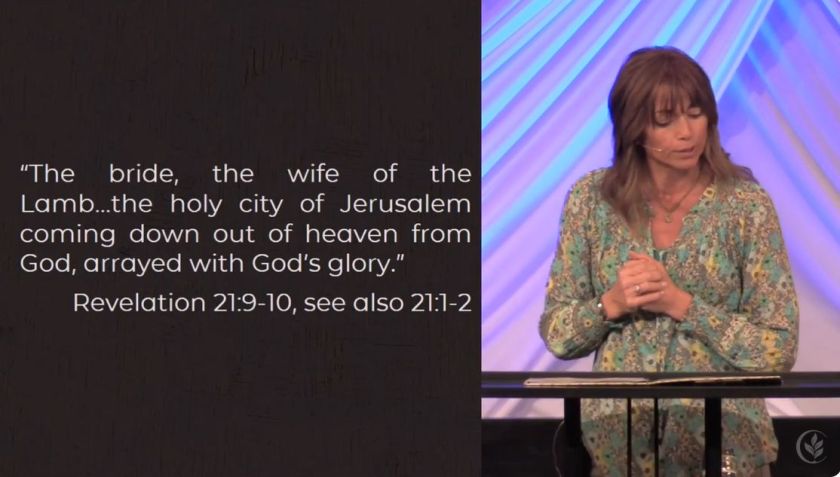
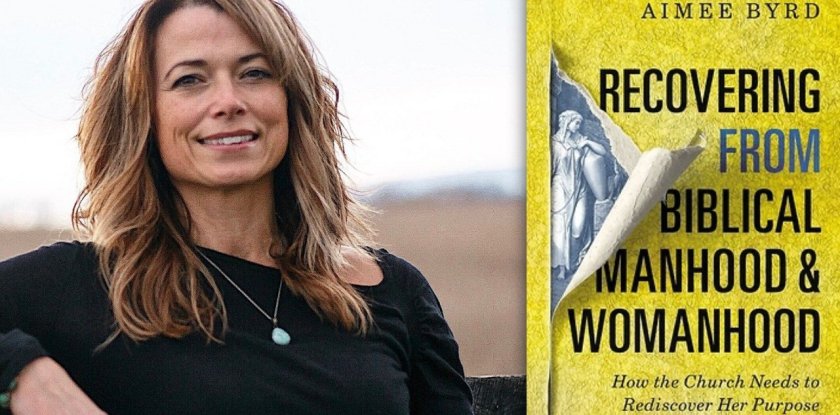
Preacher Aimee Byrd

About the “Cut to the Chase” series: short, bullet point discernment pieces warning about various teachers. In the Cut to the Chase I include links at the end if you care to go to the longer essays.


Aimee Byrd was a member of the Orthodox Presbyterian Church (OPC). She burst onto the scene in 2013 with her book The Housewife Theologian. She was selected to be co-host at the Alliance of Confessing Evangelicals along with intellect Carl Trueman and theologian Todd Pruitt, where she settled for a few years. She wrote more books and was a published essayist and became a sought-after speaker.

But slowly as Aimee began to espouse and proclaim her more feminist stances, alarm was raised about her from various camps in the faith. By 2020 Aimee was ‘gone’. Gone from the complementarian stance she’d once espoused, and openly rejecting biblical gender roles. Let’s cut to the chase-


1. Aimee is a feminist. Feminism is antithetical to the Gospel (1 Timothy 2:12; Titus 2:5). In fact, it’s a curse. (Genesis 3:16)

Dr. Jonathan Master, seminary president and the Alliance Of Confessing Evangelicals’ editorial director publicly asked Aimee some questions about her then-new stance, which were posted after she had refused to answer them privately: Questions for Aimee

Aimee’s public response to Dr. Master: “Peeling Yellow Wallpaper” simply demonstrated her further entrenchment into feminism, a rebellious spirit, and a hardening to correction.

The Council for Biblical Manhood and Womanhood reviewed Aimee’s polemical and startling book containing her newly revealed feminist stance, here. They disliked it strongly.

Statement from the Alliance on the removal of Aimee –https://www.reformation21.org/blog/a-clarification-from-the-alliance


2. Aimee preaches in church to men. This violates 1 Timothy 2:12, and violates the spirit of her gender (many other verses).

In 2022 she preached at Covenant Church in Shepherdstown, WV, part of the Southern Baptist Convention. She also preached at a Presbyterian church called The Crossing, a Church in Columbia, MO. These are sermons during a mixed audience Sunday Service.

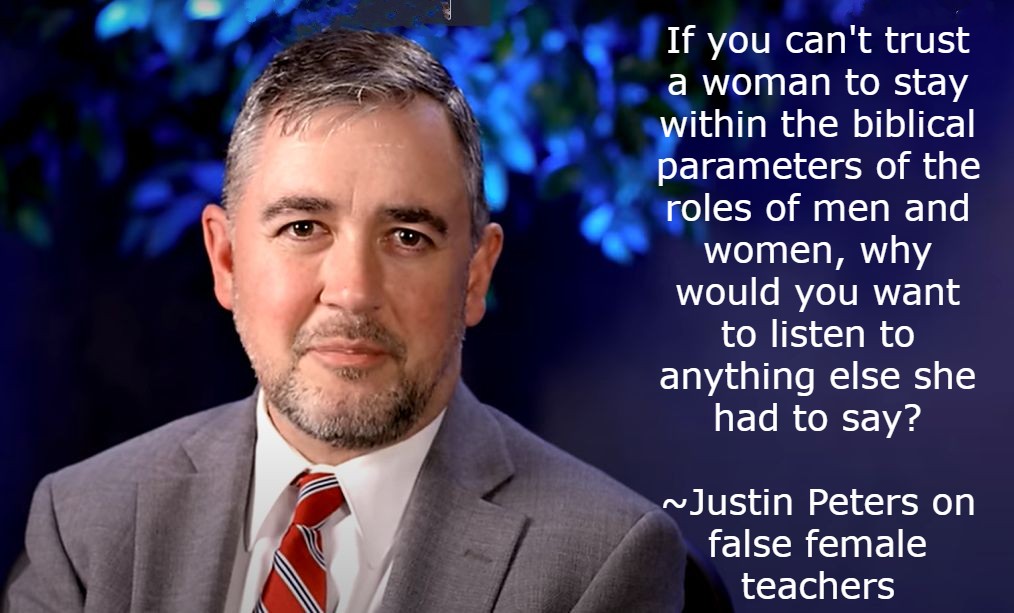
Women are not to preach. To do so despite clear instructions in the Bible shows a blatant disregard for the Jesus they profess to love. “If you love Me, you will keep My commandments” Jesus said in John 14:15. And as Justin Peters said,


3. Aimee is divisive and hardened to correction. This violates Proverbs 15:32, “One who neglects discipline rejects himself, But one who listens to a rebuke acquires understanding.”

In fact, Aimee knew she would be publicly excoriated for her preaching, saying at the opening of her sermon at Covenant Church,

I had to do some, you know, real soul work and prayer work to accept that invitation, not only for my own views on that issue, but just knowing ‘Hey, this is going to be on the internet’ and there’s going to be a public smearing of me after this

And rightly so. But those with a seared conscience believe they are unjustly being smeared rather than being rightly rebuked.

Also Proverbs 1:7
The fear of the LORD is the beginning of knowledge, but fools despise wisdom and discipline.”

Aimee left her denomination rather than submit to its teaching.


4. Aimee ordained herself so that she can officiate weddings.

In an essay on her blog titled “By the Power Vested in Me” Aimee declared her joy in being able to officiate her brother’s wedding after completing a quick course and obtaining a certificate of ordination. She obtained this certificate from American Marriage Ministries, which believes that “All people, regardless of race, gender, or sexual orientation, have the right to marry.”

AMA’s requirements to become an ordained minister are to fill out this form. That’s it.

But, Aimee says, “I have a high regard for the pastorate.” Obviously she does not. She said in her essay that when her brother asked her to officiate his wedding, she wanted to make sure “if I say no, I want it to be for good reason.” So she consulted culture and history. The Bible is not a good enough reason?

Avoid Aimee Byrd. She is false.


Critiques of Aimee Byrd by E Prata

All Cut to the Chase essays here. Discernment on Joyce Meyer, Priscilla Shirer, Beth Moore, David Platt, Jackie Hill Perry, Lori Alexander (The Transformed Wife), Jen Wilkin

Posted in theology

False teachers’ emotional teaching

By Elizabeth Prata

I’ve recently written about the clique of folks who claim in public that the church ‘hurt them’, and I went into a discussion of the difference between emotions and emotionalism. That essay is here.

Many women who teach the Bible on the speaking circuit are false. Not all, of course, but many. Since they are false they have to manufacture a work-around for their lack of illumination of the scriptures. They don’t exegete well (exegete meaning draw the Author’s intended meaning out of the Bible). They either twist the word (2 Peter 3:16), or they eisegete (meaning they put their own ideas into the Bible rather than unearth the one meaning the Author intended). Perhaps they use a cover for their obvious lack of theology. One of these covers frequently used is emotionalism.

Joe Thorn at Ligonier discusses emotionalism. He wrote in his essay Don’t pursue feelings, pursue Christ,

One danger is emotionalism, in which we allow our feelings to interpret our circumstances and form our thoughts about God. This is putting feelings before faith. The other danger is a kind of stoicism, where faith is rooted in theology but void of affection. This tendency removes feelings from faith altogether. While it is true that our emotions should not lead our theology, it is vital to our faith that theology lead to a deep experience of our triune God.

[Confession: I am certainly not perfect. I myself need to work against Stoicism.]

WHEN we commune with God, WHEN we are in prayer with the Spirit, WHEN we are at Jesus throne of grace, THEN our emotions develop into great affection for the Triune God. We do feel emotions such as relief, joy, humility, amazement, awe, proper fear; all the emotions that our study of His attributes will cultivate. But it’s theology first, and then the outflow of that growing knowledge of God is subsequently a growing feeling of affection for who He is. Put succinctly, the more we study Him the more we love Him.

Jonah knew full well who God is, but he was led by his emotions. Anger, resentment, bitterness, xenophobia…when you feel temptation to be led by your emotions at the expense of submission to God’s authority, remember Jonah.

When these false teachers lead by emotion, it creates a dependency on emotions. But emotions are fleeting. Hence the surfing analogy. We want to feel that high again that we felt at the Study/simulcast/event/conference etc. False teacher Rick Warren unwittingly explained the high of emotional learning back in a Baptist Press interview in 1998.

We’re just a church that tries to look for waves, and we ride them. And then we try to do it with balance. Catching the wave means first determining what God is doing… ~Rick Warren.

His quote typifies the flitting of encounter to encounter, a surfing the waves of an adrenaline approach to Christian life rather than persevering obediently, sacrificially, and steadily. Remember, we first discover who God is by reading His word. The article is (tellingly) titled, “Rick Warren: Surfing skills critical to ‘catching waves’ of God’s activity

A church should look at Jesus. Not flit from high wave to high wave, and not surfing up and down based on a humanly interpreted vision of what God is doing.

Emotions give us that adrenaline and then suddenly you’re surfing, trying to catch that high you felt but every time you catch it, it needs to be a little higher than the last time. Why? The Law of Diminishing Returns-

The law of diminishing returns is a principle that states that after a certain point, each additional unit of input results in a smaller increase in output. In other words, you get less and less bang for your buck the more you do something. This can be applied to many areas of life, including business and investing. (Source).

Emotionalism will give you diminishing returns. In God’s economy, you only ever receive more. His is an economy of eternal increase. A false teacher’s economy is only ever one of decrease.

Let’s look at some examples of how false teachers use emotional language to deceive you into that false high.

Aimee Byrd’s Twitter & Threads profile pic

Aimee Byrd wrote recently about her decision to become ordained. She filled out a form, and voila! now she can legally marry people in her home state. Here is her gushing, over-the-top-emotional description about how performing the ceremony for her brother made her feel:

Last weekend I got to experience something that resonated so deeply with my soul. It felt like I got to meet a part of who I am. And in this, I wasn’t only seeing beauty, but participating in the beautiful. … ~Aimee Byrd

I’m hesitant to write about this, because it is so deeply meaningful to me. … ~Aimee Byrd

When I started this Substack, I wanted to write about what is real: what is the lump in my throat right now? ~Aimee Byrd

Aimee is a good writer, if a little fluffy for my taste. I’m not saying we should not write about what we are feeling when we commune with God. I am saying that some female teachers and false preacher women depend on flowery writing based on emotion rather than biblical facts.

In Aimee’s case, she wrote “It felt like…” She said that she mulled this over deeply and concluded, “But this is my brother asking me, and if I say no, I want it to be for good reason.” But her reasoning was based on a deep dive into history and culture, not the Bible. She decided to ordain herself because of how she felt about it [and because, she wrote, ‘the church hurt me’.].

All that combined, she wrote, “The state of Maryland doesn’t qualify what makes one ordained, or what kind of person is ordained, but recognizes ordination in the ministry as a status for the task of legally officiating a wedding.I was comfortable to be appointed for this specific and beautiful ministry.” But God decides, and God trumps Maryland.

I was comfortable.’ Women are not to aspire to the ordained office in order to perform functions before the throne of God. But Aimee was ‘comfortable.’ Her soul resonated. There was a lump in her throat. It’s deeply meaningful. Sure, so that means her rebellion is OK?

Beth Moore has always written emotionally. She is emotionalism personified. She over-states things emotionally, constantly (that’s the key, emotional language is constant) using words like “with all my heart” and “deeply desire”, “in my bones”. Her teachings are saturated with overblown hyperbole and hyper adjectives such as vital, crucial etc. Even her first published study was filled with adjectives that work to evoke emotions and fervency rather than draw out from the Bible the attributes of God. She uses words like “vital” and “crucial” repeatedly. If everything is vital and crucial, then nothing is.

Beth Moore performing her Bible Study, with emotion

The basic test to determine if you’re being taught to be led by your emotions is, a few days after a study, think about what is at the top of your mind most. Did you learn more about God? Or more about the teacher? Do you remember the teacher’s anecdotes and how they made you feel, for about God and how seeing Him through scripture made you feel? Your thoughts and feelings about God stay. The thoughts and feelings about the teacher about the study about how you felt at the time, flee. See what remains. It should be a clearer picture of God.

[Many] falsely suppose that the feelings, which God has implanted in us as natural, proceed only from a defect. Accordingly the perfecting of believers does not depend on their casting off all feelings, but on their yielding to them and controlling them, only for proper reason. John Calvin, Commentary on Acts 20:37.

Posted in theology

The self-delusion is strong with this one (Lori Alexander & others)

By Elizabeth Prata

Lori Alexander is known by her handle The Transformed Wife. Her TwitterX handle is godlywomanhood. She maintains many social media accounts for the express purpose, she says, of teaching women to be keepers at home, as per Titus 2:3-5.

On October 21, 2024, Lori The Transformed Wife, @godlywomanhood wrote-

This is for any of you who think my life is no different than the popular female preachers, influencers, book writers, speakers, and podcasters. I am home full time and always available for my family. I never travel. I’ve never given a speech anywhere. I stopped doing interviews. I donate all the money from my books to a pro-life organization. I just write or do a short video when something comes to mind. I mentor many women privately and on my social media sites in the ways of biblical womanhood as God commands. I stay within the boundary God has given to me to teach in Titus 2:3-5. I am a keeper at home as God commands. 3:06 PM Oct 21, 2024

I am glad she noticed the apparent contradiction of her constant shaming of women who work outside the home compared to her constant work for her ‘ministry’ inside her home. By my count she is on Youtube, Twitter, Facebook, Facebook Private group, Pinterest, TikTok her blog, Instagram, and who know what else. Constantly. These are not dormant platforms. Lori is active. She creates a LOT of content almost every day. She not only works at creating content but manages donations and royalties from her published books, so, she is also working with her finances, too. She is busy.

As I say so often, don’t look at only what these women say, look at what they do. In her defensive posting, Lori unwittingly admits to blogging, authoring, mentoring, youtubing, responding to contacts, interviewing, and managing her finances. Just because she does it at home instead of an office does not negate the fact that she is extremely busy with her work. Anyone seeing the excessive abundance of her output would note the same. She is deluding herself.

I noticed this kind of self-delusion (or outright lie) in an early Beth Moore blog essay. I had read in a 2010 Christianity Today article, where the interviewer of Beth Moore had stated,

“…she insists on maintaining a regular schedule, traveling every other Friday night and coming home the next night. “We walk the dogs together and eat out together all the time and lie on the floor with pillows and watch TV,” Moore says. “My man demanded attention and he got it, and my man demanded a normal home life and he got it.”

No. The maths ain’t mathing. A normal life? Hardly.

I had already noted that year Moore’s heavy travel schedule at the time, her mention of spending 2 weeks secluded in a cabin in Wyoming to write her book, her book tours, her speaking engagements apart from Living Proof, her TV appearances, her IRS tax-return statement that she worked 50 hours per week at her office in Houston. She was busy. What Moore was claiming and what she was actually doing did not match up.

Is she deluding herself? Is she deceiving others? Both.

I noticed the same with Diana Stone. When Diana Stone was writing for She Reads Truth, we read in Diana Stone’s bio that, “You can find her in the mornings with a cup of coffee and her Bible flung open, preparing for the day ahead.” And “With a sweet daughter in tow, Diana clings to God’s Word daily.

It turns out that Mrs. Stone relaxes with the Bible “flung open” … after she dropped her daughter to daycare. At the time of that writing, in 2014, the couple had employed a part time nanny to care for their daughter in their home so Mrs. Stone could work as a freelance writer. After bumping along with several nannies, (likely not a fun time for the children with personnel coming and going) they put their child in daycare so Mrs. Stone could continue to write at home. So yes, she was at home…while a day care worker took care of her kid. What she tells the public and what is actually going on did not match up.

It was the same with so many others such as Priscilla Shirer, Joanna Gaines, Jackie Hill Perry… If a Christian mother chooses a career and also has children, one or the other, or both, will suffer. No matter how they try to spin it.

It is impossible for a woman to claim undivided attention for the children at home AND have an outside the house career, especially when it’s evident by reading their blogs, seeing their speaking schedules, and just having common sense to see their lifestyle. These women on the speaking circuit are either deluding themselves or their audience, or both. But the main problem is the hypocrisy of saying you live godly as a wife and mom but living your career too.

If a woman and her husband decide she needs to work outside the home, there may be good reasons for that to which the outsider is not privy. Sheerah in the Bible was “a builder.” Rachel was a shepherdess. Deborah was a wife but also a Judge. Lydia ran a business of selling purple but also had her own household. There ARE examples of women in the Bible who worked.

But if she is a mother, yes, then her first priority should be the children. John Mark was blessed with a mom and a grandma who raised him in the admonition of the Law. Don’t be fooled by mothers who have young children at home who try to talk the talk about being totally oriented to the home all the while living a different lifestyle away from the home. We aren’t dumb. We see you.

If you have to work, so be it. There may be good reasons. On the flip side, if you’re ashamed of being a stay at home mom, realize it is a magnificent thing. The point is, there is no room for self-deception and no call to deceive others…unless that is the intent.

Posted in prophecy, theology

Why Read Dystopian Fiction?

By Elizabeth Prata

Tim Challies is a reader and a book reviewer. He is the author and promoter of the Annual Christian Reading Challenge, in which I have participated in the past.

I was glad to see this article by by Jon Dykstra linked from Tim Challies’ site. I’d add the eerily prescient 1914 novella from EM Forster, “The Machine Stops“, which predicted, well, pretty much where we are now regarding media, internet, imagination, ideas, social contact and more. Pretty amazing for a hundred-year-old novella.

Here is Dykstra’s essay- Why Is Dystopian Fiction Worth Reading?

Dystopian is a word from Greek meaning ‘bad place’ according to the article. It’s the opposite of Utopian, meaning ‘perfect place’.

Dystopian fiction is a genre that describes people surviving or trying to, after a holocaust of some kind, or a societal collapse, or a nuclear war, and the like. The article speaks of this kind of fiction being worthwhile because it helps us in predictive prophecy of the secular kind, in connecting the dots to see a current credible future threat. The author Dykstra’s point was that this kind of fiction spins a credible threat into scenarios that help us understand where these threats may lead us.

This is a genre well worth exploring, though with care and caution. It’s a big blank canvas that insightful writers can use to paint pictures of grim futures, all in the hopes that they, and we, will ensure such futures never come to be.

Of course, the mightiest and truest prediction of all is what God has said will come, via His word in scripture. Nothing outsmarts, outpaces, outdoes God’s prophecies.

EPrata photo

I enjoy this fiction but had felt mildly guilty about it, as though I needed to be doing something more productive. I’d wonder, ‘Am I a ghoul?’ ‘Why do I find this absorbing?’

Mr Dykstra helped me see my interest in it was to go where my own imagination lacked facility, to ‘see’ a future that is all too real in some cases, and to develop opinions and thoughts to guard against it. EM Forster’s The Machine Stops is a future that is practically already here, as is Stephen King’s The Running Man. Chilling.

The most famous work of dystopian fiction is George Orwell’s 1984, which the article mentions. That work was published in 1949. Another famous work of dystopian fiction is Aldous Huxley’s Brave New World. Other classic dystopian books are PD James’s Children of Men, which discusses the childlessness of all the nations and certain doom as the already born die off with no new births coming up to replace them. In fact, birth rates are ranging from declining to collapsing all over the world right now.

Of course there’s the famous Canadian book The Handmaid’s Tale. Dystopian fiction is good where it helps us see ahead and cope with credible current or near current threats and that book’s twisted version of Christianity isn’t a credible threat.

I mentioned I’ve participated in the Challies’ Christian Reading Challenge, at the “Avid Level” (26 books to read in a year.) I added several others of my own choosing to Challies’ list, making myself a separate genre nook of dystopian books I wanted to read. They included The Running Man, The Machine Stops, and It Can’t Happen Here by Sinclair Lewis about the rise of fascism in the US.

FYI, in Stephen King’s The Running Man (1982)- The end is absolutely chilling, because the final action the main character takes has already come to pass. Remember, in Dykstra’s essay, dystopian fiction that presents credible threats help us formulate our own reactions and imaginations, and that ne came true, for sure.

William Forschen’s book One Second After (2009) depicted the effect upon America from an EMP, (electro-magnetic pulse), and the nation’s societal collapse and resulting high death rate. The author consulted with psychologists, economists, and sociologists to base his fiction on real scenarios those experts stated would most likely happen if we suffered an EMP. It was well written and horrible to think of it occurring, as the Bible hints in some form, it will.

Pat Frank’s book Alas, Babylon (1959)-

-was one of the first apocalyptic novels of the nuclear age and has remained popular more than half century after it was first published, consistently ranking in Amazon.com’s Top 20 Science Fiction Short Stories list. The novel deals with the effects of a nuclear war on the fictional small town of Fort Repose, Florida, which is based upon the actual city of Mount Dora, Florida. The novel’s title is derived from the Book of Revelation: “Alas, alas, that great city Babylon, that mighty city! for in one hour is thy judgment come.”

Nuclear winter wasn’t a very known or understood event back then, so the survival rate of the population in Alas, Babylon, this initial entry into the American dystopian nuclear fiction isn’t realistic, but most of the rest of the book is.

As predictive or as absorbing as dystopian fiction might be for some people, the only true prediction is what the prophetic books of the Bible tell us will happen in the future, in God’s timing.

With the US election mere days away, many on both sides are saying ‘if the other side wins it will be the end of us’… Maybe, maybe not. It might tell us a bit about God’s judgment, though, or it might just tell us that we go on living long after the thrill of living is gone, as John Cougar Mellencamp sang.

People, the Tribulation is unthinkable. But we must think on it, the Lord’s wrath already hangs over the unsaved. Thoughts of the dystopian future and reading it now in His word should should spur us to witness with eagerness and fervor.

I don’t think a steady diet of this kind of material should be on our plates, but books like this can be a legitimate addition to our bookshelves or movie queue, for the reasons stated above. Happy reading…or in this case, unhappy reading.

hammer mural1

Posted in theology

When the church ‘hurts’ you (Get over it!)

By Elizabeth Prata

Photo by Kelly Sikkema on Unsplash

Person: Wah, the church hurt me.
Me: So?
P: Well, I’m HURT!
Me: So?
P: You monster, I’m in pain!
Me: So?
P: I hate the church because it’s full of hateful people like you. I’m leaving.

It hurts to be betrayed by your pastor. I know, it happened to me long ago, twice. It hurts deeply and in a way that other abuses don’t even touch, because they are just of the body, but pastoral or church wounds split the spirit.

At the same time, we cannot indulge the forever ‘hurt’ person in church. There is a point where empathy or compassion or hurt goes too far.

But before we continue, I make the explicit point that this essay is not about ‘shooting the wounded’ as Chuck Girard famously sang in 1983. It’s about learning to regulate our emotions, and it’s about spotting the emotional manipulators who claim the church hurt them, but refuse to either repent or forgive.


In the past, educators included teaching on emotional regulation as part of the normal day. Greg Morse in his essay “Emotions make Terrible Gods, wrote,

Educators in other eras considered the training of their pupils’ sentiments as a chief part of their employ. As opposed to merely making sure they knew their multiplication table and English grammar, education sought to train students to hate what is hateful and love what is lovely. They taught how to discriminate the good from the bad and then respond appropriately.

This society has become an emotional free-for-all where some who express any emotion use that as a justification for their abhorrent or destructive behavior. The emotionally immature or unrestrained emotionalism person expects sympathy or affirmation for their behavior connected to that emotion. Controlling one’s emotions seems like an antiquated or even destructive teaching these days. I assure you it isn’t.

EPrata photo

In fact, we are commanded by God to feel certain things at certain times. Here are just a few examples from Morse, again from his article Emotions Make Terrible Gods:

Does God expect us to train our feelings? It appears that he does. He commands them. God commands obedience “from the heart” (Romans 6:17) — the vessel we often judge as ungovernable. He, unlike the mother, tells us what to fear and what not to fear (Luke 12:4–5); what we must and must not delight in (Philippians 4:4); what we must abhor (Romans 12:9); that we must never be anxious (Philippians 4:6); and how we can and cannot be angry (Ephesians 4:26).

EPrata photo

I’m not talking about suppressing emotions, but for the Christian to be aware of two facts:

  1. Emotions lie
  2. Christians must not act FROM emotions

We DO feel Anger, empathy, fear, joy, sadness, anxiety, right? I also include hurt in the list. Feeling put-upon, wounded, misjudged, all those contribute to the umbrella of ‘hurt’. It is a true thing that people have been hurt by the church.

Steve Nichols at Ligonier, however, explains that there is a difference between emotions and emotionalism.

There is a difference between emotion and emotionalism.

When you get into emotionalism, the barometer for what is true or what is real becomes how I feel about it. So if I feel excited about this, this thing is good. If I don’t feel excited about this, this thing is bad. We can even judge doctrine that way and begin to ask, “How does this make me feel?” or, “How does a biblical book make me feel?” and judge its value to our life and our Christian walk based on that.

Emotions are real and of course God knows this. He knows we are fragile, dumb sheep. The Spirit has inspired many verses about how to handle the wounded.

Galatians 6:1 says Brothers and sisters, even if a person is caught in any wrongdoing, you who are spiritual are to restore such a person in a spirit of gentleness; each one looking to yourself, so that you are not tempted as well.

Of Galatians 6:1 Barnes’ Notes says, “we should be tender while we are firm; forgiving while we set our faces against evil; prayerful while we rebuke; and compassionate when we are compelled to inflict on others the discipline of the church.

EPrata photo

Romans 12:15 says, Rejoice with those who rejoice, and weep with those who weep.

Paul says in 2 Corinthians 2:6-8 of the person who caused sorrow, Sufficient for such a person is this punishment which was imposed by the majority, 7so that on the other hand, you should rather forgive and comfort him, otherwise such a person might be overwhelmed by excessive sorrow. 8Therefore I urge you to reaffirm your love for him.

Church SHOULD be a sanctuary for all who enter, a place of emotional maturity to help the wounded, the sinning, the grieving, the hurt, the joyful, the anxious…but I know that oftentimes it isn’t.

Alternately, there are true churches that are a sanctuary but contain congregants who feel wounded in some way (perhaps they underwent appropriate discipline, or whose husband had a moral failure and the wife feels it wasn’t properly addressed, or any number of feelings of anger, disappointment, or hurt.) In many cases the feelings of hurt the person are not helpful – or even genuine.

It’s a dilemma, this person says the church hurt them and that person says the church hurt them, but one is genuine and one is a manipulator.

Did you know that in between 1 and 2 Corinthians, Paul wrote another, more “severe” letter? That letter is not part of the canon, apparently the Spirit did not wish to preserve that epistle for all time. However we know Paul wrote it and we know why. As RC Sproul said in his essay Paul’s Severe Letter to the Corinthians,

The Apostle tells us in 2 Corinthians 1:23 that he did not come to Corinth because he wanted to spare them. As 1:24–2:4 makes clear, Paul’s unplanned visit to Corinth to deal with problems there after writing 1 Corinthians was quite painful for both the Apostle and the church there. We do not know what happened during that meeting, but it was so difficult that the Apostle did not believe another visit would be fruitful, at least not before there had been some move toward reconciliation. Paul had enacted some kind of church discipline during that “painful visit,” the congregation had not responded well, and hard feelings existed on all sides. Thus, Paul did not return so that he would not exacerbate tensions.

EPrata photo

The Corinthian church was a mess. There were sins, wounds, hurts, bitterness, apathy, unbiblical tolerance, and more. At one point, Paul asked them if they wanted him to come to them with gentleness, or a rod.

What do you desire? That I come to you with a rod, or with love and a spirit of gentleness? (1 Corinthians 4:21).

Here, Paul is demonstrating that a pastor has a diversity of approaches in his handling of truculent congregants. He, or the other leaders, carefully consider which to employ, when. The gentle touch or the rod? Both are appropriate. It is NOT unloving to handle a self-identifying wounded congregant with a rod. Sometimes it’s necessary if they have crossed the boundary into destructive behavior. It is then the behavior, not the hurt, must be addressed.

When a congregant feels that the church hurt them, there is no set timetable for a person to move on from that hurt. Some wounded folks forgive quicker, others take longer. So how do we reconcile dealing with true hurt and false hurt? Or know when it’s been long enough? A few ways.

One is obvious- they refuse even a gentle rebuke, reject correction, refuse even to come to the table to talk about it. In that case it becomes clear they WANT to remain in the hurt mode and not reconcile or heal.

Secondly, we know they have crossed the line from feeling hurt and disappointed, to bitterness and more destructive emotions, when they begin to gossip or slander. If they gossip about their issue that ‘hurt’ them, blaming and shaming others, you know that their heart has become entrenched in an emotion that is not of God, but one that is damaging to themselves, the people around them, and to the church’s reputation.

In a recent case of a leader who was revealed to be an adulterous hypocrite, a woman on Twitter/X had been a former member of that leader’s church. She claimed to have been ‘hurt’ by that church and left it. She never said if she was (rightly) excommunicated or if she was genuinely hurt by bad practices. But she had much to say about the goings at that church on during the scandal. Because she was no longer a member there, the information she posted was second-hand leaks from present members; so, gossip. After reading numerous negative and slanderous tweets of hers, I gently chided her for her slander of the elders, but the admonition fell on deaf ears. She continued to slander because she had been ‘hurt’, feeling justified and righteous to do so. This is wrong.

A smaller category of wounded women are the abuse divas. They’re a smaller category but are louder than any other. They claim to have been sexually harassed or even sexually abused by leadership and have ‘triumphed’ over their wounds by becoming “church sexual abuse survivors.” Others say they are “spiritual abuse survivors”.

Yet, constant obsessing over past wounds is not triumphing over anything, least of all over one’s emotions. Constant harping on what ‘they did to me’ is the opposite of forgiveness and moving on. These women are a clutch of menacing ravens hovering darkly over the church, shrieking their ‘story’ to all who dare to glance even momentarily toward their gloom.

This bunch is easy to spot. They are constantly negative, have nothing good to say about the church, and boast of their departure from it, even gloating in their own deconstruction. They cannot and will not regulate their emotions toward anything healthier or even toward what is commanded.

I understand hurt. Trust me, I understand abuse. I also can detect narcissistic ‘poor me, I’m hurt’ woundedness. I have little tolerance for the latter. Why?

Jesus was rejected by his own people, betrayed, scourged, crucified. Paul was beaten, falsely arrested, rejected. Sinners sin. Sinners populate churches. You’ll get hurt. Life hurts. Why? Sin. It happens.

Peter speaks of not being surprised when the fiery trial comes upon them, as if it was a strange thing. He was speaking of persecution there but why should we be surprised when any trial comes upon us? It would be ordained by God and for our good, even though it may feel horrific at the time. This is why we must put aside feeling blame against the church and trust Jesus.

If a person is in an unsafe situation in the church, of course, she should leave and seek help. Remember, I’m talking about when people claim the CHURCH hurt them, not wounds they bring to the church from prior to salvation or hurts that occur outside the church from their personal life.

Jesus underwent the greatest hurt and betrayal of all time. He triumphed over that evil and all evil so that He could save His own and bring them to healing at His throne. Jesus is the great Healer!

Keep your eyes on Jesus. He loves you and will wipe those tears on the Day. But He must be worshiped no matter how you feel or no matter how you’ve been ‘hurt.’ We have to be undaunted. Blaming ‘religion’ for our hurts is in effect, blaming Jesus! No, no! There is no one more unjustly hurt on this earth than the sinless, holy God-Man who came to save us but was killed by his own ‘religion’, but a religion that He said had been perverted into something evil.

We need to think of God’s definitions of love, goodness, and justice. God’s commands for our emotions. The wisdom of acknowledging our emotions while not succumbing to emotionalism. The church contains sinners and sometimes their sinful behavior may hurt you. But the sweetness of healing at His throne from all hurts, even those foisted upon you from the church, is found in Him.

Isaiah 53:5, But He was pierced for our offenses,
He was crushed for our wrongdoings;
The punishment for our well-being was laid upon Him,
And by His wounds we are healed.

Isaiah 61:1-3; The Spirit of the Lord God is upon me,
Because the Lord anointed me
To bring good news to the humble;
He has sent me to bind up the brokenhearted,
To proclaim release to captives
And freedom to prisoners;
2 To proclaim the favorable year of the Lord
And the day of vengeance of our God;
To comfort all who mourn,
3 To grant those who mourn in Zion,
Giving them a garland instead of ashes,
The oil of gladness instead of mourning,
The cloak of praise instead of a disheartened spirit.
So they will be called oaks of righteousness,
The planting of the Lord, that He may be glorified

Psalm 147:3; He heals the brokenhearted And binds up their wounds.

Further Reading

TruthScript: David Platt and the Respectable Sin of Pastoral Corruption

Desiring God: Emotions Make Terrible Gods: Taking Control of Our Feelings

Ligonier: What do you think about emotional sensationalism in the modern church?

Posted in theology

Keep our creativity going! Read, write, draw

By Elizabeth Prata

Often as a new year approaches, people start thinking about their New Year’s resolutions. Many of those resolutions are vows to take better care of our bodies, by eating well or losing weight or exercising more.

But do we ever resolve to take care of our mind?

Christianity is a religion of the mind. We have the mind of Christ. (1 Corinthians 2:16). The Spirit transforms us by the renewing of our mind. (Romans 12:2). The mind governed by the Spirit is
life and peace, as Romans 8:6 says. Mark reminds us in verse 12:30 that we must ‘Love the Lord your God with all your heart and with all your soul and with all your mind and with all your strength.’

Start looking in the New Testament and the Psalms and Proverbs for the ‘mind’ and you may be surprised at how many times it’s mentioned.

The Internet was commercialized and came into widespread use in the US by 1995 or so, making the generation in their 30s now the first generation to live post-Internet. The rest of us, like me in my 60s, have used some version of the Internet for most of my adult life. I’ve been an Amazon customer since 1997. My final email address was established in 1998 and it has remained the same ever since.

As the Internet grows, our mind diminishes. You might think I am overstating the case, but the Internet, while having many boons and pluses, has served to make our thinking more shallow. 21st century media has pummeled our minds and not in a good way. We listen in sound bites and read in tweet-length script. Yet the two greatest books ever written, the Bible and The Pilgrim’s Progress, are old.

The Bible has a variety of literature within it, many genres, difficult concepts, and is a demanding read. It requires study.

Pilgrims’ Progress by John Bunyan is the single best selling English language book in the world, after the Bible. It was written in 1678 and uses antiquated language. Even if you read a modernized version, it is a book that even still, demands the reader’s attention and requires lengthy thought.

Our minds are being trained away from that kind of reading. The kind of thinking we are commanded to do in the Bible is the opposite, it’s the kind of reading that edifies us. Not to mention reading the ancients and the Puritans are, every day, getting out of reach because they demand attention spans that nearly don’t exist any more.

I myself do not read as much as I’m used to.

I write essays that range from 500 words to 2000 words. I remember the first time on the blog a reader commented “TLDR”. I had to look it up. It stands for ‘Too Long, Didn’t Read.’ I was irked and shocked. 2000 words is only about 4 single spaced pages long.

I’m speaking to myself here, not just you. As I get older and I come home from a busy day of work, all I want to do is make a cup of tea, sit down, watch a comedy, then go to bed. I have to work at keeping the energy up so that I can have a clear mind to absorb Christian classics and other great material.

I’m fairly aghast at myself, because reading didn’t used to be this hard. But now I’m nearing 65, and my mind is balking at difficult material. Reading Moby Dick a few summers ago was hard. I was surprised at how hard. My mind is a terrible thing to waste.

I don’t want to waste it. It’s the mind of Christ.

I feel it’s important to keep our mind active and our creativity up. When we spend time in the creative side of our mind different things happen. Here are a few resources along these lines:

3 Reasons Why You Should Read More Classic Literature in 2019
Why Great Literature, Especially Old Literature, Has Become Essential Medicine In the Age of Social Media

Call me Ishmael.

The famous opening sentence of Moby Dick, so short and provocative, is welcoming and familiar to the 21st century reader, who is accustomed to snappy prose with short sentences and lots of white space. A few sentences later in Melville’s masterpiece we get a sentence that’s more representative of the novel to come. In just a bit I’m going to quote that sentence, and insist that you read it.

My own personal reading challenge was to read these classics:

  • Sense & Sensibility By Jane Austen
  • It Can’t Happen Here by Sinclair Lewis
  • The Running Man Stephen King
  • The Machine Stops, E.M. Forster
  • The Decameron, Boccaccio
  • Heart of Darkness by Joseph Conrad

I did read end up reading Heart of Darkness, Running Man, Can’t Happen Here, and The Machine Stops. I didn’t like Can’t Happen Here and I quit in the middle.

The Classics Spin is an activity from an online book club devoted to the classics. Readers list the top 20 classics they would like to read, sometimes the game is along the lines of a theme (Shakespeare challenge, Really Huge Book challenge) and other times not. They pick a number at random and you read that book. Since the Club is a community, the Admins of the site say,

We know it can be hard to stay on track and enthused about your Spin Book for the whole journey. We plan to provide support and encouragement to all our CC Spinners via twitter, fb, instagram and goodreads. We hope you can join us in cheering everyone on to finish another fabulous classics reading experience!

Four Good Reasons to Read Good Books
Tim Challies lists 4 reasons, here’s one of them-

Identify areas of weakness and read books to strengthen yourself there. This may be weakness of knowledge, weakness of character, or weakness of understanding. If you have too low a view of God, read The Holiness of God by R.C. Sproul. If you are struggling with parenting, read Gospel-Powered Parenting by William Farley. If you struggle with making decisions, read Decisions, Decisions by Dave Swavely. If you don’t know where you are weak, read a book on humility. Whatever your weakness, there is almost definitely a book that answers it specifically and well.

Colin Adams, the Unashamed Workman, goes Challies 16 better and lists 20 good reasons to read good Christian books. Here are a few of them

–You will be forced to cease from incessant activity and think
–You will receive a historical perspective on current problems and spot present day blindspots
–You will have some of your questions answered and confront other questions you hadn’t even thought of
–You will be able to practically apply Paul’s command to think upon “wholesome” things

Do you like Bible journaling, sketching things that Bible reading or Christian classics bring to mind? I’m a visual person too. I see all these magnificently illustrated journals and theologically rich blogs and I get intimidated and when I’m intimidated I quit before I start. So if you’re like me, scared of generating huge or fabulous content, write one sentence or sketch one quick scene. Everyone can do that. Even me! Here are two ‘challenges’ along those lines-

The Sketchbook Challenge is a daily draw where you draw, paint, or sketch one quick scene from your day that stands out to you. I think this is a good way to both practice your skills and keep the creativity going. You can adapt this to a quick sketch of a Bible visual. Whatever helps the brain keep flowing! 

Gretchen Rubin wanted to enhance her writing skills, and all writers know that to be a good writer you need to write every day. But she worked and had kids. Busy! So she developed the one-sentence journal. Gretchen says

Instead, each day, I write one sentence (well, actually, I type on the computer) about what happened that day to me, the Big Man and the girls.

She suggests that you can even do a one-sentence journal on a particular topic, your day at work, your divorce, a catastrophic event. In like manner, you can keep a one-sentence journal of your spiritual reactions or insights as you read the Bible or a Christian classic. By the end of the year you’ll have 365 sentences or around 15-20 pages.

Let this be the year you spent 21 days developing a new habit (some say that is how long it takes, others say that it takes longer, but I stick with the 3 weeks because it’s not as intimidating). Read, write, draw, whatever kind of activity you know enhances your mind is the one.

Let’s train and protect our bodies, but also let’s take care of the mind.

What am I to do? I will pray with my spirit, but I will pray with my mind also; I will sing praise with my spirit, but I will sing with my mind also. (1 Corinthians 14:15).

Posted in theology

Great Cities of the Bible #5: Capernaum

By Elizabeth Prata

Damascus, the first city mentioned in the Bible and the oldest continually lived in city in the world. Babylon, majestic city of Mesopotamia, and from whence comes great evil. Rome, dubbed itself the Eternal City, city of Paul’s jailing end demise, and city that will learn who the REAL eternal city is. Jerusalem, the Holy City, where God placed His name and where He will dwell. All dominant cities of the Bible and all worth a look that my meager blog essays that really cannot do justice to. Great Cities of the Bible series is linked below.

Capernaum: Where was it?

I found this 10-minute video about Capernaum to be moving. It’s well done. https://youtu.be/ifTro5uRaT8?si=ELkGopxu5N-kYI7L

Let’s add another city to the four I’ve mentioned and wrote about. Maybe not as large. Maybe not as well known. But it was the city where Jesus chose to establish most of His ministry, performed miracles, taught in the synagogue, and more.

Capernaum was on the north end of the sea of Galilee. It is about 30 miles from the birth town of Jesus, Nazareth. The city calls itself today “The City of Jesus” and that is not far off.  The Gospel writers refer to it as Jesus’ “own city”. In Matthew 9:1 it reads, Getting into a boat, Jesus crossed over the Sea of Galilee and came to His own city. Jesus settled in Capernaum, says Matthew 4:13, after He left Nazareth.

Unlike Nazareth which was a backwater, Capernaum was bustling. It was a Roman Tax Center (hence Levi/Matthew’s life there.) The city was the center of fishing and trade. The city of Magdala 6 miles down the coast was in fact much larger than Capernaum, but critically, Capernaum connected to Damascus by road. A milestone found by excavators reads The Emperor Caesar of the divine … showing that Rome considered Capernaum to be a strategic post.

Capernaum was an important fishing town.

When Capernaum is mentioned in the New Testament, it is often in conjunction with the Sea of Galilee (Matt 4:13–22; 8:5–24, Mark 1:16–21; John 6:17, 24).

Though Peter and his brother Andrew were originally from Bethsaida, they were seasoned fishermen by the time Jesus came. The brothers had lived in Capernaum a long time. It is also likely that James and John who were also fishermen, lived in Capernaum also. And we know that Matthew was living there, since he worked the tax post for Rome.

Life in Capernaum

Though there were always tensions between Gentiles and Jews, tensions were much less in Capernaum. It seems that the two groups lived more harmoniously than elsewhere. We see that the centurion highly regarded his slave, but the slave was ill and about to die. The Centurion sent some Jewish elders to Jesus asking them to ask Jesus to heal his slave. The elders did so, approaching Jesus and saying the centurion is ‘worthy’.

When they came to Jesus, they strongly urged Him, saying, “He is worthy for You to grant this to him; for he loves our nation, and it was he who built us our synagogue.” (Luke 7:4-5)

Photo of synagogue in Capernaum. From Google street view, photo by Jess Alejo

Jesus taught in and around Capernaum for a period of his public ministry. He taught many times in the synagogue. He proclaimed Himself to be “the living bread that came down from heaven” there.(John 6:26–59)

Capernaum in the Gospels: source Logos 9.

Sadly, though Capernaum was Jesus ‘own city’, and despite the teaching, preaching, ministering and miracles done there, along with Chorazin and Bethsaida, Jesus cursed Capernaum.

And you, Capernaum, will not be exalted to heaven, will you? You will be brought down to Hades! For if the miracles that occurred in you had occurred in Sodom, it would have remained to this day. (Matthew 11:23).

Such is the fate of all who reject the Saving King.

Further Reading

Great Cities of the Bible #1: Damascus
Great Cities of the Bible #2: Babylon
Great Cities of the Bible #3: Rome
Great Cities of the Bible #4: Jerusalem
Great Cities of the Bible #5: Capernaum

What is the significance of Capernaum in the Bible?

Why Was Capernaum Such an Important City in the Bible?

Posted in theology

Of toxic empathy, false zeal, and how satan’s demons masquerade to fool you

By Elizabeth Prata

Allie Beth Stuckey published a book that’s out this week, called Toxic Empathy: How Progressives Exploit Christian Compassion. The book is making waves and causing a hearty discussion on social media.

That’s good. Stuckey explores the concepts of the current cultural mantras, “love is love”, “trans women are women”, “abortion is health care”, “social justice is justice”, and pointedly, that empathy is not always empathy. Love, justice, empathy are good words, but they can and are appropriated by bad people who use those words to manipulate the people around them, especially Christians. Stuckey wrote in her introduction,

But empathy alone is a terrible guide. It may be part of what inspires us to do good, but it’s just an emotion and, like all emotions, is highly susceptible to manipulation. That’s exactly what’s happening today. Empathy has been hijacked for the purpose of conforming well-intentioned people to particular political agendas. Specifically, it’s been co-opted by the progressive wing of American society to convince people that the progressive position is exclusively the one of kindness and morality. I call it toxic empathy. Source: page xii)

Of course the culture will push back on a Christian re-redefining the words that the progressives have appropriated and redefined. Here we see one reaction-

Mason Mennenga @masonmennenga wrote on Twitter, “if you think empathy is toxic then you’re going to hate this guy named jesus christ“.

According to our own understanding of the word ’empathy’, of course the guy is right. But then again, this is a situation that calls for thought, not knee-jerk reactions such as “Yeah!” then press ‘like’.

The ever wise Ron Henzel @ronhenzel replied to Mennenga, (≠ means ‘does not equal’):

“toxic substance” ≠ “all substances are toxic”
“toxic waste” ≠ “all waste is toxic”
“toxic relationships” ≠ “all relationships are toxic”
“toxic empathy” ≠ “all empathy is toxic

We must, MUST think things through. Christians are a thinking people, (Philippians 4:8). As Stuckey said, emotions can be manipulated.

Emotions are a part of life. But I bring this to your attention…what were the first emotions seen in the Bible? Shame, guilt, blame. Genesis 3. Satan manipulated Eve’s curiosity into a temptation and we know what happened from there.

Of ‘toxic empathy’, the American writer Flannery O’Connor said,

“If other ages felt less, they saw more, even though they saw with the blind, prophetical, unsentimental eye of faith. In the absence of this faith now, we govern by tenderness. It is a tenderness which, long cut off from the person of Christ, is wrapped in theory. When tenderness is detached from the source of tenderness, its logical outcome is terror. It ends in forced-labor camps and in the fumes of the gas chamber.”

AI explains the quote-

This quote, by Flannery O’Connor, argues that modern society, lacking a strong religious faith, governs itself through a detached “tenderness” that, without the grounding of Christ, ultimately leads to horrific consequences like violence and oppression, symbolized by the gas chambers of concentration camps.

And haven’t we seen that? “Love thy neighbor” was the covid-flu mantra pressuring the populace to ingest untested or unwieldy vaccinations, to close down society against common sense, and to become isolated robots. What happened was the elderly were left to die alone and society’s children were impacted negatively for a generation to come. That’s just one example of how progressives used toxic empathy against the people in their society.

Moving away from toxic empathy to examining toxic zeal, Martyn Lloyd-Jones preached a 2 part series on true zeal versus false zeal.

There IS such a thing as false zeal. False Christians who seem so zealous for God are actually not zealous for God. It’s a manufactured zeal cloaking their zeal for themselves, or for satan. See this verse-

Brothers, my heart’s desire and my prayer to God for them is for their salvation. For I testify about them that they have a zeal for God, but not according to knowledge. (Romans 10:1-2).

By this verse we see there is such a thing as a zeal that is not of God. There can be zeal, or fervor, or energy around religious things, but not according to what we know from the Bible. AKA knowledge.

Zeal: great energy or enthusiasm in pursuit of a cause or an objective. Synonyms: passion, fervor, enthusiasm.

Photo by Luan Cabral on Unsplash

They went across the world to make one proselyte, but wound up making him twice the sons of hell they were. (Matthew 23:15). That verse is the example of zeal without knowledge. You can be passionate, you can be busy making disciples, but a false zeal will make disciples who miss the mark completely and will wind up in hell as a son of hell. Zeal, no knowledge.

Beth Moore has been consistently described through the years as “energetic”, “charismatic”, “passionate”. She puts out an energy as zealous for God. But because we know she is a false teacher, her zeal is without knowledge. She is full of emotion but lacks the tether to the Rock via faith.

She was recently interviewed by Ed Stetzer at Church Leaders. He ended by asking Moore how she prepares for a lesson. I was struck by her answer.

Question: Can you encourage teachers and preachers, especially in this season when it is hard to speak truth and there is a lot of destructive forces that are trying to take down teachers and preachers?

Answer:
“Keep asking the Lord to give you fire in your bones, to teach and preach and communicate the Scriptures so that you can’t keep it to yourself. Ask him for it when it wanes, and it’s going to wane…Nobody just keeps that naturally on their own.

It’s love for scripture, love for Jesus, that drives the Christian to search the scriptures and then the scriptures fire up that proper zeal.

Is My word not like fire?” declares the LORD, “and like a hammer which shatters a rock?” (Jeremiah 23:29).

You get a ‘fire in the bones’ when you open up the scriptures!

And they said one to another, Did not our heart burn within us, while he talked with us by the way, and while he opened to us the scriptures?(Luke 24:32).

But Moore said it is important that “we’re not just going to the scriptures to prepare a lesson.

To be fair, she was talking of the teacher having a right relationship with Jesus as one prepares the lesson. I can intuit that she means not apathetic, in prayerful humility, regular church goer, etc But she didn’t say those things. She just muddily talked of the overflow (whatever that means). Consulting the scriptures is primary. But for the false zealer, it’s secondary. Emotions tops the list.

I was struck by what she said and what she did NOT say. Any thinking Christian must think of both- what is said and what is not said. Moore did not say it was crucial for the leader to pray for perseverance in staying in right doctrine. To ask for moral righteousness. Begging to rightly divide the scriptures. Her reply focused on emotion. ‘Fire in the bones’ (whatever that means) was most important to her because, as we know, she is driven by emotion. Zeal misapplied is false. Zeal untethered from the Rock will lead you nowhere good.

False teachers appear to be doing a religious effort, they look like they are on the right track, and part of that appearance is because of their fervent energy.

The Bible says that satan and his demons masquerade as angels of light. That means behavior, outward appearance. The thinking Christian must look deeper.

Do not fall for toxic empathy. Do not mistake toxic zeal for righteous fervor. Above, all, THINK!

Lloyd-Jones’ sermon can be heard here, for free: True Zeal and False Zeal: A Sermon on Romans 10:1-2. Or on Youtube with closed captions (which might help due to his accent).

Further Reading

Real Zeal vs. False Zeal part 1

Real Zeal vs. False zeal part 2

Here is a good article on turning information into knowledge by Rick Holland.

Here in this article What do you think about emotional sensationalism in the modern church? Stephen Nichols of Ligonier says there are valid emotions, but “especially in the American church, we seem to be very susceptible to this. There is a difference between emotion and emotionalism.”