Now one of the Pharisees was requesting Him to eat with him, and He entered the Pharisee’s house and reclined at the table. And there was a woman in the city who was a sinner; and when she learned that He was reclining at the table in the Pharisee’s house, she brought an alabaster vial of perfume, and standing behind Him at His feet, weeping, she began to wet His feet with her tears, and she wiped them with the hair of her head, and began kissing His feet and anointing them with the perfume. Now when the Pharisee who had invited Him saw this, he said to himself, “If this man were a prophet He would know who and what sort of person this woman is who is touching Him, that she is a sinner!” (Luke 7:36-39).
In this scene we observe a few things as it gets going. First, the Pharisee had no personal interest in Jesus. None of them did (except perhaps Nicodemus). They thought him a blasphemer. No Pharisee would invite a blasphemer to his home unless he wanted to trap him and try and gain evidence to convict him. We can see this exhibited in the Pharisees’ behavior later as Jesus remarked that he had not given Jesus even the most basic courtesy as host, Jesus’ feet weren’t washed, he was not greeted with the customary kiss, nor was Jesus’ head anointed. The Pharisee had not extended minimally polite host duties toward Jesus.
Secondly, in the culture of that time, it was common for Pharisees and other town dignitaries to invite notable people to their home for a meal. They would usually leave the doors open so that interested bystanders could listen to the conversation, too. Since this is a Pharisee’s home and we know they like the chief seats and places of honor, and to be seen and revered (Matthew 23:6-7), this host Pharisee certainly would have left the doors and windows open to be seen and heard as he no doubt thought he would defeat Jesus in conversation and come out on top.
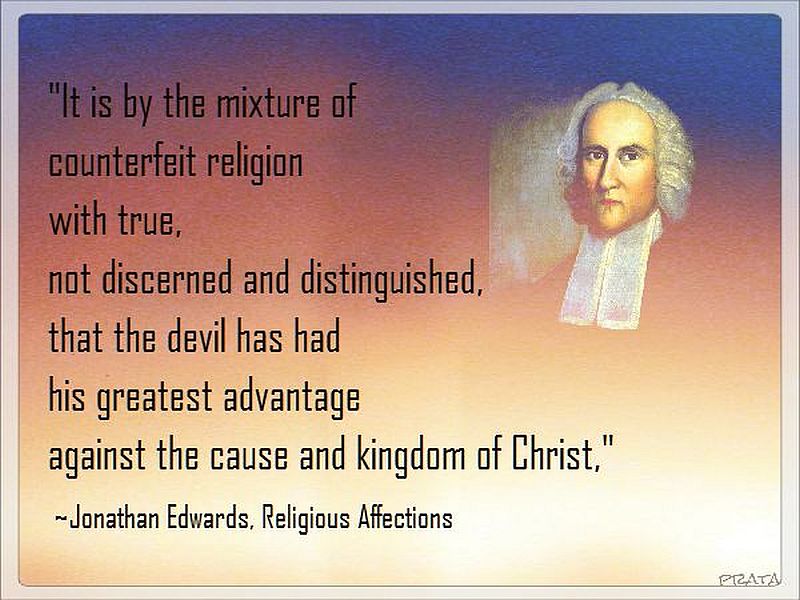
There are believers who are false. That is, they are not saved. There are two classes of these non-believer believers: those who know they’re not saved but have come in to secretly spy out the church doings in order to purposely corrupt the true believers (Galatians 2:4). And there are non-believing believers who don’t know they’re not saved. They think they are, but they’re not. They will be surprised on judgment day. (Matthew 7:21).
Now when evening came, Jesus was reclining at the table with the twelve. And as they were eating, He said, “Truly I say to you that one of you will betray Me.” Being deeply grieved, they began saying to Him, each one: “Surely it is not I, Lord?” (Matthew 26:22)
New International Version: They were very sad and began to say to him one after the other, “Surely you don’t mean me, Lord?”
New Living Translation: Greatly distressed, each one asked in turn, “Am I the one, Lord?”
English Standard Version: And they were very sorrowful and began to say to him one after another, “Is it I, Lord?”
The “Is it I, Lord” over and over from each of the disciples is poignant. They were sorrowful to think that the Lord of all, the man they had left their lives for, submitted to, followed, and acknowledged as Supreme, was going to be betrayed by one of their own! Who could DO such a thing?
Even more poignant though is their wonderment as who it might be. They knew enough to know that their hearts were deceitful, and that they indeed had a potential for such a dastardly trick. They wondered if it was themselves.
Here is the point: The disciples believed Jesus before they would believe themselves. They trusted Jesus’s words more than their own hearts.
This is as it should be.
Matthew Henry said:
They were apt to suspect themselves; Lord, is it I? Though they were not conscious to themselves of any inclination that way (no such thought had ever entered into their mind), yet they feared the worst, and asked Him who knows us better than we know ourselves, Lord, is it I? Note, It well becomes the disciples of Christ always to be jealous over themselves with a godly jealousy, especially in trying times. We know not how strongly we may be tempted, nor how far God may leave us to ourselves, and therefore have reason, not to be high-minded, but fear. It is observable that our Lord Jesus, just before he instituted the Lord’s supper, put his disciples upon this trial and suspicion of themselves, to teach us to examine and judge ourselves...
Henry, M. (1994). Matthew Henry’s commentary on the whole Bible: complete and unabridged in one volume (p. 1754). Peabody: Hendrickson.
Today we have incessant Disney movies where the hero or more usually the heroine, succeeds because she “followed her heart” or she “listened to her own truth” or she “became true to who she is.”
The heart is what makes us, us. It’s deceitfully wicked, says Jeremiah 17:9. The heart, or the inner person, contaminates our entire life and our character and from it springs all manner of unrighteous deeds and thoughts constantly (Genesis 6:5). Hence the heart must be changed, or regenerated, and man himself cannot do that. Following one’s heart or listening to one’s own heart only leads one in a circle, ever downward. The disciples were aware enough to know not to look inward and settle the matter with their own conscience, saying to one’s self- ‘Of course it cannot be I.’ Indeed, just a few hours later, Peter denied Jesus.
We must trust the word of God more than our own thoughts, motivations, ideas. Even with the Spirit in us, our inner man still lurks. We must slay him, appealing to the Spirit for help in that. They asked “Is it I, Lord?” but the answer of course is, ‘It could be any one of you. But it is in fact Judas.’
We need to stay in the word so that He will transform our mind (heart/conscience/inner man) to one of likeness to Jesus. And who wouldn’t want to be more like the most perfect, compassionate, righteous, loving, just person in the universe?
If you ask yourself “Is it I, Lord?” you know the answer would be yes without Him, and even with Him, it could be, for we are able to do just about any unrighteous deed. His deed, to hang on the cross as payment for our sins, absorbing all God’s wrath for them, dying, and rising again, makes it possible for us to say ‘It could be I, but not today, Lord. Not today, by grace of the Spirit’. James Smith said in his essay on Grace Gems:
Brethren, we need the Holy Spirit, as the Spirit of grace–to make us gracious and graceful Christians. Without the Spirit of grace . . . we cannot live up to our profession; we cannot copy the example of our beloved Master; we cannot keep His commandments; we cannot love one another as He has loved us; we cannot sympathize with lost sinners as we should; we cannot keep God’s glory in view in all that we do; we cannot walk in high and holy fellowship with God; we cannot meet death with peace and joy!
Let us look up, therefore, to our heavenly Father, let us plead his precious promises, let us go in the name of the Lord Jesus, and let us entreat him to give us more of “the Spirit of grace.”
The Last Supper. Leonardo da Vinci. da Vinci has depicted the consternation that occurred among the Twelve Apostles when Jesus announced that one of them would betray him. Wikipedia
But as for me, brothers and sisters, if I still preach circumcision, why am I still persecuted? Then the stumbling block of the cross has been eliminated. (Galatians 5:11)
For the preaching of the cross is to them that perish foolishness; but unto us which are saved it is the power of God. (1 Corinthians 1:18)
Some translations of the Galatians 5 verse say the cross is an ‘offense’.
We understand that point, that the cross is an offense. Likely because we have heard sermons (especially on Easter) that the cross was a horrible offense, it was disgraceful, punitive in the extreme, etc. Most likely we’d have heard sermons or read essays about how the flesh of Jesus was tortured, scourged, and how He bled.
But I don’t think we realize HOW MUCH of an offense the cross was to first century Romans, Jews, and others.
It’s summer. You go out for a walk. You look down at the sidewalk and see a little dried up string of a worm. I know you’ve see those. The worm tried to make it across the expanse, and got too hot and fried before he made it to the other side.
If a worm had a brain maybe he was thinking “Ahhh this grass feels so good. Oh no, what’s this? Concrete. I’ve been warned about how dangerous concrete is. Hmmm, it looks dry and hot, but it doesn’t look too wide, I think I can make it!” and he launches across wiggling his way over the fiery hot ground. But with every wiggle he loses strength. It’s taking longer than he thought, he’s lost his energy. He slows down. He takes a rest, just for a minute. Panting. The burning hot cement overtakes him and he dries up in a final gasp.
A few days later it rained. The worm’s brother wiggles in the dirt underground and emerges on the surface of the grass. It’s cool and refreshing. There are floods of puddles everywhere. The worm makes his way across the lawn and comes to the concrete. He thinks, “Hmm, I’ve been warned about this. But look, there’s an inch of water across the whole thing. I can stay hydrated and I can make it!” And he launches across and skims along on the water and makes it to the other side.
Be the second worm.
I am the vine, you are the branches; the one who remains in Me, and I in him bears much fruit, for apart from Me you can do nothing. (John 15:5).
When we try to do hard things, (or anything) in our own strength, we will dry up. The Holy Spirit gives us strength, keeps us refreshed. It’s the Holy Spirit who keeps us hydrated, so to speak. He provides the living water upon which we go about and do the things we need to do in Christ.
Staying away from reading the Bible, failing to pray, isolating yourself from church life (Have you gone back to church AND fully immersed yourself in your fellow Christians’ lives?) will dry you up faster than a worm on the sidewalk on a July day. We are totally dependent on Jesus for all that we do. Barnes’ Notes says of John 15:5-
The expression "without me" denotes the same as separate from me. As the branches, if separated from the parent stock, could produce no fruit, but would immediately wither and die, so Christians, if separate from Christ, could do nothing. The expression is one, therefore, strongly implying dependence. The Son of God was the original source of life, John 1:4. He also, by his work as Mediator, gives life to the world John 6:33, and it is by the same grace and agency that it is continued in the Christian. We see hence:
1. that to him is due all the praise for all the good works the Christian performs. 2. that they will perform good works just in proportion as they feel their dependence on him and look to him. And, 3. that the reason why others fail of being holy is because they are unwilling to look to him, and seek grace and strength from him who alone is able to give it.
Whenever you’re walking around this summer and see an unfortunate little dehydrated worm, think of the word “dependence”. In Matthew Henry’s Commentary, he said,
Note, It is the great concern of all Christ’s disciples constantly to keep up a dependence upon Christ and communion with him, habitually to adhere to him, and actually to derive supplies from him. Matthew Henry’s commentary on the whole Bible: complete and unabridged in one volume (p. 2018).
We don’t like to be the second worm, dependent and helpless without Christ. We like to think we can do this or that in our own strength. And maybe we can fool ourselves for a while, doing small things and enjoying their success. So, emboldened, we sally forth to do more, INdependent of Jesus.
But eventually, we will dry up, and spectacularly so. We need Jesus for the giving of life and grace. It is He that gives holiness and fruitfulness. The Holy Spirit bestows support and strength.
When we’re halfway across the hard thing and we realize we are drying up and out of strength, we can always pray in repentance for our foolishness. He will flood us with His refreshing, living water again and again, sustaining us when we ask for this good gift from the Father. He will supply us with the means, strength, energy, and will to do all the things, even the hard things. Especially the hard things. We cannot do them apart from Him. Abide in Jesus.
Charles Spurgeon was a great preacher. In his sermon What are the Clouds? He asks timeless questions. He asks the questions we ask today, when there are disasters, wars, tragedies. Why did my baby die? What did that war accomplish? Why was there a terrible hurricane?
Here Spurgeon speaks of mysterious Providence as he did so often. Providence is the outworking of the plan God has in His mind that He causes to happen and all things that He prevents from happening. It’s the working out of His will in the world. We might be but a microbe in the grand plan and cannot see all that He is doing nor know why. But we still ask, Why? Where is the good in this?
If you collapsed and were unresponsive, but woke only long enough to get two words out of your mouth to your ambulance driver, what would they be?
In December 2019, Pastor Tom Ascol was ministering to his congregation when he suddenly collapsed. He lay unresponsive on the floor. Some people were crying, most were praying. One was singing.
I was asked for a review or a critique of a July 23, 2021 interview between Allen Parr of The Beat, and Priscilla Shirer, a well-known speaker and teacher and author on the Christian ministry circuit. This is that review. I listened to the first 30 minutes of the 58-minute interview.
Before I was saved, I went to Italy. One of those times I visited the Colosseum. I wrote about that visit here. For a short while immediately after I was saved, in reading the passages in Revelation and Peter and Isaiah where the earth will be completely deconstructed and remade, I was sad that all the pretty things would be swept away too. All the “great art”, all the “monuments” like the Colosseum or Pyramids. All the castles and mansions and bridges and things tourists go to see. Awww, I thought.
EPrata photo. Windsor Castle
But of course all those were made by sinful man’s hands and many of them, particularly in art, are odes to false gods. (Botticelli’s Primavera for example). As I matured I began to see man’s works for what they were, pretty, sure, awe-inspiring, yes, but ultimately symbols of debauchery against a holy God amid our history across human epochs. The Colosseum will fall. Now or later, it is guaranteed to be swept away in the calamity of judgment imminently bearing down on us. Let’s start seeing these cracked and tottering monuments of rebellion for what they are- and get used to thinking about the glories ahead made by Jesus’s hands. (John 14:3).
What Jesus has built for us is a body that shall never perish. A universal body of believers who eternally will worship Him in praise and sing, myself included. He has prepared a place for us to be with Him always. He will share with us a new heavens and a new earth whose riches and beauty stunned Isaiah into woeful silence.
Praise God for his coming promises to be fulfilled.
For the wrath of God is revealed from heaven against all ungodliness and unrighteousness of men who suppress the truth in unrighteousness, because that which is known about God is evident within them; for God made it evident to them. (Romans 1:18-19).
What did they suppress, exactly? And where? Or how?
They, meaning unbelievers, deny in their minds that there is a God. They suppress that He made everything in creation. They hate thinking of the fact that He made them, which would mean they are accountable to Him at judgment for their words, their deeds, their lives. They squash their conscience when they do evil.




 the-end-time.org