Posted in Basilides, leonidus, Sunday martyr moment, victor

Sunday Martyr Moment: Victor, Leonidus, Basilides

Foxe’s Book of Martyrs. According to this summary from Christian Book Summaries,

Writing in the mid-1500s, John Foxe was living in the midst of intense religious persecution at the hands of the dominant Roman Catholic Church. In graphic detail, he offers accounts of Christians being martyred for their belief in Jesus Christ, describing how God gave them extraordinary courage and stamina to endure unthinkable torture.

From the same link, the book’s purpose was fourfold:

  • Showcase the courage of true believers who have willingly taken a stand for Jesus Christ throughout the ages, even if it meant death,
  • Demonstrate the grace of God in the lives of those martyred for their faith,
  • Expose the ruthlessness of religious and political leaders as they sought to suppress those with differing beliefs,
  • Celebrate the courage of those who risked their lives to translate the Bible into the common language of the people.

Text from Foxe’s Book of Martyrs

The Fifth Persecution, Commencing with Severus, A.D. 192

For a short period, Severus was favorable toward Christians, because it was said that he recovered from a severe illness after being ministered to by a Christian. It wasn’t long though, before the full fury and prejudice of Rome’s citizens prevailed and obsolete laws were revived and used against the And once again, they were blamed and punished for every natural misfortune that occurred. A.D. 192.

But, though persecuting malice raged, the Gospel still shone with resplendent brightness. Firm as an impregnable rock, withstood the attacks of its boisterous enemies with success. The Lord added to His body throughout the Roman Empire. Tertullian, the Carthaginian who converted to Christianity about 193 AD, informs us that if the Christians had collectively withdrawn themselves from the Roman territories, the empire would have been nearly empty.

During this persecution, Victor, bishop of Rome, was martyred in 201 AD. Leonidus, father of Origen, the Greek Christian philosopher known for his interpretations of the Old Testament, was beheaded. Many of Origen’s hearers also suffered martyrdom: particularly two brothers, named Plutarchus and Serenus; another Serenus, Heron, and Heraclides, were beheaded. Rhais had boiled pitch poured upon her head, and was then burnt, as was Marcella her mother. Potainiena, the sister of Rhais, was executed in the same manner as Rhais had been; but Basilides, an officer belonging to the army, and ordered to attend her execution, became her convert.

Basilides was later required to swear an oath to Roman idols, and said he could not, as he was a Christian. At first those who heard him could not believe what they had heard, but when he repeated it, he was dragged before a judge, condemned and quickly executed.

~~~~~~~~~~~~~~~~~~~~~~~~~~~~~~~~~~

What an amazing God we have! When one genuinely converts, He places the Holy Spirit in us to help us in all our Christian life- in prayer, in study, in resisting sin, and in proclaiming Him. Basilides was firm in his convictions even in the face of death. This kind of clinging to the faith can only be done under the influence and strength of the Holy Spirit, Whom we give all due praise.

Just as firmly, the evil spirit that influences the world, satan, wants to stamp out all occurrences of such genuine faith as fast as he can. Do not think that satan ignores you. No one is too lowly or too marginal for satan to know about. He had his eye on the lowly officer Basilides in the one corner of the Roman Empire, and when he converted incited the people and the court officers to dispatch Basilides quickly. In Luke 4:13 it says “And when the devil had ended every temptation, he departed from him until an opportune time.” He never quits, that old beast! Stamp out the light! cries satan, never understanding that the Light is eternal.

~~~~~~~~~~~~~~~~~~~~~~~~~~~~~~~~~~

Father, we thank You that the light of Jesus burns in us forever. Foxe wrote that even though malice tried to reign, Your gospel shone with resplendent brightness! Let our light shine so brightly that the devil mus shield his eyes when we pass by, and let it penetrate even the darkest heart filled with malice against You. Amen
Posted in justin, martyr, Sunday martyr moment

Sunday Martyr Moment: Justin Martyr, Felicitatis, others

Foxe’s Book of Martyrs. According to this summary from Christian Book Summaries,

Writing in the mid-1500s, John Foxe was living in the midst of intense religious persecution at the hands of the dominant Roman Catholic Church. In graphic detail, he offers accounts of Christians being martyred for their belief in Jesus Christ, describing how God gave them extraordinary courage and stamina to endure unthinkable torture.

From the same link, the book’s purpose was fourfold:

  • Showcase the courage of true believers who have willingly taken a stand for Jesus Christ throughout the ages, even if it meant death,
  • Demonstrate the grace of God in the lives of those martyred for their faith,
  • Expose the ruthlessness of religious and political leaders as they sought to suppress those with differing beliefs,
  • Celebrate the courage of those who risked their lives to translate the Bible into the common language of the people.

Text from Foxe’s Book of Martyrs:

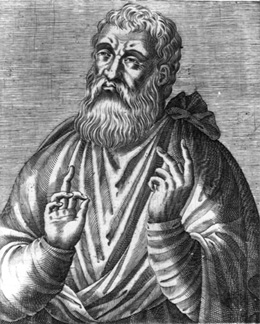
Justin Martyr. Wikipedia

The cruelties against Christians under Marcus Aurelius were so inhuman that many of those who watched them shuddered with horror, and were astonished at the courage of the sufferers. Some of the martyrs had their feet crushed in presses, and were then forced to walk over thorns, nails, sharp shells, and other pointed objects. Others were whipped until their sinews and veins were exposed. Then after suffering the most excruciating tortures that could be devised they were killed in terrible ways. Yet few turned from Christ or begged their torturer to lessen their pain.

Metrodorus, a minister, who preached boldly, and Pionius, who made some excellent apologies for the Christian faith, were likewise burnt. Carpus and Papilus, two worthy Christians, and Agatonica, a pious woman, suffered martyrdom at Pergamopolis, in Asia.

Felicitatis, an illustrious Roman lady, of a considerable family, and the most shining virtues, was a devout Christian. She had seven sons, whom she had educated with the most exemplary piety. All of them were martyred.

Januarius, the eldest son of Felicitatus, was scourged, and pressed to death with weights; Felix and Philip, the two next had their brains dashed out with clubs; Silvanus, the fourth, was murdered by being thrown from a precipice; and the three younger sons, Alexander, Vitalis, and Martial, were beheaded. The mother was beheaded with the same sword as the three latter.

Justin, the celebrated philosopher, fell a martyr in this persecution. He was a native of Neapolis, in Samaria, and was born A.D. 103. Justin was a great lover of truth, and a universal scholar; he investigated the Stoic and Peripatetic philosophy, and attempted the Pythagorean; but the behavior of our of its professors disgusting him, he applied himself to the Platonic, in which he took great delight. About the year 133, when he was thirty years of age, he became a convert to Christianity, and then, for the first time, perceived the real nature of truth.

He wrote an elegant epistle to the Gentiles, and employed his talents in convincing the Jews of the truth of the Christian rites; spending a great deal of time in travelling, until he took up his abode in Rome, and fixed his habitation upon the Viminal mount.

He kept a public school, taught many who afterward became great men, and wrote a treatise to confuse heresies of all kinds. As the pagans began to treat the Christians with great severity, Justin wrote his first apology in their favor. Justin’s’ arguments overpowered Crescens and so disturbed him that he resolved to destroy Justin. This piece displays great learning and genius, and occasioned the emperor to publish a decree in favor of the Christians.

I fell in love with the prophets and these men who had loved Christ; I reflected on all their words and found that this philosophy alone was true and profitable. ~Justin Martyr
Soon after, he entered into frequent contests with Crescens, a person of a vicious life and conversation, but a celebrated cynic philosopher. Justin’s’ arguments overpowered Crescens and so disturbed him that he resolved to destroy Justin. The second defense that Justin write on behalf of the Christians gave Crescens the opportunity he needed. He convinced the emperor that Justin was dangerous to him whereupon Justin and six followers were arrested and ordered to sacrifice to pagan idols. When they refused, they were scourged and beheaded.

~~~~~~~~~~~~~~~~~~~~~~~~

Lord, we know that the unregenerate heart and unsanctified mind can devise horror after horror. The Holocaust showed us the depths of man’s inhumanity to man and the future Tribulation will exceed even those horrors. It’s unimaginable what the Christians who preceded us went through, but thank You for your grace and comfort to them while they were under trial. I know that many hearts were converted upon seeing their courage, which was the strength of the Holy Spirit in them. As this time at the end of the Age of Grace draws to a close, I pray You deliver the same strength and courage to today’s martyrs. So that once more, many hearts are converted as they see dark evil of hate and torture against Your light of holy eternity in pure hearts proclaiming Your name even as they die under the sword.

——————————-
Further Reading:

CS Lewis Institute: Profiles in Faith Justin Martyr (a .pdf)

Christian History: Justin Martyr

Posted in polycarp, Sunday martyr moment

Sunday Martyr moment: Germanicus and Polycarp

Foxe’s Book of Martyrs. According to this summary from Christian Book Summaries,

Writing in the mid-1500s, John Foxe was living in the midst of intense religious persecution at the hands of the dominant Roman Catholic Church. In graphic detail, he offers accounts of Christians being martyred for their belief in Jesus Christ, describing how God gave them extraordinary courage and stamina to endure unthinkable torture.

From the same link, the book’s purpose was fourfold:

  • Showcase the courage of true believers who have willingly taken a stand for Jesus Christ throughout the ages, even if it meant death,
  • Demonstrate the grace of God in the lives of those martyred for their faith,
  • Expose the ruthlessness of religious and political leaders as they sought to suppress those with differing beliefs,
  • Celebrate the courage of those who risked their lives to translate the Bible into the common language of the people.

Text from Foxe’s Book of Martyrs:

The Fourth Persecution, Under Marcus Aurelius Antoninus, A.D. 162

Marcus Aurelius, followed about the year of our Lord 161, a man of nature more stern and severe; and, although in study of philosophy and in civil government no less commendable, yet, toward the Christians sharp and fierce; by whom was moved the fourth persecution.

The cruelties used in this persecution were such that many of the spectators shuddered with horror at the sight, and were astonished at the intrepidity of the sufferers. Some of the martyrs were obliged to pass, with their already wounded feet, over thorns, nails, sharp shells, etc. upon their points, others were scourged until their sinews and veins lay bare, and after suffering the most excruciating tortures that could be devised, they were destroyed by the most terrible deaths.

Germanicus, a young man, but a true Christian, being delivered to the wild beasts on account of his faith, behaved with such astonishing courage that several pagans became converts to a faith which inspired such fortitude.

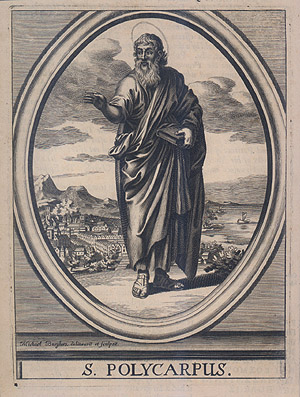
Polycarpus, engraving by Michael Burghers, ca 1685

Polycarp, who was a student of the Apostle John and the overseer of the church at Smyrna, heard that soldiers were looking for him and tried to escape but was discovered by a child. After feeding the guards who captured him, he asked for an hour of prayer, which they gave him. He prayed with such fervency that his guards said they were sorry they were the ones to capture him. Nevertheless, he was taken before the governor and condemned to be burned at the market place.

After his sentence was given, the governor said to Polycarp, “Reproach Christ and I will release you.”

Polycarp answered, “Eighty and six years have I served him, and he never once wronged me; how then shall I blaspheme my King, Who has saved me?”

At the stake to which he was only tied, but not nailed as usual, since he assured them he would stand immovable. As the dry sticks around him were lit, the flames rose up and circled his body without touching him. The executioner was told to pierce him with a sword, which he did. Upon being pierced, a great quantity of blood gushed out and put out the fire. Although is Christian friends asked to retrieve the body so it could be buried, the enemies of the Gospel insisted that it be burned in the fire, which was done.

~~~~~~~~~~~~~~~~~~~~~~~~~~~~~

“You shall treat the stranger who sojourns with you as the native among you, and you shall love him as yourself, for you were strangers in the land of Egypt: I am the Lord your God.” (Leviticus 19:34)

“Rendering service with a good will as to the Lord and not to man,” (Ephesians 6:7)

Lord, thank You for the example of the martyrs, who were living, breathing examples of Christ-likeness unto death. Polycarp’s hospitality, prayers, and steadfastness under the most extreme pressure was an example to the pagans around him and is an example to us today. Thank you for the blood-bought opportunity to go to a worship service, the blood-bought privilege of carrying a bible to that place, and the inexpressible privilege of prayer. May we all proclaim Christ boldly, echoing Polycarp’s words, that we shall not blaspheme our King, Who saved us.

Posted in domitian, Sunday martyr moment

Sunday Martyr moment: Persecution under Domitian

Foxe’s Book of Martyrs. According to this summary from Christian Book Summaries,

Writing in the mid-1500s, John Foxe was living in the midst of intense religious persecution at the hands of the dominant Roman Catholic Church. In graphic detail, he offers accounts of Christians being martyred for their belief in Jesus Christ, describing how God gave them extraordinary courage and stamina to endure unthinkable torture.

From the same link, the book’s purpose was fourfold:

  • Showcase the courage of true believers who have willingly taken a stand for Jesus Christ throughout the ages, even if it meant death,
  • Demonstrate the grace of God in the lives of those martyred for their faith,
  • Expose the ruthlessness of religious and political leaders as they sought to suppress those with differing beliefs,
  • Celebrate the courage of those who risked their lives to translate the Bible into the common language of the people.
The Second Persecution, under Domitian, A. D. 81.

The emperor Domitian, who was naturally inclined to cruelty, first slew his brother, and then raised the second persecution against the Christians. In his rage he put to death some of the Roman senators, some through malice; and others to confiscate their estates. He then commanded all the lineage of David to be put to death.

Among the numerous martyrs that suffered during this persecution was Simeon, bishop of Jerusalem, who was crucified; and St. John, who was boiled in oil, and afterward banished to Patmos. Flavia, the daughter of a Roman senator, was likewise banished to Pontus; and a law was made, “That no Christian, once brought before the tribunal, should be exempted from punishment without renouncing his religion.”

A variety of fabricated tales were, during this reign, composed in order to injure the christians. Such was the infatuation of the pagans, that, if famine, pestilence, or earthquakes afflicted any of the Roman provinces, it was laid upon the Christians. These persecutions among the christians increased the number of informers and many, for the sake of gain, swore away the lives of the innocent.

Another hardship was, that, when any Christians were brought before the magistrates, a test oath was proposed, when, if they refused to take it, death was pronounced against them; and if they confessed themselves Christians, the sentence was the same.

The following were the most remarkable among the numerous martyrs who suffered during this persecution.

Dionysius, the Areopagite, was an Athenian by birth, and educated in all the useful and ornamental literature of Greece. He then travelled to Egypt to study astronomy, and made very particular observations on the great and supernatural eclipse, which happened at the time of our Saviour’s crucifixion.

The sanctity of his conversation, and the purity of his manners, recommended him so strongly to the Christians in general, that he was appointed bishop of Athens.

Nicodemus, a benevolent Christian of some distinction, suffered at Rome during the rage of Domitian’s persecution.

Protasius and Gervasius were martyred at Milan.

Timothy was the celebrated disciple of St. Paul, and bishop of Ephesus, where he zealously governed the church till A. D. 97. At this period, as the pagans were about to celebrate a feast called Catagogion, Timothy, meeting the procession, severely reproved them for their ridiculous idolatry, which so exasperated the people, that they fell upon him with their clubs, and beat him in so dreadful a manner, that he expired of the bruises two days after.

Text from Project Gutenberg

Posted in martyrdom, nero, Sunday martyr moment

Sunday Martyr Moment: Persecutions begin under Nero

Foxe’s Book of Martyrs. According to this summary from Christian Book Summaries,

Writing in the mid-1500s, John Foxe was living in the midst of intense religious persecution at the hands of the dominant Roman Catholic Church. In graphic detail, he offers accounts of Christians being martyred for their belief in Jesus Christ, describing how God gave them extraordinary courage and stamina to endure unthinkable torture.

From the same link, the book’s purpose was fourfold:

  • Showcase the courage of true believers who have willingly taken a stand for Jesus Christ throughout the ages, even if it meant death,
  • Demonstrate the grace of God in the lives of those martyred for their faith,
  • Expose the ruthlessness of religious and political leaders as they sought to suppress those with differing beliefs,
  • Celebrate the courage of those who risked their lives to translate the Bible into the common language of the people.

In these posts, which I began last April, I have gone chronologically through the martyrdoms of the first generation martyrs, beginning with Stephen and ending with John. I’ve also put up an essay on the martyrdom of John Huss, to note the anniversary of his death, and then opened with Foxe’s next  section, the “Chapter One: History of Christian Martyrs to the First General Persecutions Under Nero” and related it to the coming persecutions of Christians today.

Now, we continue. Foxe’s Book of Martyrs, by John Foxe

Nero was the 6th Emperor of Rome and reigned for fifteen years. He was a paradox, a man of great creativity combined with a vicious temper and extreme cruelty. It was said by many that it was Nero who ordered that Rome be burned and then blamed it on the Christians to turn the wrath of Rome’s citizens away from himself.  Others say he was not in Rome when it burned. Whichever way it was, Christians were blamed for the fire that lasted 9 days, and during which the hunt for Christians increased and became a dreadful persecution that lasted the rest of Nero’s reign.

The barbarous acts against Christians were worse than any they had previously endured, especially those committed by Nero. Only a Satan-inspired imagination could have conceived them. Some Christians were sewn inside the skins of wild animals and torn apart by fierce dogs. Shirts stiff with wax were put on others, and they were tied to poles in Nero’s garden and set on fire to provide light for his parties.

This cruel persecution spread throughout the Roman Empire, but it only succeeded in strengthening the spirit of Christianity rather than killing it.  Along with Paul and Peter, several of the seventy appointed by

Jesus (Luke 10:1) were martyred also. Among them were Erastus, treasurer of Corinth (Romans 16:23), Aristarchus the Macedonian (Acts 19:29), Trophimus the Ephesian (Acts 21:29), Barsabas who was surnamed Justus (Acts 1:23), and Ananias, bishop of Damascus whom the Lord sent to Saul (Acts 9:10).

~~~~~~~~~~~~~~~~~~~~~~

Lord, we thank you for the faith of our fathers. We thank you that you gave them, and us, the Holy Spirit, to strengthen us in times of persecution and to enable us to proclaim Your name as witnesses to the ends of the earth. They were witnesses who suffered a tormenting death, but unto joyous eternal life. Nero suffered a comfortable life, but unto a tormenting eternal death. Therefore, we thank you that no matter what our situation, circumstance or problem, You have promised Good to us and a life of glorified fellowship with You now and in the future. We hold onto the promise of Your coming and the promise of life everlasting.

Meanwhile, please remind us to pray for the afflicted, the persecuted and those undergoing martyrdom right now. Let us pray for each other always. “and may the Lord make you increase and abound in love for one another and for all, as we do for you,” (1 Thessalonians 3:12)