Posted in holy living, spurgeon

The first of 11 reasons pastors aren’t trusted today

Paul is giving Titus some advice as to how older men and older women should live.

to be self-controlled, pure, working at home, kind, and submissive to their own husbands, that the word of God may not be reviled.” (Titus 2:5).

Then Paul gives advice for how younger men should live and also pastors:

and sound speech that cannot be condemned, so that an opponent may be put to shame, having nothing evil to say about us.” (Titus 2:8)

Living Water by AmBr0

Paul speaks about how even slaves are supposed to live. Even though they are not free in life, they are free to make Godly choices.

not pilfering, but showing all good faith, so that in everything they may adorn the doctrine of God our Savior.” (Titus 2:10).

Do you notice how in verse 5 and 8 and 10 Paul attaches to the verse the reason why we should live holy lives?

Paul says the same thing to Timothy in these verses:

So I counsel younger widows to marry, to have children, to manage their homes and to give the enemy no opportunity for slander.” (1 Timothy 5:14)

All who are under the yoke of slavery should consider their masters worthy of full respect, so that God’s name and our teaching may not be slandered.” (1 Timothy 6:1)

So that the teaching of Jesus may not be slandered! Satan is always looking for an opportunity to accuse us
of being hypocrites. So are the lost. it is so important that since we have been given the Light, not to share the dark. Yet more and more often, Christians hide their light under a bushel basket and allow the way of Christ to be slandered. This is from Thom Ranier:

Eleven Reasons Pastors Are Trusted Less Today
The moral failures of a minority of pastors receive widespread coverage. The media loves the sensational stories behind clergy failure. For sure, some stories such as sex abuse should be brought to the public eye. But many people now believe the bad behavior of a few is normative for all pastors.

Wikipedia creative commons photo, Dunn County Farm

Kerby Anderson wrote in his essay “The Decline of a Nation

The refrains that are often heard are: “It can’t happen here,” or “Our country is different.” But the reality is that nations are born and die just like individuals. Their longevity may exceed the average person’s lifespan. But the reality is that nations also die.

History has shown that the average age of the great civilizations is around two hundred years. Countries like Great Britain exceed the average while other countries like the United States are just now reaching the average age.

Each of the great civilizations in the world passed through a series of stages from their birth to their decline to their death. Historians have listed these in ten stages.

The first stage moves from bondage to spiritual faith. The second from spiritual faith to great courage. The third stage moves from great courage to liberty. The fourth stage moves from liberty to abundance. The fifth stage moves from abundance to selfishness. The sixth stage moves from selfishness to complacency. The seventh stage moves from complacency to apathy. The eighth stage moves from apathy to moral decay. The ninth stage moves from moral decay to dependence. And the tenth and last stage moves from dependence to bondage.

These are the ten stages through which the great civilizations have gone. Notice the progression from

The Civilization Express Station by theflickerees, cc photo

bondage to liberty back to bondage. The first generation throws off the shackles of bondage only to have a later generation through apathy and indifference allow itself to once again be enslaved.

I believe the US, and perhaps even the entire world, are at the end of stage nine and readying for the final stage before the antichrist comes to power, by taking advantage of humankind’s dependance and moving them into the prophesied bondage.

But back to Paul’s admonitions. Paul ended his letter to Titus 2:15 this way-

“Declare these things; exhort and rebuke with all authority. Let no one disregard you.”

Paul is serious about holy living. On the Day when we all stand before Jesus, think of whether you want Him to congratulate you when your works are not burned up, that you lived for Him with good motivations. Or will you (or I) be embarrassed that our sins were exposed to the world and the word of God was reviled? Why give satan ammunition? He’ll only use it against us. (Zechariah 3:1, Revelation 12:10).

Spurgeon said of holy living:

There are legitimate reasons why the world, the church, and our Lord Jesus Christ himself, may expect more from Christians than from the rest of mankind. And, the first is, because they profess more. Professions should always be supported by facts, or else they are deceits, impostures, and hypocrisies. A Christian professes himself to be a renewed man; he has learned the evil of sin, repented of it, and fled from it to Christ Jesus; he professes to have been pardoned, and to have received a new heart and a right spirit; he professes, also, to be a child of God, and an heir of heaven. Other men do not profess this. … Now, Christian, if you profess this, your life must prove it, or else, if your life gives the lie to your religious pretensions, you stand convicted of a flagrant falsehood, a fraud on men and a felony against God.

But, secondly, we may well expect more from Christians than others, because it is a fact in the case of those who are truly Christians that they are more than others. It is not mere talk, it is a fact that the believer in Christ is born again. He is not only as other men are, made by God, but he has been twice made, new born, new created in Christ Jesus. It is no fiction but a matter of truthful experience; we have passed from death unto life. We have received the Spirit of God into our souls, which has implanted in us a new nature higher than the nature of other men.”

Again, it is certain that true Christians can do more than others. “Can,” saith one, “why, they can do nothing.” True, but through Christ that strengtheneth them they can do all things; and Christ does strengthen his people.”

Be strengthened, live holy, that the way of Christ not be reviled!

Posted in francis, pope, popery, spurgeon

The Guardian Liberty Voice asks the prophetic question: "Could Pope Francis Be a Modern-Day Jesus?"

There is no doubt that Pope Francis is the rock star religious celebrity of the day. His humble attitude, message of tolerance and unity, and his rapport among people have endeared him to millions, despite his tenure has so far lasted less than one year. He was chosen man of the year by Time Magazine. He has an 88% approval rating among US Catholics. Why is he so popular? And why is he being likened to a modern day Jesus?

Catholic Online wondered the same thing about his popularity, and wrote yesterday, “The secret to Pope Francis’ fame REVEALED

They like that he doesn’t act like a televangelist, megachurch pastor, or a king (though Pope Francis is a king) by succumbing to the lavish lifestyle so many in his position or level of wealth take as their due.

He deliberately lives as impoverished a lifestyle as possible, lives in a Vatican guest house, eats with the staff, and mingles with the public far beyond what his security detail thinks prudent. He has expressed, on several occasions, his desire for the Church to be “a poor church, for the poor.”

This is a strange statement coming from a man who accepted the globe’s only absolute monarchy worth an estimated 110 billion dollars today (source Time Magazine estimation of the Vatican’s worth in 1965, adjusted for 2013 dollars). I wonder if the Pope would give away 100 billion of the money, keeping “only” 10 bn for expenses? Or alternately, how can a poor church help the poor, if it’s poor? So it seems that the people like that Pope Francis pretends to be poor.

There seems to be no end to the public fascination with Pope Francis. While the Pope is the Vicar of Christ and is expected to serve as God’s representative on Earth, complete with splendid regalia, Pope Francis actually walks and talks like a living saint. … Why does he capture our attention? The ordinary man, the person who has no hope of incredible wealth or power, sees Pope Francis who has all the access, money and power that a man can have, and he watches Francis turn away from it. Pope Francis chooses humble garments, lunch with homeless men and their dog, to ride in the back seat of a compact car, and to make sandwiches for the people who are meant to wait on him. Has the modern world seen a better example of a holy man?

Pope Francis has not turned away from incredible wealth. He is the the only absolute monarch on the planet and sole manager of the largest amassed wealth and treasure on the planet. Turning away from it would mean he declined to be Pope. “I do not seek, nor will I accept…” But no, Pope Francis accepted the papal office and all the wealth, luxury, and power that comes with it.

Anyway, that is a slight bit of background as to this new religious rock star we have on our hands. On to the article that asked if he is a modern-day Jesus, though the previous article asked pretty much the same question already. The people love Pope Francis because he brings a message the lost and carnal world wants to hear. Jesus came to bring a sword, to show the way was narrow and exclusive. To show we are condemned in our sins but He is the Good News. Pope Frances says he brings a white flag of peace, a message of love and unity for all who are all on one broad path, holding hands and singing kumbayah. To the lost, this is a better Jesus.

Pope Francis gave a speech in St. Peter’s Basilica balcony the other day. It was his first Christmas message. The article below pounced on the Pope’s message of love, tolerance, and unity, digging in like a lion on a wildebeest.

In a world where many of today’s clergy seek to tear down anyone or religion that doesn’t line up completely with what they believe, the Pope is sweeping through the world like a breath of fresh air. Francis has chosen not to waste time with different persuasions of belief or religions; instead he focuses on what’s most important in the world: a message of love, hope and peace. … While the fallen nature of mankind loves religion, since it bolsters the ego and boots one’s self esteem, Jesus came to bring the gift of relationship which includes a message of love, hope and peace; much like Pope Francis.” (source)

Oh my.

The false, satirical message “Pope declares all religions are true” that Snopes recently debunked, and the real message Pope Francis has consistently brought so far this year, are hard to tell apart because essentially, the pope does say all religions are true. He even says atheists and unbelievers can get in. “He realizes that atheists and agnostics are people of good intentions and good morals with whom we want to work closely,” said Martin,” explained the culture editor of ‘America Magazine.’

BTW, Billy Graham said the same thing. If you have good intentions and good morals and lived a sincere life, you’re in. I am not making this up.

Here is the snopes-debunked satirical Pope message:

…because Muslims, Hindus and African Animists are also made in the very likeness and image of God, to hate them is to hate God! To reject them to is to reject God and the Gospel of Christ. Whether we worship at a church, a synagogue, a mosque or a mandir, it does not matter. Whether we call God, Jesus, Adonai, Allah or Krishna, we all worship the same God of love. This truth is self-evident to all who have love and humility in their hearts!

It doesn’t sound so different from the real pope’s message, does it?

Shortly after he took papal office, Pope Francis said that peoples from different faiths are united under God, it sent shock waves throughout the Catholic Church. This is because for two thousand years, the Catholic Church said said anyone who is not a Catholic is anathema (cursed) and is going to hell. Now the RC message -via Pope Francis- has changed. Don’t overlook the significance of that.

The bible says that the entire church age will be filled with false teachers and the spirit of antichrists (1 John 2:18) but it will get a lot worse by the end of the end. This following verse could be speaking to all popes from then until now!

And he said to them, “Well did Isaiah prophesy of you hypocrites, as it is written, “‘This people honors me with their lips, but their heart is far from me; in vain do they worship me, teaching as doctrines the commandments of men.’ You leave the commandment of God and hold to the tradition of men.” And he said to them, “You have a fine way of rejecting the commandment of God in order to establish your tradition!” (Mark 7:6-9)

The Pope is a false prophet, having the spirit of antichrist, and with his popularity and his espousing of the prophesied message of peace and ecumenism we know will come to fruition in the Tribulation, he is certainly a good candidate for the Antichrist. He is laying the groundwork anyway.

As the antichrist will be, Pope Francis is also concerned with the economy, with the poor and disenfranchised, and wants to stop their exclusion from the economy and include them. Just a few weeks ago. Daily Kos saidPope Francis has attacked unfettered capitalism as “a new tyranny”, urging global leaders to fight poverty and growing inequality in the first major work he has authored alone as pontiff,” calling it “a scathing critique of modern capitalism in an 84-page document, known as an apostolic exhortation, and which amounts to an official platform for his papacy and the Roman Catholic Church.”

Pope Francis is setting the platform for all the precepts the antichrist is prophesied to espouse.

We know that in the Tribulation one man will hold sway. It will be his dictates on economy, finance, and religion that will cause the entire world to worship Him and swear allegiance (except for the people who come to faith after the rapture and become martyrs, the Tribulation Saints).

It is a hard thing to see the sweep of popery come across the world with such renewed vigor. It is a worse thing to see popery, Catholicism, and its Roman mysticism intertwine within the precious walls of the Christian evangelical faith, heresies brought in by many, including Beth Moore!

We mourn for Pope Francis in his lost state, and all the Catholics who are also lost. See how Spurgeon puts it. Charles Spurgeon said of popery:

It is the bounden duty of every Christian to pray against Anti-Christ, and as to what Anti-Christ is no sane man ought to raise a question. If it be not Popery in the Church of Rome there is nothing in the world that can be called by that name…because it wounds Christ, because it robs Christ of His Glory, because it puts sacramental efficacy in the place of His atonement, and lifts a piece of bread in the place of the Saviour, and a few drops of water in place of the Holy Ghost, and puts a fallible man like ourselves up as the Vicar of Christ on earth; if we pray against it, because it is against Him, we shall love the persons though we hate their errors; we shall love their souls though we loath and detest their dogmas, and so the breath of our prayers will be sweetened, because we turn our faces towards Christ when we pray.

We turn our faces toward the true Christ, His message, and His statutes. He is the One whom all knees will bow, including all kings, sultans…and popes. (Revelation 6:15-17).

Posted in christmas, malachi, shepherds, spurgeon, three kings, worship

Christmas, Malachi 1, and the nature of true worship

In Malachi 1:6-14, the LORD our God rebukes the priests and the people for offering polluted worship. Let’s take a look at what proper worship is by first looking at what proper worship isn’t, from the mouth of the LORD. Here is His rebuke in full:

A son honors his father, and a servant his master. If then I am a father, where is my honor? And if I am a master, where is my fear? says the Lord of hosts to you, O priests, who despise my name. But you say, ‘How have we despised your name?’ By offering polluted food upon my altar. But you say, ‘How have we polluted you?’ By saying that the Lord’s table may be despised. When you offer blind animals in sacrifice, is that not evil? And when you offer those that are lame or sick, is that not evil? Present that to your governor; will he accept you or show you favor? says the Lord of hosts. And now entreat the favor of God, that he may be gracious to us. With such a gift from your hand, will he show favor to any of you? says the Lord of hosts.

Oh that there were one among you who would shut the doors, that you might not kindle fire on my altar in vain! I have no pleasure in you, says the Lord of hosts, and I will not accept an offering from your hand. For from the rising of the sun to its setting my name will be great among the nations, and in every place incense will be offered to my name, and a pure offering. For my name will be great among the nations, says the Lord of hosts. But you profane it when you say that the Lord’s table is polluted, and its fruit, that is, its food may be despised. But you say, ‘What a weariness this is,’ and you snort at it, says the Lord of hosts. You bring what has been taken by violence or is lame or sick, and this you bring as your offering! Shall I accept that from your hand? says the Lord. Cursed be the cheat who has a male in his flock, and vows it, and yet sacrifices to the Lord what is blemished. For I am a great King, says the Lord of hosts, and my name will be feared among the nations.”

He said that the priests bring the people’s sick and the lame animals for the altar, not even the Governor would accept these blemished offerings. Yet they bring them to Him, the Holy God of Israel. They sneer at the weight of having to sacrifice, saying it’s a burden. They give no thought to the Lord’s table nor revere Him as King. They don’t even honor Him as Father.

In this day and age, we have come to believe the lie that just because we show up to church, mumble a few prayers, half-heartedly sing a few theology-less songs, and sit through a sermon that’s interfering with the timing of the crock pot, that we have blessed God.

God has standards for everything, including worship. He calls those who bring less than their best a “cheat”. He says that they “pollute” his temple. He refuses to accept their sacrifices. And He says they still expect Him to show them favor. And it shouldn’t be a duty nor a burden, because as He says, “I am a great King, says the Lord of hosts, and my name will be feared among the nations.”

What if God were to expose our worship today? What if He spoke a word from through a person as He did Malachi, saying that we are evil, polluters of His sanctuary, and are not worthy of favor? That we might as well all just leave and close the church doors behind us? That He has no pleasure in us? (Reminiscent of the condemnations in the letters in Revelation 2-3). The church as it is today would probably reject Him! They’d say He is being too mean, not being tolerant or inclusive, and after all, they are doing the best they can and He should just be happy with that. (Revelation 3:20)

Worship is important, but it doesn’t stop at the church doors when we enter in. Showing up isn’t worship. We need to worship in the right way.

Superficial worship, shallow worship, wrong worship cripples, debilitates, robs God of what is rightfully His, limits your usefulness, denigrates your whole Christian experience. We need to worship in the right way, to give God what He is due and to put ourselves in a position of being most useful to God. (source)

I am thinking about true worship on the almost eve of the celebration we offer to God for sending His Son into the world, in flesh. Jesus’ birth is a monumental moment in history, one that culminated with His death and resurrection. Man and God reconciled. Do we offer pure, and good worship to Him? This week of all weeks is a week to worship! What are a few of the positive templates of worship we see in the New Testament?

Adoration of the Shepherds (The Holy Night)
Correggio 1530

I think of the Shepherds to whom the angels appeared with the glad tidings on that night in Bethlehem so long ago.

When the angels went away from them into heaven, the shepherds said to one another, “Let us go over to Bethlehem and see this thing that has happened, which the Lord has made known to us.” And they went with haste and found Mary and Joseph, and the baby lying in a manger. And when they saw it, they made known the saying that had been told them concerning this child. And all who heard it wondered at what the shepherds told them.” (Luke 2:15-18)

The shepherds truly worshiped! First, they listened to the angels. They did not run away and they did not sneer or mock or say “what weariness is this?” They listened with all their heart and souls. We know this from Luke 2:9 when the shepherds feared the glory of the Lord.

Then, they obeyed. They were instructed to get up and go, seek the babe, and they did. “In haste”!! They heard the message and they obeyed it as fast as their feet could carry them. Inertia didn’t keep them on their bedrolls. Weariness from a long day shepherding didn’t stop them. Fear didn’t paralyze them. Resentment at being marginalized from the worship structure of the day didn’t hinder them. They got up, gathered together and they searched for the babe, in haste. This shows us that nothing else was as important to them at that moment. The shepherds worshiped by obeying the word they had heard from on high.

Third, when they saw the sign of the babe in swaddling clothed confirmed, the shepherds went out and told the news. “They made known.” They must have told a lot of people if the angels’ message had become known. They didn’t stop at one or two people, they made it known. This also is worship- to proclaim Him.

Byzantine art usually depicts the Magi in Persian
clothing which includes breeches, capes, and Phrygian caps.
Mosaic, ca. 565. Ravenna, Italy

How about the Kings from the East? “Now after Jesus was born in Bethlehem of Judea in the days of Herod the king, behold, wise men from the east came to Jerusalem, saying, “Where is he who has been born king of the Jews? For we saw his star when it rose and have come to worship him. … ” And going into the house they saw the child with Mary his mother, and they fell down and worshiped him. Then, opening their treasures, they offered him gifts, gold and frankincense and myrrh.” (Matthew 2:1-2; 11).

These kings had come from a distance of what was probably at least 800-900 miles away. In any case, distance was of no matter to them, they set their eyes on the west and walked until they found Him. Would you walk the distance from Atlanta to Oklahoma City because you had heard Jesus was there?

They brought Him their best, best offering. They did not bring a blind lamb and a broken-winged dove! Their worship was that they had known He was coming, and had watched for His appearing. Then they put action to their worship by seeking Him. And do you see the manner of their worship? Unlike those in Malachi, the kings brought best offerings they had. And they fell down.

“Yea, all kings shall fall down before him: all nations shall serve him“. (Psalm 72:11)

As the Christian Courier delves into the discussion between Jesus and the woman at the well, the article discusses true worship:

In drawing the contrast between Samaritan worship and Hebrew worship, Christ emphasized that true worship is more than emotion; it is grounded in knowledge. … Away goes the contention that the format of worship is immaterial, so long as one is sincere.” (John 4:22-23, source)

To properly worship, we must know Who we are worshiping and we must do it in the proper mode. I’m not talking about a list of legalistic rules, but only referring to the templates of worthless worship and proper worship presented to us in His word. It is a heart condition. We no longer have sacrifices to bring, but do we worship sacrificially, with all our heart, mind, and soul? Or do we vow a large tithe but switch it for lesser at the last minute?

Cursed be the cheat who has a male in his flock, and vows it, and yet sacrifices to the Lord what is blemished… (Malachi 1:14)

Do we acknowledge not only the babe in the manger, but the glorious risen KING of Kings and LORD of Lords who is to come?

For from the rising of the sun to its setting my name will be great among the nations, and in every place incense will be offered to my name, and a pure offering…(Malachi 1:11)

Do we know who we are worshiping and why? Do we love Him?

Who among the gods is like you, LORD? Who is like you– majestic in holiness, awesome in glory, working wonders? (Exodus 15:11)

Spurgeon speaks of true spiritual worship.

Christ comes to tell us that now his worship is to be wholly spiritual, even the altar which belongs to antediluvian times is gone, for we have an altar of another kind; even the sacrifice which belonged to the early period has departed like a shadow, because we have the sacrifice of Christ in which to trust. … At any rate, my dear hearers, if you have not with your whole hearts loved and worshipped God, repent over it, and pray the Holy Ghost to make you spiritual. Go to Christ’s cross, and trust in him; then, and not till then, will you be capable of adoring the most High God in a style in which he can accept your worship. God grant that this may be impressed upon the hearts of all of us, that we may worship God in spirit and in truth.

Posted in immutable, purpose, rick warren, spurgeon

Finding God’s will for your life

True Christians are consumed with obeying God and serving Him, because we love Him so much. That’s why so many people say they want to “find God’s will for their life.” Finding God’s will is at the top of their list of ways we want to serve Him. Christians ache when they feel that they are missing out on doing service for God, and they fear. ‘What if I’m not finding it?’ they wonder. ‘What if He wants me to be a missionary in Burma and I haven’t read the signs correctly and I’m just here in Dayton, not doing much?’

Rugendas, c. 1820, “Village of Christianized Tapuyos indians”

The book Radical by David Platt touched on this invisible fear among many Christians. The book Radical is, according to Kevin DeYoung, “an all-out assault on cheap grace, easy-believism, consumer Christianity.”

And is against the Christian laziness that comes with it. I agree that those things should be avoided and denounced. But despite the softening language, Platt’s overall tone is that we should throw it all over, sell all our stuff, and run off to Burma as a missionary.

DeYoung admires Platt but has five concerns of the book, and mentions this fourth: “I worry that radical and crazy Christianity cannot be sustained. If the message of Jesus translates into “Give more away” or “Sacrifice for the gospel” or “Get more radical” we will end up with burned out evangelicals. Even when Jesus said his hard saying (and he said a lot of them) it was not his basic stump speech. His message was repent and believe in the gospel (Mark 1:15). When Jesus challenged the crowds to count the cost or let the dead bury their dead it was to make clear that following him was not all about miracles and wonders, it was about giving him the preeminence. The emphasis was doxological first and foremost. Worship Christ. Believe in Christ. Walk with Christ. And therefore, before you follow Christ be prepared for opposition.”

I don’t worry for David’s theology, but I worry that some young Christians reading his book might walk away wondering if a life spent working as a loan officer, tithing to their church, praying for their kids, learning to love Christ more, and serving in the Sunday school could possibly be pleasing to God. We need to find a way to attack the American dream while still allowing for differing vocations and that sort of ordinary Christian life that can plod along for fifty years. I imagine David wants this same thing. I’m just not sure this came through consistently in the book.

Rick Warren, Source

The book was a catalyst for the lurking doubt that rests in many Christians that they aren’t doing enough. That they are missing their purpose. (thanks a bunch, Rick Warren). So what is the answer?

The bible. God wrote down about Himself, what He wanted us to know about Him. He also put in there by the inspired Holy Spirit what He wants us to do and not do, and to take comfort in His promises. His purpose for us is in there.

He has several purposes for us all. ALL.

God wants us to believe. That is our primary purpose in life. “The time is fulfilled, and the kingdom of God is at hand; repent and believe in the gospel.” (Mark 1:15. Also 2 Peter 3:9 & Acts 22:16).

After belief, we are to be a witness, teaching and making disciples. That is the Christian’s purpose in life. “Go therefore and make disciples of all nations, baptizing them in the name of the Father and of the Son and of the Holy Spirit, teaching them to observe all that I have commanded you. And behold, I am with you always, to the end of the age.” (Matthew 28:19-20)

Our chief purpose in Christian life is to glorify God. “Or do you not know that your body is a temple of the Holy Spirit within you, whom you have from God? You are not your own, for you were bought with a price. So glorify God in your body.” (1 Corinthians 6:19-20). This next part is from MacArthur’s outline from his essay “How to live for God’s glory”

  • Confess Your Sins. (1 John 1:9)
  • Bear Fruit. (John 15:8; Colossians 1:10)
  • Give Praise to God. (Psalm 50:23)
  • Be Content. (Philippians 4:11)
  • Pray According to God’s Will. (John 14:13)
  • Proclaim God’s Word. (2 Thessalonians 3:1)

In the past, God made it clear to those whom He chose as to what their purpose was. Moses was to be His prophet. Jeremiah was to preach repentance. David was to be King. He spoke through a burning bush, a cloud, a still small voice, and even a donkey. He said what He said clearly and definitively- and directly.

Just because he isn’t speaking like that any more does not mean He isn’t speaking. Or, rather, has not spoken. Hebrews 1:1-2 says that God’s final word is through His Son–

“Long ago, at many times and in many ways, God spoke to our fathers by the prophets, but in these last days he has spoken to us by his Son, whom he appointed the heir of all things, through whom also he created the world.”

His Son is the Word and His word can be found in the bible. That is where we find our purpose.

“But what if I am to be called as a missionary? Or a preacher? Or to do a certain work in a certain place as a layperson? How will I know if there is a specific purpose, then?”

Do we think that just because He doesn’t come down to us and speak directly through a burning bush, that we cannot understand that if He has a specific call for our lives that He can’t or won’t make it clear? He is powerful! As Spurgeon praises Him in His power so eloquently,

“He changes not in his attributes. Whatever the attributes of God were of old, that they are now; and of each of them we may sing “As it was in the beginning, is now, and ever shall be, world without end, Amen.” Was he powerful? Was he the mighty God when he spake the world out of the womb of nonexistence? Was he the Omnipotent when he piled the mountains and scooped out the hollow places for the rolling deep? Yes, he was powerful then, and his arm is unpalsied now, he is the same giant in his might; the sap of his nourishment is undried, and the strength of his soul stands the same for ever.”

He has the power to instill in you the burning desire to be a preacher. As He did Paul, 1 Corinthians 9:16, or Jeremiah in Jeremiah 20:9.

Has He given you the gift of teaching? Do people remark on your teaching or preaching, whether you have done it impromptu or in formal settings? (Ephesians 4:11).

Even if we have submitted to His obvious working of circumstances in our lives so that we are now beginning to understand the specific purpose, He will also still sovereignly work to guide you within it! See Paul in Acts 16:6-8,

Mosaic, ‘Man of Macedonia appearing to Paul’

“And they went through the region of Phrygia and Galatia, having been forbidden by the Holy Spirit to speak the word in Asia. And when they had come up to Mysia, they attempted to go into Bithynia, but the Spirit of Jesus did not allow them. So, passing by Mysia, they went down to Troas.”

In the next verse Paul received a vision of where He was in fact to go. Though we do not receive direct visions anymore like this, do we not think the Spirit isn’t still working and guiding us within our lives to HIS purpose? Of course He is.

Because that is what it is all about, God’s purpose, not our purpose. We believe, submit, and serve. He guides and organizes the rest. Do we believe that God is so timid that our busy lives can block Him out, and that it is even remotely possible for us to miss a specific purpose He has outlined for us?

No.

“And we know that for those who love God all things work together for good, for those who are called according to his purpose. For those whom he foreknew he also predestined to be conformed to the image of his Son, in order that he might be the firstborn among many brothers. And those whom he predestined he also called, and those whom he called he also justified, and those whom he justified he also glorified.” (Romans 8:28-30)

Queen Esther – Andrea del Castagno, c.1450

God had a purpose and He wanted Queen Esther to be a part of its fulfillment. Esther’s uncle Mordecai was talking to her about doing it. It seems that Esther already had an inkling about what she was to do. Mordecai cemented it. We usually focus on the last part of Mordecai’s answer, “for such a time as this” but what about the first part?

“Then Mordecai told them to reply to Esther, “Do not think to yourself that in the king’s palace you will escape any more than all the other Jews. For if you keep silent at this time, relief and deliverance will rise for the Jews from another place, but you and your father’s house will perish. And who knows whether you have not come to the kingdom for such a time as this?” (Esther 4:14-15)

‘If you keep silent at this time, relief and deliverance will rise for the Jews from another place’. So you see, God providentially works all things to the good, and we are not so powerful that we miss His call, and He is not so tenuous that it all falls apart if we refuse it.

God has a purpose. If you know what your purpose is- and you will, because God makes it clear, and you refuse the call to be a missionary or preacher or whatever, God will still fulfill what He wants to fulfill. His plans are immutable.

Our purpose is to believe, witness, make disciples, and glorify Him. We all have that purpose. In addition, He sent the Spirit to dispense Gifts as He wills, so that His purposes will be executed though us and by the fruits we bear by His Spirit’s power. If we are to have a specific call, He will make it known. Moses was 40 years old when we learned he killed a man, and he waited another 40 years until God used him for his last 40. Moses was used by God from age 80-120. So even one of the great patriarchs of the bible was not called to a specific purpose until late in life. However, Moses’s entire life was used of God’s purpose! Moses just didn’t know it. It is the same with us.

Not everyone has a call to run off to Burma or to preach to the masses. Most of us, I dare say, are simply operating in our mundane spheres, planting seeds and bearing fruit. If we have a call to perform a specific purpose, we will understand it when it comes. Until then, rest secure in His providence and His power. It’s not our purpose in life that is the point, but His purposes.

Posted in angus buchan, passion 2013, revival, spurgeon

What is revival?

Inside Christian culture, we often pray for something we call ‘revival’. As with secular culture, revival means a kind of refreshing, a renewal. Hope, and new beginnings. For the Christian it means a time when we do not have a strong faith because we either actively sin or we know of sin in our family or our church and we let it slide. This clogs up our spiritual arteries. We may become sluggish, apathetic, taking the faith for granted and losing touch with our ability to feel the conviction of the Holy Spirit.

One person in the bible that surely needed revival was Eli. A judge and priest for many years in the Temple, Eli had grown old, not just in age, but in spiritual age, too. Rather than being constantly renewed and refreshed by the Spirit through prayer, study, diligent service, and seeking God, Eli had simply grown lazy.

Worse, Eli’s son’s were ruffians of the worst sort- spiritual ruffians who were supposed to be priests but who were idolaters. They took the best temple offerings for themselves. They lay with women who served at the tabernacle. They blasphemed God. Eli knew all this and did nothing. (1 Sam 2:22, 2:29, 1 Samuel 3:13.)

We all know that sinning isn’t good and will result in correction by God. Worse, though, sinning will close our ears to hearing him. I don’t mean audibly, I mean feeling the prick of conscience, the warmth of prayer, the closeness of the Spirit. Soon enough, we don’t care that we are sinning.

However it comes as a surprise to many that even if we are not sinning ourselves, if gross sin exists in our family or our church, and we fail to acknowledge it and take the biblical steps to correcting it, God corrects us too. Eli’s sons were punished. They died. Eli was punished too, even though his sons were the immoral blasphemers. It is not just an Old Testament thing, either. Revelation 2:20 shows us that those who tolerate sin will be punished.

Anyway, when we tolerate sin our own ears become closed. Eli was unperceptive when the LORD was calling Samuel, his disciple, at the temple. (1 Samuel 3:8). Eli was in need of revival, long before the promised judgment came.

What happens when revival comes to a church or a nation? Let’s look at Acts 2:37 and the reaction of the people who heard Peter’s famous sermon at Pentecost-

“Now when they heard this they were cut to the heart, and said to Peter and the rest of the apostles, “Brothers, what shall we do?””

The phrase ‘cut to the heart’ means, pierce all the way down, i.e. deeply (thoroughly) pained; “emotionally pierced through”; psychologically pricked, emotionally stunned.

Let’s look at the Gentiles at Nineveh. After Jonah preached to them at God’s command, this was their reaction-

“The Ninevites believed God. They declared a fast, and all of them, from the greatest to the least, put on sackcloth. And the people of Nineveh believed God. They called for a fast and put on sackcloth, from the greatest of them to the least of them. The word reached the king of Nineveh, and he arose from his throne, removed his robe, covered himself with sackcloth, and sat in ashes.” (Johan 3:5-6).

Sitting in ashes, or flinging ashes over your head, was considered to be both mourning for the dead and a sign of national calamity. It was an outward expression of deep repentance and a sign to the LORD that they sought Him in humility. Fasting, wearing sackcloth and sitting in ashes were outward signs that you wanted to be the lowest of the low before the Highest of the High.

How about a revival in non-biblical history? The famous sermon by Jonathan Edwards called “Sinners in the Hands of an Angry God” delivered at Enfield CT in 1741 brought about an awakening. The awakening was going on all over New England, but in that one church in Enfield the congregation sat unaffected. The pastor of that church invited Edwards to come preach. Edwards delivered the now-famous sermon in his typical style- which is read in a near monotone. Edwards believed that showmanship had no place in the pulpit and simply read or spoke his sermons plainly. The church went wild.

Eyewitness Stephen Williams, wrote in his diary, “We went over to Enfield where we met dear Mr. Edwards of Northampton who preached a most awakening sermon from these words, Deuteronomy 32:35, and before the sermon was done there was a great moaning and crying went out through ye whole House…. ‘What shall I do to be saved,’ ‘Oh, I am going to Hell,’ ‘Oh, what shall I do for Christ,’ and so forth. So yet ye minister was obliged to desist, ye shrieks and cry were piercing and amazing.”

In all three cases I described for you, Nineveh, Pentecost, and Enfield CT, revival broke out. Notice that the people who were revived were first pierced, cut to the quick, and cried out.

Revival always begins with tears.

Revival begins with lamentation.

Revival begins with grief.

THAT is revival.

Unless you, your nation, your church, whatever, has sat low and cried out in agony over the sins you’ve performed against the Lord, you are not in revival. The congregation at Enfield CT were flinging themselves down the aisle, leaping out of the pews in fearful agony of the spirit, crying out from where they lay.

The effects of revival are joy, works, buoyancy. Williams describes what happened after church in Enfield CT on the day Johnathan Edwards preached ‘Sinners in the Hands of an Angry God’ ,

“After some time of waiting the Congregation were still, so yet a prayer was made by Mr. W. and after that we descended from the pulpit and discoursed with the people, some in one place and some in another, and amazing and astonishing ye power of God was seen, and several souls were hopefully wrought upon that night, and oh ye cheerfulness and pleasantness of their countenances.”

“It is estimated that 10 percent of New England was converted during this time. Imagine today 28 million converted in 2 years. Picture every church in your town doubling or tripling in the next 2 years, and you have some grasp of the enormity of what happened” (Source)

Charles Spurgeon wrote of revival:
“When revival comes to a people who are in the state thus briefly described, it simply brings them to the condition in which they ought always to have been; it quickens them, gives them new life, stirs the coals of the expiring fire, and puts heavenly breath into the languid lungs.”

Spurgeon issued a caution, however: “If revival is confined to living men we may further notice that it must result from the proclamation and the receiving of living truth. … Intense excitement may produce a revival of the animal, but how can it operate upon the spiritual, for the spiritual demands other food than that which stews in the fleshpots of mere carnal enthusiasm.”

He is saying do not mistake enthusiasm for revival. You might think, how can we tell them apart? Easy. If there were no tears, there is no revival. The tears and lamentation mean that the person truly glimpsed their sin in the face of a Holy God, and their resulting spiritual suffering could not be contained inwardly.

Acts 3:19 gives us the progression of revival: “Therefore repent and return, so that your sins may be wiped away, in order that times of refreshing may come from the presence of the Lord;”

1. Repent of your sins
2. Return to the Lord’s ways
3. You will be forgiven
4. Revival will come… and then
5. Joy in His presence

In today’s Christianity, when the reverse of that progression happens people say it is revival. People toss around the word revival whenever a group of people get outwardly excited but inwardly they are unchanged. I’ve written of Angus Buchan in South Africa and the throngs who dance and jump and praise the Lord at his Charismatic signs and wonders healing ‘revivals.’ That’s not revival.

I’ve written about the Passion 2013 conference where thousands of young people jump and dance and praise the Lord as a result of the emotionally manipulative entertainment and non-proclamation of the living truth by Charismatic speakers. That’s not revival, either.

If you want to see what revival is, look to the bible. Nineveh and Pentecost are two examples. Look at Job:

“I had heard of you by the hearing of the ear, but now my eye sees you; therefore I despise myself, and repent in dust and ashes.” (Job 42:5-6).

Only hearing the word but not letting it into your heart let Job continue on in his pride. When he truly spiritually saw the LORD, he hated himself. THAT’S revival.

After the grief, comes the joy. Spurgeon ends this way:

When Christians are revived they live more consistently, they make their homes more holy and more happy, and this leads the ungodly to envy them, and to enquire after their secret. Sinners by God’s grace long to be like such cheerful happy saints; their mouths water to feast with them upon their hidden manna, and this is another blessing, for it leads men to seek the Savior. If an ungodly man steps into a congregation where all the saints are revived he does not go to sleep under the sermon. The minister will not let him do that, for the hearer perceives that the preacher feels what he is preaching, and has a right to be heard. This is a clear gain, for now the man listens with deep emotion; and above all, the Holy Spirit’s power, which the preacher has received in answer to prayer comes upon the hearer’s mind; he is convinced of sin, of righteousness, and of judgment to come, and Christians who are on the watch around him hasten to tell him of the Savior, and point him to the redeeming blood, so that though the revival, strictly speaking, is with the people of God, yet the result of it no man can limit.

Amen to that.

Posted in all joy, spurgeon, trials

Count it all joy

Testing of Your Faith

“Count it all joy, my brothers, when you meet trials of various kinds, for you know that the testing of your faith produces steadfastness. And let steadfastness have its full effect, that you may be perfect and complete, lacking in nothing.” (James 1:2-4)

Sermon on that verse by Charles Spurgeon:

“Beginning with this word “brethren,” James shows a true brotherly sympathy with believers in their trials, and this is a main part of Christian fellowship. “Bear ye one another’s burdens, and so fulfil the law of Christ.” If we are not tempted ourselves at this moment, others are: let us remember them in our prayers; for in due time our turn will come, and we shall be put into the crucible. As we would desire to receive sympathy and help in our hour of need, let us render it freely to those who are now enduring trial. Let us remember those that are in bonds, as bound with them, and those that suffer affliction as being ourselves in the body. Remembering the trials of his brethren, James tries to cheer them, and therefore he says, “My brethren, count it all joy when ye fall into divers trials.” It is a part of our high calling to rise ourselves into confidence; and it is also our duty to see that none of our brethren despond, much less despair. The whole tendency of our holy faith is to elevate and to encourage.”

Please remember our brethren in love. Carry their burdens, for would you not want someone to come alongside you in your time of trouble and carry yours?

Trials bring patience. As Spurgeon says,

“the kind of patience is when experience enables a man to bear ill-treatment, slander, and injury without resentment. He feels it keenly, but he bears it meekly. Like his Master, he opens not his mouth to reply, and refuses to return railing for railing. Contrariwise he gives blessing in return for cursing; like the sandal-wood tree which perfumes the axe which cuts it. Blessed is that holy charity which hopeth all things, endureth all things, and is not easily provoked. Ah, friend, if the grace of God by trial shall work in you the quiet patience which never grows angry, and never ceases to love, you may have lost a trifle of comfort, but you have gained a solid weight of character.”

“They have built a new lighthouse upon the Eddystone: how do we know that it will stand? We judge by certain laws and principles, and feel tolerably safe about the structure; but, after all, we shall know best if after-years when a thousand tempests have beaten upon the lighthouse in vain. We need trials as a test as much as we need divine truth as our food.” 

Joseph Mallord Wm Turner, The Eddystone Lighthouse

In these dark days, it is our love and our light which is from Jesus that makes the difference. Be Christ-loving by loving those who persecute you, and pray for them.

“and you, dear brother, if ever you are to be a leader and a helper, as you would wish to be, in the church of God, it must be by such means as this that you must be prepared for it. Do you not wish to have every virtue developed? Do you not wish to become a perfect man in Christ Jesus? If so, welcome with all joy divers trials and temptations; fly to God with them; bless Him for having sent them: ask Him to help you to bear them with patience, and then let that patience have its perfect work, and so by the Spirit of God you shall become “perfect and entire, lacking in nothing.” May the Comforter bless this word to your hearts, for Jesus Christ’s sake. Amen.”

Posted in gold, spurgeon

Encouragement: "Testing the Genuineness of our Faith"

Testing the Genuineness of our Faith
Pastor Charles Haddon Spurgeon (1834-1892)

“In this you greatly rejoice, though now for a little while, if need be, you have been grieved by various trials, that the genuineness of your faith, being much more precious than gold that perishes, though it is tested by fire, may be found to praise, honor, and glory at the revelation of Jesus Christ.” (1 Peter 1:6-7)

“Untested faith may be true faith, but it is sure to be small faith, and it is likely to remain little as long as it is without trials. Faith never prospers so well as when all things are against her: Tempests are her trainers, and bolts of lightning are her illuminators.”

“When a calm reigns on the sea, spread the sails as you will, the ship does not move to its harbor; for on a slumbering ocean the keel sleeps too. Let the winds rush and howl, and let the waters lift themselves, though the vessel may rock and her deck may be washed with waves and her mast may creak under the pressure of the full and swelling sail, it is then that she makes headway toward her desired haven.”

“No flowers are as lovely a blue as those that grow at the foot of the frozen glacier; no stars gleam as brightly as those that glisten in the midnight sky; no water tastes as sweet as that which springs up in the desert sand; and no faith is so precious as that which lives and triumphs in adversity.”

“Tested faith brings experience. You could not have believed your own weakness if you had not been compelled to pass through the rivers; and you would never have known God’s strength if you had not been supported in the flood. Faith increases in quality, assurance, and intensity the more it is exercised with tribulation. Faith is precious, and its trial is precious too.”

“Do not let this, however, discourage those who are young in faith. You will have trials enough without seeking them: The full portion will be measured out to you in due course.”

“Meanwhile, if you cannot yet claim the result of long experience, thank God for what grace you have; praise Him for that degree of holy confidence you have now attained: Walk according to that rule, and you will still have more and more of the blessing of God, until your faith will remove mountains and conquer impossibilities.”
~by Charles Spurgeon

Posted in god's favor, grace, jentezen, osteen, spurgeon

What is all this "favor of God" talk really about?

Do we really have as much favor from God as some preachers say we do? What is all this “favor” anyway?

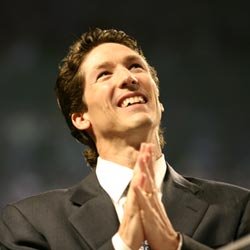
Interview with Joel Osteen:
Q. You talk about God’s favor a lot. What is God’s favor?

A. “There are so many people who don’t expect anything good in life. They don’t expect to get breaks, they don’t expect to get promoted, they don’t expect anything positive. So I just try to get people to say, I believe if we expect God’s favor, if we declare it, if we thank him when we do see good things happening, then we’re going to see more of that.” ~Joel Osteen

No it’s not. Favor of God is His grace upon us, unmerited. “Grace is free sovereign favor to the ill-deserving.” -Benjamin B. Warfield

It all depends on what one means by “good things.” I certainly don’t expect good things in life from God on the basis of my sparkling personality or because of the supposed favor I did Him by becoming a believer. Not this life…compared to the next. And yet, I DO expect good things. The Holy Spirit has already deposited Himself in me as a guarantee of my inheritance. That’s a good thing! Then He dispensed spiritual gifts as He willed. That’s a good thing! He has been growing me in sanctification in ever more Christ-likeness. That’s a good thing!

Mr Osteen makes the implication, both overtly and covertly, that your Christianity isn’t doing you any good unless you are receiving earthly, material things, and getting “breaks”.

In this painful but uplifting story out of Egypt, we learn the hopes and fears of the Christians there in the face of increasing violence and hatred toward them. “The service ends with the Lord’s Prayer and instructions for members to exit through the church’s back entrance–tear gas is in the air in front. A short time later, a wailing ambulance arrives, delivering six young men. One clutches his wrist; another reveals a back peppered with birdshot. Another will probably lose his eye. The following night, the violence touches the church family. A KDEC teenager is shot near Tahrir. News spreads that someone kidnapped the daughter of a church member. Another member is found dead, murdered on his way home from the airport.”

Where are their breaks??  Yet they already know they have their “good things.” And they act accordingly. The article continues: “We [converts] could be the first people to be killed,” said the activist, who asked for anonymity. “We are the rust in Islam that is corroding the walls. We are the threat.” But rather than seeking the first opportunity to leave Egypt, he and others like him choose to stay and exert influence behind the scenes. “Doctors stay in medicine; politicians stay in politics; advocates stay in advocacy,” he said. “The salt put in warehouses will just go stale. The salt needs to be in the food.”

It all depends on what a person expects is a “good thing.” The Egyptian Christians are hoping that if it is appointed for them to die, that they die for His name being uplifted and that hope enter the hearts of the killers. In Mr Osteen’s theology, Christians should hope to get a good parking space at the mall. Is the ‘good thing’ Christ oriented, or me-oriented? The way ‘favor’ is being used by the prosperity Gospelites are that the things we receive are an identifying confirmation that we who possess many earthly riches have more favor with God than the next person, who doesn’t possess as many.

For Mr Jentezen, his definition is: “Favor means God has called u to the front of the line! It’s your turn. Your [sic] next!” ~ Jentezen Franklin- Twitter

Favor means that I cut ahead of other, sanctified, holy saints to the front of the line? Why would I want to do that? And what line? There’s a line? What happens when I get there? Anyway, didn’t God say, “So the last will be first, and the first last” ? (Matthew 20:16a). Maybe the head of the line is not good, ha ha. Also, doesn’t He love us equally, without favor? As He said to the man in the parable who complained of the ones coming into the vineyard at the last hour, who received the same pay, “I wish to give to this last man the same as to you.”

Sort of along the same lines at the man in the parable complaining he’d worked all day and the last guy got the same pay, is this question asked and answered at Christian Apologetics and Research Ministry:

“Why does God hear and answer prayers for some and not others even though they live for Him?” At the end of the good essay (I recommend reading it at their site)

“What is the point of doing good then, if not to gain God’s favor? There is every reason in the world to do good! We do get God’s favor, not because He owes it to us, but because when we do good, we are operating according to God’s design for us, and we benefit from this in more lasting ways. We actually get more of God Himself when we follow Him. He is the source of all good.”

Therefore, why do I need ‘breaks,’ when I already possess the universe’s greatest break of all? Why isn’t that good enough for the positive confession, name it claim it, blab it and grab it people?

An acrostic!

The grace of God IS the favor (2 Corinthians 12:9-10). “That is to say those of us who know God through faith in Jesus Christ are the recipients of the out-pouring of God’s continual blessing and favor.” MacArthur

But what of passages like this in the bible, you say:

“And the boy Samuel continued to grow in stature and in favor with the LORD and with men.” (1 Samuel 2:26). Barnes notes explains, “The child Samuel advanced and grew and was good (or acceptable), both with the Lord, and also with men.” The word ‘favor’ translated means ‘good, acceptable’. Not that you receive extra special things according to your works.

What of Naphtali’s favor? “Naphtali is abounding with the favor of the LORD and is full of his blessing; he will inherit southward to the lake.” (Deuteronomy 33:23).
Though it is a different Hebrew word than used in the Samuel verse it means the same thing, “acceptable to the Lord, pleasing, good.”

What about Mary? Wasn’t she ‘highly favored’? “And in the sixth month the angel Gabriel was sent from God unto a city of Galilee, named Nazareth, to a virgin espoused to a man whose name was Joseph, of the house of David; and the virgin’s name was Mary. And the angel came in unto her, and said, Hail, thou that art highly favoured, the Lord is with thee: blessed art thou among women. (Luke 1:26-28). J. Vernon McGee wrote, “There is a tendency among Protestants to play down the role of Mary, but this tells us that she was highly favored. In the same breath, however, let me say that she was blessed among women, not above women. She is not lifted above women; she lifted up womanhood.”

“One thing is clear: while Americans universally want God’s favor, as a whole, they do not want God.” (source, John MacArthur above)

What are really asking when we say we “want God’s favor”? Is it that we crave His blessings upon us spiritually, as we continually repent of our sins and seek His face, walking in His statutes? No. It is favor upon us personally, as Osteen said, to get breaks, a good parking space at the mall, and a promotion. These kinds of favors are man-sized favors, temporal and earthly, desired by people who live in the flesh. (Mt 6:19)

We should desire the God-sized favor, which means grace on earth and, stored up in heaven. (Mt. 6:20). “Do not exhaust your strength and spend your days in providing for the life here, but let your chief anxiety be to be prepared for eternity…To regulate the heart, it is therefore important that the treasure, or object of attachment, should be right.” (Barnes Notes). [Illustration, “On hoarding treasures.” Artist unknown. 1593.]

“Freedom, as expressed in Galatians, refers to freedom from the frustrating struggle to keep the law to gain God’s favor. It is the freedom of knowing you are accepted by God because of what Christ has done. Such freedom is a tremendous kind of freedom, but it is more than just a deliverance from the oppression of legalism; it is also a positive endowment. When a Christian lives in the flesh, he forfeits the blessing he would receive if he were living in the Spirit. A Christian can live in the flesh, hoping to earn God’s favor, but that only cuts him off from the flow of daily blessing.” (source)

Maybe the positive confession, favor-seeking pastors and teachers should just read Colossians!

“Positionally, you cannot increase or decrease in the favor of God. As a genuine Christian, nothing you do, or  fail to do, can change to the slightest degree your perfect standing before God–for “in Him you have been made complete” (Colossians 2:10). (source)