Posted in listening, preaching, sermon

How to listen to a sermon: part 2 "Expository Listening".

Yesterday I’d posted a piece called How to listen to a sermon: part 1 “The mechanics of listening”. It examined the surface elements of how to listen and looked at what distracts us from listening well. Listening is a skill that needs to be practiced and honed, actively. The ultimate goal of a good listening is to be able to listen to a sermon and to the man preaching it, to the highest ability we possess.

Expository listening goes deeper. I am going to take portions from Ken Ramey’s book “Expository Listening” and present them for your consideration. His book is a handbook of biblical listening and I found it to be very helpful. The blurb on the back of the book states,

In many people’s mind, if they don’t get anything out of a sermon, it’s the preacher’s fault. But that’s only half true. The bible says that listeners must partner with the preacher so that the Word of God accomplishes its intended purpose of transforming a life.

In the first part of this two part series, I said that listening is a process. The process moves through three steps—receiving, attending, and understanding. They happen in order. Read the first part for more information on how those work and what hinders them.

In Expository Listening, AKA biblical listening, first are the visual cues that ready the mind for receiving information auditorially. There is a connection between theology and church architecture. The Christian Pundit published a tremendous series on ecclesiastical architecture and how it got to be that way, and why. In part two of their series on pulpits, we read, “because the Word is indispensable, the pulpit, as the architectural manifestation of the Word, must make its indispensability architecturally clear” (Bruggink and Droppers, 80.) Proclaimed gospel, however, has historically held and should hold primary importance in Protestant worship. Everything else in worship and the sanctuary should revolved around it and point to it.”

Visual cues both support the Word and set a stage for listening. Your ears expect something different when your eyes see a high, formal pulpit versus a stage with bright colored lights and no lectern. The Christian Pundit explains this in their  ecclesiastical architecture series, regarding pulpits,

“The pulpit was large, not only so that it was visible from all parts of the sanctuary, but also so there was space to hold the preacher’s notes, a hymn book and a copy of the Scriptures which the congregation could see. The other reason that pulpits were large was to make the minister look smaller, hiding most of the man behind this architectural manifestation of the Word. When a man preaches Christ faithfully, he himself begins to disappear in the minds of the hearers, as God and His work is magnified. Large pulpits facilitate this reality. Pulpits were the center around which every other piece of furniture in the sanctuary was arranged.”

In former times, pulpits looked like the ones below. The reason was because the Word was magnified and the man speaking it was reduced. John MacArthur on large screens in church:

I actually try to minimize myself, if I can. That’s why you will never see big screens in here, because people need to hear the Word of God, they don’t need to see my nose hairs. They don’t need to become overly familiar with every nuance of my face and my expressions, it’s not about me.”

Pulpit of the Gallus chapel in Greifensee ZH, Switzerland. Wkipedia Commons

When you go into a church, look at the pulpit. Is everything arranged so that the place where the Word emanates is promoted to primary position? How does the church elevate the word and prepare you for hearing it? Seeing a majestic pulpit tells your mind that this place takes the word seriously and this helps to prepare you in a mindset that lays the ground work for sober listening.

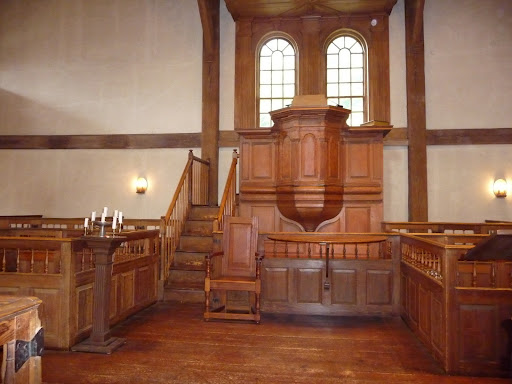
Below we have a pulpit from puritan times in at the Old Ship Meetinghouse, in Hingham Massachusetts. This architecture is similar to most early pulpits in New England- high, wooden with stairs at the side. For a fascinating story on pulpits, this one at Boston, go here, “Mystery of the Old South Meeting House Pulpit

Source
Let the wise hear and increase in learning, and the one who understands obtain guidance 
Proverbs 1:5

Think of it this way. At a concert, your ears expect something different if you’re laying on the grass at a 4th of July Concert in the Park in Central Park NY than if you were inside the Rockefeller Center listening to the Opera Aida. Don’t underestimate the setting as to how it coaches your mind to receive text.

The Christian Pundit said,

“a central pulpit makes a clear statement to any stranger walking in the door: “We have something for you to hear. It’s not what we say, it’s what God says in His Word. The pulpit looks important because what you are going to hear from it is essential for life and eternity.”

I’m not saying we all have to build high pulpits. However, today’s listener sees a man on a stage, a man dressed in torn skinny jeans and sweatshirt, one gluteal cheek perched on a wobbly stool, and a music stand, if that. We have gone from this,

To this:
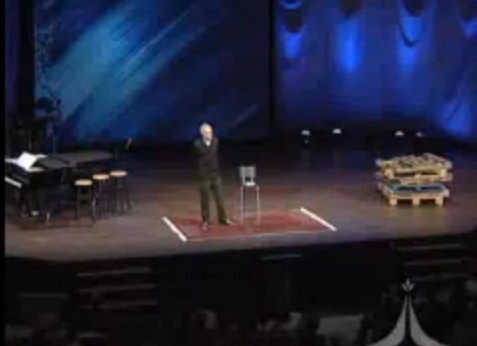
Rob Bell speaking at Rick Warren’s Willow Creek Community Church

We don’t have pulpits today. Joel Osteen doggedly refused to even call his stage a pulpit when pressed by Larry King. “It’s a podium,” he said. He has no cross behind him or anywhere on stage.

So the expository listener of today has been coached via architecture (or the lack of it) to prepare for a reduced word or prepare for a heightened word before a word is even spoken.

“He who has ears to hear, let him hear.” (Matthew 11:15)

Gill’s Exposition explains the verse:

“He that hath ears to hear, let him hear. A way of speaking used by Christ, when anything serious, and of great importance, was delivered; and which required attention, and was not easily understood”

As Ken Ramey stated in his book “Expository Listening, “Those who take to heart God’s call to listen will transcend the discouraging trends in the church today.

Ramey continues in describing the sacred partnership the preacher and the listener has with each other, and the Word of God binds them. We come to church to hear a sermon, but in addition to listening, we must also heed it. Almost every book of the bible contains a reference to hearing and obeying God’s word. Mr Ramey said,

“We might systematize everything the bible teaches on the subject of listening by arranging the verses under four summary statements, or theological truths, as follows:

1. God has spoken and commands us to listen and to obey what he has said,
2. We all fail to listen and obey God and deserve to be punished by Him,
3. God grants us the ability to listen to and to obey Him by His Holy Spirit, whom we receive through Jesus Christ,
4. God promises to bless us both now and for all eternity if we listen to and obey Him.

How do we do this? We know the parable of the soils explains that there are four kinds of soils. One of them is hard packed. If you garden, then you know that for the soil to receive the seed, it must be prepared by aerating, breaking up the clods and making rows to put the seeds into. Our heart is like that hard packed soil. We need to prepare it before we listen to the seeds the preacher sends forth from the Word in a sermon.

We do this in several ways. One is, we must read and meditate on God’s word every day. Mr Ramey wrote,

Reading the Word on a daily basis will develop in you a healthy appetite for God’s Word. You can’t expect to come to church on Sunday with a hunger for God’s Word if you haven’t been feeding on it throughout the week.

We prepare to listen by praying throughout the week.

“Pray for yourself. You should pray that God would grant you an honest and good heart that would hear and accept the Word and that it will bring lasting fruit in your life, that he would make your heart receptive to the Word. … Second, you should pray for the preacher. Pray that the preacher would preach with great liberty and boldness and clarity (Eph 6:19-20; Col 4:3-4), that God’s Word would run rapidly, transforming people’s lives for His glory.”

Let us not forget about sin. In order to be good, biblical listeners, we need to confess our sin on a regular basis so that it does not form a block, a wall, or a stronghold against the implanting of the seed. James 1:21 says “Therefore put away all filthiness and rampant wickedness and receive with meekness the implanted word, which is able to save your souls.”

Here is another tip for becoming a biblical listener which you may not have expected as a tip for how to listen to a sermon. Mr Ramey suggests,

“Reduce your media intake. …  The media saturation in our society has a deadening, dulling effect on our hearts.” These conditions diminish our receptivity to hearing God’s word.

Do you prepare to listen? Just as architecturally, the pulpit is central in a sanctuary, do you orient your week with the focal point being the ministry of the Word? Is Sunday the most important part of your week? In Mr Ramey’s book “Expository Listening,” he wrote,

You should try to schedule your work activities, get-togethers and vacations around church. You should live by the principle that Sunday morning begins on Saturday night. Here are some practical suggestions on how to prioritize the Lord’s Day:
–Make it a habit to be home Saturday night
–Be careful not to do, watch, or read anything that will cause lingering distractions in your mind the next day
–Get things ready on Saturday evening to alleviate the typical Sunday morning rush
–Get a good night’s sleep so you can be sharp and energetic to worship and serve God. It’s hard to listen when you’re nodding off!

And so on. The book contains many more instructions for how to be a good, biblical listener. I recommend it.

I hope these tips on how to become a biblical listener have helped you in any way. There is so much more to receiving God’s Word than plopping down in the pew in a huff and a rush, and half listening with a closed heart. We honor God to do our part before-hand to work out our salvation in fear and trembling.

“The Gospel is not the doorway into Christianity, it is the unending, ever-expanding, always sweetening country that we will be exploring for eternity.”

———————

Further Reading

How to listen to a sermon: part 1 “The mechanics of listening”.

What is expository preaching?

What is biblical theology of worship?

Posted in abendroth, green, johnson, listening, lloyd-jones, macarthur, preachers, sermon

How to listen to a sermon: part 1 "The mechanics of listening"

Part 2 here: “Expository Listening”

As I’m sure you do, I like to listen to sermons. I listen at my laptop, while I am doing dishes or cooking, and in church. The former means I have no visuals to accompany the listening, and the latter does.

The catch is finding a good preacher who treats the scripture with respect, doesn’t promote a false doctrine, and is clear in his preaching. That is hard to do these days! Once you find some pastors like that, phew, it is easy to settle into a routine that contains your favorite few. Mine are John MacArthur, Mike Abendroth, (and also herePhil Johnson, and Don Green.

However, I have an Old Testament prophet’s heart and I LOVE to listen to good exposition on the OT texts. The problem is, pastors who preach those texts are few and far between. Pastor Johnson has a great series on the Psalms, and Dr. MacArthur has a very few on OT texts (his series on Genesis 1 is fantastic) and Pastor Green as a tiny amount, but that’s it.

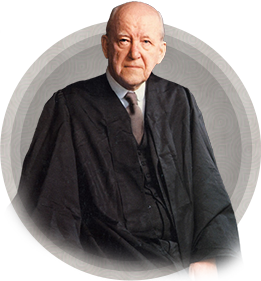
Martyn Lloyd Jones was a well-known British preacher. He lived from 1899 to 1981. He preached for a long time. Recently, his recorded sermons were combined into a trust and released to the public via the internet. There are 133 sermons on the OT. There are 55 on the great biblical doctrines. There are 1,600 sermons overall. What a treasure trove! I got so excited!

This week, I listened to two of his sermons from Jeremiah and I had a hard time sticking with it. I like Jeremiah a lot, and  was truly interested in the exposition of the text. So why was my mind balking? Lloyd-Jones is an old-fashioned fire and brimstone preacher, which I love. So why was I having a hard time? You know me, I have to analyze everything.

Lloyd-Jones’s voice is upper crust, ‘veddy British’. He rolls his rrrr’s dramatically. He has a high nasal

voice, not helped by older recording equipment from the 40s, 50s, 60s that makes him sound more tinny than likely he was in real life. The vocabulary he uses is slightly different that I’m used to, and it included British words as well as simply a different phraseology than I’ve heard before. All these surface elements of the skill of listening negatively impacted my listening experience.

I thought about it for a while and I came to the conclusion that our ears settle into a comfortable rut. Just as we enjoy living in a routine, so do our ears. People’s voices are like blankets. We become used to how our pastors sound, we know their verbal tics, and go along with their vocal rhythms. Listening is an ability. It needs to be kept in good working order, the wheels of the mind greased and stretched. I was having a hard time not because of the content of Lloyd-Jones’s sermons, which are tremendous, nor because of any spiritual conviction I was experiencing, but simply because my listening ability was being stretched.

I’m sure you’ve experienced this when a guest preacher comes to your church. It takes a while for your mind to settle down and get used to hearing a new tone of voice, an new rhythm, a new way of speaking. All this stretches your listening vocabulary and listening skills. And listening is a skill.

I used to watch foreign films a lot. I don’t like dubbing so I always went for the subtitles, which never bothered me. Foreign films of course show foreign things, contain foreign ideas, use a different approach to story telling, and even the cinematography is different because of different type cameras used in the making of the film. It has been about ten years since I’ve seen a foreign film and I watched one recently. I had a hard time settling down at first because I’d lost the skill of watching them. Same goes for black and white movies, which I’ve recently gotten back into, and the same goes for silent films. I was surprised that the 2011 American/French film “The Artist” won so many Academy Awards (five) because it was a silent film. A silent film hasn’t been made nor an old one released in a long time, and many of us have lost that skill of how to watch one.

It is the same with listening. The mechanics of listening to a sermon are just as important. Keep honing your skills in listening to a wide range of good preachers. Here is a little tutorial on how to keep the mechanics of your listening skills in good shape. In another blog entry, I’ll discuss the spiritual mechanics of biblical listening.

Literacy is reading and writing, listening and speaking. It is via literacy that we create meaning in our lives. The US Air Force has a University called The Air University, or AU. In this good series on Listening Effectively, we read,

“Listening is a complex process—an integral part of the total communication process, albeit a part often ignored. This neglect results largely from two factors.”

“First, speaking and writing (the sending parts of the communication process) are highly visible, and are more easily assessed than listening and reading (the receiving parts). And reading behavior is assessed much more frequently than listening behavior; that is, we are more often tested on what we read than on what we hear. And when we are tested on material presented in a lecture, generally the lecture has been supplemented by readings.”

“Second, many of us aren’t willing to improve our listening skills. Much of this unwillingness results from our incomplete understanding of the process—and understanding the process could help show us how to improve. To understand the listening process, we must first define it.”

The essay goes on to explain that, “The process moves through the first three steps—receiving, attending,

Group of people listening to a sermon.
Coranderrk, c.1860-c.1865
source

understanding—in sequence.” Receiving is what it means, someone transmits a body of information auditorially and your ears receive it. There are many things that can impact receiving. If you’re in a car and driving, of course that impacts you because you get distracted. The speaker is still sending, you’re not receiving. Even if you are in a pew and seated comfortably, receiving can be impacted by the preacher’s speech, any impediments, his rhythm, tone, or distracting verbal tics.

My old pastor used to punctuate every half phrase with “Amen?” as in, “Paul was about to set out in his second missionary journey, amen? And then he got in the boat, amen?” etc. Like that. Drove me nuts. I’m exaggerating a bit on how frequently he said it, but it was frequent enough that it became a distraction to me rather than a pattern of speech unique to him. Sometimes I’d just count the amens rather than listen to what he was saying. That is what I mean by verbal tics. MacArthur repeats a sentence he really wants us to get. He doesn’t do it often within a sermon, but only at the introduction of a new main idea, so it doesn’t distract me. In the former case, it was distracting, in the latter, a comforting vocal blanket to my ears.

In the Air University lecture it stated that “attending” is the second part of the process of listening. Attending is hard when you’re distracted. This impacts receiving. Like I said above, I had a hard time paying attention to the content when the distraction of the amens got in the way.

The AU lecture notes that in the second part of the listening process attending, there is such a thing as–

“Selectivity of attention. We direct attention to certain things to prevent an information overload.”

And alternately, we become distracted by things when they are competing for our attention. This is why listening is active. If there arise any barriers to listening, we must mentally work to overcome them.

“Selectivity of attention explains why you “perk up” or pay attention when something familiar to you, such as your hometown or your favorite hobby, is mentioned. In fact, you may have been listening intently to a conversation when someone in a different conversation mentions your name. Immediately, the focus of your attention shifts to the conversation in which your name was mentioned.” (source)

So in listening to a sermon, you may have a favorite topic. If any preacher mentions anything about eschatology, I am all ears. If the sermon is on marriage (I’m single) I tend to want to tune out.

Strength of attention. Attention is not only selective; it possesses energy, or strength.

Attention requires effort and desire. It is possible to get lazy in listening, that is why I’m writing about listening as a skill that needs honing and practice. We make ourselves literate when we connect the new to the known. If you are listening to a preacher for the first time, you have nothing to connect the new to the known with. In other words, I understand without having to think about it that when MacArthur repeats a sentence it means he is emphasizing a point and getting ready to launch into another verbal paragraph. This barely registers with me now but it is what I am talking about when I say that listening is an active skill. When you tune in to a new preacher you won’t know his patterns and it takes a few listens to acquire them. Stick with it.

Words are verbal symbols. Yet there can exist barriers to understanding even when we all speak the same language.

Barrier : The same words mean different things to different people.

I laugh when I remember this example. When I was married, my husband and I used to talk of course. All

my degrees are in literacy and my profession is teaching. I live by words. My husband was a mathematician, his profession was databases and computer software. One time we were having a talk. We were both speaking English. We were at home and undistracted. But we were not connecting verbally. Finally, I asked him, “When you speak what does it look like in your mind?” He said, “Numbers. I think in equations. How do you think?” I answered, “I think in anecdotes.”

In the AU lecture, the professor said, “I may tell my colleague that the temperature in the office is quite comfortable. My “quite comfortable,” however, is her “uncomfortable”: 75 degrees is comfortable for me; 70 degrees is comfortable for her. The same word can mean different things to different people.”

If you listen to a new preacher it takes a while to become familiar with what he means when he says such and such.

“Barrier : Different words sometimes mean the same thing”

It took me a while after moving from the north to the south in the US that buggy meant cart, soda meant pop, and tea meant cold and sweet. I remember asking one of my kindergarteners to get the wastebasket and he literally didn’t know what I meant. I said “the trash can” and then he brought it right over.

A new preacher you’re listening to might indeed be speaking English but may be using different words in that present a barrier to understanding. With ongoing listening you absorb his meanings into your mental listening vocabulary.

Barrier : Misinterpretation of the voice. The quality, intelligibility, and variety of the voice affect the listener’s understanding. Quality refers to the overall impression the voice makes on others.

There is a preacher I listen to who has a tone that tends to become petulant, even though he is not petulant in the least. I have to work hard while listening not to be distracted by it. I love Pastor Mike Abendroth’s voice on his radio program No Compromise Radio. His voice is so soothing, he speaks slowly and clearly, there are no sound effects or distractions. In fact, when I want to be soothed, I’ll listen to him. His voice is like an oasis in the loudness of life. He makes it easy to receive, attend, and understand.

Well, that was a little lesson on the mechanics of listening. In the next essay I’ll offer some information on how to partner with the preacher via maximized listening so that the Word of God accomplishes its intended purpose. It will be geared to the theology of listening: expanding your capacity for expository listening. Meanwhile I’ll urge you all to keep the mechanics of your listening skills honed by occasionally practicing an deliberate expansion of who you listen to, and how.

Posted in discipline, pastor, plagiarism, sermon

Preaching hollow words: when pastors plagiarize

Today, the deacons revealed to our congregation that our pastor was asked to resign for plagiarism.

I’m heartbroken.

But I am also joyful.

This is a story of the faithfulness of Jesus and His concern over His church, the ministry of the Holy Spirit in how He operates in giving gifts and working among the people. It is a praise to the Lord for the way He set up the church and the checks & balances that are in His word.

People, the process works.

So what happened? For many years, he had been downloading sermons from the internet, memorizing them, and passing them off as his own work. I’m not talking about plagiarizing an outline. I’m not talking some research lifted from one sermon and used in his own sermon. I am talking mirror image, page for page, word for word ripoff. For these last few years, his entire preaching ministry was an act.

IS PLAGIARISM A SIN? OR JUST A HELPFUL AID TO BUSY PASTORS?

Plagiarism is an act where a person takes credit for another person’s work. It doesn’t have to be illegally obtained, like stolen words or infringed copyright. It can be, but depressingly often these days, sermons are purchased from websites where the pastor or person who owns the website sells them, like Charles Stanley, for example. Rick Warren also offers sermons. There are sites like sermoncentral.com, pastors.com, sermonspice.com, and desperatepreacher.com where you buy them. The practice has become so widespread that 7 years ago, the Wall Street Journal wrote about sermon plagiarism, saying,

That Sermon You Heard on Sunday May Be From the Web”
“The widespread buying of packaged wisdom has touched off a debate about ethics, especially after incidents in which pastors have resigned over plagiarism allegations. Some members of the clergy say sermon sales diminish religious oratory and undermine both scholarship and the trust between ministers and their flocks.”

“Every minister owes his congregation a fresh act of interpretation,” says Thomas G. Long, a preaching professor at the Candler School of Theology at Emory University in Atlanta. “To play easy with the truth, to be deceptive about where the ideas come from, is a lie.”

Since 2006, plagiarism in the pulpit has exploded into something that is commonly done. It’s become so ingrained in Christendom, particularly in western countries, that there are even discussions now as to whether plagiarism even IS a sin. We read of excuses like Rick Warren’s, who said, “other pastors’ sermons fed my soul – and eased my preparation! we’re all on the same team. Let’s help each other out…”

Unequivocally, plagiarism, in any sphere or any form, academic, professional, or pastoral, is a sin. Period. Therefore, behold, I am against the prophets, declares the LORD, who steal my words from one another. Jer. 23:30

The fact that these websites flourish is an indicator of deep rottenness at the heart of our faith. To use sermons from Warren or Stanley or desperatepreacher.com is a sin of omission because your flock believes you have done the work of creating a unique message from the Spirit designed specifically to meet a local congregation’s spiritual needs, when it is actually someone else’s work, and you do not correct them. Whether the originating pastor gives you permission to use his work is beside the point, though it does add stealing to cheating when a pastor takes a sermon without paying for it or without the original pastor’s permission.

Some pastors make the issue an even deeper sin by not just letting their flock believe he created the sermon, but purposely says that he created it. The first is a sin of omission, the latter is a sin of commission. He might say, “This week as I was preparing …” or, “As I was researching for this message…”.

It does get even worse. In the ugliest sin of all in the plagiarizing sphere, some pastors use the same anecdote as the original pastor did, but change all the pronouns to “I” and spoke it as if he has lived the anecdote himself.

As DA Carson says of this all too common practice, “re-telling personal experiences as if they were yours when they were not makes the offense all the uglier. Make no mistake, plagiarism in the pulpit is an offense, both to Jesus and to the sheep who are supposed to be feeding on His word.”

How terrible to be following an under-shepherd who leads the Lord’s sheep to green pastures, only for the sheep to discover that the grass he is feeding them is astroturf.

CON MEN

A confidence trick is an attempt to defraud a person or group after first gaining their confidence. The people who perform these scams are confidence men, or con men.

Though it pains me to say it, a pastor who is dwelling in a permanent pattern of plagiarism is a con man. They are in a position of trust with Jesus as the called under-shepherd, and in a position of trust with the members of their flock as an approved workman to feed them. The act of plagiarizing sermons is a trick, a sleight of hand that can only be called fraud. The bible calls men like these impostors and deceivers (2 Timothy 3:13). Trust is destroyed in an instant.

As John MacArthur said in his sermon “Should fallen pastors be restored?“, “Trust forfeited is not so easily regained. Once purity is sacrificed, the ability to lead by example is lost forever. As my friend Chuck Swindoll once commented when referring to this issue–it takes only one pin to burst a balloon.”

Often, a pastor who plagiarizes initially may have had a good intention, but as the Christian Index reported in 2006, one misstep can lead to disaster–

One misstep can be disastrous. Consider the case earlier this year of a mid-Georgia pastor who was struggling under stress of personal problems and had trouble focusing on weekly sermon preparation. Over a six-week period he preached several sermons verbatim without giving attribution. When confronted he confessed and shared his problems and asked forgiveness from the church. It was not an act of laziness but pure survival, he maintained, trying to hold his ministry together in the face of seemingly insurmountable difficulties. While the church apparently extended the forgiveness, the pastor did feel his ministry had been severely damaged and resigned from the church.

MacArthur concluded his sermon, he said, “What should you do in the current crisis? Pray for your church’s leaders. Keep them accountable. Encourage them. Let them know you are following their godly example. Understand that they are not perfect, but continue nonetheless to call them to the highest level of godliness and purity. The church must have leaders who are genuinely above reproach.”

WHAT DOES THE BIBLE SAY?

What is the biblical stance on plagiarizing?

The wonderful bible does cover this, directly and indirectly. In Jeremiah 23:30 we directly read of how the LORD feels about stolen words:

Therefore, behold, I am against the prophets, declares the LORD, 
who steal my words from one another.

Barnes Notes says of the verse, which is embedded in a longer treatise about how false prophets operate,
“Jeremiah gives in succession the main characteristics of the teaching of the false prophets. The first is that they steal God’s words from one another. Having no message from God, they try to imitate the true prophets.”

Clark’s Exposition says, “Three cases are mentioned here which excited God’s disapprobation:, first, The prophets who stole the word from their neighbor; who associated with the true prophets, got some intelligence from them, and then went and published it as a revelation which themselves had received, Jeremiah 23:30.”
 
Though a modern day pastor is not a prophet of old who exhorted the Word of the LORD from direct revelation, he still is a type of prophet, because he is exhorting the word of the Lord delivered via the bible and understood via the Spirit.

The LORD is against this practice of stealing words from one another. AGAINST! Anything the Lord is against, I am against also. It is that simple.

In addition to the Jeremiah verse which speaks directly to stealing the Lord’s words, we read a simple commandment in Exodus 20:15, Thou Shalt not steal. Taking someone else’s words and using them as your own is stealing. A pastor doing this is also blasphemy. (Blasphemy: To blaspheme is to speak with contempt about God or to be defiantly irreverent.)

Further, the bible speaks to deceit. Purposely intimating or explicitly stating a sermon is your own when it is not, and pretending another person’s life story is yours when it is not, is deceit. The bible speaks much to deceit and lies.

  • A false witness will not go unpunished, and he who breathes out lies will perish. (Proverbs 19:9)
  • You shall not steal, neither deal falsely, neither lie one to another. (Leviticus 19:11)
  • Let no corrupt communication proceed out of your mouth, but that which is good to the use of edifying, that it may minister grace to the hearers. (Ephesians 4:29)
  • Lie not one to another, seeing that you have put off the old man with his deeds; (Colossians 3:9)

And so on.

None of us who believe in the Lord want to sin. We know we are going to. The key is to repent immediately so that we can get back into right relationship with Him. However, the consequences are even higher for pastors/elders, (and deacons) because the bible endows them with special responsibility, and outlines explicit qualifications for their office. I refer to Titus 1:5-9 for pastors.

As John MacArthur summarized, “Its requirements are faultless character, spiritual maturity, a willingness to serve humbly and a skill in teaching.” 1 Timothy 3:1-7 also lists qualifications for overseer/elder/pastor (terms used interchangeably) and again the first one is to be “above reproach”. All other characteristics listed that go to qualifying a pastor for service to lead a flock stem from that overarching quality: faultless, above reproach.”

Obviously any pastor who plagiarizes is no longer faultless nor above reproach. MacArthur continues,

“Pastors must take great care to remain above reproach for several reasons. First, they are the special targets of Satan, and he will assault them with more severe temptation than others. Those on the front lines of the spiritual battle will bear the brunt of satanic opposition.”

“Second, their fall has a greater potential for harm. Satan knows that when a shepherd falls, the effect on the sheep is devastating.”

“Third, leaders’ greater knowledge of the truth, and accountability to live it, brings greater chastening when they sin.”

“Fourth, elders’ sins are more hypocritical than others’ because they preach against the very sins they commit.”

What happens when a sin like that goes undetected, or unaddressed if detected? First, it gives the pulpit over to satan. Sin is his playground. If he has the pulpit he has a voice in the church. He will use that prime position to secretly introduce destructive doctrines. (2 Peter 2:1). What could be better than a sinning pastor to accomplish that?

Barnes explains how this secret introduction of false doctrines is accomplished-

“They would not at first make an open avowal of their doctrines, but would, in fact, while their teachings seemed to be in accordance with truth, covertly maintain opinions which would sap the very foundations of religion. The Greek word here used, and which is rendered “who privily shall bring in,” (παρεισάγω pareisagō,) means properly “to lead in by the side of others; to lead in along with others.” Nothing could better express the usual way in which error is introduced. It is “by the side,” or “along with,” other doctrines which are true; that is, while the mind is turned mainly to other subjects, and is off its guard, gently and silently to lay down some principle, which, being admitted, would lead to the error, or from which the error would follow as a natural consequence.”

Left unaddressed, things will only get worse over time. The thief comes to steal, kill, destroy. (John 10:10a). Therefore any gross, disqualifying sin discovered in a pastor or leader must be addressed!

WHAT SHOULD BE DONE?

What should be done if plagiarism, or another ethical or a moral sin surfaces in your pastor?

The wonderful Lord put processes and standards and gifts in place. This is why it is so important to have been abiding by them all along, so when satan comes, and he will, (2 Peter 2:1, Matthew 7:15), your church will have a vigor that’s inherent in your church already. To resist the devil, you need the Lord’s strength, and that strength includes adherence to His statutes. In other words, obedience is your foundation.

Some of these standards include having men only as elders and pastors. Having deacons who fit the biblical qualifications of the office. Church discipline process is given importance and exercised when necessary. Overall, issues of church governance appear in Acts and pastoral instructions are given in the epistles to Timothy and Titus. Follow those!

If your church has strayed from the biblical polity as given, then start now in strengthening it. A bridge with foam buttresses will not stand. No matter how strong the bridge is, it needs that solid infrastructure to withstand the rushing flood of waters satan sends against it.

How about the people of the congregation? Does the church practice discipline? Bible.org states, “The discipline of the church is first patterned after the fact that the Lord Himself disciplines His children (Heb. 12:6) and, as a father delegates part of the discipline of the children to the mother, so the Lord has delegated the discipline of the church family to the church itself (1 Cor. 5:12-13; 2 Cor. 2:6).”

Church discipline nurtures all involved, whether to restoration or to discipline. (Hebrews 12:11).

In other words, does your church structure fit the outlines we’re given in the bible? Having vigor in those areas is like an athlete who strengthens his muscles to prepare for the race. You cannot expect to run a marathon if you have not been preparing for it!

Next, does your church honor the gifts of the spirit? All of the gifts? The Spirit sends people to your church with certain gifts that will meld and coalesce in a way that He knows you need now and will need in the future. Often, the gift of discerning of spirits is misunderstood, ignored, or maligned. Sometimes justifiably so. There are nuts out there who believe there is a demon behind every tree and that you got that hangnail because you have a spirit of hairballs. Use your gift and honor the gifts of others. It is for the common good, after all! (1 Corinthians 12:4-7).
Plagiarism has been a problem in the world for centuries. It is defined as “to steal and pass off (the ideas or words of another) as one’s own.” A truly humble person with real integrity will avoid plagiarism, and that was true of Paul. He never displayed a willingness to take credit for others’ labors. ~John MacArthur.
WHAT HAPPENS IF PLAGIARISM IS ADDRESSED BADLY?

I’ve spoken of what happens if a church addresses plagiarism correctly, and if a church fails to address it. The third possibility is it is ignored or addressed badly, it leaves the church vulnerable.

It leaves the church powerless and without the Spirit.

Samuel Chadwick (1860-1932) was a Wesleyan Methodist minister. ordained in 1890. Rev Chadwick said in a sermon called The Tragedy of a Powerless Church

“The Holy Spirit is the active, administrative Agent of the glorified Son. He is the Paraclete, the Deputy, the acting Representative of the Ascended Christ. His mission is to glorify Christ by perpetuating His character, establishing His Kingdom and accomplishing His redeeming purpose in the world. The Church is the Body of Christ, and the Spirit is the Spirit of Christ. He fills the Body, directs its movements, controls its members, inspires its wisdom, supplies its strength. He guides into the truth, sanctifies its agents, and empowers for witnessing.”

“It is possible to excel in mechanics and fail in dynamics. There is a superabundance of machinery. What is wanting is power. To run an organization needs no God. Man can supply the energy and enterprise for things human. The real work of a church depends upon the power of the Spirit.”

If you are in a church where an ethical or moral failing has been uncovered in a pastor or elder, take heart. The loving Savior cares more for His church than all of us combined! He loves us and wants his trophies of grace to be strong and beautiful for His name. He is intimately involved in His church! We are His Bride. There’s comfort in clinging to  that. Also, He sent His word via the inspiration of the Holy Spirit and His designated Apostles and writers. His word contained warnings and prophecies, including warnings that false pastors or leaders will come. How wonderful that He told us ahead of time so we can be prepared. Prophecy is a true word, so if it comes to pass we can praise the Lord who knows the end from the beginning. (2 Peter 1:19; Isaiah 46:10).

If you have elected Godly deacons, then how to address this issue will become known to them, no matter the specifics of your particular denomination’s constitution or bylaws. Jesus is involved, and He sends His Spirit to endow these men with wisdom of what to do. Pray for them and trust them.

Jesus sends His Spirit to operate in and activate Christ’s power! His gifts meld together in a beautiful way to ignite glory for the Father. To avoid a powerless church, then acknowledge who is the Head of it. (Revelation 3:20). We worship the risen Christ, not a man, no matter how loved or popular or how long his tenure has been in your church. Be a praying church, a submitting church, a gifted church, an obedient church. How wonderful and beautiful is the Holy Spirit who points to Jesus always, and who multiplies HIS church-

“Then had the churches rest throughout all Judaea and Galilee and Samaria, and were edified; and walking in the fear of the Lord, and in the comfort of the Holy Ghost, were multiplied.” (Acts 9:31).

————————
Of Related Interest,

Discernment lesson: The Sin of Inaction

Where is the righteous indignation? The holy anger?