Foxe’s Book of Martyrs. According to this summary from Christian Book Summaries,
Writing in the mid-1500s, John Foxe was living in the midst of intense religious persecution at the hands of the dominant Roman Catholic Church. In graphic detail, he offers accounts of Christians being martyred for their belief in Jesus Christ, describing how God gave them extraordinary courage and stamina to endure unthinkable torture.
From the same link, the book’s purpose was fourfold:
- Showcase the courage of true believers who have willingly taken a stand for Jesus Christ throughout the ages, even if it meant death,
- Demonstrate the grace of God in the lives of those martyred for their faith,
- Expose the ruthlessness of religious and political leaders as they sought to suppress those with differing beliefs,
- Celebrate the courage of those who risked their lives to translate the Bible into the common language of the people.
Text from Foxe’s Book of Martyrs
We have been looking at Chapter 2, the Ten Primitive Persecutions. Chapter 1 looked at the first persecutions, beginning with Stephen, and the Apostle’s and companions’ deaths and ending with Barnabas in AD 73.
Foxe’s Book of Martyrs Chapter 2 is about the first generations of martyrs, from AD 73 to AD 303. This post represents an overview of part of the second half of the 8th persecution under Valerian, A.D. 257.
 |
| Source |
In Africa the persecution raged with peculiar violence; many thousands received the crown of martyrdom, among whom the following were the most distinguished characters:
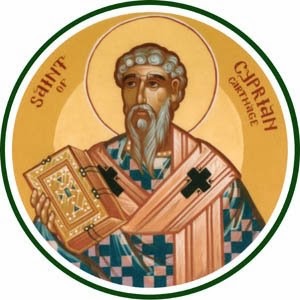
Cyprian, bishop of Carthage, an eminent prelate, and a pious ornament of the Church. The brightness of his genius was tempered by the solidity of his judgment; and with all the accomplishments of the gentleman, he blended the virtues of a Christian. His doctrines were orthodox and pure; his language easy and elegant; and his manners graceful and winning: in fine, he was both the pious and polite preacher. In his youth he was educated in the principles of Gentilism, and having a considerable fortune, he lived in the very extravagance of splendor, and all the dignity of pomp.
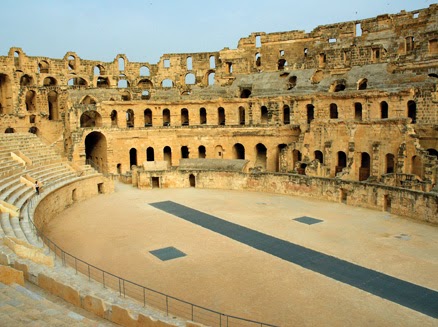
“Carthage is a suburb of Tunis, Tunisia and was the centre of the Carthaginian Empire in antiquity. The city has existed for nearly 3,000 years, developing from a Phoenician colony of the 1st millennium BC into the capital of an ancient empire.” Wikipedia

About the year 246, Coecilius, a Christian minister of Carthage, became the happy instrument of Cyprian’s conversion: on which account, and for the great love that he always afterward bore for the author of his conversion, he was termed Coecilius Cyprian. Previous to his baptism, he studied the Scriptures with care and being struck with the beauties of the truths they contained, he determined to practise the virtues therein recommended. Subsequent to his baptism, he sold his estate, distributed the money among the poor, dressed himself in plain attire, and commenced a life of austerity. He was soon after made a presbyter; and, being greatly admired for his virtues and works, on the death of Donatus, in A.D. 248, he was almost unanimously elected bishop of Carthage.
Cyprian’s care not only extended over Carthage, but to Numidia and Mauritania. In all his transactions he took great care to ask the advice of his clergy, knowing that unanimity alone could be of service to the Church, this being one of his maxims, “That the bishop was in the church, and the church in the bishop; so that unity can only be preserved by a close connexion between the pastor and his flock.”
 |
| Source |
Left, Roman Carthage.
In A.D. 250, Cyprian was publicly proscribed by the emperor Decius, under the appellation of Coecilius Cyprian, bishop of the Christrians; and the universal cry of the pagans was, “Cyprian to the lions, Cyprian to the beasts.” The bishop, however, withdrew from the rage of the populace, and his effects were immediately confiscated. During his retirement, he wrote thirty pious and elegant letters to his flock; but several schisms that then crept into the Church, gave him great uneasiness. The rigor of the persecution abating, he returned to Carthage, and did everything in his power to expunge erroneous opinions. A terrible plague breaking out in Carthage, it was as usual, laid to the charge of the Christians; and the magistrates began to persecute accordingly, which occasioned an epistle from them to Cyprian, in answer to which he vindicates the cause of Christianity. A.D. 257, Cyprian was brought before the proconsul Aspasius Paturnus, who exiled him to a little city on the Lybian sea. On the death of this proconsul, he returned to Carthage, but was soon after seized, and carried before the new governor, who condemned him to be beheaded; which sentence was executed on the fourteenth of September, A.D. 258.
The disciples of Cyprian, martyred in this persecution, were Lucius, Flavian, Victoricus, Remus, Montanus, Julian, Primelus, and Donatian.
~~~~~~~~~~~~~~~~~
The lesson here is how quickly false doctrine attempts to gain entry. It never sleeps and it always crouches at the door. (Genesis 4:7). The moment Cyprian was in hiding, it came in with full force and caused division among the brethren. As lay-people we need to do our part in being students of the Word and prayerfully understanding of the precepts Jesus laid down. Deacons too. Don’t over-rely on the pastor for discernment or wisdom. The Holy Spirit gives wisdom to all who ask, with no reproach. (James 1:5). The overseer of the flock is important but we have our job to do as well. (Philippians 3:14, 2 Peter 1:5-7).
Have a blessed Lord’s day.


 the-end-time.org